Open Access Publisher and Free Library
CRIME+CRIMINOLOGY.jpeg

CRIME

Violent-Non-Violent-Cyber-Global-Organized-Environmental-Policing-Crime Prevention-Victimization

Posts in Public Health
"Blasphemy" in Schools : Self-Censorship and Security Fears Amongst British Teachers

By Damon L. Perry

In Britain, no one has the right not to be offended. Words or actions that are taken by some as offensive – whether they relate to religion, sexuality or race – are not criminal as long as they are not intentionally hostile and meant, or likely, to incite hatred. The statutory guidance on Non Crime Hate Incidents, revised in March 2023, is consistent with the law in this regard. It states: “Fundamentally, offending someone is not, in and of itself, a criminal offence. To constitute an offence under hate crime legislation, the speech or behaviour in question must be threatening, abusive or insulting and be intended to, or likely to, stir up hatred”. Yet, this does not seem to be fully acknowledged in Britain’s schools. As this revealing survey of over a thousand teachers from YouGov and Policy Exchange demonstrates, since the Batley Grammar School protests, a small but significant proportion of British teachers have self-censored to avoid offence on religious grounds – 16%. (That proportion is slightly higher for teachers of certain subjects, including almost a fifth of all English teachers and art teachers – 19%). In areas with the largest Muslim populations, around 10% fewer teachers do not self-censor than those in areas with the smallest Muslim populations. A worrying proportion believe that – regardless of a teacher’s intentions – images of the prophet Muhammad should never be used in classrooms, even in the teaching of Islamic art or ethics: In addition to the 55% of teachers that would not personally use an image of Muhammad independently from the Batley Grammar School protests, an additional 9% said they personally were less likely to use it as a result of the events in Batley. The case of the teacher at Batley Grammar who went into hiding after death threats thus appears to have had a significant impact on teachers’ confidence and willingness to use materials that fall within the scope of the law. Alarmingly, half of British teachers believe that if blasphemy-related protests led by activist and advocacy groups occur outside their schools, there would be a risk to their physical safety. Despite most teachers thinking that headteachers get the balance right – between supporting them to use materials that are on the right side of the law but which might offend, and ensuring no offence is caused – they are clearly in need of greater confidence in the support they can expect from their headteachers and, in the case of activist-led protests outside their school gates, the police. Recent events have given further impetus to concerns regarding the physical safety of teachers and the security at schools. On 13 October, 2023, in Arras, France, a literature teacher, Dominque Bernard, was killed in a knife attack; the suspect, an Islamist extremist, was looking for teachers  of history or geography. The case has been compared to that of Samuel Paty, the teacher who was killed three years ago by an Islamist extremist for showing cartoons of Muhammad to a class on freedom of expression. Both teachers have been described by President Macron as champions of the values of the French republic. Although this tragic incident took place across the Channel, France’s battle with Islamist extremism is one shared with the UK. Closer to home, in the wake of the Hamas terrorist attacks on hundreds of civilians in Israel on 7 October, protests on the streets of the UK against Israeli reprisals in the name of the Palestinian “resistance” have demonstrated alarming levels of hateful extremism and antisemitism.5 Some Jewish schools were forced to close on 13 October, when Hamas called for a “Global Day of Jihad”, and several Jewish schools were vandalised with red paint. The atmosphere has been fraught. The Department for Education wrote to school leaders “to ensure that any political activity from pupils in response to the crisis does not create an ‘atmosphere of intimidation’”  etc.

London: Policy Exchange, 2024. 51p.

Examining a Dataset on Gun Shows in the U.S

By David Pérez Esparza, Eugenio Weigend Vargas, Tony Payan and Carlos Pérez Ricart

Gun shows are public gatherings where licensed gun dealers and private gun owners use formal and informal venues to exchange information or sell and buy firearms, accessories, and ammunition. A major challenge is that gun shows, unlike established business locations, can be considered gray zones where regulatory loopholes facilitate the movement of legal firearms to illegal domains both domestically and internationally. Given this, they tend to feed into gun trafficking schemes. Despite this, gun shows are poorly monitored. Moreover, these events are not tracked by the Bureau of Alcohol, Tobacco, Firearms and Explosives (ATF) and what little is known comes from academic studies, press releases, or outdated ATF reports. To address this gap, update information, and generate a better understanding of how gun shows connect with gun trafficking, we generated a gun show dataset in the US from 2011 to 2019. We compiled information on promoted gun shows from three main sources, The National Rifle Association Magazine and the websites Gun Show Trader and Shooting Illustrator. We completed our dataset by looking at other minor sources that promoted gun shows. Our dataset encompasses information of 20,691 gun shows and suggests that 71% of them occurred in states where background checks were not required during gun sales between private individuals. We argue that scholars and practitioners will find in this dataset an original tool to analyze gun shows and their impact on public security and public health.

  Journal of Illicit Economies and Development. 2022, 11pg

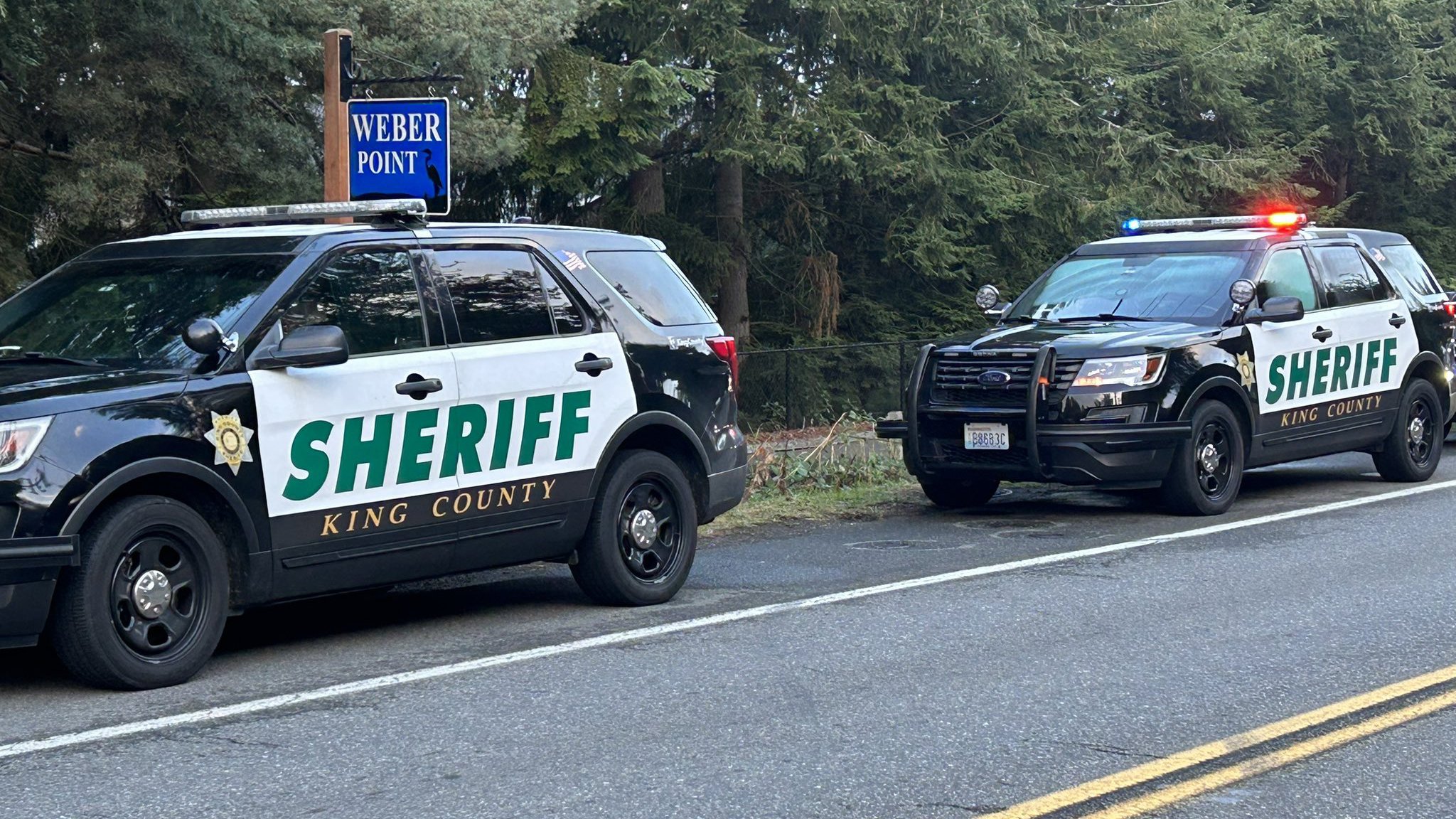
Analysis of female strangulation homicides in King County, Washington, from 1978 to 2022

By 
Richard C Harruff, Robert Johnston, and U L M S Perera 

Asphyxia due to strangulation is an uncommon but important modality of homicide that tends to disproportionately involve female victims. The present study was designed to investigate the circumstances, motivations, and injuries associated with strangulation homicides of females and to measure trends in incidence over time. Electronic records of the King County Medical Examiner's Office in Seattle, Washington, were used to compile a data set of all homicides in King County from 1995 through 2022. A second data set of female homicides due to strangulation was constructed with additional records prior to 1995, supplemented with data abstracted from autopsy reports, and linked to the Washington Attorney General's Office Homicide Investigation Tracking System database. This comprehensive data set was used to analyze demographics, circumstances, motives, and injuries of female strangulation homicides from 1978 through 2016. The results found that, from 1995 through 2022, females accounted for 22.8% of 2394 homicides but 80.3% of strangulation homicides. The average annual rate of all strangulation homicides decreased until 2020. Mean ages of female decedents were 27.7 years in homicides associated with sexual assault, 36.8 years with domestic violence, and 63.9 years with robbery. Lethal assaults most often occurred in private homes, and perpetrators were usually well known to the victim. Injuries included petechiae in 83%; ligature marks in 20%; fingernail marks in 1.4%; hyoid fractures in 23%; and thyroid cartilage fractures in 31%. Fractures were more common in manual strangulation and in decedents of ages over 40 years.

Journal of Forensic Sciences. January 2024, 6pg

Characterizing prescription opioid, heroin, and fentanyl initiation trajectories: A qualitative study

By Tasha Perdue aRobert Carlson bRaminta Daniulaityte cSydney M. Silverstein bRicky N. Bluthenthal dAvelardo Valdez eAlice Cepeda

The purpose of this study is to describe opioid initiation within each of the three waves from the perspective of people who use illicit opioids, with a focus on emerging pathways into fentanyl use. We noted supply-side changes as influencing trajectories in all three waves. However, we also noted differences in the experiences of prescription opioid and heroin initiation, with these trajectories influenced by pharmacological effects, pain management, curiosity, intergenerational use, pricing, and peers. In comparison, most participants were unaware that they were initiating fentanyl, and many reported overdosing with their first use of fentanyl. We identified a trajectory into fentanyl with limited to no prior heroin use among a few participants.

Social Science & Medicine Volume 340. January 2024, 11pg

Drug Trafficking Deterrence Signs and Ohio Schools: A Survey of Ohio Principals

By Peter Leasure


Nearly all states, including Ohio, have laws increasing punishments for drug trafficking in or near schools, though there are long-standing concerns for how these laws function. With a novel inquiry of school leaders, the current study explores whether Ohio schools displayed signage that was viewable by the general public stating that drug traffickers could face enhanced penalties if the conduct occurred on or near school premises. The current study also sought to gauge school principal perception about the deterrence effectiveness of such signs and whether enhanced penalty laws should explicitly require that individuals know they are on or near school premises to receive a penalty enhancement. The results of this survey of Ohio school principals suggested that the vast majority of Ohio schools lack any signage seeking to notify individuals of enhanced penalties for drug trafficking or that generally seek to deter drug trafficking. The results also showed that a majority of Ohio principals believed that the Ohio Revised Code should require that individuals know they are on or near a school's premises to receive increased penalties for drug trafficking (e.g., selling drugs) on or near school premises. Policy recommendations informed by the above findings are discussed.

Drug Enforcement and Policy Center. March 2024, 11pg