Open Access Free Library
CRIME+CRIMINOLOGY.jpeg

CRIME

Violent-Non-Violent-Cyber-Global-Organized-Environmental-Policing-Crime Prevention-Victimization

Posts in Institutions
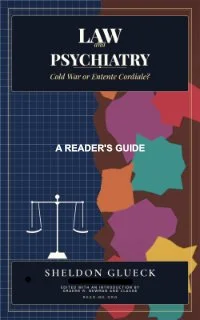
LAW AND PSYCHIATRY: Cold War or Entente Cordiale?: An abridged Glueck Classic

by Graeme Newman (Author), Sheldon Glueck (Author)

In 1962, a Harvard criminologist stood before an audience of lawyers and psychiatrists and asked whether their two professions were fighting a cold war — or could finally reach an entente cordiale.

Sheldon Glueck had spent nearly four decades studying what happens when the law and the mind collide. When the American Psychiatric Association awarded him its Isaac Ray Award in 1962, he used the honor to revisit a question he'd first raised in 1925: can a courtroom ever fairly judge a defendant whose mind wasn't entirely his own?

Law and Psychiatry: Cold War or Entente Cordiale? is Glueck's answer — four lectures that trace the law's century-long struggle to define legal insanity, from the rigid "right-and-wrong" test born in the trial of a Victorian assassin, through the sweeping 1954 Durham rule that tried to replace it, to Glueck's own proposal for resolving the deadlock. Along the way, he tackles the oldest dilemma in criminal justice — does anyone really choose freely, or are we all, to some degree, prisoners of forces we don't control? — with the wit and clarity of a scholar who has spent a career refusing easy answers.

This Read-Me.Org Mini-Classic edition condenses and lightly modernizes Glueck's original lectures for today's reader, and adds a new closing chapter, "Law and Psychiatry Today," tracing what actually happened next: the rise and fall of the Durham rule, the Hinckley verdict that reshaped the insanity defense overnight, the states that abolished it outright, and the neuroscience now reopening questions Glueck could only pose in the language of his own era.

What's inside:

  • An editor's introduction placing Glueck and the Isaac Ray Lectures in context

  • A biographical sketch of Sheldon and Eleanor Glueck and their landmark criminology research

  • All four of Glueck's original 1962 lectures, condensed and modernized

  • A new chapter tracing the insanity defense from 1962 to the present day

  • Review questions for classroom or book-group discussion

  • A further reading list for readers who want to go deeper

Whether you're a law or psychology student, a true-crime reader curious where the insanity defense actually came from, or simply someone who has ever wondered where blame ends and illness begins, this short, sharp classic still has something to say — six decades on, the cold war Glueck diagnosed has never entirely thawed.

A Read-Me.Org Mini-Classic — condensed, modernized editions of significant but hard-to-find works of criminology, law, and social science.

Direct quotation from the original is limited to brief, fair-use excerpts. Read-Me.Org discloses the use of AI assistance in preparing this edition.

Read-Me.Org Inc. New York-Philadelphia-Australia. 2026. p.43.

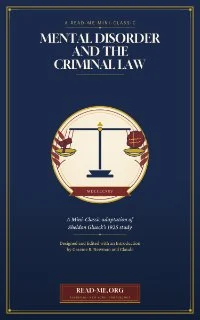
Mental Disorder And The Criminal Law: A Mini-Classic adaptation of Sheldon Glueck’s 1925 study

by Graeme Newman (Author), Sheldon Glueck (Author)

In 1925, a thirty-year-old Harvard instructor wrote a book that quietly reshaped how American law would treat defendants whose minds were diseased. Sheldon Glueck's Mental Disorder and the Criminal Law took direct aim at the M'Naghten "right-and-wrong" rule — the eighty-year-old English test still governing most American insanity trials — and showed, case by case and state by state, why it no longer matched what psychiatry actually knew about the human mind.

A century later, the debate Glueck defined is still very much alive. The M'Naghten rule remains the law in a majority of U.S. states. The Hinckley trial, the 1984 Insanity Defense Reform Act, and the more recent abolition of the insanity defense in several states are all chapters in an argument Glueck saw coming.

This Mini-Classic distills Glueck's dense, five-hundred-page original — footnoted case law, medical literature, and a state-by-state statutory appendix — into a single accessible guide:

  • A biography of Glueck and the Harvard reform circle (Roscoe Pound, Felix Frankfurter, William Healy) that shaped his thinking

  • The historical moment: M'Naghten's Case, the Leopold and Loeb trial, and the rise of modern psychiatry

  • A chapter-by-chapter walk through Glueck's argument — from the "wild beast" test of 1724 through the clinical psychoses of the 1920s to his own proposed reforms

  • A concluding chapter connecting Glueck's 1925 arguments to Hinckley, neurolaw, and today's insanity-defense debates

  • Sixteen review questions for students and reading groups

Ideal for students of criminal law, criminology, and the history of psychiatry — and for anyone curious how the insanity defense got the shape it has today.

Direct quotation from the original is limited to brief, fair-use excerpts. Read-Me.Org discloses the use of AI assistance in preparing this edition.

Read-Me.Org Inc. New York-Philadelphia-Australia. 2026. p.69.

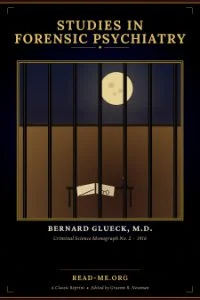
Studies in Forensic Psychiatry

By Bernard Glueck. Designed and Edited with an Introduction by Graeme R. Newman and Claude.

In 1916, psychiatrist Bernard Glueck made a case that was still radical for its time: that prisons and asylums needed trained psychiatrists on staff, not as outside consultants, but as clinicians embedded in the institution itself. Writing from the criminal department of the Government Hospital for the Insane in Washington, D.C., Glueck laid out five detailed case studies that argued, one patient at a time, for a new way of understanding the criminal mind.

Inside, you'll find:

  • A clinical study of psychogenic psychosis in prisoners — the theory that mental breakdown behind bars is often a meaningful reaction to arrest, trial, and confinement, not simply organic illness

  • An extended case-by-case analysis of malingering, and the difficult problem of separating feigned symptoms from genuine mental illness

  • A study of "litigious paranoia" — the compulsive, self-representing plaintiff who turns the courtroom into an extension of his delusion

  • A landmark early psychoanalytic case history of kleptomania

Glueck went on to found the first psychiatric clinic ever established inside an American prison, at Sing Sing, and later served as a psychiatric expert in the Leopold and Loeb trial. He was also the elder brother of criminologist Sheldon Glueck — making this book a companion volume to Read-Me.Org's editions of War Criminals and Probation and Criminal Justice.

This new edition includes a substantial original introduction by Graeme R. Newman, assessing Glueck's century-old argument against the present day: what holds up in modern correctional psychiatry, what doesn't, and a hard look at whether American prisons have actually delivered on the promise Glueck was making in 1916 — including current data on the ongoing shortage of psychiatric staffing across U.S. correctional systems.

A Read-Me.Org Classic Reprint. This is a corrected and reformatted edition of the 1916 first edition (Little, Brown, and Company), prepared from a public domain source text under a Creative Commons Attribution 4.0 International License. AI-assisted tools were used in the production of this edition, as disclosed on our website.

Read-Me.Org Inc. New York-Philadelphia-Australia. 2026. p.165.

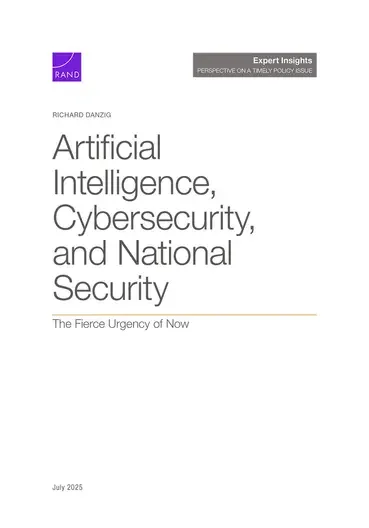
Artificial Intelligence, Cybersecurity, and National Security:

By Richard Danzig

In this paper, the author warns national security decisionmakers that to accomplish their missions they urgently need to better prepare for the impact of artificial intelligence (AI) on cybersecurity. He analyzes the present failings of the U.S. government in this respect, highlights the consequences of these failings, and makes recommendations for correcting them. He offers this effort as a case study and draws from it ten propositions relevant to those who are more broadly concerned with how AI, other technologies, and human decisions are intertwined and co-evolving.

Santa Monica, CA: RAND, 2025.

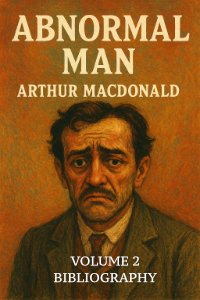
Abnormal Man : Volume 2 - Bibliography

By Arthur MacDonald.

The narrative in Volume 1 asks many pointed questions: What does it mean to be “abnormal”? Who decides? And how have these judgments shaped modern science, education, and criminal justice?

First published in 1893, Arthur MacDonald’s Abnormal Man is one of the earliest American attempts to systematically study human difference through the emerging tools of psychology, anthropology, and criminology. Drawing on international research—from European criminal anthropology to American child-study movements—MacDonald sought to classify the physical, mental, and moral traits considered “aberrant” in his era. His work reflects the hopes and anxieties of a society confronting rapid industrialization, immigration, social change, and new scientific approaches to crime and mental health.

To the modern reader, Abnormal Man reveals both the ambition and the pitfalls of nineteenth-century science. Its pages contain pioneering observations about child development, deviance, and social responsibility, alongside early theories—now discredited—about heredity, physiognomy, and race. What emerges is a vivid and sometimes unsettling portrait of a culture striving to understand human variation without the benefit of modern psychology or ethical safeguards.

The Read-Me.org edition Volume 1 presents Abnormal Man as both a historical artifact and a gateway to critical reflection. It illustrates how scientific thought evolves, how cultural bias can shape research, and how early debates about abnormality laid the groundwork for contemporary approaches to mental health, special education, criminology, and social policy. To make such work, much of it controversial then as it is today, minimally believable, requires extensive documentation. The voluminous Bibliography of Abnormal Man reproduced here in Volume 2, contains all that Macdnald referred to within his detailed exposition. To some, his arguments may seem unsupported, or lacking in evidence. But he left no stone untuned as this amazing bibliographical documentation of all relative contemporary research

A foundational text at the crossroads of science and society, Abnormal Man invites readers to explore the origins of modern debates about deviance, diversity, and the boundaries of the “normal.”

Read-Me.Org Inc. New York-Philadelphia-Australia. 2025. 240p.

Abnormal Man : Volume 1 --Digest of Literature

By Arthur MacDonald. Introduction by Graeme R. Newman

What does it mean to be “abnormal”? Who decides? And how have these judgments shaped modern science, education, and criminal justice?

First published in 1893, Arthur MacDonald’s Abnormal Man is one of the earliest American attempts to systematically study human difference through the emerging tools of psychology, anthropology, and criminology. Drawing on international research—from European criminal anthropology to American child-study movements—MacDonald sought to classify the physical, mental, and moral traits considered “aberrant” in his era. His work reflects the hopes and anxieties of a society confronting rapid industrialization, immigration, social change, and new scientific approaches to crime and mental health.

To the modern reader, Abnormal Man reveals both the ambition and the pitfalls of nineteenth-century science. Its pages contain pioneering observations about child development, deviance, and social responsibility, alongside early theories—now discredited—about heredity, physiognomy, and race. What emerges is a vivid and sometimes unsettling portrait of a culture striving to understand human variation without the benefit of modern psychology or ethical safeguards.

This new Read-Me.org edition presents Abnormal Man as both a historical artifact and a gateway to critical reflection. It illustrates how scientific thought evolves, how cultural bias can shape research, and how early debates about abnormality laid the groundwork for contemporary approaches to mental health, special education, criminology, and social policy.

A foundational text at the crossroads of science and society, Abnormal Man invites readers to explore the origins of modern debates about deviance, diversity, and the boundaries of the “normal.”

Read-Me.Org Inc. New York-Philadelphia-Australia. 2025. p.193.

"Blasphemy" in Schools : Self-Censorship and Security Fears Amongst British Teachers

By Damon L. Perry

In Britain, no one has the right not to be offended. Words or actions that are taken by some as offensive – whether they relate to religion, sexuality or race – are not criminal as long as they are not intentionally hostile and meant, or likely, to incite hatred. The statutory guidance on Non Crime Hate Incidents, revised in March 2023, is consistent with the law in this regard. It states: “Fundamentally, offending someone is not, in and of itself, a criminal offence. To constitute an offence under hate crime legislation, the speech or behaviour in question must be threatening, abusive or insulting and be intended to, or likely to, stir up hatred”. Yet, this does not seem to be fully acknowledged in Britain’s schools. As this revealing survey of over a thousand teachers from YouGov and Policy Exchange demonstrates, since the Batley Grammar School protests, a small but significant proportion of British teachers have self-censored to avoid offence on religious grounds – 16%. (That proportion is slightly higher for teachers of certain subjects, including almost a fifth of all English teachers and art teachers – 19%). In areas with the largest Muslim populations, around 10% fewer teachers do not self-censor than those in areas with the smallest Muslim populations. A worrying proportion believe that – regardless of a teacher’s intentions – images of the prophet Muhammad should never be used in classrooms, even in the teaching of Islamic art or ethics: In addition to the 55% of teachers that would not personally use an image of Muhammad independently from the Batley Grammar School protests, an additional 9% said they personally were less likely to use it as a result of the events in Batley. The case of the teacher at Batley Grammar who went into hiding after death threats thus appears to have had a significant impact on teachers’ confidence and willingness to use materials that fall within the scope of the law. Alarmingly, half of British teachers believe that if blasphemy-related protests led by activist and advocacy groups occur outside their schools, there would be a risk to their physical safety. Despite most teachers thinking that headteachers get the balance right – between supporting them to use materials that are on the right side of the law but which might offend, and ensuring no offence is caused – they are clearly in need of greater confidence in the support they can expect from their headteachers and, in the case of activist-led protests outside their school gates, the police. Recent events have given further impetus to concerns regarding the physical safety of teachers and the security at schools. On 13 October, 2023, in Arras, France, a literature teacher, Dominque Bernard, was killed in a knife attack; the suspect, an Islamist extremist, was looking for teachers  of history or geography. The case has been compared to that of Samuel Paty, the teacher who was killed three years ago by an Islamist extremist for showing cartoons of Muhammad to a class on freedom of expression. Both teachers have been described by President Macron as champions of the values of the French republic. Although this tragic incident took place across the Channel, France’s battle with Islamist extremism is one shared with the UK. Closer to home, in the wake of the Hamas terrorist attacks on hundreds of civilians in Israel on 7 October, protests on the streets of the UK against Israeli reprisals in the name of the Palestinian “resistance” have demonstrated alarming levels of hateful extremism and antisemitism.5 Some Jewish schools were forced to close on 13 October, when Hamas called for a “Global Day of Jihad”, and several Jewish schools were vandalised with red paint. The atmosphere has been fraught. The Department for Education wrote to school leaders “to ensure that any political activity from pupils in response to the crisis does not create an ‘atmosphere of intimidation’”  etc.

London: Policy Exchange, 2024. 51p.

The Current Crisis of American Criminal Justice: A Structural Analysis

By David Garland

This review situates the recent, radical challenges to American criminal justice—calls to end mass incarceration, defund the police, and dismantle systemic racism—within the broader social and economic arrangements that make the US system so distinctive and so problematic. It describes the social structures, institutions, and processes that give rise to America's extraordinary penal state—as well as to its extraordinarily high rates of homicide and social disorder—and considers what these portend for the prospect of radical change. It does so by locating American crime and punishment in the structural context of America's (always-already racialized) political economy—a distinctive set of social structures and institutional legacies that render the United States more violent, more disorderly, and more reliant on penal control than any other developed nation. Drawing on a broad range of social science research findings, it argues that this peculiar political economy—a form of capitalism and democratic governance forged on the anvils of slavery and racial segregation and rendered increasingly insecure and exclusionary in the decades following deindustrialization—generates high levels of social disorganization and criminal violence and predisposes state authorities to adopt penal control as the preferred policy response.


Annual Review of Criminology v. 6. 2023, 20pg