Open Access Free Library
CRIME+CRIMINOLOGY.jpeg

CRIME

Violent-Non-Violent-Cyber-Global-Organized-Environmental-Policing-Crime Prevention-Victimization

Posts in Statistics
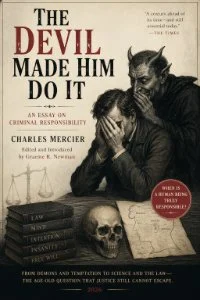
The Devil Made Him Do It

A Forgotten Classic of Criminological Thought—Reintroduced for the Twenty-First Century

Originally published in 1918 and now carefully edited and introduced by Graeme R. Newman, The Criminology of Crime and Criminals: Medical, Biological and Psychological restores Charles Mercier’s groundbreaking exploration of crime, punishment, criminal behavior, and social order.

Long before modern criminology embraced concepts such as situational crime prevention, environmental opportunity, offender decision-making, and restorative justice, Mercier argued that crime cannot be explained by biology, psychology, or environment alone. Instead, criminal behavior emerges from the interaction between human nature and circumstance, between personal disposition and criminal opportunity.

Rejecting the popular theories of his day, Mercier challenges the notion of the “born criminal” and dismisses simplistic environmental explanations of lawbreaking. His provocative and highly original analysis examines:

  • The psychological foundations of criminal conduct

  • The roles of instinct, reason, desire, self-control, and will

  • How opportunity and temptation shape criminal action

  • The classification of crimes and criminals

  • The relationship between crime, morality, and society

  • The purposes of punishment: deterrence, retaliation, reform, and reparation

  • The prevention, detection, and punishment of crime

Mercier’s central insight—that criminals are not a separate species but ordinary human beings responding differently to circumstances—remains strikingly relevant more than a century later.

Graeme R. Newman’s contemporary introduction places Mercier within the broader history of criminological thought and connects his ideas to modern developments in crime prevention and criminal justice. Together, Mercier and Newman illuminate enduring questions that continue to shape public policy and scholarly debate:

Why do people commit crimes? How should society respond? Is prevention more effective than punishment?

Part intellectual history, part criminological theory, and part social philosophy, this edition offers a fascinating window into the origins of modern criminology and the continuing struggle to understand crime and criminals.

Essential reading for students and scholars of criminology, criminal justice, sociology, psychology, legal history, and anyone interested in the causes of crime and the future of punishment.

Read-Me.Org Inc. New York-Philadelphia-Australia. 2026. 195p.

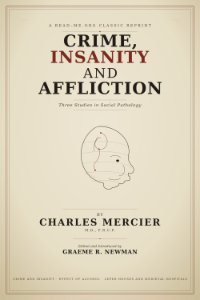
Crime, Insanity And Affliction: Three Studies in Social Pathology

by Graeme Newman (Editor), Charles Mercier (Author)

Why do people commit crime? When does mental illness diminish responsibility? Should punishment always follow wrongdoing?

More than a century before modern debates about criminal responsibility, forensic psychiatry, and the treatment of mentally ill offenders, the distinguished British physician Charles Mercier confronted these enduring questions with remarkable clarity and originality.

In Crime, Insanity and Affliction, Mercier explores the complex relationship between criminal behaviour, mental disorder, and human suffering. Rejecting simplistic explanations, he argues that crime cannot be understood apart from the biological, psychological, and social forces that shape human conduct. His examination ranges from drunkenness, epilepsy, intellectual disability, and mental illness to questions of moral responsibility, punishment, and the proper role of the criminal law.

Although written in the early twentieth century, many of Mercier's observations anticipate debates that continue today. His discussion of diminished responsibility, the treatment of mentally ill offenders, addiction, and the limits of punishment remains surprisingly relevant in an era still struggling to balance justice, compassion, and public safety.

This new Read-Me edition presents Mercier's influential work with a new editorial introduction that places his ideas within the development of modern criminology, forensic psychiatry, and criminal justice. It also examines where Mercier's conclusions have been confirmed, where later research has challenged them, and why his work continues to deserve the attention of students, scholars, and general readers alike.

More than a historical curiosity, Crime, Insanity and Affliction is a thoughtful exploration of one of society's oldest and most difficult questions: how should we judge those whose minds, circumstances, or afflictions place them beyond the ordinary boundaries of responsibility?

Read-Me.Org Inc. New York-Philadelphia-Australia. 2026. 182p.

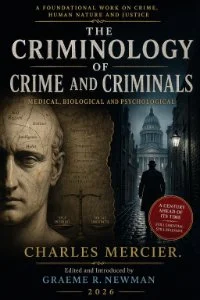
The Criminology Of Crime And Criminals: Medical, Biological And Psychological

A Forgotten Classic of Criminological Thought—Reintroduced for the Twenty-First Century

Originally published in 1918 and now carefully edited and introduced by Graeme R. Newman, The Criminology of Crime and Criminals: Medical, Biological and Psychological restores Charles Mercier’s groundbreaking exploration of crime, punishment, criminal behavior, and social order.

Long before modern criminology embraced concepts such as situational crime prevention, environmental opportunity, offender decision-making, and restorative justice, Mercier argued that crime cannot be explained by biology, psychology, or environment alone. Instead, criminal behavior emerges from the interaction between human nature and circumstance, between personal disposition and criminal opportunity.

Rejecting the popular theories of his day, Mercier challenges the notion of the “born criminal” and dismisses simplistic environmental explanations of lawbreaking. His provocative and highly original analysis examines:

  • The psychological foundations of criminal conduct

  • The roles of instinct, reason, desire, self-control, and will

  • How opportunity and temptation shape criminal action

  • The classification of crimes and criminals

  • The relationship between crime, morality, and society

  • The purposes of punishment: deterrence, retaliation, reform, and reparation

  • The prevention, detection, and punishment of crime

Mercier’s central insight—that criminals are not a separate species but ordinary human beings responding differently to circumstances—remains strikingly relevant more than a century later.

Graeme R. Newman’s contemporary introduction places Mercier within the broader history of criminological thought and connects his ideas to modern developments in crime prevention and criminal justice. Together, Mercier and Newman illuminate enduring questions that continue to shape public policy and scholarly debate:

Why do people commit crimes? How should society respond? Is prevention more effective than punishment?

Part intellectual history, part criminological theory, and part social philosophy, this edition offers a fascinating window into the origins of modern criminology and the continuing struggle to understand crime and criminals.

Essential reading for students and scholars of criminology, criminal justice, sociology, psychology, legal history, and anyone interested in the causes of crime and the future of punishment.

Read-Me.Org Inc. New York-Philadelphia-Australia. 2026. 195p.

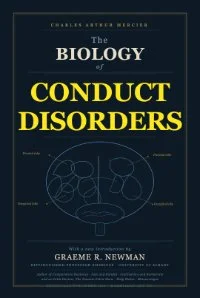
The Biology of Conduct Disorders

The book that criminology forgot — and urgently needs to remember.
Arthur M<ercier (Author). Graeme Newman (Editor and Introduction).

First published in 1918 by the University of London Press, Charles Arthur Mercier's Conduct and Its Disorders, Biologically Considered, published by Macmillan in 1911 is one of the most rigorous, most readable, and most unjustly neglected works in the history of criminological thought. Now reissued as The Biology of Conduct Disorders, with a major critical introduction by Graeme R. Newman, it arrives at a moment when the questions it raises — about criminal intent, biological disposition, the limits of punishment, and the poverty of criminological theory — are more pressing than ever.
Mercier was no armchair theorist. As medical officer of lunatic asylums, consulting physician at criminal trials, and the only systematic student of conduct as a science, he brought to the study of crime a combination of clinical experience and biological rigour that the field had not seen before and has rarely matched since. His target was the prevailing chaos of criminological thought — above all the Continental school of Lombroso, which he dismantled with surgical precision — and his method was the application of praxiology, his own science of conduct, to the specific problem of criminal action.

What Mercier argued — and why it still matters:

  • Every criminal act is the product of two factors: an internal factor (the biological constitution of the offender) and an external factor (circumstance and opportunity). Ignoring either produces not criminology but ideology.

  • The turpitude of the criminal and the gravity of the crime are entirely separate questions — and confusing them has produced centuries of unjust punishment.

  • Punishment should be calibrated to intention, not outcome: the man who intends murder and fails is more culpable than the man who kills by accident, whatever the body count.

  • Statistical criminology — mass data gathered from convicted prisoners — cannot produce a science of crime. Only the study of individual criminal action, grounded in biology, psychology, and jurisprudence together, can do that.

  • Certain acts currently outside the law (stealing the use of a thing; deliberate breach of contract) deserve criminal status; certain acts currently criminalised do not.

This new edition includes a critical introduction by Graeme R. Newman, Distinguished Professor Emeritus at the School of Criminal Justice, University at Albany, and one of the most provocative and original voices in the study of crime, deviance, and punishment. Author of Comparative Deviance: Perception and Law in Six Cultures, The Punishment Response, Just and Painful: A Case for the Corporal Punishment of Criminals, and Civilization and Barbarism: Punishing Criminals in the Twenty-First Century — and, as Colin Heston, of darkly satirical fiction including The Tommie Felon Show, Miscarriages, and Holy Water — Newman brings a unique authority to this text. Writing with the unflinching directness that earned him national television appearances and a reputation as the most uncomfortable conscience in American criminology, he traces the connections between Mercier's 1918 arguments and the debates that have defined — and divided — the field ever since.
"With the exception of logic, there is no subject on which so much nonsense has been written as this of criminality and the criminal." — Charles Arthur Mercier, 1918
Essential reading for students and scholars of criminology, criminal justice, the history of psychiatry, legal theory, and the philosophy of punishment — and for anyone who has ever wondered why, after two centuries of criminal science, we understand so little about why people commit crimes and what we should do about it.

Read-Me.Org Inc. New York-Philadelphia-Australia. 2026. 208p.

Bridging the Immigration Detention Justice Gap

By Jaclyn Kelley-Widmer and  Alisa Whitfield

Immigrants held in United States detention centers experience a de facto denial of their right to access to counsel. The 38,000 immigrants detained each day are largely held in remote facilities, where they experience extremely poor—often abusive—conditions; the inability to contact counsel or prepare their cases; and a legal framework that is stacked against them. Many scholars have studied the overlapping challenges detained immigrants face in a hostile regime and have proposed solutions ranging from ending immigration prison to providing universal representation for all those detained to revising legal rationales for detention. These ideas are good ones. However, as we work towards such goals, tens of thousands remain detained with little recourse. As a partial way to bridge that gap, we argue for a transformative, collaborative model of access to justice that focuses on community empowerment and combines the work of organizers, attorneys, and law students in clinics.

 This article uniquely blends both theory and practical perspectives to advance a theory of abolition-minded provision of legal services in detention. First, we explore the legal right of access to counsel for detained immigrants, with an overview of Constitutional and international human rights models. We then examine the severe barriers to this counsel that immigration detention creates. We then use theories of abolition and legal pedagogy to explore an innovative and critical model for expanding justice in immigration detention. We propose primary goals of increasing access to counsel, empowering communities, and supporting organizing to work towards the end of immigration detention.

 This article was inspired by our experiences representing detained immigrants in a clinical setting, with law students, and in coalition with agencies and organizers working on the ground. Through examples, stories, and even photographs, we weave in insights from this ongoing collaborative project to advance a framework for bridging the immigration detention justice gap.

Cornell Legal Studies Research Paper 25-18, 2024


  Does age matter? Examining seniors’ experiences of romance fraud

By Cassandra Cross  · Thomas J. Holt 

Using the premise of a genuine relationship, romance fraud ofenders deceive victims for monetary gain. Research on romance fraud has grown, but limited work explores the demographic correlates of victimisation. An assumption exists that older persons are more susceptible to fraud, though this dynamic is not consistently evident in the literature. This article analyses 2686 romance fraud complaints to Scamwatch, an online Australian fraud reporting portal, to identify correlates between being 65 years and older and their risk of victimisation. The fndings illustrate that seniors were not more likely to sufer monetary losses to romance fraud and were less likely to lose personal information compared to victims in other demographic groups. This study afrms the challenge of using demographics to predict romance fraud victimisation and emphasises the need for additional research in this area 

  Security Journal (2025) 38:46

Abnormal Man : Volume 2 - Bibliography

By Arthur MacDonald.

The narrative in Volume 1 asks many pointed questions: What does it mean to be “abnormal”? Who decides? And how have these judgments shaped modern science, education, and criminal justice?

First published in 1893, Arthur MacDonald’s Abnormal Man is one of the earliest American attempts to systematically study human difference through the emerging tools of psychology, anthropology, and criminology. Drawing on international research—from European criminal anthropology to American child-study movements—MacDonald sought to classify the physical, mental, and moral traits considered “aberrant” in his era. His work reflects the hopes and anxieties of a society confronting rapid industrialization, immigration, social change, and new scientific approaches to crime and mental health.

To the modern reader, Abnormal Man reveals both the ambition and the pitfalls of nineteenth-century science. Its pages contain pioneering observations about child development, deviance, and social responsibility, alongside early theories—now discredited—about heredity, physiognomy, and race. What emerges is a vivid and sometimes unsettling portrait of a culture striving to understand human variation without the benefit of modern psychology or ethical safeguards.

The Read-Me.org edition Volume 1 presents Abnormal Man as both a historical artifact and a gateway to critical reflection. It illustrates how scientific thought evolves, how cultural bias can shape research, and how early debates about abnormality laid the groundwork for contemporary approaches to mental health, special education, criminology, and social policy. To make such work, much of it controversial then as it is today, minimally believable, requires extensive documentation. The voluminous Bibliography of Abnormal Man reproduced here in Volume 2, contains all that Macdnald referred to within his detailed exposition. To some, his arguments may seem unsupported, or lacking in evidence. But he left no stone untuned as this amazing bibliographical documentation of all relative contemporary research

A foundational text at the crossroads of science and society, Abnormal Man invites readers to explore the origins of modern debates about deviance, diversity, and the boundaries of the “normal.”

Read-Me.Org Inc. New York-Philadelphia-Australia. 2025. 240p.

Abnormal Man : Volume 1 --Digest of Literature

By Arthur MacDonald. Introduction by Graeme R. Newman

What does it mean to be “abnormal”? Who decides? And how have these judgments shaped modern science, education, and criminal justice?

First published in 1893, Arthur MacDonald’s Abnormal Man is one of the earliest American attempts to systematically study human difference through the emerging tools of psychology, anthropology, and criminology. Drawing on international research—from European criminal anthropology to American child-study movements—MacDonald sought to classify the physical, mental, and moral traits considered “aberrant” in his era. His work reflects the hopes and anxieties of a society confronting rapid industrialization, immigration, social change, and new scientific approaches to crime and mental health.

To the modern reader, Abnormal Man reveals both the ambition and the pitfalls of nineteenth-century science. Its pages contain pioneering observations about child development, deviance, and social responsibility, alongside early theories—now discredited—about heredity, physiognomy, and race. What emerges is a vivid and sometimes unsettling portrait of a culture striving to understand human variation without the benefit of modern psychology or ethical safeguards.

This new Read-Me.org edition presents Abnormal Man as both a historical artifact and a gateway to critical reflection. It illustrates how scientific thought evolves, how cultural bias can shape research, and how early debates about abnormality laid the groundwork for contemporary approaches to mental health, special education, criminology, and social policy.

A foundational text at the crossroads of science and society, Abnormal Man invites readers to explore the origins of modern debates about deviance, diversity, and the boundaries of the “normal.”

Read-Me.Org Inc. New York-Philadelphia-Australia. 2025. p.193.

“You Did It to Yourself”: An Exploratory Study of Myths About Gender-Based Technology-Facilitated Violence and Abuse Among Men

By Esteban Morales, Jaigris Hodson, Yimin Chen, Chandell Gosse, Kaitlynn Mendes, George Veletsianos

Gender-based technology-facilitated violence and abuse (GBTFVA) is a common experience for those engaging with digital technologies in their everyday lives. To better understand why GBTFVA persists, it is necessary to understand the false beliefs and cultural narratives that enable and sustain them. Drawing on the literature on rape myths, this paper explores the prevalence of seven gender-based online violence myths among Canadian men. To achieve this, we adapted the Illinois Rape Myth Acceptance (IRMA) (Payne et al., in J Research in Personality 33:27–68, 1999) to assess GBTFVA, and surveyed 1,297 Canadian men between 18 and 30 years old on their GBTFVA beliefs. Our results show that GBTFVA myths and cultural narratives are prevalent across participants, though endorsement levels vary. Four myths were more strongly endorsed: It Wasn’t Really Gender-Based Online Abuse, He Didn’t Mean To, Gender-Based Online Abuse Is a Deviant Event, and She Lied. Overall, these findings help to name and thus begin to address the narratives that sustain and perpetuate gender-based online violence.

Sex Roles (2024) 90:1521–1533 https://doi.org/10.1007/s11199-024-01514-w

Challenges to the veracity and the international comparability of Russian homicide statistics

By: Alexandra Lysova

Homicide statistics are often seen as the most reliable and comparable indicator of violent deaths around the world. However, the analysis of Russian homicide statistics challenges this understanding and suggests that international comparisons of homicide levels can be hazardous. Drawing on an institutionalist perspective on crime statistics, official crime-based homicide statistics in Russia are approached as a social construct, a performance indicator and a tool of governance. The paper discusses several incentives to misrepresent official homicide data in contemporary Russia, including politicization of homicide statistics as a legacy of the Soviet’ era’s falsified crime statistics and the role of policing. Mainly, the paper identifies and describes the exact legal, statistical and country-specific substantive mechanisms that allow homicide statistics to be distorted in Russia. By considering legal mechanisms alone, the more accurate homicide rate may be at least 1.6 times higher than that reported in the United Nations Office on Drugs and Crime Global Study on Homicide 2013.

European Journal of Criminology 1 –21

AN INVESTIGATION OF THE PREVALENCE, RESPONSE TO, AND REPRESENTATION OF MALE RAPE

By Joanna Jamel

The aim of this thesis is to examine the under-researched subject of male rape from a social constructionist perspective across a variety of contexts. First, the three studies which were conducted are contextualised by providing a critical review of the available literature on male rape; from the embryonic stages of male rape research within penal institutions through to its evolution from clinical to community-based studies. Second, the findings of the study on the specialist police response, (particularly that of the Sexual Offences Investigative Technique Officers) to male and female rape victims is explored using a thematic analysis. Few male rape cases were reported to the police but those that were suggested that more training is required about the complexities of male rape in relation to the psychological sequelae; and its impact on the survivors’ masculinity. These factors may influence the male survivor’s behaviour on reporting, and affect the police response received. It was also noted that male and female rape myths were pervasive in the police responses and influenced survivors’ decision to report. Third, the incidence of client-perpetrated rape of male sex workers is investigated by employing an adapted form of grounded theory. It was found that in contrast with female sex work, sexual violence within the commercial male sex industry is reported to be rare. Fourth, whether the print media provided a gender-biased representation of rape victims as identified by the journalistic tone and the influence of the gender of the journalist and/or rape victim were investigated. It was found that contrary to the historical myth-laden and victim-blaming portrayal of female rape victims in the press (circa thirty years ago which would parallel the current time frame regarding the awareness of male rape), a sympathetic tone is evidenced in the male rape cases reported.

University of Leicester, November 2008

Criminal record and employability in Ghana: A vignette experimental study

ByThomas D. Akoensi, Justice Tankebe

Using an experimental vignette design, the study inves-tigates the effects of criminal records on the hiring deci-sions of a convenience sample of 221 human resource(HR) managers in Ghana. The HR managers were ran-domly assigned to read one of four vignettes depicting job seekers of different genders and criminal records:male with and without criminal record, female with and without criminal record. The evidence shows that a criminal record reduces employment opportunities for female offenders but not for their male counter-parts. Additionally, HR managers are willing to offer interviews to job applicants, irrespective of their crim-inal records, if they expect other managers to hire ex-convicts. The implications of these findings are dis-cussed.

The Howard Journal of Crime and Justice, online first, May 2024

Determining economic factors for sex trafficking in the United States using count time series regression

By Yuhyeong Jang1 ·Raanju R. Sundararajan1 ·Wagner Barreto-Souza2 · Elizabeth Wheaton-Paramo

The article presents a robust quantitative approach for determining significant economic factors for sex trafficking in the United States. The aim is to study monthly counts of sex trafficking-related convictions and use a wide range of economic variables as covariates to investigate their effect on conviction counts. A count time series model is considered along with a regression setup to include economic time series as covariates (economic factors) to explain the counts on sex trafficking-related convictions. The statistical significance of these economic factors is investigated, and the significant factors are ranked based on appropriate model selection methods. The inclusion of time-lagged versions of the economic factor time series in the regression model is also explored. The authors’ findings indicate that economic factors relating to immigration policy, consumer price index and labor market regulations are the most significant in explaining sex trafficking convictions

Empirical Economics. 2024, 18pg

Get a Job: Labor Markets, Economic Opportunity, and Crime

By Robert D. Crutchfield 

Are the unemployed more likely to commit crimes? Does having a job make one less likely to commit a crime? Criminologists have found that individuals who are marginalized from the labor market are more likely to commit crimes, and communities with more members who are marginal to the labor market have higher rates of crime. Yet, as Robert Crutchfield explains, contrary to popular expectations, unemployment has been found to be an inconsistent predictor of either individual criminality or collective crime rates. In Get a Job, Crutchfield offers a carefully nuanced understanding of the links among work, unemployment, and crime.

Crutchfield explains how people’s positioning in the labor market affects their participation in all kinds of crimes, from violent acts to profit-motivated offenses such as theft and drug trafficking. Crutchfield also draws on his first-hand knowledge of growing up in a poor, black neighborhood in Pittsburgh and later working on the streets as a parole officer, enabling him to develop a more complete understanding of how work and crime are related and both contribute to, and are a result of, social inequalities and disadvantage. Well-researched and informative, Get a Job tells a powerful story of one of the most troubling side effects of economic disparities in America.

New York; London: NYU Press, 2014. 303p.

The Future of Crime in Chicago and the Impact of Reducing the Prison Population on Crime Rates

By Richard Rosenfeld, James Austin

This report examines the effects of a small set of factors on violent and property crime rates in Chicago. The authors find that a statistical model based on the Illinois imprisonment rate and a measure of the cost of living explained past variation in crime rates with minimal error.  The authors then used the model to forecast crime rates through 2025. Both violent and property crime are forecast to drop through 2025. In addition, the report finds that were Illinois to reduce its imprisonment rate by 25%, the effect on Chicago’s rate of violent crime would be negligible. No association was found between imprisonment rates and property crime. 

New York: Harry Frank Guggenheim Foundation. 2023, 20pg

The Future of Crime in Los Angeles and the Impact of Reducing the Prison Population on Crime Rates

By Richard Rosenfeld, James Austin

In this report, the authors devised statistical models to “predict” past yearly changes in Los Angeles’s rates of violent and property crime from the early 1960s through 2021, employing a very small set of predictive variables known to be associated with levels of crime. The yearly changes projected for those years corresponded quite closely to the actual changes. The authors then used the models to forecast crime trends through 2026. Violent crime is forecast to decline through 2026, while property crime is expected to rise modestly in the same period. The analysis also finds that if California imprisonment rates were reduced by 20%, the effect on crime in Los Angeles would be minimal.

New York: Harry Frank Guggenheim Foundation. 2023, 21pg

Nashville Longitudinal Study of Youth Safety and Wellbeing

By Maury Nation

The author reports on the motivation for developing and performing the Nashville Longitudinal Study of Youth Safety and Wellbeing (NLSYSW) as well as the project’s activities and outcomes, and resulting artifacts. The work of the NLSYSW was organized into working groups corresponding to the principal required tasks to develop the multi-sectoral dataset. The four data collection working groups focused on the following: Metropolitan Nashville Public Schools (MNPS) administrative data; MNPS survey data; contextual data; and youth mapping data. Two data management working groups focused on data anonymization and data archiving. The report describes the major tasks of each working group, the impact of the Covid-19 pandemic disruptions, and NLSYSW outputs and artifacts. The major output of the study was a compilation of multiple data sources with over two million observations and 450 variables; the report provides a list of data sources with the years of data included and a short description of each data set, and directs readers to the user guide and codebook sections for complete details.

Nashville, TN: Vanderbilt University, 2023. 167p.

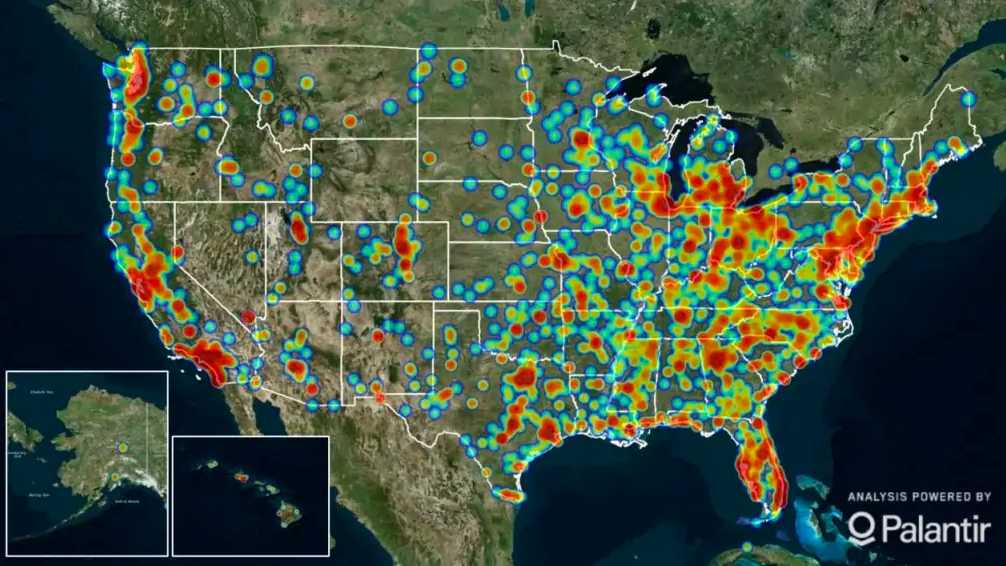
Examining a Dataset on Gun Shows in the U.S

By David Pérez Esparza, Eugenio Weigend Vargas, Tony Payan and Carlos Pérez Ricart

Gun shows are public gatherings where licensed gun dealers and private gun owners use formal and informal venues to exchange information or sell and buy firearms, accessories, and ammunition. A major challenge is that gun shows, unlike established business locations, can be considered gray zones where regulatory loopholes facilitate the movement of legal firearms to illegal domains both domestically and internationally. Given this, they tend to feed into gun trafficking schemes. Despite this, gun shows are poorly monitored. Moreover, these events are not tracked by the Bureau of Alcohol, Tobacco, Firearms and Explosives (ATF) and what little is known comes from academic studies, press releases, or outdated ATF reports. To address this gap, update information, and generate a better understanding of how gun shows connect with gun trafficking, we generated a gun show dataset in the US from 2011 to 2019. We compiled information on promoted gun shows from three main sources, The National Rifle Association Magazine and the websites Gun Show Trader and Shooting Illustrator. We completed our dataset by looking at other minor sources that promoted gun shows. Our dataset encompasses information of 20,691 gun shows and suggests that 71% of them occurred in states where background checks were not required during gun sales between private individuals. We argue that scholars and practitioners will find in this dataset an original tool to analyze gun shows and their impact on public security and public health.

  Journal of Illicit Economies and Development. 2022, 11pg