Open Access Publisher and Free Library
CRIME+CRIMINOLOGY.jpeg

CRIME

Violent-Non-Violent-Cyber-Global-Organized-Environmental-Policing-Crime Prevention-Victimization

Posts in Violence & Oppression
Intergenerational transmission of criminal and violent behaviour

By Sytske Besemer.

The apple doesn't fall far from the tree', 'Like father like son', 'Chip off the old block'. All these idioms seem to suggest that offspring resemble their parents and this also applies to criminal behaviour. This dissertation investigates mechanisms that might explain why children with criminal parents have a higher risk of committing crime. Several explanations for this intergenerational transmission have been contrasted, such as social learning (imitation of behaviour), official bias against certain families, and transmission of risk factors. Sytske Besemer investigated this in England as well as in the Netherlands. She answers questions such as: does it matter when the parents committed crime in the child's life? Do more persistent offenders transmit crime more than sporadic offenders? Do violent offenders specifically transmit violent behaviour or general crime to their children? Might the police and courts be biased against certain families? Could a deprived environment explain why parents as well as children show criminal behaviour? Does parental imprisonment pose an extra risk? This dissertation is the first study to specifically investigate these mechanisms of intergenerational continuity. The study is scientifically relevant because of its breadth, integration of conviction data as well as data on self-reported offending and environmental risk factors, its comparative design and the long periods over which transmission is investigated. Furthermore, the dissertation has important policy implications. It demonstrates how penal policy designed to reduce criminal behaviour might actually increase this behaviour in the next generation. This is especially important since Western countries such as the United Kingdom and the Netherlands show an increasing trend towards more punitive policies.

Leiden: Sidestone Press, 2012. 198p.

download
Nordic Homicide in Deep Time

By Janne Kivivuori • Mona Rautelin Jeppe Büchert Netterstrøm • Dag Lindström Guðbjörg S. Bergsdóttir • Jónas O. Jónasson Martti Lehti • Sven Granath Mikkel M. Okholm • Petri Karonen.

Lethal Violence in the Early Modern Era and Present Times. Nordic Homicide in Deep Time draws a unique and detailed picture of developments in human interpersonal violence and presents new findings on rates, patterns, and long-term changes in lethal violence in the Nordics. Conducted by an interdisciplinary team of criminologists and historians, the book analyses homicide and lethal violence in northern Europe in two eras – the 17th century and early 21st century. Similar and continuous societal structures, cultural patterns, and legal cultures allow for long-term and comparative homicide research in the Nordic context. Reflecting human universals and stable motives, such as revenge, jealousy, honour, and material conflicts, homicide as a form of human behaviour enables long-duration comparison. By describing the rates and patterns of homicide during these two eras, the authors unveil continuity and change in human violence. Helsinki:

Helsinki University Press, 2022. 378p.

download
Global Report on Crime and Justice

Edited by Graeme R. Newman

This groundbreaking work reviews the global situation of crime and justice around the world. Volume 1 includes: 1. Data sources;. 2. Experience of crime and justice. 3. Bringing to Justice. 4. Punishment. 5. Resources in criminal justice. 6. Firearm abuse and regulation. 7. Drugs and drug control.

United Nations and Oxford. 1999.

download part 1
download part 2
InternatIonal approaches to rape

Edited by Nicole Westmarland and Geetanjali Gangoli

This book gives an overview of the socio-legal and political approaches taken in relation to rape across nine countries worldwide. It is written at a time in which many governments have begun to take rape more seriously than in the past and have started to implement wide-ranging reforms.This is therefore an ideal time to describe what that range of reforms has been, and to assess the degree to which they have been successful. In this introductory chapter, we briefly introduce ourselves and the chapters that follow, while pulling out some of the themes that cut across the chapters.

Bristol University Press. (2012). 248 pages.

download
Moral Economies Of Corruption

By Steven Pierce.

State Formation & Political Culture in Nigeria. “The messages are familiar to almost anyone with an e-mail account. During the early 2000s they became an international punch line. Often purporting to come from the relative of a Nigerian government official, they requested the recipient’s help to transfer vast sums of money out of the country. In return for this assistance, the recipient would receive a significant percentage of the funds being transferred. Usually unsaid was that the money had been acquired corruptly and that the sender needed help in avoiding the attention of law enforcement.”

Duke University Press (2016) 305p.

download
Domestic violence and sexuality

By Catherine Donovan and Marianne Hester.

What’s love got to do with it? “As the book is largely about experiences of individuals in same sex relationships, the focus is mainly on those identifying as lesbian and gay men. However, we are also able to move beyond the limitations of looking only at lesbian, gay male or heterosexual experiences of DVA to make comparisons between these groups.”

Policy Press (2014) 260p.

download
Femicide Across Europe

Edited by: Shalva Weil Consuelo Corradi Marceline Naudi.

Theory, research and prevention. “Femicide is the intentional killing of women and girls because of their gender. Femicides are usually perpetrated by intimate partners (for example, husbands or boyfriends) or family members (for example, fathers, brothers or cousins), who are usually familiar males; on rare occasions the perpetrators can be women, either lesbian partners or kin. A global study of homicides carried out by the United Nations Office on Drugs and Crime (UNODC) in 2012 showed that 79% of all homicide victims were male. The global average male homicide rate was, at 9.7 per 100,000, almost four times the global average female rate.”

Policy Press (2018) 201p.

download
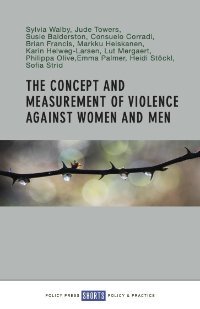
The Concept And Measurement Of Violence Against Women And Men

By Sylvia Walby, Jude Towers, Susie Balderston, Consuelo Corradi, Brian Francis, Markku Heiskanen, Karin Helweg-Larsen, Lut Mergaert, Philippa Olive, Emma Palmer, Heidi Stöckl and Sofia Strid.

“Lethal violence is enormous. There are nearly half a million (437,000) intentional homicides globally each year. Lethal violence is gendered. Globally, 95% of perpetrators of intentional homicide are male. Every year, intimate partners or family members perpetrate nearly 64,000 intentional homicides; two thirds of victims are female. Half the intentional homicides of women are perpetrated by an intimate partner or other family members, compared to 6% of intentional homicides of men.“

Policy Press (2017) 193 pages.

download
White-Collar Crime in the Shadow Economy

By Petter Gottschalk and Lars Gunnesdal.

Lack of Detection, Investigation and Conviction Compared to Social Security Fraud . Examines the magnitude, causes of, and reactions to white-collar crime, based on the theories and research of those who have uncovered various forms of white-collar crime. It argues that the offenders who are convicted represent only ‘the tip of the iceberg’ of a much greater problem: because white-collar crime is forced to compete with other kinds of financial crime like social security fraud for police resources and so receives less attention and fewer investigations. Gottschalk and Gunnesdal also offer insights into estimation techniques for the shadow economy, in an attempt to comprehend the size of the problem. Holding broad appeal for academics, practitioners in public administration, and government agencies, this innovative study serves as a timely starting point for examining the lack of investigation, detection, and conviction of powerful white-collar criminals.

Palgrave Macmillan. (2018 ) 151p.

download
Refining Child Pornography Law

Edited by Carissa Byrne Hessick.

The legal definition of child pornography is, at best, unclear. In part because of this ambiguity and in part because of the nature of the crime itself, the prosecution and sentencing of perpetrators, the protection of and restitution for victims, and the means for preventing repeat offenses are deeply controversial. In Refining Child Pornography Law, experts in law, sociology, and social work examine child pornography law and its consequences in an effort to clarify the questions and begin to formulate answers. Focusing on the roles of language and crime definition, the contributors discuss the increasing visibility child pornography plays in the national conversation about child safety, and present a range of views regarding the punishment of those who produce, distribute, and possess materials that may be considered child pornography.

Michigan University Press. 2016. 200p.

download
The Wild East

Edited by Barbara Harriss-White and Lucia Michelutti.

Criminal Political Economies in South Asia. The Wild East bridges political economy and anthropology to examine a variety of il/legal economic sectors and businesses such as red sanders, coal, fire, oil, sand, air spectrum, land, water, real estate, procurement and industrial labour. The 11 case studies, based across India, Pakistan and Bangladesh, explore how state regulative law is often ignored and/or selectively manipulated. The emerging collective narrative shows the workings of regulated criminal economic systems where criminal formations, politicians, police, judges and bureaucrats are deeply intertwined.

London. UCL Press. 2019.

download
A Primer in the Psychology of Crime

By S.
 Giora
 Shoham and Mark
 Seis.

First published back in the 1980s, there's still nothing like this book anywhere. Provides a balanced, innovative account of the psychology of crime, drawing on current and past scientific research and philosophies. CONTENTS: 1. Perspectives, Defining Crime, and Theoretical Evaluation. 2. Psychoanalytic Theory. 3.Trait Perspectives. 4. Behavioral, Situational And Social Learning Perspectives. 5. Cognitive Learning Perspectives. 6. Existential and Phenomenological Perspectives. 7. References. RECOMMENDED: Excellent text for upper division undergraduate classes, or beginning graduate classes. Strongly recommended as a substitute for those expensive, superficial introductory textbooks! As we noted above, there is NO text that covers as carefully as this one does, the psychology of crime literature. It's as relevant today as it was a couple of decades ago.

NY. Harrow and Heston Publishers. 2012.

download
A Primer in the Sociology of Crime

By S. Giora Shoham and John Hoffman.

With depth, clarity and erudition, this primer covers all the classic theory and research on the sociology of crime. CONTENTS: 1. Criminology and Social Deviance. 2. Theoretical and Methodological Issues in Criminology. 3. Ecological Theories of Crime and Delinquency. 4. Anomie and Social Deviance: Strain Theories. 5. Differential Association and its Progeny. 6. Control Theories of Crime and Delinquency. 7. Social Reaction to Crime: Stigma and Interaction. 8. Conflict and Radical Perspectives on Crime. 9. Recent Developments in the Sociology of Crime. References. RECOMMENDED: Excellent text for upper division undergraduate classes, or beginning graduate classes. Strongly recommended as a substitute for those expensive, superficial introductory textbooks!

NY. Harrow and Heston Publishers. 2012.

download
Corporate Crime Corporate Violence, 3rd edition

By Michael J. Lynch.

A revised and extended edition of the popular Crimes Against Health and Safety, this classic dissects the popular myths promoted by traditional criminology, uncovers who the real criminals are, and the extent of their dreadful crimes. The authors have written a new Introduction specially for this Kindle edition. CONTENTS: 1.Quiet Violence. 2.Corporate Crime: Definition and History. 3.Calling a Crime a Crime. 4.Conventional Laws for Unconventional Crimes. 5.Regulating Health and Safety. 6.Green Criminology: Corporate Violence and the Environment. 7.Explaining Corporate Violence. 9.Restructuring Risk Decision-making.References.

RECOMMENDED: If you're fed up with white collar crime, corporate arrogance and greed, then this book is for you. Makes a provocative text for upper division undergraduate courses on the Nature of Crime and its Control. Never fails to stimulate animated discussion in graduate classes.

NY. Harrow and Heston Publishers. 2014. 212p.

download
Confronting Child Sex Abuse

By Ann M. Nurse.

Knowledge to Action . This book describes the forces that shape our views of victims and offenders, while also providing an in-depth look at prevention efforts and current research. Topics include the prevalence of abuse, the impact of abuse on victims and families, offender characteristics, abuse in institutions, and the efficacy of treatments. Nurse’s book offers new public policy ideas as well as practical suggestions on how to engage in prevention work. Interactive links to studies, videos, and podcasts connect readers to further resources.

Lever Press (2020) 319 pages.

download
Animal Abuse as a Strategy of Coercive Control

By Mary Wakeham.

This study adopts a feminist methodology to explore the coexistence of animal abuse and domestic abuse. This study builds on the growing body of research in this area that to date has largely been situated in the US, Canada and Australia to provide new knowledge. There were three phases of data collection in this research which included a national online survey, semi-structured interviews with victim-survivors of domestic violence and abuse and interviews with professionals.

The research findings provide compelling evidence that animal abuse is a strategy of coercive control and an act of animal cruelty. The oppression of women, children and animals are intertwined in patriarchal systems, and nowhere is this interconnection more apparent than in the co-occurrence of animal abuse and domestic violence and abuse. A human-centric approach dominates definitions and the prevailing public story about domestic violence and abuse across society. This conceptualisation focuses on the human victim-survivor in isolation but undermines the status of the animal and the importance of the animal in the dynamics of abuse. We need to extend our construction of domestic violence and abuse to include animals as victim-survivors. Animals are the silent victim- survivors of domestic violence and abuse.

The oppression of animals is compounded by the dominant status of animals in society as ‘less important’ than human beings and ‘property’ that is ‘owned’ by humans. This conceptualisation of animals is underpinned by animal welfare legislation in the UK that provides a platform for perpetrators of domestic abuse who abuse animals to justify and continue the abuse of animals often with little consequence or challenge. This research highlights the many parallels between the abuse of animals and people in the context of domestic abuse and the implications of the abuse for all victim-survivors – humans and animals.

Bristol, UK: University of Bristol, 2021. 261p.

download
Journeys to freedom? Post-rescue ethnography of bonded labourers and sex workers in India

By Pankhuri Agarwal.

Working with a simplistic notion of release from bondage as “freedom”, mainstream anti-trafficking activists focus on rescue. They argue that victims of trafficking are “free” once removed from their employers. Critics contest this approach and argue that significantly less attention is paid to the role of the state and the NGOs in producing conditions due to which people remain vulnerable. This research lends empirical support to this critical position through a multi-sited ethnography of informal migrant workers, sex workers, and law enforcement officers, traversing through courtrooms, police stations, district welfare offices, worksites, shelter homes, and offices of NGOs, in New Delhi, India. It corroborates that the authority of law is compromised ‘on ground’ and is actively negotiated within the legal space of anti-trafficking efforts. Instead of being instantly transported to “freedom”, the workers end up in protracted legal proceedings, ranging two to thirty-seven years, to seek justice and rights. Their rights are neglected due to a Kafkaesque bureaucracy. Their mobility is restricted due to improper documentation. Their suffering is intensified through an evasive legal system. The result – arbitrary, unjust legal outcomes after an endless wait and dependence on intermediaries. In fact, their journey through the system, with cost and time overruns, has no direct or precise chronology, and often moves in a circle rather than reaching an end. The workers resemble the class of people that Denise Ferreira da Silva (2009) describes as “nobodies”. They continue to struggle to achieve the rights and recognition that would allow them to escape this status. The combination of empirical data, doctrinal analysis, and socio-legal theory in this research provide an insight on the harm and limits of the anti-trafficking discourse with reference to India.

Bristol, UK: University of Bristol, 2021. 233p.

download
Inside War. Understanding the Evolution of Organised Violence in the Global Era

By Fabio Armao.

The post-Cold War era was characterised by both the recurrence of state wars and the spread of forms of organised violence other than wars. Asymmetric warfare between alliances led by the USA and groups of insurgents, such as those witnessed in Afghanistan and Iraq, coexist alongside domestic conflicts, such as that of former Yugoslavia and, more recently, Libya and Syria; and still other conflicts involving gangs, mafias or narco-traffickers. The massive military-industrial complexes conceived in the context of the threat of nuclear Armageddon are still there of course, but they now coexist with irregular armies of insurgents carrying out massacres through the use of light weapons and improvised explosives devices. This book oppose the idea that this situation prefigures the return to an anarchical, pre-political condition, by assuming that new wars are rather the product of the blurring of the public-private divide, induced by the end of the Cold War, together with globalisation. As a consequence, also the internal and external factors are blurred; and ever more permeable and elusive is becoming even the border between war and crime. Inside War goes beyond a state-centered analysis and adopts an interdisciplinary and multilayered approach, and is intended to foster the dialogue among researchers from different fields. It places war at the core of analysis, assuming that the reality of war is what we make of it; and that the only insurmountable limit to our comprehension of war is our way of knowing and representing it. Fabio Armao teaches courses in Politics and Globalisation Processes, and Criminal Systems. He has been Visiting Professor at Cornell University, and co-convenor of the Standing Group on Organized Crime, European Consortium for Political Research. Founding member of T.wai (Torino World Affair Institute), he is also member of the Editorial Board of ‘Global Crime’. His research interests and publications focus on international wars and geopolitics, on violent non-state actors and transnational organised crime, and on urban security.

Warsaw, Poland: deGruyter, 2015. 224p.

download
Not just a victim: the child as catalyst and witness of contemporary Africa

Edited by Sandra J.T.M. Evers, Catrien Notermans and Erik van Ommering.

“Children should be seen, and not heard. The above maxim, though representing a Victorian value, was commonly pronounced in family homes up until a half century ago. It is based on the principle that a well-behaved child is a child who does not bother adults or disrupt their conversations. While such approaches have evolved considerably since then, in mainstream social science theory, children’s voices usually are not heard. Wallowing as it were in a phase of innocence, immaturity and dependence on adult care and protection, children continue to be largely deemed unfit as sources of scientific inquiry.”

Leiden. Koninklijke Brill NV, Leiden, The Netherlands.

download
Money and Violence: financial self-help groups in a South African township

By E.. Bähre.

From the eighties onward, when apartheid was crumbling, more and more Africans migrated to Cape Town, South Africa. They did not leave their homes in the Eastern Cape because they liked the city like the many tourists who, not unlike the Dutch East India Company of the colonial past, enjoy its revitalising qualities. To the Xhosa migrants Cape Town was, and still is, a hostile city. People fear murder, rape, and theft. They do not know their neighbours and friends are scarce. They have no family there, either living or dead, and racist attitudes are ever present. The Xhosa migrants have only one motivation for plunging themselves into the unknown and hostile squatter camps of Cape Town and that is money. This ethnography concerns the way in which Xhosa migrants in the townships of Cape Town collectively manage their money in financial self-help groups, also known as financial mutuals.1 The migrants organise a myriad of groups in which the participants collectively save, borrow, lend, or use their hard-earned money to form insurances. Some mutuals consisted of only a few neighbours who met each month at a member’s home, with each giving about R200 to the host member until all members had had a turn. Other mutuals were complex arrangements where members saved money together, mostly for Christmas, but also issued loans to each other. There were also many insurance arrangements involving up to a couple of hundred members that made sure that money was available to attend the funeral of a relative back home, or to prevent a burial in Cape Town itself. One could join a group voluntarily and the social constraint of fellow members would make sure that not all the money would be spent but would be used for the contribution to the financial mutual.

Leiden/Boston: Brill Academic Publisher, 2007. 205p.

download