Open Access Free Library
CRIME+CRIMINOLOGY.jpeg

CRIME

Violent-Non-Violent-Cyber-Global-Organized-Environmental-Policing-Crime Prevention-Victimization

Posts in Violence & Oppression
Recruitment into Organised Criminal Groups: A Systematic Review

By Francesco Calderoni, Gian Maria Campedelli, Tommaso Comunale, Martina E Marchesi and Ernesto U Savona

This paper provides a narrative synthesis of the results of a systematic review of the social, psychological and economic factors leading to recruitment into organised crime.This is based on the analysis of evidence emerging from 47 qualitative, quantitative and mixed-method studies published in or before 2017.While the selected studies varied markedly in method and quality, several factors emerged as particularly important in understanding recruitment into organised criminal groups. These included the role of social relations (family, kinship, friendship and work-relations), criminal background and criminal skills.

Canberra: Australian Institute of Criminology, 2021. 28p.

Women in the Islamic State: Victimization, Support, Collaboration, and Acquiescence

By Devorah Margolin and Charlie Winter

This paper examines the Islamic State’s treatment of, and engagement with, women who lived under its control between 2014 and 2017. Focusing on both ‘in-group’ and ‘out-group’ women, this paper creates a framework for understanding the diverse day-to-day lives of women in the caliphate. This research explores the Islamic State’s implementation of an elaborate theological legislative gendered system of control in Iraq and Syria that sought to penetrate society, regulate social relationships, extract resources from local populations, and appropriate those resources for their own gain. This system of control was a product of the group’s efforts to address a dilemma faced by many ideologically-driven rebel governing actors like the Islamic State – a constant balancing act between the ideology that drives the group in question, and the pragmatic issues that govern the actual application of its ideology. Drawing on hundreds of Islamic State administrative documents, this paper shows the interplay between ideology and pragmatism in the group’s administrative approach, shaping its engagement with both in-group and out-group women to perpetuate its doctrine and entrench its rule.

Washington, DC: George Washington University, Program on Extremism, 2021. 54p.

Proud Boys Crimes and Characteristics

By Michael Jensen, Elizabeth Yates and Sheehan Kane.

The Proud Boys were formed by Gavin McInnes, co-founder of Vice Media, in 2016 during the U.S. presidential election. Proud Boys consider themselves “Western chauvinists” who romanticize a traditional, male-dominated version of Western culture. While the Proud Boys vehemently deny adhering to a racist ideology, the organization is deeply rooted in white nationalism and misogyny. As of December 31, 2021, 83 Proud Boys members and sympathizers have allegedly carried out ideologically motivated crimes in the United States. This number includes 54 Proud Boys defendants who participated in the Capitol breach on January 6, 2021. Proud Boys defendants have come from 25 states and the District of Columbia, including 14 from Florida, 14 from New York, 7 from Washington, and 6 from Pennsylvania. Using auxiliary data from the Profiles of Individual Radicalization in the United States (PIRUS) project, these infographics provide information on the characteristics of U.S. Proud Boys defendants and their crimes.

College Park, MD: START, 2022. 3p.

Burglars on the Job: Streetlife and Residential Break-ins

By Richard T. Wright, Scott H. Decker and Gilbert Geis

Through extensive and candid interviews, the authors of this ground-breaking work have studied burglars' decision-making processes within the context of their streetlife culture. In this volume they present their findings in the areas of motivation, target selection, methods of entering and searching a residence, and methods of selling stolen goods, concluding with a discussion of the theoretical implications of their research.

Boston: Northeastern University Press, 1996. 248p.

Burglary

By Rob Mawby

Burglary has all the credentials as the 'folk crime of the new millennium', and is regularly identified as one of the crimes most feared by the public. Victims are particularly affected by burglary, and burglary is generally at the centre of crime prevention and community safety strategies. This book provides an accessible, systematic account of burglary, focusing on the problem of crime in the first main part of the book, and on policy responses in the second. This book identifies the particular characteristics of burglary as a crime, drawing upon an extensive range of research in both the UK

Cullompton, Devon, UK: Willan, 2001. 224p.

Violence in the City of Women: Police and Batterers In Bahia, Brazil

By Sarah J. Hautzinger

Brazil's innovative all-female police stations, installed as part of the return to civilian rule in the 1980s, mark the country's first effort to police domestic violence against women. Sarah J. Hautzinger's vividly detailed, accessibly written study explores this phenomenon as a window onto the shifting relationship between violence and gendered power struggles in the city of Salvador da Bahia. Hautzinger brings together distinct voices--unexpectedly macho policewomen, the battered women they are charged with defending, indomitable Bahian women who disdain female victims, and men who grapple with changing pressures related to masculinity and honor. What emerges is a view of Brazil's policing experiment as a pioneering, and potentially radical, response to demands of the women's movement to build feminism into the state in a society fundamentally shaped by gender.

Berkeley: University of California Press, 2007. 366p.

Gangster States: Organized Crime, Kleptocracy and Political Collapse

By Katherine Hirschfeld

Gangsterism, extortion and racketeering are currently viewed as deviant, pathological behaviors that are disconnected from formal political and economic structures, and often excluded from analysis in the fields of political science and economics. A critical reconsideration of organized crime reveals that the evolution of racketeering in systems of exchange should be understood as a natural phenomenon that can be predicted with tools from behavioral ecology originally developed to model the dynamics of predator-prey relations. These models predict the conditions under which unregulated markets evolve into hierarchical criminal syndicates, and how established organized crime groups expand and intrude into formal systems of government, creating chimeric 'gangster-states'. This book outlines the parameters of this process, and uses archival research to explore case studies of organized crime and kleptocratic state formation. A final section proposes redefining state formation as part of a longitudinal cycle of political-economic evolution that includes phases of racketeering, instability, collapse and regeneration.

Basingstoke, Hampshire, UK; New York:: Palgrave Macmillan, 2015. 176p.

The Breaking Point: Uncovering South Africa’s Shameful Live Wildlife Trade with China

By EMS Foundation and Ban Animal Trading

The wild animals within the borders of South Africa are part of the heritage of every South African and we have the right to demand that our government protects wild animals against exploitation and to demand accountability from government as to what it does in this regard. Government is empowered by a cogent body of laws to perform this function and it is obliged to do so by international treaties. It is urgently necessary for government to comply with its responsibilities not only because of the ethical, moral and legal compunction to do so but also because the export of our wild animals for the financial gain of a few has become big business.

South Africa has become the largest exporter of live wild animals to Asia, where many wild animals are killed to extract potions from their carcases and are eaten as delicacies. Some are sent to languish in atrocious zoos. Some are inserted into the murky world of the illegal wildlife trade. The reality is that the South African government fails to apply its strong regulatory powers and by design or neglect allows strikingly large numbers of animals to be exported.

South Africa: EMS Foundation and Ban Animal Trading, 2020. 123p.

Plundered: South Africa’s Cold-Blooded International Reptile Trade

By Ban Animal Trading and EMS Foundation

The international trade in the majority of reptiles, amphibians and arachnids is mostly unregulated, often unlawful and a growing industry in South Africa. Data on the trade in these species is unreliable and insufficient, because most countries do not keep records or compile data unless the species is listed on the CITES Appendices. Even then the data is incomplete. One reason for this is that, unlike so-called charismatic species such as lions, elephants, tigers and primates―perceived to have higher intrinsic value―reptiles, including species such as snakes, lizards, turtles, tortoises, alligators and crocodiles are, in terms of public perception, and often because of the negative stereotypes attached to them, considered less desirable creatures, lack the charismatic appeal of anthropomorphic species and consequently they are afforded less attention.

South Africa: Ban Animal Trade and EMS Foundation, 2020. 94p.

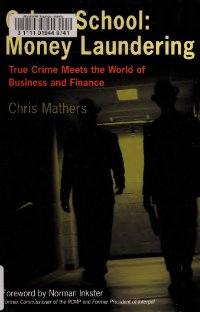
Crime School: Money Laundering: True Crime Meets the World of Business and Finance

By Chris Mathers

In Crime School: Money Laundering, a twenty-year law enforcement veteran of financial crime explains this felony in simple terms. Written anecdotally, the book describes what money laundering is and how the crimes behind it fit together.

Organized criminals operating both domestically and internationally corrupt bankers and subvert national economies through the use of drug money.

This book examines the history of money laundering from ancient times to the cocaine craze of the 1970s to the sophisticated, brutal techniques employed by today's terrorists and organized crime.

Lively and detailed, this book chronicles the stark realities and deadly dynamics of the lynchpin between organized crime and modern terrorism. It's a rare and fascinating look at a deadly world few have ever witnessed and lived to tell the story.

Buffalo, NY: Firefly Books, 2004. 244p.

Explaining White-collar Crime: The Concept of Convenience in Financial Crime Investigations

By Petter Gottschalk

This book introduces 'convenience' as the key concept to explain financial crime by white-collar criminals. Based on a number of fraud examination- reports from the United States and Norway, the book documents empirical evidence of convenience among white-collar criminals. It advances our understanding of white-collar crime by drawing attention to private investigation reports by fraud examiners and financial crime specialists, who are in the growing business of fraud investigations. Reports of investigations have never before been researched in terms of white-collar criminals nor crime convenience. Reports of investigations by auditing and law firms represent a valuable empirical basis – in addition to court documents and other sources of information about financial crime.

Cham: Palgrave Macmillan, 2016, 134p.

White Collar Crime and Risk: Financial Crime, Corruption and the Financial Crisis

Edited by Nic Ryder

This edited collection provides an innovative and detailed analysis of the relationship between the financial crisis, risk and corruption. A large majority of the published research has concentrated on identifying the traditional factors that contributed towards the largest financial crisis since the Wall Street Crash and subsequent Great Depression. This original volume contests this, and provides the alternative view that white collar crime was also an underappreciated, and important factor.

Divided into five parts: bribery and corruption; financial crime; market manipulation; technology and white collar crime; and the financial crisis, and based on contributions by a wide range of experts in the field, this book will be of great interest to policy makers and practitioners, researchers and students alike.

London: Palgrave Macmillan, 2018. 377p.

Crime Script Analysis: Preventing Crimes Against Business

By Harald Haelterman

This book positions script analysis as a useful and pragmatic tool, which can guide the selection and implementation of preventive measures in business environments. It illustrates how the concept aligns with the crime-specific orientation found in environmental criminology, and particularly explores the theoretical foundations of situational crime prevention, the approach to which it is deemed most relevant and supportive.

The volume provides clear guidance on how to apply script analysis in daily practice, covering its main building blocks and key features. These are illustrated by a series of case studies into various crime types. Moving beyond the use of script analysis with the intent to disrupt the crime-commission process, the author further explores the wider benefits of the approach to both academics and practitioners. He identifies what is needed most if we want to embrace the full potential of script analysis for preventive purposes.

London: Palgrave Macmillan, 2016. 262p.

Economic Gangsters: Corruption, Violence, and the Poverty Of Nations

By Raymond Fisman and Edward Miguel

Meet the economic gangster. He’s the United Nations diplomat who double parks his Mercedes on a New York street at rush hour, because the cops can’t touch him-he has diplomatic immunity. He’s the dictator, the warlord, the black marketeers, the unscrupulous bureaucrat who bilks the developing world of billions of aid—and keeps many communities in a cycle of violence and poverty.

We can stop this waste of resources as we follow the foreign aid money trail, and find solutions that can make tremendous difference to the developing world, solutions that can range from cash infusions to diffuse violence in times of drought to guiding the World Bank away from programs most susceptible to corruption. Economic data, often found in unexpected places, can become potent tools in understanding how the global market really works and what is getting in the way of economic progress.

Princeton, NJ: Princeton University Press, 2008. 256p.

Militarised Responses to Transnational Organised Crime: The War on Crime

Edited by Tuesday Reitano, Sasha Jesperson and Lucia Bird Ruiz-Benitez de Lugo

This edited volume examines the use of militarised responses to different forms of criminal activity, discussing the outcomes and unintended consequences. Politicians and policymakers frequently use militarised responses to look tough on crime. The deployment of armies, navies, military assets and militarised approaches can send a powerful message, but have produced mixed results. While they generate the perception that governments are actively engaged on issues of concern to the public, and in some cases have resulted in notable successes, on the downside they have frequently also increased the loss of life, exacerbated the humanitarian consequences of a particular crime and entrenched divides between security and state institutions and the criminal proponents, narrowing the possibilities for future negotiated solutions. By focusing on four different areas of criminality – wildlife crime, piracy, migration and drug trafficking – the book allows context and evidence-based conclusions to be drawn on the strategic value and commonality of responses and their outcomes.

Cham: Springer International Publishing, 2017. 353p

Trafficking in Persons for the Purpose of Organ Removal. Assessment Tool.

By The United Nations Office on Drugs and Crime, Human Trafficking and Migrant Smuggling Section

The present toolkit deals with trafficking in persons for the purpose of organ removal, as defined by the Protocol to Prevent, Suppress and Punish Trafficking in Persons, especially Women and Children, (Trafficking in Persons Protocol), supplementing the United Nations Convention against Transnational Organized Crime (Organized Crime Convention). Terms like ‘organ trafficking’, ‘illegal organ trade’, ‘transplant tourism’, ‘organ purchase’ and others are often used interchangeably with trafficking in persons for the purpose of organ removal, even where they would not refer to the same phenomenon. Any conduct described by such terms will only be within the scope of this toolkit, if it meets the definition provided by the Trafficking in Persons Protocol.

Vienna: United Nations Office on Drugs and Crime, 2015. 149p.

Drugs, Gangs and Vigilantes: How to tackle the new breeds of Mexican armed violence

By Gema Santamaria

This report analyzes the objectives, structures and impact of armed non-state actors in Mexico, focusing on drug-trafficking organizations, street gangs and self-defense forces. The author also examines the pitfalls and lessons learned from the country's past and present strategies to deal with these actors. Finally, she provides an alternative approach to tackling these groups, which suggests the Mexican state should 1) recognize the hybrid character of these groups and prioritize the fight against corruption; 2) focus on protecting affected communities and not on dismantling criminal organizations; 3) work at the local level and focus on the most affected areas; 4) prevent the forced recruitment of youth and immigrants by organized crime; and 5) promote a culture of legality in state institutions and communities.

Oslo: Norwegian Peacebuilding Resource Centre (NOREF), 2014. 9p.

Nonfatal Assaults and Homicides Among Adults Aged ≥60 Years - United States, 2002-2016

By J. E. Logan, Tadesse Haileyesus, Allison Ertl, Whitney L Rostad, andJeffrey H Herbst

Since interpersonal violence was recognized as a public health problem in the 1970s, much attention has focused on preventing violence among young persons and intimate partners (1). Violence directed against older adults (≥60 years) has received less attention, despite the faster growth of this population than that of younger groups (2). Using data from the National Electronic Injury Surveillance System-All Injury Program (NEISS-AIP) and the National Vital Statistics System (NVSS), CDC analyzed rates of nonfatal assaults and homicides against older adults during 2002-2016. Across the 15-year period, the nonfatal assault rate increased 75.4% (from 77.7 to 136.3 per 100,000) among men, and from 2007 to 2016, increased 35.4% (from 43.8 to 59.3) among women. From 2010 to 2016, the homicide rate increased among men by 7.1%, and a 19.3% increase was observed from 2013 to 2016 among men aged 60-69 years. Growth in both the older adult population and the rates of violence against this group, especially among men, suggests an important need for violence prevention strategies (3). Focusing prevention efforts for this population will require improved understanding of magnitude and trends in violence against older adults.

MMWR Morb Mortal Wkly Rep. 2019 Apr 5;68(13):297-302.

The Role of the RCMP During the Indian Residential School System

By Marcel-Eugène LeBeuf

This report is the first complete assessment of the RCMP’s involvement in the Indian Residential School (IRS) system. As the police force of jurisdiction in many areas where Indian Residential Schools were located, the RCMP sought to gain a better understanding of its role during this era. Through researching and publishing this study, the RCMP wishes to document and demonstrate its dedication to the healing and reconciliation process. The contribution of knowledge from a law enforcement and sociological perspective shows the commitment of the RCMP to support the Truth and Reconciliation Commission (TRC), former Indian Residential School students, First Nation, Inuit and Métis communities, RCMP members, as well as all Canadians, Aboriginal and non-Aboriginal, in the healing process. This report helps prepare for the future as it permits assessment of past practices, actions and accomplishments, and provides an occasion for the RCMP to improve future ones. … This study does not intend to shed light on the systemic problems that occurred in Indian Residential Schools nor on what the police could have done with regards to the various forms of abuse suffered in the system. The focus, rather, is to explain how police officers were linked with the school system and what actions the police took, if any, if they were aware of abuse. For the study and this report, the word “abuse” refers to improper physical or sexual behavior and actions that contributed to the loss of cultural roots

Ottawa: Royal Canadian Mounted Police, 2011. 470p.

Crime’s Power: Anthropologists and the Ethnography of Crime

Edited by Philip C. Parnell and Stephanie C. Kane

The changes that are engulfing the world today - the fall of nation-states and dictatorships, migrations and border crossings, revolution, democratization, and the international spread of capital - call for new approaches to the subject of crime. Anthropologists engage a variety of methods to answer that call in Crime's Power . Their view of crime extends into the intimacies of everyday life as war transforms personal identities, the violence of a serial killer inhabits paintings, and as the feel of imprisonment reveals society's potentials. Moving beyond the fixities of law, this book explores the nature of crime as an expression of power across the spectrum of human differences.

New York: Palgrave Macmillan, 2003. 310p.