Open Access Publisher and Free Library
CRIME+CRIMINOLOGY.jpeg

CRIME

Violent-Non-Violent-Cyber-Global-Organized-Environmental-Policing-Crime Prevention-Victimization

Posts in Violence & Oppression
Final Report of The Royal Commission Into Violence: Abuse, Neglect and Exploitation of People with Disability

By The Royal Commission Into Violence, Neglect and Exploitation of People with Disability

In this Royal Commission, people with disability, their families and a range of other people shared their dreams and aspirations for an inclusive Australia. These visions were diverse but rested on a common foundation: a future where people with disability live free from violence, abuse, neglect and exploitation; human rights are protected; and individuals live with dignity, equality and respect, can take risks, and develop and fulfil their potential. We heard about these dreams and aspirations in Public hearings, including Public hearing 31, ‘Vision for an inclusive Australia’, as well as from submissions, responses to issues papers, private sessions, community engagements and research projects.1 This vision summarises what we learnt from people with disability, their families and supporters about their hopes for the future. Our public hearings, and the information we gathered from other sources, have necessarily focused on violence, abuse, neglect and exploitation. But people with disability have also told us about positive changes that have made their lives better, and their confidence that together we can shape a society which recognises, empowers and values disability as part of human diversity. They rightly insist an inclusive society is better for everyone. What follows is a sample of what we have heard from people with disability and their families about their visions for the future, drawing out themes that help us to understand what inclusion is all about. We then explore the foundational significance of a human rights approach to preventing and responding to violence, abuse, neglect and exploitation. Finally, we set out critical aspects of an inclusive society, highlighting the importance of listening to the voices, and recognising the leadership, of people with disability

Australia: The Royal Commission, 2023. 356p.

Download
Beyond reasonable doubt? Understanding police attrition of reported sexual offences in the ACT

By Rachel Burgin and Jacqui Tassone

This report presents the findings of a a study that aimed to understand the reasons for the high rate of attrition of reported sexual offences in the Australian Capital Territory. Through analysis of 389 police case reports, interviews with 33 victim-survivors and a review of Australian Federal Police and ACT Policing policy and procedural documents, the review found that not only are sexual offences rarely charged in the ACT, sexual offences are rarely investigated.

Failure to investigate sexual offences was driven by two key factors:

  • impact of rape myths on police decision-making

  • lack of understanding of the laws relating to sexual offences and the test to charge.

The report makes 17 recommendations to improve responses to sexual offences in the ACT and improve the experiences of victim-survivors in reporting to police. The findings provide insight for police forces across Australia to move towards a trauma-informed approach to policing sexual offences.

Hawthorn, VIC: Swinburne University of Technology, 2024. 129p.

Download
Sentencing for child homicide offences: Assessing public opinion using a focus group approach.

By Laura Hidderley, Marni Manning, Elena Marchetti, Anne Edwards

Public opinion about sentencing is notoriously difficult to assess. In 2017, the Queensland Sentencing Advisory Council was asked to do just that in relation to sentencing for child homicide offences. Building on the existing literature on public attitudes to the criminal justice system, this study aimed to explore community views on this issue using a focus group methodology. A group of 103 participants was recruited by a market research company from a mix of urban and rural locations in Queensland. After completing a series of questionnaires, participants were assigned a ‘punitiveness score’ and assessed the seriousness of three separate child homicide vignettes. The study found that participants viewed the sentences as inadequate and not sufficiently reflective of the vulnerability and defencelessness of the child. These findings contributed to the Council’s recommendations to the Attorney-General and have since led to legislative change.

Research Report no. 21.

Canberra: Australian Institute of Criminology, 2021. 58p.

Download
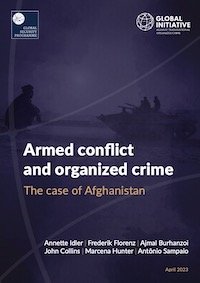
Armed Conflict and Organized Crime: the Case of Afghanistan

By Annette Idler | Frederik Florenz | Ajmal Burhanzoi John Collins | Marcena Hunter | Antônio Sampai

This paper contributes to research on the relationship between conflict and organized crime (the crime–conflict nexus), using Afghanistan as a case study. For the past four decades, Afghanistan has been plagued by internal armed conflict, influenced by local, national, regional, and international external actors, and the intricate relationships among them. To varying degrees, power, politics, and criminality informed these relationships. Organized crime provides actors in Afghanistan with significant political power, while powerful political actors are uniquely positioned to reap the profits of the country’s criminal markets. This paper gives an account of the existing literature on Afghanistan’s crime–conflict nexus, identifying some of the key insights that this literature has revealed. To do so, it uses a four-pronged framework, exploring how conflict has fuelled organized crime in Afghanistan; how organized crime has fuelled conflict; how conflict over the control of illicit markets has resulted; and how organized crime has contributed to the erosion of the state. By assessing the literature on Afghanistan’s crime–conflict nexus, the paper identifies knowledge gaps and suggests areas for future research.

Geneva: Global Initiative Against Transnational Organized Crime, 2023. 36p.

download
Militarized Approaches to Serious and Organized Crime: Approaches and Policy Implications 

By Luke Kelly

This annotated bibliography includes research and evidence on militarized approaches to combating serious and organized crime (SOC) in various contexts. Militarised approaches involve using military forces or methods to deter and disrupt SOC groups. These approaches have been employed in states facing high levels of violence, fragile and conflict-affected contexts, post-conflict settings, and against threats like piracy and wildlife crime. The research finds that the evidence on the effectiveness of militarised approaches is largely negative. While there are a range of militarised approaches, applied in a variety of contexts, most papers nevertheless agree that military force, or military techniques, can only address one facet of SOC at best, and need to be linked with a range of other measures such as policing, rule of law interventions and economic interventions, to effectively combat SOC. As well as drawing resources away from these other measures, militarised approaches have also been found to have a number of direct and indirect negative effects, such as human rights abuses, increases in violence, and undermining the rule of law.

Birmingham, UK: University of Birmingham, 2023. 44p.SOC ACE Evidence Review Paper 4.   

download
Long-Term Pre-Conception Exposure to Local Violence and Infant Health

By Eunsik Chang, Sandra Orozco-Aleman, María Padilla-Romo:

This paper studies the effects of mothers' long-term pre-conception exposure to local violence on birth outcomes. Using administrative data from Mexico and two different empirical strategies, our results indicate that mothers' long-term exposure to local violence prior to conception has detrimental effects on infant health at birth. The results suggest that loss of women's human capital and deterioration of mental health are potential underlying mechanisms behind the adverse effects, highlighting intergenerational consequences of exposure to local violence. Our findings shed light on the welfare implications of local violence that are not captured in in-utero exposure to violence.

Bonn: Institute of Labor Economics, 2024. 

download
World Cinema and the Planet of SlumsBy Krstić, Igor

By Krstić, Igor

From Jacob Riis’ How The Other Half Lives (1890) to Danny Boyle’s Slumdog Millionaire (2008), Igor Krstić outlines a transnational history of films that either document or fictionalise the favelas, shantytowns, barrios poulares or chawls of our ‘planet of slums’.

Edinburgh: Edinburgh University Press, 2016.

download
Judging Complicity:  How to Respond to Injustice and Violence 

By Gisli Vogler

How should those profiting from injustice and violence respond to their complicity? And how can they remain responsive when faced with the many ways in which they are entangled in an unjust world? We are at a deciding moment in affluent (Western) societies when it comes to addressing these kinds of questions. On the one hand, there is cause for optimism: the last decade has seen a significant shift towards open discussion of patriarchal society, institutional racism, capitalist exploitation, and the destruction of the environment, amongst many other contemporary political problems. Social movements such as #MeToo, Black Lives Matter, Fridays for Future, and Occupy Wall Street have helped turn assuming responsibility for violence and injustice into a dominant political issue. As a consequence, unjust practices, as diverse as Amazon’s working conditions and the Oxfam sexual exploitation scandal, are met with global condemnation. Debates about how those benefiting from exploitation and expropriation can act more responsibly now pervade many aspects of everyday life, from what to eat and wear, to who has what kind of opportunities. On the other hand, societies continue to be characterized by a failure to act upon the omnipresent demands for facing up to one’s involvement in injustice. Racism, sexism and ableism, and the exploitation of minorities, poorer countries and people, and nature all remain integral parts of human existence. The re-emergence of reactionary populist forces and parties in the US and large parts of Europe, together with the consolidation of power by authoritarian leaders across the world, has exacerbated the problem. The enduring failures by complicit actors to address injustice are cause for much despair and frustration. However, they have also served as catalysts for a sustained scholarly reflection on the complexities of complicity and how to address them (Beausoleil, 2019;  Hayward, 2017; Mihai, 2022; Schaap, 2020). It is my intention in this book to contribute to this interrogation and to think further how people can appropriately respond to their complicity in injustice and violence. To this end, I begin with a constructive evaluation of recent scholarship on complicity.  

Edinburgh:  Edinburgh University Press, 2024. 194p.

download
Digital Disinformation in Africa

Edited by Tony Roberts and Karekwaivanane, George Hamandishe

In an era when hashtag campaigns like #MeToo and #BlackLivesMatter capture global attention for victims of injustice, politicians and corporations are now spending billions employing Cambridge Analytica-type consultancies to manufacture disinformation - employing trolls, cyborgs and bots to disrupt dialogue and drown-out dissent. In the first study of its kind, this open-access book presents a range of case studies of these emerging dynamics across Africa, mapping and analyzing disinformation operations in ten different countries, and using innovative techniques to determine who is producing and coordinating these increasingly sophisticated disinformation machines. Drawing on scholars from across the continent, case studies document the actors and mechanisms used to profile citizens, manipulate beliefs and behaviour, and close the political space for democratic dialogue and policy debate. Chapters include examinations of how the Nigerian government deployed disinformation when the #EndSARS campaign focused attention on police brutality and corruption; insights into how pro-government actors responded to the viral #ZimbabweanLivesMatter campaign; and how misogynists mobilized against the #AmINext campaign against gender-based violence in South Africa. Through the documentation of episodes of unruly politics in digital spaces, these studies provide a valuable assessment of the implications of these dynamics for digital rights, moving beyond a focus on elaborations of the idea of ‘fake news’, and providing actionable recommendations in the areas of policy, legislation and practice. The ebook editions of this book are available open access under a CC BY-NC-ND 4.0 licence on bloomsburycollections.com.

London: Zed Books, 2024. 256p.

download
Violent Offending, Desistance, And Recidivism Violent Offending, Desistance, And Recidivism 

By Daniel O'Connell,  Christy Visher,  Lin Liu

This Article reviews what is known from the field of criminology about the nature of crime patterns in general, focusing particularly on violence, violent people, and how violence manifests in the lives of individuals who commit crime. Broad consensus exists in the research community that offending careers of individuals who commit crimes vary substantially from person to person. Most people tend to commit non-violent crimes and while many violent offenders recidivate after being released from prison, the majority do not. Moreover, the type of violent crime committed—expressive versus instrumental—may be an important distinction. We draw several conclusions from the research on violence and violent recidivism and what it can mean for policymakers and their decision-making. Armed with accurate information about violent offending, policymakers, and practitioners may be able to propose appropriate policy changes and make more informed decisions about the likelihood of violent offending and recidivism among persons who commit crimes.  

103 Marq. L. Rev. 983 (2020). 

Download
Project Hakea: criminal use of tracking and other surveillance devices in NSW

By The New South Wales Crime Commission

Tracking devices are a growing enabler of serious and organized crime in NSW. Accessible, inexpensive, and easily concealed – they are used by organized crime networks to monitor, locate, and ultimately attack their rivals. An initial review of joint operations between the Commission and partner agencies identified frequent and increasing use of tracking devices to facilitate murders, public place shootings, kidnappings, violent drug thefts, and drug trafficking, and tracking devices are extensively being used by high-risk domestic and family violence offenders. 

By matching sales data against criminal histories and intelligence records, Project Hakea identified that:

  • 37% of customers who had purchased tracking devices were adversely known to police

  • 25% of customers had a history of domestic and family violence

  • 15% had a history of serious and organized crime

  •  9% of customers had a history of both domestic and family violence and serious and organized crime.

In addition to the extensive use of tracking devices by organized criminals, their widespread use by domestic and family violence offenders creates an urgent need to address the issue. 

Download
My Life as a Spy: Investigations in a Secret Police File

By Katherine Verdery

Surveillance and Identity: The author, Katherine Verdery, explores how being under surveillance by Romania's secret police during the Cold War affected her sense of identity and her work as an anthropologist.

Ethnography and Spying: The book delves into the similarities and differences between ethnographic research and spying, questioning the ethical implications of both practices.

Impact of Surveillance: Verdery reflects on the emotional and psychological impact of discovering her secret police file, which contained extensive surveillance records and accusations of espionage.

Historical Context: The narrative provides a detailed account of life în Romania under Nicolae Ceausescu's regime, highlighting the pervasive nature of state surveillance and its effects on individuals and society.

Duke University Press, 2018, 323 pages

READ
Gangs of Russia: From the Streets to the Corruptors of Power

By Svetlana Stephenson

Historical Context: The book explores the evolution of gangs in Russia, particularly during the 1990s when radical market reforms led to the rise of street gangs that evolved into sophisticated organized crime networks.

Gang Structure: Russian gangs are described as male-dominated, violent alliances that are deeply embedded in society, often overlapping with legitimate structures and mainstream institutions.

Economic Influence: Gangs transitioned from street-level extortion to more complex economic activities, including protection operations for large companies and involvement in the shadow economy.

Social Integration: Despite their criminal activities, gang members often maintain legitimate jobs and social ties, reflecting a unique"double helix" model of social incorporation in Russia.

Cornell University Press, 2015, 277 pages

read
Banditry in Islam: Case Studies from Morocco, Algeria and the Pakistan North West Frontier

By David M. Hart

Hobsbawm Thesis: Eric Hobsbawm's analysis of banditry as a form of political protest is applied to the Islamic world by David Hart, examining cases from Morocco, Algeria, and Pakistan.

Case Studies: The document includes detailed case studies of banditry in North Western Morocco, the Moroccan Central High Atlas, Colonial Algeria, and the North West Frontier of Pakistan.

Bandit Behavior: The analysis reveals that while elements of political protest were present, bandit behavior was influenced by various other factors, making the Hobsbawm thesis not always applicable.

Historical Context: The document provides historical context and examples of banditry, highlighting the complex interplay between bandits and political power in different regions.

Middle East & North African Studies Press, 1987, 86 pages

read
Domestic Violence Reports and the Mental Health and Well-Being of Victims and Their Children

By Manudeep Bhuller,  Gordon B. Dahl,  Katrine V. Løken,  Magne Mogstad 

We study the costs associated with domestic violence (DV) in Norway by comparing outcomes before and after a DV report, using those who will be victimized in the future as controls. A DV report is associated with increased mental health diagnoses for both victims and their children and reduced financial resources. Victims experience marital dissolution, more doctor visits, lower employment, reduced earnings, and higher use of disability insurance. Their children are more likely to receive child protective services and commit a crime. Using a complementary regression discontinuity (RD) design, we find declines in children’s test scores and grade completion.   

Journal of Human Resources, April 2024, 59 (S) S152-S186

Download
Shattered Lives: Sexual Violence during the Rwandan Genocide and its Aftermath

By Human Rights Watch

During the 1994 Rwandan genocide, sexual violence was rampant, with thousands of women being raped, mutilated, or forced into sexual slavery by militia, soldiers, and civilians[. The violence was primarily directed at Tutsi women due to their ethnicity and gender, often following the torture and killing of their relatives. Survivors face severe social stigma, health issues, and poverty. Many women are now heads of households, dealing with the aftermath of the genocide. International Response Efforts include support for judicial training, victim protection, and financial aid, but challenges remain in effectively addressing gender-based crimes and supporting survivors.

Human Rights Watch New York· Washington· London· Brussels. 1996. 109p.

download
Politics at Play: Geopolitics and Organized Crime in the Pacific 

 By Virginia Comolli   

Building and expanding on the analysis in the Global Organized Crime Index, the GI-TOC has undertaken to map trends in organized criminality in the Pacific (Oceania). The resulting papers contribute to filling some of the gaps in a region where crime-related data can be scarce. In turn, these analyses allow us to identify vulnerabilities as well as opportunities for intervention and mitigation. The Pacific islands now occupy a more prominent place on the international strategic chessboard as a result of the proliferation of trade, diplomatic and security engagements in the region in the 21st century.  This is due to greater foreign presence and influence in Micronesia, Melanesia and Polynesia, and intensifying geopolitical competition among external partners. This reality, alongside greater connectivity and market trends, is also drastically  transforming the criminal landscape. Pacific islands have traditionally been considered as mostly immune from high levels of criminality due to their geographic remoteness.  However, highly pernicious illicit markets are taking hold, and the islands are becoming increasingly vulnerable to new threats in the form of cyber-enabled and cyber-dependent crimes and the introduction of new narcotics, to mention just two examples. Who is behind these activities? There are multiple criminal actors present and active in the Pacific islands, but the most pervasive are foreign actors.  And within the foreign actor sub-set, there are a diverse array of nationalities and sectors. The one thing they have in common is their pivotal role vis a vis evolving crime dynamics. Across the series of papers, we map their different typologies. The emerging pictures suggest that, possibly contrary to expectations, business operators are often responsible for the bulk of organized criminality. This is particularly evident in the extractive industries, but also in sectors such as real estate and financial services. Yet, more ‘obvious’ criminal actors such as cartels and triads have also made their way to the islands and intensified their operations.

Geneva, SWIT:  Global Initiative Against Transnational Organized Crime. 2024. 29p.

download
Sisters in Pain : Battered Women Fight Back

Linda Elisabeth LaPinta and Mary Angela Shaughnessy

Focus on Battered Women: The book, "Sisters in Pain," highlights the stories of battered women in Kentucky who fought back against their abusers, emphasizing their struggles and resilience.

Legal and Social Challenges: It discusses the legal and social challenges these women faced, including the lack of enforcement of domestic violence laws and the societal norms that perpetuate abuse.

Personal Narratives: The book includes personal narratives and interviews with the women, providing a deep, personal look into their experiences and the impact of abuse on their lives.

Call for Change: The authors aim to raise awareness and inspire action to improve the legal and social systems that fail to protect victims of domestic violence.

University Press of Kentucky, 2014, 214 pages

read
The Second Assault Rape and Public Attitudes

By Joyce E. Wiliams and Karen A. Holmes

Second Assault: Rape victims often face a "second assault" of skepticism, blame, and condemnation from society, family, and even themselves.

Racial-Sexual Stratification: The study examines rape through the lens of racial and sexual stratification, highlighting how race and gender impact victimization and societal reactions.

Victim Experiences: The research includes detailed accounts from victims, exploring their immediate needs, coping mechanisms, and the long-term impact of rape.

Community Attitudes: The document analyzes public attitudes towards rape, revealing significant differences based on race, gender, and community, and suggests tailored community interventions.

Bloomsbury Academic, 1981, 232 pages

read
Rape and Sexual Assault II

By Ann Wolbert Burgess

Victim Populations: The document explores various victim groups, including college students, psychiatric patients, and street prostitutes, highlighting the prevalence and impact of sexual assault on these populations.

Psychiatric Illness: There is a significant link between sexual abuse and psychiatric illness, with many patients showing difficulties in coping with anger, aggression, and trust.

Victim Response Strategies: Different strategies victims use to respond to sexual assault are discussed, including their effectiveness and psychological impact.

References: The document includes numerous references and studies, providing a comprehensive overview of research on rape and sexual assault.

Garland Pub., 1985, 430 pages

read