

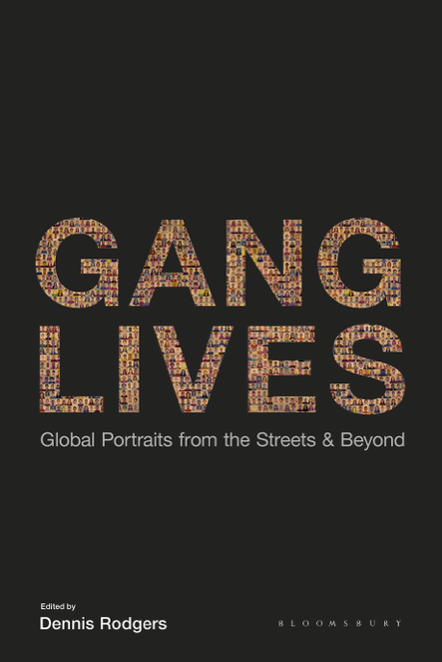
Editor: Dennis Rodgers
Through biographical investigations of gang members' life histories, this open access book illustrates the range of causes, motivations, and consequences associated with being a gang member.
Gangs are one of a small number of truly global social phenomena, present across time and space all over the world. Partly as a result of this ubiquity, gangs are inherently revealing social institutions, and can be connected to a range of fundamental human activities, such as the exercise of power, capital accumulation, socialization, identity formation, territorialization, or the articulation of gender relations, amongst others.
At the same time, however, gangs are also frequently associated with an almost pathological form of violence, generally represented as engaging in senseless forms of brutality, and gangsters are popular
global scapegoats. Such representations make it all the more urgent to understand what it is that truly motivates individuals to become gang members, why they undergo particular trajectories, and what the
long-term consequences of gang membership might be.
Through a comparison of thirteen life histories of gang members from twelve different countries around the world, this book offers a nuanced and sensitive overview of the global gang experience. Life histories are ideal lenses through which to explore these issues due to their ability to simultaneously reflect both the uniqueness and the embedded complexity of gang lives, but also their capacity to offer fundamentally relatable portraits that elicit empathy and humanize individuals.

by Graeme R. Newman with the assistance of Claude.
Can you stop crime before it starts, without fully knowing what causes it? A reader's guide to the 1936 symposium that gathered twenty-four programs trying to find out.
Preventing Crime: A Symposium, edited by Sheldon and Eleanor Glueck, brought together the directors of coordinated community councils, school bureaus, police prevention units, residential homes, child guidance clinics, a parent school, and boys' clubs, and asked each the same questions: what evidence shows the need for your program, how does it work, and how do you know whether it succeeds? The editors were candid from the start. Their title, they admitted in the preface, was optimistic, and a more accurate one would have been "Promising Efforts to Prevent Delinquency and Criminality." Only time and real evaluation, they wrote, could say whether these programs actually prevented anything.
The book is a portrait of what serious people believed about crime prevention in the depths of the Depression, and a case study in the gap between good intentions and good evidence. This Reader's Guide makes it accessible without replacing it. It explains what each program did, sets out the twelve principles the Gluecks drew from the contributions, and shows exactly what counted as proof of success in 1936, and how little of it would count today.
INSIDE THIS GUIDE
A reading plan and a chapter-by-chapter map of the original, with all twenty-five contributors
The Gluecks' opening argument: can crime be prevented without knowing its causes?
Twelve principles distilled from the programs, from starting early to using trained personnel
Community councils, school programs, police prevention bureaus, residential homes, clinics, and boys' clubs, program by program
A close look at "the audit problem": what each contributor offered as evidence, and what it actually showed
A worked example that tests one program's before-and-after numbers against six hard questions
What has changed since 1936, including the Cambridge-Somerville Youth Study's sobering results and decades of research on what works, what doesn't, and what's promising
Five common misreadings, a primer of evaluation terms, a glossary, an annotated reading list, an FAQ, 26 discussion questions and classroom activities
WHO IT'S FOR: Students of criminology, social work, education, public policy and program evaluation; practitioners designing youth programs; teachers and reading groups; and general readers curious about where crime prevention came from and why proving it works is so hard.
PLEASE NOTE: This is an independent guide, not an abridgment or edition of the original symposium. It does not reproduce the original's text and is not endorsed by the editors', or contributors', heirs. It is meant to be read alongside the original, which is in the public domain in the United States.
Written by Graeme R. Newman with the assistance of Claude, an AI model made by Anthropic. The AI-generated content is disclosed in accordance with Read-Me.Org policy.
Download the original book here.
Read-Me.Org Inc. New York-Philadelphia-Australia. 2026. p.54p.

by Graeme R. Newman
In 1862, Henry Mayhew and John Binny walked into eleven of London's most notorious institutions — Newgate, Millbank, Pentonville, Brixton, the prison hulks at Woolwich, Coldbath Fields, Tothill Fields, Wandsworth, Holloway, the House of Detention at Clerkenwell, and Horsemonger Lane — and wrote down exactly what they saw: the governors, the warders, the chaplains, and the prisoners themselves, in their own words.
This edition brings that record back to life. Each chapter has been fully rewritten in modern prose while preserving every fact, every interview, and every argument the original authors made — from their case against purposeless hard labour to their unflinching accounts of the convict nursery, the condemned cell, and the boy discharged from prison with no one waiting at the gate.
A new introduction and retrospective, written for this edition, follows these institutions into the present: which ones were demolished, which became galleries, cathedrals, and post offices — and which are still open today, cited in current inspection reports for the very same overcrowding and neglect that Victorian reformers were fighting a century and a half ago.
What you'll find inside: • Eleven Victorian prisons, reconstructed room by room, cell by cell • Real testimony from governors, chaplains, and prisoners — first offenders and lifelong professionals alike • A frank, often moving record of Victorian London's poorest and most desperate • A new historical retrospective connecting each institution to its fate today
Part social history, part true crime, part uncomfortable mirror — London Prisons: A Retrospective is a door-by-door tour of a city's conscience, then and now.
Read-Me.Org Inc. New York-Philadelphia-Australia. 2026. p.339.

by Nettly Lucas (Author), Graeme Newman (Introduction)
Step into the hidden London of the 1920s—a city of fashionable hotels and crowded streets, respectable suburbs and shadowy back rooms, Scotland Yard detectives and professional criminals who made deception, burglary, fraud and blackmail their trade.
First published in 1926, London and Its Criminals is Netley Lucas’s remarkable journey through the criminal underworld of interwar London. Rather than simply recounting celebrated crimes, Lucas sets out to describe criminals themselves: how they lived, where they gathered, the methods they used, the slang they spoke, and the elaborate machinery of policing that pursued them.
The result is an extraordinary period portrait of crime and criminal justice.
Lucas takes his readers inside Scotland Yard and its Criminal Record Office, explaining the growing importance of fingerprints, criminal records and systematic detection. From there he ventures into a very different London—the world of professional burglars, pickpockets, confidence tricksters, jewel thieves, forgers, blackmailers and criminal gangs. He introduces his readers to figures he describes as the “Kings” and “Queens” of the Underworld: men and women who move between cheap public houses, prosperous suburban homes, exclusive restaurants and fashionable hotels while living secret criminal lives.
Among the book’s most striking chapters are Lucas’s accounts of “master criminals” and “crooked women.” His characters include expert burglars, ingenious forgers, sophisticated jewel thieves and accomplished confidence tricksters. Some are frightening, some ingenious, some surprisingly ordinary. Again and again Lucas emphasizes the unsettling proximity of the criminal world to respectable society.
Yet London and Its Criminals is more than a gallery of rogues. Lucas was writing at a moment when attitudes toward crime and punishment were beginning to change. He opens the book by discussing the emerging scientific study of crime, criminal psychology, rehabilitation and the limitations of imprisonment—questions that remain central to debates about criminal justice a century later.
Lucas is also an unusually provocative guide. He claims familiarity with criminals themselves and repeatedly describes conversations, meals and encounters with people operating on the wrong side of the law. His London is consequently not the London of official police reports alone. It is a city observed from its restaurants, streets, clubs, pubs, courtrooms and criminal meeting places.
Modern readers should approach some of Lucas’s language, assumptions and sweeping judgments as products of their time. That is also part of the historical importance of the book. It provides a vivid primary-source window into how crime, policing, punishment, class and the urban underworld were represented during the 1920s.
This new Read-Me.Org Classic Reprint presents Lucas’s fascinating account to a new generation of readers, accompanied by a detailed new Introduction by Graeme Newman that places the work in its historical and criminological context.
For readers interested in true crime, criminology, Scotland Yard, policing, criminal history, London history, organized crime and the social history of the 1920s, London and Its Criminals offers a fascinating journey into a vanished—but sometimes surprisingly familiar—criminal world
Read-Me.Org Inc. New York-Philadelphia-Australia. 2026. p.194.
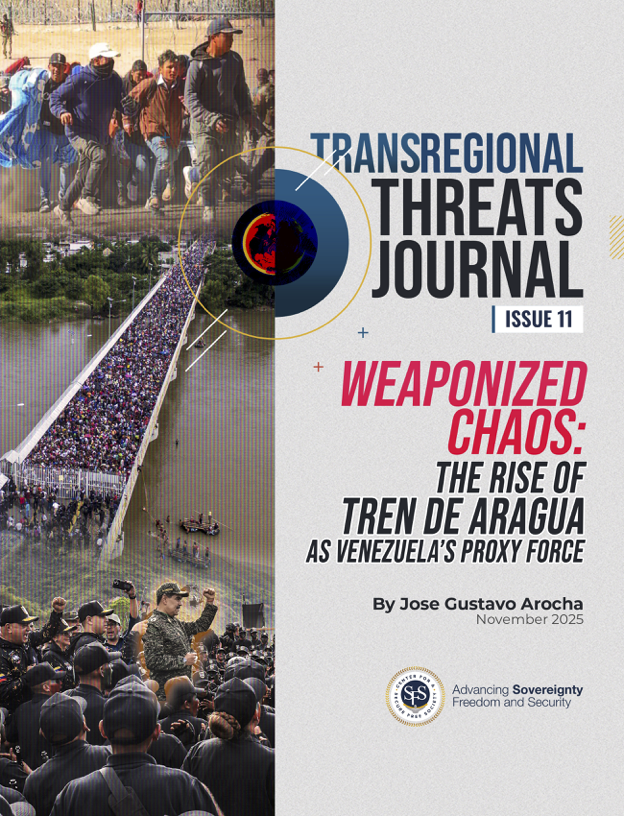
By José Gustavo Arocha
BOTTOM LINE UP FRONT:
1 Tren de Aragua (TdA) has morphed from a prison gang into a paramilitary instrument of the Maduro regime, now active in at least eleven Latin American countries [1] and twenty-three U.S. states, [2] according to the U.S. House Oversight Committee (2025).
2 Strategic Alignment. TdA’s deliberate expansion complements Venezuela’s Guerra de Todo el Pueblo asymmetric-warfare doctrine, [3] erasing boundaries between statecraft and organized crime.
3 Elastic Network. The gang’s “insurgent archipelago” [4] of semiautonomous cells, linked through encrypted channels, makes it exceptionally resilient; when joint Peruvian-U.S. raids freed more than eighty trafficking victims in January 2025, [5] replacement cells reemerged within days. [6]
4 Weaponized Migration. By monetizing migrant flows, selling “all risk” travel packages that often devolve into debt bondage, [7] TdA offloads costs onto regional adversaries; more than 520,000 migrants transited through the Darién Gap in 2023. [8]
5 Persistent Threat. Despite terrorism designations by the United States, Argentina, Ecuador, and Trinidad and Tobago—and nearly 3,500 U.S. arrests as of August 2025, [9] TdA’s franchise model is regenerating faster than law enforcement can dismantle it.
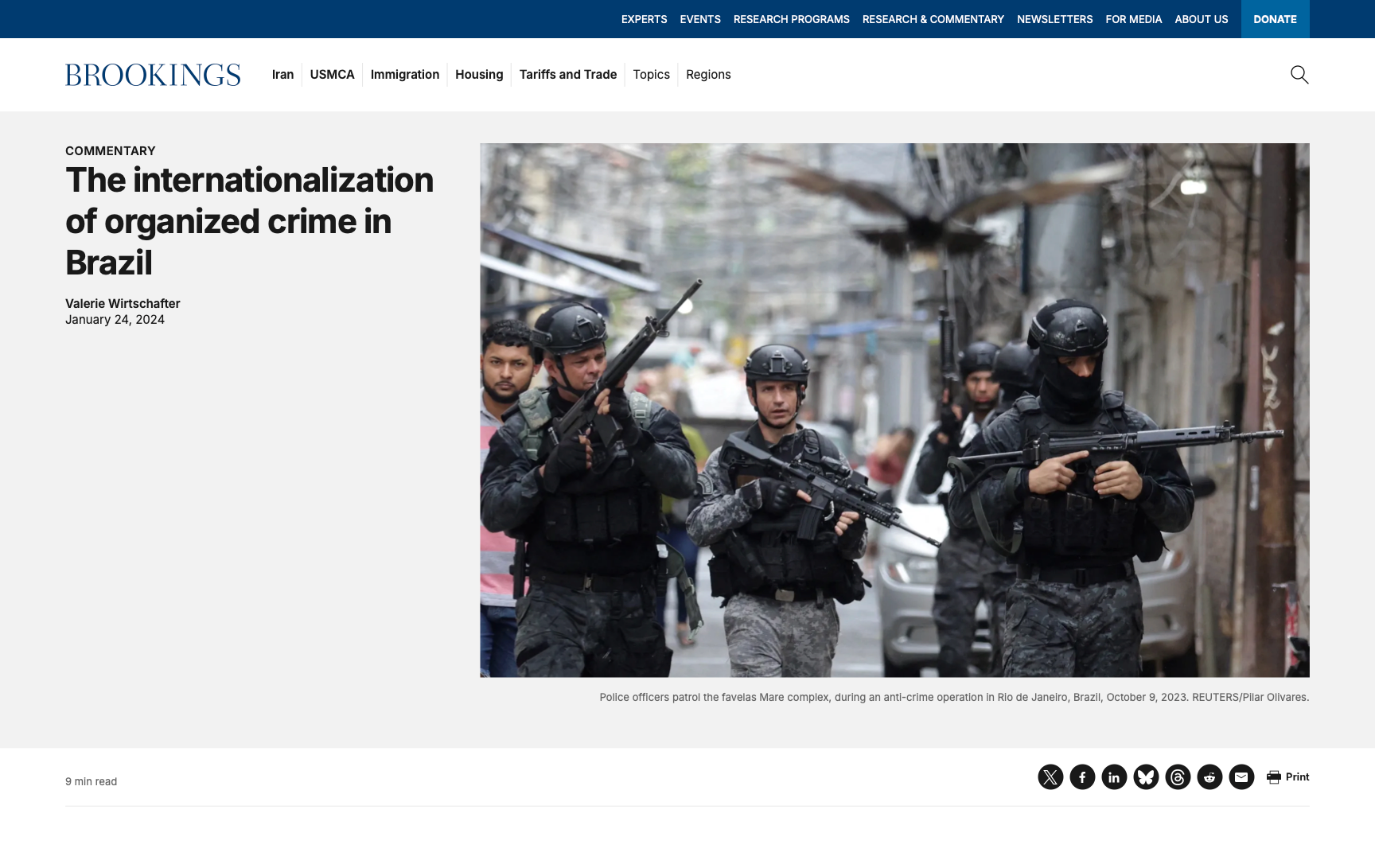
By Valerie Wirtschafter
Over the past three decades, the Primeiro Comando da Capital (PCC) has transformed from a prison gang founded in São Paulo into a transnational criminal “leviathan,” with a presence throughout South America, Africa, and Europe. In response to this growing threat, in 2021 the U.S. government cited the PCC as “the most powerful organized crime group in Brazil and among the most powerful in the world.” What can we expect from the PCC moving forward? And how might policymakers stall this international expansion?In the coming year, the PCC will likely continue to vie for dominance in strategic areas of contested control throughout Brazil and look for opportunities to consolidate gains abroad. Confrontation with rival groups, including the Comando Vermelho (CV), born in the Rio de Janeiro prisons, and its allies in areas such as the Amazon, is also likely to continue. This is particularly the case due to the region’s importance for drug smuggling

By Pamela Ruiz
The Mara Salvatrucha 13 (mara) and Barrio 18 (pandilla) gangs have become a major concern for the governments of the Northern Triangle of Central America (Guatemala, El Salvador, and Honduras) and the United States. In recent years, government officials have attributed violence and the exodus of Central Americans to the developing capacities of gangs. The Mara Salvatrucha 13(MS-13) and Barrio 18 have been identified to strategically implement violence and extortion rackets which have led to transformations in their organizational structures and increased participation in drug trafficking. Furthermore, officials insinuate that gangs have developed capacities to confront security forces that enter gang territory with an increase in confrontations. This has resulted with Northern Triangle governments reclassifying gangs as organized crime and/or terrorist organizations; but, do these gangs meet the requirements to be classified as such? The overall purpose of this study is to examine the evolution of MS-13 and Barrio 18 in the Northern Triangle of Central America using mixed methods. Crime pattern theory provided the framework to understand the crime opportunity structures to explain the concentration of violence (homicides, extortion, and confrontations). Organized crime and gang concepts were used to evaluate gangs’ evolution with regards to their use of violence, extortion rackets,transformations in organizational structures, and roles in drug trafficking with a focus on their alliances with Los Zetas and the Sinaloa cartel (Mexican DTOs). Phase I of this study used official quantitative data to map the spatial concentration of homicides, extortions, and confrontations (gang-related crimes) at the municipality level for each country from 2007-2017. Phase II gathered qualitative data through purposive, semi-structured interviews with subject matter experts (academics, law enforcement, and NGO personnel) to obtain a more comprehensive understanding of the concentration of violence and whether gangs had evolved to organized crime organizations. Triangulation of the study data provided a more concise display of where these crimes concentrate and contributing factors to the gangs’ evolution. This study concludes illicit political economic networks between corrupt officials, narcotrafficking groups, and gangs contribute to violence and impunity in the Northern Triangle of Central America. The concentration of homicides in border municipalities was often associated with drug trafficking, homicides in urban areas were often associated with gangs, and homicides in rural areas were attributed to vengeance murders. Extortion concentrated in urban centers and was described as a crime of opportunity with various “imitators” involved. Confrontations between law enforcement personnel and gangs have led to formal accusations of extrajudicial executions. Moreover, the politicization of gangs has limited attention to address criminal activities and violence that are not associated with gangs. Therefore, this study’s findings indicate violence in the Northern Triangle of Central America can be attributed tointer-and-intra gang violence, 2) inter-and-intra narcotrafficking violence, 3) state violence and 4) non-gang related violence. Lastly, it is unquestionable MS-13 and Barrio 18 have evolved, while it is premature to classify these gangs as an organized crime group; this study puts forth categorizing gangs as “organized delinquency” to best describe their capacities.
New York: City University of New York, 2019. 193p.
By Pamela Ruiz
Government officials in northern Central America (Guatemala, El Salvador, and Honduras) claim the Mara Salvatrucha (MS-13) and Barrio 18 are primarily responsible for violence in their countries. These gangs have been identified to exert violence, extortion rackets, and confront security forces that enter gang-controlled communities (Seelke, 2014; Natarajan et al, 2015; International Crisis Group, 2017; Servicio Social Pasionista (SSPAS), 2017; Insight Crime and Asociación para una Sociedad mas Justa (ASJ) [Association for a more Just Society] 2016, Arce, 2015). But exactly how do gangs contribute to violence and extortion rackets in these countries? What are the differences, if any, on how the gangs commit these crimes in Guatemala, Honduras, and El Salvador? This working paper discusses the complex violence dynamics in northern Central America and argues that a chronic deficiency in data, weak rule of law, and impunity exacerbate insecurity in these countries. The Mara Salvatrucha (MS-13) and Barrio 18 originated in Los Angeles, California and are now present throughout the United States, northern Central America, Spain, and Italy (Franco, 2008; Valdez, 2009; Seelke, 2016; Valencia, 2016; Finklea, 2018; Dudley & Avalos, 2018). Barrio 18 was formed in the 1960s by mixed-race Mexican, and MS-13 was formed in latter 1980s by Salvadorans who fled the civil war (Franco, 2008; Valdez, 2009; Seelke, 2016; Wolf, 2012). Some scholars argue gang culture was exported when individuals with criminal records were deported to their country of origin, while other scholars argue voluntary migration contributed to gangs’ presence in northern Central America (Arana, 2005; Franco, 2008; Seelke, 2016; Cruz, 2010). It is imperative to clarify that a criminal removal from the United States is not synonymous,nor does it imply a perfect correlation with a gang member being removed. Nonetheless, these gangs have become major security concerns in northern Central America. This study examined the concentration of crimes often attributed exclusively to gangs (homicides, extortion, and confrontations) using administrative data from the Salvadoran National Civilian Police, Honduran Prosecutor’s Office, and Guatemalan National Civilian Police. Interviews with subject matter experts supplemented the quantitative analysis to gain further understanding of violence dynamics per country. This paper follows with a literature review on homicides, extortion, and confrontations trends in northern Central America, a methodology section, results, and a discussion.
Kimberly Green Latin American and Caribbean Center , Florida International University, January 2022 31p.

By Megan Kang
This study draws on 95 interviews and observations with gang-affiliated individuals in Chicago to examine how gang structures shape disengagement and desistance from crime. During the last two decades, the city's gangs have experienced a decline in group closure, or their capacity to regulate membership and member behavior, and a blurring of boundaries between those active in a gang from all others. In the past, Chicago's gangs maintained closure and bright boundaries that made gang affiliations, norms, and territories clearly defined. Leaving these gangs required costly exit rituals that signaled an unambiguous departure while facilitating desistance. Today, with weaker gang structures and blurry boundaries, leaving a gang is no longer a distinct event. The ease of gang disengagement, however, makes desistance harder as inactive members struggle to knife off past ties and access turning points. In this uncertain landscape, desistance tactics can backfire, sending “blurred signals”—behaviors intended to create distance from former affiliates and rivals but appear as wavering commitment to supporters—that trap individuals in a liminal space between social worlds. Contrary to leading desistance theories that emphasize individual readiness, opportunity, and prosocial bonds, this study underscores how group structures critically shape pathways out of crime.
CriminologyVolume 63, Issue 4 Nov 2025 Pages687-883
By Sou Lee
The purpose of this study is to gain a holistic understanding of the Asian gang phenomenon through the application of a meta-synthesis, which is seldom utilized within the criminal justice and criminology discipline. Noblit and Hare’s (1988) seven step guidelines for synthesizing qualitative research informed this methodology. Through this process, 15 studies were selected for synthesis. The synthesis of these studies not only identified prevalent themes across the sample, but also provided the basis for creating overarching metaphors that captured the collective experience of Asian gang members. Through the interpretive ordering of these metaphors, a line of synthesis argument was developed in which three major inferences about the Asian gang experience were made. First, regardless of ethnic and geographic differences, the experiences of Asian gangs and their members are similar. Second, although extant literature has applied different theories to explain gang membership for individual ethnic gangs (e.g. Chinese, Vietnamese), this synthesis revealed that the dominant theory for explaining the onset and persistence of Asian gangs is Vigil’s (1988) multiple marginality theory. Finally, in comparison to the broader literature, Asian gangs are more similar than they are different to non-Asian gangs because of their overlap in values.
Thesis, 2016. 127p.
By David Spencer
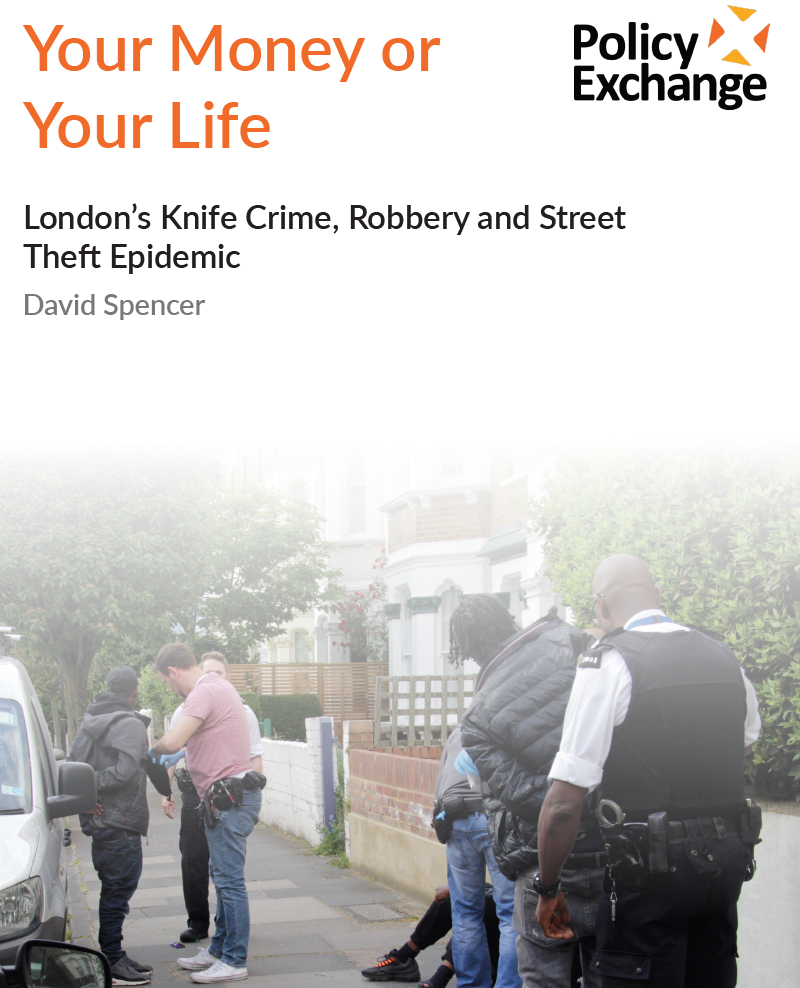
A new report from Policy Exchange demonstrates how London is in the grip of a street crime epidemic and makes seventeen recommendations to show how the Metropolitan Police, City Hall and the Government can turn the tide.
The report shows that:
Knife crime in London increased by 58.5% in only three years between 2021 and 2024;
Only 1 in 20 robberies and 1 in 170 “theft person” crimes in the capital were solved last year.
60% of the knife crimes committed in the capital were robberies – with over 81,000 mobile phones stolen in robberies and thefts last year.
In 2024 one small geographic area of around 20 streets in London’s West End near Oxford Circus and Regent Street had more knife crime than nearly 15% of the rest capital combined; in 2023 these streets had more knife crime than 23% of the capital combined.
The report identifies the top 20 neighbourhoods (technically known as Lower Layer Super Output Areas or LSOAs of about 15-20 streets each) in London which had the highest levels of knife crime in 2024. One in 15 of every knife crime offence in the capital in 2024 occurred in one of these 20 neighbourhoods (908 knife crimes). In 2024 only 4% of neighbourhoods accounted for nearly a quarter of all knife crime offences in the capital (3,615 knife crimes) and 15% of neighbourhoods accounted for half of all knife crime offences (7055 knife crimes).
The report identifies that within the Metropolitan Police there are least 850 police officers currently in non-frontline posts which could be redeployed to the policing frontline to tackle knife crime, robbery and theft in the areas where criminals are most prolific. This includes police officers currently posted to the following departments: Transformation (142 officers), Human Resources (24 officers), Culture, Diversity and Inclusion (20 officers) and Digital, Data & Technology (34 officers).
Policy Exchange rejects the suggestion that stop and search is being deployed in a “racist” way. While only 39.5% of those stopped and searched by the police are black, 43.6% of those charged with murder are black, 45.6% of non-domestic knife-crime murder victims are black and 48.6% of robbery suspects are black. 13.5% of London’s population are black. Policy Exchange asserts that it is not “racist” when the police are merely responding to the demographic breakdown of serious and violent offending in the capital.
Policy Exchange analysis shows that the courts are taking a dangerously lax approach to the most prolific criminals. Despite already having 46 or more previous convictions, “Hyper-Prolific Offenders” are sent to prison on less than half of all occasions (44.5%) on conviction for a further indictable or either-way offence – 4,555 such criminals walked free from court in 2024. For “Super-Prolific Offenders” (those with 26 to 45 previous offences) this falls to 42.1% with 9,483 such criminals walking free from court in 2024. Despite there being mandatory sentencing provisions for repeat knife-carriers to be sent to prison over a third are not sentenced to a term of immediate custody
By Barbara Kelemen | Ján Slobodník
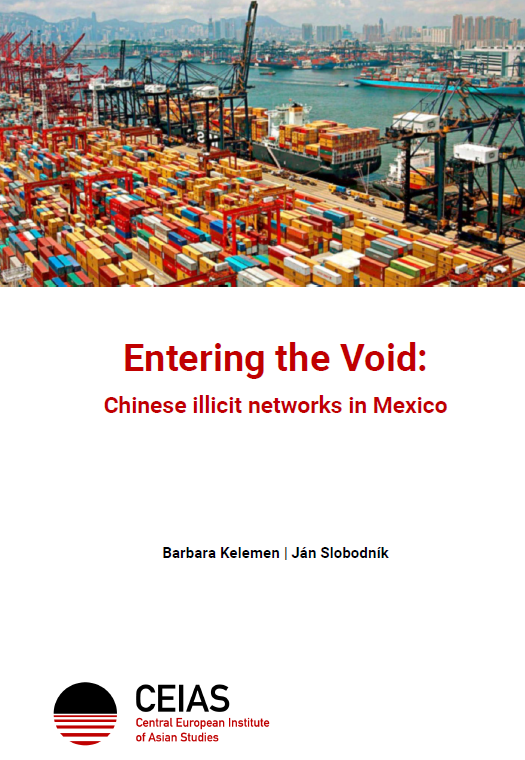
This CEIAS paper aims to shed light on cooperation between Chinese businesses and Mexican criminal groups. It specifically analyzes cases related to drug trafficking and the exploitation of natural resources in three states in Mexico. The topic is particularly relevant for countries in Latin America that have been expanding their commercial ties with China. This research suggests that the lack of state supervision in some of these countries could allow alternative structures—such as criminal groups and Chinese organized networks—to thrive and fill the security and economic void if not regulated properly.
Summary
Mexico’s macroeconomic stability and abundant natural resources have made the country into an attractive destination for Chinese businesses.
The country still suffers from a lack of internal security, most of it stemming from the Mexican Drug War, an ongoing multilateral low-intensity conflict between the Mexican government and a large number of criminal organizations.
In some of Mexico’s states, pervasive violence and instability have resulted in a power vacuum. With the government being unable to guarantee security, non-state actors such as criminal organizations and/or civilian militias seize the opportunity to establish their own rule.
When foreign companies operate in such troubled areas, they inevitably run into problems caused by Mexico’s security issues.
Within this trend of foreign companies operating in Mexico, some level of tacit cooperation has been observed between Chinese businesses and non-state actors. This cooperation is often an outcome of localized security vacuums that are exploited by alternative security providers, such as criminal organizations, that can fill them and provide operational safety for local businesses.
A growing body of research has identified the existence of Chinese illicit networks and their involvement in the trafficking of people, narcotics, and contraband goods, as well as money laundering and illegal arms trade in Mexico.
Concealed under the guise of legal commercial activity, networks of Mexican criminal organizations and their Chinese business partners exploit the dire security situation in some areas of Mexico.
Despite attempts by the Chinese and the Mexican governments to regulate certain sectors that contribute to the existence of the illicit networks in Mexico, there are still substantial opportunities that are ripe for exploitation by the criminal group-legitimate business partnerships

By Svetlana Stephenson
Historical Context: The book explores the evolution of gangs in Russia, particularly during the 1990s when radical market reforms led to the rise of street gangs that evolved into sophisticated organized crime networks.
Gang Structure: Russian gangs are described as male-dominated, violent alliances that are deeply embedded in society, often overlapping with legitimate structures and mainstream institutions.
Economic Influence: Gangs transitioned from street-level extortion to more complex economic activities, including protection operations for large companies and involvement in the shadow economy.
Social Integration: Despite their criminal activities, gang members often maintain legitimate jobs and social ties, reflecting a unique"double helix" model of social incorporation in Russia.
Cornell University Press, 2015, 277 pages