Open Access Free Library
CRIME+CRIMINOLOGY.jpeg

CRIME

Violent-Non-Violent-Cyber-Global-Organized-Environmental-Policing-Crime Prevention-Victimization

Posts in social sciences
Criminal Victimisation in Eleven Industrialised Countries: Key findings from the 1996 International Crime Victims Survey

By P. Mayhew, and J.J.M. van Dijk.

The International Crime Victimisation Survey (ICVS) is the most far-reaching programme of fully standardised sample surveys looking at householders' experience of crime in different countries. The first ICVS took place in 1989, the second in 1992, and the third in 1996. Surveys have been carried out in over 50 countries since 1989, including a large number of city surveys in developing countries and countries in transition. This report deals with eleven industrialised countries which took part in the third sweep. The reason for setting up the ICVS was the inadequacy of other measures of crime across country. Figures of offences recorded by the police are problematic due to differences in the way the police define, record and count crime. And since most crimes the police know about are reported by victims, police figures can differ simply because of differences in reporting behaviour. It is also difficult to make comparisons of independently organised crime surveys, as these differ in design and coverage. For the countries covered in this report, interviews were mainly conducted by telephone (with samples selected through variants of random digit dialling). There is no reason to think results are biased because of the telephone mode. Response rates varied hut we show that there is no overriding evidence that this affects the count of victimisation. Samples were usually of 1,000 or 2,000 people which means there is a fairly wide sampling error on the ICVS estimates. The surveys cannot, then, give precise estimates of crime in different countries. But they are a unique source of information and give good comparative information. The results in this report relate mainly to respondents' experience of crime in 1995, the year prior to the 1996 survey. Those interviewed were asked about crimes they had experienced, whether or not reported to the police.

The Hague: WODC, 1997. 116p.

Criminal Victimisation in International Perspective: Key findings from the 2004-2005 ICVS and EU ICS

By Jan van Dijk John van Kesteren Paul Smit.

The International Crime Victims Survey became operational in 1989. The main object was to seek advancement in international comparative criminological research, beyond the constraints of officially recorded crime data. The next sweeps of the ICVS surveys took place in 1992, 1996 and 2000. With its fifth sweep in 2005 the initiative has developed into a truly unique global project. Over a time span of fifteen years more than 300,000 people were interviewed about their experiences with victimisation and related subjects in 78 different countries. This report describes the 2004 – 2005 sweep of surveys in 30 countries and 33 capital or main cities and compares results with those of earlier sweeps. A large portion of the latest data in this report comes from the European Survey on Crime and Safety (EU ICS), organised by a consortium lead by Gallup Europe, co-financed by the European Commission’s Directorate General for Research and Technology Development. The ICVS is the most comprehensive instrument developed yet to monitor and study volume crimes, perception of crime and attitudes towards the criminal justice system in a comparative, international perspective. The data are from surveys amongst the general public and therefore not influenced by political or ideological agendas of governments of individual countries. Standardisation of questionnaires used and other aspects of data collection assure that data can, within confidence margins, be reliably compared across countries. Independent reviews have attested to the comparability of ICVS results (e.g. Lynch, 2006). The ICVS started in 1989 in 14 industrialised countries. City surveys were also piloted in Warsaw, Poland and Surabaya, Indonesia. Already in the second sweep coverage was enlarged by including several countries in Eastern Central Europe. Fieldwork in some of these countries was funded by the Ministry for Development Aid of the Netherlands. For these countries the project played a part in the process of modernising criminal justice systems after Western European models. Many of those countries have now become part of the European Union. Where most industrialised countries have a long tradition of publishing statistics on police-recorded crime, in many developing countries crime data are either fragmented, of poor quality or not available to the public. Crime victim surveys in these countries, although restricted to the capital or main cities, is often the only available source of statistical information on crime and victimisation. Internationally comparable crime victim surveys not only serve policy purposes but make data available that can be used by researchers interested in crime in a comparative context, including in developing countries from different regions of the world.

The Hague: WODC; Boom Juridische uitgevers: 2007. 292p.

Outsourcing Cybercrime

By R. S. van Wegberg.

Many scientific studies and industry reports have observed the emergence of so-called cybercrime-as-a-service. The idea is that specialized suppliers in the underground economy cater to criminal entrepreneurs in need of certain capabilities – substituting specialized technical knowledge with “knowing what to buy”. The impact of this trend could be dramatic, as technical skill becomes an insignificant entry barrier for cybercrime. Forms of cybercrime motivated by financial gain, make use of a unique configuration of technical capabilities to be successful. Profit-driven cybercrimes, as they are called, range from carding to financial malware, and from extortion to cryptojacking. Given their reliance on technical capabilities, particularly these forms of cybercrime benefit from a changing crime paradigm: the commoditization of cybercrime. That is, standardized offerings of technical capabilities supplied through structured markets by specialized vendors that cybercriminals can contract to fulfill tools and techniques used in their business model. Commoditization enables outsourcing of components used in cybercrime - i.e., a botnet or cash-out solution. Thus lowering entry barriers for aspiring criminals, and potentially driving further growth in cybercrime. As many cybercriminal entrepreneurs lack the skills to provision certain parts of their business model, this incentivizes them to outsource these parts to specialized criminal vendors. With online anonymous markets - like Silk Road or AlphaBay - these entrepreneurs have found a new platform to contract vendors and acquire technical capabilities for a range of cybercriminal business models. A configuration of technical capabilities used in a business model reflects the value chain of resources. Here, not the criminal activities themselves, but the technical enablers for all these criminal activities are depicted. To create a comprehensive understanding of how businessmodels in profit-driven cybercrime are impacted by the commoditization of cybercrime, we investigate how outsourced components can fulfill technical capabilities needed in profit-driven cybercrime. This is where we use an economic lens to deliver an overview of criminal activities, resources and strategies in profit-driven cybercrime. In turn, knowing how outsourcing fulfils A study into the treatment of victims and its effects on their attitudes and behaviourparts of the value chain, can help law enforcement exploit ‘chokepoints’ – i.e., use the weakest link in the value chain where criminals appear to be vulnerable.

Delft University of Technology, 2020. 202p.

Women and Petty Violence in Cheltenham and Exeter, 1880-1909

By Grace E. A.Di Meo.

The historiography of female violence has largely centred on women’s experiences as victims or on their perpetration of lethal acts such as murder and infanticide. In the last decade, however, scholars have paid increasing attention to women’s perpetration of non-lethal violent crime. This thesis contributes to recent scholarship by examining female acts of assault in late Victorian and Edwardian England in an understudied region of the country: whilst most historians have focused on the North, South East or Midlands, this study draws attention to the South West of the country and situates women’s acts of minor violence within the context of wider national patterns. Focusing specifically on cases prosecuted at the Exeter and Cheltenham magistrates’ courts in the years 1880-1909, the thesis follows women through different stages of their offending trajectories: the perpetration of their acts; their treatment by magistrates; their portrayal in the media; and, finally, their experiences after facing prosecution.

Using evidence from court records, newspapers and census returns, the study employs both quantitative and qualitative analyses in order to examine patterns in the perpetration and outcome of female non-lethal violence. These examinations reveal that women’s ‘expected’ and ‘actual’ roles – especially those relating to motherhood, wifehood and the neighbourhood – impacted not only the ways in which their assaults were committed but also on their treatment by the justice system and the media. It is also demonstrated that women’s positions could contribute to their propensity to reoffend, an action which sometimes resulted in women’s marginalisation in post-offending life. By following the women’s experiences from the onset to aftermath of their violence, this thesis offers an original and comprehensive contribution to the historiography of female violence in late Victorian and Edwardian England.

Bristol, UK: University of Bristol 2020. 264p.

Measurement Problems in Criminal Justice Research: Workshop Summary

National Research Council.

Most major crime in this country emanates from two major data sources. The FBI’s Uniform Crime Reports has collected information on crimes known to the police and arrests from local and state jurisdictions throughout the country. The National Crime Victimization Survey, a general population survey designed to cover the extent, nature, and consequences of criminal victimization, has been conducted annually since the early1970s. This workshop was designed to consider similarities and differences in the methodological problems encountered by the survey and criminal justice research communities and what might be the best focus for the research community. In addition to comparing and contrasting the methodological issues associated with self-report surveys and official records, the workshop explored methods for obtaining accurate self-reports on sensitive questions about crime events, estimating crime and victimization in rural counties and townships and developing unbiased prevalence and incidence rates for rate events among population subgroups.

Washington, DC: The National Academies Press. 2003. 111p.

Estimating the Incidence of Rape and Sexual Assault

National Research Council

The Bureau of Justice Statistics' (BJS) National Crime Victimization Survey (NCVS) measures the rates at which Americans are victims of crimes, including rape and sexual assault, but there is concern that rape and sexual assault are undercounted on this survey. BJS asked the National Research Council to investigate this issue and recommend best practices for measuring rape and sexual assault on their household surveys. Estimating the Incidence of Rape and Sexual Assault concludes that it is likely that the NCVS is undercounting rape and sexual assault. The most accurate counts of rape and sexual assault cannot be achieved without measuring them separately from other victimizations, the report says. It recommends that BJS develop a separate survey for measuring rape and sexual assault. The new survey should more precisely define ambiguous words such as "rape," give more privacy to respondents, and take other steps that would improve the accuracy of responses. Estimating the Incidence of Rape and Sexual Assault takes a fresh look at the problem of measuring incidents of rape and sexual assault from the criminal justice perspective. This report examines issues such as the legal definitions in use by the states for these crimes, best methods for representing the definitions in survey instruments so that their meaning is clear to respondents, and best methods for obtaining as complete reporting as possible of these crimes in surveys, including methods whereby respondents may report anonymously.

Rape and sexual assault are among the most injurious crimes a person can inflict on another. The effects are devastating, extending beyond the initial victimization to consequences such as unwanted pregnancy, sexually transmitted infections, sleep and eating disorders, and other emotional and physical problems. Understanding the frequency and context under which rape and sexual assault are committed is vital in directing resources for law enforcement and support for victims. These data can influence public health and mental health policies and help identify interventions that will reduce the risk of future attacks. Sadly, accurate information about the extent of sexual assault and rape is difficult to obtain because most of these crimes go unreported to police. Estimating the Incidence of Rape and Sexual Assault focuses on methodology and vehicles used to measure rape and sexual assaults, reviews potential sources of error within the NCVS survey, and assesses the training and monitoring of interviewers in an effort to improve reporting of these crimes.

Washington, DC: The National Academies Press. 2014. 278p.

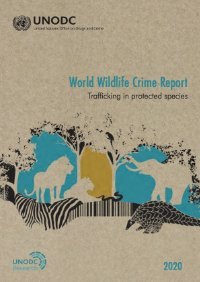
World Wildlife Crime Report Trafficking in protected species

United Nations Office on Drug and Crime

The heedless exploitation of nature by humans has led to unprecedented biodiversity loss and a worsening climate crisis. It is also a threat to human health, as highlighted by the COVID-19 pandemic. Three-quarters of all emerging infectious diseases are zoonotic, according to the United Nations Environment Programme, transferred from animals to humans, facilitated by environmental destruction and wildlife crime. Links between the global health crisis and the illegal exploitation of wildlife have been in the spotlight since it was suggested that wet markets selling wildlife, in this case pangolins, could have facilitated the transfer of COVID-19 to humans. The spike in public awareness of this connection has led to a push for new bans on the sale of wild animals for consumption. It is against this backdrop that the second edition of the World Wildlife Crime Report is published by the United Nations Office on Drugs and Crime (UNODC). The report shows wildlife crime to be a business that is global; lucrative, with high demand driving high prices; and extremely widespread. Nearly 6,000 different species of fauna and flora have been seized between 1999 and 2018, with nearly every country in the world playing a role in the illicit wildlife trade

Vienna; New York: UNODC, 2020. 134p.

Cyber-offenders versus traditional offenders

Weulen Kranenbarg, M.

The main goal of this dissertation was to empirically compare cyber-offenders with traditional offenders on four domains in criminology: offending over the life-course, personal and situational risk factors for offending and victimisation, similarity in deviance in the social network, and motivations related to different offence clusters. The focus was on new forms of crime that target IT and in which IT is key in the commission of the crime, so-called cyber-dependent crimes, like malicious hacking, web defacement, illegal control over IT-systems, malware use, and so on. These crimes provide a unique test case for traditional criminological explanations for offending, as these did not exist prior to the rise in the use of ITsystems. The anonymous digital context in which these crimes take place may have changed, for example, the situations in which opportunities for committing crime occur, the skills and personality characteristics that are needed to commit these crimes, the perceptions of the consequences of offending, and the interpersonal dynamics between offenders and victims.

Amsterdam: Free University of Amsterdam, 2018. 230p.

Understanding cybercriminal behaviour among young people: Results from a longitudinal network study among a relatively high-risk sample

By Marleen Weulen Kranenbarg, Yaloe van der Toolen, Frank Weerman.

This report aims to increase our insight into the explanation of cyber-delinquency among juveniles. We examined which individual characteristics and environmental factors are related to different types of cybercrime, with a specific focus on the importance of peer relationships. We used a longitudinal research design (three waves of data collection) among a substantial sample of Dutch youths in secondary or tertiary education (with ages between 12 and 25), who were following ICT programmes, tracks, or courses. These students were chosen because they are considered to be at an elevated risk of committing cybercrime. We used questionnaires to collect self-report data on a large variety of cyber-offences, and on characteristics of both offline and online peers. We distinguished between cyber-dependent offending (i.e. offences requiring the use of online means) and cyber-enabled offending (i.e. offences existing in the offline world, but that can also be conducted online). We also included questions about common traditional types of offending. In addition, we asked the respondents about various individual characteristics and environmental factors and we collected detailed social network data on the respondents’ school friends. Our methods (for details, see Chapter 3) addressed various important limitations in previous research on cyberdelinquency (see Chapter 2).

Amsterdam: VU University Amsterdam/Netherlands Institute for the Study of Crime and Law Enforcement, 2022. 107p.

Reporting crime : effects of social context on the decision of victims to notify the police

By H. Goudriaan.

Victim reports are the main source of information for the police regarding where crimes are committed, and also the basis for most subsequent actions of the criminal justice system. Therefore, the victims' decision to report to the police is crucial. However, much criminal victimization is not reported and, consequently, many offenders are never prosecuted. Why are some crimes reported and others not? Substantial differences in reporting are found across crime locations, neighborhoods and countries. In this book, a socio-ecological model of victims' decision-making is introduced which endeavors to explain these contextual differences in reporting. To empirically test the main hypotheses derived from this model, several data sources are used and different research strategies are employed, with which the effects of crime, victim and contextual factors on victims' reporting behavior are simultaneously analyzed. Factors constituting the context in which crime incidents take place (e.g. whether the location is in the private or public domain), as well as factors composing the neighborhood context (e.g. the neighborhood social cohesion) and – to a lesser extent – the country context in which victims reside, were found to play a role in victims's decision (not) to report.

Leiden: Leiden University, 2006. 213p.

Crime over the Life Span; Trajectories of Criminal Behavior in Dutch Offenders

By A.A.J. Blokland.

How does crime develop over the life course? And how do age, life circumstances, and prior offending affect this development? This thesis seeks to answer these two questions that are central to present day developmental and life course criminology. The research presented is based on the Criminal Career and Life course Study (CCLS), a longitudinal study covering the criminal careers of over 5,000 offenders from early adolescence to late adulthood. Employing a range of statistical techniques especially designed for analyzing longitudinal data, this research gives insight in issues such as the reality of life course persistent offenders, the influence of marriage and parenthood on offending, and the role of prior offending in generating stability and change in offending over time.

Leiden: Leiden University, 2005. 189p.

Ports, Piracy and Maritime War: Piracy in the English Channel and the Atlantic, c. 1280 c. 1330

By Thomas Heebøll-Holm.

In Ports, Piracy, and Maritime War Thomas K. Heebøll-Holm presents a study of maritime predation in English and French waters around the year 1300. Following Cicero, pirates have traditionally been cast as especially depraved robbers and the enemy of all, but Heebøll-Holm shows that piracy was often part of private wars between English, French, and Gascon ports and mariners, occupying a liminal space between crime and warfare. Furthermore he shows how piracy was an integral part of maritime commerce and how the adjudication of piracy followed the legal procedure of the march. Heebøll-Holm convincingly demonstrates how piracy influenced the policies of the English and the French kings and he contributes to our understanding of Anglo-French relations on the eve of the Hundred Years’ War.

Leiden; Boston: Brill, 2013. 312p.

Certain other countries: homicide, gender, and national identity in late nineteenth-century England, Ireland, Scotland, and Wales

By Carolyn Conley.

Even though England, Ireland, Scotland, and Wales were under a common Parliament in the nineteenth century, cultural, economic, and historical differences led to very different values and assumptions about crime and punishment. For example, though the Scots were the most likely to convict accused killers, English, Welsh and Irish killers were two and a half times more likely to be executed for their crimes. In Certain Other Countries, Carolyn Conley explores how the concepts of national identity and criminal violence influenced each other in the Victorian-era United Kingdom. It also addresses the differences among the nations as well as the ways that homicide trials illuminate the issues of gender, ethnicity, family, privacy, property, and class. Homicides reflect assumptions about the proper balance of power in various relationships. For example, Englishmen were ten times more likely to kill women they were courting than were men in the Celtic nations.

By combining quantitative techniques in the analysis of over seven thousand cases as well as careful and detailed readings of individual cases, the book exposes trends and patterns that might not have been evident in works using only one method. For instance, by examining all homicide trials rather than concentrating exclusively on a few highly celebrated ones, it becomes clear that most female killers were not viewed with particular horror, but were treated much like their male counterparts.

The conclusions offer challenges and correctives to existing scholarship on gender, ethnicity, class, and violence. The book also demonstrates that the Welsh, Scots, and English remained quite distinct long after their melding as Britons was announced and celebrated. By blending a study of trends in violent behavior with ideas about national identity, Conley brings together rich and hotly debated fields of modern history. This book will be valuable both for scholars of crime and violence as well those studying British history.

Columbus, OH: Ohio State University Press, 2007. 255p.

Drug-related Homicide in Europe; Part 1: Research Report

R. de Bont. Liem.

Illicit drugs continue to be a profitable area for criminal organizations operating within the EU. Drug use and drug markets can act as facilitators for all types of violence, which could ultimately lead to homicide. Yet, drug-related homicide (DRH) has not been monitored. The development of a drug-related homicide data collection is necessary to study this phenomenon. This report provides a first step towards a European-level DRH monitor.

Leiden; Leiden University, 2017. 66p.

Collective violence offenders and offending : the role of individual characteristics

By T. van Ham.

Collective violence offenders usually do not have a criminal record. In earlier research, the emphasis in explaining collective violence has been on the relationships between the groups involved in collective. This thesis argues that individual characteristics cannot be ignored. A part of collective violence offenders (approximately 10 percent) appear to have come into contact with the police from an early age on due to violence, committed both alone and in groups. Moreover, certain psychological characteristics - such as problems with impulse control, ADHD and aggression regulation problems - are more common in this group than among other collective violence offenders. In short: for some of involved in collective violence, taking part seems to be prompted not only by the situation but also by individual characteristics which manifest themselves in such situations. To date, the role of individual characteristics has only been examined to a limited extent, based on the idea that this does not do justice to the context in which collective violence manifests itself. The findings of this research argue for nuance in the scientific debate. When explaining collective violence, attention should be paid to the mutual relationships between the groups involved, the applicable "values" within specific offender groups (such as hooligans) and individual characteristics.

Leiden: Leiden University, 2020. 147p.

A victimless crime?: a narrative on terrorism victimization to build a case for support

By Laura Dolci.

On 19 August 2003, Laura Dolci lost her husband, Jean-Sélim Kanaan, in the terrorist attack against the United Nations headquarters in Baghdad, Iraq. They were a 'UN couple' of young humanitarians, who had met in war-torn Bosnia. On the day of the blast, he was 33, she was 33. Their son was 28 days old. "A Victimless Crime?" juxtaposes the author's personal story with thorough research on victims of terrorism, whom she calls "the silent protagonists of our times". Today, victims of terrorism are in all continents and belong to all communities, races, gender, ages, professional backgrounds and creeds. Yet, in most countries they are not recognized or assisted. At the international level, little has been achieved within the UN-led counter-terrorism for their acknowledgment and assistance. In a 'problem without passports' as is global terrorism today, the author argues that victims fall increasingly between the cracks as if they were everybody's and, paradoxically, nobody's responsibility. This book brings them to the forefront, taking the reader through the specificities of the experience of victims of terrorism. It convincingly makes the case for greater empathy, understanding and action by states, civil society and the UN.

Geneva: United Nations Sabbatical Programme, 2017. 121p.

The Organizational Aspects of Corporate and Organizational Crime

Edited by Judith van Erp.

Corporate crimes seem endemic to modern society. Newspapers are filled on a daily basis with examples of financial manipulation, accounting fraud, food fraud, cartels, bribery, toxic spills and environmental harms, corporate human rights violations, insider trading, privacy violations, discrimination, corporate manslaughter or violence, and, recently, software manipulation. Clearly, the problem of corporate crime transcends the micro level of the individual ‘rotten apple’ (Ashforth et al. 2008; Monahan and Quinn 2006); although corporate crimes are ultimately committed by individual members of an organization, they have more structural roots, as the enabling and justifying organizational context in which they take place plays a defining role. Accounts of corporate fraud, misrepresentation, or deception that foreground individual offender’s motivations and characteristics, often fail to acknowledge that organizational decisions are more than the aggregation of individual choices and actions, and that organizations are more than simply the environment in which individual action takes place.

Basel: MDPI - Multidisciplinary Digital Publishing Institute, 2018. 152p.

Religion and Crime: Theory, Research, and Practice

Edited by Kent R. Kerley.

The scientific study of religion is a rather recent development in colleges and universities in the United States and in other nations. Beginning in the 1960s, researchers from many social science backgrounds began conducting data-driven studies of the extent to which religiosity is related to crime, deviance, and delinquency. Since the 1980s, social scientists have also studied the nature, extent, practice, and impact of faith and faith-based programs in prisons and other correctional contexts. This volume contains the most contemporary and cutting-edge research on religion and crime, which includes data-driven (quantitative and qualitative), conceptual, review, and policy oriented papers.

Basel: MDPI Books, 2018. 274p.

Pauperism and Crime

By W.L. Fisher.

Philadelphia: The following pages were written during the severe weather of late winter, when the sufferings of the poor became so interesting a subject of enquiry. …I impugn neither the motives nor philanthropy of those who differ from me….”

Self published. 1831. 119p.

The Criminal Imbecile

By Henry Herbert Goddard.

This book is offered to the public in the belief that the three cases herein described are typical of a large proportion of criminal cases and that the analysis and discussion at- tempted will help to make clear important points which are often misunderstood, points relative to the criminal and to the imbecile. A clear conception of the nature of the imbecile and of his relation to crime will inevitably result in a most desirable change in our criminal procedure. It should be noted that we use "imbecile" in the legal sense which includes the moron and often the idiot as scientifically classified. This usage is justified since much of the literature still describes all mental defectives as imbeciles, idiots, or feeble-minded —according to the preference of the writers. These cases are unique in that they were the first court cases in which the Binet-Simon tests were admitted in evidence, the mental status of these persons under indictment being largely determined by this method.

New York: Macmillan, 1916.188p.