
Open Access Publisher and Free Library
Fiction+Mediajpg.jpg

FICTION and MEDIA

CRIME AND MEDIA — TWO PEAS IN A POD

Posts tagged adventure fiction
A Bid For Fortune: Dr. Nikola's Vendetta

by Guy Boothby (Author), Colin Heston (Introduction)

In the landscape of late-Victorian sensation fiction, few figures loom as large or as shadow-drenched as Dr. Nikola. Before the world had a definitive supervillain archetype, Guy Boothby introduced a mastermind who combined the cold intellect of Sherlock Holmes with the occult ambitions of a sorcerer. A Bid for Fortune, published in 1895 and often subtitled Dr. Nikola’s Vendetta, marks the debut of this iconic antagonist in a high-stakes adventure that spans the globe, moving restlessly from the dusty streets of Sydney to the high society of London and the secretive corners of the East.
The narrative follows Richard Hatteras, a rugged Australian sailor who finds himself accidentally entangled in a web of international intrigue. Hatteras is a man of action, yet he is fundamentally out of his depth when he crosses paths with the enigmatic Doctor. Nikola is not interested in mere petty theft or local power; he is obsessed with uncovering the ancient secrets of a mysterious Tibetan sect. To achieve his ends, he requires a specific Chinese stick—a relic of immense power—and he proves himself willing to manipulate, kidnap, and destroy anyone standing in his way.
Guy Boothby was a pioneer of the "Yellow Back" thrillers, and in Dr. Nikola, he created a character who fascinated readers as much as he terrified them. Accompanied by a massive, sinister black cat named Apollyon, Nikola is a master of science, hypnotism, and disguise, driven by a personal code that sits entirely outside conventional law. This work is more than a simple chase; it is a quintessential example of the "New Imperial" gothic style, blending the era's anxiety about the unknown with the thrill of global exploration.
Readers should prepare for a narrative that moves at a breakneck pace, as Boothby excels at building atmosphere through his descriptions of Nikola’s cat-like movements and calculated calm. As Hatteras attempts to protect the woman he loves while outmaneuvering a man who seems to see five steps ahead, the audience is invited into a world where the line between science and magic is dangerously thin. It is a story where the hero is constantly shadowed by a man who, as the text suggests, is just as dangerous to have as a friend as he is as an enemy.

Read-Me.Org Inc. New York-Philadelphia-Australia. 2026. 232p.
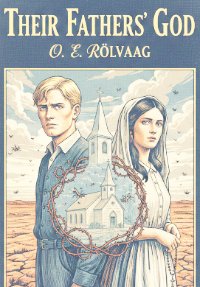
Their Father's God

By O. E. ROLVAAG

Their Fathers’ God (1931) is the powerful conclusion to O. E. Rølvaag’s epic trilogy of the Norwegian-American immigrant experience on the South Dakota prairies. Picking up where Peder Victorious left off, the novel shifts focus from the physical struggle of settling the land to the cultural and spiritual conflicts of the second generation. The story centers on the marriage of Peder Holm, a forward-thinking Norwegian Lutheran, and Susie Doheny, a devout Irish Catholic. As they attempt to build a life together, their relationship becomes a battlefield for the "clash of heritages":

  • Religious Tension: The couple struggles with the differing demands of their faiths, particularly regarding the baptism and upbringing of their children.

  • Cultural Identity: Peder wants to assimilate and modernise, while the pressures of their respective immigrant communities pull them back toward old-world traditions.

  • Environmental Hardship: Set against a backdrop of drought, grasshopper plagues, and the harsh reality of prairie farming, the physical environment mirrors the drying up of their emotional connection.

Major Themes

  • The Melting Pot Myth: Rølvaag explores the psychological toll of assimilation, suggesting that the blending of two distinct cultures is often a painful, destructive process rather than a seamless one.

  • Succession: The book examines whether the "God of the Fathers"—the rigid traditions and beliefs of the original pioneers—can survive or thrive in a rapidly changing American landscape.

While Giants in the Earth was a sweeping adventure of pioneer survival, Their Fathers’ God is a more intimate, psychological drama. It is often cited by historians and literary critics for its realistic, unsentimental portrayal of how religious and ethnic boundaries persisted even in the "limitless" American West.

Harper & Brothers. 1931. 350 p.

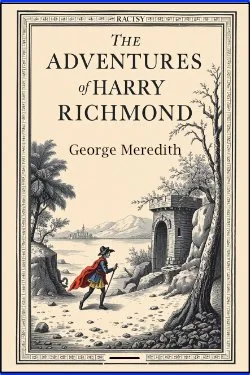
The Adventures Of Harry Richmond

By George Meredith. Designed and Edited with an Introduction by Colin Heston

The Adventures of Harry Richmond, first published in serial form between 1870 and 1871, then in full in 1871, occupies a fascinating place in the evolution of the English novel. A heady mixture of picaresque adventure, coming-of-age narrative, satire, romance, and psychological study, it is one of George Meredith’s most ambitious works. Beneath its surface as a lively and sometimes eccentric tale of a young man’s escapades lies an intricate meditation on the construction of identity, the conflict between appearance and reality, and the profound influence of family, class, and society. These themes connect the novel powerfully to concerns that dominate modern fiction.

At its core, Harry Richmond examines how identity is not simply inherited but assembled—through choice, resistance, deception, and chance. Harry Richmond is born into a web of conflicting influences: his father, Roy Richmond, is a charming but unscrupulous social climber whose life revolves around maintaining appearances and manipulating social structures; his grandfather, Squire Beltham, represents a rigid, landed English respectability that is both moralistic and emotionally cold. Caught between these poles, Harry’s life becomes a journey to define himself outside the narrow confines of these competing legacies.

Read-Me.Org Inc. New York-Philadelphia-Australia. 2025. 355p.

Robbery Under Arms

By Rolf Boldrewood

Robbery Under Arms was acclaimed as an Australian classic almost immediately after it appeared in book form in the late 1880s. It was praised for its excitement, romance and authentic picture of 1850s colonial life. As the first writer to attempt a long narrative in the voice of an uneducated Australian bushman, Rolf Boldrewood had created a story with enduring cultural resonance. Its continuing appeal and popularity have seen the tale frequently adapted for stage, radio, film and television. During all of this time the novel's text was not stable. It lost some material accidentally in its early typesettings, and these omissions were never repaired. It was later abridged by its author at the publisher's request, but the publisher botched his instructions. And, as with any much-reprinted work, thousands of small changes gradually crept into the text. This Academy Edition is the first full-scale critical edition of the novel. It presents the text as it originally appeared in instalments in the pages of the Sydney Mail in 1882-83. It allows readers to experience the first-person narration that Henry Lawson was inspired by, to appreciate how the special qualities of voice were partially flattened over time and to know exactly what material was omitted.

Univ. of Queensland Press, 2006, 479 pages

The Sealskin Cloak

By Rolf Boldrewood

In "The Sealskin Cloak," readers are transported to the rugged coast of Iceland, where a young woman discovers a mysterious sealskin cloak washed ashore. As she begins to wear the cloak, she finds herself embroiled in a web of ancient legends and dark magic that threaten to consume her very existence.

As the townspeople whisper of selkies and forbidden love, our protagonist must navigate treacherous waters both literal and metaphorical. With lyrical prose and haunting imagery, this tale weaves a mesmerizing narrative of sacrifice, redemption, and the unfathomable depths of the human heart.

"The Sealskin Cloak" is a captivating blend of folklore and fantasy, where the line between reality and myth blurs, inviting readers to confront their own desires and the consequences of chasing forbidden dreams. Join us on a journey where love and loss become intertwined, and the true cost of magic is revealed in unexpected ways.

Macmillan, 1896, 571 pages

The Squatter's Dream

By Rolf Boldrewood

"The Squatter's Dream" is a thought-provoking novel that delves into the complexities of identity, belonging, and the pursuit of the Australian dream. Set against the backdrop of the harsh Australian outback, the story follows the journey of a young squatter named Jack as he grapples with his aspirations for the future and the harsh realities of his present circumstances. Through vivid storytelling and rich character development, this novel challenges readers to question the true meaning of success and the sacrifices one must make to achieve it. "The Squatter's Dream" is a poignant exploration of hope, resilience, and the enduring human spirit in the face of adversity.

Macmillan and Company, 1892, 319 pages

The Miner's Right

By Rolf Boldrewood

The Miner's Right, as 'A Tale of the Australian Goldfields', is the counterpart of Boldrewood's bushranging classic . Written out of the author's immediate experience as Goldfields Commissioner at Gulgong in the 1870s, it also casts back to the Chinese riots at Lambing Flat, to the robbery of the gold-escort at Eugowra, and to some aspects of the Eureka stockade. While these events are set in the romantic framework of the nineteenth-century novel, the democratic sentiment of the time is reflected to a greater degree than Boldrewood himself could have realised. The Miner's Right is both an example of the colonial romance, and an account 'from the life' of conditions on the Australian goldfields in a time of social and political change.

Macmillan, 1890, 397 pages

The Last Chance: A Tale of the Golden West

By Rolf Boldrewood

In "The Last Chance: A Tale of the Golden West," readers are transported to the rugged landscapes of the Wild West during the height of the Gold Rush. Follow the gripping journey of a diverse cast of characters as they navigate the treacherous frontier in search of fortune, redemption, and a place to call home. Filled with heart-pounding action, intricate plot twists, and poignant moments of human connection, this novel captures the essence of resilience and the unyielding spirit of the pioneers who dared to chase their dreams in the untamed wilderness. "The Last Chance" is a compelling narrative that explores the triumphs and tragedies of the human experience against the backdrop of a defining era in American history.

Macmillan, 1905, 402 pages

Ghost Camp

By Rolf Boldrewood

In "Ghost Camp" by Rolf Boldrewood, readers are transported to the rugged Australian outback, where the forces of nature and the human spirit collide in a gripping tale of survival and redemption. Set against the backdrop of the unforgiving wilderness, this novel follows a diverse group of characters as they navigate the challenges of the frontier.

Boldrewood's vivid descriptions bring to life the harsh beauty of the Australian landscape, from the scorching heat of the day to the eerie stillness of the night. As the characters face their demons and forge unlikely alliances, they discover the true meaning of courage and sacrifice.

"Ghost Camp" is a timeless classic that delves into themes of loyalty, resilience, and the unbreakable bond between humans and the natural world. Boldrewood's masterful storytelling and rich character development will captivate readers from start to finish, making this a must-read for fans of historical fiction and adventure tales.

Macmillan, 1902 - 409 pages

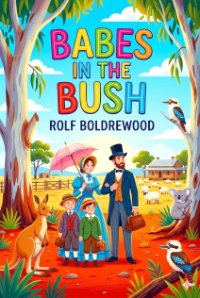
BABES IN THE BUSH

By Ronf Boldrewood

Imagine, if you will, the jarring transition of a family trading the velvet curtains and manicured gardens of an English manor for the sun-scorched, eucalyptus-scented vastness of the Australian interior. This is the heart of Rolf Boldrewood’s 1900 novel, Babes in the Bush, a sprawling narrative that serves as both a romantic adventure and a gritty survival manual for the Victorian era. While Boldrewood is often immortalized for the bushranging exploits of Captain Starlight in Robbery Under Arms, this particular work offers a more domestic, yet no less perilous, look at the "squatting" life—the high-stakes gamble of pastoral farming in the 19th-century colonies.

The story centers on the Effinghams, an aristocratic family whose financial foundation has crumbled beneath them in England. Facing the social death sentence of genteel poverty, they choose a path of radical reinvention: migrating to New South Wales to rebuild their dynasty. The title itself is a clever literary allusion to the old English folk tale "Babes in the Wood," but here, the "woods" are the unforgiving Australian scrub, and the "babes" are sophisticated adults and their children who are utterly illiterate in the language of the frontier. They are innocents abroad, armed with nothing but their British pluck and a very expensive, very impractical education.

What makes this introduction to colonial life so compelling is the man behind the pen. Rolf Boldrewood was the pseudonym for Thomas Alexander Browne, a man who didn't just write about the bush—he lived it. Having served as a police magistrate and a "squatter" (a settler who occupied large tracts of Crown land for grazing), Browne understood the soul-crushing weight of a three-year drought and the chaotic adrenaline of a cattle muster. His prose is thick with the authority of someone who has actually tasted the dust. When he describes the logistical nightmare of moving thousands of sheep across a dry plain or the specific architecture of a bark-roofed homestead, he isn't guessing; he’s reporting from the front lines of history.

However, it would be a disservice to the modern reader to ignore the specific "Victorian lens" through which this story is told. Boldrewood was a product of his time, and his writing is steeped in the ideology of Empire. The Australian landscape is frequently portrayed as a wild, "untamed" canvas waiting for the brush of British civilization to give it meaning. You will find a fascinating, if sometimes uncomfortable, tension between the family's desire to maintain English social hierarchies and the rugged, egalitarian reality of the Australian bush where a man’s worth is measured by his ability to track a stray bull rather than his family crest.

The novel also provides a window into the complex social ecosystem of the frontier. It isn't just the Effinghams vs. Nature; it is a world populated by "currency lads" (Australian-born whites), hardworking immigrants, and the Indigenous people whose land was being transformed. While Boldrewood’s depictions of Indigenous Australians are undeniably colonial and reflect the prejudices of the 1900s, they offer a stark, honest look at the mindset that drove the pastoral expansion. It is a story of resilience and adaptability, showing how the harshness of the Australian sun slowly bakes away the "Englishness" of the characters, leaving behind something harder, leaner, and distinctly Australian.

As you step into the world of the Effinghams, expect a narrative that moves with the slow, deliberate pace of a bullock team. It is a book of grand landscapes, sudden dangers, and the quiet triumph of building a home where none existed before. It remains a cornerstone of Australian colonial literature because it captures that pivotal moment when the Old World collided with the New, and the "Babes" either learned to walk the bush or were swallowed by it.

Read-Me.Org Inc. New York-Philadelphia-Australia. 2026. 353p.

A Modern Buccaneer Vol. 3

BY Rolf Boldrewood

A Modern Buccaneer Vol. 3 continues the thrilling adventures of Captain Lucas Black and his intrepid crew as they navigate the treacherous waters of the Caribbean in search of lost treasure and high-seas intrigue. In this latest installment, Captain Black faces his greatest challenge yet as he squares off against a formidable rival and uncovers long-buried secrets that threaten to upend everything he holds dear. With pulse-pounding action, unexpected twists, and a cast of colorful characters, this captivating tale of piracy, betrayal, and redemption will keep readers on the edge of their seats until the very last page. Join Captain Black on his daring quest in A Modern Buccaneer Vol. 3 and set sail for adventure like never before.

Macmillan and Company, 1894, 298 pages

A Modern Buccaneer Vol. 2

BY ROLF BOLDREWOOD

Step into a thrilling world of high-seas adventure and daring exploits with "A Modern Buccaneer Vol. 2." In this riveting sequel, Captain Morgan embarks on a new series of treacherous voyages, facing formidable foes and unexpected challenges at every turn. As alliances are tested and secrets are revealed, readers will be swept away on a pulse-pounding journey filled with twists and turns. With vivid storytelling and vibrant characters, this book is a must-read for fans of action-packed tales of the sea. Join Captain Morgan on another epic escapade in "A Modern Buccaneer Vol. 2."

Macmillan, 1895, 245 pages