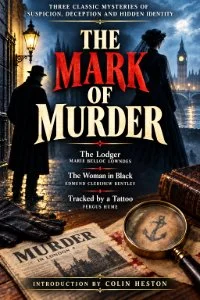
Edited by Colin Heston. Three classics of British crime and detective fiction: The Lodger by Marie Belloc Lowndes, The Woman in Black by E. C. Bentley, and Tracked by a Tattoo by Fergus Hume.
Three celebrated mysteries—carefully condensed and abridged for the modern reader in one substantial volume.
The original novels are substantial works written in the expansive style of their period. For this special edition, each has been carefully condensed and abridged, removing repetition, lengthy exposition, incidental description, and passages that do not materially advance the mystery. The aim is not to summarize or rewrite the novels, but to provide a more concentrated reading experience while retaining the essential storylines, principal characters, important clues, suspense, atmosphere, memorable scenes, and complete solutions of the originals.
In The Lodger, respectable but impoverished Robert and Ellen Bunting take a mysterious stranger into their London home. Mr. Sleuth brings desperately needed money, but his peculiar habits and nocturnal excursions coincide with a terrifying series of murders committed by the killer known as The Avenger. Gradually Mrs. Bunting is forced to contemplate an appalling possibility: has she given sanctuary to a murderer?
In The Woman in Black, wealthy American financier Sigsbee Manderson is found murdered at his English country residence. The brilliant Philip Trent sets about reconstructing the crime from apparently persuasive evidence. Yet E. C. Bentley has something more ingenious in mind. What appears certain may be false, and even the detective's most convincing deductions can lead him dangerously astray.
In Tracked by a Tattoo, Fergus Hume sends Scotland Yard detective Fanks into a labyrinth of murder, disguise, secret identities, suspicious characters, and misleading evidence. Among the bewildering clues is a physical mark—a tattoo—that may provide the thread capable of leading the detective to the truth.
Together, these three novels explore a theme at the heart of classic mystery fiction: the dangerous difference between appearance and reality. A respectable exterior may conceal guilt; an apparently decisive clue may deceive; and a murderer may remain hidden even while standing in plain sight.
This condensed and abridged edition allows readers to experience three substantial classics in a single accessible volume, preserving the mystery and character of the originals while moving more rapidly through their stories.
With an Introduction by Colin Heston, The Mark of Murder offers both longtime enthusiasts and newcomers an inviting way to rediscover three distinctive works from the formative age of crime and detective fiction.
Three classic mysteries—shortened, sharpened, and brought together in one volume, with the murder, mystery, characters, clues, and surprises intact.
.Read-Me.Org Inc. New York-Philadelphia-Australia. 2026. 294p.