Open Access Free Library
Fiction+Mediajpg.jpg

FICTION and MEDIA

CRIME AND MEDIA — TWO PEAS IN A POD

Posts in diversity
You're Dead -- So What: Media, Police, and the Invisibility of Black Women as Victims of Homicide

By Cherly L. Neely

Though numerous studies have been conducted regarding perceived racial bias in newspaper reporting of violent crimes, few studies have focused on the intersections of race and gender in determining the extent and prominence of this coverage, and more specifically how the lack of attention to violence against women of color reinforces their invisibility in the social structure. This book provides an empirical study of media and law enforcement bias in reporting and investigating homicides of African American women compared with their white counterparts. The author discusses the symbiotic relationship between media coverage and the response from law enforcement to victims of color, particularly when these victims are reported missing and presumed to be in danger by their loved ones. Just as the media are effective in helping to increase police response, law enforcement officials reach out to news outlets to solicit help from the public in locating a missing person or solving a murder. However, a deeply troubling disparity in reporting the disappearance and homicides of female victims reflects racial inequality and institutionalized racism in the social structure that need to be addressed. It is this disparity this important study seeks to solve.

East Lansing, MI: Michigan State University Press, 2015. 125p.

Optimising Emotions, Incubating Falsehoods: How to Protect the Global Civic Body from Disinformation and Misinformation

By Vian Bakir • Andrew McStay

This open access book deconstructs the core features of online misinformation and disinformation. It finds that the optimisation of emotions for commercial and political gain is a primary cause of false information online. The chapters distil societal harms, evaluate solutions, and consider what must be done to strengthen societies as new biometric forms of emotion profiling emerge. Based on a rich, empirical, and interdisciplinary literature that examines multiple countries, the book will be of interest to scholars and students of Communications, Journalism, Politics, Sociology, Science and Technology Studies, and Information Science, as well as global and local policymakers and ordinary citizens interested in how to prevent the spread of false information worldwide, both now and in the future.

Cham: Palgrave Macmillan, 2022. 286p..

Murder Most Queer: The Homicidal Homosexual in the American Theater

By Jordan Schildcrout

The “villainous homosexual” has long stalked America’s cultural imagination, most explicitly in the figure of the queer murderer, a character in dozens of plays. But as society’s understanding of homosexuality has changed, so has the significance of these controversial characters, especially when employed by LGBT theater artists themselves to explore darker fears and desires. Murder Most Queer examines the shifting meanings of murderous LGBT characters in American theater over a century, showing how these representations wrestle with and ultimately subvert notions of gay villainy.

Ann Arbor, MI: University of Michigan Press, 2014. 247p.

The Mediatization of the O.J. Simpson /case: From Reality to Filmic Adaptation

By Tatjana Neubauer

F. Scott Fitzgerald once said: »Show me a hero, and I'll write you a tragedy.« In the 1990s, nobody fell deeper than O.J. Simpson. Once considered a national treasure, the athlete was accused of brutally slaying his ex-wife Nicole Brown and her friend Ronald Goldman on June 12, 1994. Within days, the media and public developed an unprecedented obsession with the story, turning a murder investigation and trial into a sensationalized reality show. Tatjana Neubauer examines the mediatization, deliberate manipulation, and the simplification of popular criminal trials for profit on television. She demonstrates that TV conflated legal proceedings into entertainment programming by commodifying events, people, and places.

Bielefeld, Germany: transcript Verlag, Bielefeld, 2023. 271p.

Ethics, Politics and Justice in Dante

Edited by Giulia Gaimari and Catherine Keen

Ethics, Politics and Justice in Dante presents new research by international scholars on the themes of ethics, politics and justice in the works of Dante Alighieri, including chapters on Dante’s modern ‘afterlife’.

Together the chapters explore how Dante’s writings engage with the contemporary culture of medieval Florence and Italy, and how and why his political and moral thought still speaks compellingly to modern readers. The collection’s contributors range across different disciplines and scholarly traditions – history, philology, classical reception, philosophy, theology – to scrutinise Dante’s Divine Comedy and his other works in Italian and Latin, offering a multi-faceted approach to the evolution of Dante’s political, ethical and legal thought throughout his writing career.

Certain chapters focus on his early philosophical Convivio and on the accomplished Latin Eclogues of his final years, while others tackle knotty themes relating to judgement, justice, rhetoric and literary ethics in his Divine Comedy, from hell to paradise. The closing chapters discuss different modalities of the public reception and use of Dante’s work in both Italy and Britain, bringing the volume’s emphasis on morality, political philosophy, and social justice into the modern age of the nineteenth, twentieth, and twenty-first centuries.

London: UCL Press, 2019. 192p.

Tainted Souls and Painted Faces: The Rhetoric of Fallenness in Victorian Culture

By Amanda Anderson

Prostitute, adulteress, unmarried woman who engages in sexual relations, victim of seduction—the Victorian "fallen woman" represents a complex array of stigmatized conditions. Amanda Anderson here reconsiders the familiar figure of the fallen woman within the context of mid-Victorian debates over the nature of selfhood, gender, and agency. In richly textured readings of works by Charles Dickens, Elizabeth Gaskell, Dante Gabriel Rossetti, and Elizabeth Barrett Browning, among others, she argues that depictions of fallen women express profound cultural anxieties about the very possibility of self-control and traditional moral responsibility.

Ithaca, NY: Cornell University Press, 1993. 264p.

Print, Publicity and Radicalism in the 1790s

By Jon Lee

Jon Mee explores the popular democratic movement that emerged in the London of the 1790s in response to the French Revolution. Central to the movement’s achievement was the creation of an idea of ‘the people’ brought into being through print and publicity. Radical clubs rose and fell in the face of the hostile attentions of government. They were sustained by a faith in the press as a form of ‘print magic,’ but confidence in the liberating potential of the printing press was interwoven with hard-headed deliberations over how best to animate and represent the people. Ideas of disinterested rational debate were thrown into the mix with coruscating satire, rousing songs, and republican toasts. Print personality became a vital interface between readers and print exploited by the cast of radicals returned to history in vivid detail by Print, Publicity, and Popular Radicalism.

Cambridge, UK: Cambridge University Press, 2016. 286p.

On Odysee: The Role of Blockchain Technology for Monetisation in the Far-Right Online Milieu

By Paula Matlach, Dominik Hammer and Christian Schwieter

This is a translation of a report first published in German on 10 August 2022 under the title “Auf Odysee: Die Rolle von Blockchain-Technologie für die Monetarisierung im rechtsextremen Onlinemilieu“.

Odysee is one of the “alternative” social media platforms identified by ISD Germany researchers as part of their project “Countering Radicalization in Right-Wing Extremist Online Subcultures,” funded by the German Federal Ministry of Justice. The video hosting portal, which markets itself as a YouTube alternative and hosts similar functions, relies on blockchain technology to provide platform-specific monetization opportunities that offer financial incentives. These “incentivized” platforms are structured to reward users for their activities – e.g. publishing, liking and distributing posts – by paying them cryptocurrencies. The use of decentralized blockchain technology in this context is often accompanied by promises of unmoderated exchange and anonymity. This and the opportunities to make profits are particularly interesting for right-wing extremists, “lateral thinkers” and conspiracy ideologues, whose content is often deleted on established platforms and who rely on financial support from their supporters. In this way, right-wing extremists can not only disseminate anti-constitutional content on the Internet undisturbed, but even earn money from it. For the far-right online milieu, Odysee serves as a regulation-free retreat or as part of a multiplatform strategy, or backup option. Whether it can be successful in the long run depends, among other things, on the fluctuating value of cryptocurrencies. Another determining factor is how investors who have lost money due to fraud or a drop in the value of cryptocurrencies on Odysee behave. As a crypto-related space, the platform is an ideal recruitment space for right-wing extremists who want to convince disappointed investors of their ideology. 

Beirut; Berlin; London; Paris; Washington DC : Institute for Strategic Dialogue (ISD), 24. 32p.

Under-Moderated, Unhinged and Ubiquitous: Al-Shabaab and the Islamic State Networks on Facebook 

By Moustafa Ayad, Anisa Harrasy, Mohammed Abdullah A. 

Researchers at the Institute for Strategic Dialogue (ISD) led a two-year investigation into the online media ecosystem of al-Shabaab and the Islamic State in Africa, analyzing the role of “independent news” outlets and their intersections with hundreds-strong networks of amplifier profiles on Facebook linked to a number of central pages identifying themselves as “media outlets” or “media personalities” operating in Somali, Kiswahili and Arabic. Researchers found that the network of support for al-Shabaab and Islamic State extended across several platforms, including decentralized messaging applications such as Element and RocketChat, and encrypted messaging platforms such as Telegram, as well as Twitter, YouTube and Facebook.  A qualitative cross-platform analysis showed the most active, networked, and multilingual ecosystem of support for al-Shabaab and the Islamic State existed on Facebook, where profiles and pages classified as “media outlets” were sharing terrorist content openly and eschewing private groups and profiles. The content that ISD researchers observed through the networks is often linked to “media” and “media personality” pages in Somali, Kiswahili and Arabic, and not only violates the platform’s community guidelines, but also points to language moderation blind spots that have been previously documented by journalists as well as whistleblowers.

Beirut; Berlin; London; Paris; Washington DC : Institute for Strategic Dialogue (ISD), 2022. 22p.

Algorithms as a Weapon Against Women; How YouTube Lures Boys and Young Men into the ‘Manosphere’

By Elise Thomas, Kata Balint

This research documents how YouTube’s algorithms contribute to promoting misogynistic, anti-feminist and other extremist content to Australian boys and young men. Using experimental accounts, this research tracks the content that YouTube, and their new ‘YouTube Shorts’ feature, routinely recommends to boys and young men. This short-term, qualitative study involved analysing algorithmic recommendations and trajectories provided to 10 experimental accounts. As the study progressed, each account was recommended videos with messages antagonistic towards women and feminism. Following the recommendations and viewing and liking the suggested content resulted in more overtly misogynist ‘Manosphere’ and ‘incel’ content being recommended. The study found that while the general Youtube interface recommended broadly similar content to topics the accounts originally engaged with, the new shorter video feature, called YouTube Shorts, appears to operate quite differently. Shorts seems to optimise more aggressively in response to user behaviour and show more extreme videos within a relatively brief timeframe. On Shorts, all accounts were shown vastly similar and sometimes even the same specific content from right-wing and self-described ‘alt-right’ content creators. The algorithm did not make any distinction between the underage and adult accounts in terms of the content served.

Beirut; Berlin; London; Paris; Washington DC : Institute for Strategic Dialogue (ISD), 2022. 24p.

Researching the Evolving Online Ecosystem: Telegram, Discord & Odysee

By Henry Tuck, Jakob Guhl, Julia Smirnova, Lea Gerster and Oliver Marsh

Harmful actors use an ever-expanding range of digital spaces to spread harmful ideologies and undermine human rights and democracy online. Understanding their evolving ideas, online networks and activities is critical to developing a more comprehensive evidence base to inform effective and proportional efforts to counter them. But creating that evidence base can challenge the technical capabilities, resources, and even ethical and legal boundaries of research. We are concerned that all these may be getting worse, just as the options for spreading harm online increase. It should therefore be of concern that in many instances it is increasingly hard to conduct digital research in a systematic, ethical and legal manner. This results in a situation where difficult trade offs have to be made between competing goods, including the desire to understand and mitigate harmful content and behaviour online, the preservation of privacy and the adherence to legal agreements. We argue in this report that this does not need to be the case; solutions are available,…

Beirut; Berlin; London; Paris; Washington DC : Institute for Strategic Dialogue (ISD), 2023. 60p.

Hatescape: An In-Depth Analysis of Extremism and Hate Speech on TikTok

By Ciarán O’Connor

This report aims to provide an in-depth analysis on the state of extremism and hate on TikTok. It is the culmination of three months of research on a sample of 1,030 videos, equivalent to just over eight hours of content, posted on the social media platform. These videos were used to promote hatred, as well as glorify extremism and terrorism. ISD set out to examine the state of hate and extremism on TikTok in two ways. The first objective involved analysing how individuals or groups promote hateful ideologies and target people on the platform based on numerous protected attributes such as ethnicity, religion, gender or others. Second, using the same framework, ISD investigated how features on TikTok like profiles, hashtags, share functions, video effects and music are used to spread hate. This report seeks to start a conversation around how platforms like TikTok can improve their own practices to protect users from harm. Additionally, it underscores the clear need for independent oversight of such platforms, which currently leave users and the wider public open to significant risks to their health, security and rights.

Beirut; Berlin; London; Paris; Washington DC : Institute for Strategic Dialogue (ISD), 2021. 57p.

Cash for Comments: How YouTube's Super Chats Enable the Platform & Creators to Profit from Conspiracies, Misinformation & Calls for Violence

By Ciarán O’Connor

In collaboration with the Southern Poverty Law Center, ISD conducted research to examine the use and misuse of YouTube Super Chats, a tool that allows creators to monetise comments in their livestream chat feeds, that are an increasingly important source of revenue for both YouTube and creators on the platform. The report features three case studies examining popular political commentary and content channels; Timcast IRL, The Young Turks and Right Side Broadcasting Network. In the past, Super Chats have been used by extremists on the platform as a source of generating revenue and, as this report demonstrates, Super Chats continue to enable creators and YouTube to profit from comments that promote violence, conspiracy theories, misinformation and hate. The report features three case studies of popular YouTube highlights YouTube’s failure to effectively enforce its own community guidelines on Super Chats and includes recommendations on how the platform can address this enforcement gap.

Beirut; Berlin; London; Paris; Washington DC : Institute for Strategic Dialogue (ISD), 2022. 18p.

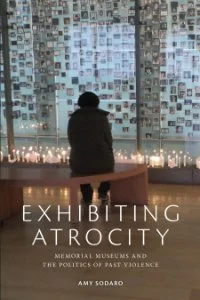
Exhibiting Atrocity: Memorial Museums and the Politics of Past Violence

By Amy Sodaro 

Through a global comparative approach, Amy Sodaro uses in-depth case studies of five exemplary memorial museums that commemorate a range of violent pasts and allow for a chronological and global examination of the form: the US Holocaust Memorial Museum in Washington, DC; the House of Terror in Budapest; the Kigali Genocide Memorial Centre in Rwanda; the Museum of Memory and Human Rights in Santiago, Chile; and the National September 11 Memorial Museum in New York. Together, these case studies illustrate the historical emergence and global spread of the memorial museum and show how this new cultural form of commemoration is intended to be used in contemporary societies around the world emerging from widely divergent forms of political violence.

New Brunswick, NJ: Rutgers University Press, 2018. 227p.

Making the White Man's West: Whiteness and the Creation of the American West

By Jason E. Pierce

In the early nineteenth century, critics like Zebulon Pike and Washington Irving viewed the West as a “dumping ground” for free blacks and Native Americans, a place where they could be segregated from the white communities east of the Mississippi River. But as immigrant populations and industrialization took hold in the East, white Americans began to view the West as a “refuge for real whites.” The West had the most diverse population in the nation with substantial numbers of American Indians, Hispanics, and Asians, but Anglo-Americans could control these mostly disenfranchised peoples and enjoy the privileges of power while celebrating their presence as providing a unique regional character. The first comprehensive study to examine the construction of white racial identity in the West, Making the White Man’s West shows how these two visions of the West shaped the history of the region and influenced a variety of contemporary social issues in the West today. 

Boulder: University Press of Colorado, 2016. 323p.

Ficciones

By Jorge Luis Borges

From the cover: ". unquestionably the most brilliant South American writing today. . .one of the genuine prose talents of our pe- riod. Written with a classical economy of means and under the control of a mind of wide culture and deep sensitivity, his stories will continue echoing in the minds of his readers as do those of Franz Kafka." -Herald Tribune Books

NY. Grove Press. 1962. 164p. USED BOOK. CONTAINS MARK-UP.

Sex Scene:Media and the Sexual Revolution

Edited by Eric Schaefer

Sex Scene suggests that what we have come to understand as the sexual revolution of the late 1960s and early 1970s was actually a media revolution. In lively essays, the contributors examine a range of mass media—film and television, recorded sound, and publishing—that provide evidence of the circulation of sex in the public sphere, from the mainstream to the fringe. They discuss art films such as I am Curious (Yellow), mainstream movies including Midnight Cowboy, sexploitation films such as ;Mantis in Lace, the emergence of erotic film festivals and of gay pornography, the use of multimedia in sex education, and the sexual innuendo of The Love Boat. Scholars of cultural studies, history, and media studies, the contributors bring shared concerns to their diverse topics. They highlight the increasingly fluid divide between public and private, the rise of consumer and therapeutic cultures, and the relationship between identity politics and individual rights. The provocative surveys and case studies in this nuanced cultural history reframe the "sexual revolution" as the mass sexualization of our mediated world.

Durham, NC: Duke University Press, 2014. 481p.

The Propagation of Misinformation in Social Media: A Cross-platform Analysis

Edited by Richard Rogers

There is growing awareness about how social media circulate extreme viewpoints and turn up the temperature of public debate. Posts that exhibit agitation garner disproportionate engagement. Within this clamour, fringe sources and viewpoints are mainstreaming, and mainstream media are marginalized. This book takes up the mainstreaming of the fringe and the marginalization of the mainstream. In a cross-platform analysis of Google Web Search, Facebook, YouTube, Reddit, Twitter, Instagram, 4chan and TikTok, we found that hyperpartisan web operators, alternative influencers and ambivalent commentators are in ascendency. The book can be read as a form of platform criticism. It puts on display the current state of information online, noting how social media platforms have taken on the mantle of accidental authorities, privileging their own on-platform performers and at the same time adjudicating between claims of what is considered acceptable discourse.

Amsterdam: Amsterdam University Press, 2023. 246p.

Women and Crime in Post-Transitional South African Crime Fiction: A Study of Female Victims, Perpetrators and Detectives

By Sabine Binder

In this ground-breaking study, Sabine Binder analyses the complex ways in which female crime fictional victims, detectives and perpetrators in South African crime fiction resonate with widespread and persistent real crimes against women in post-apartheid South Africa. Drawing on a wide range of crime novels written over the last decade, Binder emphasises the genre’s feminist potential and critically maps its political work at the intersection of gender and race. Her study challenges the perception of crime fiction as a trivial genre and shows how, in South Africa at least, it provides a vibrant platform for social, cultural and ethical debates, exposing violence, misogyny and racism and shedding light on the problematics of law and justice for women faced with crime. Readership: All interested in crime fiction and its gender/racial political potential, its cultural relevance, its ethics and aesthetics, in South Africa and beyond.

Leiden, NETH: Brill. 2020. 252p.

Theatres Of Human Sacrifice: From Ancient Ritual to Screen Violence

By Mark Pizzato

From the Preface: Why do humans perform acts of violence for a watching audience? This book

explores the performance of violence in various cultures, from ancient human and animal sacrifices to modern sports and cinema, through psychoanalytic theories and theatrical paradigms. How is the sublimation of human sacrifice today, on sports fields and movie screens, like and unlike actual bloodshed in prior cultures? Does it create a current community of ritual belief in the divine powers of mythic heroes and demons? What effects might melodramatic violence have on a mass audience--with purely good and evil forces battling apocalyptically onscreen especially after September 11, 2001, and the subsequent "war on terrorism" in our new millennium? Is a fundamental catharsis of fear and desire, of terrorist paranoia and capitalist greed, still pos- sible today, through complex characters and tragic violence, involving our mass-media warriors and godlike stars?

NY. SUNY Press. 2005. 260p. CONTAINS MARK-UP