
Open Access Free Library
Fiction+Mediajpg.jpg

FICTION and MEDIA

CRIME AND MEDIA — TWO PEAS IN A POD

Posts tagged French Revolution
AGAINST ALL ODDS: THE BLACK TULIP

by Colin Heston (Author), Alexandre Dumas (Author)

Against All Odds: The Black Tulip is a timeless historical novel by Alexandre Dumas that blends romance, suspense, and moral courage into a quietly powerful tale of perseverance in the face of injustice.

Set in the Dutch Republic during the political chaos of 1672, the story unfolds as fear and intrigue tear a nation apart. While violence and ambition dominate public life, Cornelius van Baerle pursues a far more fragile dream: to cultivate the world’s first perfect black tulip. His devotion to this ideal—symbolizing beauty, patience, and order—sets him apart in a society consumed by suspicion.

Betrayed by jealousy and falsely accused of treason, Cornelius is cast into prison, where his future appears lost. Yet even behind stone walls, hope survives. With the help of Rosa, the jailer’s daughter, he continues his delicate work in secrecy, risking everything to protect his dream. As rivalry intensifies and danger closes in, the black tulip becomes more than a prize—it becomes a testament to integrity, love, and resilience against overwhelming odds.

Edited and introduced by Colin Heston, this paperback edition places Dumas’s novel in its historical and literary context, illuminating its enduring relevance and emotional depth. Elegant, moving, and rich with meaning, Against All Odds: The Black Tulip is a compelling story of quiet heroism—proof that even in the darkest times, hope can still bloom.

Read-Me.Org Inc. New York-Philadelphia-Australia. 2026. 261p.

Massacres Of The South: Not the USA

by Colin Heston (Author), Alexandre Dumas (Author)

In this gripping and unsettling volume, Alexandre Dumas—best known for his sweeping historical adventures—turns his formidable narrative power to one of the darkest chapters of European history. Massacres of the South: “Not THE USA”, introduced by Colin Heston, brings together Dumas’s haunting account of religious violence in southern France, where centuries of conflict between Catholics and Protestants erupted into cycles of vengeance, terror, and mass killing.

Originally part of Dumas’s Celebrated Crimes, this work reconstructs a landscape in which ideology hardened into hatred and neighbors became enemies. From the early convulsions of the Reformation through later uprisings and reprisals, Dumas reveals how massacre became not an aberration but a recurring instrument of power—sanctioned, remembered, and repeated. His narrative is both historical and psychological, exposing the mechanisms by which fear, belief, and authority combine to justify the unthinkable.

Colin Heston’s new introduction reframes these events for modern readers with a provocative comparative lens. By drawing parallels between the religious massacres of southern France and the racial and political violence of the American South in the nineteenth century, Heston challenges readers to reconsider the universality of collective violence. The subtitle—“Not THE USA”—is both ironic and incisive, underscoring how easily the patterns Dumas describes reappear across different societies, identities, and eras.

This edition restores a powerful and often overlooked work to contemporary attention, presenting it as more than a historical curiosity. It is a study in the anatomy of atrocity—how divisions become absolutes, how institutions fail, and how ordinary people are drawn into extraordinary cruelty. For readers interested in history, criminology, political conflict, or the enduring question of why societies turn against themselves, this volume offers a compelling and deeply relevant exploration.

Disturbing, illuminating, and unflinching, Massacres of the South stands as a reminder that the past is never as distant as it seems—and that the forces shaping it remain with us still.

Read-Me.Org Inc. New York-Philadelphia-Australia. 2026. 211p.

The Romance of Revolution-- Book Five

By Alexandre Dumas. Edited and introduced by Graeme R. Newman

Amazon KDP Book Description

Enter the most perilous phase of the French Revolution in Book Five of The Romance of Revolution, featuring Alexandre Dumas’s gripping novel, The Chevalier de Maison-Rouge. In this powerful continuation of his sweeping historical saga, Dumas shifts from the explosive birth of revolution to its darkest and most personal consequences.

Paris is no longer a city of hope, but of suspicion, fear, and relentless political upheaval. The monarchy has fallen, and Marie Antoinette, once Queen of France, now languishes in captivity, awaiting an uncertain fate. Amid this storm of violence and shifting loyalties, a daring royalist plot emerges—led by the mysterious and devoted Chevalier de Maison-Rouge—whose single aim is to rescue the Queen from imprisonment and certain death.

Yet nothing in revolutionary France is simple. As secret plans unfold, personal lives become entangled in the struggle. Maurice Lindey, a loyal republican, finds himself torn between duty and love as he becomes drawn into a conspiracy that challenges everything he believes. Trust is fragile, identities are uncertain, and the line between hero and traitor grows dangerously thin.

Edited and introduced by Graeme R. Newman, this volume situates Dumas’s narrative within the broader arc of the series, illuminating how The Chevalier de Maison-Rouge represents a turning point—from revolution as collective uprising to revolution as personal tragedy. Newman’s introduction highlights the profound human cost of political change and the way Dumas blends historical drama with emotional depth.

Rich in suspense, romance, and historical detail, Book Five of The Romance of Revolution reveals the Revolution at its most intense and intimate. It is a story of loyalty under siege, courage in the face of hopeless odds, and the enduring power of love in a world transformed by fear and fate.

Read-Me.Org Inc. New York-Philadelphia-Australia. 2026. p.308..

NOT NED KELLY: The Man in the Iron Mask

by Colin Heston (Author), Alexandre Dumas (Author)

Who was the mysterious prisoner forced to live behind a mask of iron—hidden from the world, erased from history, and known only in whispers? Was he a traitor, a political threat… or something far more dangerous: the king’s own brother?

In The Man in the Iron Mask, the final and most powerful chapter of Dumas’s sweeping Musketeer saga, the fate of France turns on a secret so explosive it must be buried in darkness. Set in the glittering yet ruthless court of Louis XIV, this gripping historical novel follows d’Artagnan and the aging musketeers as they are drawn into a conspiracy that challenges the very foundations of royal power.

Imprisoned in silence and steel, the masked man becomes the center of a daring plot—one that could replace a king, ignite civil war, and reshape the destiny of a nation. Loyalty and betrayal collide as ambition, justice, and friendship are tested to their limits.

This new edition, Not Ned Kelly, brings a fresh and provocative perspective. In his original introduction, Colin Heston explores the enduring mystery of the iron mask and places it in dialogue with the legend of Ned Kelly, the Australian bushranger who fashioned his own crude “iron mask” in defiance of authority. One mask imposed, the other chosen—together they reveal a timeless struggle over identity, power, and resistance.

More than a classic adventure, this is a profound meditation on secrecy, legitimacy, and the cost of power.

A masterpiece of historical fiction from one of the world’s greatest storytellers—now presented with a bold new interpretation for modern readers.

Read-Me.Org Inc. New York-Philadelphia-Australia. 2026. 406p.

The Romance of Revolution-- Book Four

By Alexandre Dumas. Edited and introduced by Graeme R. Newman

Step into the heart of revolution with Book Four of The Romance of Revolution, where Alexandre Dumas transforms one of history’s most dramatic upheavals into a vivid tapestry of passion, courage, and human struggle. This volume brings together two of the most powerful episodes in the series—Taking the Bastile and The Countess of Charny—capturing the moment when ideas erupt into action and a nation is irrevocably transformed.

In Taking the Bastile, Dumas recreates the iconic event that ignited the French Revolution. The storming of the fortress is no distant historical episode but a living, breathing drama, filled with urgency, danger, and the voices of ordinary people rising against tyranny. As the walls of the Bastille fall, so too does the illusion of absolute monarchy, replaced by the unpredictable force of popular will. Through unforgettable characters—idealists, citizens, prisoners, and leaders—Dumas shows how individuals are swept up into events far greater than themselves, yet remain central to its unfolding.

The Countess of Charny deepens the narrative, shifting from the explosive beginnings of revolution to its personal and emotional consequences. Here, the reader enters a world where loyalties are tested, families are divided, and love must survive amidst political chaos. The aristocracy, once secure at the centre of power, faces a future of uncertainty and loss, while the reforming energy of the Revolution grows ever more intense. Through richly drawn characters and intertwining relationships, Dumas reveals how historical change reshapes not only nations but the most intimate human bonds.

Edited and introduced by Graeme R. Newman, this volume places Dumas’s masterwork in its broader historical and literary context, offering readers a deeper appreciation of both the narrative and the extraordinary period it depicts. Newman’s introduction illuminates the continuity of the series and highlights how these two works mark a turning point—where the philosophical groundwork of earlier volumes gives way to the lived reality of revolution.

Sweeping, dramatic, and deeply human, Book Four of The Romance of Revolution is essential reading for anyone drawn to historical fiction, political drama, or the timeless questions of justice, power, and change. Dumas brings the French Revolution to life not as a distant event, but as an experience filled with urgency, complexity, and unforgettable characters—reminding us that history is always, at its core, a story about people.

Read-Me.Org Inc. New York-Philadelphia-Australia. 2026. p.368..

The Romance of Revolution-- Book Three

The Queen’s Necklace
By Alexandre Dumas. Edited and Introduced by Graeme R. Newman

Step into the glittering yet fragile world of late eighteenth-century France in The Queen’s Necklace, the dramatic third volume of Alexandre Dumas’s sweeping historical series The Romance of Revolution. In this richly layered narrative, Dumas brings together intrigue, ambition, and scandal at the very moment when the foundations of the French monarchy begin to crack.

Set against the dazzling backdrop of Versailles and the restless streets of Paris, the novel unfolds in 1784, a time when luxury and hardship coexist in stark and dangerous contrast. While the aristocracy continues its rituals of elegance, the people suffer under the weight of poverty and neglect. Out of this tension emerges a story that is both intimate and monumental, revealing how private actions can ignite public catastrophe.

At the heart of the narrative lies one of the most infamous scandals in French history: the Affair of the Diamond Necklace. Through the intertwined lives of a queen, a clever and desperate noblewoman, and a cast of courtiers, conspirators, and visionaries, Dumas crafts a tale in which illusion and reality blur, and reputation becomes more powerful than truth. Marie Antoinette appears not as a caricature of excess, but as a complex and vulnerable figure whose generosity and misjudgments alike contribute to her tragic fate. Opposite her stands Jeanne de la Motte, a woman driven by ambition and circumstance, determined to reclaim status in a society that has cast her aside.

As rumor spreads and perception takes hold, Dumas reveals a crucial insight: revolutions are not born in a single moment of upheaval, but in the slow erosion of trust. The glittering necklace at the center of the scandal becomes more than an object—it is a symbol of extravagance, illusion, and the fatal misunderstandings that can topple a kingdom.

This edition, edited and introduced by Graeme R. Newman, provides readers with a thoughtful and engaging entry into Dumas’s historical vision. The introduction situates the novel within its broader revolutionary context, illuminating its themes of power, perception, and inevitability while preserving the narrative’s literary richness and dramatic force.

Combining romance, history, and psychological insight, The Queen’s Necklace stands as one of Dumas’s most compelling explorations of how societies unravel. It is a story of intrigue and destiny, of individuals caught in forces beyond their control, and of a world on the brink of transformation.

Perfect for readers of historical fiction, lovers of classic literature, and anyone fascinated by the origins of the French Revolution, this volume offers both gripping storytelling and enduring insight into one of history’s most pivotal eras.

Read-Me.Org Inc. New York-Philadelphia-Australia. 2026. p.313..

The Romance of Revolution-- Book Two

By Alexandre Dumas
Edited and Introduced by Graeme R. Newman

The revolution is no longer a whisper—it is a wound.

In Memoirs of a Physician, the sweeping second volume of The Romance of Revolution, Alexandre Dumas carries readers from secret intrigue into the brutal realities of a society on the brink of collapse. What was hidden in shadows in Book One now erupts into the open—on the streets, in the courts, and in the lives of those caught in its path.

After a catastrophic public disaster leaves the streets of Paris littered with the dead and dying, the fragile divisions between aristocrat and commoner begin to shatter. Amid the chaos, a new voice rises—one that demands justice not for the privileged, but for the people. Figures such as Jean-Jacques Rousseau and the fiery young Jean-Paul Marat embody the powerful and dangerous ideas that are transforming thought into action.

At the center of it all remains the enigmatic Joseph Balsamo—magician, strategist, and master of influence—moving silently through a world where power is shifting and nothing is secure. As royal authority weakens and unrest spreads, even the court of Louis XV and the rising figures around Marie Antoinette cannot escape the gathering storm.

Personal drama and political upheaval collide in unforgettable ways. Love, obsession, ambition, and betrayal unfold against a backdrop of mounting crisis, as ordinary lives are swept into extraordinary events. No one is untouched. No one is safe.

Featuring a compelling new introduction by Graeme R. Newman, this edition reveals Memoirs of a Physician as a pivotal chapter in Dumas’s grand vision of revolution—where ideas ignite action, and history begins to turn.

The diagnosis has been made. The consequences are beginning.

Ideal for readers of:

  • Historical fiction and classic literature

  • French Revolution and Enlightenment history

  • Political drama and character-driven narratives

  • Dumas’s great multi-volume epics

Continue the series where revolution moves from conspiracy to consequence—and the world begins to change forever.

Read-Me.Org Inc. New York-Philadelphia-Australia. 2026. p.397..

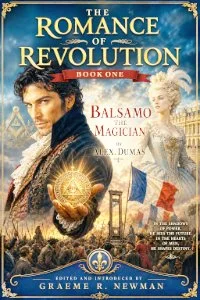
The Romance of Revolution-- Book One

By Alexandre Dumas
Edited and Introduced by Graeme R. Newman

From the master storyteller who brought the world The Three Musketeers comes a sweeping, electrifying tale of intrigue, prophecy, and power at the edge of revolution.

In Balsamo the Magician, Alexandre Dumas plunges readers into the shadowed world of secret societies, royal courts, and hidden knowledge in the final years before the French Revolution. At its center stands the enigmatic Joseph Balsamo—magician, alchemist, and master manipulator—who claims to see beyond the present and shape the destiny of nations.

Arriving in France under mysterious circumstances, Balsamo moves effortlessly between worlds: from clandestine rituals in ruined castles to the glittering yet fragile aristocracy of Versailles. With hypnotic power and unsettling insight, he exposes illusions, bends wills, and positions himself at the heart of forces that will soon shake Europe to its core.

Around him, a society begins to fracture. Noble families cling to fading privilege, while new ideas—drawn from thinkers like Jean-Jacques Rousseau—circulate among the restless and ambitious. Beneath the elegance of court life lies decay, contradiction, and a gathering storm.

This new edition, featuring a substantial introduction by Graeme R. Newman, repositions Balsamo the Magician as the opening movement in The Romance of Revolution—a bold series exploring how individuals, ideas, and hidden networks converge to remake the modern world.

Rich in atmosphere, driven by unforgettable characters, and charged with historical insight, this is Dumas at his most visionary: a novel where magic meets politics, and where the future is already taking shape in the shadows.

Read-Me.Org Inc. New York-Philadelphia-Australia. 2026. p.234.

Print, Publicity and Radicalism in the 1790s

By Jon Lee

Jon Mee explores the popular democratic movement that emerged in the London of the 1790s in response to the French Revolution. Central to the movement’s achievement was the creation of an idea of ‘the people’ brought into being through print and publicity. Radical clubs rose and fell in the face of the hostile attentions of government. They were sustained by a faith in the press as a form of ‘print magic,’ but confidence in the liberating potential of the printing press was interwoven with hard-headed deliberations over how best to animate and represent the people. Ideas of disinterested rational debate were thrown into the mix with coruscating satire, rousing songs, and republican toasts. Print personality became a vital interface between readers and print exploited by the cast of radicals returned to history in vivid detail by Print, Publicity, and Popular Radicalism.

Cambridge, UK: Cambridge University Press, 2016. 286p.