Open Access Free Library
Fiction+Mediajpg.jpg

FICTION and MEDIA

CRIME AND MEDIA — TWO PEAS IN A POD

Posts in justice
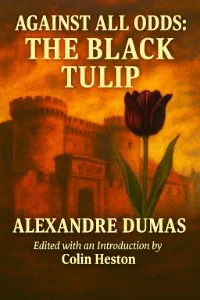
AGAINST ALL ODDS: THE BLACK TULIP

by Colin Heston (Author), Alexandre Dumas (Author)

Against All Odds: The Black Tulip is a timeless historical novel by Alexandre Dumas that blends romance, suspense, and moral courage into a quietly powerful tale of perseverance in the face of injustice.

Set in the Dutch Republic during the political chaos of 1672, the story unfolds as fear and intrigue tear a nation apart. While violence and ambition dominate public life, Cornelius van Baerle pursues a far more fragile dream: to cultivate the world’s first perfect black tulip. His devotion to this ideal—symbolizing beauty, patience, and order—sets him apart in a society consumed by suspicion.

Betrayed by jealousy and falsely accused of treason, Cornelius is cast into prison, where his future appears lost. Yet even behind stone walls, hope survives. With the help of Rosa, the jailer’s daughter, he continues his delicate work in secrecy, risking everything to protect his dream. As rivalry intensifies and danger closes in, the black tulip becomes more than a prize—it becomes a testament to integrity, love, and resilience against overwhelming odds.

Edited and introduced by Colin Heston, this paperback edition places Dumas’s novel in its historical and literary context, illuminating its enduring relevance and emotional depth. Elegant, moving, and rich with meaning, Against All Odds: The Black Tulip is a compelling story of quiet heroism—proof that even in the darkest times, hope can still bloom.

Read-Me.Org Inc. New York-Philadelphia-Australia. 2026. 261p.

Massacres Of The South: Not the USA

by Colin Heston (Author), Alexandre Dumas (Author)

In this gripping and unsettling volume, Alexandre Dumas—best known for his sweeping historical adventures—turns his formidable narrative power to one of the darkest chapters of European history. Massacres of the South: “Not THE USA”, introduced by Colin Heston, brings together Dumas’s haunting account of religious violence in southern France, where centuries of conflict between Catholics and Protestants erupted into cycles of vengeance, terror, and mass killing.

Originally part of Dumas’s Celebrated Crimes, this work reconstructs a landscape in which ideology hardened into hatred and neighbors became enemies. From the early convulsions of the Reformation through later uprisings and reprisals, Dumas reveals how massacre became not an aberration but a recurring instrument of power—sanctioned, remembered, and repeated. His narrative is both historical and psychological, exposing the mechanisms by which fear, belief, and authority combine to justify the unthinkable.

Colin Heston’s new introduction reframes these events for modern readers with a provocative comparative lens. By drawing parallels between the religious massacres of southern France and the racial and political violence of the American South in the nineteenth century, Heston challenges readers to reconsider the universality of collective violence. The subtitle—“Not THE USA”—is both ironic and incisive, underscoring how easily the patterns Dumas describes reappear across different societies, identities, and eras.

This edition restores a powerful and often overlooked work to contemporary attention, presenting it as more than a historical curiosity. It is a study in the anatomy of atrocity—how divisions become absolutes, how institutions fail, and how ordinary people are drawn into extraordinary cruelty. For readers interested in history, criminology, political conflict, or the enduring question of why societies turn against themselves, this volume offers a compelling and deeply relevant exploration.

Disturbing, illuminating, and unflinching, Massacres of the South stands as a reminder that the past is never as distant as it seems—and that the forces shaping it remain with us still.

Read-Me.Org Inc. New York-Philadelphia-Australia. 2026. 211p.

The Romance of Revolution-- Book Five

By Alexandre Dumas. Edited and introduced by Graeme R. Newman

Amazon KDP Book Description

Enter the most perilous phase of the French Revolution in Book Five of The Romance of Revolution, featuring Alexandre Dumas’s gripping novel, The Chevalier de Maison-Rouge. In this powerful continuation of his sweeping historical saga, Dumas shifts from the explosive birth of revolution to its darkest and most personal consequences.

Paris is no longer a city of hope, but of suspicion, fear, and relentless political upheaval. The monarchy has fallen, and Marie Antoinette, once Queen of France, now languishes in captivity, awaiting an uncertain fate. Amid this storm of violence and shifting loyalties, a daring royalist plot emerges—led by the mysterious and devoted Chevalier de Maison-Rouge—whose single aim is to rescue the Queen from imprisonment and certain death.

Yet nothing in revolutionary France is simple. As secret plans unfold, personal lives become entangled in the struggle. Maurice Lindey, a loyal republican, finds himself torn between duty and love as he becomes drawn into a conspiracy that challenges everything he believes. Trust is fragile, identities are uncertain, and the line between hero and traitor grows dangerously thin.

Edited and introduced by Graeme R. Newman, this volume situates Dumas’s narrative within the broader arc of the series, illuminating how The Chevalier de Maison-Rouge represents a turning point—from revolution as collective uprising to revolution as personal tragedy. Newman’s introduction highlights the profound human cost of political change and the way Dumas blends historical drama with emotional depth.

Rich in suspense, romance, and historical detail, Book Five of The Romance of Revolution reveals the Revolution at its most intense and intimate. It is a story of loyalty under siege, courage in the face of hopeless odds, and the enduring power of love in a world transformed by fear and fate.

Read-Me.Org Inc. New York-Philadelphia-Australia. 2026. p.308..

NOT NED KELLY: The Man in the Iron Mask

by Colin Heston (Author), Alexandre Dumas (Author)

Who was the mysterious prisoner forced to live behind a mask of iron—hidden from the world, erased from history, and known only in whispers? Was he a traitor, a political threat… or something far more dangerous: the king’s own brother?

In The Man in the Iron Mask, the final and most powerful chapter of Dumas’s sweeping Musketeer saga, the fate of France turns on a secret so explosive it must be buried in darkness. Set in the glittering yet ruthless court of Louis XIV, this gripping historical novel follows d’Artagnan and the aging musketeers as they are drawn into a conspiracy that challenges the very foundations of royal power.

Imprisoned in silence and steel, the masked man becomes the center of a daring plot—one that could replace a king, ignite civil war, and reshape the destiny of a nation. Loyalty and betrayal collide as ambition, justice, and friendship are tested to their limits.

This new edition, Not Ned Kelly, brings a fresh and provocative perspective. In his original introduction, Colin Heston explores the enduring mystery of the iron mask and places it in dialogue with the legend of Ned Kelly, the Australian bushranger who fashioned his own crude “iron mask” in defiance of authority. One mask imposed, the other chosen—together they reveal a timeless struggle over identity, power, and resistance.

More than a classic adventure, this is a profound meditation on secrecy, legitimacy, and the cost of power.

A masterpiece of historical fiction from one of the world’s greatest storytellers—now presented with a bold new interpretation for modern readers.

Read-Me.Org Inc. New York-Philadelphia-Australia. 2026. 406p.

The Romance of Revolution-- Book Four

By Alexandre Dumas. Edited and introduced by Graeme R. Newman

Step into the heart of revolution with Book Four of The Romance of Revolution, where Alexandre Dumas transforms one of history’s most dramatic upheavals into a vivid tapestry of passion, courage, and human struggle. This volume brings together two of the most powerful episodes in the series—Taking the Bastile and The Countess of Charny—capturing the moment when ideas erupt into action and a nation is irrevocably transformed.

In Taking the Bastile, Dumas recreates the iconic event that ignited the French Revolution. The storming of the fortress is no distant historical episode but a living, breathing drama, filled with urgency, danger, and the voices of ordinary people rising against tyranny. As the walls of the Bastille fall, so too does the illusion of absolute monarchy, replaced by the unpredictable force of popular will. Through unforgettable characters—idealists, citizens, prisoners, and leaders—Dumas shows how individuals are swept up into events far greater than themselves, yet remain central to its unfolding.

The Countess of Charny deepens the narrative, shifting from the explosive beginnings of revolution to its personal and emotional consequences. Here, the reader enters a world where loyalties are tested, families are divided, and love must survive amidst political chaos. The aristocracy, once secure at the centre of power, faces a future of uncertainty and loss, while the reforming energy of the Revolution grows ever more intense. Through richly drawn characters and intertwining relationships, Dumas reveals how historical change reshapes not only nations but the most intimate human bonds.

Edited and introduced by Graeme R. Newman, this volume places Dumas’s masterwork in its broader historical and literary context, offering readers a deeper appreciation of both the narrative and the extraordinary period it depicts. Newman’s introduction illuminates the continuity of the series and highlights how these two works mark a turning point—where the philosophical groundwork of earlier volumes gives way to the lived reality of revolution.

Sweeping, dramatic, and deeply human, Book Four of The Romance of Revolution is essential reading for anyone drawn to historical fiction, political drama, or the timeless questions of justice, power, and change. Dumas brings the French Revolution to life not as a distant event, but as an experience filled with urgency, complexity, and unforgettable characters—reminding us that history is always, at its core, a story about people.

Read-Me.Org Inc. New York-Philadelphia-Australia. 2026. p.368..

The Romance of Revolution-- Book Three

The Queen’s Necklace
By Alexandre Dumas. Edited and Introduced by Graeme R. Newman

Step into the glittering yet fragile world of late eighteenth-century France in The Queen’s Necklace, the dramatic third volume of Alexandre Dumas’s sweeping historical series The Romance of Revolution. In this richly layered narrative, Dumas brings together intrigue, ambition, and scandal at the very moment when the foundations of the French monarchy begin to crack.

Set against the dazzling backdrop of Versailles and the restless streets of Paris, the novel unfolds in 1784, a time when luxury and hardship coexist in stark and dangerous contrast. While the aristocracy continues its rituals of elegance, the people suffer under the weight of poverty and neglect. Out of this tension emerges a story that is both intimate and monumental, revealing how private actions can ignite public catastrophe.

At the heart of the narrative lies one of the most infamous scandals in French history: the Affair of the Diamond Necklace. Through the intertwined lives of a queen, a clever and desperate noblewoman, and a cast of courtiers, conspirators, and visionaries, Dumas crafts a tale in which illusion and reality blur, and reputation becomes more powerful than truth. Marie Antoinette appears not as a caricature of excess, but as a complex and vulnerable figure whose generosity and misjudgments alike contribute to her tragic fate. Opposite her stands Jeanne de la Motte, a woman driven by ambition and circumstance, determined to reclaim status in a society that has cast her aside.

As rumor spreads and perception takes hold, Dumas reveals a crucial insight: revolutions are not born in a single moment of upheaval, but in the slow erosion of trust. The glittering necklace at the center of the scandal becomes more than an object—it is a symbol of extravagance, illusion, and the fatal misunderstandings that can topple a kingdom.

This edition, edited and introduced by Graeme R. Newman, provides readers with a thoughtful and engaging entry into Dumas’s historical vision. The introduction situates the novel within its broader revolutionary context, illuminating its themes of power, perception, and inevitability while preserving the narrative’s literary richness and dramatic force.

Combining romance, history, and psychological insight, The Queen’s Necklace stands as one of Dumas’s most compelling explorations of how societies unravel. It is a story of intrigue and destiny, of individuals caught in forces beyond their control, and of a world on the brink of transformation.

Perfect for readers of historical fiction, lovers of classic literature, and anyone fascinated by the origins of the French Revolution, this volume offers both gripping storytelling and enduring insight into one of history’s most pivotal eras.

Read-Me.Org Inc. New York-Philadelphia-Australia. 2026. p.313..

The Romance of Revolution-- Book Two

By Alexandre Dumas
Edited and Introduced by Graeme R. Newman

The revolution is no longer a whisper—it is a wound.

In Memoirs of a Physician, the sweeping second volume of The Romance of Revolution, Alexandre Dumas carries readers from secret intrigue into the brutal realities of a society on the brink of collapse. What was hidden in shadows in Book One now erupts into the open—on the streets, in the courts, and in the lives of those caught in its path.

After a catastrophic public disaster leaves the streets of Paris littered with the dead and dying, the fragile divisions between aristocrat and commoner begin to shatter. Amid the chaos, a new voice rises—one that demands justice not for the privileged, but for the people. Figures such as Jean-Jacques Rousseau and the fiery young Jean-Paul Marat embody the powerful and dangerous ideas that are transforming thought into action.

At the center of it all remains the enigmatic Joseph Balsamo—magician, strategist, and master of influence—moving silently through a world where power is shifting and nothing is secure. As royal authority weakens and unrest spreads, even the court of Louis XV and the rising figures around Marie Antoinette cannot escape the gathering storm.

Personal drama and political upheaval collide in unforgettable ways. Love, obsession, ambition, and betrayal unfold against a backdrop of mounting crisis, as ordinary lives are swept into extraordinary events. No one is untouched. No one is safe.

Featuring a compelling new introduction by Graeme R. Newman, this edition reveals Memoirs of a Physician as a pivotal chapter in Dumas’s grand vision of revolution—where ideas ignite action, and history begins to turn.

The diagnosis has been made. The consequences are beginning.

Ideal for readers of:

  • Historical fiction and classic literature

  • French Revolution and Enlightenment history

  • Political drama and character-driven narratives

  • Dumas’s great multi-volume epics

Continue the series where revolution moves from conspiracy to consequence—and the world begins to change forever.

Read-Me.Org Inc. New York-Philadelphia-Australia. 2026. p.397..

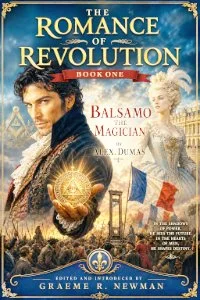
The Romance of Revolution-- Book One

By Alexandre Dumas
Edited and Introduced by Graeme R. Newman

From the master storyteller who brought the world The Three Musketeers comes a sweeping, electrifying tale of intrigue, prophecy, and power at the edge of revolution.

In Balsamo the Magician, Alexandre Dumas plunges readers into the shadowed world of secret societies, royal courts, and hidden knowledge in the final years before the French Revolution. At its center stands the enigmatic Joseph Balsamo—magician, alchemist, and master manipulator—who claims to see beyond the present and shape the destiny of nations.

Arriving in France under mysterious circumstances, Balsamo moves effortlessly between worlds: from clandestine rituals in ruined castles to the glittering yet fragile aristocracy of Versailles. With hypnotic power and unsettling insight, he exposes illusions, bends wills, and positions himself at the heart of forces that will soon shake Europe to its core.

Around him, a society begins to fracture. Noble families cling to fading privilege, while new ideas—drawn from thinkers like Jean-Jacques Rousseau—circulate among the restless and ambitious. Beneath the elegance of court life lies decay, contradiction, and a gathering storm.

This new edition, featuring a substantial introduction by Graeme R. Newman, repositions Balsamo the Magician as the opening movement in The Romance of Revolution—a bold series exploring how individuals, ideas, and hidden networks converge to remake the modern world.

Rich in atmosphere, driven by unforgettable characters, and charged with historical insight, this is Dumas at his most visionary: a novel where magic meets politics, and where the future is already taking shape in the shadows.

Read-Me.Org Inc. New York-Philadelphia-Australia. 2026. p.234.

The Gold Coast Regiment In The East African Campaign

By Hugh Clifford.. Introduction by Graeme Newman

The East African Campaign of the First World War remains one of the most demanding and least understood theatres of that global conflict. Far removed from the trenches of Europe, it unfolded across vast expanses of dense bush, swamps, mountains, and savannah—lands where climate, terrain, and disease were often deadlier adversaries than the enemy’s rifles. In this harsh environment, the soldiers of the Gold Coast Regiment distinguished themselves with a fortitude and endurance that earned them a lasting place in the annals of imperial military history.

The Gold Coast Regiment, drawn predominantly from the peoples of West Africa and led by British officers, brought to East Africa a unique blend of discipline, adaptability, and martial tradition. Their participation in the long pursuit of General Paul von Lettow‑Vorbeck’s elusive Schutztruppe represented both a severe test of their abilities and a defining moment in their collective identity. The campaign demanded not only courage under fire but also the capacity to march extraordinary distances, survive with minimal supplies, and maintain cohesion amid the ravages of tropical disease and the unpredictable rhythms of guerrilla warfare.

Sir Hugh Clifford, K.C.M.G.—administrator, colonial governor, and a man deeply familiar with West Africa—brings a rare perspective to this narrative. His closeness to the region and its peoples lends the work a depth of understanding that extends beyond the purely military. Clifford’s account is not merely a chronicle of battles and maneuvers; it is also a tribute to the character, loyalty, and steadfastness of the African soldiers who served with such distinction. He illuminates how, in the face of profound hardship, these men forged bonds of trust and cooperation with their officers, contributing decisively to the eventual success of British and Allied arms in the region.

This book therefore stands as both a historical record and a testament—an effort to ensure that the bravery and sacrifices of the Gold Coast Regiment are neither forgotten nor overshadowed by more widely known campaigns. In revisiting their story, readers gain insight not only into a pivotal chapter of African military history but also into the wider, often overlooked global dimensions of the First World War. The narrative that follows invites us to honour the endurance, resilience, and unyielding spirit of a regiment that marched far from home and left an indelible mark on the course of the war in Africa.

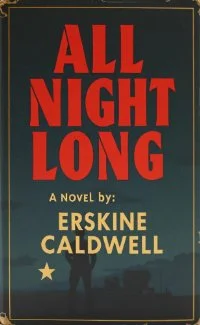
All Night Long: A Novel of Guerrilla Warfare in Russia

By Erskine Caldwell. Designed and Edited with an Introduction  by Colin Heston

When All Night Long appeared in 1942, Erskine Caldwell was already one of the most widely read—and most controversial—American novelists of his generation. Known primarily for his unsparing portrayals of poverty, violence, and moral stress in the American South, Caldwell here turned his attention outward, to a global conflict unfolding at unprecedented scale. Subtitled A Novel of Guerrilla Warfare in RussiaAll Night Long represents Caldwell’s direct literary engagement with the Second World War at the moment when its outcome remained deeply uncertain and when the Soviet Union, newly allied with the United States, had become a central symbol of resistance to fascist aggression.

Caldwell’s Russia is not a romanticized abstraction nor a detailed ethnographic portrait. Instead, it functions as a stark moral landscape shaped by occupation, deprivation, and constant threat. Villages, forests, and frozen terrain become arenas of endurance rather than scenery. The emphasis falls on night operations, secrecy, hunger, exhaustion, and the psychological toll of living in a perpetual state of danger. The title itself—All Night Long—signals this temporal and emotional register: war as an unbroken vigil, a continuous strain that erodes the boundary between action and survival.

For modern readers, the novel occupies an intriguing position in Caldwell’s body of work and in twentieth-century war literature more broadly. It stands apart from his Southern novels in geography but not in theme. As in Tobacco Road or God’s Little Acre, Caldwell examines how extreme conditions strip life down to its essentials and expose the structures—economic, political, or military—that govern human behavior. In All Night Long, the setting is international, but the underlying concerns remain consistent: power, exploitation, resilience, and the cost of endurance.

Read today, All Night Long also invites reflection on the evolving representation of guerrilla warfare itself. Long before such conflicts became a dominant feature of late-twentieth- and early-twenty-first-century military discourse, Caldwell recognized the strategic and moral complexity of irregular resistance. His novel anticipates later debates about asymmetrical warfare, civilian involvement, and the blurred lines between combatant and noncombatant—issues that continue to shape global conflicts.

Ultimately, All Night Long is less a novel about Russia per se than a novel about resistance under occupation. It captures a historical moment when global war demanded new forms of solidarity and new narrative frameworks to explain them. Caldwell’s achievement lies in his ability to translate that vast struggle into an intimate, unrelenting account of human persistence, sustained through darkness, danger, and the long hours of night.

NY.Book League of America. 1942. Read-Me.Org Inc. Australia, New York & Philadelphia. 2025. 161p.

The Grandissimes: A Story of Creole Life

By George W. Cable

The Grandissimes: A Story of Creole Life stands among the most vivid and penetrating literary portraits of early New Orleans—its tangled ancestries, its hierarchies of caste and color, and its rich cultural complexity at the turn of the nineteenth century. First published in 1880, George W. Cable’s novel announced the arrival of a distinctive Southern voice: one capable of blending romance, social critique, historical reconstruction, and an almost anthropological attention to the manners and moral contradictions of Creole society.

Cable, himself native to New Orleans, wrote at a moment when the American public was only beginning to recognize the significance of Louisiana’s unique heritage. The city had passed from French to Spanish control, then back to France, then suddenly into the hands of the United States through the Louisiana Purchase. In Cable’s imagination, this swirl of sovereignties—compounded by the interwoven legacies of France, Spain, Africa, the Caribbean, and Indigenous peoples—created a society unlike any other on the continent. The Grand–issimes dramatizes this world at a moment of profound transition, when old loyalties struggled against the pressures of Americanization, and when the boundaries of race, class, and honor were both fiercely guarded and constantly transgressed.

At its center stands the old Creole family of the Grandissimes, whose branches include both the proud white aristocracy and a free man of color who bears the same name—a blood relationship that must not, in respectable society, be spoken aloud. Through this intricate family history, Cable exposes the contradictions of slavery, the moral compromises of privilege, and the tragic limitations imposed on people of mixed heritage. Yet the novel is anything but a simple moral allegory. Its pages teem with humor, local color, memorable characters, and a richly textured atmosphere that evokes the city’s architecture, dialects, festivals, and customs with unmatched fidelity.

Cable’s realism—rare among Southern writers of his generation—caused both admiration and controversy. His depictions of racial injustice were received with anger in parts of the post-Reconstruction South, and his advocacy for Black civil rights would eventually drive him to relocate to the North. Today, his work is recognized as foundational: a precursor to later explorations of New Orleans identity by Kate Chopin, Lafcadio Hearn, Lyle Saxon, and many others.

This edition of The Grandissimes invites readers to rediscover Cable’s great novel not merely as an historical document but as a living work of art. Its themes of belonging, cultural collision, and the moral weight of inherited systems remain deeply resonant. In tracing the fate of a family—and of a city—at a crossroads, Cable offers a vision both critical and compassionate, illuminating a world whose complexities still echo through the streets of New Orleans today.

Read-Me.Org Inc. New York-Philadelphia-Australia. 2025. p.248.

The Inner Beams

By Afshin rad

The document The Inner Beams by Afshin Rad is a historical novel set in East Berlin during the final years of the Cold War, focusing on the brutal atmosphere created by the East German Ministry of State Security, the Stasi. The narrative combines political history with a deeply personal story, illustrating how authoritarianism corrodes ordinary lives. It opens with a preface explaining the power and reach of the Stasi, an organization that employed nearly a hundred thousand agents and twice as many informants under the chilling slogan that anyone who “thinks differently” is an enemy.

The story follows Nadia, a young, marginalized woman surviving on the fringes of society through prostitution while raising her daughter Maya. Despite her poverty, stigmatization, and abuse at the hands of neighbors and strangers, she displays resilience and a rebellious spirit. Her life becomes entangled with the violence and hypocrisy of both the state and the church. She is alternately vilified and desired, caught between accusations of being a spy and exploitation by priests who hide their own corruption.

As events unfold, Nadia becomes a victim of the Stasi’s cruelty. She is imprisoned, tortured, and left for dead, only to be saved by a compassionate old man who hides her and helps her plan to reclaim her daughter, who has been taken by Party officials. Their efforts culminate in a daring but tragic attempt to rescue the child from a powerful regime family. The old man sacrifices his life to protect Nadia, while she herself endures near-death encounters in the collapsing state.

Against the backdrop of the Berlin Wall’s fall and the chaos of 1989, Nadia’s fate is sealed in both tragedy and symbolic triumph. Though she dies violently, her memory and sacrifice become a posthumous inspiration. Her grave, once marked with disdain, is later reclaimed as a shrine to freedom, with an epitaph honoring her rebellious spirit.

The work blends history, fiction, and allegory to show how individuals—especially the marginalized and forgotten—resist oppression and become unwilling martyrs of liberty. Through Nadia’s story, the book captures the human cost of totalitarianism while leaving readers with a sense of dignity, defiance, and the enduring value of freedom.

Read-Me.Org Inc. New York-Philadelphia-Australia. 2025. 77p.

The Count Of Monte-Cristo: Volume Two


By Alexandre Dumas (Author), G. Staal (Illustrator), J.A. Beauce (Illustrator), & 2more Format: Kindle Edition

Few novels have captured the imagination of readers across generations as powerfully as The Count of Monte Cristo. First published in 1844, this sweeping tale of betrayal, revenge, and redemption is the work of Alexandre Dumas, one of France’s most celebrated literary figures. Set against the backdrop of post-Napoleonic France, the novel follows the transformation of Edmond Dantès, a young sailor whose promising future is shattered by the treachery of those he trusted. Wrongfully imprisoned in the Château d’If, Dantès emerges years later not as the man he once was, but as the enigmatic and wealthy Count of Monte Cristo—determined to exact justice on those who wronged him. At once a thrilling adventure and a profound exploration of human nature, The Count of Monte Cristodelves into themes of vengeance, justice, mercy, and the enduring power of hope. Dumas weaves a rich tapestry of characters and subplots, each contributing to the novel’s intricate moral landscape. His storytelling is both grand in scope and intimate in detail, offering readers a journey that is as emotionally resonant as it is exhilarating.
This two volume edition is based on the five volume 1888 English edition. It retains all text as in the original and includes most of the illustrations preserving the spirit and elegance of Dumas’s original edition, while making the novel accessible to contemporary readers. This version is most likely that of an anonymous translator who translated the work from the French for the publisher Chapman and Hall in 1846. There have been many translations in dozens of languages, and some in the 20th century basically rewriting the novel in modern prose and almost always considerably abridged.

Read-Me.Org Inc. New York-Philadelphia-Australia. 2025. 501 p.

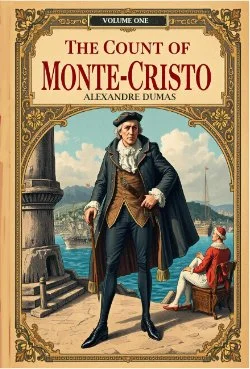
The Count Of Monte-Cristo: Volume One


By Alexandre Dumas (Author), G. Staal (Illustrator), J.A. Beauce (Illustrator), & 2more Format: Kindle Edition

Few novels have captured the imagination of readers across generations as powerfully as The Count of Monte Cristo. First published in 1844, this sweeping tale of betrayal, revenge, and redemption is the work of Alexandre Dumas, one of France’s most celebrated literary figures. Set against the backdrop of post-Napoleonic France, the novel follows the transformation of Edmond Dantès, a young sailor whose promising future is shattered by the treachery of those he trusted. Wrongfully imprisoned in the Château d’If, Dantès emerges years later not as the man he once was, but as the enigmatic and wealthy Count of Monte Cristo—determined to exact justice on those who wronged him. At once a thrilling adventure and a profound exploration of human nature, The Count of Monte Cristodelves into themes of vengeance, justice, mercy, and the enduring power of hope. Dumas weaves a rich tapestry of characters and subplots, each contributing to the novel’s intricate moral landscape. His storytelling is both grand in scope and intimate in detail, offering readers a journey that is as emotionally resonant as it is exhilarating.
This two volume edition is based on the five volume 1888 English edition. It retains all text as in the original and includes most of the illustrations preserving the spirit and elegance of Dumas’s original edition, while making the novel accessible to contemporary readers. This version is most likely that of an anonymous translator who translated the work from the French for the publisher Chapman and Hall in 1846. There have been many translations in dozens of languages, and some in the 20th century basically rewriting the novel in modern prose and almost always considerably abridged.

Read-Me.Org Inc. New York-Philadelphia-Australia. 2025. 456 p.

Round Up: The Stories Of Ring W. Lardner

By Ring W. Gardner (Author), Colin Heston (Preface) Format: Kindle Edition

Round Up gathers together the taut, muscular stories of Ring W. Lardner, a writer whose work bridges the divide between the mythologized West and its harsher, less forgiving realities. In these pages, Lardner is neither sentimental nor nostalgic. He strips the Western narrative to its barest elements, presenting us with a landscape that is both expansive and claustrophobic, and characters who are caught between the lure of freedom and the inevitability of fate.
Lardner’s contribution to the American short story lies in his ability to invest the familiar tropes of frontier life with psychological depth and moral ambiguity. His cowboys and ranchers are not mere archetypes; they are restless souls negotiating loyalty, isolation, and survival in a world where law and justice are provisional at best. The violence in these stories is never gratuitous—it is sudden, often senseless, and always carries a human cost. Lardner understands that the West was not only a place but also an idea, one that promised reinvention yet often delivered ruin.
What sets Lardner apart from many of his contemporaries is his prose: terse, unsentimental, yet charged with a quiet lyricism. His narratives move with the inevitability of a gathering storm, his dialogue as spare as the plains he describes. The result is a body of work that feels astonishingly modern in its refusal of easy resolutions.
In an era when the Western genre risks being dismissed as an artifact of popular culture, Round Up demands reconsideration. These are not mere adventure tales or moral fables. They are stories of a liminal world, where the boundaries between civilization and wilderness, justice and vengeance, myth and memory, blur and collapse. Lardner’s West is not simply the West that was; it is also the West as it continues to haunt the American imagination.

Vittoria


By George Meredith (Author), Colin Heston (Introduction)

Vittoria, published in 1867, is one of George Meredith’s most ambitious historical novels and serves as a sequel to his earlier work Sandra Belloni (originally titled Emilia in England). While Sandra Belloni explored the struggles of an Italian-born heroine within the confines of English provincial society, Vittoria shifts the scene entirely to Italy during one of the most turbulent and significant periods of the 19th century—the Italian Risorgimento, the movement for national unification and independence from foreign rule.
In Vittoria, Meredith combines the personal and the political, weaving a narrative in which the inner development of the heroine, Vittoria, mirrors the aspirations and tumult of the Italian national cause. The novel is set during the events of 1848, a year of revolutionary fervor across Europe, when Italy was in the throes of armed uprisings against Austrian dominance. Through the story of Vittoria, a gifted opera singer who becomes involved in the nationalist struggle, Meredith addresses questions of patriotism, duty, identity, and the costs of freedom. Ultimately, Vittoria is a novel about courage—the courage to defy oppression, to embrace love in the face of danger, and to live a life that is aligned with one’s highest convictions. It is both a stirring narrative of revolution and an enduring meditation on the responsibilities that come with freedom. For readers willing to engage with its intellectual demands, Vittoria offers a richly rewarding experience—a testament to Meredith’s belief that literature should challenge as well as enlighten.

Read-Me.Org Inc. New York-Philadelphia-Australia. 2025. 358p.

5 Grams: Crack Cocaine, Rap Music, and the War on Drugs

By Dimitri A. Bogazianos

In 2010, President Barack Obama signed a law repealing one of the most controversial policies in American criminal justice history: the one hundred to one sentencing disparity between crack cocaine and powder whereby someone convicted of “simply” possessing five grams of crack—the equivalent of a few sugar packets—had been required by law to serve no less than five years in prison. In this highly original work, Dimitri A. Bogazianos draws on various sources to examine the profound symbolic consequences of America’s reliance on this punishment structure, tracing the rich cultural linkages between America’s War on Drugs, and the creative contributions of those directly affected by its destructive effects.

Focusing primarily on lyrics that emerged in 1990s New York rap, which critiqued the music industry for being corrupt, unjust, and criminal, Bogazianos shows how many rappers began drawing parallels between the “rap game” and the “crack game." He argues that the symbolism of crack in rap’s stance towards its own commercialization represents a moral debate that is far bigger than hip hop culture, highlighting the degree to which crack cocaine—although a drug long in decline—has come to represent the entire paradoxical predicament of punishment in the U.S. today.

UA Open. New York; London: NYU Press, 2011. 216p.

Murdering Masculinities: Fantasies of Gender and Violence in the American Crime Novel

by Gregory Forter

Though American crime novels are often derided for containing misogynistic attitudes and limiting ideas of masculinity, Greg Forter maintains that they are instead psychologically complex and sophisticated works that demand closer attention. Eschewing the synthetic methodologies of earlier work on crime fiction, Murdering Masculinities argues that the crime novel does not provide a consolidated and stable notion of masculinity. Rather, it demands that male readers take responsibility for the desires they project on to these novels.
Forter examines the narrative strategies of five novels--Hammett's The Glass Key, Cain's Serenade, Faulkner's Sanctuary, Thompson's Pop. 1280, and Himes's Blind Man with a Pistol--in conjunction with their treatment of bodily metaphors of smell, vision, and voice. In the process, Forter unearths a "generic unconscious" that reveals things Freud both discovered and sought to repress.

UA. Open. New York; London: NYU Press, 2000. 278p.

Romantic Outlaws, Beloved Prisons: The Unconscious Meanings of Crime and Punishment

By Martha Grace Duncan

An ex-convict struggles with his addictive yearning for prison. A law-abiding citizen broods over his pleasure in violent, illegal acts. A prison warden loses his job because he is so successful in rehabilitating criminals. These are but a few of the intriguing stories Martha Grace Duncan examines in her bold, interdisciplinary book Romantic Outlaws, Beloved Prisons.
Duncan writes: "This is a book about paradoxes and mingled yarns - about the bright sides of dark events, the silver linings of sable clouds." She portrays upright citizens who harbor a strange liking for criminal deeds, and criminals who conceive of prison in positive terms: as a nurturing mother, an academy, a matrix of spiritual rebirth, or a refuge from life's trivia. In developing her unique vision, Duncan draws on literature, history, psychoanalysis, and law. Her work reveals a nonutopian world in which criminals and non-criminals--while injuring each other in obvious ways--nonetheless live together in a symbiotic as well as an adversarial relationship, needing each other, serving each other, enriching each other's lives in profound and surprising fashion.

UA. Open. New York; London: NYU Press, 1996. 284p.

Victims in the News: Crime and the American news Media

MAY CONTAIN MARKUP

By Steven M. Chermak

In the gripping pages of this novel, readers are drawn into a world where mystery and suspense intertwine with raw human emotion. As the intricate plot unfolds, characters are forced to confront their deepest fears and desires, ultimately revealing the complexities of the human psyche. This thought-provoking narrative challenges readers to examine their own beliefs and motivations as they navigate a thrilling journey filled with unexpected twists and turns. A compelling blend of heart-pounding action and profound introspection, this book is sure to captivate readers from beginning to end.

Boulder. Oxford. Westview Press. 1995. 213p.