
Open Access Publisher and Free Library
Fiction+Mediajpg.jpg

FICTION and MEDIA

CRIME AND MEDIA — TWO PEAS IN A POD

Posts tagged Victorian morality
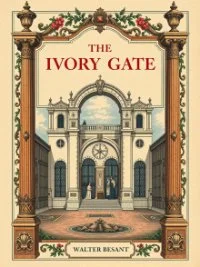
The Ivory Gate

By Walter Besant. Introduction by Colin Heston.

First published in 1893, The Ivory Gate stands among the late novels of Walter Besant, a writer whose career was defined by a sustained engagement with the moral, social, and psychological pressures of modern urban life. Appearing at the close of the Victorian era, the novel reflects both Besant’s long-standing commitment to social realism and his increasing interest in the interior life of the individual—especially the fragile boundary between aspiration and illusion.
The title itself announces the book’s governing metaphor. In classical and medieval literature, the “ivory gate” is the passage through which false dreams pass into waking life, as opposed to the gate of horn, from which true dreams emerge. Besant adapts this image to late-nineteenth-century conditions, using it to explore the seductive power of unrealized hopes, romantic delusions, and social fantasies that shape—and often distort—human conduct. The novel is less concerned with overt villainy than with self-deception: the quiet, persistent capacity of individuals to misread their circumstances and to substitute imagined futures for lived realities.
For modern readers, the novel remains strikingly relevant. Its exploration of illusion, self-fashioning, and the tension between inner fantasy and external reality resonates with contemporary concerns about identity, expectation, and social pressure. While its Victorian idiom and moral framework are firmly rooted in the nineteenth century, its psychological insights anticipate later treatments of self-deception and emotional displacement.
This new edition invites readers to reconsider The Ivory Gate not simply as a period piece, but as a thoughtful and understated meditation on the human tendency to live in dreams of our own making. In tracing the quiet tragedies that arise when those dreams eclipse judgment, Besant offers a work of enduring moral seriousness—one that illuminates both the anxieties of his age and the persistent vulnerabilities of our own.

A READ-ME.ORG CLASSIC REPRINT. New York-Philadelphia-Australia. 2025. 321p.
download free
kindle $2.99 -- Paperback $9.99
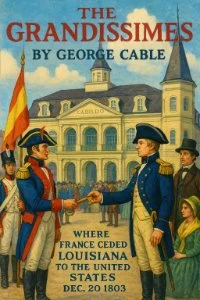
The Grandissimes: A Story of Creole Life

By George W. Cable

The Grandissimes: A Story of Creole Life stands among the most vivid and penetrating literary portraits of early New Orleans—its tangled ancestries, its hierarchies of caste and color, and its rich cultural complexity at the turn of the nineteenth century. First published in 1880, George W. Cable’s novel announced the arrival of a distinctive Southern voice: one capable of blending romance, social critique, historical reconstruction, and an almost anthropological attention to the manners and moral contradictions of Creole society.

Cable, himself native to New Orleans, wrote at a moment when the American public was only beginning to recognize the significance of Louisiana’s unique heritage. The city had passed from French to Spanish control, then back to France, then suddenly into the hands of the United States through the Louisiana Purchase. In Cable’s imagination, this swirl of sovereignties—compounded by the interwoven legacies of France, Spain, Africa, the Caribbean, and Indigenous peoples—created a society unlike any other on the continent. The Grand–issimes dramatizes this world at a moment of profound transition, when old loyalties struggled against the pressures of Americanization, and when the boundaries of race, class, and honor were both fiercely guarded and constantly transgressed.

At its center stands the old Creole family of the Grandissimes, whose branches include both the proud white aristocracy and a free man of color who bears the same name—a blood relationship that must not, in respectable society, be spoken aloud. Through this intricate family history, Cable exposes the contradictions of slavery, the moral compromises of privilege, and the tragic limitations imposed on people of mixed heritage. Yet the novel is anything but a simple moral allegory. Its pages teem with humor, local color, memorable characters, and a richly textured atmosphere that evokes the city’s architecture, dialects, festivals, and customs with unmatched fidelity.

Cable’s realism—rare among Southern writers of his generation—caused both admiration and controversy. His depictions of racial injustice were received with anger in parts of the post-Reconstruction South, and his advocacy for Black civil rights would eventually drive him to relocate to the North. Today, his work is recognized as foundational: a precursor to later explorations of New Orleans identity by Kate Chopin, Lafcadio Hearn, Lyle Saxon, and many others.

This edition of The Grandissimes invites readers to rediscover Cable’s great novel not merely as an historical document but as a living work of art. Its themes of belonging, cultural collision, and the moral weight of inherited systems remain deeply resonant. In tracing the fate of a family—and of a city—at a crossroads, Cable offers a vision both critical and compassionate, illuminating a world whose complexities still echo through the streets of New Orleans today.

Read-Me.Org Inc. New York-Philadelphia-Australia. 2025. p.248.

download free
kindle $2.99 -- paperback $9.99
Tainted Souls and Painted Faces: The Rhetoric of Fallenness in Victorian Culture

By Amanda Anderson

Prostitute, adulteress, unmarried woman who engages in sexual relations, victim of seduction—the Victorian "fallen woman" represents a complex array of stigmatized conditions. Amanda Anderson here reconsiders the familiar figure of the fallen woman within the context of mid-Victorian debates over the nature of selfhood, gender, and agency. In richly textured readings of works by Charles Dickens, Elizabeth Gaskell, Dante Gabriel Rossetti, and Elizabeth Barrett Browning, among others, she argues that depictions of fallen women express profound cultural anxieties about the very possibility of self-control and traditional moral responsibility.

Ithaca, NY: Cornell University Press, 1993. 264p.

download