

The Criminology Of Crime And Criminals: Medical, Biological And Psychological
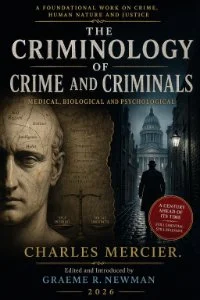
A Forgotten Classic of Criminological Thought—Reintroduced for the Twenty-First Century
Originally published in 1918 and now carefully edited and introduced by Graeme R. Newman, The Criminology of Crime and Criminals: Medical, Biological and Psychological restores Charles Mercier’s groundbreaking exploration of crime, punishment, criminal behavior, and social order.
Long before modern criminology embraced concepts such as situational crime prevention, environmental opportunity, offender decision-making, and restorative justice, Mercier argued that crime cannot be explained by biology, psychology, or environment alone. Instead, criminal behavior emerges from the interaction between human nature and circumstance, between personal disposition and criminal opportunity.
Rejecting the popular theories of his day, Mercier challenges the notion of the “born criminal” and dismisses simplistic environmental explanations of lawbreaking. His provocative and highly original analysis examines:
The psychological foundations of criminal conduct
The roles of instinct, reason, desire, self-control, and will
How opportunity and temptation shape criminal action
The classification of crimes and criminals
The relationship between crime, morality, and society
The purposes of punishment: deterrence, retaliation, reform, and reparation
The prevention, detection, and punishment of crime
Mercier’s central insight—that criminals are not a separate species but ordinary human beings responding differently to circumstances—remains strikingly relevant more than a century later.
Graeme R. Newman’s contemporary introduction places Mercier within the broader history of criminological thought and connects his ideas to modern developments in crime prevention and criminal justice. Together, Mercier and Newman illuminate enduring questions that continue to shape public policy and scholarly debate:
Why do people commit crimes? How should society respond? Is prevention more effective than punishment?
Part intellectual history, part criminological theory, and part social philosophy, this edition offers a fascinating window into the origins of modern criminology and the continuing struggle to understand crime and criminals.
Essential reading for students and scholars of criminology, criminal justice, sociology, psychology, legal history, and anyone interested in the causes of crime and the future of punishment.
Read-Me.Org Inc. New York-Philadelphia-Australia. 2026. 195p.