


By Thana Ridha and Sylvie Frigon
For over forty years, William Head on Stage (WHoS) has operated as an inmate-run prison theatre, making it one of Canada’s longest-standing prison arts initiatives.
Staging Prison Theatre in Canada: Setting the Spotlight on William Head on Stage delves into the story of WHoS through the voices of the men involved, offering a unique criminological perspective that situates their experiences within the prison context.
The analysis explores how WHoS creates an alternative space within the social and emotional realities of incarceration. By unlocking participants’ capacities, skills, and confidence, the initiative fosters a sense of agency and community both inside the prison and beyond. WHoS becomes a space for transformation, offering men opportunities to re-imagine themselves and build meaningful connections.
This work underscores the broader significance of arts-based initiatives like WHoS, not only within prisons but also in the fields of criminology, theatre, and community engagement. It offers valuable insights for correctional administrators, criminologists, theatre practitioners, scholars, students, and anyone interested in the intersection of art and rehabilitation.
By Katrina Scurrah, Swen Kuh, Mulu Woldegiorgis, Catherine Andersson, Sean Martin
Using data from Wave 1 (2013–14) and Wave 4 (2022) of Ten to Men: The Australian Longitudinal Study on
Male Health, we found: Higher-risk alcohol use was associated with men starting to use intimate partner violence (IPV) over time. Men with hazardous drinking at Wave 1 were 27% more likely to initiate IPV by Wave 4 than low-risk drinkers; men with harmful use or possible dependence were 57% more likely. The relationship between alcohol use and IPV was similar across the different forms of IPV measured (emotional-type abuse, physical violence and sexual abuse) and was strongest for the use of physical IPV. Men with harmful use/possible dependence had around double the risk (119%) of initiating physical IPV than low-risk drinkers.
How much men drank in a typical session mattered more than how often they drank. Men who typically drank 10+ standard drinks were 55% more likely to initiate IPV than non-drinkers; drinking frequency and age at first drink were not linked to later IPV initiation.
Overall scores for conformity to masculine norms were not associated with IPV initiation but some specific norms were. Higher scores on the measure, used in Wave 1, for the domains of playboy, violence and risk taking were associated with starting to use IPV. In contrast, patterns combining emotional openness, self-reliance and primacy of work were associated with a lower likelihood of starting to use IPV. Another masculinity-related scale that assessed gender-role identity was used in Wave 4 and there was no clear association with the use of IPV. There was little evidence that self-reported masculinities changed the strength of the relationship between alcohol use and IPV initiation. Higher-risk drinking was linked to IPV regardless of the strength between alcohol use and IPV initiation. Higher-risk drinking was linked to IPV regardless of the strength of conformity to these masculine norms. The combined highest-risk group (harmful/probable alcohol dependence plus high scores on the masculine norms measure used at Wave 1) showed at most a modest additional increase in risk of IPV use compared with either high alcohol risk or stronger conformity to specific masculine norms alone.
These findings suggest the following could enhance policy and practice to support IPV prevention efforts: Use alcohol harm reduction as a practical lever for IPV prevention. Strengthen routine alcohol screening and brief intervention/referral pathways in settings that see large numbers of men (primary care, mental health and community services), with clear, safe escalation pathways where IPV risk is identified. Prioritise indicators of heavier drinking in risk identification for IPV initiation. Policies and practice guidance should focus on current severity/patterns rather than drinking frequency alone for men, as these were the measures most predictive of later use of IPV. Target the specific masculine norms associated with IPV use. While this report found little evidence that these norms change the strength of the alcohol–IPV association, the highest observed risks tended to be among men with both higher-risk drinking and higher-risk masculine norm profiles. This suggests prevention and behaviour-change approaches may be particularly valuable when targeted to men already identified as higher risk (e.g. through alcohol-related risk) and should address norms related to violence acceptance, risk taking, sexual entitlement and status/power, and build skills such as emotion regulation and non-violent conflict management – integrated with alcohol-focused interventions where relevant. Taken together, these findings point to the potential value of coordinated alcohol and other drugs–family and domestic violence (AOD–FDV) pathways, rather than separate, parallel responses. This includes alcohol interventions that incorporate safe identification of family violence risk and enable appropriate referral, as well as specialist programs that address both alcohol-related harm and relevant attitudes and behaviours as part of a tailored response.
By Sophie King-Hill
This evidence review explores how masculinity influences offending, vulnerability and engagement with the criminal justice system. It examines the impact of gender norms, trauma and online influences, and considers how gender-informed, trauma-aware approaches can support prevention, rehabilitation and safer communities.

A Read-Me.Org Modernized-Classic. Abridged and adapted with an Introduction by Graeme R. Newman and Claude . William Healy and Augusta F. Bronner authors of the original book.
Delinquents and Criminals: Their Making and Unmaking is one of the most important and surprisingly modern works in the history of criminology. First published in 1926, pioneering researchers William Healy and Augusta F. Bronner asked a question that still challenges criminal justice systems today: What actually works in preventing young offenders from becoming adult criminals?
Drawing on the lives of hundreds of juvenile offenders tracked over many years in Chicago and Boston, the authors conducted one of America's first large-scale outcome studies of delinquency. Their findings were startling. Many young offenders who passed through courts, reform schools, and correctional institutions went on to criminal careers, while others successfully rebuilt their lives. Most striking was the discovery that similar youths experienced dramatically different outcomes depending on how their communities treated them.
This modernized edition brings Healy and Bronner's landmark study to contemporary readers in clear, accessible language while preserving the authors' original arguments, evidence, and conclusions. Their analysis challenges many popular assumptions about crime. They found little evidence that criminal careers were determined by heredity, nationality, religion, poverty alone, or innate character. Instead, they emphasized the importance of family life, peer influence, community conditions, probation, supervision, and effective intervention.
A century later, the book remains remarkably relevant. Its themes anticipate modern debates about evidence-based justice, rehabilitation, juvenile detention, parole, foster care, and crime prevention. Many policies now considered innovative were already being advocated by Healy and Bronner in the 1920s.
This abridged and modernized Read-Me.Org edition includes a new introduction, explanatory notes, and discussion questions that place the work in both its historical and contemporary context.
A fascinating classic for students, scholars, criminal justice professionals, policy makers, and anyone interested in how societies create, prevent, and respond to crime. Download the Original Book here.
Read-Me.Org Inc. New York-Philadelphia-Australia. 2026. p.74.

By Lindsay Graef, Aurelie Ouss
Despite increasing attention to prosecutors' role in shaping criminal justice outcomes, there is limited empirical research on what prosecutors do. While most theories of prosecutorial discretion emphasize overarching goals related to justice and safety, our paper shifts the focus toward the practical realities of the job, particularly in the lower courts. We propose a case management model of prosecutorial discretion, grounded in analyses of misdemeanor cases handled by the Philadelphia District Attorney's Office. Importantly, our dataset includes hearing-level prosecutor identifiers and decisions. By adapting established benchmarking methods, we identify credible counterfactuals and analyze how prosecutor actions influence case and defendant outcomes. We find that prosecutors vary in their case management skills, which are an important driver of conviction. Defendants fare better under prosecutors who secure fewer convictions, indicating negative consequences of conviction, but prosecutors who secure fewer convictions tend to be less effective in their day-to-day case management tasks. This highlights a fundamental tension in a prosecutor's work: prosecutors meeting office standards demonstrate worse outcomes in terms of future criminal justice contacts. Our findings underscore the need to rethink what makes an effective prosecutor in order to achieve policy goals such as public safety, rehabilitation, and efficient resource use.

by Graeme R. Newman with the assistance of Claude.
Can you stop crime before it starts, without fully knowing what causes it? A reader's guide to the 1936 symposium that gathered twenty-four programs trying to find out.
Preventing Crime: A Symposium, edited by Sheldon and Eleanor Glueck, brought together the directors of coordinated community councils, school bureaus, police prevention units, residential homes, child guidance clinics, a parent school, and boys' clubs, and asked each the same questions: what evidence shows the need for your program, how does it work, and how do you know whether it succeeds? The editors were candid from the start. Their title, they admitted in the preface, was optimistic, and a more accurate one would have been "Promising Efforts to Prevent Delinquency and Criminality." Only time and real evaluation, they wrote, could say whether these programs actually prevented anything.
The book is a portrait of what serious people believed about crime prevention in the depths of the Depression, and a case study in the gap between good intentions and good evidence. This Reader's Guide makes it accessible without replacing it. It explains what each program did, sets out the twelve principles the Gluecks drew from the contributions, and shows exactly what counted as proof of success in 1936, and how little of it would count today.
INSIDE THIS GUIDE
A reading plan and a chapter-by-chapter map of the original, with all twenty-five contributors
The Gluecks' opening argument: can crime be prevented without knowing its causes?
Twelve principles distilled from the programs, from starting early to using trained personnel
Community councils, school programs, police prevention bureaus, residential homes, clinics, and boys' clubs, program by program
A close look at "the audit problem": what each contributor offered as evidence, and what it actually showed
A worked example that tests one program's before-and-after numbers against six hard questions
What has changed since 1936, including the Cambridge-Somerville Youth Study's sobering results and decades of research on what works, what doesn't, and what's promising
Five common misreadings, a primer of evaluation terms, a glossary, an annotated reading list, an FAQ, 26 discussion questions and classroom activities
WHO IT'S FOR: Students of criminology, social work, education, public policy and program evaluation; practitioners designing youth programs; teachers and reading groups; and general readers curious about where crime prevention came from and why proving it works is so hard.
PLEASE NOTE: This is an independent guide, not an abridgment or edition of the original symposium. It does not reproduce the original's text and is not endorsed by the editors', or contributors', heirs. It is meant to be read alongside the original, which is in the public domain in the United States.
Written by Graeme R. Newman with the assistance of Claude, an AI model made by Anthropic. The AI-generated content is disclosed in accordance with Read-Me.Org policy.
Download the original book here.
Read-Me.Org Inc. New York-Philadelphia-Australia. 2026. p.54p.

By William D. Phillips, Jessica Dawney, Emily Hutton, Avery Adams, Lucy Strang, Katherine I. Morley, Nicola Kalk, Jennifer Bostock, Andrew Jones, Tom Ling, Tim Millar, Joanne Neale, John Strang, Jon Sussex, Jennifer Newbould
This study examined how treatment and recovery services are integrated with physical and mental health services following additional funding from England's drug strategy. Findings show wide variation in the extent and type of integration across local areas. While some progress has been made, more needs to be done to strengthen collaboration and achieve effective, person-centred care.
Key Findings
There is substantial variation in what services are offering across different local areas
While certain activities - such as embedding treatment and recovery staff in broader health services to encourage inward referrals - are relatively consistent across local areas, other initiatives are more localised. This is driven by variations in the stage of development of different services, differences in resourcing and local context, and the varying strength of existing relationships and connections.
We identify five models of integration for treatment and recovery services and an optimal example of an integrated care pathway.
We conceptualise the following models to help policymakers think about how to monitor, evaluate and communicate about service integration going forward:
Model 1 - single point of access
Model 2 - embedded workers
Model 3 - joint planned care
Model 4 - leveraging external support
Model 5 - building in-house expertise
.
Many treatment and recovery services are struggling to meet even basic needs due to high caseloads. Limited, short-term and inconsistent funding compounds these problems, making long-term planning and integration very difficult. Stigma, especially within mental health services, also remains a major barrier.
Recommendations
Central government should:
Facilitate the dissemination and implementation of the co-occurring mental health and substance use delivery framework
Identify priority interventions for service integration
Explore ring fenced, longer-term funding for integrating services
Examine ways in which integration efforts could be measured and monitored.
ICPs should:
Consider establishing a dedicated role for treatment and recovery services.
Treatment and recovery services should:
Provide basic mental health training to screen for and deliver mental health interventions
Strengthen relationships with other health services.
ICPs and treatment and recovery services should:
Ensure training on substance use is implemented across all healthcare settings, prioritising mental health services.
By Sarah Parkinson, Jessica Dawney, Fifi Olumogba, Fin Oades, Jennifer Newbould, Katherine I. Morley, Jennifer Bostock, Andrew Jones, Nicola Kalk, Tom Ling, Tim Millar, Joanne Neale, John Strang, Jon Sussex, Lucy Strang
We conducted a mixed-methods process evaluation of the first three years of implementation of the Treatment and Recovery Portfolio of the UK government's 10-year drug strategy, From Harm to Hope. We found that the Portfolio brought welcomed funding into the treatment and recovery sector after an extended period of disinvestment. The Portfolio has largely been implemented as planned, despite challenges related to funding uncertainty and some delays. Stakeholders involved in local implementation agreed with the Portfolio's priorities, highlighting the positive focus on boosting capacity within the sector, supporting collaboration between treatment and recovery and other parts of the system, and incorporating lived experience and recovery into treatment. However, the Portfolio has not yet achieved its aim of creating a world-class treatment system or a whole-system approach to alcohol and/or other drugs. The treatment and recovery sector has been negatively impacted by years of disinvestment, which has diminished the workforce's and the system's capacity and capabilities. These long-standing challenges cannot be quickly reversed with funding injections alone, and were under-estimated by the UK government when initially implementing the Portfolio. Addressing these issues requires long-term investment, improved training and professional development standards, and action within the health and social care system that makes it easier to collaborate with treatment and recovery services. Increasing the number of people in treatment without addressing these fundamental challenges.
Key Findings
Ring-fenced funding provided through the Portfolio was welcomed. However, uncertainty regarding long-term funding and restrictions on carrying funding from one year to the next were reported to impede long-term planning.
Central government departments largely implemented the Portfolio as planned. However, there were several significant delays, including the plans to integrate with physical and mental health services.
Many local stakeholders were satisfied with the level of flexibility they had in delivering the Portfolio, and commented positively on planning processes with OHID. However, they viewed reporting and reprofiling requirements of the Portfolio as onerous, and national targets set by DHSC as unrealistic.
Local stakeholders largely agreed with the Portfolio's priorities of boosting capacity, supporting collaboration with other parts of the system, and incorporating lived experience and recovery into treatment. However, they also identified gaps, including a perceived lack of focus on alcohol and prescription drugs.
The Portfolio's aims of creating a world-class treatment system and whole-system approach to alcohol and other drugs have not yet been achieved. The central government underestimated the scale of the challenges faced after years of disinvestment, which has diminished capacity and capabilities within the system. Long-standing challenges cannot be quickly reversed with funding injections alone.
Study participants expressed concern that the quality of services may decrease due to the push to increase numbers in treatment without adequate improvements to maintain a minimum standard of care. Achieving a world-class system will require balancing numbers in treatment with the need to ensure that each person receives good-quality care..
bby Bernard Hollander (Author), Graeme Newman (Introduction)
Why do people do what they know is wrong—and how much responsibility should they bear for their actions?
First published in 1922, Bernard Hollander’s The Psychology of Misconduct, Vice, and Crime: A Study of Conduct, Responsibility, and Moral Failing is a fascinating early attempt to understand wrongdoing through psychology rather than through moral condemnation alone. Drawing on twenty-five years of medical practice with patients suffering from nervous and mental disorders, Hollander examines the impulses, habits, emotions, circumstances, and failures of self-control that can lead ordinary people toward destructive or criminal behavior.
Moving across the emerging fields of psychology, psychiatry, and criminology, Hollander asks questions that remain strikingly familiar today. How do heredity and environment shape conduct? Why can one person resist temptation while another cannot? What roles do opportunity, habit, intoxication, anger, fear, acquisitiveness, and sexual desire play in misconduct? And at what point should psychological impairment affect our judgment of moral and legal responsibility?
Across twelve wide-ranging chapters, Hollander investigates the psychological foundations and causes of misconduct before turning to alcohol and drug habits, aggression and violence, suspicion and deceit, theft and crimes for gain, fear of consequences, sexual conduct, egotism and domination, moral weakness, responsibility, and treatment.
Of particular interest to readers of criminology is Hollander’s rejection of simplistic explanations based entirely upon free will. He sees behavior as emerging from the interaction of predisposition, upbringing, social environment, opportunity, competing motives, and the individual’s capacity for inhibition and self-control. His treatment of professional offenders also distinguishes calculated criminality from impulsive or psychologically troubled misconduct—an early recognition that there is no single psychological type called “the criminal.”
Hollander’s science is unmistakably that of his era. Some of his terminology, assumptions about heredity and mental deficiency, views of sexuality, and continuing interest in phrenology have long since been rejected or superseded. Yet this is precisely what makes the book valuable as a historical document: it captures a formative period when psychology, psychiatry, medicine, and criminology were struggling to replace simple categories of vice and wickedness with explanations based on individual differences and the causes of human behavior.
At the same time, Hollander frequently argues against indiscriminate punishment. He considers upbringing, poverty, physical and mental condition, temptation, and circumstance; questions whether fear and punishment genuinely reform offenders; and advocates individualized treatment rather than a single remedy for every form of misconduct.
This 2026 Read-Me.Org Classic Reprint, designed and edited with a new introduction by Graeme R. Newman, preserves Hollander’s historical arguments and period terminology while correcting obvious OCR and typographical defects, regularizing punctuation, and converting spelling to contemporary American English.
More than a century after its first appearance, The Psychology of Misconduct, Vice, and Crime offers historians, criminologists, psychologists, criminal-justice students, and general readers a provocative window into the origins of modern thinking about crime, deviance, self-control, treatment, and human responsibility.
Read-Me.Org Inc. New York-Philadelphia-Australia. 2026. 153p.

by Col. V. M. Masten (Author), Graeme Newman (Introduction)
What did Americans believe caused crime a century ago—and what did they think should be done about it?
First published in 1921, Stop Thief is a forceful and revealing examination of crime, punishment, policing, prisons, and social disorder in Progressive-Era America. Written by Col. V. M. Masten, the book captures a nation deeply concerned about rising crime and fiercely debating whether criminals should be deterred, punished, rehabilitated, or reformed.
Across eight wide-ranging chapters, Masten addresses immigration and crime, criminal influence and “crime by suggestion,” the courts and judges, prison reform, correctional regimes, professional sport and gambling, and proposals for improving probation, sentencing, and prison administration.
Masten is an uncompromising writer. He challenges the growing rehabilitative philosophy of his period and argues instead for discipline, deterrence, personal responsibility, and the vigorous enforcement of law. Yet some of his observations—particularly his concern with gambling, criminal association, and the ways people learn criminal behavior from others—anticipate debates that remain remarkably current.
At the same time, Stop Thief is very much a document of 1921 America. Its discussions of immigration, race, heredity, and social fitness contain prejudices and pseudo-scientific assumptions characteristic of parts of Progressive-Era criminological writing. This edition preserves that language rather than disguising or rewriting it, allowing the book to be read critically as an important historical source.
This new Read-Me.Org edition reproduces the complete original text, corrected for scanning and transcription errors, and includes a new introduction by criminologist Graeme R. Newman, placing Masten and his arguments within the history of American crime, criminal justice, immigration, and penal reform.
Essential reading for students and readers interested in criminology, criminal justice, American social history, policing, prisons, immigration history, and the Progressive Era, Stop Thief offers something more valuable than a modernized account of the past: it allows us to encounter the American debate over crime as it was actually being conducted more than a century ago.
Read-Me.Org Inc. New York-Philadelphia-Australia. 2026. 189p.

by Graeme R. Newman
In 1862, Henry Mayhew and John Binny walked into eleven of London's most notorious institutions — Newgate, Millbank, Pentonville, Brixton, the prison hulks at Woolwich, Coldbath Fields, Tothill Fields, Wandsworth, Holloway, the House of Detention at Clerkenwell, and Horsemonger Lane — and wrote down exactly what they saw: the governors, the warders, the chaplains, and the prisoners themselves, in their own words.
This edition brings that record back to life. Each chapter has been fully rewritten in modern prose while preserving every fact, every interview, and every argument the original authors made — from their case against purposeless hard labour to their unflinching accounts of the convict nursery, the condemned cell, and the boy discharged from prison with no one waiting at the gate.
A new introduction and retrospective, written for this edition, follows these institutions into the present: which ones were demolished, which became galleries, cathedrals, and post offices — and which are still open today, cited in current inspection reports for the very same overcrowding and neglect that Victorian reformers were fighting a century and a half ago.
What you'll find inside: • Eleven Victorian prisons, reconstructed room by room, cell by cell • Real testimony from governors, chaplains, and prisoners — first offenders and lifelong professionals alike • A frank, often moving record of Victorian London's poorest and most desperate • A new historical retrospective connecting each institution to its fate today
Part social history, part true crime, part uncomfortable mirror — London Prisons: A Retrospective is a door-by-door tour of a city's conscience, then and now.
Read-Me.Org Inc. New York-Philadelphia-Australia. 2026. p.339.

by Nettly Lucas (Author), Graeme Newman (Introduction)
Step into the hidden London of the 1920s—a city of fashionable hotels and crowded streets, respectable suburbs and shadowy back rooms, Scotland Yard detectives and professional criminals who made deception, burglary, fraud and blackmail their trade.
First published in 1926, London and Its Criminals is Netley Lucas’s remarkable journey through the criminal underworld of interwar London. Rather than simply recounting celebrated crimes, Lucas sets out to describe criminals themselves: how they lived, where they gathered, the methods they used, the slang they spoke, and the elaborate machinery of policing that pursued them.
The result is an extraordinary period portrait of crime and criminal justice.
Lucas takes his readers inside Scotland Yard and its Criminal Record Office, explaining the growing importance of fingerprints, criminal records and systematic detection. From there he ventures into a very different London—the world of professional burglars, pickpockets, confidence tricksters, jewel thieves, forgers, blackmailers and criminal gangs. He introduces his readers to figures he describes as the “Kings” and “Queens” of the Underworld: men and women who move between cheap public houses, prosperous suburban homes, exclusive restaurants and fashionable hotels while living secret criminal lives.
Among the book’s most striking chapters are Lucas’s accounts of “master criminals” and “crooked women.” His characters include expert burglars, ingenious forgers, sophisticated jewel thieves and accomplished confidence tricksters. Some are frightening, some ingenious, some surprisingly ordinary. Again and again Lucas emphasizes the unsettling proximity of the criminal world to respectable society.
Yet London and Its Criminals is more than a gallery of rogues. Lucas was writing at a moment when attitudes toward crime and punishment were beginning to change. He opens the book by discussing the emerging scientific study of crime, criminal psychology, rehabilitation and the limitations of imprisonment—questions that remain central to debates about criminal justice a century later.
Lucas is also an unusually provocative guide. He claims familiarity with criminals themselves and repeatedly describes conversations, meals and encounters with people operating on the wrong side of the law. His London is consequently not the London of official police reports alone. It is a city observed from its restaurants, streets, clubs, pubs, courtrooms and criminal meeting places.
Modern readers should approach some of Lucas’s language, assumptions and sweeping judgments as products of their time. That is also part of the historical importance of the book. It provides a vivid primary-source window into how crime, policing, punishment, class and the urban underworld were represented during the 1920s.
This new Read-Me.Org Classic Reprint presents Lucas’s fascinating account to a new generation of readers, accompanied by a detailed new Introduction by Graeme Newman that places the work in its historical and criminological context.
For readers interested in true crime, criminology, Scotland Yard, policing, criminal history, London history, organized crime and the social history of the 1920s, London and Its Criminals offers a fascinating journey into a vanished—but sometimes surprisingly familiar—criminal world
Read-Me.Org Inc. New York-Philadelphia-Australia. 2026. p.194.
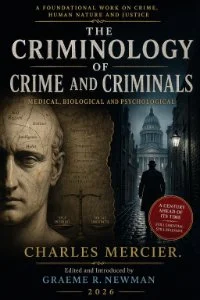
A Forgotten Classic of Criminological Thought—Reintroduced for the Twenty-First Century
Originally published in 1918 and now carefully edited and introduced by Graeme R. Newman, The Criminology of Crime and Criminals: Medical, Biological and Psychological restores Charles Mercier’s groundbreaking exploration of crime, punishment, criminal behavior, and social order.
Long before modern criminology embraced concepts such as situational crime prevention, environmental opportunity, offender decision-making, and restorative justice, Mercier argued that crime cannot be explained by biology, psychology, or environment alone. Instead, criminal behavior emerges from the interaction between human nature and circumstance, between personal disposition and criminal opportunity.
Rejecting the popular theories of his day, Mercier challenges the notion of the “born criminal” and dismisses simplistic environmental explanations of lawbreaking. His provocative and highly original analysis examines:
The psychological foundations of criminal conduct
The roles of instinct, reason, desire, self-control, and will
How opportunity and temptation shape criminal action
The classification of crimes and criminals
The relationship between crime, morality, and society
The purposes of punishment: deterrence, retaliation, reform, and reparation
The prevention, detection, and punishment of crime
Mercier’s central insight—that criminals are not a separate species but ordinary human beings responding differently to circumstances—remains strikingly relevant more than a century later.
Graeme R. Newman’s contemporary introduction places Mercier within the broader history of criminological thought and connects his ideas to modern developments in crime prevention and criminal justice. Together, Mercier and Newman illuminate enduring questions that continue to shape public policy and scholarly debate:
Why do people commit crimes? How should society respond? Is prevention more effective than punishment?
Part intellectual history, part criminological theory, and part social philosophy, this edition offers a fascinating window into the origins of modern criminology and the continuing struggle to understand crime and criminals.
Essential reading for students and scholars of criminology, criminal justice, sociology, psychology, legal history, and anyone interested in the causes of crime and the future of punishment.
Read-Me.Org Inc. New York-Philadelphia-Australia. 2026. 195p.
by Graeme Newman (Editor), Charles Mercier (Author)
Why do people commit crime? When does mental illness diminish responsibility? Should punishment always follow wrongdoing?
More than a century before modern debates about criminal responsibility, forensic psychiatry, and the treatment of mentally ill offenders, the distinguished British physician Charles Mercier confronted these enduring questions with remarkable clarity and originality.
In Crime, Insanity and Affliction, Mercier explores the complex relationship between criminal behaviour, mental disorder, and human suffering. Rejecting simplistic explanations, he argues that crime cannot be understood apart from the biological, psychological, and social forces that shape human conduct. His examination ranges from drunkenness, epilepsy, intellectual disability, and mental illness to questions of moral responsibility, punishment, and the proper role of the criminal law.
Although written in the early twentieth century, many of Mercier's observations anticipate debates that continue today. His discussion of diminished responsibility, the treatment of mentally ill offenders, addiction, and the limits of punishment remains surprisingly relevant in an era still struggling to balance justice, compassion, and public safety.
This new Read-Me edition presents Mercier's influential work with a new editorial introduction that places his ideas within the development of modern criminology, forensic psychiatry, and criminal justice. It also examines where Mercier's conclusions have been confirmed, where later research has challenged them, and why his work continues to deserve the attention of students, scholars, and general readers alike.
More than a historical curiosity, Crime, Insanity and Affliction is a thoughtful exploration of one of society's oldest and most difficult questions: how should we judge those whose minds, circumstances, or afflictions place them beyond the ordinary boundaries of responsibility?
Read-Me.Org Inc. New York-Philadelphia-Australia. 2026. 182p.
A Forgotten Classic of Criminological Thought—Reintroduced for the Twenty-First Century
Originally published in 1918 and now carefully edited and introduced by Graeme R. Newman, The Criminology of Crime and Criminals: Medical, Biological and Psychological restores Charles Mercier’s groundbreaking exploration of crime, punishment, criminal behavior, and social order.
Long before modern criminology embraced concepts such as situational crime prevention, environmental opportunity, offender decision-making, and restorative justice, Mercier argued that crime cannot be explained by biology, psychology, or environment alone. Instead, criminal behavior emerges from the interaction between human nature and circumstance, between personal disposition and criminal opportunity.
Rejecting the popular theories of his day, Mercier challenges the notion of the “born criminal” and dismisses simplistic environmental explanations of lawbreaking. His provocative and highly original analysis examines:
The psychological foundations of criminal conduct
The roles of instinct, reason, desire, self-control, and will
How opportunity and temptation shape criminal action
The classification of crimes and criminals
The relationship between crime, morality, and society
The purposes of punishment: deterrence, retaliation, reform, and reparation
The prevention, detection, and punishment of crime
Mercier’s central insight—that criminals are not a separate species but ordinary human beings responding differently to circumstances—remains strikingly relevant more than a century later.
Graeme R. Newman’s contemporary introduction places Mercier within the broader history of criminological thought and connects his ideas to modern developments in crime prevention and criminal justice. Together, Mercier and Newman illuminate enduring questions that continue to shape public policy and scholarly debate:
Why do people commit crimes? How should society respond? Is prevention more effective than punishment?
Part intellectual history, part criminological theory, and part social philosophy, this edition offers a fascinating window into the origins of modern criminology and the continuing struggle to understand crime and criminals.
Essential reading for students and scholars of criminology, criminal justice, sociology, psychology, legal history, and anyone interested in the causes of crime and the future of punishment.
Read-Me.Org Inc. New York-Philadelphia-Australia. 2026. 195p.
The book that criminology forgot — and urgently needs to remember.
Arthur M<ercier (Author). Graeme Newman (Editor and Introduction).
First published in 1918 by the University of London Press, Charles Arthur Mercier's Conduct and Its Disorders, Biologically Considered, published by Macmillan in 1911 is one of the most rigorous, most readable, and most unjustly neglected works in the history of criminological thought. Now reissued as The Biology of Conduct Disorders, with a major critical introduction by Graeme R. Newman, it arrives at a moment when the questions it raises — about criminal intent, biological disposition, the limits of punishment, and the poverty of criminological theory — are more pressing than ever.
Mercier was no armchair theorist. As medical officer of lunatic asylums, consulting physician at criminal trials, and the only systematic student of conduct as a science, he brought to the study of crime a combination of clinical experience and biological rigour that the field had not seen before and has rarely matched since. His target was the prevailing chaos of criminological thought — above all the Continental school of Lombroso, which he dismantled with surgical precision — and his method was the application of praxiology, his own science of conduct, to the specific problem of criminal action.
What Mercier argued — and why it still matters:
Every criminal act is the product of two factors: an internal factor (the biological constitution of the offender) and an external factor (circumstance and opportunity). Ignoring either produces not criminology but ideology.
The turpitude of the criminal and the gravity of the crime are entirely separate questions — and confusing them has produced centuries of unjust punishment.
Punishment should be calibrated to intention, not outcome: the man who intends murder and fails is more culpable than the man who kills by accident, whatever the body count.
Statistical criminology — mass data gathered from convicted prisoners — cannot produce a science of crime. Only the study of individual criminal action, grounded in biology, psychology, and jurisprudence together, can do that.
Certain acts currently outside the law (stealing the use of a thing; deliberate breach of contract) deserve criminal status; certain acts currently criminalised do not.
This new edition includes a critical introduction by Graeme R. Newman, Distinguished Professor Emeritus at the School of Criminal Justice, University at Albany, and one of the most provocative and original voices in the study of crime, deviance, and punishment. Author of Comparative Deviance: Perception and Law in Six Cultures, The Punishment Response, Just and Painful: A Case for the Corporal Punishment of Criminals, and Civilization and Barbarism: Punishing Criminals in the Twenty-First Century — and, as Colin Heston, of darkly satirical fiction including The Tommie Felon Show, Miscarriages, and Holy Water — Newman brings a unique authority to this text. Writing with the unflinching directness that earned him national television appearances and a reputation as the most uncomfortable conscience in American criminology, he traces the connections between Mercier's 1918 arguments and the debates that have defined — and divided — the field ever since.
"With the exception of logic, there is no subject on which so much nonsense has been written as this of criminality and the criminal." — Charles Arthur Mercier, 1918
Essential reading for students and scholars of criminology, criminal justice, the history of psychiatry, legal theory, and the philosophy of punishment — and for anyone who has ever wondered why, after two centuries of criminal science, we understand so little about why people commit crimes and what we should do about it.
Read-Me.Org Inc. New York-Philadelphia-Australia. 2026. 208p.
By Falcon Correctional & Community Services, Inc
The Wisconsin Department of Corrections (WIDOC) Division of Adult Institutions (DAI) has long served the Wisconsin community with its three stated goals: • WIDOC works to protect the public through the constructive management of those placed in its charge. • WIDOC offers education, programming, and treatment to persons in WIDOC’s care that enables them to be successful upon returning to the community. • WIDOC’s mission is to achieve excellence in correctional practices while fostering safety for victims and communities. The WIDOC Executive Leadership Team sought outside assistance to conduct a comprehensive system-wide assessment of correctional, mental health, and physical health operations and practices, with a particular focus on restrictive housing and organizational culture. The project, initiated through discussions with Secretary Jared Hoy and his executive team, was designed to build upon recent reform efforts and respond to persistent staffing and operational challenges. The study used a multi-method approach that included data requests and analyses, staff interviews, workshops with DAI staff and other key stakeholders, site visits, interviews with incarcerated individuals, and policy reviews. The central objectives of the study were to (1) identify areas of strength that could be expanded upon throughout the department, (2) identify areas requiring improvements, and (3) provide actionable, evidence-based, and sustainable recommendations to achieve both short-term and long-term success. This independent assessment was conducted by an interdisciplinary team of Falcon Correctional and Community Services, Inc. (“Falcon, Inc.” or “Falcon”) experts with expertise in the administration of state prison operations, correctional medical and behavioral health practices, the assessment of criminogenic risk, large-scale system studies, and restrictive housing reform. The purpose of this independent evaluation was to serve as a tool to collectively understand, navigate, and prioritize recommendations for system improvements. Falcon would like to thank everyone at WIDOC for their assistance throughout this study. The time commitment was significant, from responding to data requests, organizing and facilitating site visits, and participating in workshops to providing the information necessary to complete this important project. We also thank you for the important work you do for the individuals in your care, your staff, and the Wisconsin community.Inc.

By Arthur MacDonald.
The narrative in Volume 1 asks many pointed questions: What does it mean to be “abnormal”? Who decides? And how have these judgments shaped modern science, education, and criminal justice?
First published in 1893, Arthur MacDonald’s Abnormal Man is one of the earliest American attempts to systematically study human difference through the emerging tools of psychology, anthropology, and criminology. Drawing on international research—from European criminal anthropology to American child-study movements—MacDonald sought to classify the physical, mental, and moral traits considered “aberrant” in his era. His work reflects the hopes and anxieties of a society confronting rapid industrialization, immigration, social change, and new scientific approaches to crime and mental health.
To the modern reader, Abnormal Man reveals both the ambition and the pitfalls of nineteenth-century science. Its pages contain pioneering observations about child development, deviance, and social responsibility, alongside early theories—now discredited—about heredity, physiognomy, and race. What emerges is a vivid and sometimes unsettling portrait of a culture striving to understand human variation without the benefit of modern psychology or ethical safeguards.
The Read-Me.org edition Volume 1 presents Abnormal Man as both a historical artifact and a gateway to critical reflection. It illustrates how scientific thought evolves, how cultural bias can shape research, and how early debates about abnormality laid the groundwork for contemporary approaches to mental health, special education, criminology, and social policy. To make such work, much of it controversial then as it is today, minimally believable, requires extensive documentation. The voluminous Bibliography of Abnormal Man reproduced here in Volume 2, contains all that Macdnald referred to within his detailed exposition. To some, his arguments may seem unsupported, or lacking in evidence. But he left no stone untuned as this amazing bibliographical documentation of all relative contemporary research
A foundational text at the crossroads of science and society, Abnormal Man invites readers to explore the origins of modern debates about deviance, diversity, and the boundaries of the “normal.”
Read-Me.Org Inc. New York-Philadelphia-Australia. 2025. 240p.

By Arthur MacDonald. Introduction by Graeme R. Newman
What does it mean to be “abnormal”? Who decides? And how have these judgments shaped modern science, education, and criminal justice?
First published in 1893, Arthur MacDonald’s Abnormal Man is one of the earliest American attempts to systematically study human difference through the emerging tools of psychology, anthropology, and criminology. Drawing on international research—from European criminal anthropology to American child-study movements—MacDonald sought to classify the physical, mental, and moral traits considered “aberrant” in his era. His work reflects the hopes and anxieties of a society confronting rapid industrialization, immigration, social change, and new scientific approaches to crime and mental health.
To the modern reader, Abnormal Man reveals both the ambition and the pitfalls of nineteenth-century science. Its pages contain pioneering observations about child development, deviance, and social responsibility, alongside early theories—now discredited—about heredity, physiognomy, and race. What emerges is a vivid and sometimes unsettling portrait of a culture striving to understand human variation without the benefit of modern psychology or ethical safeguards.
This new Read-Me.org edition presents Abnormal Man as both a historical artifact and a gateway to critical reflection. It illustrates how scientific thought evolves, how cultural bias can shape research, and how early debates about abnormality laid the groundwork for contemporary approaches to mental health, special education, criminology, and social policy.
A foundational text at the crossroads of science and society, Abnormal Man invites readers to explore the origins of modern debates about deviance, diversity, and the boundaries of the “normal.”
Read-Me.Org Inc. New York-Philadelphia-Australia. 2025. p.193.

ByThomas D. Akoensi, Justice Tankebe
Using an experimental vignette design, the study inves-tigates the effects of criminal records on the hiring deci-sions of a convenience sample of 221 human resource(HR) managers in Ghana. The HR managers were ran-domly assigned to read one of four vignettes depicting job seekers of different genders and criminal records:male with and without criminal record, female with and without criminal record. The evidence shows that a criminal record reduces employment opportunities for female offenders but not for their male counter-parts. Additionally, HR managers are willing to offer interviews to job applicants, irrespective of their crim-inal records, if they expect other managers to hire ex-convicts. The implications of these findings are dis-cussed.
The Howard Journal of Crime and Justice, online first, May 2024