Open Access Free Library
CRIME+CRIMINOLOGY.jpeg

CRIME

Violent-Non-Violent-Cyber-Global-Organized-Environmental-Policing-Crime Prevention-Victimization

Posts in Historical Crime
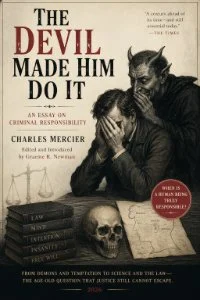
The Devil Made Him Do It

A Forgotten Classic of Criminological Thought—Reintroduced for the Twenty-First Century

Originally published in 1918 and now carefully edited and introduced by Graeme R. Newman, The Criminology of Crime and Criminals: Medical, Biological and Psychological restores Charles Mercier’s groundbreaking exploration of crime, punishment, criminal behavior, and social order.

Long before modern criminology embraced concepts such as situational crime prevention, environmental opportunity, offender decision-making, and restorative justice, Mercier argued that crime cannot be explained by biology, psychology, or environment alone. Instead, criminal behavior emerges from the interaction between human nature and circumstance, between personal disposition and criminal opportunity.

Rejecting the popular theories of his day, Mercier challenges the notion of the “born criminal” and dismisses simplistic environmental explanations of lawbreaking. His provocative and highly original analysis examines:

  • The psychological foundations of criminal conduct

  • The roles of instinct, reason, desire, self-control, and will

  • How opportunity and temptation shape criminal action

  • The classification of crimes and criminals

  • The relationship between crime, morality, and society

  • The purposes of punishment: deterrence, retaliation, reform, and reparation

  • The prevention, detection, and punishment of crime

Mercier’s central insight—that criminals are not a separate species but ordinary human beings responding differently to circumstances—remains strikingly relevant more than a century later.

Graeme R. Newman’s contemporary introduction places Mercier within the broader history of criminological thought and connects his ideas to modern developments in crime prevention and criminal justice. Together, Mercier and Newman illuminate enduring questions that continue to shape public policy and scholarly debate:

Why do people commit crimes? How should society respond? Is prevention more effective than punishment?

Part intellectual history, part criminological theory, and part social philosophy, this edition offers a fascinating window into the origins of modern criminology and the continuing struggle to understand crime and criminals.

Essential reading for students and scholars of criminology, criminal justice, sociology, psychology, legal history, and anyone interested in the causes of crime and the future of punishment.

Read-Me.Org Inc. New York-Philadelphia-Australia. 2026. 195p.

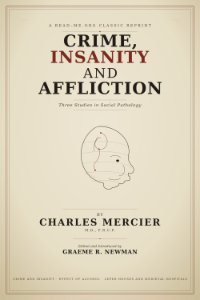
Crime, Insanity And Affliction: Three Studies in Social Pathology

by Graeme Newman (Editor), Charles Mercier (Author)

Why do people commit crime? When does mental illness diminish responsibility? Should punishment always follow wrongdoing?

More than a century before modern debates about criminal responsibility, forensic psychiatry, and the treatment of mentally ill offenders, the distinguished British physician Charles Mercier confronted these enduring questions with remarkable clarity and originality.

In Crime, Insanity and Affliction, Mercier explores the complex relationship between criminal behaviour, mental disorder, and human suffering. Rejecting simplistic explanations, he argues that crime cannot be understood apart from the biological, psychological, and social forces that shape human conduct. His examination ranges from drunkenness, epilepsy, intellectual disability, and mental illness to questions of moral responsibility, punishment, and the proper role of the criminal law.

Although written in the early twentieth century, many of Mercier's observations anticipate debates that continue today. His discussion of diminished responsibility, the treatment of mentally ill offenders, addiction, and the limits of punishment remains surprisingly relevant in an era still struggling to balance justice, compassion, and public safety.

This new Read-Me edition presents Mercier's influential work with a new editorial introduction that places his ideas within the development of modern criminology, forensic psychiatry, and criminal justice. It also examines where Mercier's conclusions have been confirmed, where later research has challenged them, and why his work continues to deserve the attention of students, scholars, and general readers alike.

More than a historical curiosity, Crime, Insanity and Affliction is a thoughtful exploration of one of society's oldest and most difficult questions: how should we judge those whose minds, circumstances, or afflictions place them beyond the ordinary boundaries of responsibility?

Read-Me.Org Inc. New York-Philadelphia-Australia. 2026. 182p.

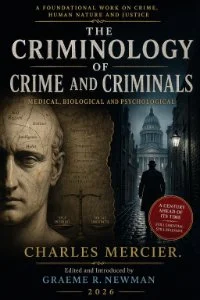
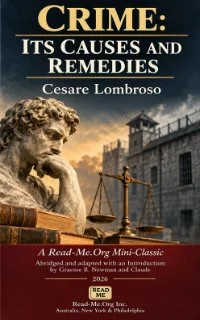
The Criminology Of Crime And Criminals: Medical, Biological And Psychological

A Forgotten Classic of Criminological Thought—Reintroduced for the Twenty-First Century

Originally published in 1918 and now carefully edited and introduced by Graeme R. Newman, The Criminology of Crime and Criminals: Medical, Biological and Psychological restores Charles Mercier’s groundbreaking exploration of crime, punishment, criminal behavior, and social order.

Long before modern criminology embraced concepts such as situational crime prevention, environmental opportunity, offender decision-making, and restorative justice, Mercier argued that crime cannot be explained by biology, psychology, or environment alone. Instead, criminal behavior emerges from the interaction between human nature and circumstance, between personal disposition and criminal opportunity.

Rejecting the popular theories of his day, Mercier challenges the notion of the “born criminal” and dismisses simplistic environmental explanations of lawbreaking. His provocative and highly original analysis examines:

  • The psychological foundations of criminal conduct

  • The roles of instinct, reason, desire, self-control, and will

  • How opportunity and temptation shape criminal action

  • The classification of crimes and criminals

  • The relationship between crime, morality, and society

  • The purposes of punishment: deterrence, retaliation, reform, and reparation

  • The prevention, detection, and punishment of crime

Mercier’s central insight—that criminals are not a separate species but ordinary human beings responding differently to circumstances—remains strikingly relevant more than a century later.

Graeme R. Newman’s contemporary introduction places Mercier within the broader history of criminological thought and connects his ideas to modern developments in crime prevention and criminal justice. Together, Mercier and Newman illuminate enduring questions that continue to shape public policy and scholarly debate:

Why do people commit crimes? How should society respond? Is prevention more effective than punishment?

Part intellectual history, part criminological theory, and part social philosophy, this edition offers a fascinating window into the origins of modern criminology and the continuing struggle to understand crime and criminals.

Essential reading for students and scholars of criminology, criminal justice, sociology, psychology, legal history, and anyone interested in the causes of crime and the future of punishment.

Read-Me.Org Inc. New York-Philadelphia-Australia. 2026. 195p.

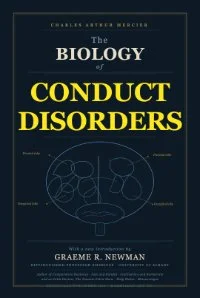
The Biology of Conduct Disorders

The book that criminology forgot — and urgently needs to remember.
Arthur M<ercier (Author). Graeme Newman (Editor and Introduction).

First published in 1918 by the University of London Press, Charles Arthur Mercier's Conduct and Its Disorders, Biologically Considered, published by Macmillan in 1911 is one of the most rigorous, most readable, and most unjustly neglected works in the history of criminological thought. Now reissued as The Biology of Conduct Disorders, with a major critical introduction by Graeme R. Newman, it arrives at a moment when the questions it raises — about criminal intent, biological disposition, the limits of punishment, and the poverty of criminological theory — are more pressing than ever.
Mercier was no armchair theorist. As medical officer of lunatic asylums, consulting physician at criminal trials, and the only systematic student of conduct as a science, he brought to the study of crime a combination of clinical experience and biological rigour that the field had not seen before and has rarely matched since. His target was the prevailing chaos of criminological thought — above all the Continental school of Lombroso, which he dismantled with surgical precision — and his method was the application of praxiology, his own science of conduct, to the specific problem of criminal action.

What Mercier argued — and why it still matters:

  • Every criminal act is the product of two factors: an internal factor (the biological constitution of the offender) and an external factor (circumstance and opportunity). Ignoring either produces not criminology but ideology.

  • The turpitude of the criminal and the gravity of the crime are entirely separate questions — and confusing them has produced centuries of unjust punishment.

  • Punishment should be calibrated to intention, not outcome: the man who intends murder and fails is more culpable than the man who kills by accident, whatever the body count.

  • Statistical criminology — mass data gathered from convicted prisoners — cannot produce a science of crime. Only the study of individual criminal action, grounded in biology, psychology, and jurisprudence together, can do that.

  • Certain acts currently outside the law (stealing the use of a thing; deliberate breach of contract) deserve criminal status; certain acts currently criminalised do not.

This new edition includes a critical introduction by Graeme R. Newman, Distinguished Professor Emeritus at the School of Criminal Justice, University at Albany, and one of the most provocative and original voices in the study of crime, deviance, and punishment. Author of Comparative Deviance: Perception and Law in Six Cultures, The Punishment Response, Just and Painful: A Case for the Corporal Punishment of Criminals, and Civilization and Barbarism: Punishing Criminals in the Twenty-First Century — and, as Colin Heston, of darkly satirical fiction including The Tommie Felon Show, Miscarriages, and Holy Water — Newman brings a unique authority to this text. Writing with the unflinching directness that earned him national television appearances and a reputation as the most uncomfortable conscience in American criminology, he traces the connections between Mercier's 1918 arguments and the debates that have defined — and divided — the field ever since.
"With the exception of logic, there is no subject on which so much nonsense has been written as this of criminality and the criminal." — Charles Arthur Mercier, 1918
Essential reading for students and scholars of criminology, criminal justice, the history of psychiatry, legal theory, and the philosophy of punishment — and for anyone who has ever wondered why, after two centuries of criminal science, we understand so little about why people commit crimes and what we should do about it.

Read-Me.Org Inc. New York-Philadelphia-Australia. 2026. 208p.

Homicide in Victoria: female perpetrators of murder and manslaughter, 1860 to 1920 

By Victoria Nagy

Records from the Central Register of Female Prisoners permit a longitudinal analysis of ninety-five women convicted of murder and manslaughter in Victoria between 1860 and 1920. The data show the similarities and differences between the women convicted of these homicide offenses. An examination of the women’s socioeconomic profiles, occupations, ages, migrations, and victims reveals the links between their crimes and their punishment.