Open Access Publisher and Free Library
CRIME+CRIMINOLOGY.jpeg

CRIME

Violent-Non-Violent-Cyber-Global-Organized-Environmental-Policing-Crime Prevention-Victimization

Posts in Social Sciences
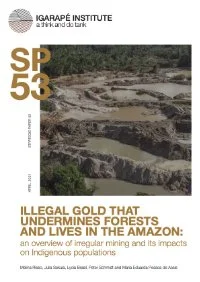
Illegal Gold that Undermines Forests and Lives in the Amazon: an overview of irregular mining and its impacts on Indigenous populations

By Melina Risso, Julia Sekula, Lycia Brasil, Peter Schmidt and Maria Eduarda Pessoa de Assis

In the past 20 years, the price of gold has increased from US$400 to US$1861.50 per ounce, driven by rising demand in China and India. Gold is time and capital-intensive to produce, which is why this rise in demand has driven an attendant demand for illegal gold mining — an industry that is estimated to yield globally between US$12 and US$28 billion annually.2 The Brazilian Amazon is rife with illegal gold mining operations, with 321 identified points of illegal, active and inactive mines arranged in the 9 states that comprise the Brazilian Amazon Basin.3 This has had a direct impact on deforestation rates and health hazards of local indigenous populations. Deforestation across the Amazon grew 25% in the first half of 2020 according to INPE (Brazil’s National Institute for Space Research). The contribution of mining activity to deforestation rates as a whole has increased from 4% in 2017 to 23% in indigenous territories in data recorded up to June 10, 2020.4 Deforestation has been concentrated in indigenous territories where, between 2018 and 2019, environmental degradation by mining increased 107%. This devastation has a price — according to Brazil’s Federal Public Prosecutors Office, 1kg of gold represents roughly R$1.7m in environmental damages, culminating in an environmental cost roughly 10 times greater than the current price of gold.

Rio de Janeiro - RJ - Brasil, Igarapé Institute, 2021. 50p.
download
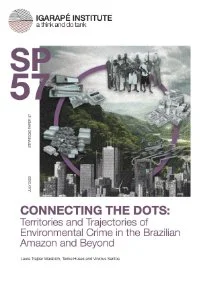
Connecting the Dots: Territories and Trajectories of Environmental Crime in the Brazilian Amazon and Beyond

By Laura Trajber Waisbich, Terine Husek and Vinicius Santos

The ecosystem of environmental crime in the Amazon is largely to blame for the current levels of deforestation and degradation of the biggest tropical forest on the planet. Several illegal economic activities, representing the main drivers of destruction in the river basin, take a heavy toll on the forest and its inhabitants. Based on an analysis of the spatial distribution of the Federal Police operations to fight environmental crime in the Legal Amazon between 2016 and 2021, this study highlights the hotspots for a range of illicit forest-based economic activities in the region, while also showing how other locations within and outside the Brazilian Amazon form part of a broader nexus of environmental crime. The study reviewed more than 300 Federal Police operations and identified 846 territories that make up the ecosystem of environmental crime in the Amazon. These territories are located in 262 municipalities, both in the Legal Amazon and beyond its borders. Of the cities mapped, 75% are located in the Legal Amazon, 22% are in other regions of Brazil and 3% are in neighboring countries. These territories are where environmental and associated crimes converge to fuel illegal deforestation, illegal logging, public land grabbing (known as grilagem, in Portuguese), agriculture and livestock rife with environmental illegalities and illegal mining.

Rio de Janeiro, Brazil: Igarape, 2022. 58p.

download
Exploring Drug Supply, Associated Violence and Exploitation of Vulnerable Groups in Denmark

By Thomas Friis Søgaard Marie Højlund Bræmer Michael Mulbjerg Pedersen

This report provides an analysis of current drug supply models and the related violence and exploitation of vulnerable groups in Denmark. Recent years have seen a growth in criminals’ exploitation of vulnerable groups for drug-related crimes. This development appears to be driven by several structural factors, including increased drug market competition and a proliferation of more labour-intensive supply models. Based on the findings of this study, we identify some priorities for future research to understand the impact of digital developments in retail-level drug distribution on vulnerable individuals and to inform responses to reduce criminal exploitation.

Lisbon: European Monitoring Centre for Drugs and Drug Addiction (EMCDDA), 2021. 55p.

download
European Drug Report 2022: Trends and Developments

By European Monitoring Centre on Drugs and Drug Addiction (EMCDDA)

Our overall assessment is that drug availability and use remain at high levels across the European Union, although considerable differences exist between countries. Approximately 83.4 million or 29 % of adults (aged 15–64) in the European Union are estimated to have ever used an illicit drug, with more males (50.5 million) than females (33.0 million) reporting use. Cannabis remains the most widely consumed substance, with over 22 million European adults reporting its use in the last year. Stimulants are the second most commonly reported category. It is estimated that in the last year 3.5 million adults consumed cocaine, 2.6 million MDMA and 2 million amphetamines.

Lisbon: EMCDDA: 2022. 60p.

download
From the Maskani to the Mayor: The political economy of heroin markets in East and Southern Africa

By Simone Haysom

The heroin economy has shaped the growth of coastal villages, border towns and megacities across East and Southern Africa.

The trafficking of heroin is a crucial component of urban politics and development in East and Southern Africa. The heroin economy has shaped the growth of small coastal villages, border towns and megacities along the Southern Route – a network moving Afghan drugs south across the Indian Ocean and onward through Tanzania, Kenya and Mozambique to South Africa. Rapid and dysfunctional urbanisation, the migration of low-skilled youth throughout the region, unemployment and the inability of local governments to cope with service delivery needs have contributed to the spread of the drug, building fortunes for a few ‘big fish’ and promoting corruption among police and politicians.

ENACT (Africa) 2020. 60p..

download
Hiding in Plain Sight: Heroin's Stealthy Takeover of South Africa

By Simone Haysom

The heroin route that crosses South Africa has created a regional heroin economy, with severe social and political repercussions. Heroin use has developed in both major cities and small towns – an important shift in local drug markets that is taking a toll on thousands of people. This policy brief sheds light on the domestic heroin economy, analyses its implications and proposes responses to its drivers and consequences. An effective response will need to consider political factors and must be regionally coordinated. Market dynamics and harm-reduction approaches should also be included. The most sustainable strategies address root causes, disrupt markets and tackle corruption.

ENACT (Africa) 2019. 12p.

download
The Heroin Coast: A political economy along the estern African seaboard

By Simone Haysom, Peter Gastrow and Mark Shaw

This report examines the characteristics of the heroin trade off the East African coast and highlights the criminal governance systems that facilitate drug trafficking along these routes.

In recent years, the volume of heroin shipped from Afghanistan along a network of maritime routes in East and southern Africa appears to have increased considerably. Most of this heroin is destined for Western markets, but there is a spin-off trade for local consumption. An integrated regional criminal market has developed, both shaping and shaped by political developments in the region. Africa is now experiencing the sharpest increase in heroin use worldwide and a spectrum of criminal networks and political elites in East and southern Africa are substantially enmeshed in the trade. This report focuses on the characteristics of the heroin trade in the region and how it has become embedded in the societies along this route. It also highlights the features of the criminal governance systems that facilitate drug trafficking along this coastal route.

ENACT (Africa), 2018. 54p.

download
Fending off Fentanyl and Hunting Down Heroin: Controlling opioid supply from Mexico

By Vanda Felbab-Brown

This paper explores policy options for responding to the supply of heroin and synthetic opioids from Mexico to the United States. Forced eradication of opium poppy has been the dominant response to illicit crop cultivation in Mexico for decades. Forced eradication appears to deliver fast results in suppressing poppy cultivation, but the suppression is not sustainable even in the short term. Farmers find a variety of ways to adapt and replant after eradication. Moreover, eradication undermines public safety and rule of law efforts in Mexico, both of high interest to the United States….Unless security and rule of law in Mexico significantly improve, the licensing of opium poppy in Mexico for medical purposes is unlikely to reduce the supply of heroin to the United States. Mexico faces multiple feasibility obstacles for getting international approval for licensing its poppy cultivation for medical purposes, including, currently, the inability to prevent opium diversion to illegal supply and lack of existing demand for its medical opioids. In seeking to establish such demand, Mexico should avoid setting off its own version of medical opioid addiction.

Washington, DC: The Brookings Institution,2020. 28p.

download
The Opioid Crisis in America: Domestic and International Dimensions

By Vanda Felbab-Brown, Jonathan P. Caulkins, Carol Graham, Keith Humphreys, Rosalie Liccardo Pacula, Bryce Pardo, Peter Reuter, Bradley D. Stein, and Paul H. Wise

This Brookings opioid project, “The Opioid Crisis in America: Domestic and International Dimensions,” has analyzed policy options for reducing demand, providing treatment, designing regulatory frameworks, and implementing domestic law enforcement and international supply control measures. It has explored local impacts on communities as well as state and federal level responses and international actions. It has paid special attention to vulnerable communities, such as politically and economically disenfranchised Americans, women and children, and military veterans.

Washington DC: The Brookings Institution, 2020. 15p.

download
Violence Against Women and Ethnicity: Commonalities and Differences Across Europe

Edited by Ravi K. Thiara, Stephanie A. Condon, and Monika Schröttle

This book draws together both: theory and practice on minority/migrant women and gendered violence. The interplay of gender, ethnicity, religion, class, generation and sexuality in shaping the lives, experiences and choices of minority/migrant women affected by violence has not always been adequately theorised within much of the existing writing on violence against women. Feminist theory, especially the insights provided by the concept of intersectionality, are central to the editors’ conceptual frameworks.

Leverkusen-Opladen: Verlag Barbara Budrich , 2011. 426p.

download
Mitigating Risk: A Delphi Study Identifying Competencies in Sport and Event Security Management

By Elizabeth Burke Voorhees

The purpose of this study was to identify core competencies for supervisory-level security management professionals working in the sports and entertainment industry. Qualified and trained sport and event security-management professionals are essential to support the U.S. homeland security objectives outlined in Presidential Policy Directive21. Providing effective safety and security for sports and entertainment events requires specialized knowledge and skill on the behalf of security-management practitioners who detect, deter, prevent, and respond to potential risks and threats. This qualitative research study employed a Delphi research design to elicit expertise from a purposefully selected panel of experts (N = 36). The expert panel suggested a list of competencies in Delphi round one and rated each competency statement based on level of importance and frequency using a 5-point Likert scale. The expert panel produced 136 core competencies in seven clusters: Risk Management, Emergency Planning, Problem Solving and Decision Making, Leadership, Communication, Building Collaborative Relationships, and Human Resource Management. Twenty-nine panelists successfully completed all three rounds of the Delphi study yielding a 93.5% response rate. Sport and event security management professionals and industry stakeholders can use the validated list of competencies to develop human capital and improve performance though the strategic application of human resource management,

Hattiesburg, MS: University of Southern Mississippi, 2010. 247p.

download
The Ecology of Football-related Crime and Disorder

By Justin Kurland

Numerous studies have been conducted on football ‘hooliganism’ with the majority of this work ignoring the immediate, environmental conditions that facilitate opportunities for crime in the football match day context. Consequently, the existing theoretical framework for explaining why crime emerges during football matches remains incomplete. This thesis aims to fill this gap for understanding modern football-related crime and disorder. The thesis uses a predominantly environmental criminology framework to explore whether crime opportunity theories can make sense of crime patterns observed around previously unexplored English domestic football stadia. It is crime event-oriented, focussing on how variation in the ecology of the area around stadia on match days and a set of counterfactual days when the stadium is not used facilitates different criminal opportunities. This is achieved primarily through the analysis of police-recorded crime data for three kilometre areas surrounding a sample of five stadia for the period 2005- 2010. The thesis focuses on three components of crime events - where they occur, when they occur, and why a disproportionate amount of it clusters in some neighbourhoods and not others. Despite the contrasting physical environment around the five stadia, the findings suggest very similar spatial and temporal crime patterns in the area surrounding stadia when they are used relative to when they are not and thus lend support to environmental theories of crime in the football context. The findings also help draw attention to where and when crime is elevated on football match days. The implications of the research for reducing the unintended and unwanted side-effect of football that is desired for the positive utilities it brings, in particular the practicality of employing situational crime prevention in the context of English domestic football are discussed.

London: University College London, 2014.

download
Organized Crime, Violent Conflict and Fragile Situations Assessing Relationships through a Review of USAID Programs

By Phyllis Dininio

The USAID Bureau for Democracy, Conflict, and Humanitarian Assistance Office of Conflict Management and Mitigation (DCHA/CMM) commissioned Management Systems International (MSI) to conduct research on the relationship between organized crime, conflict and fragility. The year-long research project included a literature review and country case studies in Guatemala, Nigeria and the Democratic Republic of the Congo (DRC) that examine the interaction between organized criminality and USAID conflict and fragility programming in both causal directions—with regard to how criminality affects USAID implementation and results, and how assistance affects criminality. ..The report concludes with a set of key findings and recommendations. Organized crime is both facilitated by, and contributor to, state fragility.

Arlington, VA: Management Systems International, 2015. 61p.

download
Social Dimension of Organised Crime: Modelling The Dynamics Of Extortion Rackets

Edited by Corinna Elsenbroich, David Anzola and Nigel Gilbert

This book presents a multi-disciplinary investigation into extortion rackets with a particular focus on the structures of criminal organisations and their collapse, societal processes in which extortion rackets strive and fail and the impacts of bottom-up and top-down ways of fighting extortion racketeering. Through integrating a range of disciplines and methods the book provides an extensive case study of empirically based computational social science. It is based on a wealth of qualitative data regarding multiple extortion rackets, such as the Sicilian Mafia, an international money laundering organisation and a predatory extortion case in Germany. Computational methods are used for data analysis, to help in operationalising data for use in agent-based models and to explore structures and dynamics of extortion racketeering through simulations. In addition to textual data sources, stakeholders and experts are extensively involved, providing narratives for analysis and qualitative validation of models. The book presents a systematic application of computational social science methods to the substantive area of extortion racketeering. The reader will gain a deep understanding of extortion rackets, in particular their entrenchment in society and processes supporting and undermining extortion rackets. Also covered are computational social science methods, in particular computationally assisted text analysis and agent-based modelling, and the integration of empirical, theoretical and computational social science.

Cham, SWIT: Springer, 2016. 250p.

download
The Cuban Connection: Drug Trafficking, Smuggling, And Gambling In Cuba from The 1920s to the Revolution

By Eduardo Sáenz Rovner and Russ Davidson

A comprehensive history of crime and corruption in Cuba, The Cuban Connection challenges the common view that widespread poverty and geographic proximity to the United States were the prime reasons for soaring rates of drug trafficking, smuggling, gambling, and prostitution in the tumultuous decades preceding the Cuban revolution. Eduardo S?enz Rovner argues that Cuba's historically well-established integration into international migration, commerce, and transportation networks combined with political instability and rampant official corruption to help lay the foundation for the development of organized crime structures powerful enough to affect Cuba's domestic and foreign politics and its very identity as a nation.S?enz traces the routes taken around the world by traffickers and smugglers. After Cuba, the most important player in this story is the United States. The involvement of gangsters and corrupt U.S. officials and businessmen enabled prohibited substances to reach a strong market in the United States, from rum running during Prohibition to increased demand for narcotics during the Cold War.

Chapel Hill, NC:University of North Carolina Press, 2008. 247p.

download
The Changing Racial Dynamics of the War on Drugs

By Marc Mauer

For more than a quarter century the “war on drugs” has exerted a profound impact on the structure and scale of the criminal justice system. The inception of the “war” in the 1980s has been a major contributing factor to the historic rise in the prison population during this period. From a figure of about 40,000 people incarcerated in prison or jail for a drug offense in 1980, there has since been an 1100% increase to a total of 500,000 today. To place some perspective on that change, the number of people incarcerated for a drug offense is now greater than the number incarcerated for all offenses in 1980. The increase in incarceration for drug offenses has been fueled by sharply escalated law enforcement targeting of drug law violations, often accompanied by enhanced penalties for such offenses. Many of the mandatory sentencing provisions adopted in both state and federal law have been focused on drug offenses. At the federal level, the most notorious of these are the penalties for crack cocaine violations, whereby crack offenses are punished far more severely than powder cocaine offenses, even though the two substances are pharmacologically identical. Despite changes in federal sentencing guidelines, the mandatory provisions still in place require that anyone convicted of possessing as little as five grams of crack cocaine (the weight of two sugar packets) receive a five-year prison term for a first-time offense

Washington, DC: The Sentencing Project, 2009. 23p.

download
A Better City for All: A Partnership Approach to Address public Substance Missuse and Perceived Anti-social Behaviour in Dublin City Centre

By The Strategic Response Group (SRG)

The Strategic Response Group (SRG)is a partnership set up to address public substance misuse and perceived anti-social behaviour in Dublin city centre. This report - Report of the Strategic Response Group to build sustainable street-level drug services and address related public nuisance - acknowledges that for historical reasons there is a clustering of drug treatment and homelessness services in or adjacent to the inner city. While these services play a major role in the provision of effective treatment to problematic drug users, the report recommends that there should be greater access to prompt provision of treatment options nationally and that people should be treated and accommodated in the most appropriate setting for their circumstances and provided with support services as close to their home as possible.

The report takes a holistic approach to address the issues of the city centre. The group have set out their recommendations in the short, media and long term and under the headings of treatment, rehabilitation, homelessness, policing responses, planning and urban design, legislation and regulation and implementation.

Dublin: The Strategic Response Group, 2012. 24p.

download
European Drug Report 2022: Trends and developments

By European Monitoring Centre on Drugs and Drug Addiction (EMCDDA)

Our overall assessment is that drug availability and use remain at high levels across the European Union, although considerable differences exist between countries. Approximately 83.4 million or 29 % of adults (aged 15–64) in the European Union are estimated to have ever used an illicit drug, with more males (50.5 million) than females (33.0 million) reporting use. Cannabis remains the most widely consumed substance, with over 22 million European adults reporting its use in the last year. Stimulants are the second most commonly reported category. It is estimated that in the last year 3.5 million adults consumed cocaine, 2.6 million MDMA and 2 million amphetamines.

Around 1 million Europeans used heroin or another illicit opioid in the last year. Although the prevalence of use is lower for opioid use than for other drugs, opioids still account for the greatest share of harms attributed to illicit drug use. This is illustrated by the presence of opioids, often in combination with other substances, which was found in around three quarters of fatal overdoses reported in the European Union for 2020. It is important to note that most of those with drug problems will be using a range of substances. We are also seeing considerably more complexity in drug consumption patterns, with medicinal products, non-controlled new psychoactive substances and substances such as ketamine and GBL/GHB now associated with drug problems in some countries or among some groups. This complexity is reflected in an increasing recognition that drug use is linked with, or complicates how we respond to, a wide range of today’s most pressing health and social issues. Among these issues are mental health problems and self-harm, homelessness, youth criminality and the exploitation of vulnerable individuals and communities.

Lisbon: EMCDDA, 2022. 60p.

download
After the War on Drugs: Blueprint for Regulation

By Stephen Rolles

Global drug policy is rooted in a laudable urge to address the very real harms that non-medical psychoactive drugs can create. Such concerns have driven a prohibitionist global agenda: an agenda that gives clear and direct moral authority to those who support it, while casting those who are against it as ethically and politically irresponsible. However, such binary thinking can be problematic. By defining the most stringent prohibition as the most moral position, it makes nuanced consideration of the impacts of prohibition difficult. In particular, it makes it very difficult to look at and learn from the impacts and achievements of prohibition. Historic attempts to do so have foundered on a sense that analysing prohibition means questioning prohibition, and that questioning prohibition is in itself an immoral act—one that allies the questioner with the well known infamies of the world’s illegal drug trade. Ironically, supporting the status quo perpetuates that trade, and the harms that it creates.

It is not the purpose of this report to revisit these various findings; they are freely and easily available elsewhere. Rather, we seek to reconsider the management of illicit drugs in the light of the experience that they represent and embody. Using that experience, we will set out a blueprint for non-medical drug management policies that will minimise the harms that such drug use creates, both on a personal and on a societal level. In short, our goal is to define a set of practical and effective risk and harm management and reduction policies. Such policies will represent a clear and positive step towards the positive outcomes that prohibition has tried, and failed, to achieve. A strictly prohibitionist stance would understand them to be immoral, because they call for the legally regulated production and availability of many currently proscribed drugs. Transform’s position is, in fact, driven by an ethics of effectiveness, and as such represent an attempt to re-frame the global harm management debate in exclusively practical terms

London: Transform Drug Policy Foundation, 2009. 232p.

download
A Rapid Assessment Research (RAR) of Drug and Alcohol Related Public Nuisance in Dublin City Centre

By Marie Claire Van Hout and Tim Bingham

This research aimed to assemble an evidence base around perceived anti-social behaviour associated with the provision of drug treatment in Dublin’s city centre, upon which to build a strategic response incorporating short/medium/long term goals and actions within the area. It will be used to guide discussions on how to reduce visibility of drug related public nuisance, improve public perceptions of safety in the area and provide comprehensive, safe, effective and appropriate treatment services within a series of short, medium and long-term strategies.

Dublin:Strategic Response Group, 2012. 187p.

download