Open Access Publisher and Free Library
CRIME+CRIMINOLOGY.jpeg

CRIME

Violent-Non-Violent-Cyber-Global-Organized-Environmental-Policing-Crime Prevention-Victimization

Posts in Social Sciences
Criminally Queer: Homosexuality and Criminal Law in Scandinavia 1842-1999

Edited by Jens Rydström and Kati Mustola

This book provides a coherent history of criminal law and homosexuality in Scandinavia 1842-1999, a period during which same-sex love was outlawed or subject to more or less severe legal restrictions in the Scandinavian penal codes. This was the case in most countries in Northern Europe, but the book argues that the development in Scandinavia was different, partly determined by the structure of the welfare state. Five of the most experienced scholars of the history of homosexuality in the region (Jens Rydström, Kati Mustola, Wilhelm von Rosen, Martin Skaug Halsos and Thorgerdur Thorvaldsdóttir) describe how same-sex desire has been regulated in their respective countries during the past 160 years. The authors with their backgrounds in history, sociology, and gender studies represent an interdisciplinary approach to the problem of criminalization of same-sex sexuality. Their contributions, consisting for the most part of previously unpublished material, present for the first time a comprehensive history of homosexuality in Scandinavia. Among other things, it includes the most extensive study yet written in any language about Iceland's gay and lesbian history. Also for the first time, the book discusses in detail same-sex sexuality between women before the law in modern society and presents previously unpublished findings on this topic. Female homosexuality was outlawed in Eastern Scandinavia, but not in the Western parts of this region. It also analyzes the modern tendency to include lesbian women in the criminal discourse as an effect of the medicalization of homosexuality and the growing influence of medical discourse on the law.

Amsterdam: Aksant Academic Publishers, 2007. 312p.

Fentanyl Availability on Darknet Markets

By Roderic Broadhurst, Matthew Ball and Harshit Trivedi

A snapshot of the sale of fentanyl and its analogues across several popular darknet markets between 2 January and 27 March 2019 reveals the amount, types and physical forms available. Of the 127,541 unique drug listings identified, 13,135 were opioids (10.3% of all drugs), of which 1,118 (0.876% of all drugs) were fentanyl or its analogues. Between 27.3 and 39.3 kilograms of fentanyl and its derivatives were available over the period. The average price of fentanyl was A$99 per gram, while carfentanil was A$26.8 per gram. The shipping methods, cross-market operations and product specialisation of the 303 active fentanyl vendors on these darknet markets are also described.

Canberra: Australian Institute of Criminology, 2020. 14p.

Commission on Combating Synthetic Opioid Trafficking: Final Report

By United States and Rand Corporation

The Commission on Combating Synthetic Opioid Trafficking, established under Section 7221 of the National Defense Authorization Act for Fiscal Year 2020, was charged with examining aspects of the synthetic opioid threat to the United States—specifically, with developing a consensus on a strategic approach to combating the illegal flow of synthetic opioids into the United States. This final report describes items involving the illegal manufacturing and trafficking of synthetic opioids, as well as the deficiencies in countering their production and distribution, and includes action items directed to appropriate executive branch agencies and congressional committees and leadership. Get appendices to the report.

Rand, 2022. 148p.

Characterization of the Synthetic Opioid Threat Profile to Inform Inspection and Detection Solutions

By Bryce PardoLois M. DavisMelinda Moore

The opioid overdose crisis has continued to accelerate in recent years because of the arrival of potent synthetic opioids, such as fentanyl and related substances. Although several synthetic opioids have legitimate medical applications, the majority of overdoses are due to illicitly manufactured imports. Researchers from the Homeland Security Operational Analysis Center evaluated publicly available data to better understand the dimensions of the consumption and supply of these substances. They performed four tasks designed to gain insight into this new and quickly evolving phenomenon: (1) They evaluated trends in overdoses across regions and over time. Understanding where overdoses due to synthetic opioids occur provides a rough proxy for where law enforcement should prioritize screening efforts for packages that enter the country destined for such markets. (2) They evaluated the supply of fentanyl and related substances using public data from state and local forensic laboratories that report to national systems. The authors note a relationship between lab exhibits and fatal overdoses across regions and over time. (3) They examined the online markets for synthetic opioids. The team collected quantitative and qualitative data from online marketplaces and vendors to better understand what supply and concealment mechanisms vendors use when shipping product to the United States. (4) They evaluated the adulterants and other bulking agents used in retail distribution. There are limitations to each of these approaches, and the authors provide caveats to interpreting their findings.

Santa Monica, CA: Rand, 2019. 91p.

Great Power Competition and Counternarcotics in the Western Hemisphere

By Chloe Gilroy

The nexus between illicit drug economies and great power competition is a critical, yet understudied, dimension of counternarcotics. If policy experts and academics understood how great power competition intersects with illicit drug economies, then counternarcotics experts would have yet another incisive theoretical lens through which to understand drug flows. This paper contends that China is unwilling to crack down on chemical precursor flows that feed the Western Hemisphere’s synthetic drug trade due to its broader geopolitical imperatives, which are shaped by great power competition. Chinese pharmaceutical and chemical producers are taking advantage of un-checked drug demand in the United States by selling chemical precursors to Mexican drug trafficking organizations that manufacture and smuggle synthetic drugs across the U.S.-Mexico border. Their involvement in the Western Hemisphere drug trade has expanded the market for synthetic drugs and has destabilized Mexico’s criminal landscape. The Chinese government’s response to the export of massive quantities of illegal drugs and precursor chemicals is largely driven by external pressure and characterized by a lack of credible commitment to reduce the flow of illegal drugs and precursor chemicals. This paper will start by delving into the existing literature on great power competition and illicit drug economies before exploring China’s approach to drug control. It will then dissect trafficking patterns in two synthetic drugs, methamphetamine and fentanyl. After that, it will explain how Beijing’s incentives in the pharmaceutical and chemical sectors impact methamphetamine and fentanyl export volumes. This paper will conclude by comparing time series data on methamphetamine and fentanyl seizures at the U.S.-Mexico border with the progression of China’s enforcement efforts.  

Washington, DC: William J. Perry Center for Hemispheric Defense Studies, 2020. 28p.

Ideology, Crime and Criminal Justice: A symposium in honour of Sir Leon Radzinowicz

Edited by Anthony Bottoms and Michael Tonry

This book consists of papers originally presented at the Radzinowicz Commemoration Symposium convened in Cambridge in March 2001. It is offered as a tribute to the founding Director of the Institute of Criminology at the University of Cambridge, who was also the first professor of criminology to be appointed in any British university. In wide-ranging chapters, the contributors - all leading scholars of crime and criminal justice - debate some of the central issues of ideology, crime and criminal justice, including morality and policing. Two of the chapters focus on the history of criminal just. Read more... Ideology, Crime and Criminal Justice; Copyright Page; Contents; Preface; Sir Leon Radzinowicz an appreciation; Recollections of Sir Leon Radzinowicz; Part I Theory; 1 Ideology and crime: a further chapter; 2 Morality, crime, compliance and public policy; Part 2 History; 3 Gentlemen convicts, Dynamitards and paramilitaries: the limits of criminal justice; 4 The English police: a unique development?; Part 3 Prisons; 5 A 'liberal regime within a secure perimeter'?: dispersal prisons and penal practice in the later twentieth century; Part 4 Research and Policy. 6 Criminology and penal policy: the vital role of empirical researchSir Leon Radzinowicz: a bibliography; Index

Cambridge, UK: Cambridge University Press, 2002. 224p

Women in Crime

By Nadia Campaniello

In recent decades, women's participation in the labor market has increased considerably in most countries and is converging toward the participation rate of men. Though on a lesser scale, a similar movement toward gender convergence seems to be occurring in the criminal world, though many more men than women still engage in criminal activity. Technological progress and social norms have freed women from the home, increasing their participation in both the labor and the crime market. With crime no longer just men's business, it is important to investigate female criminal behavior to determine whether the policy prescriptions to reduce crime should differ for women.

Bonn: IZA World of Labor, 2019. 11p.

Path to Under 100: STrategies to Safely Lower the Number of Women and Gender-Expansive People in New York City Jails

By Sharon White-Harrigan, Michelle Feldman, Zachary Katznelson, Dana Kaplan, Michael Rempel and Joanna Weill

On Rikers Island, the widespread violence, dysfunction, and lack of access to basic services mean no one leaves better off than when they went in. The roughly 300 women and gender-expansive people incarcerated at Rikers are uniquely vulnerable.* They face an elevated risk of sexual abuse and retraumatization.1 Over 80 percent are being treated for mental illness and 27 percent have a serious mental illness. Many are victims of domestic violence. Seventy percent are caregivers, and incarceration has profoundly negative consequences for their children and families. Almost 90 percent are held before trial, mostly due to unaffordable bail. Last fiscal year, the city spent over $550,000 to keep a single person locked up at Rikers for a year.2 New York City is legally required to close Rikers by August 2027. The city is on track to replace the Rikers jail complex with four borough-based facilities closer to courthouses, lawyers, families, and service providers. Women and gender-expansive people, most of whom are currently housed at the Rose M. Singer Center on Rikers (“Rosie’s”), are slated to be relocated to a new facility in Kew Gardens, Queens (see box below). The deaths of 31-year-old Mary Yehudah and the other eight people incarcerated at Rikers who have died this year—underscore the importance of shutting the jails as soon as possible.3

  • Description text goes here

New York: Center for Court Innovation, 2022. 40p.

Violence Within: Understanding the Use of Violent Practices Among Mexican Drug Traffickers

By Karina Garcia

This paper provides first-hand data regarding the perpetrators’ perspectives about their engagement in practices of drug trafficking-related violence in Mexico such as murder, kidnapping and torture. Drawing on the life stories of thirty-three former participants in the Mexican drug trade—often self-described as “narcos”— collected in the North of Mexico between October 2014 and January 2015, this paper shows how violent practices serve different purposes, which indicates the need for different strategies to tackle them.

San Diego: Justice in Mexico, University of San Diego, 2019. 37p.

Combatting Drugs in Mexico under Calderon: The inevitable war

By Jorge Cabat

Since the beginning of his administration, President Felipe Calderon launched a war against drug trafficking using the Army and the Federal Police. This strategy has had serious unintended consequences in terms of the level of violence. By August 2010, the government acknowledged that there were 28,000 drug-related deaths since December 2006. This violence has provoked hard criticisms of the Calderon Administration and some analysts have suggested that the decision to attack the drug cartels was motivated by political reasons in order to obtain legitimacy after a very close and polemic Presidential election in 2006. However, since the end of the Fox Administration there are parts of the Mexican territory controlled by drug traffickers, which no State can allow. The paper argues that even if the anti-drug strategy of Calderon has been very costly in terms of violence, there was no other alternative, as the other options were not viable at the beginning of the Calderon administration. From this point of view it is an inevitable war. The weak results achieved to date are due to the fact that the Mexican government does not possess the institutional and human resources to carry out this war. This explains the emphasis of the Mexican government on institutional building. However, this is a long-term solution. In the short term, everything suggests that the high levels of drug-related violence are going to continue.

México, D.F. : CIDE: 2010. 24p.

An EU-focused Analysis of Drug Supply on the Online Anonymous Marketplace Ecosystem

By Nicolas Christin

Online anonymous marketplaces are a relatively recent technological development that enables sellers and buyers to transact online with far stronger anonymity guarantees than on traditional electronic commerce platforms. This has led certain individuals to engage in transactions of illicit or illegal goods.

This report presents an analysis of the online anonymous marketplace data collected by Soska and Christin [13] over late 2011–early 2015. In this report, we focus on drug supply coming from the European Union. Keeping in mind the limitations inherent to such data collection, we found that, for the period and the marketplaces considered.

Lisbon, Portugal: European Monitoring Centre for Drugs and Drug Addiction, 2017. 25p.

Synthetic Drugs in East and Southeast Asia: Latest developments and challenges

By United Nations Office on Drugs and Crime (UNODC)

The versatility of synthetic drugs and flexibility of their manufacture is driving a constant evolution of the illicit synthetic drug market. The dynamic nature of the market continues to present a significant challenge globally, requiring a multifaceted, comprehensive approach to address the problem. In November 2021, UNODC launched the Synthetic Drug Strategy as a framework to support countries in developing evidence and science-based responses to address this ongoing challenge. The strategy includes four spheres of action, namely, multilateralism and international cooperation, early warning on emerging synthetic drug threats, promoting science-informed health responses, and strengthening counter-narcotic interventions. East and Southeast Asia, which is home to one of the largest methamphetamine markets in the world, is a key region for implementation of the strategy. Amidst the continued impact of the COVID-19 pandemic and other recent developments, organised crime groups in the region have shown their adaptability and ingenuity to capitalise on the situation and expand their operations.

Vienna: UNODC, Global SMART Programme , 2022. 36p.

Women and the Mafia: Female Roles in Organized Crime Structures

Edited by Giovanni Fiandaca

Where is a woman’s place in the mob? Does she even have one? Is the rise in women’s involvement in organized crime the darker side of their increased presence in the legitimate workplace, or simply a reworking of the mafia’s traditional male attitudes cloaked in the guise of women’s emancipation?

The insightful essays in Women and the Mafia seek to answer these questions from a wide range of academic disciplines and trace the portrait of women tied to organized crime in Italy and around the world. This book pulls back the code of silence and shines a light on the dark image of women entangled in organized crime.

The surprising first hand accounts of mafia women in Italy not only reveal women in power, "generals in skirts", but also tales of severe abuse and violence against women.

The book introduces us to the professional women of the Argentine "mafia state", Albanian human traffickers, spies for the Russian mob, runners for Brazilian numbers rackets, and the mystique of the American gangster moll.

New York: Springer, 2007. 300p.

Five Families: The Rise, Decline, and Resurgence of America's Most Powerful Mafia Empires

By Selwyn Raab

For half a century, the American Mafia outwitted, outmaneuvered, and outgunned the FBI and other police agencies, wreaking unparalleled damages to America's social fabric and business enterprises while emerging as the nation's most formidable crime empire. The vanguard of this criminal juggernaut is still led by the Mafia's most potent and largest borgatas: New York's Five Families.Five Families is the vivid story of the rise and fall of New York's premier dons from Lucky Luciano to Paul Castellano to John Gotti and more. This definitive history brings the reader right up to the possible resurgence of the Mafia as the FBI and local law-enforcement agencies turn their attention to homeland security and away from organized crime. The paperback has been revised and updated, with a new epilogue focusing on the trial of the notorious "Mafia Cops."

New York: A Thomas Dunne Book for St. Martin's Griffin; 2006. 784p.

The Japanese Mafia: Yakuza, Law, and the State

By Peter B. E. Hill

The Japanese mafia - known collectively as yakuza - has had an extensive influence on Japanese society over the past fifty years. Based on extensive interviews with criminals, police officers, lawyers, journalists, and academics, this is the first academic analysis in English of Japan's criminal syndicates. Peter Hill argues that the essential characteristic of Japan's criminal syndicates is their provision of protection to consumers in Japan's under- and upper-worlds. In this respect they are analogous to the Sicilian Mafia, and the mafias of Russia, Hong Kong and the United States. Although the yakuza's protective mafia role has existed at least since the end of the Second World War, and arguably longer, their sources of income have not remained constant. The yakuza have undergone considerable change in their business activities over the last half-century.

  • The two key factors driving this evolution have been the changes in the legal, and law-enforcement environment within which these groups must operate, and the economic opportunities available to them. This first factor demonstrates that the complex and ambiguous relationship between the yakuza and the state has always been more than purely symbiotic. With the introduction of the boryokudan (yakuza) countermeasures law in 1992, the relationship between the yakuza and the state has become more unambiguously antagonistic. Assessing the impact of this law is, however, problematic; the contemporaneous bursting of Japan's economic bubble at the beginning of the 1990s also profoundly and adversely influenced yakuza sources of income. It is impossible to completely disentangle the effects of these two events. By the end of the twentieth century, the outlook for the yakuza was bleak and offered no short-term prospect of amelioration. More profoundly, state-expropriation of protection markets formerly dominated by the yakuza suggests that the longer-term prospects for these groups are bleaker still: no longer, therefore, need the yakuza be seen as an inevitable and necessary evil.

Oxford, UK; New York: Oxford University Press, 2006. 336p.

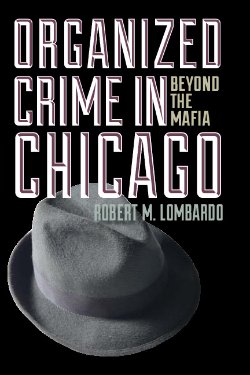
Organized Crime in Chicago: Beyond the Mafia

By Robert M. Lombardo

This book provides a comprehensive sociological explanation for the emergence and continuation of organized crime in Chicago. Tracing the roots of political corruption that afforded protection to gambling, prostitution, and other vice activity in Chicago and other large American cities, Robert M. Lombardo challenges the dominant belief that organized crime in America descended directly from the Sicilian Mafia. According to this widespread "alien conspiracy" theory, organized crime evolved in a linear fashion beginning with the Mafia in Sicily, emerging in the form of the Black Hand in America's immigrant colonies, and culminating in the development of the Cosa Nostra in America's urban centers.

Looking beyond this Mafia paradigm, this volume argues that the development of organized crime in Chicago and other large American cities was rooted in the social structure of American society. Specifically, Lombardo ties organized crime to the emergence of machine politics in America's urban centers. From nineteenth-century vice syndicates to the modern-day Outfit, Chicago's criminal underworld could not have existed without the blessing of those who controlled municipal, county, and state government. These practices were not imported from Sicily, Lombardo contends, but were bred in the socially disorganized slums of America where elected officials routinely franchised vice and crime in exchange for money and votes. This book also traces the history of the African-American community's participation in traditional organized crime in Chicago and offers new perspectives on the organizational structure of the Chicago Outfit, the traditional organized crime group in Chicago.

Urbana, IL: University of Illinois Press, 2013. 257p.

The Vory: Russia’s Super Mafia

By Mark Galeotti

Mark Galeotti is the go-to expert on organized crime in Russia, consulted by governments and police around the world. Now, Western readers can explore the fascinating history of thevory v zakone, a group that has survived and thrived amid the changes brought on by Stalinism, the Cold War, the Afghan War, and the end of the Soviet experiment.

Thevory—as the Russian mafia is also known—was born early in the twentieth century, largely in the Gulags and criminal camps, where they developed their unique culture. Identified by their signature tattoos, members abided by the thieves’ code, a strict system that forbade all paid employment and cooperation with law enforcement and the state. Based on two decades of on-the-ground research, Galeotti’s captivating study details thevory’s journey to power from their early days to their adaptation to modern-day Russia’s free-wheeling oligarchy and global opportunities beyond.

New Haven, CT: Yale University Press, 2018. 344p.

Men of Dishonor: Inside the Sicilian Mafia

By Pino Arlacchi and Don Antonio Calderone

The startling 1992 confessions of Antonino Calderone, a boss in the Sicilian Mafia, provide a behind-the-scenes look at la Cosa Nostra that reveals the Mafia's history, organization, and worldwide influence.

New York: William Morrow, 1993. 289p.

Octopus: The Rise and Rise of the Sicilian Mafia

By Joe Pieri

This book reveals a shocking and sensational story: the mafia and the huge syndicates it controls have infiltrated the government in Italy, the US, the highest levels of the Catholic Church, and in modern times, are even implicated in the murder of an American president and the pope. At lower levels of criminality the mafia is omnipresent - from prostitution, gambling and boot-legging during the Prohibition era in the 1920's, to the present day control of drug trafficking in Europe and America. The annals of the mafia are bloodstained and littered with corpses, both of the mobsters themselves and the law-abiding citizens and legislators who have tried to resist their intimidation. Peopled with compelling characters, Pieri rattles through the tangle of rackets, feuds, business affairs and political chicanery that satisfies our fascination with the criminal underworld.

Edinburgh: Birlinn, 1990. 182p.

Powderburns: Cocaine, Contras and the Drug War

By Celerino Castillo, III , Dave Harmon

The truth about the remaining dark secret of the Iran-Contra scandal- the United States government's collaboration with drug smugglers. Powderburns is the story of Celerino Castillo III who spent 12 years in the Drug Enforcement Administration. During that time, he built cases against organized drug rings in Manhattan, raided jungle cocaine labs in the Amazon, conducted aerial eradication operations in Guatemala, and assembled and trained anti-narcotics units in several countries. The eerie climax of Agent Castillo's career with the DEA took place in El Salvador. One day, he received a cable from a fellow agent. He was told to investigate possible drug smuggling by Nicaraguan Contras operating from the ilpango air force base. Castillo quickly discovered that Contra pilots were, indeed, smuggling narcotics back into the United States - using the same pilots, planes, and hangars that the Central Intelligence Agency and the National Security Council, under the Direction of Lt. Col. Oliver North, used to maintain their covert supply operation to the Contras.sm

Oakville, Ont: Mosaic Press,1994. 205p.