Open Access Publisher and Free Library
CRIME+CRIMINOLOGY.jpeg

CRIME

Violent-Non-Violent-Cyber-Global-Organized-Environmental-Policing-Crime Prevention-Victimization

Posts in rule of law
Artificial Intelligence-Based Capabilities for the European Border and Coast Guard; final report

By RAND Europe

This document is the final report of a study commissioned by the European Border and Coast Guard Agency (Frontex) in November 2019 to examine Artificial Intelligence (AI)-based capabilities for border and coast guard applications. This report presents the main findings of the study, including:  A characterisation of the evolving landscape of AI-based capabilities in border security and mapping of the technology, capability areas and border security functions to which AI may be applied;  Mapping of the current and desired capability levels for nine selected technology areas, as well as pathways to their adoption;  Discussion of cross-cutting enablers and barriers for adoption of AI-based capabilities in border security; and  Reflections on the implications for Frontex.

Warsaw, Poland: Frontex – European Border and Coast Guard Agency, 2020. 167p.
download
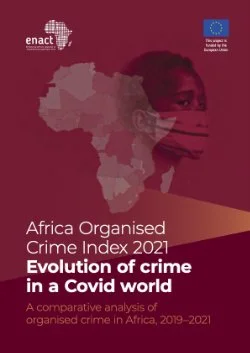
Africa Organised Crime Index 2021, Evolution of crime in a Covid world. A comparative analysis of organised crime in Africa, 2019–2021

By ENACT Africa

As COVID-19 dominates the world’s stage, nearly every aspect of society has been affected by the deadly pandemic. While the impact of the contagion on countries’ economies, social cohesion, health and security has been widely reported on, less is known about its influence on criminal dynamics. The pandemic has not only become a central component of the everyday lives of Africans, but has also revealed the important role the continent plays in the global economy – both licit and illicit. COVID-19 measures have posed a double burden on African countries by heavily challenging people’s economic livelihood and restricting the freedom of movement of Africans, while also challenging governments in how they balance the need to address the health crisis with the provision of services and security amid declining economies. In this context, organised crime in Africa has evolved and taken advantage of the confusion and frustration wrought by the pandemic; it has filled in the gaps left by state institutions, by both adapting its illicit activities in order to circumvent COVID restrictions and providing new sources of livelihoods and parallel services. Institutional responses to stop the spread of the virus have had a profound impact on movement, trade and business, including in black markets and shadow economies. In Africa, COVID-19 was slower to take effect than in other parts of the world, and even though the continent has had experience in handling other major viral epidemics, the health, economic and security systems of many countries on the continent have found themselves ill-equipped to face the particular challenges posed by the COVID-19 pandemic. As legitimate businesses suffered extensive losses across the continent, people increasingly turned to the informal and illicit economies for alternative sources of livelihood. Meanwhile, those already vulnerable to exploitation become even more at risk due to the paucity of economic opportunities available to them and the isolating restrictions put in place in the interest of public health

ENACT (Africa), 2021. 160p.

download
Developing the Capacity to Understand and Prevent Homicide: An Evaluation of the Milwaukee Homicide Review Commission

By Deborah Azrael, Anthony A. Braga and Mallory O’Brien

This report presents the methodology and findings of an evaluation of the effectiveness of the Milwaukee Homicide Review Commission (MHRC), which was established in May 2004 with the mandate to address the city's persistent lethal violence.

A distinguishing feature of the MHRC is its inclusion of community agencies and leaders outside of the traditional criminal justice system. The evaluation examined MHRC's work from January 2005 through December 2007. Overall, the homicide review process found that homicide in the city's intervention districts were largely clustered in specific locations, such as in and around taverns, as well as in districts with concentrations of active offenders who had been involved in the criminal justice system. Homicides were often the outcome of persistent disputes between individuals and/or groups (usually gangs). Homicides were often committed to gain respect and status among peers who valued fearless displays of power and control over others, as well as to inflict retribution on those showing disrespect and confrontational interactions. Generally, the MHRC decision-making and actions produced a comprehensive set of actionable policy and practice recommendations whose implementation and effects were continuously monitored by the MHRC. MHRC actions were intended to better position criminal justice, social service, and community based organizations in addressing the violence-related factors in high-risk locations and high-risk individuals with a propensity for violence. The impact evaluation found that the implementation of the MHRC interventions was linked with a statistically significant 52-percent decrease in the monthly count of homicides in the treatment districts. In comparison, the control districts had a statistically insignificant 9.2- percent decrease in homicides, after controlling for the other covariates. Apparently, the MHRC's crafting of interventions designed to address underlying risks associated with homicides has had a significant impact in reducing incidents of lethal violence.

Boston, MA: Harvard School of Public Health, 2012. 95p.

download
Tussle for the Amazon: New Frontiers in Brazil's Organized Crime Landscape

By Ryan C. Berg

Brazil is witnessing a “tussle for the Amazon”—a new and deadly phase in the history of its organized crime groups and their operations. While the country is no stranger to violent criminal organizations, recent years have seen groups building increasingly sophisticated networks, both within and beyond Brazil’s borders. In the strategic state of Amazonas, these developments have sparked a power struggle between several of the country’s largest criminal organizations that has concerning implications for the stability of Brazil as a whole. This “tussle” is more than a mere clash between Brazil’s transnational organized crime groups. It is a threat to regional stability and imperils neighboring Latin American countries. Appreciating the Amazon region’s current role in the dynamics of Brazil’s criminal underworld is the first step toward deliberate, informed action by the United States and Brazil against a shifting criminal environment.

Miami: Florida International University, 2021. 26p.

download
Developing Methodologies to Assess Organized Crime Strategies in Latin America

By Mark Ungar

Because of the increasingly organized and lethal nature of criminality in Latin America and Caribbean (LAC), OC policy may be the single most important safeguard for regional security. Nearly every current report, in fact, stresses OC’s increasingly threatening impact “on the economic and sociopolitical environment of the region” as it fuels manifestations of criminal violence such as “trafficking of persons, exploitation of natural resources, threats to protected areas, forced displacement, criminal governance, robbery, physical aggression, extortion and kidnapping,” according to UNDP. A recognition of the tandem growth of OC’s forms, though, does not mean a policy-relevant understanding of them. Such an understanding requires disentangling these crimes’ many overlapping sources, removing embedded layers of methodological obstruction, and attuning responses with OC practice. This multiple challenge, though, first requires stepping back to re-evaluate existing paradigms in at least three ways that this report discusses. First is to question existing OC data, since much of it is suspect, biased, or incomplete – reflecting the misalignment of institutional process and policy goals. Second is the ways in which OC draws its power from a multitude of local, national and regional links among non-state, economic, and state agencies that, like dark matter, are omnipresent but largely invisible. Third is a need to widen and re-examine physical and geographic space.

Miami: Florida International University, Jack D. Gordon Institute for Public Policy, 2021.

download
The Organized Crime Community: Essays in Honor of Alan A. Block

Edited by Frank Bovenkerk and Michael Levi

In his social investigative writings on "the serious crime community" which describes the loose merger of corporate interests, organized crime and political crime, professor Alan A. Block of Penn State University has proven to be one of the most inspiring criminologists in the field. An international group of pupils and friends dedicate this book to him which contains original contributions on the troubled concept of organized crime, the social history of crime groups in the United States, corruption in the United Nations Oil-for-Food Program in Iraq, the struggle against identity fraud, the world of drugs and the adverse consequences of criminalization, the money-laundering control movement, International Tribunals against war crimes and a Jewish studies chapter on the role of bystanders during the Holocaust.

New York: Springer, 2007. 246p.

download
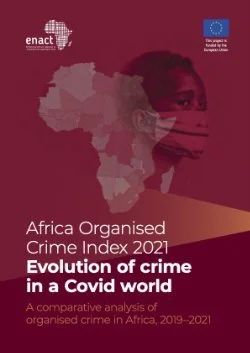
Africa Organised Crime Index 2021, Evolution of crime in a Covid world. A comparative analysis of organised crime in Africa, 2019–2021

By ENACT Africa

As COVID-19 dominates the world’s stage, nearly every aspect of society has been affected by the deadly pandemic. While the impact of the contagion on countries’ economies, social cohesion, health and security has been widely reported on, less is known about its influence on criminal dynamics. The pandemic has not only become a central component of the everyday lives of Africans, but has also revealed the important role the continent plays in the global economy – both licit and illicit. COVID-19 measures have posed a double burden on African countries by heavily challenging people’s economic livelihood and restricting the freedom of movement of Africans, while also challenging governments in how they balance the need to address the health crisis with the provision of services and security amid declining economies. In this context, organised crime in Africa has evolved and taken advantage of the confusion and frustration wrought by the pandemic; it has filled in the gaps left by state institutions, by both adapting its illicit activities in order to circumvent COVID restrictions and providing new sources of livelihoods and parallel services. Institutional responses to stop the spread of the virus have had a profound impact on movement, trade and business, including in black markets and shadow economies. In Africa, COVID-19 was slower to take effect than in other parts of the world, and even though the continent has had experience in handling other major viral epidemics, the health, economic and security systems of many countries on the continent have found themselves ill-equipped to face the particular challenges posed by the COVID-19 pandemic. As legitimate businesses suffered extensive losses across the continent, people increasingly turned to the informal and illicit economies for alternative sources of livelihood. Meanwhile, those already vulnerable to exploitation become even more at risk due to the paucity of economic opportunities available to them and the isolating restrictions put in place in the interest of public health

ENACT (Africa), 2021. 160p.

download
Global Organized Crime Index : 2021

By The Global Initiative Against Transnational Organized Crime

The Global Organized Crime Index is the first tool of its kind designed to assess levels of organized crime and resilience to organized criminal activity. It includes in its rankings all the UN member states – 193 countries. The results, which draw from a comprehensive dataset informed by experts worldwide, paint a worrying picture of the reach, scale and impact of organized crime. It is a sobering thought, for instance, that nearly 80% of the world’s population today live in countries with high levels of criminality. It is equally alarming to consider that the exploitation of people, in the form of human trafficking, has become the most pervasive criminal economy in the world – a development that serves as a dark reminder of the dehumanizing impact of organized crime. Meanwhile, the Index highlights how state involvement in criminality is a deeply embedded phenomenon around the world: state officials and clientelist networks who hold influence over state authorities are now the most dominant brokers of organized crime, and not cartel leaders or mafia bosses, as one might be forgiven for thinking. And these are but a few stand-out examples of the findings of this Index. This report introduces the Global Organized Crime Index and sets out the results and implications of the 2020 data, the year in which a new pandemic began to ravage the world. Of course, organized crime is not a new phenomenon, but it is now a more urgent issue than ever. Criminal networks and their impact have spread across the globe in the last two decades, driven by geopolitical, economic and technological forces. The analysis in this report conclusively demonstrates that organized crime is the most pernicious threat to human security, development and justice in the world today.

Geneva: The Global Initiative Against Transnational Organized Crime. 2021. 188p.

download
Synthetic Cannabinoids in Europe: A Review

By The European Monitoring Centre for Drugs and Drug Addiction (EMCDDA)

This report provides a technical review of the current body of knowledge regarding synthetic cannabinoids that are monitored by the EU Early Warning System. The aim of this report is to strengthen situational awareness of synthetic cannabinoids in Europe and to help stakeholders prepare for, and respond to, public health and social threats caused by such substances.

Lisbon: European Monitoring Centre for Drugs and Drug Addiction (EMCDDA), 2021. 70p.

downloads
Estimating the Size of the Illicit Small Arms Economy in San Diego

By Topher L. McDougal

Illicit economies are notoriously difficult to detect and quantify for the simple reason that participants have incentives to keep their activities clandestine. This paper outlines and implements a method for estimating the markets for illicit small arms, sex, and drugs as constituent components of the total cash economy for the San Diego metropolitan area. The method has two parts: first it derives the total cash economy of San Diego; second it fits a model predicting that amount for each available year as a function of index variables for three distinct illicit markets (small arms, sex, and drugs) and the licit cash economy. It estimates that the market for cash-based purchases of small arms in San Diego in 2013 was $920 million – slightly larger than the illicit sex industry, and much smaller than both the market for illicit drugs and the licit cash economy. Limitations of the method are discussed, including the potential for better proxy variables to improve reliability.

San Diego: Small Arms Data Observatory, 2015. 13p.

download
Operation Burglary Countdown: Evaluation Study Final Report

By Rick Cummings

Operation Burglary Countdown is an innovative community-based crime reduction program operating in two pilot areas, Bentley and Morley. A comprehensive and independent evaluation study has shown that the model of integrating central and local resources through coordinated police and community activities has been well implemented and generated considerable community support. During 12 months of operation, the program has demonstrated its effectiveness in targeted hotspots by reducing residential burglary in Bentley and the surrounding area by over 40%, saving the community an estimated $700,000. Its lack of significant impact in Morley indicates it is best introduced only in identified hotspots

Perth: Office of Crime Prevention, Government of Western Australia, 2005. 65p.

download
On the Trail of Illicit Gold Proceeds: Strengthening the Fight Against Illegal Mining Finances: Colombia’s Case.

By The The Organization of American States, Department against Transnational Organized Crime

The illegal gold trade in Colombia is a widespread and significant threat that has seen considerable growth in recent years. Illegal mining activity produces substantial quantities of gold in the country, by some estimates representing over 70% of national production and accounting for the majority of gold exports. The illegal extraction of gold exacerbates numerous challenges Colombia faces, such as insecurity, environmental degradation, and corruption, while also providing opportunities for drug trafficking organizations and illegal armed groups to obtain significant revenue in some regions. Indeed, in areas where there is extensive mineral exploitation these transnational criminal organizations are often deeply involved in Colombia’s illegal trade in gold, leveraging extensive criminal expertise, ample financing capacities, and armed violence in order to develop illicit gold networks. The spread of illegal mining in Colombia is facilitated by high levels of economic and commercial informality, rural poverty, corruption, limited governmental presence and resources in remote mining areas, and porous international borders that are vulnerable to smuggling, among other factors. Colombia’s government is taking numerous steps to combat the sale and export of illegal gold, including through regulation and oversight of gold supply chains, formalization programs targeting small-scale miners, support for subsistence mining, and on-the-ground operations to disrupt illegal mining activity. Nevertheless, illegal trade in gold continues to thrive as illicit actors excel in finding gaps and opportunities to exploit.

Washington, DC: The Organization of American States, Department against Transnational Organized Crime, 2022. 66p.

download
On the Trail of Illicit Gold Proceeds: Strengthening the Fight Against Illegal Mining Finances.The Case for Ecuador

By The Organization of American States, Department against Transnational Organized Crime

The illegal gold trade is a growing and significant challenge in Ecuador. The spread of illegal gold mining activity has brought surges of violence and instability to remote areas while attracting organized crime, at the local and international level, and triggering an increase in money laundering and contraband. Concern regarding the disruptive and harmful impact of illegal gold mining, as well as the government’s desire to develop and expand Ecuador’s mining sector away from its reliance on small-scale and artisanal operations, have also led to a renewed focus on the challenges posed by illegal mining. There is reason to believe that the illegal gold trade and its associated criminal networks are less entrenched and developed in Ecuador than in neighboring Peru and Colombia. However, there are significant challenges facing the government as it works to combat illegal mining activity, which is increasingly accelerated by illicit cross-border contraband flows and unique vulnerabilities to money laundering activity.

Washington, DC: The Organization of American States, Department against Transnational Organized Crime, 2021. 46p.

download
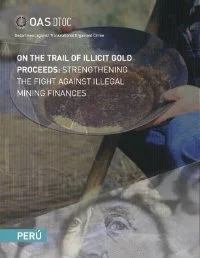
On the Trail of Illicit Gold Proceeds: Strengthening the Fight Against Illegal Mining Finances. Peru's Case.

By The Organization of American States, Department against Transnational Organized Crime

Peru’s well-developed mining sector has shaped the country’s economy and society to a significant degree. The mining sector contributes up to 10% of GDP, while minerals like gold and copper weigh heavily in Peru’s trade composition. Peru’s abundant reserves of mineral resources have helped to fuel the development of its mining sector, attracting a variety of small, medium, and large enterprises to engage in exploration and extraction. However, the country’s mineral wealth and governance challenges in remote mining areas, also offer ample opportunities for organized crime and illegal mining activity. As a result, large populations of illegal miners and transnational criminal networks have become deeply entrenched in Peru, giving the country a central role in the international illegal gold trade. While Peru has taken active steps to combat illegal gold mining and the sale and export of illegal gold, a variety of criminal actors have continued to successfully engage in and promote these illicit activities, producing detrimental effects for citizen security, the economy, and the environment.

Washington, DC: Organization of American States, Department against Transnational Organized Crime 2021. 40p.

download
Illegal Gold Mining in Central Africa

By ENACT AFrica and INTERPOL

Over the last decade, criminal actors engaged in illegal mining have made huge amounts of illicit profits at the expense of countries’ economies, vulnerable populations, and the environment across the Central African region. In the region, gold is mainly produced by artisanal and small-scale gold miners and semi-mechanized companies. The exact quantities of gold produced is unknown to authorities; gold smuggling within and out of the region is well organized, systematic, and concerns the majority of gold leaving the region. The dominance of crime in the industry is enabled by a variety of factors affecting the entire gold supply chain. Illegal financing, by gold, cash, or other means, fuels the process. Fraudulent practices are a central aspect in land exploitation, and allow criminals to employ more effective methods for extraction and production, and to conceal the real quantity of gold produced. A network of illegal buyers collects gold from production sites and smuggles it to regional traders and refiners, who, in turn, are likely to obscure its real origin, ownership, and quantity. Gold is then smuggled out of the country or region mainly by air, often via Cameroon or Uganda, towards Asia (United Arab Emirates, India, and China). Smuggling gold to neighbouring countries allow criminals to benefit from discrepancies in export taxes. It also allows them to introduce gold onto the global market masking its origin, especially if originating from conflict zones. Information suggests that gold mining is largely controlled by criminal consortia composed of different actors, who, collectively, benefit from criminal synergies: members of organized crimes groups (OCGs) and /or corrupt officials in high-ranking positions, economic players, and non-state armed groups in conflict zones. The presence of non-state armed groups in gold mining areas, who seek to finance their activities with the illicit proceeds from this natural resource, is likely to be controlled.

Paris: INTERPOL; ENACT AFRICA, 2021. 53p.

download
IUU Fishing Crimes in Latin America and the Caribbean

By The American University Center for Latin American & Latino Studies and InSight Crime

This report details the causes, consequences, and responses to IUU fishing crimes in nine countries of Latin America and the Caribbean: Argentina, Chile, Costa Rica, Ecuador, Guyana, Jamaica, Panama, Suriname, and Uruguay. Our analysis draws on academic research; press reports; interviews with fishers, experts and government officials conducted in 2021 and 2022; and comments by participants in off-the-record workshops hosted virtually at American University. The report first details the adverse consequences of IUU fishing in Latin America and the Caribbean, including its direct and indirect economic costs, environmental consequences, contributions to food insecurity and potential conflict. The second section analyzes the scope of crimes associated with IUU fishing in the nine countries, describing three distinct dynamics of IUU fishing at work in the hemisphere. The third section analyzes the legislative sources of the weak government response to IUU fishing in the nine countries of Latin America and the Caribbean, discussing the gaps in existing legislation, patchwork international agreements, and a web of bilateral agreements with a variety of international actors. The fourth section evaluates the considerable variation in three significant measures of regional law enforcement capacity: physical capacity, surveillance capabilities, and prosecutorial-judicial capacity. Finally, the report concludes by recommending areas in which policies against IUU fishing could be strengthened to deter fishing-related crime across Latin America and the Caribbean.

Washington, DC: American University Center for Latin American & Latino Studies and InSight Crime, 2022. 77p.

download
llicit Goods Trafficking Via Port and Airport Facilities in Africa

By ENACT (Enhancing Africa’s response to transnational organized crime)

Ports and airports across Africa continue to be targeted by organised crime groups to traffic illicit goods.

The objective of this report is to assess how organised crime exploits ports and airports in Africa. It aims at identifying and analysing the latest transportation trends and methods used on the continent by organised crime, to further their sphere of operations. This will include detailed explanation of the criminals involved, trafficking routes and specific modus operandi, and recommendations to identify and disrupt these organised crime groups.

The assessment may ultimately help law enforcement in the appropriate targeting and disruption of transnational organised crime groups, and elicit law enforcement cooperation between countries to effectively fight the trafficking of illicit goods via ports and airports in Africa.

Enact (Africa): Lyon, France: INTERPOL, 2020. 47p.

download
Recruitment into Organised Criminal Groups: A Systematic Review

By Francesco Calderoni, Gian Maria Campedelli, Tommaso Comunale, Martina E Marchesi and Ernesto U Savona

This paper provides a narrative synthesis of the results of a systematic review of the social, psychological and economic factors leading to recruitment into organised crime.This is based on the analysis of evidence emerging from 47 qualitative, quantitative and mixed-method studies published in or before 2017.While the selected studies varied markedly in method and quality, several factors emerged as particularly important in understanding recruitment into organised criminal groups. These included the role of social relations (family, kinship, friendship and work-relations), criminal background and criminal skills.

Canberra: Australian Institute of Criminology, 2021. 28p.

download
Organized Crime and Instability Dynamics: Mapping Illicit Hubs in West Africa

By Lucia Bird and Lyes Tagziria

As the nature of armed conflict in West Africa is in flux – with the constellation of conflict actors multiplying, the intensity and geographic dispersion of violence growing, civilians increasingly targets of attacks, and conflicts more commonly spreading across borders – now is a key moment to consider the role played by illicit economies in creating the enabling environments for conflicts to develop, and in prolonging them.

Yet the intersection between illicit economies and instability is an often misunderstood and over-simplified subject of research and debate. The inherently clandestine nature of organized crime poses an obstacle to accurately understanding the dynamics of illicit economies and their relationship with conflict and instability. In West Africa, this is compounded by the paucity of comparable data in much of the region.

This report represents a step towards addressing this deficit. It presents the findings of a new initiative that maps the key geographic hubs of illicit economies across West Africa (Benin, Burkina Faso, Cabo Verde, Cameroon, Central African Republic, Chad, Côte d’Ivoire, Gambia, Ghana, Guinea, Guinea-Bissau, Liberia, Mali, Niger, Nigeria, Senegal, Sierra Leone and Togo)

Geneva, SWIT: Global Initiative Against Transnational Organized Crime. 2022. 88p.

download
Gangster States: Organized Crime, Kleptocracy and Political Collapse

By Katherine Hirschfeld

Gangsterism, extortion and racketeering are currently viewed as deviant, pathological behaviors that are disconnected from formal political and economic structures, and often excluded from analysis in the fields of political science and economics. A critical reconsideration of organized crime reveals that the evolution of racketeering in systems of exchange should be understood as a natural phenomenon that can be predicted with tools from behavioral ecology originally developed to model the dynamics of predator-prey relations. These models predict the conditions under which unregulated markets evolve into hierarchical criminal syndicates, and how established organized crime groups expand and intrude into formal systems of government, creating chimeric 'gangster-states'. This book outlines the parameters of this process, and uses archival research to explore case studies of organized crime and kleptocratic state formation. A final section proposes redefining state formation as part of a longitudinal cycle of political-economic evolution that includes phases of racketeering, instability, collapse and regeneration.

Basingstoke, Hampshire, UK; New York:: Palgrave Macmillan, 2015. 176p.

download