Open Access Publisher and Free Library
CRIME+CRIMINOLOGY.jpeg

CRIME

Violent-Non-Violent-Cyber-Global-Organized-Environmental-Policing-Crime Prevention-Victimization

Posts in social sciences
BAN-boozled: How Corruption and Collusion Fuel the Illegal Rosewood Trade in Ghana

By Environment Investigation Agency (EIA)

Our new report BAN-BOOZLED: How Corruption and Collusion Fuel Illegal Rosewood Trade in Ghana reveals how despite a comprehensive ban in place since March 2019, the dry forests and rural communities of Ghana are still the victims of rosewood plundering. EIA estimates that since 2012, over 540,000 tons of rosewood – the equivalent of 23,478 twenty-foot containers or approximately 6 million trees – were illegally harvested and imported into China from Ghana while bans on harvest and trade have been in place. EIA’s investigation documents a massive institutionalized timber trafficking scheme, enabled by high-level corruption and collusion.

New York: London: Environmental Investigation Agency, Inc. 2019. 16p.

download
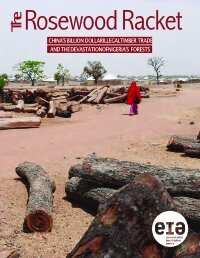
The Rosewood Racket: China's Billion Dollar Illegal Timber Trade and the Devastation of Nigeria's Forests

By Environmental Investigation Agency, Inc. (EIA).

The illegal trade in precious “rosewoods” is the world’s most valuable form of wildlife crime. Hundreds of people have been killed around the world trying to protect these rare trees from the gangs seeking to profit from the rapidly growing demand for luxury furniture in China. Having decimated most rosewood species in Southeastern Asia and Central America, this rapacious industry has now turned to Africa, and a dry forest species called “kosso” (Pterocarpus erinaceus) . EIA’s investigators have spent two years exploring this booming illegal trade, including undercover meetings with more than 30 actors in the supply chain, from the arid forests in Nigeria to the sophisticated retail shops in China. Our investigation reveals that almost all the kosso coming from and through Nigeria for the past three years has been illegal. Most shockingly, EIA’s investigation has revealed that thousands of documents from the Convention on International Trade in Endangered Species of Wild Fauna and Flora (CITES) have been used in contravention of the core objectives of the Convention.

London: Environmental Investigation Agency, Inc. 2017. 40p.

download
Analyzing the Problem of Femicide in Mexico: The Role of Special Prosecutors in Combatting Violence Against Women

By Teagan McGinnis, Octavio Rodríguez Ferreira and David Shirk

Justice in Mexico has released its latest working paper titled Analyzing the Problem of Femicide in Mexico by Teagan McGinnis, Octavio Rodríguez Ferreira, and David Shirk. This study examines the patterns of violence against women in Mexico, with special attention to the problem of femicide. While national homicide data show that the proportion of female homicide victims in Mexico has stayed largely the same for decades, the authors demonstrate that the elevated rate of homicides throughout the country has contributed to a large increase in the total number of female homicide victims. Because many homicides targeting women have distinctive characteristics—such as sexual violence, intimate partners, or other factors attributable to the woman’s gender—they have been legally codified as “femicides,” murders targeting women due to their gender.

The authors explore the question of why both the number and proportion of femicides has increased dramatically since national level data became available in 2015. Since prosecutors play a key role in determining whether a crime will be classified as either a homicide or femicide, the authors specifically evaluate the effects of state level prosecutorial capacity on the reporting of such crimes. The authors compiled an original dataset of state prosecutorial budgets and levels of homicidal violence (by gender and by state) and used both means testing and linear regression models to assess differences between states with special prosecutors and those without, while controlling for the level of homicidal violence across states. In terms of qualitative methods, the authors also compiled federal and state laws to examine differences in criminal and administrative laws and conducted interviews with state prosecutors and security experts.

The authors find statistically significant evidence that states that have special prosecutors for the investigation of femicides are substantially more likely to classify female homicides as femicides. Indeed, appointing a special prosecutor for gender-related crimes increases the investigation of femicide cases by 50% on average, even controlling for levels of homicidal violence in those states. These findings illustrate the impact of recent prosecutorial reforms in Mexico and offer useful insights for policy makers and activists working to combat violence against women in Mexico. Informed by the novel findings in this study, the authors recommend that Mexican states lacking special prosecutorial offices for the investigation and prosecution of femicides should create such units, and that all states should provide more resources and prosecutorial tools for the investigation and prosecution of gender-motivated crimes.

Washington, DC: Wilson Center, 2022. 33p.

download
The Prevalence of Violence against Women among Different Ethnic Groups in Peru

By Jorge M. Agüero

About half of Peruvian women between the ages of 15 and 49 have experienced some form of violence from their partners. Through a quantitative analysis, this report explores how violence rates against women vary by ethnic group and over time. Based on a nationally representative sample of more than 75,000 women surveyed between 2003 and 2012 and a review of the literature on ethnic classification in Peru, a typology is applied to measure ethnicity, based on women’s linguistic backgrounds, allowing for a consistent ethnic characterization throughout the period of analysis. In this typology, the first group is made up of women who speak an indigenous language at home and do not speak Spanish. A second group, called “historic” Spanish speakers, is composed of women who learned Spanish during childhood and still use it today, while the third group, called “recent” Spanish speakers, includes women who grew up speaking an indigenous language but now speak Spanish. The highest rate of all types of violence is found in this last group, with a much greater difference in sexual and severe physical violence. This is consistent with the predictions of the theoretical model developed in this study in which violence depends on the type of couple. The model finds that women who speak “recent” Spanish—and who have what is termed a lower “outside option” than their “historic” Spanish-speaking male partners—experience greater violence. The study found that the gap in rates of violence against women among these three language groupings has remained constant over time despite an overall reduction in violence. This shows that current policies to provide care for victims and prevent violence against women are insufficient because the policies do not necessarily target groups with a greater risk of violence. This is unlike other areas of public health, where interventions are directly targeted at the most vulnerable populations

Washington, DC: Inter-American Development Bank, 2018. 43p.

download
Nature and Extent of Environmental Crime in Kenya

By David Kamweti, Deborah Osiro and Donald A. Mwiturubani

An environmental crime can be defined as a grave act against the environment that results in the infringement of the right of citizens to a clean and healthy environment. For such an act to constitute a crime, it must contravene laid-down legislation in the various sectors of the environment, such as forestry, water and wildlife. Environmental offences have, for a long time, been treated as misdemeanours, and not felonies. Environmental crime is a serious and growing concern, leading to the near extinction of valuable wildlife species, and significantly impacting on the biological integrity of the planet. It contributes to environmental degradation, which in turn affects the quality and quantity of environmental resources. By doing so, it leads to unhealthy competition for these scarce resources, and subsequently to volatile situations and even resource-use conflicts. As such, environmental crime impacts on human livelihoods.

Pretoria, South Africa: Institute for Security Studies, 2009. 96p.

download
How Much Violence Does Football Hooliganism Cause?

By Marc Fabel and Helmut Rainer

This paper quantifies how much of violent crime in society can be attributed to football-related violence. We study the universe of professional football matches played out in Germany’s top three football leagues over the period 2011-2015. To identify causal effects, we leverage time-series and cross-sectional variation in crime register data, comparing the number of violent crimes on days with and without professional football matches while controlling for date heterogeneity, weather, and holidays. Our main finding shows that violent crime increases by 21.5 percent on a match day. In the regions and time period under consideration, professional football matches explain 8 percent of all violent assaults, and generate social costs of roughly 194 million euros. Exploring possible mechanisms, we establish that the match day effect cannot be explained by emotional cues stemming from either unsettling events during a match or unexpected game outcomes, nor is it driven by increases in domestic violence. Instead, we find that the match day effect can be attributed to violence among males in the 18-29 age group, rises to almost 70 percent on days with high-rivalry derby matches, and that a non-negligible share of it stems from violent assaults on police officers. These findings are inconsistent with frustration-aggression theories that can explain sports-related violence in the United States, but can be accommodated by social identity explanations of football hooliganism.

Munich: CESifo, 2021. 40p.

download
Violent and Antisocial Behaviours at Football Events and Factors Associated with these Behaviours A rapid evidence assessment

By Lucy Strang, Garrett Baker, Jack Pollard, Joanna Hofman

Football is the world's most popular sport, with millions of fans annually watching professional football on their television or at public viewing places such as fan zones, or attending matches in person. Negative behaviour at football matches is a widely recognised issue that has garnered international media attention for decades. However, violent and antisocial behaviour at football matches remains an issue that needs to be better understood. To this end, RAND Europe was commissioned by Qatar University to provide a series of reports looking into the issues of violence and antisocial behaviour at major sporting events. This first report observes the key antisocial and violent behaviours that may be witnessed in relation to football events, such as verbal abuse, destruction of property, acts of vandalism and assault, while also noting that football environments can foster positive behaviours and social dynamics. In addition, it acknowledges that definitions of antisocial behaviour are to some degree subjective and contextual. It is important to acknowledge, however, that while the identified studies consider specific factors driving fan behaviour, the available evidence supports the notion that no single factor can be found to be responsible for violent or antisocial behaviour by fans at football events. Rather, multiple factors are often in play simultaneously. While the identified studies consider specific factors driving fan behaviour, the available evidence supports the notion that no single factor can be found to be responsible for violent or antisocial behaviour by fans at football events. Rather, multiple factors are often in play simultaneously. The quality of the identified literature varied significantly, and the research team rated only a handful of studies as being very high quality.

Santa Monica, CA: Cambridge, UK: RAND Europe, 2018. 42p.

download
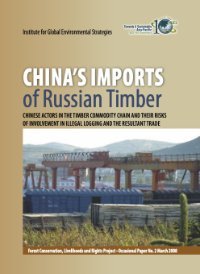
China's Imports of Russian Timber: Chinese Actors in the Timber Commodity Chain and Their Risks of Involvement in Illegal Logging and the Resultant Trade

By Tian Yanfang

Since the end of the 1990s, the Sino-Russian border regions have witnessed a dramatic, unprecedented increase in cross-border timber trade that has made Russia the largest log supplier for China's expanding wood industry sector. Driving factors include: severe constraints in China's domestic wood supplies, the availability of rich forest resources in the Russian Far East and Siberia, liberalised trade policies and demand from both domestic and European, Japanese and US markets for low cost Chinese wood products. This study provides a contextual description and analysis of the cross-border timber trade boom and the actors involved. It examines the current challenges faced by a largely inefficient Russian forestry sector and decentralised Russian forest administration in the context of illegal logging and unsustainable forestry practices, both widely viewed as having reached serious dimensions.

This study focuses on the involvement and role of Chinese actors throughout the supply chain. Chinese companies have entered the Russian forestry sector, introduced greater efficiency and proved competitive. This involvement has also opened doors for Chinese actors to inadvertently or intentionally participate in illegal activities throughout the supply chain. In addition to timber harvesting, Chinese actors are involved as intermediaries in the commercial log depots and control the wholesale timber market in some parts of Russia. Chinese actors have also increasingly invested in wood processing in Russia, partly in response to the adjustment of the Russian export tax on logs. Most recently, there has been a trend towards vertical integration for Chinese companies, with intermediaries and wood importers attempting to extend their business to every node of the trading network. On the Chinese side of the border, preferential tax policies and infrastructure investment have spurred a rapid development of the timber processing industry with private sector processing mills replacing state-owned timber processing factories.

Hayama, Japan, Institute for Global Environmental Strategies, 2008. 58p.

download
Tracking Blood Money: Financial investigations into wildlife crime in East Africa

By Amanda Gore

Boniface Mathew Malyongo was, by most accounts, the perfect fit for a Hollywood villain. Nicknamed ‘Shetani’ (Satan, or the devil, in Kiswahili), he was allegedly one of the most prolific elephant poachers and ivory traffickers in the world, accused by some of controlling as many as 15 poaching gangs responsible for killing up to 10 000 elephants in five countries. The Leonardo DiCaprio-produced documentary, The Ivory Game, which culminated with dramatic footage of Malyongo’s arrest in Tanzania, assured him a certain degree of global infamy. And when he was jailed for 12 years in 2018, conservation organizations and activists around the world rejoiced. But Malyongo appealed, and in 2020 Tanzania’s Court of Appeal quashed the conviction. For conservationists, it was a stunning reversal – the court ruled that there were basic errors and police missteps that fatally compromised the chain of evidence, a complete lack of evidence to prove the key elements of the crimes and an overreliance on confessions as proof of guilt. Despite charging Malyongo with ‘leading organized crime’, as defined in Tanzania’s Economic and Organized Crime Control Act, investigators and prosecutors produced no hard evidence that he organized, directed or financed a ‘criminal racket’, or reaped a profit from it. The case and the vast sums involved could have been a chance to unravel the financial threads underpinning an alleged transnational syndicate, yet no financial investigation was ever done. Police seized four vehicles and identified several properties, including a house and a supermarket, which, they said, had been obtained as a result of poaching activities. But that is where the financial inquiries stopped. No attempt was made to produce evidence showing how the syndicate financed its operations, where the money originated, how it flowed or how it was laundered. While the effect of the judgment is that Malyongo has been found innocent, the conduct of the public officials in this case, the police and prosecutors, is a matter that deserves scrutiny

Geneva, CH: Global Initiative Against Transnational Organized Crime, 2021. 44p.

download
Elephants in the Dust: the African Elephant Crisis. A Rapid Response Assessment

By United Nations Environment Programme; CITES, IUCN, TRAFFIC

This rapid response assessment report brings together critical up-to-date information from the CITES-recognized systems that monitor the status of elephants, the illegal killing of elephants, and the legal and illegal trade in ivory. Collectively, these systems deliver consistent, evidence-based information to improve our understanding of the dynamics of the illegal ivory supply chain

Nairobi, Kenya: United Nations Environment Programme, Arendal, NO: GRID-Arendal, 2013. 80p.

download
“Illegal” Logging and Global Wood Markets: The Competitive Impacts on the U.S. Wood Products Industry

By Seneca Creek Associates, LLC and Wood Resources International, LLC

Illegal logging has been high on the agenda, if not directly at the center, of numerous international conferences on forests. This attention stems in large part from environmental concern over deforestation and poor forest management practices in many developing countries and countries with economies in transition. Illegal harvesting can have deleterious impacts on biodiversity and other globally important environmental services. Among the factors driving illegal logging are: unclear or poorly enforced forest tenure, weak political institutions, poverty, corruption, inadequate natural resources planning and monitoring, and lax enforcement of sovereign laws and regulations. The presence of illegally procured wood fiber also affects the competitiveness of American and other producers who operate legitimately within national and international environmental and trade rules. An AF&PA-sponsored study of the illegal logging issue provides new perspective on the estimates of illegal logging and its associated economic impacts.

Poolesville, MD: Seneca Creek Associates; University Place, WA : Wood Resources International, 2004. 190p.

download
The Globalization of Crime: A Transnational Organized Crime Threat Assessment

By United Nations Office on Drugs and Crime

In The globalization of crime: a transnational organized crime threat assessment, UNODC analyses a range of key transnational crime threats, including human trafficking, migrant smuggling, the illicit heroin and cocaine trades, cybercrime, maritime piracy and trafficking in environmental resources, firearms and counterfeit goods. The report also examines a number of cases where transnational organized crime and instability amplify each other to create vicious circles in which countries or even subregions may become locked. Thus, the report offers a striking view of the global dimensions of organized crime today.

Vienna: UNODC, 2010. 314p.

download
Transnational Environmental Crime in Greater China: A Case Study from the Perspective of Network Theories

By Yunbo Jiao

The central goal of this study is to produce an in-depth understanding of the nature and dynamics of China-related transnational environmental crime (TEC). To that end, this study takes the GreaterKaoem Telapak Kaoem Telapak China – including mainland China, Hong Kong, Macau, and Taiwan – as the specific geographic focus for its investigation into three key TEC sectors (illegal trade in wildlife, forest products, and ozone depleting substances (ODS)). Overall, this study seeks to achieve the central goal in a four-step sequence. First, it builds a network-centric conceptual framework based on the idea of “networked threats require networked responses” advocated by many influential scholars. This framework focuses on addressing two puzzles: what essentially constitutes a network threat; and what forms a networked response. Second, it applies the concept of networked threats to the study of China’s global trade in illegal wildlife, forest products, and ODS. Third, it examines China’s TEC-related legal frameworks and enforcement responses and identifies key challenges that China has encountered in each of the three selected TEC sectors. Fourth and finally, it combines the above three lines of understandings – the accounts of networked responses, the empirical findings of China’s illegal trade, and the key regulatory and enforcement challenges identified – to develop practical suggestions on how can China apply the notion of networked responses to the formulation of regulatory and enforcement strategies for addressing the identified key challenges. This study makes two broad arguments: one theoretically oriented and one empirically directed. First, this study argues that while the concept of networked threats can be approached along the dimensions of transaction networks and directed networks, networked responses are not a standard, formatted mode of regulatory or enforcement responses. Instead, networked responses should be understood as a special way of thinking and acting: a way that sees a bright-side actor (e.g., enforcement agencies) as operating in an environment occupied by various networks and entities, which simultaneously present challenges in terms of amplified (networked) threats, as well as opportunities in terms of power amplifiers for the bright-side actor, in the sense that they could potentially be leveraged for tackling these threats. Second, China’s global trade in environmental contraband is typified by the substantial scale of China’s black markets and the deep embeddedness of China in the international and regional illicit trade chains. These two features, on the one hand, pose a serious challenge to the Chinese government in tackling its TEC; while on the other hand, they imply that Chinese effort and progress made toward addressing its illegal internal trade will likely have a substantive, positive overflowing effect on the whole of the international and regional illegal trade.

Canberra: Coral Bell School of Asia Pacific Affairs, College of Asia and the Pacific, Australian National University, 2016. 306p.


download
Failing the Forests: Europe's Illegal Timber Trade

By World Wildlife Fund - UK

Based on trade data for six timber producing regions, this report examines the role of the EU in trade in illegally sourced timber and assesses the potential for the EU to limit illegal logging over the next ten years. Presenting a league table of the EU’s top importers of illegal timber, and combining up-to-date information on both timber imports and EU policy, the report predicts that the main factor limiting illegal logging in the near future will be the exhaustion of forest resources. The implications are far-reaching: biodiversity, human health and national economies across the world will all be affected. The report concludes with a series of recommendations, which address the need for the EU and its member states to take more proactive steps to halt the practice of illegal logging and the trade in illegal timber. It also highlights the urgent need for meaningful co-operation from other major importing countries, including China, Japan and the US.

Godalming, Surrey. UK: WWF-UK, November 2005. 102p.

download
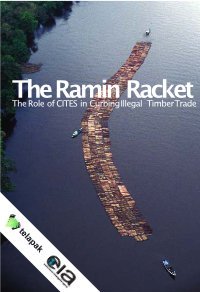
The Ramin Racket: The Role of CITES in Curbing Illegal Timber Trade

By EIA

A report on the role of the Convention on International Trade in Endangered Species (CITES) in curbing illegal timber trade and protecting endangered tree species. Despite the success of its current CITES listing, endangered ramin remains under threat, with the remnants of Malaysia’s ramin forests exploited unsustainably. Although ramin is banned from cutting and export in Indonesia – the only other significant range state – stolen wood continues to be laundered through neighbouring Malaysia in quantities exceeding the global annual legal supply.

London; New York Environmental Investigations Agency, 2011. 17p.

download
Illegal Logging: Cut It Out! The UK’s role in the trade in illegal timber and wood products

By Rachel Hembery, Anna Jenkins, George White and Beatrix Richards

Illegal logging exists because enormous profits can be made. These profits are most easily realised in countries with endemic corruption, lax law enforcement and poor social conditions, where there is little incentive to change forestry practice. Many of the countries supplying timber and wood products to the UK have high levels of foreign debt, poor governance systems, high levels of poverty and unsustainable forest management, and are experiencing loss of some of the world’s most biodiverse forests at an alarming rate. These factors – which by no means comprise an exhaustive list – contribute to the illegal and unsustainable trade in timber and wood products. Arguably the problems associated with illegal activities are most acute in developing countries, those countries with emerging economies and in the transitional economies of Russia and eastern Europe. These are areas of the world where weak political institutions and weak regulatory enforcement in the forested regions are often the norm, and where corruption is common. This report attempts to estimate the volume of illegal wood entering the UK and to identify which sectors of the UK market utilise this wood and fibre. It identifies various processes involving the UK government as a purchaser or specifier, as well as national and international governmental processes and market-based mechanisms that are in place to counter illegal logging. It identifies their effectiveness and weaknesses and makes a series of recommendations.

Godalming, Surrey. UK: World Wildlife Fund - UK, 2007. 103p.

download
Deep-Rooted Interests: Licensing Illicit Logging in Guinea-Bissau

By Lucia Bird and A. Gomes

The widespread devastation of Guinea-Bissau’s forests – a process coordinated by the military – was curtailed in April 2015 by the imposition of a five-year moratorium on logging exports. Now, the current government looks set to lift the ban – raising widespread concerns of a resurgence in illicit logging.

Drivers for lifting the moratorium may be linked to the powerful interests at play in the sector, both within Guinea-Bissau’s elite and those of the Chinese business community, which have long-standing links to the logging business in the country. These interests, and particularly those of Prime Minister Nuno Gomes Nabiam, were highlighted by a significant seizure of illicit logs by the Judicial Police in November 2020.

Geneva: Global Initiative Against Transnational Organized Crime. 2021, 17p.

download
Left Undefended: Killings of Rights Defenders in Colombia’s Remote Communities

By Human Rights Watch

Since 2016, over 400 human rights defenders have been killed in Colombia—the highest number of any country in Latin America, according to the United Nations Office of the High Commissioner for Human Rights (OHCHR). In November 2016, the Colombian government and the Revolutionary Armed Forces of Colombia (Fuerzas Armadas Revolucionarias de Colombia, FARC) guerrillas reached a landmark peace accord, leading to the demobilization of the country’s then-largest armed group. The agreement included specific initiatives to prevent the killing of human rights defenders. Separately, that year the Attorney General’s Office decided to prioritize investigations into any such killings occurring as of the beginning of 2016.

New York: HRW, 2021. 135p.

download
Improving the Legal Framework of Wildlife Resources in Cameroon: Achievements and constraints, challenges and perspectives

By Roger Ngoufo; Hubert Tsague D.; Matthias Waltert

In the African rainforest zone, wildlife can provide up to 70 % of animal protein to the population and is used for various cultural reasons (e.g. tastes, food habits, rituals and prestige). Cameroonians have become famous for their attachment to the consumption of game meat. Moreover, the availability of wildlife maintains a variety of public services, forming the basis of substantial numbers of public and informal jobs in the branches of transport and trade. But this natural and cultural heritage is severely threatened by the intensification of illegal activities, including the destruction of habitats and poaching. This book questions the current legal framework of wildlife resources management in Cameroon, asks whether the country’s legislation could be improved towards a sustainable exploitation of wildlife resources and makes concrete suggestions for a possible reform.

Göttingen: University of Gottingen, 2014. 110p.

download
The Organisation of the Illegal Tiger Parts Trade in China

By Rebecca Wing Yee Wong

The thesis is a study of how Chinese illegal tiger parts trading networks are organized. In particular, this thesis tests in a qualitative manner the causal relationship between three independent variables and the network organizations of these markets. The three independent variables are “ethnicity”, “level of enforcement” and “proximity to the source country”. The thesis also discusses the dynamics of the illegal transactions of tiger parts products. Legitimate meditators or dispute resolutions mechanisms are lacking in the underworld so the risks, which the parties undertake during trading, are far higher. This thesis explores how illegal transactions are enforced, carried out and honored in this trade. In order to map the organization of the tiger trade, I conducted fieldwork in three trading hubs across China: Lhasa. Kunming and Xining.

I discovered five tiger parts trading networks, three of which specialized in the trading of tiger skins and two in tiger bones. Within these networks, the level of perceived but not the actual level of risk influences the decisions of the actors in the network. Entry into the network is easy when the perceived level of enforcement is low. In these settings, there is no ethnic restriction for entering the network; the supplier is willing to trade with anyone with a trustworthy reputation. On the other hand, accessibility to the network is strictly controlled when actors perceive a high level of enforcement in their operating environment. Under this setting, the organization of the network becomes more exclusive and ethnically homogenous, as shown in the Tibetan tiger skin-trading network in Lhasa and the tiger bone-trading network in Kunming. The proximity of the tiger source country to the re-distribution sites (fieldwork cities) also influences the organization of the networks. When the level of enforcement is low and the tiger source country is far away from the re-distribution sites, a monetary deposit is required in order to show that the buyer is serious about his/her request, as shown by the tiger skin-trading network in Kunming.

Oxford, UK: St Hilda’s College, University of Oxford . 2013. 280p.

download