Open Access Free Library
CRIME+CRIMINOLOGY.jpeg

CRIME

Violent-Non-Violent-Cyber-Global-Organized-Environmental-Policing-Crime Prevention-Victimization

Posts in social sciences
Handbook Of Child Sexual Abuse: Identification, Assessment, And Treatment

Edited by Paris Goodyear-Brown

This handbook is the most comprehensive volume on child sexual abuse to date and offers a snapshot of the state of the field as it stands today. As such, it is intended to aid the refinement of our thoughts, to help increase our mutual understanding as we approach this critically important issue together, and to help shape society’s approach to child sexual abuse.

Hoboken, New Jersey: John Wiley & Sons, 2012. 642p.

Piracy in Shipping

By Maximo Q. Mejia Jr., Pierre Cariou, François-Charles Wolff

Piracy in its various forms has posed a threat to trade and shipping for millennia. In the 1970s, a steady rise in the number of attacks ushered in the present phenomenon of modern piracy and not many parts of the world's seas are free from piracy in one form or another today. This paper reviews the historical and geographical developments of piracy in shipping, with a discussion on contentious issues involved in defining piracy. Using data available on piracy acts collected from the IMB related to 3,957 attacks that took place between 1996 and 2008, we shed light on recent changes in geography and modi operandi of acts of piracy and investigate how poverty and political instability may be seen as the root causes of piracy.

Malmo, Sweden: World Maritime University, 2010. 35p.

The Disappearing Act: The Illicit Trade in Wildlife in Asia

By Vanda Felbab-Brown

Southeast Asia, with its linkages into the larger Asian market that includes China, Indonesia, and India, is one of the world’s biodiversity hotspots as well as one of the world’s hotspots for the illegal trade in wildlife and wildlife parts. Although demand markets for wildlife, including illegally traded wildlife are present throughout the world, China ranks as the world’s largest market for illegal trade in wildlife, and wildlife products, followed by the United States. Globally, the volume and diversity of traded and consumed species have increased to phenomenal and unprecedented levels, contributing to very intense species loss. In Southeast Asia alone, where the illegal trade in wildlife is estimated to be worth $8-10 billion per year, wildlife is harvested at many times the sustainable level, decimating ecosystems and driving species to extinction.

Washington, DC: Brookings Institute, 2011. 43p.

A Comparative Analysis of Wildlife Trafficking in Australia, New Zealand, and the United Kingdom

By Tanya Wyatt

Wildlife trafficking is a major black market, and is thought to be the second most profitable illicit market after drug trafficking. It has significant negative impacts on species, ecosystems, and biodiversity. After habitat loss, wildlife trafficking is the leading cause of extinction. It is also a threat to food industries and human health with its connection to disease transmission. The patterns of wildlife trafficking vary throughout the world and nations approach the prevention of it differently. The differences that exist raise the question as to why the levels differ between nations that appear to be similar. This is the case with the United Kingdom, Australia, and New Zealand, which are demographically similar with a significant shared cultural history. Yet New Zealand has high levels of wildlife trafficking, Australia low levels, and the UK somewhere in between. This research uses the trade database from the Convention on the International Trade in Endangered Species of Wild Fauna and Flora (CITES) to explore all the illegal trade incidents of these three countries reported to CITES from its creation in 1973. Combined with a review of the literature, the paper investigates the differences and similarities in the wildlife that is traded and the legislation that is implemented. It appears that more regulation in this instance may be connected to decreased levels of wildlife trafficking.

Canberra: Transnational Environmental Crime Project, Department of International Relations, Australian National University, 2013. 25p.

Governmental Discourses on Transnational Environmental Crime

By Matthew Marshall

This paper summarises, analyses, and assesses four working papers published by the Transnational Environmental Crime (TEC) Project and written by two employees of the Australian Government’s Department of the Environment (DoE) who served as Visiting Fellows to the TEC Project. This working paper also forms part of the TEC Project. It synthesises the data and concludes the overall contribution made by DoE, emphasising future areas of consideration. Part of this involves enunciating research findings in such a way that they can be better utilised by DoE to subsequently develop policy in the area of TEC regulation, which is also one of the aims of the TEC Project generally: that the course of academic research provide assistance in the development of government policy on the matter of TEC with subsequent operational benefits.

Canberra: Transnational Environmental Crime Project, Department of International Relations, Australian National University, 2014. 24p.,

Detecting Illegal Trade Practices by Analyzing Discrepancies in Forest Products Trade Statistics: An Application to Europe, With a Focus on Romania

By Jeffrey R. Vincent

Discrepancies in bilateral trade statistics for forest products have recently attracted attention as potential indicators of illegal trade practices. For example, if exporters understate quantities to evade export taxes or quotas, then one might expect reported exports to be less than reported imports. Discrepancies in trade statistics can exist for reasons that have nothing to do with illegal activities, however, such as measurement error and shipment lags. Any attempt to infer evidence of illegal activities from statistical discrepancies must control for these other explanations. The author estimates the discrepancies between reported imports and exports for bilateral flows of sawnwood traded by Romania and other European countries. The author also examines whether these discrepancies reflect illegal activities by the traders. The mean discrepancy for sawnwood exported by Romania during 1982-97 was significantly different from zero for coniferous sawnwood but not for nonconiferous sawnwood. Yet the sign of the discrepancy for coniferous sawnwood-reported exports tended to be greater than reported imports-implies that illegal trade activities were more likely occurring in Romania's trading partners than in Romania. An econometric analysis of bilateral trade statistics for Romania and other European countries finds evidence that measurement error, shipment lags, and intentional underreporting all play a role in explaining discrepancies for both types of sawnwood. The econometric model is not sufficiently reliable, however, for estimating the portion that was due solely to illegal activities or determining whether those activities occurred primarily in Romania or in its trading partners. Moreover, given that it is based on observed discrepancies in bilateral trade statistics, it fails to detect illegal trade activities that occur simultaneously in both importing and exporting countries. For these reasons, econometric methods appear unlikely to be of practical use in revealing illegal trade activities in the Romanian forest sector.

Washington, DC: World Bank, 2004. 43p.

Timber Smuggling in Indonesia: Critical or Overstated Problem?: Forest Governance Lessons from Kalimantan

By Krystof Obidzinski, Agus Andrianto, and Chandra Wijaya

Over the last few years, illegal logging has been at the center of policy debates about the current state and future prospects of Indonesia’s forestry sector. To a significant extent, the policy dialogues as well as public understanding of the illegal logging problem have been influenced by the timber establishment’s view that clandestine timber smuggling is responsible for illegal logging activities in the country. Echoing this sentiment, the Indonesian government has been at odds with neighboring countries Malaysia and Singapore over their perceived lack of cooperation in stemming the illegal flow of Indonesian timber across the border and thus helping to rein in illegal logging. At the same time, timber smuggling has become the focus of forest law enforcement operations in Indonesia. This paper scrutinizes the assumption that timber smuggling is at the core of the illegal logging problem in Indonesia. Taking the border zone between Indonesia and Malaysia on the island of Borneo (Kalimantan) as a sample unit of analysis and complementing it with data from other parts of Indonesia, the paper shows the intensity of timber smuggling was relatively high between 2000 and 2003, but has since declined by over 70%. Despite this decline, illegal logging in Indonesia still continues at a rate of approximately 40 million m3 per year. It seems clear that timber smuggling is not the primary driver of illegal logging in Indonesia. Instead, the core of the problem is the extraction of timber by Indonesian forest concession holders, plantation developers, road construction companies and other ventures that abuse company permits and violate prevailing forestry regulations.

Bogor, Indonesia: Center for International Forestry Research, 2006. 46p.

Controlling the International Trade in Illegally Logged Timber and Wood Products

By Duncan Brack, Kevin Gray and Gavin Hayman

This report examines the means by which the international trade in illegally logged timber and wood products can be controlled - in other words, how importing/consuming governments might establish and operate a system for denying market access to timber and wood products produced and exported illegally. This can be seen as a way of adding value to producer country enforcement actions, by establishing a system aiming to deny markets to the illegal products that are exported. Although the report does not deal with other options for controlling illegal logging, it should be borne in mind that in many producer countries, reform of domestic laws and regulations dealing with forest crimes and related activities will be an essential prerequisite for the successful implementation of the options listed below. In some circumstances it may be helpful to make disbursement of development assistance conditional on improvements in forest law and governance.

London: Chatham House, 2002. 73p.

BAN-boozled: How Corruption and Collusion Fuel the Illegal Rosewood Trade in Ghana

By Environment Investigation Agency (EIA)

Our new report BAN-BOOZLED: How Corruption and Collusion Fuel Illegal Rosewood Trade in Ghana reveals how despite a comprehensive ban in place since March 2019, the dry forests and rural communities of Ghana are still the victims of rosewood plundering. EIA estimates that since 2012, over 540,000 tons of rosewood – the equivalent of 23,478 twenty-foot containers or approximately 6 million trees – were illegally harvested and imported into China from Ghana while bans on harvest and trade have been in place. EIA’s investigation documents a massive institutionalized timber trafficking scheme, enabled by high-level corruption and collusion.

New York: London: Environmental Investigation Agency, Inc. 2019. 16p.

The Rosewood Racket: China's Billion Dollar Illegal Timber Trade and the Devastation of Nigeria's Forests

By Environmental Investigation Agency, Inc. (EIA).

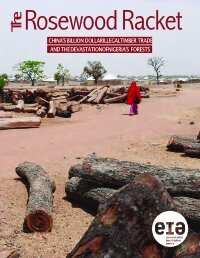
The illegal trade in precious “rosewoods” is the world’s most valuable form of wildlife crime. Hundreds of people have been killed around the world trying to protect these rare trees from the gangs seeking to profit from the rapidly growing demand for luxury furniture in China. Having decimated most rosewood species in Southeastern Asia and Central America, this rapacious industry has now turned to Africa, and a dry forest species called “kosso” (Pterocarpus erinaceus) . EIA’s investigators have spent two years exploring this booming illegal trade, including undercover meetings with more than 30 actors in the supply chain, from the arid forests in Nigeria to the sophisticated retail shops in China. Our investigation reveals that almost all the kosso coming from and through Nigeria for the past three years has been illegal. Most shockingly, EIA’s investigation has revealed that thousands of documents from the Convention on International Trade in Endangered Species of Wild Fauna and Flora (CITES) have been used in contravention of the core objectives of the Convention.

London: Environmental Investigation Agency, Inc. 2017. 40p.

Analyzing the Problem of Femicide in Mexico: The Role of Special Prosecutors in Combatting Violence Against Women

By Teagan McGinnis, Octavio Rodríguez Ferreira and David Shirk

Justice in Mexico has released its latest working paper titled Analyzing the Problem of Femicide in Mexico by Teagan McGinnis, Octavio Rodríguez Ferreira, and David Shirk. This study examines the patterns of violence against women in Mexico, with special attention to the problem of femicide. While national homicide data show that the proportion of female homicide victims in Mexico has stayed largely the same for decades, the authors demonstrate that the elevated rate of homicides throughout the country has contributed to a large increase in the total number of female homicide victims. Because many homicides targeting women have distinctive characteristics—such as sexual violence, intimate partners, or other factors attributable to the woman’s gender—they have been legally codified as “femicides,” murders targeting women due to their gender.

The authors explore the question of why both the number and proportion of femicides has increased dramatically since national level data became available in 2015. Since prosecutors play a key role in determining whether a crime will be classified as either a homicide or femicide, the authors specifically evaluate the effects of state level prosecutorial capacity on the reporting of such crimes. The authors compiled an original dataset of state prosecutorial budgets and levels of homicidal violence (by gender and by state) and used both means testing and linear regression models to assess differences between states with special prosecutors and those without, while controlling for the level of homicidal violence across states. In terms of qualitative methods, the authors also compiled federal and state laws to examine differences in criminal and administrative laws and conducted interviews with state prosecutors and security experts.

The authors find statistically significant evidence that states that have special prosecutors for the investigation of femicides are substantially more likely to classify female homicides as femicides. Indeed, appointing a special prosecutor for gender-related crimes increases the investigation of femicide cases by 50% on average, even controlling for levels of homicidal violence in those states. These findings illustrate the impact of recent prosecutorial reforms in Mexico and offer useful insights for policy makers and activists working to combat violence against women in Mexico. Informed by the novel findings in this study, the authors recommend that Mexican states lacking special prosecutorial offices for the investigation and prosecution of femicides should create such units, and that all states should provide more resources and prosecutorial tools for the investigation and prosecution of gender-motivated crimes.

Washington, DC: Wilson Center, 2022. 33p.

The Prevalence of Violence against Women among Different Ethnic Groups in Peru

By Jorge M. Agüero

About half of Peruvian women between the ages of 15 and 49 have experienced some form of violence from their partners. Through a quantitative analysis, this report explores how violence rates against women vary by ethnic group and over time. Based on a nationally representative sample of more than 75,000 women surveyed between 2003 and 2012 and a review of the literature on ethnic classification in Peru, a typology is applied to measure ethnicity, based on women’s linguistic backgrounds, allowing for a consistent ethnic characterization throughout the period of analysis. In this typology, the first group is made up of women who speak an indigenous language at home and do not speak Spanish. A second group, called “historic” Spanish speakers, is composed of women who learned Spanish during childhood and still use it today, while the third group, called “recent” Spanish speakers, includes women who grew up speaking an indigenous language but now speak Spanish. The highest rate of all types of violence is found in this last group, with a much greater difference in sexual and severe physical violence. This is consistent with the predictions of the theoretical model developed in this study in which violence depends on the type of couple. The model finds that women who speak “recent” Spanish—and who have what is termed a lower “outside option” than their “historic” Spanish-speaking male partners—experience greater violence. The study found that the gap in rates of violence against women among these three language groupings has remained constant over time despite an overall reduction in violence. This shows that current policies to provide care for victims and prevent violence against women are insufficient because the policies do not necessarily target groups with a greater risk of violence. This is unlike other areas of public health, where interventions are directly targeted at the most vulnerable populations

Washington, DC: Inter-American Development Bank, 2018. 43p.

Nature and Extent of Environmental Crime in Kenya

By David Kamweti, Deborah Osiro and Donald A. Mwiturubani

An environmental crime can be defined as a grave act against the environment that results in the infringement of the right of citizens to a clean and healthy environment. For such an act to constitute a crime, it must contravene laid-down legislation in the various sectors of the environment, such as forestry, water and wildlife. Environmental offences have, for a long time, been treated as misdemeanours, and not felonies. Environmental crime is a serious and growing concern, leading to the near extinction of valuable wildlife species, and significantly impacting on the biological integrity of the planet. It contributes to environmental degradation, which in turn affects the quality and quantity of environmental resources. By doing so, it leads to unhealthy competition for these scarce resources, and subsequently to volatile situations and even resource-use conflicts. As such, environmental crime impacts on human livelihoods.

Pretoria, South Africa: Institute for Security Studies, 2009. 96p.

How Much Violence Does Football Hooliganism Cause?

By Marc Fabel and Helmut Rainer

This paper quantifies how much of violent crime in society can be attributed to football-related violence. We study the universe of professional football matches played out in Germany’s top three football leagues over the period 2011-2015. To identify causal effects, we leverage time-series and cross-sectional variation in crime register data, comparing the number of violent crimes on days with and without professional football matches while controlling for date heterogeneity, weather, and holidays. Our main finding shows that violent crime increases by 21.5 percent on a match day. In the regions and time period under consideration, professional football matches explain 8 percent of all violent assaults, and generate social costs of roughly 194 million euros. Exploring possible mechanisms, we establish that the match day effect cannot be explained by emotional cues stemming from either unsettling events during a match or unexpected game outcomes, nor is it driven by increases in domestic violence. Instead, we find that the match day effect can be attributed to violence among males in the 18-29 age group, rises to almost 70 percent on days with high-rivalry derby matches, and that a non-negligible share of it stems from violent assaults on police officers. These findings are inconsistent with frustration-aggression theories that can explain sports-related violence in the United States, but can be accommodated by social identity explanations of football hooliganism.

Munich: CESifo, 2021. 40p.

Violent and Antisocial Behaviours at Football Events and Factors Associated with these Behaviours A rapid evidence assessment

By Lucy Strang, Garrett Baker, Jack Pollard, Joanna Hofman

Football is the world's most popular sport, with millions of fans annually watching professional football on their television or at public viewing places such as fan zones, or attending matches in person. Negative behaviour at football matches is a widely recognised issue that has garnered international media attention for decades. However, violent and antisocial behaviour at football matches remains an issue that needs to be better understood. To this end, RAND Europe was commissioned by Qatar University to provide a series of reports looking into the issues of violence and antisocial behaviour at major sporting events. This first report observes the key antisocial and violent behaviours that may be witnessed in relation to football events, such as verbal abuse, destruction of property, acts of vandalism and assault, while also noting that football environments can foster positive behaviours and social dynamics. In addition, it acknowledges that definitions of antisocial behaviour are to some degree subjective and contextual. It is important to acknowledge, however, that while the identified studies consider specific factors driving fan behaviour, the available evidence supports the notion that no single factor can be found to be responsible for violent or antisocial behaviour by fans at football events. Rather, multiple factors are often in play simultaneously. While the identified studies consider specific factors driving fan behaviour, the available evidence supports the notion that no single factor can be found to be responsible for violent or antisocial behaviour by fans at football events. Rather, multiple factors are often in play simultaneously. The quality of the identified literature varied significantly, and the research team rated only a handful of studies as being very high quality.

Santa Monica, CA: Cambridge, UK: RAND Europe, 2018. 42p.

China's Imports of Russian Timber: Chinese Actors in the Timber Commodity Chain and Their Risks of Involvement in Illegal Logging and the Resultant Trade

By Tian Yanfang

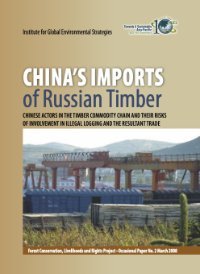
Since the end of the 1990s, the Sino-Russian border regions have witnessed a dramatic, unprecedented increase in cross-border timber trade that has made Russia the largest log supplier for China's expanding wood industry sector. Driving factors include: severe constraints in China's domestic wood supplies, the availability of rich forest resources in the Russian Far East and Siberia, liberalised trade policies and demand from both domestic and European, Japanese and US markets for low cost Chinese wood products. This study provides a contextual description and analysis of the cross-border timber trade boom and the actors involved. It examines the current challenges faced by a largely inefficient Russian forestry sector and decentralised Russian forest administration in the context of illegal logging and unsustainable forestry practices, both widely viewed as having reached serious dimensions.

This study focuses on the involvement and role of Chinese actors throughout the supply chain. Chinese companies have entered the Russian forestry sector, introduced greater efficiency and proved competitive. This involvement has also opened doors for Chinese actors to inadvertently or intentionally participate in illegal activities throughout the supply chain. In addition to timber harvesting, Chinese actors are involved as intermediaries in the commercial log depots and control the wholesale timber market in some parts of Russia. Chinese actors have also increasingly invested in wood processing in Russia, partly in response to the adjustment of the Russian export tax on logs. Most recently, there has been a trend towards vertical integration for Chinese companies, with intermediaries and wood importers attempting to extend their business to every node of the trading network. On the Chinese side of the border, preferential tax policies and infrastructure investment have spurred a rapid development of the timber processing industry with private sector processing mills replacing state-owned timber processing factories.

Hayama, Japan, Institute for Global Environmental Strategies, 2008. 58p.

Tracking Blood Money: Financial investigations into wildlife crime in East Africa

By Amanda Gore

Boniface Mathew Malyongo was, by most accounts, the perfect fit for a Hollywood villain. Nicknamed ‘Shetani’ (Satan, or the devil, in Kiswahili), he was allegedly one of the most prolific elephant poachers and ivory traffickers in the world, accused by some of controlling as many as 15 poaching gangs responsible for killing up to 10 000 elephants in five countries. The Leonardo DiCaprio-produced documentary, The Ivory Game, which culminated with dramatic footage of Malyongo’s arrest in Tanzania, assured him a certain degree of global infamy. And when he was jailed for 12 years in 2018, conservation organizations and activists around the world rejoiced. But Malyongo appealed, and in 2020 Tanzania’s Court of Appeal quashed the conviction. For conservationists, it was a stunning reversal – the court ruled that there were basic errors and police missteps that fatally compromised the chain of evidence, a complete lack of evidence to prove the key elements of the crimes and an overreliance on confessions as proof of guilt. Despite charging Malyongo with ‘leading organized crime’, as defined in Tanzania’s Economic and Organized Crime Control Act, investigators and prosecutors produced no hard evidence that he organized, directed or financed a ‘criminal racket’, or reaped a profit from it. The case and the vast sums involved could have been a chance to unravel the financial threads underpinning an alleged transnational syndicate, yet no financial investigation was ever done. Police seized four vehicles and identified several properties, including a house and a supermarket, which, they said, had been obtained as a result of poaching activities. But that is where the financial inquiries stopped. No attempt was made to produce evidence showing how the syndicate financed its operations, where the money originated, how it flowed or how it was laundered. While the effect of the judgment is that Malyongo has been found innocent, the conduct of the public officials in this case, the police and prosecutors, is a matter that deserves scrutiny

Geneva, CH: Global Initiative Against Transnational Organized Crime, 2021. 44p.

Elephants in the Dust: the African Elephant Crisis. A Rapid Response Assessment

By United Nations Environment Programme; CITES, IUCN, TRAFFIC

This rapid response assessment report brings together critical up-to-date information from the CITES-recognized systems that monitor the status of elephants, the illegal killing of elephants, and the legal and illegal trade in ivory. Collectively, these systems deliver consistent, evidence-based information to improve our understanding of the dynamics of the illegal ivory supply chain

Nairobi, Kenya: United Nations Environment Programme, Arendal, NO: GRID-Arendal, 2013. 80p.

“Illegal” Logging and Global Wood Markets: The Competitive Impacts on the U.S. Wood Products Industry

By Seneca Creek Associates, LLC and Wood Resources International, LLC

Illegal logging has been high on the agenda, if not directly at the center, of numerous international conferences on forests. This attention stems in large part from environmental concern over deforestation and poor forest management practices in many developing countries and countries with economies in transition. Illegal harvesting can have deleterious impacts on biodiversity and other globally important environmental services. Among the factors driving illegal logging are: unclear or poorly enforced forest tenure, weak political institutions, poverty, corruption, inadequate natural resources planning and monitoring, and lax enforcement of sovereign laws and regulations. The presence of illegally procured wood fiber also affects the competitiveness of American and other producers who operate legitimately within national and international environmental and trade rules. An AF&PA-sponsored study of the illegal logging issue provides new perspective on the estimates of illegal logging and its associated economic impacts.

Poolesville, MD: Seneca Creek Associates; University Place, WA : Wood Resources International, 2004. 190p.

The Globalization of Crime: A Transnational Organized Crime Threat Assessment

By United Nations Office on Drugs and Crime

In The globalization of crime: a transnational organized crime threat assessment, UNODC analyses a range of key transnational crime threats, including human trafficking, migrant smuggling, the illicit heroin and cocaine trades, cybercrime, maritime piracy and trafficking in environmental resources, firearms and counterfeit goods. The report also examines a number of cases where transnational organized crime and instability amplify each other to create vicious circles in which countries or even subregions may become locked. Thus, the report offers a striking view of the global dimensions of organized crime today.

Vienna: UNODC, 2010. 314p.