Open Access Publisher and Free Library
CRIME+CRIMINOLOGY.jpeg

CRIME

Violent-Non-Violent-Cyber-Global-Organized-Environmental-Policing-Crime Prevention-Victimization

Posts in social sciences
Analysis of Femicide/Feminicide Legislation in Latin America and the Caribbean and a Proposal for a Model Law

By The United Nations Entity for Gender Equality and the Empowerment of Women; Alicia Deus and Diana Gonzale

The Inter-American Convention on the Prevention, Punishment and Eradication of Violence against Women was adopted in Belém do Pará, Brazil by all the countries in Latin America and the Caribbean in 1994, formalizing the definition of violence against women as a violation of their human rights.

The Belém do Pará Convention establishes for the first time the development of mechanisms to protect and defend the rights of women, in the fight to eliminate violence against their physical, sexual and psychological integrity, both in the public and in the private spheres.

The Belém do Pará Convention asks the States Parties to adopt legislative measures of a criminal nature (among others) that “are necessary to prevent, punish and eradicate violence against women” (Article 7.c of the Convention) .

Recommendation No. 35 on gender based violence by the Committee for the Elimination of All Forms of Discrimination against Women (CEDAW) states that: “Women’s right to a life free from gender-based violence is indivisible from and interdependent with other human rights, including the right to life, health, liberty and security of the person, the right to equality and equal protection within the family, freedom from torture, cruel, inhumane or degrading treatment, freedom of expression, movement, participation, assembly and association.”

eminists, surviving victims and academics in Latin America and the Caribbean managed to conceptualize as an offense of femicide/feminicide, developing a great regional debate, documenting and generating evidence in each country and comparing the phenomenon. It is from their great efforts that the typification of feminicide/femicide is achieved and it has been justified based on the standards of international human rights law.

In the framework of the CSW57 in 2013, in the agreed conclusions it was possible to incorporate the concept of femicide as a criminal offense expressing “concern for the violent murders of women and girls for reasons of gender, while recognizing the efforts made to face this form of violence in different regions, particularly in countries where the concept of femicide has been incorporated into national legislation.“

A first tool developed by the Office of the High Commissioner for Human Rights and UN Women in the Latin American and Caribbean region was the Latin American Model Protocol for the investigation of gender-related killings of women (femicide/feminicide) in the framework of the UN Secretary General’s Campaign UNITE to end violence against women.

On this occasion, both MESECVI and UN Women intend to provide the region with a model law on femicide/feminicide to address the most serious women´s human rights violation. To do so, we will first analyze the existing legislation, provoking debate and improvement in cases where it is required.

Piso 3Ciudad del SaberClayton, PANAMA, UN Women, 2018. 77p.

download
Analysis of Cases of Femicides - Murders of Women in the Republic of North Macedonia: 2017-2020

By The United Nations Development Program (UNDFP)

As the most extreme form of violence, femicides pose a threat to the safety of women around the world. Although they occur in different contexts, as a result of an intimate partner violence and domestic violence, sexual violence, armed conflict, or for the purpose of so-called preserving family honor (“honor murder”), the main causes are still to be found in the unequal distribution of power between men and women, and deep-rooted patriarchal values, even in developed countries.

This analysis was carried out with the support of the German Government project “Improving National Practices for Small Arms and Light Weapons and Building Violence Resilient Communities“ implemented by UNDP. The project is part of a broader regional initiative, a Roadmap for a Sustainable Solution to the Illegal Possession, Misuse and Trafficking of Small Arms and Light Weapons and their Ammunition in the Western Balkans by 2024.

By improving data collection, analysis and dissemination of information related to Small Arms and Light Weapons it is ensured that policies and practices for its control are guided by analysis and based on evidence. The gender aspect of the project is of particular importance for these policies and practices to deliver the best results in building a society resistant to violence.

The purpose of this analysis is to present the murder of women and girls in the Republic of North Macedonia in the period from 2017 to 2020, and is a continuation of the first Analysis of Cases of Femicides - murders of women in the Republic of Macedonia conducted by the National Network to End Violence against Women and Domestic Violence, with technical and financial support from the United Nations Development Programme (UNDP).

The findings of the analysis will be used to develop recommendations for improving the system of prevention and protection of women who are victims of gender-based and domestic violence, which will contribute to the prevention of femicide as a consequence of long-term exposure to violence by an intimate partner violence and domestic violence.

Skopje, UNDP, 2021. 32p

download
Explaining the Recent Homicide Spikes in U.S. Cities: The “Minneapolis Effect” and the Decline in Proactive Policing

By Paul G. Cassell

Recently, major cities across the country have suffered dramatic spikes in homicides. These sudden spikes are remarkably large and widespread. At this rate, 2020 will easily be the deadliest year in America for gun-related homicides since at least 1999, while most other major crime categories are trending stable or slightly downward.

This article attempts to explain why so many cities have seen extraordinary increases in murder during the summer of 2020. A close analysis of the emerging crime patterns suggests that American cities may be witnessing significant declines in some forms of policing, which in turn are producing the homicide spikes. Crime rates are increasing only for a few specific categories—namely homicides and shootings. These crime categories are particularly responsive to reductions in proactive policing. The data also pinpoint the timing of the spikes to late May 2020, which corresponds with the death of George Floyd while in police custody in Minneapolis and subsequent antipolice protests—protests that likely led to declines in law enforcement.

The thesis of this article is that the recent spikes in homicides have been caused by a “Minneapolis Effect,” similar to the earlier “Ferguson Effect.” Specifically, law enforcement agencies have been forced to divert resources from normal policing to patrolling demonstrations. And even as the anti-police protests have abated, police officers have scaled back on proactive or officer-initiated law enforcement, such as street stops and other forms of policing designed to prevent firearm crimes. If this thesis is correct, it is reasonable to estimate that, as a result of de-policing during June and July 2020, approximately 710 additional victims were murdered and more than 2,800 victims were shot. Of course, this estimate relies on various assumptions, and further research on the issues surrounding the homicide spikes should be an urgent priority.

If this article’s thesis about a Minneapolis Effect is correct, an important implication is that policy makers in major cities should proceed cautiously before taking steps to “defund” the police in ways that might reduce the proactive policing that is important in preventing gun violence.\

Federal Sentencing Reporter (2020) 33 (1-2): 83–127.

download
Behind the Call for Change

By The Commission of Inquiry into Queensland Police Service Responses to domestic and family violence.

The institutional culture of a police force is of vital importance to a community. A police force is numerically strong, politically influential, physically powerful, and armed. It stands at the threshold of the criminal justice system and is in effective control of the enforcement of the criminal law. Each police officer has extensive authority over all other citizens, however powerful, coupled with wide discretions concerning its exercise. Subsequent stages in the criminal justice process, including courts and prisons, are largely dependent on the activities of the Police Force, and will inevitably be affected by its deficiencies, especially any which are cultural and therefore widespread. Investment in cultural change and strong leadership will remove any last vestiges of a culture that does not value women nor understand the costs to us all of allowing domestic and family violence to continue.

The Commission of Inquiry into Queensland Police Service responses to domestic and family violence (the Commission) was established to examine whether there are cultural issues within the QPS that negatively affect police investigations of domestic and family violence. The Commission was also tasked with investigating if any cultural issues identified contribute to the overrepresentation of First Nations peoples in the criminal justice system. It was also required to consider the adequacy of the current conduct and complaint handling process against officers. This companion report is a compilation of case studies, perspectives and experiences shared with the Commission by victim-survivors, police, and other persons. The information is intended to be a snapshot of the evidence gathered from hundreds of submissions and comments provided to the Commission. The stories and case studies about victim-survivors’ experiences have been taken from submissions from victim-survivors’ and organisation and the free text answers from the victim-survivor survey conducted by the Commission. The survey was answered by 848 people. Information and case studies from or about police members, have been taken from 365 submissions, 53 interviews of current and retired QPS members by Mark Ainsworth, free text answers from the QPS DFV-Q survey 2022 (completed by 2,733 members) and a sample of the approximately 6,200 free text responses to the Working for Qld Survey 2021. Case studies were primarily taken from police material provided under notice to produce documents. The views expressed do not profess to be the views held by all members of the QPS. They are instead a representative sample of the evidence the Commission has drawn its conclusions from. This report is intended to be read alongside A call for change (2022), which outlines the Commission’s findings and recommendations. Where names have been used, these are pseudonyms to provide anonymity. Any other identifying details have also been removed to protect the confidentiality of the people involved. Many of the extracts in this report come from submissions that were provided to the Commission on a confidential basis. In each case consent to publish the submission has been obtained from the author. To the extent possible, the Commission has sought to accurately represent the diverse views and experiences that have been shared. The Commission does not necessarily endorse or support the views outlined within this report.

Brisbane: The Commission, 2022. 56p.

download
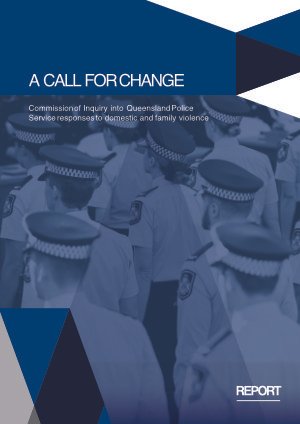
A call for change: Report of the Commission of Inquiry into Queensland Police Service responses to domestic and family violence

By Commission of Inquiry into Queensland Police Service

The Commission of Inquiry into Queensland Police Service (QPS) responses to domestic and family violence was established as part of the Queensland Government’s response to the recommendations of the Women’s Safety and Justice Taskforce in Hear her voice: Report One (2021). The Commission’s terms of reference tasked it to inquire into any cultural issues within the QPS that influence the investigation of domestic and family violence, and how those cultural issues contribute to the overrepresentation of First Nations peoples in the criminal justice system. The terms of reference also required the Commission to inquire into the capability, capacity and structure of the QPS to respond to domestic and family violence, and the adequacy of the processes for dealing with complaints about police officers to ensure the community confidence in the QPS. To assist it with those inquiries, the Commission gathered information from victim-survivors, the community organisations that support them and police officers. It did this using a variety of methods including by calling for submissions, conducting surveys of victim-survivors and police officers, conducting meetings and interviews, holding public hearings and using its powers to require the production of relevant information and records, including from the QPS. The Commission also examined previous reports and reviews of QPS responses to domestic and family violence and engaged experts to inform its understanding of matters relevant to the terms of reference. The Commission was greatly assisted by the information and perspectives provided by victim-survivors and community organisations. However, what makes the work of this Commission different to previous reviews of QPS responses to domestic and family violence is the extent to which police officers provided information and views about what is working well and what needs improvement. Police officers have a lived experience of the culture of the organisation. Through the input of police officers, the Commission learned of cultural issues of sexism, misogyny and racism which impact on QPS responses to domestic and family violence. By sharing their experiences and views, police officers also informed the Commission about the impact that resourcing issues, structural limitations, and burnout and fatigue has on the QPS response. Police officers told the Commission that, although most police officers conduct themselves admirably towards their colleagues and victim-survivors, the cultural and structural issues in the organisation mean there is need for improvement in the organisation’s response. Through the information and views shared with the Commission, victim-survivors, community organisations and police officers all made a call for change and expressed a hope for improvement.

Brisbane: The Commission, 2022. 412p.

download
Accurately identifying the “person most in need of protection” in domestic and family violence law

By Heather Nancarrow, Kate Thomas, Valerie Ringland, Tanya Modini

When police are called to an incident of domestic and family violence (DFV), one of their tasks under DFV law is to determine whether a party is in need of protection from future harm. A concern that has arisen out of the application of DFV law is the inappropriate use of legal sanctions, in particular protection orders, against women who use violence in response to violence perpetrated against them. This often occurs where there are conflicting claims of abuse and can result in cross-applications and cross-orders for protection.

This research project focused on identifying areas of improvement in police and court practice in relation to identifying the person most in need of protection, taking account of an ongoing pattern of abuse characterised by coercive control.

Key findings:

  • Women—especially Aboriginal and Torres Strait Islander women—are being misidentified as perpetrators on protection orders and the effects of this are far-reaching.

  • Police culture impacts on the accurate identification of the aggrieved/respondent, for example, through pervasive, stereotypical assumptions about victim behaviour. Police practice also focuses on single incidents of visible or physical violence, which compromises the intent of DFV legislation to provide protection from future harm (by identifying patterns of coercive control).

  • Police sometimes err on the side of caution in making applications, deferring to the magistrate to determine if an order is warranted. However, magistrates in turn may rely on the initial assessments made by police, as may prosecutors. This can create a pinball effect where each decision-maker defers to another’s assessment of the appropriateness of an order. Accordingly, this means that accountability for that assessment is unclear.

  • Perpetrators use a range of tactics of systems abuse, such as making false allegations, which can result in inaccurate identification of the person most in need of protection. Once a woman has been identified as a perpetrator, this can then also be used a tool for systems abuse by perpetrators (for example, through threats to call the police).

Key recommendations:

  • Create guidance for police on identifying patterns of coercive control.

  • Improve processes of decision-making and accountability between police and courts.

  • Create guidance for magistrates on how and when they can dismiss inappropriate applications and/or orders

Sydney: ANROWS, Australia’s National Research Organisation for Women’s Safety 2020. 134p.

download
Experiences of coercive control among Australian women

By Hayley Boxall, Anthony Morgan

Awareness of coercive control within the context of abusive intimate relationships is greater than ever before in Australia. However, there is limited research examining the different patterns and characteristics of abuse, particularly among large Australian samples.

This study examines the characteristics of violence and abuse reported by 1,023 Australian women who had recently experienced coercive control by their current or former partner. The most frequently reported behaviours were jealousy and suspicion of friends, constant insults, monitoring of movements and financial abuse. Over half of the respondents also reported experiencing physical forms of abuse (54%), including severe forms such as non-fatal strangulation (27%). One in three of these women also reported experiencing sexual violence during the survey period (30%). Women were much more likely to seek advice or support when they had also experienced physical or sexual forms of abuse.

Statistical Bulletin 30. Canberra: Australian Institute of Criminology, 2021. 15p.

download
Family violence and sexual harm: research report 2023

By Gemma Hamilton, Alexandra Ridgway, Anastasia Powell, Georgina Heydon

This research explores the co-occurrence of family violence and sexual harm in Victoria, shedding light on the complex nature and interconnectedness between these two forms of abuse and its impact on victim survivors.

Drawing on victim/survivor and stakeholder interviews, as well as a sector wide survey, the reports present key outcomes of a research project funded by Family Safety Victoria with particular attention towards the implications of key findings for the development of policy, intervention and support. By deepening understandings of the complex interplay between family violence and sexual harm, the research seeks to assist professionals in this space to better address the needs of victim/survivors and work together to strengthen system responses.

Melbourne: RMIT University, 2023. 59p,

download
RECOVER – Reconnecting mothers and children after family violence

By Leesa Hooker, Emma Toone, Sarah Wendt, Cathy Humphreys, Angela Taft

When it comes to recovery from the trauma and harm of intimate partner violence (IPV), the evidence base shows a need for early intervention and responses that include women and their children. This research report provides findings from a pilot evaluation project examining the effectiveness of an early intervention therapeutic model, child–parent psychotherapy (CPP), designed for young children and their mothers experiencing trauma, including IPV. This therapeutic model was developed in the United States as a model of care for mothers and their children to enhance relationships and reduce trauma. This report’s findings aim to inform future trialling and expansion of CPP nationally.

With this aim in mind, the researchers tested the feasibility of CPP in the Australian context, assessed therapist fidelity to the model, and evaluated its effectiveness at improving the health and wellbeing outcomes of women and their children. The evaluation used a small-scale, multisite pilot featuring 18 mother–child dyads and 11 community-based clinical sites in both urban and regional locations in Victoria and South Australia.

The researchers found that the small-scale pilot was promising, reporting the mother–child therapy model to be feasible in the Australian context. Positive outcomes were reported for mothers and children, including increased parental warmth and improved child emotions and behaviours. Women also experienced less IPV post-intervention. Clinicians who adhered most to the model were also better able to build relationships with women and their children and convey a sense of hope. Importantly, the impacts of the COVID-19 pandemic highlighted the overwhelming demand for evidence-based relational, child–parent, and young child-focused therapy like CPP, particularly in rural areas.

This research contributes to a better understanding of the service needs of women and children impacted by IPV, particularly the role of recovery interventions in buffering the long-term effects of IPV on families and developing children.

ANROWS - Australia's National Research Organisation for Women's Safety, 2022. 44p.

download
Driving-destruction: Cattle rustling and instability in Nigeria

By Kingsley L Madueke

Cattle rustling in Nigeria has evolved from a sustainable community practice into a significant illicit economy, delivering material profits to conflict actors and multiplying harms. Since 2011, the country has experienced a surge in the number of rustling incidents, resulting in thousands of deaths, loss of livelihoods, widespread destruction and displacement of people. This has had a debilitating impact on the country’s stability.

In Nigeria’s North-West and North-Central regions, in particular, cattle rustling has contributed to growing instability by increasing levels of violent crime. The Nigerian press is awash with stories of heavily armed groups raiding communities, killing people and stealing large herds of cattle. Also of note are the violent activities of the self-defense groups that have emerged in response. Additionally, in some of Nigeria’s most volatile regions, including Northern Plateau and Southern Kaduna, cattle rustling has fed into longstanding conflicts between farmers and herders, fuelling violence and deepening polarization.

Cattle rustling deserves attention because it is among the illicit economies most clearly driving instability in Nigeria, more so than others traditionally focused on as sources of instability, such as armed robbery and drug trafficking. The relationship between cattle rustling and instability is multifaceted: not only has the phenomenon been the cause of thousands of deaths, large-scale displacement of communities and destruction of livelihoods, but it has also repeatedly operated as a significant source of financing for armed groups, including regional insurgent groups operating in north-eastern Nigeria and northern and central Mali. Cattle rustling is also interwoven with longstanding tensions between ethnicities, amplifying these and catalyzing further conflict.

This report focuses on Zamfara and Plateau states, where cattle rustling has fuelled large-scale violence and instability over the past decade. The report also explores the concerning southward diffusion of cattle rustling, with an emphasis on Kwara and Oyo states. While some underlying causes of cattle rustling cut across regions, this research highlights that local drivers of cattle rustling and instability are often distinct and therefore require context-specific responses.

Geneva, SWIT: Global Initiative Against Transnational Organized Crime,2023. 46p.

download
Illicit Economies and Armed Conflict; Ten dynamics that drive instability

By Summer Walker I Mariana Botero Restrepo

The relationship between illicit economies, conflict and instability has been long debated in academic and practitioner circles, and part of the international policy agenda for some time. From the diamond trade in Sierra Leone to the heroin trade in Afghanistan, illicit economies have been shown to fund insurgencies and political actors, and to contribute to ongoing conflict.

The GI-TOC’s 2021 Global Organized Crime Index shows that of the ten highest-scoring countries for criminality, meaning those with the most pervasive criminal markets and influential criminal actors, the overwhelming majority are countries experiencing conflict or fragility.

This report considers three case studies at different stages of armed conflict to assess the dynamic relationship between criminal networks, illicit economies, and conflict actors and conditions. These three case studies offer unique perspectives in terms of duration, size of the conflict area and stage of the conflict:

  • Armed insurgency in northern Mozambique

  • Armed groups in Libya and Mali

  • Armed groups in Colombia

While these conflicts present three distinct cases, they also share relevant similarities. In these cases, unrest is created after an armed group or groups counter the legitimacy of the state. The national response to the conflict is supplemented with regional and international responses. All situations lack a swift resolution, and the instability persists primarily in areas outside capitals, even after formal conflict resolution. In this way, these three cases are representative of sustained, localized instability deriving from armed conflict between the state and non-state armed groups.

All three conflict areas overlap with areas of established illicit economies. In these settings, the connections between armed conflict and illicit markets evolve over time. The impacts may be commodity-dependent, with different considerations for illegal mining as opposed to trafficked drugs. Illicit markets change over time, as do the power brokers and beneficiaries involved. Illicit economies contribute to long-term enabling environments for instability by prolonging conflict and eroding government responses to conflict. Through the case studies of northern Mozambique, the Sahel region and Colombia, this report identifies ten dynamics that influence illicit economies and conflict situations. These findings make a contribution to vital policy discussions for stabilization and conflict mediation in these – and other – re

Geneva, SWIT: Global Initiative Against Transnational Organized Crime., 2022. 74p.

download
Report on Indicators of School Crime and Safety: 2022

By Irwin, Véronique; Wang, Ke; Cui, Jiashan; Thompson, Alexandra (Statistician)

From the document: "'Report on Indicators of School Crime and Safety: 2022' provides the most recent national indicators on school crime and safety. The information presented in this report serves as a reference for policymakers and practitioners so that they can develop effective programs and policies aimed at violence and school crime prevention. Accurate information about the nature, extent, and scope of the problem being addressed is essential for developing effective programs and policies. This is the 25th edition of Indicators of School Crime and Safety, a joint effort of the Bureau of Justice Statistics (BJS) and the National Center for Education Statistics (NCES). This report provides summary statistics to inform the nation about current aspects of crime and safety in schools. 'Report on Indicators of School Crime and Safety' includes the most recent available data at the time of its development, compiled from a number of statistical data sources supported by the federal government. Such sources include results from the School-Associated Violent Death Surveillance System, sponsored by the U.S. Department of Education, the U.S. Department of Justice, and the Centers for Disease Control and Prevention (CDC); the National Vital Statistics System, sponsored by CDC; the School Shooting Safety Compendium, sponsored by the U.S. Department of Defense; the Studies of Active Shooter Incidents, sponsored by the Federal Bureau of Investigation; the National Crime Victimization Survey and School Crime Supplement to that survey, sponsored by BJS and NCES, respectively; the Youth Risk Behavior Surveillance System, sponsored by CDC; the School Survey on Crime and Safety, Fast Response Survey System, ED'Facts', and National Teacher and Principal Survey, all sponsored by NCES; and the Campus Safety and Security Survey, sponsored by the U.S. Department of Education. Some of these data are collected annually, while others are collected less frequently."

Washington D.D. National Center For Education Statistics; United States. Bureau Of Justice Statistics. 2023.. 38p.

download
Collaborating Against Child Abuse: Exploring the Nordic Barnahus Model

Edited by Susanna Johansson · Kari Stefansen Elisiv Bakketeig · Anna Kaldal

This edited collection explores the background and implementation of the Nordic Barnahus (or 'Children's House') model - recognised as one of the most important reforms related to children who are the victims of crime in the Nordic region. This book discusses both its potential to affect change and the challenges facing it. The model was introduced as a response to a growing recognition of the need for more integrated and child-centred services for children exposed to violence and sexual abuse. In the Barnahus structure, different professions work together to ensure that victimized children receive help and treatment and that their legal rights are met. This original study is organised into four broad themes: child-friendliness, support and treatment; the forensic child investigative interview; children's rights perspectives; and interagency collaboration and professional autonomy. Each themed section includes in-depth chapters from different Nordic countries, outlining and analysing the practice and outcomes of the collaborative work engaged in by Barnahus from different perspectives. The introductory and concluding chapters offer a comparative lens useful for policy and practice implementation within the Nordic welfare state context and beyond, ensuring this book has global academic and practical appeal. This work was published by Saint Philip Street Press pursuant to

Basingstoke: Palgrave Macmillan, 2017. 402p.

download
Drugs, Sex and Crime -- Empirical Contributions

Edited by Danilo Antonio Baltieri

This book covers some recent researches on the interface between drug misuse and crime and demonstrates that some types of violent crimes are more intimately related to alcohol and / or drug consumption. It is written for researchers, health and law professionals engaged in the evaluation, management and treatment of different types of offenders. It is organized by a number of phenomena that are known (or supposed) to link drugs and crime. This book shows that the application of punishment under the guise of deterrence, despite its ineffectiveness, is frequently preferred to a more adequate management for some types of offenders. This book provides ten manuscripts that describe different aspects of the relationship between drugs and crimes, always focusing on Brazilian reality. It shows that a partnership between specialized mental health professionals, lawyers and policy makers is urgent with respect to this subject in Brazil and other countries.

Bentham Books, 2009. 100p.

download
Multiplex networks reveal geographic constraints on illicit wildlife trafficking

By Felber J. Arroyave, Alexander M. Petersen, Jeffrey Jenkins & Rafael Hurtado

Illicit wildlife trafficking poses a threat to the conservation of species and ecosystems, and represents a fundamental source of biodiversity loss, alongside climate change and large-scale land degradation. Despite the seriousness of this issue, little is known about various socio-cultural demand sources underlying trafficking networks, for example the forthright consumption of endangered species in different cultural contexts. Our study illustrates how wildlife trafficking represents a wicked problem at the intersection of criminal enforcement, cultural heritage and environmental systems management. As with similar network-based crimes, institutions are frequently ineffective at curbing wildlife trafficking, partly due to the lack of information detailing activities within illicit trading networks. To address this shortcoming, we leverage official government records documenting the illegal trade of reptiles in Colombia. As such, our study contributes to the understanding of how and why wildlife trafficking persists across robust trafficking networks, which are conduits for a broader range of black-market goods. Leveraging geo-spatial data, we construct a multiplex representation of wildlife trafficking networks, which facilitates identifying network properties that are signatures of strategic trafficker behavior. In particular, our results indicate that traffickers’ actions are constrained by spatial and market customs, a result which is apparent only within an integrated multiplex representation. Characteristic levels of sub-network coupling further indicate that traffickers strategically leverage knowledge of the entire system. We argue that this multiplex representation is essential for prioritizing crime enforcement strategies aimed at disrupting robust trade networks, thereby enhancing the effectiveness and resources allocation of institutions charged with curbing illicit trafficking. We develop a generalizable model of multiplex criminal trade networks suitable for communicating with policy makers and practitioners, thereby facilitating rapid translation into public policy and environmental conservation efforts.

Applied Network Science volume 5, Article number: 20 (2020)

download
Differentiating criminal networks in the illegal wildlife trade: organized, corporate and disorganized crime

By Tanya Wyatt, Daan van Uhm & Angus Nurse

Historically, the poaching of wildlife was portrayed as a small-scale local activity in which only small numbers of wildlife would be smuggled illegally by collectors or opportunists. Nowadays, this image has changed: criminal networks are believed to be highly involved in wildlife trafficking, which has become a significant area of illicit activity. Even though wildlife trafficking has become accepted as a major area of crime and an important topic and criminologists have examined a variety of illegal wildlife markets, research that specifically focuses on the involvement of different criminal networks and their specific nature is lacking. The concept of a ‘criminal network’ or ‘serious organized crime’ is amorphous – getting used interchangeably and describes all crime that is structured rather than solely reflecting crime that fits within normative definitions of ‘organized’ crime. In reality, criminal networks are diverse. As such, we propose categories of criminal networks that are evidenced in the literature and within our own fieldwork: (1) organized crime groups (2) corporate crime groups and (3) disorganized criminal networks. Whereas there are instances when these groups act alone, this article will (also) discuss the overlap and interaction that occurs between our proposed categories and discuss the complicated nature of the involved criminal networks as well as predictions as to the future of these networks.

Trends in Organized Crime (2020) 23:350–366

download
Typologies of urban wildlife traffickers and sellers

By Meredith L. Gore , Robert Mwinyihali , Luc Mayet Gavinet Duclair, Makaya Baku-Bumb , etc.

Urban wildmeat consumption can contribute to significant declines in wildlife populations, ecosystem function, and food insecurity security. Describing types of individuals involved in illegal urban wildmeat trafficking can help distinguish ordinary citizens from members of criminal organizations and urban vs. rural dimensions of the activity. This research aimed to: (1) create and apply a typology for urban wildmeat traffickers and sellers; and (2) explore linkages between types of urban wildmeat traffickers and sellers. We used focus groups with experts in the Republic of the Congo, February 2019 (N = 2, n = 7–10) to achieve objectives and focused on pangolins, great apes, and dwarf crocodiles. Participants generated risk rankings for each species, typology and city; data was encoded and indexed. Results illustrate heterogeneity in actors involved in the illegal supply chain. Business sideliner and trading charity trafficker types were associated with the highest total risk to wildlife trafficking. A similar pattern of divergence was detected for seller typologies; hidden and casual sellers were associated with the greatest total risk in Pointe Noire and Brazzaville, respectively. Differentiating but not stove piping stakeholders involved in urban wildmeat trafficking will help clarify stages of illegal supply chains as well and promote thinking about new sectors to involve in interventions and solutions, particularly in urban ecosystems thought to be outside the scope to wildlife crime.

Global Ecology and Conservation. Volume 27, June 2021, e01557

download
Synthesizing knowledge on crime convergence and the illegal wildlife trade

By Michelle Anagnostou

The intensified illegal trade of wildlife has contributed to the unsustainable decline of wildlife populations, the destabilization of ecosystems, and threatens economic development and human security. Though often lacking empirical evidence, convergence theory has emerged recently as a topic of interest among researchers, practitioners, and the media to explain the growing overlap of criminal activities in an increasingly globalized world. In this paper, I explain the interdisciplinary theoretical foundations for the interconnectivity of criminal networks, including connections between illegal wildlife trade networks and non-state armed groups. I also outline and discuss various perspectives on the convergence of the illegal wildlife trade with other organized crime activities. I conclude by highlighting the urgent need for a better understanding of the role of the organized criminal groups involved in the illegal wildlife trade, and of how these groups converge with other types of criminal activities. The policy implications of filling in this knowledge gap are twofold: firstly, understanding how criminal networks converge can facilitate the implementation of more effective law enforcement and investigations that target high-profile offenders, as opposed to focusing on low-level poachers; and secondly, this understanding can foster more cooperation across agencies and jurisdictions to address multiple crime types and crime in convergence settings

Environmental Challenges. Volume 5, December 2021, 100222

download
Environmental Crime Convergence: Launching an Environmental Crime Convergence Paradigm Through Investigation of Transnational Organized Crime Operations

By Earth League International and John Jay College of Criminal Justice

Environmental crime convergence, the focal point of this report, poses an imminent threat to our planet’s delicate ecosystems. To address this urgent issue, ELI, and John Jay College present ELI’s revolutionary 4-Type Environmental Crime Convergence paradigm to comprehensively understand and combat the intricate web of transnational organized crime operations that perpetuate environmental degradation.

The foundation of this report is built upon the fieldwork and intelligence analysis of ELI’s investigators and crime analysts, who have gathered first-hand evidence of Environmental Crime Convergence directly from some of the world’s most notorious environmental criminals and their networks. Drawing on years of investigative fieldwork in the Americas, Europe, Africa, and Asia, over two dozen case studies have emerged from ELI’s work as primary sources of data.

This report highlights five (5) case studies of the transnational criminal networks in Latin America identified by ELI that illustrate the convergence of environmental and wildlife crime with other serious crimes and expose the severity of the issue at a global scale.

Los Angeles: Earth League International, 2023. 83p.

download
The Criminalization of Poverty in Tennessee

By Jack Norton, Stephen Jones, Bea Halbach-Singh, Jasmine Heiss

When people are arrested and charged for activities they are forced to engage in to survive—such as driving without a license or sleeping outside—poverty becomes criminalized. In these cases, being poor is essentially made illegal. In collaboration with Free Hearts—an organization led by formerly incarcerated women—Vera researchers explain how poverty has been criminalized across Tennessee and what this means for people who live in communities in the state. The effects of the criminalization of poverty are compounded through the collection of money bail; additional fines, fees, and costs; and barriers to housing, transportation, education, and employment. With deep dives into several counties across Tennessee, the report shows how incarceration and policing are related to other systems that both punish and exacerbate poverty in the state. The report outlines actionable steps that can be taken now to build toward a vision of safety that includes all Tennesseans.

New York: Vera Institute of Justice, 2022. 58p.

download