Open Access Publisher and Free Library
CRIME+CRIMINOLOGY.jpeg

CRIME

Violent-Non-Violent-Cyber-Global-Organized-Environmental-Policing-Crime Prevention-Victimization

Posts in Social Sciences
Corruption And Wildlife Crime: A Focus On Caviar Trade

By Louisa Musing, Lindsey Harris, Aled Williams, Rob Parry-Jones, Daan van Uhm, and Tanya Wyatt.

While conservation practitioner anecdotes and existing empirical research all point to corruption as a main facilitator enabling wildlife crime, there is still limited knowledge about what can change this situation and help reverse the pernicious impact of corruption on conservation outcomes in practice. Corruption has a negative impact on conservation by reducing the effectiveness of conservation programmes, reducing law enforcement and political support, as well as establishing incentives for the overexploitation of resources. It undermines the effectiveness and legitimacy of laws and regulations and can be an indicator of the presence of organised crime groups. Corruption needs to be addressed as a central part of the approach to tackling wildlife crime.

Cambridge, UK: A TRAFFIC, WWF, U4 ACRC, Utrecht University, and Northumbria University, 2019. 42p.
Local Determinants of Crime: Distinguishing Between Resident and Non-resident Offenders

By Thiess Büttner, and Hannes Spengler.

The paper revisits the local determinants of crime using a spatial model distinguishing between resident and non-resident offenders. Employing data for German municipalities, the model is estimated by means of a spatial GMM approach. Focusing on resident offenders legal earnings opportunities and the expected gain from offenses are found to be important determinants of crime. Also the socio-economic background in terms of unemployment, poverty, and inequality proves significant for both property and violent crime. Whereas local inequality only shows an effect on crime committed by resident offenders, crime committed by non-resident offenders is shown to be significantly related to the characteristics in adjacent municipalities such as unemployment and income.

Mannheim: ZEW – Leibniz Centre for European Economic Research, 2003. 30p.

Understanding the Effects of Violent Video Games on Violent Crime

By Benjamin Engelstätter, A. Scott Cunningham, and Michael R. Ward.

Most psychological studies report a positive relationship between violent video game play and aggression. In line with that researchers and policy makers alike understand playing violent video games as contributing factors to increased aggression in teenagers and young adults including, perhaps, high school shootings. However, laboratory studies are unable to account for either the possible selection of relatively violent people into playing violent video games or foregone aggressive effects of alternative activities video game playing may substitute for. Specifically, psychological laboratory experiments cannot address the time use effects of video games which tend to incapacitate gamers from violent activity, e. g. crimes, by drawing them into extended gameplay. Accordingly, laboratory studies may be poor predictors of the net effects of violent video games on society, thus potentially overstating the importance of video game induced aggression. We argue that as both a behavioral tendency toward aggression and incapacitation from aggression are consequences of playing violent video games, the policy relevance of violent video game regulation depends critically on the degree to which one outweighs the other. We empirically investigate how video games could affect crime using four years of weekly data from the US by matching four different data sources. The number of violent and nonviolent crime incidents each week we obtain from the National Incident Based Reporting System (NIBRS). Our measure for video game play is derived from VGChartz which report the unit sales of the top 50 video games across the US each week. To determine the violent content of each game, we collect information from the Entertainment Software Rating Board (ESRB). This nonprofit body rates the appropriateness of games and provides detailed content descriptions for each game including the degree of violence. To control for unobserved factors that might influence both crime rates and video game play like, e. g., bad weather such as rain or heavy snow, we focus only on changes in game sales associated with differences in game quality as measured by Gamespot, a professional video game rating board (instrumental variable approach). Our results indicate two opposing effects. They suggest the behavioral effects in line with the psychological studies. If not for the incapacitation effect, violent video games would be associated with more violent crimes. However, the results also support a voluntary incapacitation effect in which playing either violent or non-violent games decrease crimes. Sales of either violent or non-violent games are associated with decreased violent and non-violent crime. The incapacitation effect dominates the behavioral effect such that, overall, violent video games lead to decreases in violent crime.

Mannheim: ZEW – Leibniz Centre for European Economic Research, 2011. 47p.

The Internet Effects on Sex Crime and Murder – Evidence from the Broadband Internet

By André Nolte.

This paper studies the effects of the introduction of a new mass medium on criminal activity in Germany. The paper asks the question of whether highspeed internet leads to higher/lower sex crime offences and murder. I use unique German data on criminal offences and broadband internet measured at the municipality level to shed light on the question. In order to address endogeneity in broadband internet availability, I follow Falck et al. (2014) and exploit technical peculiarities at the regional level that determine the roll-out of high-speed internet. In contrast to findings for Norway (Bhuller et al., 2013), this paper documents a substitution effect of internet and child sex abuse and no effect on rape incidences. The effects on murder increase under the instrumental variable approach however remain insignificant. Overall, the estimated net effects might stem from indirect effects related to differences in reporting crime, a matching effect, and a direct effect of higher and more intensive exposure to extreme and violent media consumption. After investigating the potential channel, I do find some evidence in favor of a reporting effect suggesting that the direct consumption effect is even stronger. Further investigation of the development of illegal pornographic material suggests that the direct consumption channel does play a significant role in explaining the substitution effect.

Mannheim: ZEW - Leibniz Centre for European Economic Research, 2017. 60p.

Development and Validation of Scientific Indicators of the Relationship Between Criminality, Social Cohesion and Economic Performance

By Horst Entorf and Hannes Spengler

According to the European Parliament, unemployment, social disintegration, the lack of an integrative policy, and the worsening of urban services and living conditions cause frustration and despair, especially among economically and socially disadvantaged groups, and constitute unfavourable conditions that might lead to delinquent behaviour. Furthermore increasing poverty and inequality are supposed to be crime-enhancing factors. Based on this view, the European Commission has put out to tender a research project titled "Development and validation of scientific indicators of the relationship between criminality, social cohesion and economic performance" which has been executed by ZEW during the period 1/12/1998 - 29/2/2000. The present publication provides the results obtained from this project. The study intends to contribute to a better understanding of the interactions between criminality, economic performance and social cohesion. We try to achieve this aim by evaluating the existing economic and criminological research (with a special focus on quantitative research) and by carrying out own empirical investigations on the basis of a panel consisting of national time series from the 15 EU member states, an international cross-section of nations and an unique set of regional panel data originating from eight EU member states. Our empirical results about causes of crime reveal the crime reducing potential of intact family values. A smaller number of divorces and earlier marriage significantly reduce delinquency. By the same token, less efficient child care as a consequence of lacking family cohesion might explain the crime enhancing effects found for increasing female labour force participation rates. Further evidence supporting the interdependence of crime and the labour market show up in significant parameter estimates for indicators of unemployment, fixed-term contracts and part-time working. Furthermore, we find that higher wealth is associated with higher property crime rates and more drug-related offences, and that in turn drug offences foster the incidence of property crime.

Mannheim: ZEW- Leibniz Centre for European Economic Research, 2000. 213p.

Geographical behaviour of stranger offenders in violent sexual crimes

By Harald Dern, Roland Frönd, Ursula Straub, Jens Vick and Rainer Witt.

“The perpetrator isn’t from here!” This claim is an understandable defensive response exhibited by local people following a sexual homicide,1 particularly in cases involving a child victim. The contention is grounded more in belief than in knowledge, however, as very few of the perpetrators who are later identified travelled a great distance to the crime scene. One occasionally encounters this notion in police circles as well, and it often makes the process of identifying the perpetrator even more difficult. When cases of this kind remain unsolved, the investigating unit in charge frequently requests the appropriate operational case analysis unit to perform a case analysis.2 As a rule, such cases analyses include the development of an offender profile containing, to the extent possible, statements about the unidentified perpetrator’s probable age, prior criminal record and place or region of residence. These criteria within the offender profile are of utmost importance to local investigative authorities. On the basis of a combination of these criteria, which can be researched in databases, analysts can, for example, identify a group of potential suspects and/or establish a scale of priorities within a known group of suspects (keyword “profiling”).

Wiesbaden: Bundeskriminalamt , 2005. 101p.

Illegal Wildlife Trade in Uganda Tracking Progress on ‘Following the Money’

By Cathy Haenlein and Vincent Opyene.

Uganda occupies a critical position as a logistics hub for transnational flows of illegally sourced wildlife. As a source, consolidation and transit country, it acts as a nexus state – a ‘one-stop shop’ for criminals looking to illegally buy and sell wildlife, launder the proceeds, and tie this in with other illicit activity, from trafficking in timber to drugs. In this context, illegal wildlife trade (IWT) in Uganda is highly lucrative for criminals. Yet, little is known about the associated money flows, despite strong momentum to address the finances of IWT at a global level. In parallel, little research has assessed Uganda’s record in disrupting these flows. While the country has taken tangible steps to target the finances of IWT, the effectiveness of its actions has not yet been analysed. Based on 35 semi-structured interviews with key stakeholders, a rigorous review of open-source literature and analysis of confidential information, this paper assesses the relationship between IWT and illicit finance in Uganda and considers how effectively the country is responding to these threats. In doing so, the paper represents the most in-depth independent study of a single jurisdiction’s experience of and response to the finances of IWT to date.

London: Royal United Services Institute for Defence and Security Studies, 2021. 54p.

Poverty, gender and violence in the narratives of former narcos: accounting for drug trafficking violence in Mexico

By Karina Garcia.

Dominant scholarly approaches to drug trafficking violence (DTV) in Mexico generally explain its onset and escalation by focusing on one of four issues: a) the democratisation process in the 1990s and 2000s; b) the systemic corruption of the judicial and legislative institutions; c) a weak rule of law across the country; and d) the ‘war on drugs’ launched by former president Felipe Calderón (2006-2012). These approaches, however, fail to account for the discursive conditions that enable the perpetrators to engage in DTV. This thesis, therefore, proposes a new critical approach to our understanding of DTV by examining the life stories of thirty-three former narcos collected in Mexico between October 2014 and January 2015. Using a discourse analytical approach, I identify a set of meaning production regularities, uncovered through detailed interviews, which I conceptualise as narco discourse. In this discourse, informed by a neoliberal ethos, poverty is understood as a fixed condition, ‘poor people have no future’ and have ‘nothing to lose’. Under this logic, the ‘only’ way for them to enjoy life is to engage in illegal activities conceived as ‘la vida fácil’ [the easy life] which guarantee them ‘dinero fácil’ [easy money]. The narco discourse also produces the idea that ‘un hombre de verdad’ [a true man] embodies the normative characteristics of machismo. This masculinity, in turn, justifies male violence as ‘necessary’ in order to ‘survive’ in contexts of poverty. These three intertwined discourses of poverty, masculinity and violence enable the construction of DTV in instrumental terms, e.g. as ‘un negocio’ [a business’], as something ‘exciting’ and even as a source of empowerment. In this way, I demonstrate how DTV is discursively made possible by and for former narcos. This is a starting point for rethinking DTV not only as the result of corruption, or failed policies, but also as the product of the interplay between pre-existing social conditions and discourses produced and reproduced by perpetrators of DTV.

Bristol, UK: University of Bristol, 2018. 179p.

Criminal Careers and "Career Criminals," Volume II

National Research Council.

Volume II takes an in-depth look at the various aspects of criminal careers, including the relationship of alcohol and drug abuse to criminal careers, co-offending influences on criminal careers, issues in the measurement of criminal careers, accuracy of prediction models, and ethical issues in the use of criminal career information in making decisions about offenders.

Washington, DC: The National Academies Press. 1986. 416p.

Criminal Careers and "Career Criminals," Volume I

National Research Council.

By focusing attention on individuals rather than on aggregates, this book takes a novel approach to studying criminal behavior. It develops a framework for collecting information about individual criminal careers and their parameters, reviews existing knowledge about criminal career dimensions, presents models of offending patterns, and describes how criminal career information can be used to develop and refine criminal justice policies. In addition, an agenda for future research on criminal careers is presented.

Washington, DC: The National Academies Press. 1986. 458p.

Child sex tourists: A review of the literature on the characteristics, motives, and methods of (Dutch) transnational child sex offenders [English translation]

By Anneke Koning and Lina Rijksen-van Dijke

Child sex tourism is a growing problem and a relatively new challenge for the Dutch national police, which is faced with the task of combatting child sexual abuse by Dutch citizens abroad. Little is known about travelling child sex offenders. In this literature review, information from (international) scientific research, Dutch policy reports, and other documents is analyzed to investigate the characteristics, motives and techniques (modus operandi) of (Dutch) child sex tourists. We conclude that this offender group is not homogeneous, and that different motivations (preferential/situational) and modus operandi (short stay/long stay/online) apply. The diversity of the offender group requires a variety of initiatives which are well-adjusted to the different offender types. The scarcity of research on this topic furthermore illustrates the necessity to gather more intelligence and conduct follow-up research.

Leiden: Leiden University, 2017. 47p.

Order and Crime: Criminal Groups ́ Political Legitimacy in Michoacán and Sicily

R. Pena Gonzalez.

This study explores contexts of disorder and crisis, in which criminal actors gain legitimacy. By affirming that criminal groups are already social agents, this research argues that they gain political legitimacy to the extent that criminal groups engage in an authority-building process. Thus, it focuses on two instances in which criminal groups launched campaigns— or at least engaged in planned activities— in order to gain political and social legitimacy. La Familia Michoacana (LFM) and Los Caballeros Templarios (LCT) de Michoacán in Mexico, on the one hand, and Cosa Nostra (CN) in Italy, on the other, offer rich and instructive cases to examine. Precisely, the research asks for how these groups seek to forge legitimacy, as well as for what are their strategies for that purpose. The research opens two avenues of conceptual discussion.

Leiden: Leiden University 2020. 265p.

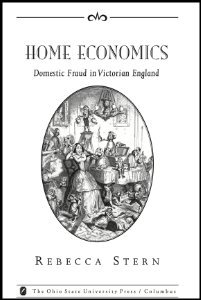
Home Economics: Domestic Fraud in Victorian England

By Rebecca Stern.

In Home Economics: Domestic Fraud in Victorian England, Rebecca Stern establishes fraud as a basic component of the Victorian popular imagination, key to its intimate, as well as corporate, systems of exchange. Although Victorian England is famous for revering the domestic realm as a sphere separate from the market and its concerns, actual households were hardly isolated havens of fiscal safety and innocence. Rather, the Victorian home was inevitably a marketplace, a site of purchase, exchange, and employment in which men and women hired or worked as servants, contracted marriages, managed children, and obtained furniture, clothing, food, and labor. Alongside the multiplication of joint-stock corporations and the rise of a credit-based economy, which dramatically increased fraud in the Victorian money market, the threat of swindling affected both actual household commerce and popular conceptions of ostensibly private, more emotive forms of exchange. Working with diverse primary material, including literature, legal cases, newspaper columns, illustrations, ballads, and pamphlets, Stern argues that the climate of fraud permeated Victorian popular ideologies about social transactions. Beyond providing a history of cases and categories of domestic deceit, Home Economics illustrates the diverse means by which Victorian culture engaged with, refuted, celebrated, represented, and consumed swindling in familial and other household relationships.

Columbus, OH: Ohio State University Press, 2008. 207p.

Violence in Nigeria: A qualitative and quantitative analysis

By Pérouse de Montclos.

Most of the academic literature on violence in Nigeria is qualitative. It rarely relies on quantitative data because police crime statistics are not reliable, or not available, or not even published. Moreover, the training of Nigerian social scientists often focuses on qualitative, cultural, and political issues. There is thus a need to bridge the qualitative and quantitative approaches of conflict studies.This book represents an innovation and fills a gap in this regard. It is the first to introduce a discussion on such issues in a coherent manner, relying on a database that fills the lacunae in data from the security forces. The authors underline the necessity of a trend analysis to decipher the patterns and the complexity of violence in very different fields: from oil production to cattle breeding, radical Islam to motor accidents, land conflicts to witchcraft, and so on. In addition, they argue for empirical investigation and a complementary approach using both qualitative and quantitative data. The book is therefore organized into two parts, with a focus first on statistical studies, then on fieldwork.

Leiden: African Studies Centre Leiden (ASCL), 2016. 217p.

Violence based on perceived or real sexual orientation and gender identity in Africa

Edited by CALS (Coalition of African Lesbians) and AMSHeR.

Violence against sexual minorities in Africa is rife. Persons belonging to or perceived to be members of the broad grouping ‘lesbian, gay, bisexual, transgender and intersex (LGBTI)’ are often victim of violence in African states. This violence is sometimes perpetrated by state actors, such as the members of the Police force, and more often by ordinary persons (non-state actors). By condoning violence by state actors, and by failing to diligently investigate, prosecute and punish the perpetrators of these acts, states fail to respect the basic right to security of some of its citizens. By condoning these actions, or by failing to act effectively, the state also violates its human rights obligations. The argument of this report is not that sexual minorities deserve special protection, but that they are entitled to the rights all other citizens have – the right to security, liberty, life, dignity, and a fair trial.

As members of the African Union, states are party to and should abide by their obligations under the African Charter on Human and Peoples’ Rights (African Charter). Like several other regional and international human rights instruments, the African Charter guarantees freedom from discrimination, and equal protection and equality of individuals and peoples’ before the law (articles 2, 3 and 19). The African Commission on Human and Peoples’ Rights (African Commission), the body monitoring compliance with the African Charter, has in various communications presented to it denounced acts of discrimination on several of the listed grounds of discrimination and has clearly established that ‘other status’ (in article 2 of the Charter) can be broadly interpreted to include grounds other than those explicitly listed under that provision of the African Charter. The Commission made its first pronouncement on sexual orientation and gender identity (SOGI) issues in its Concluding Observations on Cameroon’s periodic report of 2005 by expressing concern about the upsurge in intolerance towards sexual minorities. Most recently, the Chairperson of the Commission issued a statement on in April 2013 stating that the he Commission ‘equally denounces violence committed against individuals based on their sexual orientation as part of its mandate to protect individuals from all forms of violence’.

Pretoria: Pretoria University Law Press, 2013. 57p.

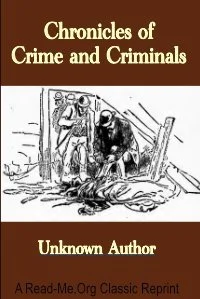
Chronicles of Crime and Criminals

Author Unknown.

Remarkable criminal trials, mysterious murders, wholesale murders, male and female poisoners, forgery and counterfeiting, bank and post office robberies, swindlers, highway robbery and railway crimes. Full and Authentic Account of the Murder by Henry Wainwright^ of his Mistress Harriet Lane: and an extended account of the the Whitechapel Murders by the infamous Jack the Ripper.

Toronto: Beaver Publishing Co., 1895. 38p.

Report on Crime, Pauperism, and Benevolence in the United States at the Eleventh Census, 1890

By Frederick Howard Wines.

"Miscellaneous documents of the House of Representatives for the first session of the fifty-second Congress, 1891-92, volume 50, part 14…..This entire report treats of prisons, juvenile reformatories; almshouses; and benevolent institutions, together with insane paupers in institutions for the insane."

Washington, DC: GPO, 1896. 440p.

Drug Smuggling and Taking in India and Burma

By Roy K. Anderson.

“ At a time when the drug-evil, as it is called, is attracting so much attention all over the world, it does not seem out of place to tell the public something about how conditions brought it about.”

Calcutta: Thacker, Spink, 1922. 104p.

The Cause of the Social Evil and the Remedy

By Albert W. Elliott.

“In the following pages, I purpose to lay bare the stark facts of the Social Evil, believing that public knowledge of conditions as they really are will prove a power for good; I will strive to tell the unflinching truth, pitiless though it appears, for therein lies the world’s only hope of freedom from error and vice. This book, my reader, is meat for strong men, not milk for babes. The author has devoted six years of his life to rescue work among fallen women, has studied the underworld from New Orleans to New York, from the Atlantic to the Pacific ; has entered on the course of his mission, more than three thousand houses of shame and talked with more than fifteen thousand inmates ; he has walked the valley of this terrible shadow meeting its blackened spirits face to face, searching their innermost secrets, praying and working for their deliverance, and crying from the depth of his soul over the hopeless tragedy of it all. Of the intimate, accurate, heart-crushing ex- perience thus gathered, this book is a faithful record.”

Atlanta, GA: Webb & Vary Co., 1914..

Sydney in Ferment: Crime, Dissent and Official Reaction, 1788 to 1973

By Peter H. Grabosky.

Crime fascinates many members of the public. They are eager to know what forms it takes, whether kinds of crime change, what measures are taken to combat it. Sydney in Ferment draws widely on primary sources, many previously unpublished. It focuses on trends in criminal behaviour, political dissidence, collective violence and crime control policies in New South Wales from Phillip{u2019}s landing in 1788 to the early 1970s. It investigates variations in rates and types of crime and threats to public order and discusses changes in criminal law, the creation and development of police forces and trends in criminal procedure and penal form. Its conclusion on the relative weights to be given to the influence of short-term changes in policy on criminal justice and to fundamental social and economic factors will provoke spirited discussion. This book is a lively account both of crime itself and also of the changes in the moral attitudes of the officials and the public at large.

Canberra: Australian National University Press, 1977. 234p.