Open Access Publisher and Free Library
CRIME+CRIMINOLOGY.jpeg

CRIME

Violent-Non-Violent-Cyber-Global-Organized-Environmental-Policing-Crime Prevention-Victimization

Posts in Social Sciences
Timber Trafficking: Illegal Logging in Indonesia, South East Asia and International Consumption of Illegally Sourced Timber

By Dave Currey, Faith Doherty, Sam Lawson, Julian Newman, and A. Ruwindrijarto

A report into illegal logging in Indonesia and South-East Asia, and the international consumption of illegally sourced timber. For the past two decades, the international community has been aware of rampant logging of tropical forests and vanishing biodiversity. Yet even if you could track an illegally cut tree to a port in a timber consuming country, and supply conclusive evidence that it was illegally cut, none of them have legislation in place that would allow their enforcement authorities to seize the shipment.

London; Washington, Environment Protection Agency; Bogor, Indonesia: Telapak, 2001. 36p.

download
Money Laundering from Environmental Crime

By The Financial Action Task Force (FATF)

Environmental crime covers a wide range of activities, from illegal extraction and trade of forestry and minerals to illegal land clearance and waste trafficking. Actors involved in these crimes vary from large organized crime groups to multinational companies and individuals. Perpetrators of environmental crime rely on both the financial and non-financial sector to launder their proceeds. The ‘low risk, high reward’ nature of environmental crime makes for a lucrative and safe source of revenue for criminals. This is partly due to a regulatory and legal environment that is not always consistent globally and does not fully address the financial aspects and money laundering (ML) risks of these crimes. The FATF conducted this study to strengthen awareness of the scale and nature of criminal gains and laundering techniques for environmental crimes. This study builds on the FATF’s 2020 report on financial flows from the illegal wildlife trade. It brings together expertise from across the FATF’s Global Network to identify good practices that governments and the private sector can take to disrupt the profitability of environmental crimes. The findings for this report are based on case studies and good practices provided by over 40 countries, alongside expertise from civil society and the private sector.

Paris: FATF, 2021. 70p.

download
Parenting, Scarcity and Violence: Theory and Evidence for Colombia

By Jorge Cuartas, Arturo Harker, and Andrés Moya

During early childhood, children develop cognitive and socioemotional skills that predict success in multiple socioeconomic dimensions. A large part of the development of these skills depends on the child’s context during the first years of life and, in particular, on the quality of parental care. Grounded on recent literature in psychology and behavioral economics, we discuss a theoretical framework for understanding why some children receive adequate care, while others do not. Within this framework, we identify a determinant of the quality of parenting that has not yet been explored in-depth: the availability of parents’ mental resources, which are depleted by the subjective feeling of scarcity and the stress generated by adversities. Using cross-sectional data from a household survey in Colombia and administrative data on crime and violence, we find that a greater subjective feeling of scarcity (β=0.45, IC95%:[0.082, 0.979]) and greater exposure to violence (β =0.09, IC90%:[0.004, 0.182]) are associated with a lower likelihood that parents engage in stimulating activities with their children. At the same time, the results show that receiving information on childrearing is correlated with better parental practices (β =-0.48, IC95%:[-0.822, -0.136]).

Bogotá, Colombia: Universidad de los Andes–Facultad de Economía–CEDE , 2016. 35p.

download
International Law and Sexual Violence in Armed Conflicts

By Chile Eboe-Osuji

Sexual violence is a particular brand of evil that women have endured—more than men—during armed conflicts, through the ages. It is a menace that has continued to challenge the conscience of humanity—especially in our times. At the international level, basic laws aimed at preventing it are not in short supply. What is needed is a more conscious determination to enforce existing laws. This book explores ways of doing just that; thereby shoring up international legal protection of women from sexual violence in armed conflicts.

Leiden; Boston: Brill, 2012. 374p.

download
The Illegal Logging Crisis in Honduras: How U.S. and E.U. imports of illegal Honduran wood increase poverty, fuel corruption and devastate forests and communities

By Environmental Investigation Agency

One of the poorest countries in Latin America, Honduras is losing up to $18 million a year in lost stumpage fees and other forest-based revenue. Yet this is only the tip of the iceberg of a massive, nationwide, resource rip-off by major timber and wood product producers and their high level political backers. An estimated 80% of mahogany and up to 50% of pine — Honduras’ main timber export — is produced in violation of government regulations.

Washington, DC: Environmental Investigation Agency, 2005. 48p.

download
Exporting Destruction: Export Credits, Illegal Logging and Deforestration

By Judith Neyer and Jade Saunders

Exporting Destruction is the conclusion of research that included fieldwork in China, desk studies, and a new financial review, all commissioned to shine a light on the role that export credit agencies (ECAs) play in financing global deforestation. Through detailed case studies and historical research, FERN has been able to produce a set of policy recommendations that would, if implemented effectively, bring export credits in line with other publicly-funded institutions and reduce their potential for negative social and environmental impacts. The paper suggests that while the primary, if not sole, remit of ECAs is to promote their country’s domestic industries in competitive and risky environments, particularly in poor emerging markets, the huge amounts of money involved mean that they also have an important effect on policies and actions in the countries in which they support projects. To put their size in context, ECAs underwrite around US$100 billion annually in medium and long-term credits and guarantees, compared with, for example, multilateral development banks, which have a combined total of US$60 billion in loans per year.

Brussels: FERN, 2008. 41p.

download
Facing Reality: How to halt the import of illegal timber in the EU

By Chantal Marijnissen, Saskia Ozinga, Beatrix Richards and Sebastien Risso

By mid-2004, the European Commission is due to report back to the Council of the European Union with its proposals for implementing the EU Action Plan on Forest Law Enforcement, Governance and Trade (FLEGT) that it released in May 2003. FERN, Greenpeace and WWF welcome the Plan and aim, with this report, to provide further recommendations to EU policy makers that will assist their efforts to ensure its successful implementation. Given the stage of development of the FLEGT Action Plan, this report will focus primarily on criminal aspects of the timber industry. However, it is important to remember that much legal logging is also highly destructive – and that ultimately it is the issue of forest sustainability that needs to be addressed. As the environmental NGO community has repeatedly shown, the impacts of illegal logging on wildlife and human welfare are devastating. Illegal logging contributes to deforestation and loss of biodiversity; fuels civil wars and threatens international security through bribery, organised crime and human rights abuses; cuts tax revenue of producer countries; destabilises international markets and undermines both legitimate business and responsible forest management.

Brussels: FERN; Greenpeace European Unit; World Wildlife Fund, 2004. 38p.

download
Controlling Imports of Illegal Timber: Options for Europe

By Duncan Brack, Chantal Marijnissen, and Saskia Ozinga

Around the world, people are waking up to the fact that illegal forestry activities are widespread and have extremely negative consequences. Not only does illegal logging damage the environment, but tax evasion by forestry companies deprives governments of billions of euros in revenues, related corruption and impunity to prosecution undermine the rule of law, and in several countries the proceeds from illegal forestry activities have financed violent conflict. Clearly something must be done. In this paper several of Europe’s most knowledgeable experts about illegal forestry activities have put their heads together to examine what the European Commission and member states can do to address the problem. They focus particularly on trade, finance, and procurement issues, although they briefly discuss efforts to strengthen the capacity of national institutions in developing countries. One by one they go through each of the specific instruments that might be used and analyse their advantages and disadvantages and the practical aspects of their application. They conclude that steps can be taken by using existing legislation and mechanisms if the Commission and member states vigorously pursue those options, but additional legislation is needed.

Brussels; FERN: London: Royal Institute of International Affairs , 2002. 74p.

download
Organised Crime in Red City: An Ethnographic Study of Drugs, Vice, and Violence

By Mark Berry

Illegal drug trafficking and retail drug sales constitute the most common activity of organised crime groups in the UK and draw the largest share of resources from the police and prison services, whilst also generating considerable social costs. There are few contemporary studies in the UK on the supply of drugs, its organisation, culture and risk management practices, and even fewer on active dealers themselves. There remains limited ethnographic research into the drug trade, missing important insights that can be gained from observing distributors in a natural setting. A key absence in criminological literature is the voice of offenders who commit serious crimes and how they perceive and mitigate problems related to their activities. This research aims to fill gaps in the knowledge base by investigating the nature of the drug market, the crime risk management practices of drug dealers, and possible reasons for their involvement and patterns of activity. The study examines the criminal careers of offenders who operate in one of Britain’s largest cities, termed here anonymously as Red City. The participants in this study distribute and manufacture a range of illicit substances, both offline and online. They distribute drugs on local, national and international levels (retail, wholesale, import and export). To complement the fieldwork, interviews were conducted with official actors from the criminal justice system, the private sector and the third sector. The thesis seeks to provide a more nuanced and grounded picture of illicit drug dealing and ‘organised crime’, that provides an account that corrects popular stereotypes.

Cardiff, Wales: Cardiff University, 2020. 195p.

download
Mafia Brotherhoods: Organized Crime, Italian Style

By Letizia Paoli

The main aim of this book is to reconstruct the culture, structure, and action of the Sicilian Cosa Nostra and the Calabrian ’Ndrangheta. Not only are these Italy’s most dangerous criminal organizations, but they have also profoundly influenced the mafia phenomenon in North America. It was from the Sicilian Cosa Nostra’s nineteenth-century forerunners that the Italian American mafia developed, as millions of Italian immigrants settled in the United States, most of them coming from southern Italy. Significantly, the largest and most influential Italian American mafia confederation is called Cosa Nostra as well. The Calabrian ’Ndrangheta also has offshoots in the Anglo-Saxon world. In the early twentieth century, ’Ndrangheta groups were established in both Canada and Australia, and these are still active now, maintaining close contacts with their Calabrian counterparts. In order to depict the culture, structure, and action of these organized crime groups, I consulted numerous sources, ranging from criminal cases to parliamentary hearings, from archival and other standard secondary sources to interviews with law enforcement officials, local politicians, and anti-mafia activists. The portrait given in this book, however, relies most heavily on the confessions and testimonies of former mafia members now cooperating with judicial authorities. As my introduction explains, these statements have not been accepted uncritically but have been taken seriously even when they seem to contradict the evil activities in which most mafiosi engage. Cooperating mafia witnesses are, in fact, the most direct source of information about the mafia, describing the mafia world not only from the outside but also—as one defector put it—from within.

Oxford, UK; New York: Oxford University Press, 2003.

download
Women and the Mafia: Female Roles in Organized Crime Structures

Edited by Giovanni Fiandaca

The insightful essays in this book shine a new light on the roles of women within criminal networks, roles that in reality are often less traditional than researchers used to think. The book seeks to answer questions from a wide range of academic disciplines and traces the portrait of women tied to organized crime in Italy and around the world. The book offers up accounts of mafia women, and also tales of severe abuse and violence against women.

New York: Springer Science+Business Media, 2007. 307p.

download
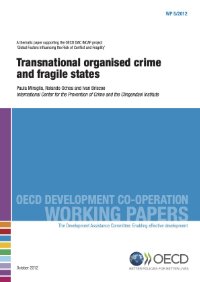
Transnational Organised Crime and Fragile States

By Paula Miraglia, Rolando Ochoa, Ivan Briscoe

Transnational organised crime (TOC) refers to a fluid and diversified industry that engages in illicit activities ranging from drug and human trafficking to drug smuggling, piracy and money laundering. Although it may affect strong states, conflict-affected and fragile states are especially vulnerable to the dynamics of TOC and may provide more favourable conditions for its development. The implications for those states are many and serious. This paper outlines the ways in which TOC has evolved in recent years and how policy might be adapted to take account of this evolution. It emphasises that TOC today is less a matter of organised cartels established in producer or end-user states, but increasingly characterised by fluid, opportunistic networks that may for example specialise in transport and logistics. The paper recommends tackling the problem through a comprehensive approach that considers TOC as but one element within a greater complex of cause and effect. This would entail a re-evaluation of many current assumptions about TOC and a reformulation of current policies.

Paris: OECD, 2012. 37p.

download
Cash Cows - The Inner Workings of Cattle Trafficking from Central America to Mexico

By Victoria Dittmar and Parker Asmann

The expansion of illegal cattle ranching is threatening nature reserves in Nicaragua, Honduras and Guatemala. This activity provokes staggering levels of deforestation, irreversible environmental degradation and violence towards Indigenous communities, all while fueling a criminal market that generates millions of dollars in proceeds. A portion of these cattle are smuggled into Mexico, where they either feed the domestic demand for meat or are mixed with beef exports sent to the United States and other countries. This report, produced by InSight Crime, follows the cattle trafficking chain from Central America to Mexico and provides an overview of how this illicit market works. It estimates the size and scope of the industry, highlights illegal ranching hotspots and smuggling routes, identifies the main actors involved in the value chain, analyzes where and how this activity overlaps with other criminal economies, and offers recommendations for governments to tackle the issue. The findings are based on a 14-month investigation that included desktop research, telephone and in-person interviews, and fieldwork in the Mexican states of Veracruz, Tabasco, and Chiapas, the Río Plátano Reserve in Honduras and the Maya Biosphere Reserve in Guatemala. Our sources include international, national and local authorities, cattle ranchers and cattle union leaders, former contraband cattle buyers, veterinarians, Indigenous leaders, park rangers, residents of the nature reserves, environmental activists and academic experts. Most of them asked to remain anonymous for their protection. We also reviewed official government data, studies conducted by academics nd non-governmental organizations, and press reports.

Washington, DC: InSight Crime, 2022. 68p.

download
Counterwork: Countering the Expansion of Transnational Criminal Networks

By Angel Rabasa, Christopher M. Schnaubelt, Peter Chalk, Douglas Farah, Gregory Midgette, Howard J. Shatz

In July 2011, President Barack Obama promulgated the Strategy to Combat Transnational Organized Crime. In the letter presenting the strategy, the president stated that the expanding size, scope, and influence of transnational organized crime and its impact on U.S. and international security and governance represent one of the most significant challenges of the 21st century. Through an analysis of transnational criminal networks originating in South America, this report develops a more refined understanding of the operational characteristics of these networks; the strategic alliances that they have established with state and other nonstate actors; and the multiple threats that they pose to U.S. interests and to the stability of the countries where they operate. It identifies U.S. government policies and programs to counter these networks; the roles of the Department of Defense, the geographic combatant commands, component commands, and task forces; and examines how U.S. Army assets and capabilities can contribute to U.S. government efforts to counter these networks. The report also recommends reconsidering the way in which nontraditional national security threats are classified; updating statutory authorities; providing adequate budgets for the counternetwork mission; and improving interagency coordination.

Santa Monica, CA: RAND, 2017. 214p.

download
Keeping Oil from the Fire: Tackling Mexico’s Fuel Theft Racket

By International Crisis Group

What’s new? The theft and illicit sale of fuel, known in Mexico as huachicoleo, experienced an enormous spike after 2010. Rising fuel prices and other unintended effects of energy reforms and security policies have attracted organised crime into this domain, driving up murder rates.

Why does it matter? President Andrés Manuel López Obrador made fighting fuel theft a central item on his anti-crime agenda. But although he has had some success, enduring progress toward stopping huachicoleo could be elusive, largely due to pervasive official corruption and the failure to promote licit alternatives for earning a living.

What should be done? The government should tackle collusion between state officials and criminal outfits by introducing external oversight over state energy and security institutions. Conflict mitigation plans tailored to violent regions should offer legal alternatives to illicit livelihoods, protect civilians through focused police or military deployments, and support local security and justice institutions.

Mexico City; New York: Brussels: International Crisis Groupm, 2022. 22p.

download
Mexico: Organized Crime and Drug Trafficking Organizations

By June S. Beittel

Mexican transnational criminal organizations (TCOs) significantly influence drug trafficking in the United States and pose the greatest drug trafficking threat, according to the U.S. Drug Enforcement Administration’s (DEA’s) annual National Drug Threat Assessment. These organizations control the market and movement of a wide range of illicit drugs destined for the United States; for this reason, they are commonly referred to as drug cartels and drug trafficking organizations (DTOs). These poly-criminal organizations also participate in extortion, human smuggling, arms trafficking, and oil theft, among other crimes. Homicide rate increases in Mexico are widely attributed to heightened DTO-related violence, often tied to territorial control over drug routes and criminal influence. Congress has tracked how Mexican TCOs affect security on the U.S.-Mexico border, perpetrate violence, and contribute to the U.S. opioid crisis. A major concern is the organizations’ trafficking of cocaine, heroin, methamphetamine, marijuana, and synthetic opioids, such as fentanyl. Many analysts assess that Mexican TCOs’ role in the production and trafficking of synthetic opioids into the United States has significantly expanded since 2018. According to the Centers for Disease Control and Prevention, more than 106,000 overdose deaths occurred in the United States in 2021, more than 70% of which involved opioids, including fentanyl.

Washington, DC: Congressional Research Service, 2022. 43p.

download
Extortion Racketeering in the EU: Vulnerability Factors

By Center for the Study of Democracy

Extortion racketeering has been long pointed out as the defining activity of organised crime. Although in recent years this crime has not been among the top listed organised crime threats in the strategic EU policy documents, it still remains ever present in European countries. The seriousness of the phenomenon has been recognised at the EU level and the crime has been listed in a number of EU legal acts in the field of police and judicial cooperation in criminal matters.

The report Extortion Racketeering in the EU: A six country study of vulnerability factors analyses extortion racketeering forms and practices in six EU member states. The analysis disentangles the risk and the vulnerability factors for enterprises in two business sectors – agriculture and hospitality – as well as in the Chinese communities. Drawing on the results of the analysis, the report suggests new policies for tackling extortion racketeering in the EU.

Sofia, Bulgaria: Center for the Study of Democracy, 2016. 351p.

download
Organised Property Crime in the EU

By Ernesto U. Savona and Matteo Anastasio

This study requested by the Committee on Civil Liberties, Justice and Home Affairs (LIBE), aims to provide information on Organised Property Crime in the EU, by offering a strategic discussion on the Union policies on this topic and highlighting key recommendations for future action. The study proposes a holistic approach to the problem, adding new elements to existing measures.

Brussels: European Union, 2020. 50p.

download
Understudied Organized Crime Offending: A Discussion of the Canadian Situation in the International Context

By Ernesto Ugo Savona, Francesco Calderoni, Alessia Maria Remmerswaal

This report provides an analysis of selected possible understudied organized crime activities present in the Canadian context, contributing to the knowledge on both of the nature and the scope of organized crime. The analysis involved an extensive review of the literature and available data on organized crime activities in Canada, and a discussion of the existing state of organized crime literature in the international context. The analysis was based on available literature, official reports and informed speculations. Given the difficulty in gathering information about understudied activities, an in-depth analysis of such activities was not always possible. Nonetheless, the findings show the possible involvement of organized crime in some activities. Selected understudied organized crime activities were identified and analysed.

Ottawa: Public Safety Canada, 2011. 38p.

download
The Impact of COVID-19 on Organized Crime

By United Nations Office on Drugs and Crime (UNODC)

The COVID-19 pandemic has swept across the world, killing hundreds of thousands of people, and testing public healthcare systems to a breaking point. Many areas of economic activity have either been shut down by governments to halt the spread of the virus or have seen demand collapse. In many countries where organized criminal groups are prevalent, struggling private businesses – many unable to access enough public funds to keep them afloat – are more likely to seek out loans on the illicit market than they would be at other times. Businesses in the transport, hospitality, arts, retail, and beauty sectors are particularly vulnerable to infiltration by organized criminal groups (OCGs). As these businesses begin to reopen, some will find themselves either in the debt of OCGs, or directly controlled by them. The OCGs can seize control either through exchange of money for buying shares or by directly taking over operations. This generates more opportunities for criminal activity, including money laundering and trafficking activities, enabling OCGs to further expand their control and power over the licit economy.

Vienna: UNODC, 2020. 37p.

download