Open Access Publisher and Free Library
CRIME+CRIMINOLOGY.jpeg

CRIME

Violent-Non-Violent-Cyber-Global-Organized-Environmental-Policing-Crime Prevention-Victimization

Posts in Violence & Oppression
Blue-Collar Crime and Finance

By Allepandro Bernales, Diether Beuermann, Douglas Cumming. and Christiaan Olid

Relatively little is known about the effects of blue-collar crime (theft, robbery, vandalism or arson) on financial decisions. Previous literature has focused its attention either on 'regional' crime rates or the 'perception' of crime as business obstacles. Instead, we examine financing terms of 'individual' firms that 'effectively' experimented blue-collar crime events. We show that blue-collar crime worsens the access and conditions to external financing, which is unexpected since firms do not have to reveal to lenders that they suffered such crime incidents. We also find evidence that firm-information leakages may explain the negative effects of blue-collar crime on financing terms.

Washington, DC: Inter-American Development Bank, 2022. 785p.

The Prevalence of Violence against Women among Different Ethnic Groups in Peru

By Jorge M. Agüero

About half of Peruvian women between the ages of 15 and 49 have experienced some form of violence from their partners. Through a quantitative analysis, this report explores how violence rates against women vary by ethnic group and over time. Based on a nationally representative sample of more than 75,000 women surveyed between 2003 and 2012 and a review of the literature on ethnic classification in Peru, a typology is applied to measure ethnicity, based on women’s linguistic backgrounds, allowing for a consistent ethnic characterization throughout the period of analysis. In this typology, the first group is made up of women who speak an indigenous language at home and do not speak Spanish. A second group, called “historic” Spanish speakers, is composed of women who learned Spanish during childhood and still use it today, while the third group, called “recent” Spanish speakers, includes women who grew up speaking an indigenous language but now speak Spanish. The highest rate of all types of violence is found in this last group, with a much greater difference in sexual and severe physical violence. This is consistent with the predictions of the theoretical model developed in this study in which violence depends on the type of couple. The model finds that women who speak “recent” Spanish—and who have what is termed a lower “outside option” than their “historic” Spanish-speaking male partners—experience greater violence. The study found that the gap in rates of violence against women among these three language groupings has remained constant over time despite an overall reduction in violence. This shows that current policies to provide care for victims and prevent violence against women are insufficient because the policies do not necessarily target groups with a greater risk of violence. This is unlike other areas of public health, where interventions are directly targeted at the most vulnerable populations

Washington, DC: Inter-American Development Bank, 2018. 43p.

The Theft of Precious Metals from South African Mines and Refineries

By Ben Coetzee and Riana Horn

Due to the importance of the precious metals mining industry and the continuous criminal threat to the industry, the Chamber of Mines of South Africa approached the Institute for Security Studies (ISS) to investigate the occurrence of theft and various related issues. The statistical information this project is based on was provided by the mining sector and is for the period January 2000-December 2004. Some of the mining houses have implemented orientation workshops to explain what type of employee conduct constitutes a crime and the importance of reporting crime. It was therefore important to test the perceptions of employees in the industry to ensure that these workshops are effective. Despite advancements in crime detection and prevention technology, transgressions are nonetheless common at most mines and processing plants. The precious metals mining industry is still not capable of determining exactly how much product is lost during processing phases, leaving a window of opportunity for theft and corruption. Reliable crime reporting is critical to determining the extent of the criminal threat facing the precious metals mining industry. Although most mines have developed processes to record and manage crime-related information, the methods used by the police and the mining industry are not standardised for efficient analysis purposes. It became evident during interviews conducted for the study that there is a general perception in the mining industry that most stolen product sold on the black market ends up in some organised illegal business or syndicate. It is presumed top-level syndicate members, who supply organised criminal dealers, dispose of the largest volume of stolen product. Statistics recorded on identified syndicates may therefore reflect the most reliable magnitude of losses suffered when it comes to approximating the extent of precious metals theft in South Africa.

Pretoria, South Africa: Institute for Security Studies, 2007. 140p.

Beaten Bad: The Life Stories of Violent Offenders

By Chandre Gould

In this monograph, readers will meet some of the men who are responsible for violent crime in South Africa. The narratives presented here are based on interviews with men who have been incarcerated for murder, robbery and rape. These accounts show that the foundation for their criminal careers was laid early in their lives and compounded by their experiences of loss, abuse and alienation. Readers are taken on a journey through their lives to understand why crime in South Africa is so violent, and what needs to be done to prevent it.

Pretoria, South Africa: Institute for Security Studies, 2017. 144p.

Money Laundering through the Football Sector

By Financial Action Task Force (FATF)

The aim of this project is to study one specific sport which could reveal money laundering schemes that may also be occurring in other sports. As one of the largest sports in the world, football1 was chosen. Both professional and amateur football were to be examined. Although the scale of vulnerabilities to money laundering is potentially different, risks in both areas were considered likely to be similar.

Paria: FATF, 2009. 42p.

How Much Violence Does Football Hooliganism Cause?

By Marc Fabel and Helmut Rainer

This paper quantifies how much of violent crime in society can be attributed to football-related violence. We study the universe of professional football matches played out in Germany’s top three football leagues over the period 2011-2015. To identify causal effects, we leverage time-series and cross-sectional variation in crime register data, comparing the number of violent crimes on days with and without professional football matches while controlling for date heterogeneity, weather, and holidays. Our main finding shows that violent crime increases by 21.5 percent on a match day. In the regions and time period under consideration, professional football matches explain 8 percent of all violent assaults, and generate social costs of roughly 194 million euros. Exploring possible mechanisms, we establish that the match day effect cannot be explained by emotional cues stemming from either unsettling events during a match or unexpected game outcomes, nor is it driven by increases in domestic violence. Instead, we find that the match day effect can be attributed to violence among males in the 18-29 age group, rises to almost 70 percent on days with high-rivalry derby matches, and that a non-negligible share of it stems from violent assaults on police officers. These findings are inconsistent with frustration-aggression theories that can explain sports-related violence in the United States, but can be accommodated by social identity explanations of football hooliganism.

Munich: CESifo, 2021. 40p.

Violent and Antisocial Behaviours at Football Events and Factors Associated with these Behaviours A rapid evidence assessment

By Lucy Strang, Garrett Baker, Jack Pollard, Joanna Hofman

Football is the world's most popular sport, with millions of fans annually watching professional football on their television or at public viewing places such as fan zones, or attending matches in person. Negative behaviour at football matches is a widely recognised issue that has garnered international media attention for decades. However, violent and antisocial behaviour at football matches remains an issue that needs to be better understood. To this end, RAND Europe was commissioned by Qatar University to provide a series of reports looking into the issues of violence and antisocial behaviour at major sporting events. This first report observes the key antisocial and violent behaviours that may be witnessed in relation to football events, such as verbal abuse, destruction of property, acts of vandalism and assault, while also noting that football environments can foster positive behaviours and social dynamics. In addition, it acknowledges that definitions of antisocial behaviour are to some degree subjective and contextual. It is important to acknowledge, however, that while the identified studies consider specific factors driving fan behaviour, the available evidence supports the notion that no single factor can be found to be responsible for violent or antisocial behaviour by fans at football events. Rather, multiple factors are often in play simultaneously. While the identified studies consider specific factors driving fan behaviour, the available evidence supports the notion that no single factor can be found to be responsible for violent or antisocial behaviour by fans at football events. Rather, multiple factors are often in play simultaneously. The quality of the identified literature varied significantly, and the research team rated only a handful of studies as being very high quality.

Santa Monica, CA: Cambridge, UK: RAND Europe, 2018. 42p.

The Globalization of Crime: A Transnational Organized Crime Threat Assessment

By United Nations Office on Drugs and Crime

In The globalization of crime: a transnational organized crime threat assessment, UNODC analyses a range of key transnational crime threats, including human trafficking, migrant smuggling, the illicit heroin and cocaine trades, cybercrime, maritime piracy and trafficking in environmental resources, firearms and counterfeit goods. The report also examines a number of cases where transnational organized crime and instability amplify each other to create vicious circles in which countries or even subregions may become locked. Thus, the report offers a striking view of the global dimensions of organized crime today.

Vienna: UNODC, 2010. 314p.

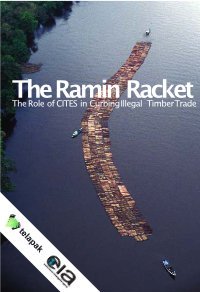
The Ramin Racket: The Role of CITES in Curbing Illegal Timber Trade

By EIA

A report on the role of the Convention on International Trade in Endangered Species (CITES) in curbing illegal timber trade and protecting endangered tree species. Despite the success of its current CITES listing, endangered ramin remains under threat, with the remnants of Malaysia’s ramin forests exploited unsustainably. Although ramin is banned from cutting and export in Indonesia – the only other significant range state – stolen wood continues to be laundered through neighbouring Malaysia in quantities exceeding the global annual legal supply.

London; New York Environmental Investigations Agency, 2011. 17p.

“Worth Less Than an Animal”: Abuses and Due Process Violations in Pretrial Detention in North Korea

By Human Rights Watch

This report—based largely on research and interviews conducted with 22 North Koreans detained in detention and interrogation facilities after 2011 (when Kim Jong Un came to power) and eight former North Korean officials who fled the country—provides new information on North Korea’s opaque pretrial detention and investigation system. It describes the criminal investigation process; North Korea’s weak legal and institutional framework; the dependence of law enforcement and the judiciary on the ruling WPK; the apparent presumption of guilt; bribery and corruption; and inhumane conditions and mistreatment of those in detention and interrogation facilities (kuryujang) that often amounts to torture. Because North Korea is a “closed” country, not much is known about the legal processes in its pretrial detention system, but the experiences of those interviewed and the other evidence detailed below, show that torture, humiliation, coerced confessions, hunger, unhygienic conditions, and the necessity of connections and bribes to avoid the worst treatment appear to be fundamental characteristics.

New York: HRW, 2021. 100p.

“I Sleep in My Own Deathbed”: Violence against Women and Girls in Bangladesh: Barriers to Legal Recourse and Support

By Human Rights Watch

On April 7, 2016, soon after the end of evening prayers, Sadia, 27, heard her husband calling her to come down to the street. As she got to the door, however, he stood flanked by two men, blocking the exit. On her husband’s order, his companions doused her with nitric acid. “My husband stood watching as my dress fell straight off and my necklace and earrings melted into my skin,” Sadia said. After four surgeries and almost four months at Dhaka Medical College Hospital, Sadia lost both her left ear and left eye. “He was trying to kill me,” she said when Human Rights Watch met her a year later. Acid attacks are one particularly extreme form of violence in a pattern of widespread gender-based violence targeting women and girls in Bangladesh. In fact, many of the women interviewed for this report endured domestic violence, including beatings and other physical attacks, verbal and emotional abuse, and economic control, for months or even years leading up to an attack with acid. For instance, during the 12 years that Sadia was married before the acid attack, her husband beat her regularly and poured chemicals in her eyes three times, each time temporarily blinding her.

New York: HRW, 2020. 73p.

Left Undefended: Killings of Rights Defenders in Colombia’s Remote Communities

By Human Rights Watch

Since 2016, over 400 human rights defenders have been killed in Colombia—the highest number of any country in Latin America, according to the United Nations Office of the High Commissioner for Human Rights (OHCHR). In November 2016, the Colombian government and the Revolutionary Armed Forces of Colombia (Fuerzas Armadas Revolucionarias de Colombia, FARC) guerrillas reached a landmark peace accord, leading to the demobilization of the country’s then-largest armed group. The agreement included specific initiatives to prevent the killing of human rights defenders. Separately, that year the Attorney General’s Office decided to prioritize investigations into any such killings occurring as of the beginning of 2016.

New York: HRW, 2021. 135p.

"They Treat You Like You Are Worthless": Internal DHS Reports of Abuses by US Border Officials

By Human Rights Watch

In 2017, a US Border Patrol agent kneed a woman in the lower pelvis, leaving bruises and pain days later, according to her statement to a government official screening her asylum claim. In a separate incident that year, a Border Patrol agent or Customs and Border Protection (CBP) officer forced a girl to undress and then inappropriately touched her. In 2018, a CBP officer hit another asylum applicant so hard he was knocked unconscious and suffered brain swelling. That same year, an officer wearing a green uniform, consistent with those of the Border Patrol, asked an asylum applicant to give him oral sex in exchange for being released from custody. Another asylum applicant was bitten in the testicle by a Border Patrol service dog and denied medical treatment for about one month and ultimately had to have his testicle surgically removed. In 2019, CBP officials appeared to withhold food from a man in a freezing cold holding facility until he agreed to sign a paper that he did not understand. These are just some of the allegations of abuse catalogued in internal US Department of Homeland Security (DHS) reports received by Human Rights Watch on September 24, 2021 via the Freedom of Information Act (FOIA).

New York: HRW, 2021. 103p.

“Everyone Wants Me Dead”: Killings, Abductions, Torture, and Sexual Violence Against LGBT People by Armed Groups in Iraq

By Human Rights Watch

The Cameroon report, “‘Everyone Wants Me Dead’: Killings, Abductions, Torture, and Sexual Violence Against LGBT People by Armed Groups in Iraq,” documents cases of attempted murder of LGBT people by armed groups primarily within the Popular Mobilization Forces (PMF), which are nominally under the prime minister’s authority.

New York: HRW, 2022. 115p.

Combatting Domestic Violence in Turkey: The Deadly Impact of Failure to Protect

By Human Rights Watch

In June 2021, Eşref Akoda shot dead his 38-year-old wife Yemen outside her home in the central Anatolian town of Aksaray. Prior to this lethal assault, courts had on four separate occasions issued preventive orders aimed at keeping Eşref away from Yemen after he harassed her when she filed for divorce. A lawyer for the family said that Eşref Akoda had approached and threatened his wife at least twice, violating the third and fourth preventive orders, but that on those occasions the court had not imposed any of the available disciplinary sanctions on him, such as a short period in detention, due to a “lack of evidence”. The prosecutor also declined to bring criminal charges against him, even though Yemen’s lawyer had filed complaints with the prosecutor’s office.

New York: HRW, 2022. 92p.

Perspectives on Elder Abuse in the Netherlands

By Yuliya Mysyuk

This thesis explores perceptions and views of different groups involved in elder abuse. First chapter provides a general introduction to the topic and current study. In the second chapter of this thesis, definitions of elder abuse and their developments are reviewed. Chapter three explores different perspectives on the etiology of violence in later life. Chapter four discusses older persons’ definitions of and explanations for elder abuse. Chapter five explores older victims’ ideas about the causes and effects of abuse, the ways of coping with abuse and how they currently feel about it. In the sixth chapter, the framing of elder abuse as a social and a health problem is addressed, with attention to the factors that influence societal context and the health care system. Chapter seven raises the debate about the distinction of system abuse as a separate form of elder abuse. Finally, key findings of this thesis on perspectives on elder abuse are summarized in chapter eight of this thesis.

Leiden, Netherlands: Leiden University, 2015. 169p.

Europe in Crisis: Crime, Criminal Justice, and the Way Forward. Essays in Honour of Nestor Courakis.

Edited by C.D. Spinellis / Nikolaos Theodorakis Emmanouil Billis / George Papadimitrakopoulos.

Volume Ii: Essays In English, German, French, And Italian. Nestor Courakis is Emeritus Professor of Criminology and Penology at the National and Kapodistrian University of Athens, Faculty of Law and a full-time Professor at the University of Nicosia.

Athens: ANT. N. Sakkoulas Publishers L.P , 2017. 1899p.

Interventions Against Child Abuse and Violence Against Women: Ethics and Culture in Practice and Policy

Edited by Carol Hagemann-White, Liz Kelly, Thomas Meysen

This book offers insights and perspectives from a study of “Cultural Encounters in Intervention Against Violence” (CEINAV) in four EU-countries. Seeking a deeper understanding of the underpinnings of intervention practices in Germany, Portugal, Slovenia and the United Kingdom, the team explored variations in institutional structures and traditions of law, policing, and social welfare. Theories of structural inequality and ethics are discussed and translated into practice

Leverkusen-Opladen: Verlag Barbara Budrich, 2019. 282p.

Conflict and Transnational Crime: Borders, Bullets & Business in Southeast Asia

By Florian Weigand

Exploring the links between armed conflict and transnational crime, Florian Weigand builds on in-depth empirical research into some of Southeast Asia’s murkiest borders. The disparate voices of drug traffickers, rebel fighters, government officials and victims of armed conflict are heard in Conflict and Transnational Crime, exploring perspectives that have been previously disregarded in understanding the field.

Cheltenham, UK; Northampton MA: Edward Elgar Publishing, 2020. 176p

The Good Cause: Theoretical Perspectives on Corruption

Edited by Gjalt de Graaf , Patrick von Maravić. and Pieter Wagenaar

Money makes the world go round - corruption The book presents the state of the art in studying the causes of corruption from a comparative perspective. Leading scholars in the field of corruption analysis shed light on the issue of corruption from different theoretical perspectives. Understanding how different theories define, conceptualize, and eventually deduce policy recommendations will amplify our understanding of the complexity of this social phenomenon and illustrate the spectrum of possibilities to deal with it analytically as well as practically.

Opladen & Farmington Hills, MI. Barbara Budrich Publishers. 2010. 207p.