Open Access Free Library
CRIME+CRIMINOLOGY.jpeg

CRIME

Violent-Non-Violent-Cyber-Global-Organized-Environmental-Policing-Crime Prevention-Victimization

Posts in Violence & Oppression
Powderburns: Cocaine, Contras and the Drug War

By Celerino Castillo, III , Dave Harmon

The truth about the remaining dark secret of the Iran-Contra scandal- the United States government's collaboration with drug smugglers. Powderburns is the story of Celerino Castillo III who spent 12 years in the Drug Enforcement Administration. During that time, he built cases against organized drug rings in Manhattan, raided jungle cocaine labs in the Amazon, conducted aerial eradication operations in Guatemala, and assembled and trained anti-narcotics units in several countries. The eerie climax of Agent Castillo's career with the DEA took place in El Salvador. One day, he received a cable from a fellow agent. He was told to investigate possible drug smuggling by Nicaraguan Contras operating from the ilpango air force base. Castillo quickly discovered that Contra pilots were, indeed, smuggling narcotics back into the United States - using the same pilots, planes, and hangars that the Central Intelligence Agency and the National Security Council, under the Direction of Lt. Col. Oliver North, used to maintain their covert supply operation to the Contras.sm

Oakville, Ont: Mosaic Press,1994. 205p.

Drug War Against America

By John Coleman

The drug trade is a very profitable business of enormous proportions, stretching across the world from producer countries to consumer countries, of which the United States of America is the leader. The cost of the product is negligible, with profits far exceeding those of some of the greatest companies in modern times. The drug trade is a war being waged principally against the United States , where innovative methods and ever-shifting pitched battles are fought. Thus far, nothing has been able to put an end to this cancer upon the United States and other western countries.

This book tells, in alarming detail, the story of how the drug trade was started in earnest with the arrival of a mop-haired group of musicians known as the Beatles. The band was brought to the U.S. to go on concert tours, which acted as a magnet for teenagers and provided cover for the distribution of drugs that got a generation of young Americans hooked.

Carson City, NV: World In Review, 2009. 203p.

Lies, Damned Lies, and Drug War Statistics: A Critical Analysis of Claims Made by the Office of National Drug Control Policy. 2nd ed.

By Matthew B. Robinson and Renee G. Scherlen

First published in 2007, Lies, Damned Lies, and Drug War Statistics critically analyzed claims made by the Office of National Drug Control Policy (ONDCP), the White House agency of accountability in the nation's drug war since 1989, as found in the six editions of the annual National Drug Control Strategy between 2000 and 2005. In this revised and updated second edition of their critically acclaimed work, Matthew B. Robinson and Renee G. Scherlen examine seven more recent editions (2006–2012) to once again determine if ONDCP accurately and honestly presents information or intentionally distorts evidence to justify continuing the drug war. They uncover the many ways in which ONDCP manipulates statistics and visually presents that information to the public. Their analysis demonstrates a drug war that consistently fails to reduce drug use, drug fatalities, or illnesses associated with drug use; fails to provide treatment for drug-dependent users; and drives up the prices of drugs. They conclude with policy recommendations for reforming ONDCP's use of statistics, as well as how the nation fights the war on drugs.

Albany, NY: State University of New York Press, 2014. 310p.

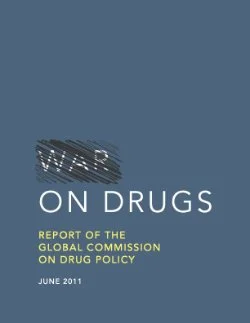
War On Drugs: Report of the Global Commission on Drug Policy

By The Global Commission on Drug Policy

The global war on drugs has failed, with devastating consequences for individuals and societies around the world. Fifty years after the initiation of the UN Single Convention on Narcotic Drugs, and 40 years after President Nixon launched the US government’s war on drugs, fundamental reforms in national and global drug control policies are urgently needed. Vast expenditures on criminalization and repressive measures directed at producers, traffickers and consumers of illegal drugs have clearly failed to effectively curtail supply or consumption. Apparent victories in eliminating one source or trafficking organization are negated almost instantly by the emergence of other sources and traffickers. Repressive efforts directed at consumers impede public health measures to reduce HIV/AIDS, overdose fatalities and other harmful consequences of drug use. Government expenditures on futile supply reduction strategies and incarceration displace more cost-effective and evidence-based investments in demand and harm reduction.

Global Commission on Drug Policy, 2011. 24p.

Drug War Pathologies : Embedded Corporatism and U.S. Drug Enforcement in the Americas

By Horace A. Bartilow

In this book, Horace Bartilow develops a theory of embedded corporatism to explain the U.S. government’s war on drugs. Stemming from President Richard Nixon’s 1971 call for an international approach to this “war,” U.S. drug enforcement policy has persisted with few changes to the present day, despite widespread criticism of its effectiveness and of its unequal effects on hundreds of millions of people across the Americas. While researchers consistently emphasize the role of race in U.S. drug enforcement, Bartilow’s empirical analysis highlights the class dimension of the drug war and the immense power that American corporations wield within the regime.

Drawing on qualitative case study methods, declassified U.S. government documents, and advanced econometric estimators that analyze cross-national data, Bartilow demonstrates how corporate power is projected and embedded—in lobbying, financing of federal elections, funding of policy think tanks, and interlocks with the federal government and the military. Embedded corporatism, he explains, creates the conditions by which interests of state and nonstate members of the regime converge to promote capital accumulation. The subsequent human rights repression, illiberal democratic governments, anti-worker practices, and widening income inequality throughout the Americas, Bartilow argues, are the pathological policy outcomes of embedded corporatism in drug enforcement.

Chapel Hill, NC:The University of North Carolina Press, 2019. 320p.

The Drug War in Mexico: Confronting a Shared Threat

By David A. Shirk

The drug war in Mexico has caused some U.S. analysts to view Mexico as a failed or failing state. While these fears are exaggerated, the problems of widespread crime and violence, government corruption, and inadequate access to justice pose grave challenges for the Mexican state. The Obama administration has therefore affirmed its commitment to assist Mexico through continued bilateral collaboration, funding for judicial and security sector reform, and building “resilient communities.”

David A. Shirk analyzes the drug war in Mexico, explores Mexico’s capacities and limitations, examines the factors that have undermined effective state performance, assesses the prospects for U.S. support to strengthen critical state institutions, and offers recommendations for reducing the potential of state failure. He argues that the United States should help Mexico address its pressing crime and corruption problems by going beyond traditional programs to strengthen the country’s judicial and security sector capacity and help it build stronger political institutions, a more robust economy, and a thriving civil society.

Washington, DC; Council on Foireign Relations Press, 2011, 56p.

Following the Money: Compendium of Resources and Step-by-step Guide to Financial Investigations Into Trafficking in Human Beings

By Organization for Security and Co-operation in Europe, Office of the Special Representative and Co-ordinator for Combating Trafficking in Human Beings

The paper aims to leverage off of the strengths and successes of established but disparate anti-THB financial investigatory practices, developed across the OSCE participating States, to raise awareness of the strategic value of financial investigations and the resources available, and to help create a more harmonised approach that can contribute to mainstreaming of financial investigations across the OSCE region.

Vienna: Organization for Security and Co-operation in Europe, Office of the Special Representative and Co-ordinator for Combating Trafficking in Human Beings, 2019. 68p.

The Criminal Victimization of Immigrants

By William F. McDonald

This book offers a comprehensive examination of the many forms of victimization of immigrants, including trafficking in persons for sexual exploitation and forced labor; assaulting, robbing and raping; refusing to pay wages; renting illegal living space that violates health codes; and domestic abuse both in general, and in particular, of mail-order brides.

McDonald examines a broad range of quantitative and qualitative data from historical and international sources including the USA, Canada, Mexico, Britain, Australia, France, Germany, Italy, Sweden, the Netherlands, Switzerland, Austria, Poland, and Spain. He writes with a view to correcting myths about the relationship between immigrants and crime, noting that immigrants are more likely to become victims than offenders.

The book outlines the multiple forms and contexts in which immigrants are victimized, exploited, and harmed. Reviewing micro- and macro-level victimological and sociological theories as they apply to patterns and forms of immigrants’ victimization, this study ultimately seeks to understand reasons for which immigrants are victimized by their own kind, and by persons outside their community.

Cham: Palgrave Macmillan, 2018. 135p.

Sexual Violence Facilitated by Dating Apps: The Experiences of Men Who Have Sex with Men

By Christopher T. Dietzel

This dissertation highlighted and addressed the nature and extent of sexual violence against men who have sex with men (MSM) that is facilitated through their use of dating apps. The dissertation includes three manuscripts, each of which details a unique study. The first study investigated MSM dating app users’ conceptualizations and negotiations of sexual consent. Findings revealed that MSM identify consent frameworks but do not always apply those frameworks, or apply their interpretations of those frameworks, to their online and in-person sexual interactions with other MSM dating users. The second study examined MSM dating app users’ experiences of sending and receiving unsolicited dick pics. Findings uncovered a diversity in MSM’s experiences that are reflected along three “dimensions”: wanted/unwanted, consensual/non-consensual, and typical/atypical. Findings also revealed seven factors that impact MSM’s experiences of sending and receiving unsolicited dick pics. The third study investigated manifestation of rape culture that are facilitated through MSM’s use of dating apps. Findings showed that unwanted sexual messages and images are common manifestations of rape culture on dating apps. Findings also demonstrated that rape culture extends from online interactions to in-person interactions. Several MSM disclosed sexual violence they experienced through their use of dating apps, and one admitted to perpetrating sexual violence. This dissertation reveals the ways in which MSM experience and perpetrate sexual violence through their use of dating apps, as well as the ways in which dating apps facilitate sexual violence. Recommendations for education, community work, law and policy, and dating app software development are offered, along with limitations and suggestions for future research

Montreal: McGill University, 2021. 264p.

The Sexual Exploitation of Australian Children on Dating Apps and Websites

By Coen Teunissen, Hayley Boxall, Sarah Napier and Rick Brown

This study presents the findings from a large survey of people living in Australia (n=9,987) who had used mobile dating apps and/or dating websites in the previous five years. Across the entire sample, 12.4 percent of respondents reported receiving requests to facilitate the sexual exploitation of their own children or children they had access to. Requests included asking for sexual information about children or for sexual images or videos of children, asking to meet children in person or asking for children to perform sex acts over webcam.

The paper highlights the need for additional safety features to be embedded in mobile dating apps and dating websites to protect vulnerable users and to prevent the sexual exploitation of children.

Canberra: Australian Institute of Criminology, 2022. 14p.

Mobile Dating Applications and Sexual and Violent Offending

By Kamarah Pooley and Hayley Boxall

In the last few years, a number of high-profile cases of sexual and violent offending have been committed after the offender and victim met through a mobile dating application (dating app). Subsequent media and popular rhetoric have positioned dating app sexual and violent offending as a major safety concern.

A literature review was conducted to determine the prevalence of dating app violence, the design features of dating apps that create and prevent opportunities for violence to occur, and the prevention strategies used by individual users and app designers. Results suggest that dating app users are at greater risk of sexual and violent victimisation than non-users. Dating app features designed to promote safety and connectedness paradoxically place users at risk of victimisation. Although some dating apps feature innovative safety mechanisms, most place the onus on users to protect themselves against victimisation.

Canberra: Australian Institute of Criminology, 2020. 16p.

Shattering Lives and Myths: A Report on Image-Based Sexual Abuse

By Clare McGlynn, et al.

Image-based sexual abuse is a pervasive and pernicious form of sexual abuse. We use the term ‘image-based sexual abuse’ to refer to a broad range of abusive behaviours including the taking and/or distribution of nude or sexual images without consent, including threats to do so, which includes so-called ‘revenge porn’, ‘upskirting’, fakeporn, sexual extortion and videos of sexual assaults and rapes. This report draws on interviews with 25 victim-survivors of image-based sexual abuse and over 25 stakeholders, including police, policy-makers, lawyers and survivor organisations conducted over a six-month period in 2018.

Durham, UK: Durham University; University of Kent, 2019. 25p.

Mobile Dating Applications and Sexual and Violent Offending

By Kamarah Pooley and Hayley Boxall

In the last few years, a number of high-profile cases of sexual and violent offending have been committed after the offender and victim met through a mobile dating application (dating app). Subsequent media and popular rhetoric have positioned dating app sexual and violent offending as a major safety concern.

A literature review was conducted to determine the prevalence of dating app violence, the design features of dating apps that create and prevent opportunities for violence to occur, and the prevention strategies used by individual users and app designers. Results suggest that dating app users are at greater risk of sexual and violent victimisation than non-users. Dating app features designed to promote safety and connectedness paradoxically place users at risk of victimisation. Although some dating apps feature innovative safety mechanisms, most place the onus on users to protect themselves against victimisation.

Canberra: Australian Institute of Criminology, 2020. 16p.

Sexual Harassment, Aggression and Violence Victimisation Among Mobile Dating App and Website Users in Australia

By Heather Wolbers, Hayley Boxall, Cameron Long, Adam Gunnoo

Use of mobile dating apps and websites has increased exponentially in the past 10 years. While these platforms create opportunities to develop and pursue social, romantic and/ or sexual relationships, both online and in the real world, media reporting and broader commentary has raised concerns about users being subjected to high levels of sexual harassment, aggression and violence.

The current study surveyed 9,987 dating app or website users in Australia to explore the prevalence and nature of dating app facilitated sexual violence (DAFSV) victimisation within the sample. Findings revealed that three-quarters of users were subjected to online DAFSV, and a third were subjected to in-person DAFSV, perpetrated by someone they met on a dating app or website. Users often experienced repeat victimisation. DAFSV victimisation was particularly common among LGB+ communities. This study provides valuable information to aid development of policies and practices to prevent the occurrence and recurrence of DAFSV.

Canberra: Australian Institute of Criminology, 2022. 101p.

Criminal Victimization, 2021

By Alexandra Thompson and Susannah N. Tapp, Ph.D., BJS Statisticians

From 1993 to 2021, the rate of violent victimization declined from 79.8 to 16.5 victimizations per 1,000 persons age 12 or older.

„ About 46% of violent victimizations were reported to police in 2021, higher than in 2020 (40%).

„ From 2020 to 2021, the violent victimization rate increased from 19.0 to 24.5 victimizations per 1,000 persons in urban areas while remaining unchanged in suburban or rural areas.

U.S. Bureau of Justice Statistics. 2022. 31p.

Mexico National Surveys of Victimization and Perception of Public Safety

By National Survey of Victimization and Perception of Public Safety (ENVIPE)

The National Survey of Victimization and Perception of Public Safety (ENVIPE) 2021 is the eleventh installment of the statistical series produced by the National Subsystem of Information on Government, Public Safety and Law Enforcement (SNIGSPIJ), coordinated by the National Institute of Statistics and Geography (INEGI). With this project, continuity is given to the topics addressed in previous editions of this survey, whose results have been declared Information of National Interest by the Governing Board of the INEGI.

DOWNLOAD:

2021 2020 2019 2018 2017 2016 2015 2014 2013 2012 2011

Developing the Capacity to Understand and Prevent Homicide: An Evaluation of the Milwaukee Homicide Review Commission

By Deborah Azrael, Anthony A. Braga and Mallory O’Brien

This report presents the methodology and findings of an evaluation of the effectiveness of the Milwaukee Homicide Review Commission (MHRC), which was established in May 2004 with the mandate to address the city's persistent lethal violence.

A distinguishing feature of the MHRC is its inclusion of community agencies and leaders outside of the traditional criminal justice system. The evaluation examined MHRC's work from January 2005 through December 2007. Overall, the homicide review process found that homicide in the city's intervention districts were largely clustered in specific locations, such as in and around taverns, as well as in districts with concentrations of active offenders who had been involved in the criminal justice system. Homicides were often the outcome of persistent disputes between individuals and/or groups (usually gangs). Homicides were often committed to gain respect and status among peers who valued fearless displays of power and control over others, as well as to inflict retribution on those showing disrespect and confrontational interactions. Generally, the MHRC decision-making and actions produced a comprehensive set of actionable policy and practice recommendations whose implementation and effects were continuously monitored by the MHRC. MHRC actions were intended to better position criminal justice, social service, and community based organizations in addressing the violence-related factors in high-risk locations and high-risk individuals with a propensity for violence. The impact evaluation found that the implementation of the MHRC interventions was linked with a statistically significant 52-percent decrease in the monthly count of homicides in the treatment districts. In comparison, the control districts had a statistically insignificant 9.2- percent decrease in homicides, after controlling for the other covariates. Apparently, the MHRC's crafting of interventions designed to address underlying risks associated with homicides has had a significant impact in reducing incidents of lethal violence.

Boston, MA: Harvard School of Public Health, 2012. 95p.

Contactless, Crypto and Cash: Laundering Illicit Profits in the Age of COVID-19

By Calum Inverarity, Gareth Price, Courtney Rice and Christopher Sabatini

Travel restrictions and lockdowns have forced changes to the traditional means illicit groups have used to launder their ill-gotten profits. This paper explores whether COVID-19 may have affected these processes through three main channels: increased reliance on cryptocurrencies to move and launder funds tied to illicit activity; the expanded use of the internet through e-commerce sites to continue and expand trade mispricing practices to move illicit funds; and the use of FinTech and peer-to-peer payment services to transfer illicit funds.

Miami: Florida International University, 2021. 37p.

Developing Methodologies to Assess Organized Crime Strategies in Latin America

By Mark Ungar

Because of the increasingly organized and lethal nature of criminality in Latin America and Caribbean (LAC), OC policy may be the single most important safeguard for regional security. Nearly every current report, in fact, stresses OC’s increasingly threatening impact “on the economic and sociopolitical environment of the region” as it fuels manifestations of criminal violence such as “trafficking of persons, exploitation of natural resources, threats to protected areas, forced displacement, criminal governance, robbery, physical aggression, extortion and kidnapping,” according to UNDP. A recognition of the tandem growth of OC’s forms, though, does not mean a policy-relevant understanding of them. Such an understanding requires disentangling these crimes’ many overlapping sources, removing embedded layers of methodological obstruction, and attuning responses with OC practice. This multiple challenge, though, first requires stepping back to re-evaluate existing paradigms in at least three ways that this report discusses. First is to question existing OC data, since much of it is suspect, biased, or incomplete – reflecting the misalignment of institutional process and policy goals. Second is the ways in which OC draws its power from a multitude of local, national and regional links among non-state, economic, and state agencies that, like dark matter, are omnipresent but largely invisible. Third is a need to widen and re-examine physical and geographic space.

Miami: Florida International University, Jack D. Gordon Institute for Public Policy, 2021.

A Criminal Culture: Extortion in Central America

By The Global Initiative AGainst Transnational Organized Crime and InSight Crime

In parts of Central America, extortion has become so endemic that it is now a feature of the daily socio-economic life of citizens, businesses and the fabric of the state. The pervasive impunity and weakness of state institutions to combat extortion have meant that, for many central American communities, extortion, or the threat of it, has become a normalized facet of life – a form of violent, omnipresent, criminally enforced taxation – and its effects are far-reaching on a personal, economic and societal level. For the violent, armed street gangs that continually threaten and harass communities in the Northern Triangle countries (El Salvador, Guatemala and Honduras) – a region that is the main focus of this report – the extortion market is the main security threat to those countries and one of the principal sources of criminal income. These gangs have bred a criminal regional economy on such a scale that extortion forms a sizeable tranche of some Northern Triangle countries’ GDP. The revenue from extortion has provided some gangs in the region with a solid economic operating base, and at the same time allowed them to diversify into other criminal enterprises, including drug trafficking, and human smuggling and trafficking, which means that they have consolidated their influence over broader transnational organized-crime networks operating in the region. Meanwhile, extortion revenue is laundered through investments in formal businesses, extending the gangs’ economic stranglehold over the communities they target.

Geneva: Global Initiative Against Transnational Organized Crime, 2019. 70p.