Open Access Publisher and Free Library
CRIME+CRIMINOLOGY.jpeg

CRIME

Violent-Non-Violent-Cyber-Global-Organized-Environmental-Policing-Crime Prevention-Victimization

Posts in justice
Abnormal Man

By Arthur Macdonald.

Being Essays on Education and Crime and Related Subjects, With Digests of Literature and a Bibliography. The present work may perhaps be considered as an introduction to abnormality in general, giving a description, diagnosis, and synthesis of human abnormalities, which seem to be constant factors in society.

Washington, DC: U.S. Bureau of Education, Government Printing Office, 1893. 463p.

download
Crime and Criminals 1887

By J. Sanderson Christison.

“Last winter I contributed a series of articles to the Chicago Tribune under the caption of "Jail Types," which were so favorably noticed, both in Europe and America, that my friends have urged their appearance in book form. With some typographical corrections, the articles are here presented in their original text, with a number of additional sketches. While they do not constitute a systematic treatise on the subject of criminology, they present the points of most importance in a form and style intended to attract and interest the general reader, who will find much to reflect upon in the line of duty as a member of society at large.” (from Preface)

Chicago: THE W. T. Keener Co. 1897 117p.

download
Crime and Criminals

By Clarence Darrow

An Address Delivered to the Prisoners in the Chicago County Jail. “Some of my good friends have insisted that while my theories are true, I should not have even them to inmates of a jail. Realizing the force of the suggestion that the truth should not be spoken to all people, I have caused these remarks to be printed on rather good paper and in a somewhat expensive form. In this way the truth does not become cheap and vulgar, and is only placed before those whose intelligence and affluence will prevent their being influenced by it. “ Clarene Darrow, Preface.

Chicago: Charles H. Kerr & Co., 1910. 36p.

download
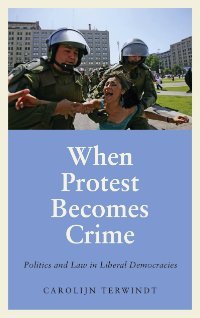
When Protest Becomes Crime

By Carolijn Terwindt.

Politics and Law in Liberal Democracies.How does protest become criminalised? Applying an anthropological perspective to political and legal conflicts, Carolijn Terwindt urges us to critically question the underlying interests and logic of prosecuting protesters. The book draws upon ethnographic research in Chile, Spain, and the United States to trace prosecutorial narratives in three protracted contentious episodes in liberal democracies. Terwindt examines the conflict between Chilean landowners and the indigenous Mapuche people, the Spanish state and the Basque independence movement, and the United States' criminalisation of 'eco-terrorists.' Exploring how patterns and mechanisms of prosecutorial narrative emerge through distinct political, social and democratic contexts, Terwindt shines a light on how prosecutorial narratives in each episode changed significantly over time. Challenging the law and justice system and warning against relying on criminal law to deal with socio-political conflicts, Terwindt's observations have implications for a wide range of actors and constituencies, including social movement activists, scholars, and prosecutors.

London: Pluto Press, 2020. 305p.

download
European Sourcebook of Crime and Criminal Justice Statistics – 2021

Edited by Marceli Aebi, et al..

Sixth Edition. This is the sixth edition of a data collection initiative that started in 1993 under the umbrella of the Council of Europe and has been continued since 2000 by an international group of experts. These experts also act as regional coordinators of a network of national correspondents whose contribution has been decisive in collecting and validating data on a variety of subjects from 42 countries. The Sourcebook is composed of six chapters. The first five cover the current main types of national crime and criminal justice statistics – police, prosecution, conviction, prison, and probation statistics – for the years 2011 to 2016, providing detailed analysis for 2015. The sixth chapter covers national victimization surveys, providing rates for the main indicators every five years from 1990 to 2015. As with every new edition of the Sourcebook, the group has tried to improve data quality as well as comparability and, where appropriate, increase the scope of data collection. This new edition will continue to promote comparative research throughout Europe and make European experiences and data available worldwide.

Gottinggen, GER: Göttingen University Press, 2021. 502p.

download
Everyday Crime, Criminal Justice and Gender in Early Modern Bologna

By Sanne Muurling.

Female protagonists are commonly overlooked in the history of crime; especially in early modern Italy, where women’s scope of action is often portrayed as heavily restricted. This book redresses the notion of Italian women’s passivity, arguing that women’s crimes were far too common to be viewed as an anomaly. Based on over two thousand criminal complaints and investigation dossiers, Sanne Muurling charts the multifaceted impact of gender on patterns of recorded crime in early modern Bologna. While various socioeconomic and legal mechanisms withdrew women from the criminal justice process, the casebooks also reveal that women – as criminal offenders and savvy litigants – had an active hand in keeping the wheels of the court spinning.

Leiden; Boston: Brill, 2021. 265p.

download
Macrocriminology and Freedom

By John Braithwaite.

How can power over others be transformed to ‘power with’? It is possible to transform many institutions to build societies with less predation and more freedom. These stretch from families and institutions of gender to the United Nations. Some societies, times and places have crime rates a hundred times higher than others. Some police forces kill at a hundred times the rate of others. Some criminal corporations kill thousands more than others. Micro variables fail to explain these patterns. Prevention principles for that challenge are macrocriminological.

Freedom is conceived in a republican way as non-domination. Tempering domination prevents crime; crime prevention reduces domination. Many believe a high crime rate is a price of freedom. Not Braithwaite. His principles of crime control are to build freedom, temper power, lift people from poverty and reduce all forms of domination. Freedom requires a more just normative order. It requires cascading of peace by social movements for non-violence and non-domination. Periods of war, domination and anomie cascade with long lags to elevated crime, violence, inter-generational self-violence and ecocide. Cybercrime today poses risks of anomic nuclear wars.

Braithwaite’s proposals refine some of criminology’s central theories and sharpen their relevance to all varieties of freedom. They can be reduced to one sentence. Strengthen freedom to prevent crime, prevent crime to strengthen freedom.

Canberra: Australian National University Press, 2022. 814p.

download
Transnational Organized Crime

Edited by Heinrich-Böll-Stiftung and Regine Schönenberg.

Analyses of a Global Challenge to Democracy. ”In June 2011, the Heinrich Böll Foundation hosted an international conference on transnational organized crime (TOC). It was the first time that the Foundation addressed the issue of transnational organized crime in such a comprehensive manner. The intention of this event was to raise awareness about the interdependency of international criminal structures, legal economic processes, and the respective political orders. A further aspect that was addressed was the interwovenness of drug, arms, human and organ trafficking, and money laundering.”

Creative Commons (2013) 309p.

download
Who Pays? Casino Gambling and Organized Crime

By Craig A. Zendzian.

Written by a former NYPD cop, this book gives a behind the scenes look at the hidden interests that lie behind casino gambling from Nevada to New Jersey. Provides a concise analysis of how politics, organized crime and special interests created one of the greatest gambling empires in the United States. CONTENTS: 1. Introduction, 2.Nevada and Earlier Gambling Movements in America, 3. The Bahamas and Casino Gambling, 4. Gambling Comes to New Jersey, 5. Let's Do Business: The Corporate Way That is, 6. Who Investigates Racketeers?, 7. Where Does It End?

NY. Harrow and Heston Publishers. 2012.

download
Sourcebook of Criminal Justice Statistics: Forever Edition
Behavioural drivers of corruption facilitating illegal wildlife trade: Problem analysis and state of the field review

By Claudia Baez Camargo and Gayle Burges.s

This Problem Analysis is a review of the efficacy and opportunities for using social norm and behaviour change (SNBC) approaches to combat illegal wildlife trade (IWT) and similar natural resource-related corruption. Behavioural science is a rich and expansive field that has received prominent coverage in recent years for the promise it offers as a foundational yet underutilised approach to achieving biodiversity conservation. Extensive literature shows how SNBC initiatives can help combat diverse corruption problems, although for those related to natural resource management the evidence for doing so is sparse. This report synthesises the available information and suggests the next steps to redress this current lack of evidence.

Basel, SWIT: Basel Institute on Governance , 2022. 61p.

download
State of the Apes Section 2

Arcus Foundation.

Killing, Capture, Trade and Conservation. The illegal trade in live apes, ape meat and body parts occurs across all ape range states and poses a significant and growing threat to the long-term survival of wild ape populations world- wide. What was once a purely subsistence and cultural activity, now encompasses a global multi-million-dollar trade run by sophisticated trans-boundary criminal networks. The chal- lenge lies in teasing apart the complex and interrelated factors that drive the ape trade, while implementing strategies that do not exacerbate inequality. This volume of State of the Apes brings together original research and analysis with topical case studies and emerging best practices, to further the ape conservation agenda around killing, capture and trade.

Cambridge (2021) 410 pages.

download
State of the Apes

Arcus Foundation.

Killing, Capture, Trade and Conservation. The illegal trade in live apes, ape meat and body parts occurs across all ape range states and poses a significant and growing threat to the long-term survival of wild ape populations world- wide. What was once a purely subsistence and cultural activity, now encompasses a global multi-million-dollar trade run by sophisticated trans-boundary criminal networks. The chal- lenge lies in teasing apart the complex and interrelated factors that drive the ape trade, while implementing strategies that do not exacerbate inequality. This volume of State of the Apes brings together original research and analysis with topical case studies and emerging best practices, to further the ape conservation agenda around killing, capture and trade.

Cambridge University Press. (2021) 410 pages.

download
Inside War. Understanding the Evolution of Organised Violence in the Global Era

By Fabio Armao.

The post-Cold War era was characterised by both the recurrence of state wars and the spread of forms of organised violence other than wars. Asymmetric warfare between alliances led by the USA and groups of insurgents, such as those witnessed in Afghanistan and Iraq, coexist alongside domestic conflicts, such as that of former Yugoslavia and, more recently, Libya and Syria; and still other conflicts involving gangs, mafias or narco-traffickers. The massive military-industrial complexes conceived in the context of the threat of nuclear Armageddon are still there of course, but they now coexist with irregular armies of insurgents carrying out massacres through the use of light weapons and improvised explosives devices. This book oppose the idea that this situation prefigures the return to an anarchical, pre-political condition, by assuming that new wars are rather the product of the blurring of the public-private divide, induced by the end of the Cold War, together with globalisation. As a consequence, also the internal and external factors are blurred; and ever more permeable and elusive is becoming even the border between war and crime. Inside War goes beyond a state-centered analysis and adopts an interdisciplinary and multilayered approach, and is intended to foster the dialogue among researchers from different fields. It places war at the core of analysis, assuming that the reality of war is what we make of it; and that the only insurmountable limit to our comprehension of war is our way of knowing and representing it. Fabio Armao teaches courses in Politics and Globalisation Processes, and Criminal Systems. He has been Visiting Professor at Cornell University, and co-convenor of the Standing Group on Organized Crime, European Consortium for Political Research. Founding member of T.wai (Torino World Affair Institute), he is also member of the Editorial Board of ‘Global Crime’. His research interests and publications focus on international wars and geopolitics, on violent non-state actors and transnational organised crime, and on urban security.

Warsaw, Poland: deGruyter, 2015. 224p.

download
Not Just in Transit: Drugs, the State and Society in West Africa

By West Africa Commission on Drugs.

After looking at the evidence, consulting experts from the region and around the world, and visiting some of the most affected countries and communities in West Africa, the Commissioners of the West Africa Commission on Drugs detail their conclusions in this report about how the problems of drug trafficking and consumption in the region should be tackled.

Geneva: WACD, 2014. 64p.

download
Blood Feuds

By M. J. L. Hardy.

And the Payment of Blood Money in The Middle East. The classic text on feuding, violence and the rules of engagement. “…traces the history of a distinctive legal institution in Arab society, that of settling of blood feuds and the payment of blood money following cases of violent death of physical injury.”

Beirut (1963) 101p.

download
Representing O.J.- Murder, Criminal Justice and Mass Culture

By Gregg Barak.

Th author takes a broad-gauged cultural studies approach to understanding the "trial of the century." A ground-breaking work on the cultural study of news reporting, entertainment, and the administration of criminal justice. This book defined the field in the emerging area of news-making criminology.

NY. Harrow and Heston Publishers. 2012. 382p.

download
Wildlife trade on e-commerce sites in China, with a focus on mammoth ivory: A Rapid Assessment

By Sarah Stoner and Jenny Feltham.

‘Wildlife trade on e-commerce sites in China, with a focus on mammoth ivory: A Rapid Assessment’, analysis of this research reveals that the majority of advertised wildlife products are legally permitted for sale. However, the prevalence of mammoth ivory found legally for sale raises concerns about perpetuating demand for elephant ivory products which is now illegal in China. Our research looked at e-commerce platforms like Alibaba and 1688, allowing us to conclude that measures taken by these platforms and by the Chinese government have helped curb online sales of illegal wildlife products. The research identified 4,297 advertisements of wildlife, parts and derivatives, in total, 637 (15%) advertisements were identified as referring to the sale of Protected species, while a minimum of 3,657 (85%) of the identified advertisements were classified as Not Protected and therefore are deemed to be legal. Items derived from mammoth ivory were the most common type of wildlife product for sale on these platforms.

The Hague: Wildlife Justice Commission, 2021. 35p.

download
Below the Surface: How Illegal, Unreported and Unregulated Fishing Threatens our Security

By Cathy Haenlein.

This paper argues that large-scale illegal, unreported and unregulated (IUU) fishing takes place on an organised, systematic scale across multiple jurisdictions, and must therefore be recognised as transnational organised crime. Such IUU fishing endangers food security, threatens livelihoods, undermines the rule of law and deprives states of revenues. It also intersects with other crimes, further amplifying the threat to security. Illegal, unreported and unregulated (IUU) fishing is conventionally treated by governments worldwide as the result of technical regulatory infringements. As such, it is often deemed a matter for industry regulators and dismissed as a trivial issue insofar as it relates to national security. This diagnosis is flawed. Certainly, IUU fishing is often small in scale and conducted by artisanal fishers out of ignorance of laws, or opportunism. Yet there is also evidence that much of today’s IUU fishing activity takes place on an organised, systematic scale across multiple jurisdictions. Testament to this are the volumes involved. Although numerous difficulties affect such calculations, global losses to IUU fishing have been estimated at some $10–23.5 billion annually – equivalent to 11–26 million tonnes of fish per year. The result is the plunder of the world’s oceans, threatening not only marine ecosystems, but also the security of human populations. Large-scale IUU fishing endangers food security, threatens livelihoods, undermines the rule of law and deprives states of revenues. It also intersects with other crimes, further amplifying the threat to security. Yet research on these security dimensions is limited and fragmented; our understanding of their dynamics remains partial. Policy and practical responses, meanwhile, remain ill-suited, failing to keep pace with the complexity of the threat posed.

London: Royal United Services Institute (RUSI), 2019. 56p.

download
Illegal Wildlife Trade and Illicit Finance in the UK

By Alexandria Reid and Cathy Haenlein.

The UK is a leading advocate of the need to ‘follow the money’ linked to illegal wildlife trade (IWT) on the international stage. Yet, to date, little focus has been placed on examining the UK’s domestic record in this area. This report is the first independent study to address the UK’s exposure and response to IWT-linked illicit finance, offering recommendations to bolster enforcement action. Based on an open-source literature review, analysis of government enforcement data, a focused ‘call for evidence’ and 40 semi-structured interviews, the report assesses the UK’s record in relation to the Financial Action Task Force’s (FATF) 2020 recommendation that countries assess their exposure to IWT-linked illicit finance; ensure legal powers exist to bring financial charges in relation to IWT offending; and undertake greater numbers of parallel financial investigations in IWT cases.

London: Royal United Services Institute (RUSI), 2022. 60p.

download