Open Access Publisher and Free Library
CRIME+CRIMINOLOGY.jpeg

CRIME

Violent-Non-Violent-Cyber-Global-Organized-Environmental-Policing-Crime Prevention-Victimization

Homelessness, Offending, Victimization, and Criminal Legal System Contact   

By Bill McCarthy and John Hagan

There is now a sizable literature on connections between homelessness, crime, and criminal legal system contact. We review studies on these relationships, focusing mostly on links between the adversity that often characterizes homelessness—the need for shelter, food, and income—and offending, victimization, and involvement with the criminal legal system. We concentrate on multivariate studies from the United States and Canada and consider research on youth and adults. We begin with a short discussion of some of the challenges of studying these relationships. We follow our review of research on homeless conditions with a summary of research that has used data from homeless samples to advance a broad array of explanations of crime; a collection that includes strain, routine activities and lifestyle exposure, differential association, social control, rational choice, life course, and criminal capital theories.

Annual Review of Criminology, Volume 7, Page 257 - 281

download
Desistance as an Intergenerational Process

By Christopher Wildeman and Robert J. Sampson

Nearly 35 years ago, Sampson and Laub popularized the concept of desistance from crime and isolated core factors that promote and inhibit this process. In this article, we introduce the concept of intergenerational desistance and provide guidance on measuring and explaining this process, encouraging researchers to think of the life-course of crime in terms of both individuals and generations. We first review research on the intergenerational transmission of family criminality and criminal justice contact, relying also on research outside of criminology to highlight how using broader conceptions of the family, including social parents, entire generations, and three (or more) generations could enliven this area. Bridging these literatures allows us to then introduce the concept of intergenerational desistance and elaborate on the concept of intergenerational escalation and demonstrate how they can be measured using data from the Project on Human Development in Chicago Neighborhoods (PHDCN). We close by developing a research agenda for considering intergenerational desistance and escalation in ways that enhance our understanding of how the life-course of crime, criminal justice contact, and other troubles in life (e.g., with alcohol, drugs, and mental health) progress through families.

Annual Review of Criminology, Volume 7, Page 85 - 104

download
Challenges and Prospects for Evidence-Informed Policy in Criminology

By Thomas G. Blomberg, Jennifer E. Copp, and Jillian J. Turanovic

The relevance of criminology to matters of public policy has been hotly debated throughout the history of the discipline. Yet time and again, we have borne witness to the consequences of harmful criminal justice practices that do little to reduce crime or improve the lives of our most vulnerable populations. Given the urgent need for evidence-informed responses to the problems that face our society, we argue here that criminologists can and should have a voice in the process. Accordingly, this review describes challenges and prospects for evidence-informed policymaking on matters of crime and justice. In terms of challenges, we review discourse on what constitutes evidence, issues with providing guidance under conditions of causal uncertainty, and practical constraints on evidence-informed policymaking. For prospects, we consider the important roles of institutional support, graduate training, and multiple translational strategies for the evidence-informed movement. Finally, we end with several considerations for advancing translational criminology through expanded promotion and tenure criteria, curricula revision, and prioritizing the organization of knowledge. More broadly, our goals are to stimulate disciplinary thinking regarding the ways in which criminology may play a more meaningful role in effectively confronting the ongoing challenges of crime in society.

Annual Review of Criminology, Volume 7, Page 143 - 162

download
 Hybrid Interpersonal Violence in Latin America: Patterns and Causes   

By Abigail Weitzman, Mónica Caudillo, and Eldad J. Levy

In this review, we argue that to understand patterns and causes of violence in contemporary Latin America, we must explicitly consider when violence takes on interpersonal qualities. We begin by reviewing prominent definitions and measurements of interpersonal violence. We then detail the proliferation of interlocking sources of regional insecurity, including gender-based violence, gangs, narcotrafficking, vigilantism, and political corruption. Throughout this description, we highlight when and how each source of insecurity can become interpersonal. Next, we outline mutually reinforcing macro and micro conditions underlying interpersonal violence in its many hybrid forms. To conclude, we call for more multifaceted conceptualizations of interpersonal violence that embrace the complexities of Latin American security situations and discuss the opportunities and challenges that lie ahead in this area.

Annual Review of Criminology, Volume 7, Page 163 - 186

download
Cultural Criminology: A Retrospective and Prospective Review

By Lynn S. Chancer

This review looks at the main ideas that have animated cultural criminology in the past while suggesting new directions the perspective might follow going forward. It discusses early definitions and subject matters; the historical contexts within which cultural criminology was initially welcomed; and cultural criminology's special emphasis on the importance of studying emotions as well as rationality to fully comprehend crime and criminality. Three older critiques of cultural criminology and one lesser known one are also outlined: theoretical vagueness; under-emphases on class, structural factors, and conjunctural analyses; insufficient attention to gender and intersectionality; and, a relatively less discussed concern, prioritizing symbolic interactionism rather than sometimes tapping Freudian psychosocial concepts when investigating matters of individual agency. I argue that cultural criminology distinctively recommends multidimensional analyses as called for by the complex character of crime itself. Finally, drawing on and in agreement with Jonathan Ilin's work, I suggest that cultural criminology should routinely consider three levels both theoretically and methodologically: the macro (structural); the meso (cultural); and the micro (individual). The review concludes with examples that, if taken up in future research, would further widen cultural criminological interests, associations, and commitments to multidimensionality.

Annual Review of Criminology, Volume 7, Page 129 - 142

Download
History, Linked Lives, Timing, and Agency: New Directions in Developmental and Life-Course Perspective on Gangs

 By David C. Pyrooz, John Leverso, Jose Antonio Sanchez, and James A. Densley

For more than three decades, developmental and life-course criminology has been a source of theoretical advancement, methodological innovation, and policy and practice guidance, bringing breadth and depth even to well-established areas of study, such as gangs. This review demonstrates how the developmental and life-course perspective on gangs can be further extended and better integrated within broader developments in criminology. Accordingly, we structure this review within the fourfold paradigm on human development that unites seemingly disparate areas in the study of gangs: (a) historical time and place, or the foregrounding of when and where you are; (b) linked lives, or the importance of dynamic multiplex relationships; (c) timing, or the age-grading of trajectories and transitions; and (d) human agency, or taking choice seriously. We conclude by outlining a vision that charts new directions to be addressed by the next generation of scholarship on gangs.

Annual Review of Criminology, Volume 7, Page 105 - 127

download
The Sixty-Year Trajectory of Homicide Clearance Rates: Toward a Better Understanding of the Great Decline

By Philip J. Cook and Ashley Mancik

In 1962, the FBI reported a national homicide clearance rate of 93%. That rate dropped 29 points by 1994. This Great Decline has been studied and accepted as a real phenomenon but remains mysterious, as does the period of relative stability that followed. The decline was shared across regions and all city sizes but differed greatly among categories defined by victim race and weapon type. Gun homicides with Black victims accounted for most of the decline. We review the evidence on several possible explanations for the national decline, including those pertaining to case mix, investigation resources, and citizen cooperation. Our preferred explanation includes an upward trend in the standard for arrest, with strong evidence that although clearance-by-arrest rates declined, the likelihood of conviction and prison sentence actually increased. That result has obvious implications for the history of policing practice and for the validity of the usual clearance rate as a police performance measure.

Annual Review of Criminology, Volume 7, Page 59 - 83

download
Group Threat and Social Control: Who, What, Where, and When

By Matt Vogel and Steven F. Messner

Group threat theory has stimulated an impressive number of studies over the course of the past several decades. Our review takes stock of this literature, focusing on core issues of concern to the criminological community. We begin by documenting the theoretical origins of group threat theory and discussing the early research informed by the theory. We then highlight the ways in which criminologists have built on and extended the early research by expanding the theory's scope, clarifying mechanisms, and addressing methodological issues. In our concluding remarks, we direct attention to the more consequential limitations of the work to date and offer suggestions about areas for fruitful growth in the future

Annual Review of Criminology, Volume 7, Page 39 - 58

download
Code of the Street 25 Years Later: Lasting Legacies, Empirical Status, and Future Directions

By Jamie J. Fader and Kenneth Sebastian León

This review, published on the twenty-fifth anniversary of the publication of Code of the Street (1999), considers the legacies of Elijah Anderson's groundbreaking analysis of the interactional rules for negotiating street violence within the context of racism and structural disadvantage in Philadelphia. Empirical testing has yielded substantial support for Code of the Street’s key arguments. In the process of assessing its generalizability, such scholarship has inadvertently flattened and decontextualized the theory by, for example, reducing it to attitudinal scales. We identify a more politically conscious analysis in the original text than it is generally credited with, which we use to argue that “code of the street” has outgrown its reductive categorization as a subcultural theory. We conclude that the pressing issue of urban gun violence makes now an ideal time to refresh the theory by resituating it within the contemporary structural and cultural landscape of urban violence, analyzing the social-ecological features that shape the normative underpinnings of interpersonal violence, and studying the prosocial and adaptive features of the code.

Annual Review of Criminology, Volume 7, Page 19 - 38

download
Global Study on Homicide 2023

By The United Nations Office on Drugs and Crime, Research and Trend Analysis Branch

Preventing and reducing homicide means sparing hundreds of thousands of lives lost to violence every year. To do that, we must understand the complex and highly diverse range of threats and phenomena that drive and intersect with such lethal violence – from interpersonal dynamics to organized crime and rule of law to climate change, poverty and inequality to demographics, and much more – and how they differ across national and regional contexts. This Global Study on Homicide is an effort to reveal and delve into the facts behind the violence, to try and identify notable trends and to inform policies and solutions. The Study shows that 2021 was an exceptionally lethal year, with an estimated 458,000 intentional homicides worldwide, averaging 52 killings every hour. The global homicide rate was at 5.8 for every 100,000 persons, a number that sadly reflects little progress in reducing lethal violence worldwide since the launch of the 2030 Agenda for Sustainable Development in 2015. The biggest share of the victims were killed with firearms, which accounted for 47 per cent of homicides committed with a known mechanism worldwide. That number rises to 75 per cent in the Americas, which has the highest homicide rate in the world, and where organized crime is responsible for at least half of all homicides. In different parts of the world, organized crime can lead to spikes in homicide, particularly as criminal groups compete for control. Organized crime has also had an impact on homicide rates in Europe. While the regional homicide rate has decreased over the last six years, there are signs of increased lethal violence connected to organized crime in various countries of the continent. Such organized crime-related killing – and all homicidal violence, in all parts of the world – is far more likely to be committed by, and against, men. Men account for 81 per cent of the victims of intentional homicide globally, and around 90 per cent of the suspects. Women, on the other hand, are more likely to be killed because of their gender, and more likely to lose their lives to violence at home. Women account for the victims in 54 per cent of killings in the home, and 66 per cent of intimate partner killings. Many people are also killed because of what they do, including human rights defenders, humanitarian workers, journalists, and environmental activists. The current global situation, characterized by growing conflicts and rule of law challenges, is fuelling such sociopolitical homicides, which in many cases happen with impunity. Given the broad and diverse factors driving lethal violence around the world, effective responses to homicide must cover a wide spectrum of context-specific interventions. Some interventions will be designed to reduce genderbased violence against women and girls, others will be geared towards reducing organized crime and gang violence, and others still may focus on firearm laws and regulations, vocational training to at-risk demographics, or mental health interventions. But all responses must share common threads, namely the need to be based on evidence, the need to prioritize prevention and address root causes, and the need to invest significantly. Investing in homicide prevention and responses is of particular priority in Africa, which this Global Study projects to be the most at-risk region over the coming decades, in large part due to its younger population, economic inequality levels, climate vulnerability, and weaker response capabilities. This study also highlights the significant limitations in the information available across regions, and the need to invest in better data collection. It is highly important to understand the types of homicide in any given context, whether family-related, gang-related, or any of the other identified typologies, yet more than a third of all detected homicides are classified as “unknown”. Similarly, four out of every ten killings of women and girls do not have information on the victim-perpetrator relationship, despite the prevalence of intimate partner killings against women and girls.

Vienna/New York: United Nations Office on Drugs and Crime; Research and Trend Analysis Branch, 2023. 155pp; December 2023

Download
Vanishing Sands: Losing Beaches to Mining

By Orrin H. Pilkey , Norma J. Longo , William J. Neal , Nelson G. Rangel-Buitrago , & 2 more

In a time of accelerating sea level rise and increasingly intensifying storms, the world’s sandy beaches and dunes have never been more crucial to protecting coastal environments. Yet, in order to meet the demands of large-scale construction projects, sand mining is stripping beaches and dunes, destroying environments, and exploiting labor in the process. The authors of Vanishing Sands track the devastating impact of legal and illegal sand mining over the past twenty years, ranging from Africa, Asia, and the Caribbean to South America and the eastern United States. They show how sand mining has reached crisis levels: beach, dune, and river ecosystems are in danger of being lost forever, while organized crime groups use deadly force to protect their illegal mining operations. Calling for immediate and widespread resistance to sand mining, the authors demonstrate that its cessation is paramount for saving not only beaches, dunes, and associated environments but also lives and tourism economies everywhere.

Durham, NC: Duke University Press, 2023. 265p.

Download
Envy, Poison, and Death: Women on Trial in Classical Athens

By: Esther Eidinow

At the heart of this book are some trials conducted in Athens in the fourth century BCE. In each case, the charges involved a combination of supernatural activities, including potion-brewing and cult activity; the defendants were all women. Because of the brevity of the ancient sources, and their lack of agreement, the precise charges are unclear; the reasons for taking these women to court, even condemning some of them to die, remain mysterious. This book takes the complexity and confusion of the evidence not as a riddle to be solved, but as revealing multiple social dynamics. It explores the changing factors—material, ideological, and psychological—that may have provoked these events. It focuses in particular on the dual role of envy (phthonos) and gossip as processes by which communities identified people and activities that were dangerous, and examines how and why those local, even individual, dynamics may have come to shape official civic decisions during a time of perceived hardship. At first sight so puzzling, these trials come to provide a vivid glimpse of the sociopolitical environment of Athens during the early to mid-fourth century BCE, including responses to changes in women’s status and behaviour, and attitudes to particular supernatural/religious activities within the city. This study reveals some of the characters, events, and local social processes that shaped an emergent concept of magic: it suggests that the legal boundary of acceptable behaviour was shifting, not only within the legal arena, but also with the active involvement of society beyond the courts.

Oxford, UK: Oxford University Press, 2015. 434p.

Download
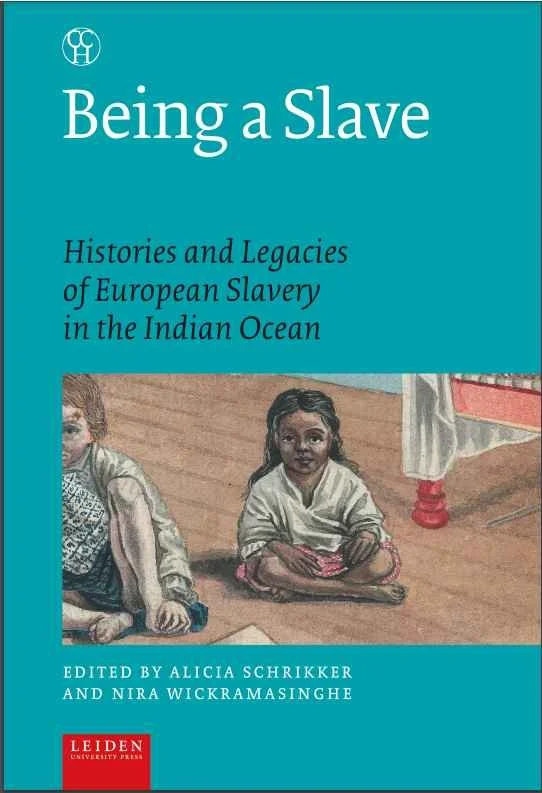
Being a Slave: Histories and Legacies of European Slavery in the Indian Ocean

By: Nira Wickramasinghe and Alicia Schrikker

"Being a Slave brings together scholars and writers who try to come to terms with the histories and legacies of European slavery in the Indian Ocean. This volume discusses a variety of qualitative data on the experience of being a slave in order to recover ordinary lives and, crucially, to place this experience in its Asian local context. Building on the rich scholarship on the slave trade, this volume offers a unique perspective that embraces the origin and afterlife of enslavement as well as the imaginaries and representations of slaves rather than the trade in slaves itself. From Cape to Batavia, slavery is understood as a diffuse practice. This approach helps unearth 18th and 19th century experiences of being a slave in the Indian Ocean world, but also sheds light on continuities in bondage into the present. Contributors face an often hostile archive to extract traces of the lived experience of slavery in court records, petitions or private letters. They also listen to local voices by prying unexplored primary sources such as oral histories, memories and objects."

[Leiden] : Leiden University Press, [2020]

Download
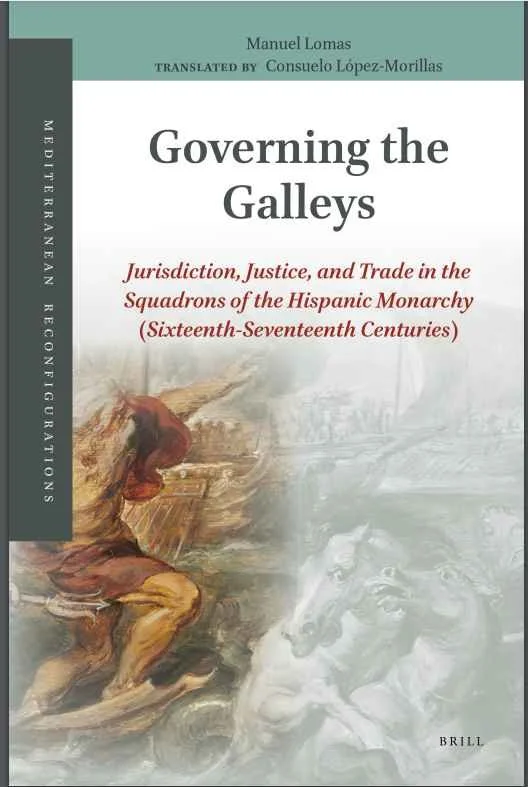
Governing the galeys: jurisdiction, justice, and trade in the squadrons of the hispanic monarchy (sixteenth-seventeenth centuries)

By: Manuel Lomas Cortés and Consuelo Lopez-Morillas

"The study of galleys is no longer confined to the history of events, navigation, or tactics. The classic paradigm has gradually been transformed: essentially descriptive- of types of ships and their components, or of the number and composition of their crews- it also served nationalist ends. The affirmation of an epic, glorious past could legitimate a nation's identity and its role in building the political, legal, and cultural reality of the modern-day Mediterranean"

Leiden ; Boston : Brill, 2020

Download
Tolerance: The Beacon of the Enlightenment

By: Caroline Warman

"Inspired by Voltaire's advice that a text needs to be concise to have real influence, this anthology contains fiery extracts by forty eighteenth-century authors, from the most famous philosophers of the age to those whose brilliant writings are less well-known. These passages are immensely diverse in style and topic, but all have in common a passionate commitment to equality, freedom, and tolerance. Each text resonates powerfully with the issues our world faces today. Tolerance was first published by the Société française d'étude du dix-huitième siècle (the French Society for Eighteenth-Century Studies) in the wake of the Charlie Hebdo assassinations in January 2015 as an act of solidarity and as a response to the surge of interest in Enlightenment values. With the support of the British Society for Eighteenth-Century Studies, it has now been translated by over 100 students and tutors of French at Oxford University."

Cambridge: Open Book Publishers, [2016]

Download
The Genocidal Gaze: From German Southwest Africa to the Third Reich

By Elizabeth R. Baer

The first genocide of the twentieth century, though not well known, was committed by Germans between 1904–1907 in the country we know today as Namibia, where they exterminated hundreds of Herero and Nama people and subjected the surviving indigenous men, women, and children to forced labor. The perception of Africans as subhuman—lacking any kind of civilization, history, or meaningful religion—and the resulting justification for the violence against them is what author Elizabeth R. Baer refers to as the “genocidal gaze,” an attitude that was later perpetuated by the Nazis. In The Genocidal Gaze: From German Southwest Africa to the Third Reich, Baer uses the metaphor of the gaze to trace linkages between the genocide of the Herero and Nama and that of the victims of the Holocaust. Significantly, Baer also considers the African gaze of resistance returned by the indigenous people and their leaders upon the German imperialists.

Detroit, MI: Wayne State University Press, 2017.

Download
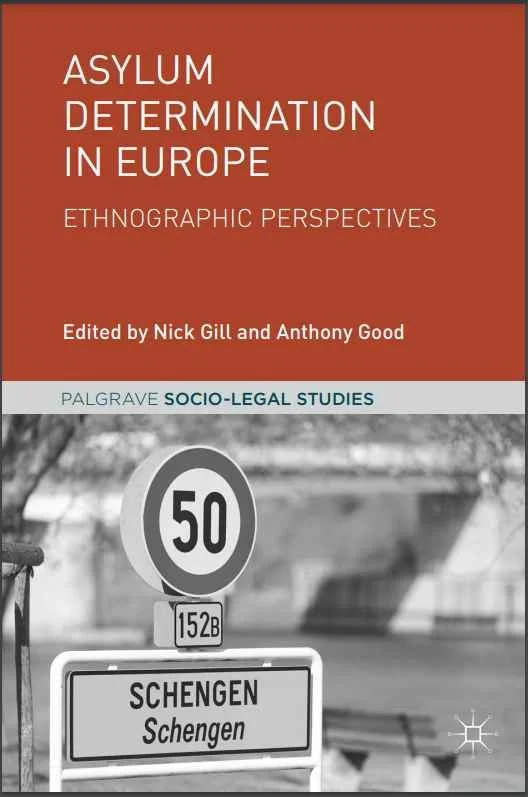
Asylum Determination in Europe: Ethnographic Perspectives

Edited by Nick Gill and Anthony Good

Drawing on new research material from ten European countries, Asylum Determination in Europe: Ethnographic Perspectives brings together a range of detailed accounts of the legal and bureaucratic processes by which asylum claims are decided. The book includes a legal overview of European asylum determination procedures, followed by sections on the diverse actors involved, the means by which they communicate, and the ways in which they make life-and-death decisions on a daily basis. It offers a contextually rich account that moves beyond doctrinal law to uncover the gaps and variances between formal policy and legislation, and law as actually practiced. The contributors employ a variety of disciplinary perspectives – sociological, anthropological, geographical, and linguistic – but are united in their use of an ethnographic methodological approach. Through this lens, the book captures the confusion, improvisation, inconsistency, complexity, and emotional turmoil inherent to the process of claiming asylum in Europe.

Basingstoke, UK: Palgrave Macmillan, 2019. 346p.

Download
Genocide and Mass Violence in Asia : An Introductory Reader

Edited by Frank Jacob

The series Genocide and Mass Violence in the Age of Extremes wants to provide an interdisciplinary forum for research on mass violence and genocide during the "short" 20th century. It will highlight the role of state and non-state actors, the perspectives of perpetrators, victims, and bystanders, and put violent events of the Age of Extremes in a larger political, social, and most important, cultural context. Anthologies and monographs will provide academic and non-academic readers with a deep insight into and a better understanding for the reasons, the acts, and the consequences or mass violence and genocide from a global perspective. The late Nobel Peace Prize laureate and former General Secretary of the UN Kofi Annan (1938–2018) emphasized in his Nobel Lecture in 2001 that the “crime of all crimes” often begins with a single murder. This violent act does not only physically destroy a human being, but, as French philosopher Michel Foucault (1926–1984) highlighted, power relations are established and new mechanisms of power are eventually installed or fortified within a society.2 The 20th century in particular witnessed countless attempts to restructure such power relations and, as a whole, the years between the First World War and the end of the Cold War, i.e. the period Eric Hobsbawm (1917–2012) called the “Age of Extremes,”3 were perhaps, as Kofi Annan correctly further remarked, “the deadliest in human history, devastated by innumerable conflicts, untold suffering, and unimaginable crimes.”4 The century was determined by imperial wars, two World Wars, the Cold War, and new wars at its end.5 These were often accompanied by forms of mass violence, i.e. mass killings or genocides.6 German historian Christian Gerlach consequently speaks of “extremely violent societies” that determined the course of this “Age of Extremes.” Gerlach describes these “extremely violent societies” as formations where various population groups become victims of massive physical violence, in which, acting together with organs of the state, diverse social groups participate for a multitude of reasons. Simply put, the occurrence and the thrust of mass violence depends on broad and diverse support, but this is based on a variety of motives and interests that cause violence to spread in different directions and varying intensities and forms

Berlin ; Boston : De Gruyter Oldenbourg, 2019, 220p.

Download
Bentham and the Arts

Edited by Anthony Julius, Malcolm Quinn, and Philip Schofield

Bentham and the Arts considers the sceptical challenge presented by Bentham’s hedonistic utilitarianism to the existence of the aesthetic, as represented in the oft-quoted statement that, ‘Prejudice apart, the game of push-pin is of equal value with the arts and sciences of music and poetry. If the game of push-pin furnish more pleasure, it is more valuable than either.’ This statement is one part of a complex set of arguments on culture, taste, and utility that Bentham pursued over his lifetime, in which sensations of pleasure and pain were opposed to aesthetic sensibility. Leading scholars from a variety of disciplines reflect on the implications of Bentham’s radical utilitarian approach for our understanding of the history and contemporary nature of art, literature, and aesthetics more generally.

Each contributor takes into account, from the perspective of their own discipline and expertise, the implications for their research area of the views contained in Bentham’s Of Sexual Irregularities, and other writings on Sexual Morality (published in the authoritative edition of The Collected Works of Jeremy Bentham in 2014) and ‘Not Paul, but Jesus: Volume III’ (published online by the Bentham Project in 2014). In these essays, Bentham puts forward the first philosophical defence of sexual liberty. In doing so, he questions the meaning of ‘taste’ and hence the received understanding of aesthetics more generally.

The contributors, moreover, challenge two of the major commonplaces in literary and historical studies of the nineteenth century: first that literature and utilitarianism represented alternative and incompatible views of the world; and second that Bentham’s utilitarianism was somehow emaciated in comparison with that of John Stuart Mill. The volume also includes new reflections on the auto-icon and the panopticon, the latter showing the utilitarian genealogy of a collaborative art and architecture project on the site of the Millbank Penitentiary.

The title ‘Bentham and the Arts’ itself challenges the commonly held notion that Bentham had nothing relevant to say on the subject of the Arts – the essays in this volume show that Bentham remains extraordinarily relevant, both in historical and philosophical terms.

London: UCL Press, 2020

Download
Selective Bribery: When Do Citizens Engage in Corruption?

By  Aaron Erlich, Jordan Gans-Morse, and Simeon Nichter

  Corruption often persists not only because public officials take bribes, but also because many citizens are willing to pay them. Yet even in countries with endemic corruption, few people always pay bribes. Why do citizens bribe in some situations but not in others? Integrating insights from both principal-agent and collective action approaches to the study of corruption, the authors develop an analytical framework for understanding selective bribery. Their framework reveals how citizens’ motivations, costs, and risks influence their willingness to engage in corruption. A conjoint experiment conducted in Ukraine in 2020 provides substantial corroboration for 10 of 11 pre-registered predictions. By shedding light on conditions that dampen citizens’ readiness to pay bribes, the researchers’ findings offer insights into the types of institutional reforms that may reduce corruption. 

Evanston, IL: Northwestern University, Institute for Policy Research, Working Paper-22-28, 2022. 55p

download