Open Access Free Library
Fiction+Mediajpg.jpg

FICTION and MEDIA

CRIME AND MEDIA — TWO PEAS IN A POD

Posts in Financial Crimes
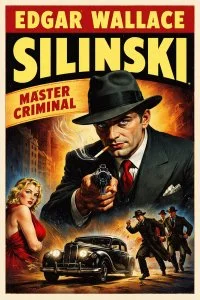
Silinski- Master Criminal

By Edgar Wallace. Introduction by Colin Heston

In Silinski – Master Criminal, Wallace constructs the titular character not as a creature of impulse, but as a precursor to the modern white-collar sociopath, defined by what can be termed "organized intellect." Unlike the flamboyant villains of Gothic tradition, Silinski’s power is derived from his mastery of systems—legal, financial, and social. He treats crime as a rigorous administrative discipline, employing a level of detachment that mirrors the very corporate structures he seeks to exploit. This intellectualization of villainy creates a chilling paradox: Silinski is most dangerous when he is at his most rational. Wallace highlights this by contrasting the frantic, reactive energy of the police with Silinski’s own glacial composure. His "mastery" is not merely a matter of successful theft, but of an informational asymmetry where he remains several steps ahead of the law by treating the world as a chessboard of predictable variables. Consequently, the tension of the novel arises not from the "whodunnit" element, but from the terrifying efficiency of a mind that has completely divorced morality from logic.
The conclusion of the narrative solidifies the "super-criminal" archetype not as a mere antagonist, but as a necessary mirror to the evolution of the modern state. By weaving together the threads of bureaucratic mastery and economic manipulation, Wallace posits that the transition of the criminal from the physical to the cerebral reflects a broader societal shift toward abstraction. Silinski represents the dark potential of the burgeoning 20th century: the realization that true power is no longer found in the strength of one's arm, but in the reach of one's influence over the systems that sustain public life. As the novel draws to its close, the resolution of the plot serves as a pyrrhic victory for the law, acknowledging that while one man may be stopped, the systemic vulnerabilities he exposed remain inherent to the fabric of global society. Ultimately, Silinski – Master Criminalstands as a definitive exploration of the modern villain, suggesting that in an age of complexity, the most profound threat to order is the very intelligence required to maintain it.

Read-Me.Org Inc. New York-Philadelphia-Australia. 2026. 188p.
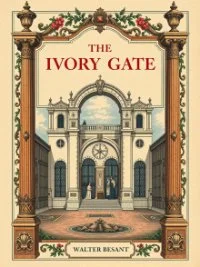
The Ivory Gate

By Walter Besant. Introduction by Colin Heston.

First published in 1893, The Ivory Gate stands among the late novels of Walter Besant, a writer whose career was defined by a sustained engagement with the moral, social, and psychological pressures of modern urban life. Appearing at the close of the Victorian era, the novel reflects both Besant’s long-standing commitment to social realism and his increasing interest in the interior life of the individual—especially the fragile boundary between aspiration and illusion.
The title itself announces the book’s governing metaphor. In classical and medieval literature, the “ivory gate” is the passage through which false dreams pass into waking life, as opposed to the gate of horn, from which true dreams emerge. Besant adapts this image to late-nineteenth-century conditions, using it to explore the seductive power of unrealized hopes, romantic delusions, and social fantasies that shape—and often distort—human conduct. The novel is less concerned with overt villainy than with self-deception: the quiet, persistent capacity of individuals to misread their circumstances and to substitute imagined futures for lived realities.
For modern readers, the novel remains strikingly relevant. Its exploration of illusion, self-fashioning, and the tension between inner fantasy and external reality resonates with contemporary concerns about identity, expectation, and social pressure. While its Victorian idiom and moral framework are firmly rooted in the nineteenth century, its psychological insights anticipate later treatments of self-deception and emotional displacement.
This new edition invites readers to reconsider The Ivory Gate not simply as a period piece, but as a thoughtful and understated meditation on the human tendency to live in dreams of our own making. In tracing the quiet tragedies that arise when those dreams eclipse judgment, Besant offers a work of enduring moral seriousness—one that illuminates both the anxieties of his age and the persistent vulnerabilities of our own.

A READ-ME.ORG CLASSIC REPRINT. New York-Philadelphia-Australia. 2025. 321p.

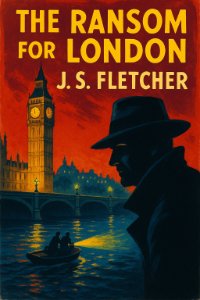
The Ransom for London

by J. S. Fletcher. Preface by Colin Heston.

The Ransom for London is one of the last full-length mysteries penned by J. S. Fletcher, the prolific master of British crime fiction whose work helped shape the modern detective novel. First published in 1937—just months before the golden age of classic mystery reached its twilight—this novel stands as a testament to Fletcher’s enduring gifts: intricate plots, bristling suspense, and a keen sense of how crime reveals the hidden tensions of society.

This edition invites readers to rediscover a late gem from a writer whose contributions to the detective genre paved the way for many who followed. With The Ransom for London, Fletcher delivers a fast-moving, atmospheric tale that demonstrates his continuing relevance, his wit, and his unmatched instinct for suspense.

Step into London on the brink—into a story built on riddles, danger, and the high cost of holding a city’s fate in the balance. The ransom has been demanded. Whether the truth is paid in gold or courage is for you to discover.

Read-Me.Org Inc. New York-Philadelphia-Australia. 2025. p.229.