Open Access Publisher and Free Library
Fiction+Mediajpg.jpg

FICTION and MEDIA

CRIME AND MEDIA — TWO PEAS IN A POD

Posts in culture
Death of An Old Goat

By Robert Barnard

“The perfect gem, one you wouldn’t change
a word of
Los Angeles Times

Professor Belville-Smith had bored university au­diences in England with the same lecture for fifty years. Now he was crossing the Australian continent, doing precisely the same. Never before had the reaction been so extreme, however; for shortly after an undistin­guished appearance at Drummondale University, the doddering old professor is found brutally murdered. As Police Inspector Royle (who had never actually had to solve a crime before) probes the possible motives of the motley crew of academics who drink their way through the dreary days at Drummondale and as he investigates the bizarre behavior of some worthy lo­cals, a hilarious, highly satirical portrait of life down under emerges!’ —St. Louis PbstHDispatch.

London Collins. 1977. 190p.

Read
Bridge of Clay

By Markus Zusak

The Dunbar boys bring each other up in a house run by their own rules a family of ramshackled tragedy their mother is dead their father has fled they love and fight and learn to reckon with the adult world. It is Clay, the quiet one, who will build a bridge; for his family, for his past, for his sins. He builds a bridge to transcend humanness. To survive A miracle and nothing less. Markus Zusak makes his long-awaited return with a profoundly heartfelt and inventive novel about a family held together by stories, and a young life caught in the current: a hoy in search of greatness, as a cure for a painful past. ‘Brilliant and hugely ambitious...the kind of book that can be life changing.” The New York Times. “‘Unsettling, thought-provoking, life affirming, triumphant and tragic, this is a novel of breathtaking scope, masterfully told.” Guardian. ‘Zusak’s novel is a highwire act of inventiveness and emotional suppleness’ The Australian.

Australia. Picador Macmillan. 2018. 581p.

read
Imperium

By Robert Harris

From the cover: “Ancient Rome - ‘a city of glory built on a river of filth teems with ambitious and ruthless men. None is more  brilliant than Marcus Cicero. A rising young lawyer, backed by a shrewd wife, he decides to gamble everything on one of the most dramatic courtroom battles of all time. Win it, and he could win control of Rome itself. Lose it, and he is finished forever. Internationally acclaimed for its storytelling power and historical accuracy, Robert Harris’s new novel is an epic account of the timeless struggle for power and the sudden disintegration of society.”

London.. Random House. 2006. 495p.

read
Getting Even

By Woody Allen

From the cover. In Getting Even Woody Allen revenges himself upon such significant subjects as death, obe­sity, organized crime, the invention of the sandwich, adult education, laundry lists of famous people, and Latin American revolu­tionaries. Here is Woody Allen at his philo­sophical deepest: •    "... Death is an acquired trait.'' •    "If man were immortal, do you realize what his meat bills would be?" •    "Why pork was proscribed by Hebraic law is still unclear, and some scholars believe that the Torah merely suggested not eating pork at certain restaurants." •    "Eternal Nothingness is OK if you're dressed for it." •    "My mind can never know my body although it has become quite friendly with my legs."

NY. Random House. 1978. 124p.

read
The First Circle

By Alexander Solzhenitsyn

Translated from the Russian by Michael Guybon. “*The First Circle asks to be compared to Dostoevsky. Solzhenitsyn is in the great story-telling tradition. When he introduces a character, he fills in the complete background. His portrait of a Soviet prosecutor and his family circle is unforgettable. So are chapters devoted to the brooding Stalin. A future generation of Russians will be able to come to terms with their history through books like Dr. Zhivago and The First Circle.'“ David Pryce-Jones, Financial Times.

London Collins. Fontana Books. 1970. 680P.

read
File No. 113

By Emile Gaboriau

Illustrated by W. Glackens. From Chapter 1: In the Paris evening papers of Tuesday, February 28, 1866, under the head of Local Items, the following announcement appeared: " A daring robbery, committed against one of our most eminent bankers, M. André Fauvel, caused great excitement this morning throughout the neighborhood of Rue de Provence. " The thieves, who were as skilful as they were bold, succeeded in making an entrance to the bank, in forcing the lock of a safe that has heretofore been considered impregnable, and in possessing themselves of the enormous sum of three hundred and fifty thousand francs in bank-notes…”

NY. Charles Scribner’s Sons. 1903. 540p.

download
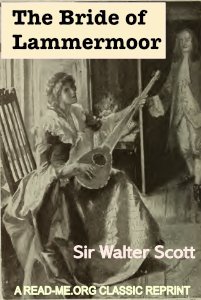
The Bride of Lammermoor

By Sir Walter Scott.

“The Author, on a former occasion, declined giving the real source from which he drew the tragic subject of this history, because, though occurring at a distant period, it might possibly be unpleasing to the feelings of the descendants of the parties. But as he finds an account of the circumstances given in the Notes to Law's Memorials by his ingenious friend Charles Kirkpatrick Sharpe, Esq., and also indicated in his reprint of the Rev. Mr. Symson's poems, appended to the Description of Galloway as the original of the Bride of Lammermoor, the Author feels himself now at liberty to tell the tale as he had it from connections of his own, who lived very near the period, and were closely related to the family of the Bride.

London: Collins Clear -Type Press, 1900. 416p.

download
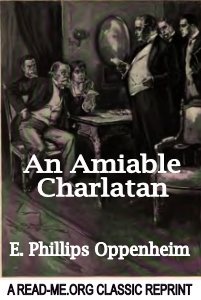
An Amiable Charlatan

By E. Phillips Oppenheim.

“An Englishman is enjoying his dinner at Stephano's, at which he is a regular diner. A man enters quickly, sits at his table, starts eating his food, and hands him a packet underneath the table! So begins Paul Walmsley's acquaintance - and adventures - with American adventurer Joseph H. Parker and his lovely daughter, Eve.”

Boston: Little, Brown and Co., 1916.341p.

download
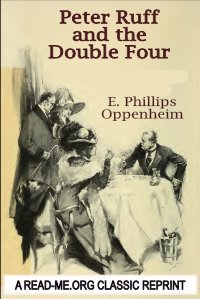
Peter Ruff and the Double Four

By E. Phillips Oppenheim.

“… Opposite him, at the other end of the table, sat his wife, Mrs. Barnes, a somewhat voluminous lady with a high colour, a black satin frock, and many ornaments. On her left the son of the house, eighteen years old, of moderate stature, somewhat pimply, with the fashion of the moment reflected in his pink tie with white spots, drawn through a gold ring, and curving outwards to seek obscurity underneath a dazzling waistcoat.”

Boston: Little, Brown, 1912. 424p.

download
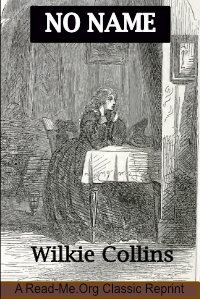
No Name

By Wilkie Collins.

This book is a 19th-century novel by the master of sensation fiction, Wilkie Collins. A country gentleman is killed in an accident and his wife dies shortly after him. The blow is double for their daughters, who discover that they were born before their parents were married. Their sudden illegitimacy robs them of their inheritance and their accustomed place in society.

New York: Harper and Brothers, 1873. 622p.

download part 1
download part 2
The Dead Secret

By Wilkie Collins. .

A Novel . Two of the characters which appear in these pages -- "Rosamond," and "Uncle Joseph" -- had the good fortune to find friends everywhere who took a hearty liking to them. A more elaborately drawn personage in the story -- "Sarah Leeson" -- was, I think, less generally understood. The idea of tracing, in this character, the influence of a heavy responsibility on a naturally timid woman, whose mind was neither strong enough to bear it, nor bold enough to drop it altogether, was a favorite idea with me, at the time, and is so much a favorite still, that I privately give "Sarah Leeson" the place of honor in the little portrait-gallery which my story contains.

London: Bradbury and Evans, 1857. 322p.

download part 1
download part 2
download part 3
The Ball And The Cross

By G.K. Chesterton.

When two men decide to fight for their respective beliefs, they discover to their astonishment that an unbelieving world won’t let them, and they find themselves partners and fugitives from the law in this steampunk satire. Penned by G.K. Chesterton in 1909, this whimsical and biting novel eerily foreshadows a world in which “tolerance” is the only god and all those who believe ideas are worth dying for are forced to stand together to defend freedom of speech and belief.

New York: J. Lane, 1909. 436p.

download
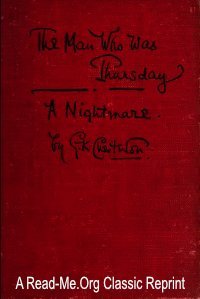
The Man Who was Thursday: A Nightmare

By G.K. Chesterton.

It is very difficult to classify The Man Who Was Thursday. It is possible to say that it is a gripping adventure story of murderous criminals and brilliant policemen; but it was to be expected that the author of the Father Brown stories should tell a detective story like no-one else. On this level, therefore, The Man Who Was Thursday succeeds superbly; if nothing else, it is a magnificent tour-de-force of suspense-writing. However, the reader will soon discover that it is much more than that. Carried along on the boisterous rush of the narrative by Chesterton’s wonderful high-spirited style, he will soon see that he is being carried into much deeper waters than he had planned on; and the totally unforeseeable denouement will prove for the modern reader, as it has for thousands of others since 1908 when the book was first published, an inevitable and moving experience, as the investigators finally discover who Sunday is.

Bristol: J.W. Arrowsmith, 1908. 329p.

download
Moll Flanders

By Daniel Defoe.

Moll Flanders follows the life of its eponymous heroine through its many vicissitudes, which include her early seduction, careers in crime and prostitution, conviction for theft and transportation to the plantations of Virginia, and her ultimate redemption and prosperity in the new World. “When a woman debauched from her youth, nay, even being the offspring of debauchery and vice, comes to give an account of all her vicious practices, and even to descend to the particular occasions and circumstances by which she ran through in threescore years, an author must be hard put to it wrap it up so clean as not to give room, especially for vicious readers, to turn it to his disadvantage.”

NY. Harrow and Heston Classic Reprint. (1772) 502 pages.

download
Hard Times

By Charles Dickens.

This is Dickens’ tenth novel, published without illustrations, in Household Word, his weekly journal. Dickens continues to fly the banner of social reform, touching on themes of industrialization, education, and utilitarianism in the sweeping Industrial Revolution of the 1850's.

NY. Harrow and Heston Classic Reprint. (1854) 302 pages.

download
Great Expectations

By Charles Dickens.

This was Charles Dickens' thirteenth novel published in Dickens' weekly journal All the Year Round without illustrations. An American edition was also published in Harper's Weekly. The novel contains a strong autobiographical element, though not as openly as in David Copperfield. Dickens reread Copperfield before beginning Great Expectations to avoid unintentional repetition. It is generally acclaimed as his best work.

NY. Harrow and Heston Classic Reprint. (186-1861) 521 pages.

download
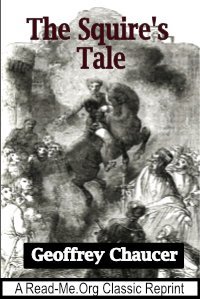
The Squire's Tale

By Geoffrey Chaucer.

Edited with an introduction by A. W. Pollard. This story from Chaucer’s Canterbury Tales was the first serious attempt to tell the story of the great Genghis Khan, leader of the Moguls, who conquered peoples and lands of Asia and South East Asia, Russia and the fringes of Europe, and by his hand spread and distributed wealth, commerce and technology throughout the peoples and lands he conquered. All of this much to the benefit of the peoples of Europe that he did not conquer, but who nevertheless absorbed the amazing commercial production and distribution of goods and the important elements of nascent science encouraged and exported by the Great Khan. None of these achievements were acknowledged by the West, instead calling the Moguls barbarians and savages.

London: Macmillan (1899) 76p.

download