
Open Access Publisher and Free Library
Fiction+Mediajpg.jpg

FICTION and MEDIA

CRIME AND MEDIA — TWO PEAS IN A POD

Posts in culture
Daniel Deronda

By George Eliot

Step into the richly woven tapestry of Victorian society with George Eliot's final and most ambitious novel, "Daniel Deronda." Published in 1876, this literary gem explores profound themes of identity, cultural heritage, and moral growth, making it a timeless classic that continues to resonate with readers today.

"Daniel Deronda" masterfully intertwines the lives of two compelling characters: Daniel Deronda and Gwendolen Harleth. Daniel, a compassionate and introspective young man of uncertain parentage, embarks on a journey of self-discovery that leads him to embrace his Jewish heritage. His quest for identity and purpose is both poignant and inspiring, reflecting the universal human search for belonging.

Gwendolen Harleth, on the other hand, is a beautiful but self-centered woman whose life takes a dramatic turn when she marries the cruel and manipulative Henleigh Grandcourt. Her journey from vanity and ambition to moral awakening and redemption is a powerful narrative of personal growth and transformation. Through Gwendolen's struggles, Eliot critiques the societal constraints placed on women and explores the possibilities of moral and personal redemption.

Eliot's writing is renowned for its deep psychological insight and realism, and "Daniel Deronda" is no exception. The novel is rich with symbolism that adds depth to its themes and character development. Water, for instance, symbolizes cleansing and rebirth, particularly in Gwendolen's storyline. Jewelry represents power, control, and submission, while stage performance reflects the theme of appearance versus reality.

"Daniel Deronda" is not just a story of individual journeys; it is also a critique of Victorian society. Eliot highlights the limitations and hypocrisies of societal conventions, particularly those related to gender and class. Her characters frequently struggle against these constraints, seeking to find their own paths and to act according to their moral convictions rather than societal expectations.

As George Eliot's final novel, "Daniel Deronda" represents the culmination of her literary career. Its innovative approach to character development and engagement with cultural and social issues have influenced countless writers and continue to inspire readers. Eliot's emphasis on empathy, integrity, and the importance of understanding individual circumstances offers valuable insights into the complexities of human behavior and ethical decision-making.

First published in 1876. William Blackwood and Sons in London released the book in eight parts from February to September of that year. This novel was the last one Eliot completed and is notable for its exploration of Victorian society and its sympathetic portrayal of Jewish proto-Zionist ideas. 591p.
download free
kindle $2.99 paperback $15.99
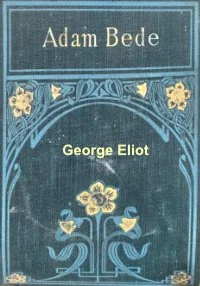
Adam Bede

By George Eliot

"Adam Bede," written by George Eliot, is a novel set in the rural community of Hayslope in 1799. The story revolves around Adam Bede, a diligent and morally upright carpenter, who is in love with Hetty Sorrel, a beautiful but superficial dairymaid. Hetty, however, is infatuated with Captain Arthur Donnithorne, the charming but irresponsible grandson of the local squire. The novel explores the complexities of their relationships and the repercussions of their actions.

Adam Bede is characterized by his integrity and strong moral principles, while Hetty's beauty and naivety lead her into a tragic situation. Arthur Donnithorne's seduction of Hetty sets off a chain of events that profoundly affect all the characters involved. Dinah Morris, a Methodist preacher and Hetty's cousin, provides spiritual and moral guidance throughout the story.

The novel is notable for its detailed depiction of rural life, rich character development, and exploration of social and ethical issues. George Eliot's writing is praised for its realism and psychological depth, making "Adam Bede" a significant work in Victorian literature. The narrative delves into themes of love, morality, and social change, offering a poignant and insightful look at human nature and society.

Adam Bede was first published in three volumes on 1 February 1859 by William Blackwood and Sons in Edinburgh and London. The novel was an immediate success, going through multiple editions within the first year. A second edition was released in March 1859, followed by a one-volume edition in 1862. The book was published anonymously at first, but George Eliot’s identity was soon revealed, further increasing public interest in the novel. This version was published by Read-Me.Org. 2025. 427p.

download free

BUY ON AMAZON. ALL PROCEEDS GO DIRECTLY TO READ-ME.ORG

KINDLE $1.99 PAPERBACK $15.99
The Agony and the Ecstasy: A Biographical Novel of Michelangelo

USED BOOK. MAY CONTAIN MARK-UP

By Irving Stone

FROM THE COVER: “Set in the days of the deadly Borgias, the warring popes and the mighty Medicis, this is the truly great novel of Michelangelo, his lifelong friendships, his passionate loves and his unquenchable genius. ….

"Irving Stone has painted the portrait of a supreme craftsman, one of the most versatile artists of all time, and he has also laid before us a cyclorama of one of the world's most astounding ages." New York Times

NY. Fontana books. 1970. 786p.

READ
Susan Pulls The Strings

USED BOOK. MAY CONTAIN MARK-UP

By Jane Shaw

FROM THE COVER FLAP: “It was Imposible for Susan, when she knew someone was needing help, not to do something about it. This incurable habit of hers led her into m any awkward situations when she was staying over Christmas with her cousins, the Carmichaels. Charlotte, Midge and Bill all assured her that they would really prefer her t o stop trying to put everything right, but Susan persisted, and proved, in an exciting climax, that her interference wasmore than justified. Jane Shaw's lively sense of humour makes this a very engaging tale; from Susan herself to the " Plum * and Chang the cat, the characters are real, and your interest in them will be kept and held from the first to the last page…”

London. Children’s Press. 1950. 188p.

read
The Lost Stradivarius

By John Meade Falkner

Edited with an Introduction by Edward Wilson who notes: “The detailed apparatus to this edition has been demanded not only by Time, which has altered not just the senses of words but a whole cultural hinterland beyond a modern reader's recognition, but by Falkner himself, who delighted in sowing his novel with literary and antiquarian allusions. Indeed, a character, Mr Gaskell, in The Lost Stradivarius itself, when reading an eighteenth-century diary in pursuit of highly sensational matter cannot resist telling us that "the minute details given were often of high antiquarian interest'“

London. Oxford University Press. 1954. (1895). USED BOOK. CONTAINS MARK-UP.

read
The First Man of Rome

By Colleen McCullough

FROM THE COVER: “The publication thirteen years ago of Birds was a landmark event, a remarkable achievement now surpassed by a novel in which storytelling and scholarship combine to bring to life one of history's most important epochs. The First Man in Rome sweeps the reader into an irresistibly vivid world of political intrigue, danger, wars, assassinations, devas- tating upheaval, intricately passionate family alliances and rivalries - and undeniable reality. It is New Year's Day of 110 B.C., and two of the latest in a long line of noble Roman mediocrities are assuming the coveted mantle of consul. But among those watching are two very different men, men whose vision, ruthlessness, and courage will force shattering change upon the Roman Republic, strug- gling to cope with mushrooming territorial possessions and the growing resentment of the Italians it treats as third-class citizens. One of these two men is Marius, a wealthy rustic barred by his low birth from grasping his prophesied destiny, to become the First Man in Rome- he who stands above all his peers through sheer excellence. The second is (continued on back flap)…..”

NY. William Morrow and Company, Inc. 1960. 897p. USED BOOK CONTAINS MARK-UP

read
Just So Stories For Little Children

By Rudyard Kipling

FROM THE COVER: "Once upon a Time O Best Beloved," and so begins one of the best loved and most respected collections of stories for children, Rudyard Kipling's Just So Stories. This edition includes the author's own unique illustrations. Kipling's bold linear fantasies, in the style of art nouveau, as well as his attention to realistic detail, create an intriguing and strikingly different interpretation. The first tale, "How the Whale Got Its Throat," a tall tale of a big whale, sets the tone for these wild "venturesome adventures," to use Kipling's words. One glance at the table of contents will reveal that the Just So Stories appeal most to inquisitive and fantasy-loving minds. These are stories which tell us of the Time of Very Beginnings;…”

London. Crown Publishers.. 1978. Originally published 1937. 211p. USED BOOK

download
Biggles Foreign Legionnaire

By Cape. W. E. Johns

Another in the Biggles series glorifying war and vilifying enemies. . “In which Air Detective-Inspector Bigglesworth takes leave from the Special Air Section Scotland Yard to join the Foreign Legion, and has an adventure involving an old friend, an even older enemy and a near fatal trip to the desolate Valley of the Tartars in Kurdistan.”

London. Hodder and Stoughton. 1954. 198p. USED BOOOK

download
The Bull Patrol

By Arthur Catherall

Classic how-to book for Boy Scouts conveying all the skills needed for leadership, survival and success in war. Inspired, of course, by the writings of Baden Powell who cut his war teething the Boer war. FROM THE COVER: “ They were an odd gang, Af,l Joe, Dick, and Gyp; but once they got the idea of Scouting they were the staunchest friends that anyone could ask for. Their Patrol Leader set a high standard of courage and endurance, and the others one by one played a loyal part in the many daring rescues and thrilling episodes that were to follow- adventures which will be the envy of every Scout.

London. Butterworth Press. 1949. 120p. USED BOOK

download
Biggles Cuts it Fine

By Captain W. E. Johns

The classic boys’ books trumpeting the attraction and excitement of war, especially World War 2.

FROM CHAPTER 1: ““Air-Commodore Raymond, Chief of the Air Section of Scotland Yard, greeted his operational staff from behind a paper-littered desk, as, in obedience to his invitation, they filed into his office.

" Pull up some chairs," he requested. "This is only in the nature of a conference, and, strangely enough, for once there's nothing urgent about it. Help yourselves to cigarettes-we may be some time." He pushed the box forward.

London. Holder and Stoughton. 1954. 162p. USED BOOK

download
Ficciones

By Jorge Luis Borges

From the cover: ". unquestionably the most brilliant South American writing today. . .one of the genuine prose talents of our pe- riod. Written with a classical economy of means and under the control of a mind of wide culture and deep sensitivity, his stories will continue echoing in the minds of his readers as do those of Franz Kafka." -Herald Tribune Books

NY. Grove Press. 1962. 164p. USED BOOK. CONTAINS MARK-UP.

download
The History Man

By Malcolm Bradbury

FROM THE COVER: Howard Kirk is the trendiest ofradical tutors at a fashionable campus university. Timid Vice- Chancellors pale before his threats of disruption; reactionary colleagues are crushed beneath his merciless Marxist logic; women are drawn by his progressive promiscuity. A self-appointed revolutionary hero, Howard always comes out on top. And Malcolm Bradbury dissects him in this savagely funny novel that has been universally acclaimed as a comic masterpiece. 'Malcolm Bradbury has come up with a novel that simply must be read' — THE TIMES.

London Arrow Books. 1975. 233p. USED BOOK. COMNGAINS MARK-UP

read
Labyrinths: Selected Stories And Other Writings

By Jorge Luis Borges. Edited by Donald A. Yates and James E. Irby

FROM THE PREFACE: Jorge Luis Borges is a great writer who has composed only little essays or short narratives. Yet they suffice for us to call him great because of their wonderful intelligence, their wealth of invention and their tight, almost mathematical, style. Argentine by birth and temperament, but nurtured on univer- sal literature, Borges has no spiritual homeland. He creates, outside time and space, imaginary and symbolic worlds. It is a sign of his importance that, in placing him, only strange and perfect works can be called to mind. He is akin to Kafka, Poe, sometimes to Henry James and Wells, always to Valéry by the abrupt projection of his paradoxes in what has been called 'his private metaphysics'.

London. Penguin. 1964. 276p. USED BOOK. CONTAINS MARK-UP

read
Prime Minister

By Anthony Trollope

From Wikipedia: When neither the Whigs nor the Tories are able to form a government on their own, a fragile compromise coalition government is formed, with Plantagenet Palliser, the wealthy and hard-working Duke of Omnium, installed as Prime Minister of the United Kingdom. The Duchess, formerly Lady Glencora Palliser, attempts to support her husband by hosting lavish parties at Gatherum Castle in Barsetshire, the family's largest country house, barely used until now. Palliser, initially unsure that he is fit to lead, grows to enjoy his high office, but becomes increasingly distressed when his government proves to be too weak and divided to accomplish anything. His own inflexible nature does not help.

London. Chapman & Hall. 1876. 807p.

download
Barchester Towers

By Anthony Trollope

Barchester Towers is a novel by English author Anthony Trollope published by Longmans in 1857. It is the second book in the Chronicles of Barsetshire series, preceded by The Warden and followed by Doctor Thorne. Among other things it satirises the antipathy in the Church of England between High Church and Evangelicaladherents. Trollope began writing this book in 1855. He wrote constantly and made himself a writing-desk so he could continue writing while travelling by train. "Pray know that when a man begins writing a book he never gives over", he wrote in a letter during this period. "The evil with which he is beset is as inveterate as drinking – as exciting as gambling". In his autobiography, Trollope observed "In the writing of Barchester Towers I took great delight. The bishop and Mrs. Proudie were very real to me, as were also the troubles of the archdeacon and the loves of Mr. Slope". When he submitted his finished work, his publisher, William Longman, initially turned it down, finding much of it to be full of "vulgarity and exaggeration".[1

London. Longmans. 1857. 559p.

download
The Prince and the Pauper

By Mark Twain

From Wikipedia: The Prince and the Pauper is a novel by American author Mark Twain. It was first published in 1881 in Canada, before its 1882 publication in the United States.[1] The novel represents Twain's first attempt at historical fiction. Set in 1547, it tells the story of two young boys who were born on the same day and are identical in appearance: Tom Canty, a pauper who lives with his abusive, alcoholic father in Offal Court off Pudding Lane in London, and Edward VI of England, son of Henry VIII of England. Plot: Tom Canty, the youngest son of a very poor family living in Offal Court located in London, has been abused by his father and grandmother, but is encouraged by the local priest, who taught him to read and write. Loitering around the palace gates one day, he sees Edward Tudor, the Prince of Wales. Coming too close in his intense excitement, Tom is caught and nearly beaten by the Royal Guards. However, Edward stops them and invites Tom into his palace chamber. There, the two boys get to know one another and are fascinated by each other's life. They have an uncanny resemblance to each other and learn they were even born on the same day, so they decide to swap clothes “temporarily". The Prince hides an item, which the reader later learns……

download
Metamorphosis

By Franz Kafka. Translated by David Wyllie

From Wikipedia: Metamorphosis (German: Die Verwandlung) is a novella written by Franz Kafka which was first published in 1915. One of Kafka's best-known works, Metamorphosis tells the story of salesman Gregor Samsa, who wakes one morning to find himself inexplicably transformed into a huge insect (German: ungeheueres Ungeziefer, lit. "monstrousvermin") and subsequently struggles to adjust to this new condition. The novella has been widely discussed among literary critics, with differing interpretations being offered. In popular culture and adaptations of the novella, the insect is commonly depicted as a cockroach.

With a length of about 70 printed pages over three chapters, it is the longest of the stories Kafka considered complete and published during his lifetime. The text was first published in 1915 in the October issue of the journal Die weißen Blätter under the editorship of René Schickele. The first edition in book form appeared in December 1915 in the series Der jüngste Tag, edited by Kurt Wolff.[1]


Leipzig. Kurt Wolff Verlag . 1915. 49p. CONTAINS MARK-UP

download
Franz Kafka: The Complete Stories

By Franz Kafka. : Willa and Edwin Muir, Tania and James Stern

This is a 1971 collection of all Kafka’s finished works. It contains all the amazing, weird and wonderful unsettling stories from Metamorphisis to In the Penal Colony.From Wikipedia: “In 1912, Kafka wrote Die Verwandlung (The Metamorphosis, or The Transformation),[150] published in 1915 in Leipzig. The story begins with a travelling salesman waking to find himself transformed into an ungeheures Ungeziefer, a monstrous vermin, Ungezieferbeing a general term for unwanted and unclean pests, especially insects. Critics regard the work as one of the seminal works of fiction of the 20th century.[151][152][153] The story "In der Strafkolonie" ("In the Penal Colony"), dealing with an elaborate torture and execution device, was written in October 1914,[82] revised in 1918, and published in Leipzig during October 1919. The story "Ein Hungerkünstler" ("A Hunger Artist"), published in the periodical Die neue Rundschau in 1924, describes a victimized protagonist who experiences a decline in the appreciation of his strange craft of starving himself for extended periods.[154] His last story, "Josefine, die Sängerin oder Das Volk der Mäuse" ("Josephine the Singer, or the Mouse Folk"), also deals with the relationship between an artist and his audience.[155]

NY. Schoken. 1971. 487p. CONTAINS MARK-UP

DOWNLOAD