Open Access Free Library
Fiction+Mediajpg.jpg

FICTION and MEDIA

CRIME AND MEDIA — TWO PEAS IN A POD

Posts in romance
The Mill on the Floss

By George Eliot

e lives of siblings Tom and Maggie Tulliver. Their story unfolds against the backdrop of Dorlcote Mill, their family's ancestral home and livelihood. From childhood to adulthood, Tom and Maggie navigate the complexities of familial duty, societal expectations, and personal aspirations. Maggie Tulliver, with her intelligence, emotional depth, and yearning for a life beyond the provincial confines, emerges as one of literature's most compelling heroines. Her struggles against the rigid gender roles of her time and her passionate quest for self-identity resonate deeply with readers. Tom, her pragmatic and duty-bound brother, often finds himself at odds with Maggie's impulsive nature, creating a dynamic and poignant sibling relationship.

George Eliot's masterful storytelling is evident in her rich character development and psychological insight. She delves into the inner lives of her characters, offering a nuanced portrayal of their motivations and conflicts. The novel's themes of duty, loyalty, and the constraints imposed by society are explored with empathy and realism, making it a powerful critique of the social structures of the time. "The Mill on the Floss" also reflects the broader economic and social changes of the 19th century. The Tulliver family's financial troubles, brought about by Mr. Tulliver's imprudent business decisions, mirror the uncertainties faced by many during the period of industrialization. Eliot's vivid depiction of rural life and the impact of modernization adds depth to the narrative, making it relevant to contemporary readers.

This novel is not just a story of personal and familial struggles but also a meditation on the forces of fate and the resilience of the human spirit. The tragic climax, marked by a devastating flood, underscores the novel's themes of loss, redemption, and the inexorable flow of life. Immerse yourself in "The Mill on the Floss," a literary masterpiece that continues to captivate and inspire readers with its timeless exploration of human nature and society. Whether you're a long-time fan of George Eliot or discovering her work for the first time, this novel promises a rich and rewarding reading experience.

First published on April 4, 1860 by William Blackwood and Sons. This edition by Read-Me.Org Inc. 2025.. 367p.

Middlemarch

By George Eliot

"Middlemarch" by George Eliot is a richly woven tapestry of life in a provincial English town during the early 19th century. The novel delves into the lives, ambitions, and struggles of its diverse cast of characters, exploring themes of marriage, idealism, political reform, and the pursuit of personal fulfillment. At its heart is Dorothea Brooke, an intelligent and idealistic young woman whose aspirations for a meaningful life lead her into a complex marriage with the much older scholar, Edward Casaubon. Alongside Dorothea's story, the novel follows the fortunes of other key figures, such as the ambitious but flawed doctor Tertius Lydgate, the charming and morally ambiguous Will Ladislaw, and the steadfast yet troubled banker, Nicholas Bulstrode. Through its intricate plot and deep psychological insight, "Middlemarch" offers a profound commentary on the social and political issues of the time, while also providing timeless reflections on human nature and relationships.

• "Middlemarch" is celebrated for its intricate narrative and profound exploration of social, political, and personal themes.

• The novel features rich and complex characters, such as Dorothea Brooke and Tertius Lydgate, who reflect societal struggles and limitations.

• Eliot's work provides a detailed social and political commentary on 19th-century England, addressing issues like the Reform Bill of 1832 and the impact of industrialization.

• The themes of personal fulfillment, societal expectations, and moral integrity are timeless and resonate with readers across generations.

• Despite its length and complexity, "Middlemarch" remains relevant for its exploration of social issues, influence on modern writers, and significance in feminist literary criticism.

First published in eight installments between 1871 and 1872 by William Blackwood and Sons. This edition Read-Me.Org Inc. 2025. 690p.

The Case of Mr. Crump: Editied with an Introduction by Graeme R. Newman

Byy Ludwig Lewisohn (Author), Graeme Newman (Editor)

“The Case of Mr. Crump” by Ludwig Lewisohn is a richly detailed narrative that delves into the complex lives of Anne and Herbert Crump. The story spans multiple stages of their lives, exploring themes of love, manipulation, duty, and the pursuit of artistic integrity. Anne’s tumultuous past and manipulative nature clash with Herbert’s aspirations as a young musician, leading to a series of personal and professional struggles. Set against the backdrop of early 20th-century America, the novel portrays Herbert’s journey through marital conflicts, familial obligations, and his relentless quest for success in the music industry. The narrative is marked by intense emotional conflicts, societal pressures, and the enduring impact of past traumas on the characters’ lives. Editing of the book corrects punctuation and spelling errors and improves the overall design and layout of the book, taking care to preserve the author's style. The interior design has been improved to make the book easier to read. The new Introduction offers a detailed overview of the novel and discusses the cultural and historical significance of Lewisohn's work.

Read-Me.Org Inc. 2025.

Daniel Deronda

By George Eliot

Step into the richly woven tapestry of Victorian society with George Eliot's final and most ambitious novel, "Daniel Deronda." Published in 1876, this literary gem explores profound themes of identity, cultural heritage, and moral growth, making it a timeless classic that continues to resonate with readers today.

"Daniel Deronda" masterfully intertwines the lives of two compelling characters: Daniel Deronda and Gwendolen Harleth. Daniel, a compassionate and introspective young man of uncertain parentage, embarks on a journey of self-discovery that leads him to embrace his Jewish heritage. His quest for identity and purpose is both poignant and inspiring, reflecting the universal human search for belonging.

Gwendolen Harleth, on the other hand, is a beautiful but self-centered woman whose life takes a dramatic turn when she marries the cruel and manipulative Henleigh Grandcourt. Her journey from vanity and ambition to moral awakening and redemption is a powerful narrative of personal growth and transformation. Through Gwendolen's struggles, Eliot critiques the societal constraints placed on women and explores the possibilities of moral and personal redemption.

Eliot's writing is renowned for its deep psychological insight and realism, and "Daniel Deronda" is no exception. The novel is rich with symbolism that adds depth to its themes and character development. Water, for instance, symbolizes cleansing and rebirth, particularly in Gwendolen's storyline. Jewelry represents power, control, and submission, while stage performance reflects the theme of appearance versus reality.

"Daniel Deronda" is not just a story of individual journeys; it is also a critique of Victorian society. Eliot highlights the limitations and hypocrisies of societal conventions, particularly those related to gender and class. Her characters frequently struggle against these constraints, seeking to find their own paths and to act according to their moral convictions rather than societal expectations.

As George Eliot's final novel, "Daniel Deronda" represents the culmination of her literary career. Its innovative approach to character development and engagement with cultural and social issues have influenced countless writers and continue to inspire readers. Eliot's emphasis on empathy, integrity, and the importance of understanding individual circumstances offers valuable insights into the complexities of human behavior and ethical decision-making.

First published in 1876. William Blackwood and Sons in London released the book in eight parts from February to September of that year. This novel was the last one Eliot completed and is notable for its exploration of Victorian society and its sympathetic portrayal of Jewish proto-Zionist ideas. 591p.

Adam Bede

By George Eliot

"Adam Bede," written by George Eliot, is a novel set in the rural community of Hayslope in 1799. The story revolves around Adam Bede, a diligent and morally upright carpenter, who is in love with Hetty Sorrel, a beautiful but superficial dairymaid. Hetty, however, is infatuated with Captain Arthur Donnithorne, the charming but irresponsible grandson of the local squire. The novel explores the complexities of their relationships and the repercussions of their actions.

Adam Bede is characterized by his integrity and strong moral principles, while Hetty's beauty and naivety lead her into a tragic situation. Arthur Donnithorne's seduction of Hetty sets off a chain of events that profoundly affect all the characters involved. Dinah Morris, a Methodist preacher and Hetty's cousin, provides spiritual and moral guidance throughout the story.

The novel is notable for its detailed depiction of rural life, rich character development, and exploration of social and ethical issues. George Eliot's writing is praised for its realism and psychological depth, making "Adam Bede" a significant work in Victorian literature. The narrative delves into themes of love, morality, and social change, offering a poignant and insightful look at human nature and society.

Adam Bede was first published in three volumes on 1 February 1859 by William Blackwood and Sons in Edinburgh and London. The novel was an immediate success, going through multiple editions within the first year. A second edition was released in March 1859, followed by a one-volume edition in 1862. The book was published anonymously at first, but George Eliot’s identity was soon revealed, further increasing public interest in the novel. This version was published by Read-Me.Org. 2025. 427p.

BUY ON AMAZON. ALL PROCEEDS GO DIRECTLY TO READ-ME.ORG

Brother Jacob AND Scenes of Clerical Life

by George Eliot

“Brother Jacob” is a satirical short story by George Eliot that follows the ambitions of David Faux, a confectioner who seeks wealth and respectability through deception. His plans are complicated by his intellectually disabled brother, Jacob, whose presence ultimately exposes David’s hypocrisy and selfishness. The story critiques vanity and self-delusion with irony and humor.

“Scenes of Clerical Life” is Eliot’s first published work, a collection of three novellas—”The Sad Fortunes of the Reverend Amos Barton,” “Mr. Gilfil's Love-Story,” and “Janet's Repentance.” Each explores the struggles and moral dilemmas of clergymen and those around them in rural England, highlighting themes of duty, sacrifice, and redemption. These stories offer a compassionate yet realistic portrayal of human nature and the social challenges of the time.

Brother Jacob was first published in 1864 as part of The Cornhill Magazine and later included in a collection with The Lifted Veil in 1878.. Scenes of Clerical Life was originally serialized in Blackwood’s Edinburgh Magazine between January and November 1857. It was later published as a three-volume book in 1858. This collection marked George Eliot’s debut as a fiction writer. This book was published by Read-Me.Org 2025. 346p.

BUY FROM AMAZON. ALL PROCEEDS GO DIRECTLY TO READ-ME.ORG

The Mapmaker's Wife: A True Tale of Love, Murder and Survival in the Amazon

MAY CONTAIN MARKUP

Robert Whitaker

In 1735 a team of French scientists set out on a daring expedition into the South American wilderness to resolve one of the great scientific challenges of the time: the precise size and shape of the Earth. Scaling the Andes and journeying along the Amazon, the mapmakers faced all manner of danger, while madness, disease and violent death each took their toll. However one, Jean Godin, fell in love with a local girl called Isabel Grameson. When the time came for the expedition to return to France, Godin travelled ahead to ensure the way was safe for his new family. But on reaching French Guiana, disaster struck: Spain and Portugal closed their borders and he was stranded, unable to return to Isabel. What followed lies at the core of this extraordinary tale - a heartbreaking 20-year separation that ended when Isabel, believing she might never see her husband again, decided to make her own way across the continent: a journey that began in hope but became hell on earth...

Drawing on his own experience retracing Isabel's epic trek as well as contemporary records, Robert Whitaker recounts a captivating true story of love and survival set against the backdrop of what many still regard as 'the greatest expedition the world has ever known'.

LONDON. BANTAM. 2004. 416p.

Fifty Shades of Grey

MAY CONTAIN MARKUP

By E. L. James

"Fifty Shades of Grey" by E.L. James is a controversial novel that follows the complex relationship between wealthy businessman Christian Grey and literature student Anastasia Steele. The book delves into themes of power dynamics, desire, and love as the two characters navigate their intense and at times tumultuous connection. With its explicit scenes and exploration of BDSM, "Fifty Shades of Grey" has sparked debates and captivated readers around the world since its release.

Vintage Books, 2012, 514 page

Smokehouse

MAY CONTAIN MARKUP

Melissa Manning

"Smokehouse" is a gripping tale that follows the lives of three individuals brought together by a mysterious fire that engulfs a small town. As they navigate through loss, guilt, and secrets buried in the ashes, their paths intertwine in unexpected ways, revealing dark truths and igniting buried desires. Set against the backdrop of a hauntingly beautiful landscape, this novel weaves together elements of suspense, romance, and redemption, leaving readers on the edge of their seats until the final page. "Smokehouse" is a compelling exploration of human nature and the intricate ways in which our past can shape our present.

Brisbane. University of Queensland Press. 2021. 248p.

THE WINGS OF THE DOVE. VOLUME I

MAY CONTAIN MARKUP

HENRY JAMES.

In the first volume of "The Wings of the Dove," readers are introduced to a compelling story of love, desire, and betrayal set in the lavish backdrop of Victorian England. The novel follows the intertwined lives of Kate Croy, a young woman from a modest background with ambitious aspirations, and Merton Densher, a struggling journalist with his own dreams of success.

As their forbidden romance blossoms, the couple becomes entangled in a web of deceit and manipulation orchestrated by Kate's wealthy, dying aunt, Milly Theale. In a bid to secure her financial future, Kate schemes to have Merton woo and marry Milly, whose immense fortune could provide them with the means to live out their desires.

Henry James masterfully weaves a tale of moral complexity and emotional turmoil, exploring the depths of human ambition and the consequences of selfishness. As the characters navigate the intricacies of love and wealth, readers are drawn into a world where the allure of power and possessions threatens to overshadow the purity of the heart.

Volume I of "The Wings of the Dove" sets the stage for a riveting narrative that will captivate readers with its rich character development and profound exploration of the human spirit. Henry James's exquisite prose and keen observations make this classic novel a timeless masterpiece that continues to resonate with audiences today.

NEW YORK. CHARLES SCRIBNER'S SONS. 1902. 318.

The Lost Stradivarius

By John Meade Falkner

Edited with an Introduction by Edward Wilson who notes: “The detailed apparatus to this edition has been demanded not only by Time, which has altered not just the senses of words but a whole cultural hinterland beyond a modern reader's recognition, but by Falkner himself, who delighted in sowing his novel with literary and antiquarian allusions. Indeed, a character, Mr Gaskell, in The Lost Stradivarius itself, when reading an eighteenth-century diary in pursuit of highly sensational matter cannot resist telling us that "the minute details given were often of high antiquarian interest'“

London. Oxford University Press. 1954. (1895). USED BOOK. CONTAINS MARK-UP.

Derry & Co. Life Boys

K. M. Macleod

A boys book heralding the wonderful role of the Christian missionaries of imperialism.

FROM THE COVER: but what can the boys join:" A new school teacher, Miss Stanley, arrives, and has an unkind trick played on her by Derry. She, however, starts a company of Life Boys, under the Great Leader, Jesus Christ, and to Derry's surprise he is allowed to join. They soon christen Miss Stanley, "The Skipper," and the story abounds with Life Boy adventures, until a Mr. Wardic arrives from Central Africa, and falls in love with The Skipper. The Life Boys form the guard of honor at the wedding which folows, and the story ends with The Skipper leaving a s "Mrs. Wardic" to be a foreign missionary in Africa, and hoping to form a company of Life Boys there of little African boys.”

London. Pickering & Inglis Ltd. 1934. 69p. USED BOOK

The Wings of the Dove

By Henry James

From Wikipedia: The Wings of the Dove is a 1902 novel by Henry James. It tells the story of Milly Theale, an American heiress stricken with a serious disease, and her effect on the people around her. Some of these people befriend Milly with honourable motives, while others are more self-interested. Plot summary:

Kate Croy and Merton Densher are two betrothed Londoners who desperately want to marry but have very little money. Kate is constantly put upon by family troubles, and is now living with her domineering aunt, Maud Lowder. Into their world comes Milly Theale, an enormously rich young American woman who had previously met and fallen in love with Densher, although she has never revealed her feelings. Her travelling companion and confidante, Mrs. Stringham, is an old friend of Maud. Kate and Aunt Maud welcome Milly to London, and the American heiress enjoys great social success…….

Washington Square

By Henry James

From Wikipedia: The story of Washington Square by Henry James is told with a nuanced perspective of characters with individual rationalizations and sometimes undisclosed motivations. There is a subtle ambiguity to the internal logic of the participants in the story and none are altogether depicted as outright villainous.

In 1840s New York City, naive, introverted Catherine Sloper lives with her respected physician father, Dr. Austin Sloper, in Washington Square, a then newly established neighborhood near Greenwich Village. After the deaths of his wife and son, Dr. Sloper raises Catherine with his widowed sister, Mrs. Penniman, who is charged with Catherine's education. Although never disclosed directly to Catherine, the Doctor does not hold her personality or appearance in high regard, finding her a cheap substitute for her mother. This evaluation is never challenged in the narrative and Catherine is depicted as a simple, reserved individual……

NY. Harper. 1880. 266p.

Dombey and Son

By Charles Dickens

From Wikipedia: “The story concerns Paul Dombey, the wealthy owner of the shipping company of the book's title, whose dream is to have a son to continue his business. The book begins when his son is born and Dombey's wife dies shortly after giving birth. Following the advice of Mrs Louisa Chick, his sister, Dombey employs a wet nurse named Mrs Richards (Toodle). Dombey already has a six-year-old daughter Florence, but, bitter at her not having been the desired boy, he neglects her continually. One day, Mrs Richards, Florence, and her maid, Susan Nipper, secretly pay a visit to Mrs Richards' house in Staggs's Gardens so that Mrs Richards can see her children. During this trip, Florence becomes separated from them and is kidnapped for a short time by Good Mrs Brown, before being returned to the streets. She makes her way to Dombey and Son's offices in the City and there is found and brought home by Walter Gay, an employee of Mr Dombey, who first introduces her to his uncle, the navigation instrument maker Solomon Gills, at his shop The Wooden Midshipman. The child, named Paul after his father, is a weak and sickly child….”

London. Bradbury & Evans. 1848.

The Chimes: A Goblin Story

By Charles Dickens

“…When he came therefore to think of his new story for Christmas time, he resolved to make it a plea for the poor ... He was to try and convert Society, as he had converted Scrooge, by showing that its happiness rested on the same foundations as those of the individual, which are mercy and charity not less than justice…” (Wikipedia)

Chapman and Hall. 1844. 175p.

My Cousin Rachel

By Daphne Du Maurier

"My Cousin Rachel" is a novel written by Daphne du Maurier, a British author known for her Gothic and romantic suspense novels. The novel was first published in 1951 and is set in 19th-century Cornwall, England.

The story follows the character of Philip Ashley, a young man who is raised by his cousin Ambrose on their estate in Cornwall. When Ambrose travels to Italy for his health and falls in love with their distant cousin Rachel, Philip is initially suspicious of her motives. After Ambrose's sudden death, Philip inherits his estate and becomes increasingly obsessed with Rachel, who comes to visit him in Cornwall.

The novel is a blend of mystery, romance, and psychological drama, as Philip tries to uncover the truth about Rachel's involvement in Ambrose's death and struggles with his conflicting feelings for her.

London. Gollancz. 1951. 221p.

The Other Queen

By Phillippa Gregory

London. Harper Collins. 2009. 491p.

"The Other Queen" is a historical fiction novel by Philippa Gregory, published in 2008. The book is set in 16th century England and Scotland, and tells the story of Mary, Queen of Scots, who is imprisoned by her cousin Queen Elizabeth I of England.

The novel is told from the perspective of three women: Mary, Queen of Scots; Elizabeth Talbot, Countess of Shrewsbury; and Georgiana, Duchess of Bedford. Elizabeth Talbot is charged with the care of Mary during her imprisonment and becomes her confidante, while Georgiana is a friend of Elizabeth I who becomes involved in the political intrigues surrounding Mary's imprisonment.

"The Other Queen" is a richly detailed and meticulously researched work of historical fiction that offers a compelling glimpse into the lives of the powerful women who shaped 16th century England and Scotland. Gregory's prose is vivid and engaging, and her characters are complex and nuanced, with their own desires, fears, and motivations.

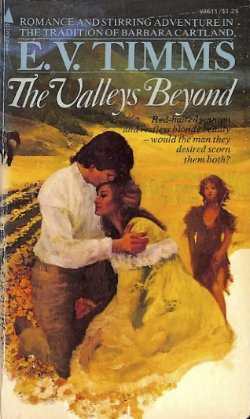
The Valleys Beyond

By E. V. Timms

NY. Pyramid. 1951. 315p

"The Valleys Beyond" is a novel by Australian author Peter Kocan, first published in 1995. The novel follows the lives of a group of working-class Australians living in the fictional town of Walgaree, New South Wales, in the 1950s and 1960s.

At the heart of the novel is the character of Brian Madden, a troubled young man who struggles with mental illness and a sense of alienation from the world around him. Madden's struggles are mirrored in the lives of the other characters, including his mother, who works as a cleaner, his father, a factory worker, and his girlfriend, an aspiring singer.

Kocan uses vivid and poetic language to capture the landscape and atmosphere of Walgaree and to explore the characters' inner lives and struggles. The novel also explores themes of class, identity, and the impact of social and economic change on working-class communities in Australia.