Open Access Publisher and Free Library
Fiction+Mediajpg.jpg

FICTION and MEDIA

CRIME AND MEDIA — TWO PEAS IN A POD

"Oh, Scouting Is A Boy" (The Title has nothing whatsoever to do with the Book!)

By Ralph Reader

FROM THE COVER: It is said that all Scouts ear partly crazy. To show that it is at least true fo himself, R. R. has written a crazy book. But as with all he writes, again and again he will pull the reader up with a jerk and make him think about himself and his boys and the Movement generallv. Ralph lets off a lot of fireworks. but by their light we are enabled to see Scouting better.

London. The Boy Scouts Association. 1950. 135p. USED BOOK

Biggles Foreign Legionnaire

By Cape. W. E. Johns

Another in the Biggles series glorifying war and vilifying enemies. . “In which Air Detective-Inspector Bigglesworth takes leave from the Special Air Section Scotland Yard to join the Foreign Legion, and has an adventure involving an old friend, an even older enemy and a near fatal trip to the desolate Valley of the Tartars in Kurdistan.”

London. Hodder and Stoughton. 1954. 198p. USED BOOOK

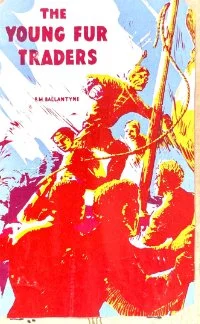
The Young Fur Traders

By R. M. Ballantyne

"The Young Fur Traders" is a children's adventure novel by Scottish author R. M. Ballantyne, first published in 1856. Set in the American Old West, this exciting tale is full of action and daring-do, making it ideal for children with an interest in the Wild West and American history. .

Melbourne. Australia. A Herald Classic. Colorgravure Publications. Originally published 1851. 1950. 223p

John Wentley Wins Through

By J. F. C. Westerman

FROM THE COVER: When JohnWentleyunder- took to fly a British Secret Service agent to a forbidden part he little imagined what would result from his escapade. How he foiled an attempt by a dangerous and un- scrupulous enemy to steal the plans of his recently invented aero engine, took part in two thrilling aerial ducls, and fought against terrific odds to regain the safety of the Swiss border--with secrets in his possession on which de-pended the very existence of the British Empireis excitingly told by one of the foremost writers of boys' adventure stories.

London. The Children's Press. 1930s. 211p. USED BOOK

The Hero Of Basil's

By C. Serjeant

A boys adventure book linking Christian life to war…FROM CHAPTER 1:

“"Yes, mother. And you remember what he said about being good soldiers of our Lord, don't you?"

"I'm afraid I didn't hear quiteall the sermon," she said, trying to speak lightly. "I wish," she added to herself, "that Jack would stop talking about such things. Especially in public. It would be frightfully embarrassing if he began to discuss religion in front of Lady Hardcastle or Mrs. Lyle-Gault. I'm not sure that they wouldn't think it a joke.'

"Well, mother,"Jack was saying, "that was what his sermon was about--being good soldiers-and somehow I felt I wanted to be one of them-and I am, mother."

London. Pickering & Inglis Ltd. 1932. 67p. USED BOOK

Derry & Co. Life Boys

K. M. Macleod

A boys book heralding the wonderful role of the Christian missionaries of imperialism.

FROM THE COVER: but what can the boys join:" A new school teacher, Miss Stanley, arrives, and has an unkind trick played on her by Derry. She, however, starts a company of Life Boys, under the Great Leader, Jesus Christ, and to Derry's surprise he is allowed to join. They soon christen Miss Stanley, "The Skipper," and the story abounds with Life Boy adventures, until a Mr. Wardic arrives from Central Africa, and falls in love with The Skipper. The Life Boys form the guard of honor at the wedding which folows, and the story ends with The Skipper leaving a s "Mrs. Wardic" to be a foreign missionary in Africa, and hoping to form a company of Life Boys there of little African boys.”

London. Pickering & Inglis Ltd. 1934. 69p. USED BOOK

The Bull Patrol

By Arthur Catherall

Classic how-to book for Boy Scouts conveying all the skills needed for leadership, survival and success in war. Inspired, of course, by the writings of Baden Powell who cut his war teething the Boer war. FROM THE COVER: “ They were an odd gang, Af,l Joe, Dick, and Gyp; but once they got the idea of Scouting they were the staunchest friends that anyone could ask for. Their Patrol Leader set a high standard of courage and endurance, and the others one by one played a loyal part in the many daring rescues and thrilling episodes that were to follow- adventures which will be the envy of every Scout.

London. Butterworth Press. 1949. 120p. USED BOOK

The Rescue Flight: A Biggles Story

By Captain W. E. Johns. Illustrated By Alfred Sindall

A boys’ book from the classic series heralding World War 2, and highlighting the excitement and attractiveness of war..

FROM CHAPTER 1: “ PETER FORTYMORE RECEIVES BAD NEWS. THERE was a pensive, almost wistful, expression on the face of the Honourable Peter Fortymore as, with his chin cupped in his hands, he sat at his study window and stared out across the deserted, moonlit playing-fields of Rundell School, where for five years he had been a pupil. The door be- hind him opened, but he did not turn, for he knew from the heavy, deliberate footsteps that the new- comer washis friend and room-mate, Dick Ripley, known throughout the upper school as Rip…”

London. Geoffrey Cumberlege Oxford University Press. 1950. 245p

Biggles Cuts it Fine

By Captain W. E. Johns

The classic boys’ books trumpeting the attraction and excitement of war, especially World War 2.

FROM CHAPTER 1: ““Air-Commodore Raymond, Chief of the Air Section of Scotland Yard, greeted his operational staff from behind a paper-littered desk, as, in obedience to his invitation, they filed into his office.

" Pull up some chairs," he requested. "This is only in the nature of a conference, and, strangely enough, for once there's nothing urgent about it. Help yourselves to cigarettes-we may be some time." He pushed the box forward.

London. Holder and Stoughton. 1954. 162p. USED BOOK

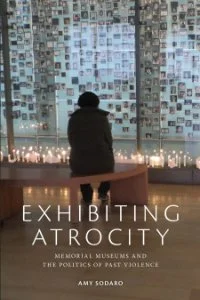
Exhibiting Atrocity: Memorial Museums and the Politics of Past Violence

By Amy Sodaro 

Through a global comparative approach, Amy Sodaro uses in-depth case studies of five exemplary memorial museums that commemorate a range of violent pasts and allow for a chronological and global examination of the form: the US Holocaust Memorial Museum in Washington, DC; the House of Terror in Budapest; the Kigali Genocide Memorial Centre in Rwanda; the Museum of Memory and Human Rights in Santiago, Chile; and the National September 11 Memorial Museum in New York. Together, these case studies illustrate the historical emergence and global spread of the memorial museum and show how this new cultural form of commemoration is intended to be used in contemporary societies around the world emerging from widely divergent forms of political violence.

New Brunswick, NJ: Rutgers University Press, 2018. 227p.

Making the White Man's West: Whiteness and the Creation of the American West

By Jason E. Pierce

In the early nineteenth century, critics like Zebulon Pike and Washington Irving viewed the West as a “dumping ground” for free blacks and Native Americans, a place where they could be segregated from the white communities east of the Mississippi River. But as immigrant populations and industrialization took hold in the East, white Americans began to view the West as a “refuge for real whites.” The West had the most diverse population in the nation with substantial numbers of American Indians, Hispanics, and Asians, but Anglo-Americans could control these mostly disenfranchised peoples and enjoy the privileges of power while celebrating their presence as providing a unique regional character. The first comprehensive study to examine the construction of white racial identity in the West, Making the White Man’s West shows how these two visions of the West shaped the history of the region and influenced a variety of contemporary social issues in the West today. 

Boulder: University Press of Colorado, 2016. 323p.

Performing Interpersonal Violence Court, Curse, and Comedy in Fourth-Century BCE Athens

By  Werner Riess

This book offers the first attempt at understanding interpersonal violence in ancient Athens. While the archaic desire for revenge persisted into the classical period, it was channeled by the civil discourse of the democracy. Forensic speeches, curse tablets, and comedy display a remarkable openness regarding the definition of violence. But in daily life, Athenians had to draw the line between acceptable and unacceptable behavior. They did so by enacting a discourse on violence in the performance of these genres, during which complex negotiations about the legitimacy of violence took place. Since discourse and reality were intertwined and the discourse was ritualized, actual violence might also have been partly ritualized. By still respecting the on-going desire to harm one’s enemy, this partial ritualization of violence helped restrain violence and thus contributed to Athens’ relative stability.

Berlin; Boston: Walter de Gruyter GmbH & Co,  2012.  492p.

Homicide in American Fiction, 1798–1860: A Study in Social Values

By David Brion Davis

Homicide has many social and psychological implications that vary from culture to culture and which change as people accept new ideas concerning guilt, responsibility, and the causes of crime. A study of attitudes toward homicide is therefore a method of examining social values in a specific setting. Homicide in American Fiction, 1798–1860 is the first book to contrast psychological assumptions of imaginative writers with certain social and intellectual currents in an attempt to integrate social attitudes toward such diverse subjects as human evil, moral responsibility, criminal insanity, social causes of crime, dueling, lynching, the "unwritten law" of a husband's revenge, and capital punishment. In addition to works of literary distinction by Cooper, Hawthorne, Irving, and Poe, among others, Davis considers a large body of cheap popular fiction generally ignored in previous studies of the literature of this period. This is an engrossing study of fiction as a reflection of and a commentary on social problems and as an influence shaping general beliefs and opinions.

Ithaca, NY: Cornell University Press, 196f 367p.

Ficciones

By Jorge Luis Borges

From the cover: ". unquestionably the most brilliant South American writing today. . .one of the genuine prose talents of our pe- riod. Written with a classical economy of means and under the control of a mind of wide culture and deep sensitivity, his stories will continue echoing in the minds of his readers as do those of Franz Kafka." -Herald Tribune Books

NY. Grove Press. 1962. 164p. USED BOOK. CONTAINS MARK-UP.

The History Man

By Malcolm Bradbury

FROM THE COVER: Howard Kirk is the trendiest ofradical tutors at a fashionable campus university. Timid Vice- Chancellors pale before his threats of disruption; reactionary colleagues are crushed beneath his merciless Marxist logic; women are drawn by his progressive promiscuity. A self-appointed revolutionary hero, Howard always comes out on top. And Malcolm Bradbury dissects him in this savagely funny novel that has been universally acclaimed as a comic masterpiece. 'Malcolm Bradbury has come up with a novel that simply must be read' — THE TIMES.

London Arrow Books. 1975. 233p. USED BOOK. COMNGAINS MARK-UP

Labyrinths: Selected Stories And Other Writings

By Jorge Luis Borges. Edited by Donald A. Yates and James E. Irby

FROM THE PREFACE: Jorge Luis Borges is a great writer who has composed only little essays or short narratives. Yet they suffice for us to call him great because of their wonderful intelligence, their wealth of invention and their tight, almost mathematical, style. Argentine by birth and temperament, but nurtured on univer- sal literature, Borges has no spiritual homeland. He creates, outside time and space, imaginary and symbolic worlds. It is a sign of his importance that, in placing him, only strange and perfect works can be called to mind. He is akin to Kafka, Poe, sometimes to Henry James and Wells, always to Valéry by the abrupt projection of his paradoxes in what has been called 'his private metaphysics'.

London. Penguin. 1964. 276p. USED BOOK. CONTAINS MARK-UP

Doctor Criminale

By Malcolm Bradbury

FROM THE COVER: Francis Jay, a Nineties person, streetwise but eco- friendly, smart but naive, makes a fool of himself at the Booker Prize ceremony and is determined to salvage his career as a journalist after the collapse of the Sunday newspaper that paid him. Jay embarks on a quest to find one of the greatest philosophers and political thinkers of the modern age, celebrated and respected in academic circles, yet of such obscure origins that he finds it almost impossible to penetrate the myth of the elusive Doctor Bazlo Criminale.

NY. Penguin. 1992. 379p. WELL USED BOOK

Durkheim and the Internet: On Sociolinguistics and the Sociological Imagination

By Jan Blommaert

Sociolinguistic evidence is an undervalued resource for social theory. In this book, Jan Blommaert uses contemporary sociolinguistic insights to develop a new sociological imagination, exploring how we construct and operate in online spaces, and what the implications of this are for offline social practice. Taking Émile Durkheim’s concept of the ‘social fact’ (social behaviours that we all undertake under the influence of the society we live in) as the point of departure, he first demonstrates how the facts of language and social interaction can be used as conclusive refutations of individualistic theories of society such as 'Rational Choice'. Next, he engages with theorizing the post-Durkheimian social world in which we currently live. This new social world operates 'offline' as well as 'online' and is characterized by 'vernacular globalization', Arjun Appadurai’s term to summarise the ways that larger processes of modernity are locally performed through new electronic media. Blommaert extrapolates from this rich concept to consider how our communication practices might offer a template for thinking about how we operate socially. Above all, he explores the relationship between sociolinguistics and social practice In Durkheim and the Internet, Blommaert proposes new theories of social norms, social action, identity, social groups, integration, social structure and power, all of them animated by a deep understanding of language and social interaction. In drawing on Durkheim and other classical sociologists including Simmel and Goffman, this book is relevant to students and researchers working in sociolinguistics as well as offering a wealth of new insights to scholars in the fields of digital and online communications, social media, sociology, and digital anthropology.

London; New York: Bloomsbury Academic, 2018. 136p.

Sex Scene:Media and the Sexual Revolution

Edited by Eric Schaefer

Sex Scene suggests that what we have come to understand as the sexual revolution of the late 1960s and early 1970s was actually a media revolution. In lively essays, the contributors examine a range of mass media—film and television, recorded sound, and publishing—that provide evidence of the circulation of sex in the public sphere, from the mainstream to the fringe. They discuss art films such as I am Curious (Yellow), mainstream movies including Midnight Cowboy, sexploitation films such as ;Mantis in Lace, the emergence of erotic film festivals and of gay pornography, the use of multimedia in sex education, and the sexual innuendo of The Love Boat. Scholars of cultural studies, history, and media studies, the contributors bring shared concerns to their diverse topics. They highlight the increasingly fluid divide between public and private, the rise of consumer and therapeutic cultures, and the relationship between identity politics and individual rights. The provocative surveys and case studies in this nuanced cultural history reframe the "sexual revolution" as the mass sexualization of our mediated world.

Durham, NC: Duke University Press, 2014. 481p.