Open Access Publisher and Free Library
HUMAN RIGHTS.jpeg

HUMAN RIGHTS

Human Rights-Migration-Trafficking-Slavery-History-Memoirs-Philosophy

Posts in Human Rights
Essays And Addresses In War Time

By The Right Hon. Viscount Bryce

When Essays and Addresses in War Time appeared in December 1918, the Great War had not yet fully settled into memory. The armistice was scarcely a month old; the dead lay uncounted; the maps of Europe were still provisional, and new nations were appearing almost daily. It was into this unsettled moral and political landscape that Viscount James Bryce (1838–1922) published this set of reflections — part justification, part analysis, and part moral plea — for what he regarded as one of civilization’s defining struggles.

Bryce was no ordinary commentator. Historian, jurist, diplomat, and moral philosopher, he had served as British ambassador to the United States (1907–1913) and was known across Europe and America as one of the most lucid defenders of democratic government. His monumental works — The Holy Roman Empire (1864) and The American Commonwealth (1888) — had already secured his international reputation. Yet Essays and Addresses in War Time reveals another dimension: a statesman confronting the collapse of Enlightenment ideals under the strain of modern total war, and seeking to explain to neutral nations why the conflict could not be reduced to a mere clash of power or empire, but must be seen as a moral contest over the principles of civilization itself.

Read-Me.Org Inc. New York-Philadelphia-Australia. 2025. 156p.

Australia Confronts a Rising Tide of Islamophobia

By Mohamed Nassir

In a report published in September 2025, Australia’s Special Envoy to Combat Islamophobia, Aftab Malik, reveals that anti-Muslim prejudices have been increasingly prevalent in Australia in recent years. He finds that these issues have been exacerbated by geopolitical events such as 9/11 and the ongoing Israel-Gaza conflict. Malik’s Report attributes this to factors such as negative media coverage and “divisive comments by politicians”. It concludes with 54 recommendations for the Australian government to consider in combating Islamophobia.

In his report published on 12 September 2025, Australia’s Special Envoy to Combat Islamophobia, Aftab Malik, describes the rise of anti-Muslim sentiment in Australia as “pervasive and, at times, terrifying”. The report entitled, A National Response to Islamophobia: A Strategic Framework for Inclusion, Safety and Prosperity, argues that, despite there being no universally accepted definition of Islamophobia, it should be acknowledged that incidents of privilege and discrimination against Australian Muslims are increasing.

 The report begins by examining the rise of anti-Muslim sentiments in Australia in recent years and identifies some of the key factors that explain the phenomenon. It concludes with 54 recommendations aimed at addressing the problem. These recommendations are a valuable resource for countries like Singapore, which value social harmony and strive to protect vulnerable groups and foster inclusivity.

S. Rajarat nam School of International Studies, NTU Singapore, 2025. 6p.

Civilisation: Its Cause And Cure

By Edward Carpenter

“Civilisation” is a word that evokes triumph — of human ingenuity, collective organisation, rising standards of living, the unfolding of arts and sciences, the building of cities, bridges, empires. And yet, as Edward Carpenter’s 1889 work Civilisation: Its Cause and Cure; and Other Essays demonstrates, civilisation can also be approached as a problem: as a state of society marked by dis-ease, alienation, and unsustainability. Carpenter, a socialist, poet, philosopher and social reformer, treats civilisation not simply as the progress of humankind but as a complex and ambivalent phenomenon — one that may require “cure” as much as celebration.

In this volume Carpenter brings together his earlier lectures and essays — including the eponymous essay “Civilisation: Its Cause and Cure,” along with essays on science, morality, custom, and society.The book thus serves as both a diagnosis of modern Western society and an expression of an alternative vision for humanity’s social and moral development.

In the following pages we will consider: first, the intellectual and historical context of the work; second, the major themes and arguments set out by Carpenter; third, the structure of the essays and the particular significance of the titular essay; fourth, an evaluation of the work’s place in the history of social thought; and fifth, pointers for contemporary reading, criticism and further research.

Read-Me.Org Inc. New York-Philadelphia-Australia. 2025. 164p.

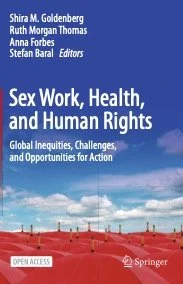
Sex Work, Health, and Human Rights: Global Inequities, Challenges, and Opportunities for Action

Edited by Shira M. Goldenberg , Ruth Morgan Thomas , Anna Forbes, Stefan Baral

This open access book provides a comprehensive overview of the health inequities and human rights issues faced by sex workers globally across diverse contexts, and outlines evidence-based strategies and best practices. Sex workers face severe health and social inequities, largely as the result of structural factors including punitive and criminalized legal environments, stigma, and social and economic exclusion and marginalization. Although previous work has largely emphasized an elevated burden and gaps in HIV and sexually transmitted infection (STI) services in sex work, less attention has been paid to the broader health and human rights concerns faced by sex workers. This contributed volume addresses this gap. The chapters feature a variety of perspectives including academic, community, implementing partners, and government to synthesize research evidence as well as lessons learned from local-level experiences across different regions, and are organized under three parts: Burden of health and human rights inequities faced by sex workers globally, including infectious diseases (e.g., HIV, STIs), violence, sexual and reproductive health, and drug use Structural determinants of health and human rights, including legislation, law enforcement, community engagement, intersectoral collaboration, stigma, barriers to health access, im/migration issues, and occupational safety and health Evidence-based services and best practices at various levels ranging from individual and community to policy-level interventions to identify best practices and avenues for future research and interventions Sex Work, Health, and Human Rights is an essential resource for researchers, policy-makers, governments, implementing partners, international organizations and community-based organizations involved in research, policies, or programs related to sex work, public health, social justice, gender-based violence, women's health and harm reduction.

Cham: Springer, 2021. 272p.

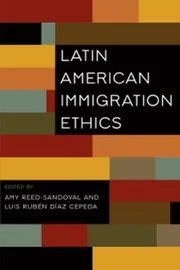
Latin American Immigration Ethics

dited byAmy Reed-SandovalLuis Rubén Díaz Cepeda

Following an extended period of near silence on the subject, many social and political philosophers are now treating immigration as a central theme of their discipline. In fact, there is now sufficient philosophical literature on immigration to enable us to detect clear trajectories in terms of its broad theorization. What began as a highly abstract debate over whether states do, in fact, have a prima facie right to exclude prospective migrants under at least some conditions evolved into scholarship on increasingly “applied” and “practical” questions such as refugee rights and justifications for family reunification schemes in immigrant admissions programs.1 Presently, and as part of this notable progression, immigration philosophy is in the midst of an identity “turn” in which philosophers—particularly those working within the traditions of feminist philosophy, Latinx philosophy, and the critical philosophy of race—theorize particular borders and barriers and particular migrant bodies that are visibly sexed/gendered and racialized.2 This stands in contrast to the more abstract borders and migrants featured in the original open borders debate. Such identity-based approaches tend to operate in the realm of “nonideal theory,” considering states as they are—namely, as entities that are often noncompliant with the requirements of justice—and providing conceptual analysis and solutions on that basis.

Tucson: University of Arizona Press, 2021. 313p.

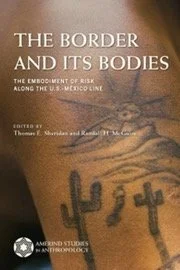
The Border and its Bodies: The Embodiment of Risk Along the U.S.-México Line

EDITED BY Thomas E. Sheridan and Randall H. McGuire

The Border and Its Bodies examines the impact of migration from Central America and México to the United States on the most basic social unit possible: the human body. It explores the terrible toll migration takes on the bodies of migrants—those who cross the border and those who die along the way—and discusses the treatment of those bodies after their remains are discovered in the desert. The increasingly militarized U.S.-México border is an intensely physical place, affecting the bodies of all who encounter it. The essays in this volume explore how crossing becomes embodied in individuals, how that embodiment transcends the crossing of the line, and how it varies depending on subject positions and identity categories, especially race, class, and citizenship. Timely and wide-ranging, this book brings into focus the traumatic and real impact the border can have on those who attempt to cross it, and it offers new perspectives on the effects for rural communities and ranchers. An intimate and profoundly human look at migration, The Border and Its Bodies reminds us of the elemental fact that the border touches us all.

Tucson: University of Arizona Press, 2019.

Human Trafficking of Children and Young People: A Framework for Creating Stable and Positive Futures

By PATRICIA HYNES, ANNA SKEELS AND LAURA DURÁN

Human trafficking of children and young people is a major concern yet there is limited research on the lived experiences of those affected and even less on their post-trafficking aspirations, strengths and capabilities. This book argues that human trafficking and/or exploitation should be seen as child abuse rather than viewed through immigration or criminal justice lenses. It draws on new research from outcomes of two participatory studies with young people affected by human trafficking. The first study focuses on the development of a Creating Stable Futures Positive Outcomes Framework (CSF-POF), centred around children’s rights and based on the views of young people themselves. The second details how this framework was implemented for the first time with young people through an outcomes evaluation of the Independent Child Trafficking Guardianship (ICTG) service in England and Wales. An invaluable text, this book guides policy makers, practitioners, local authority professionals and voluntary sector organisations working to protect children and young people from human trafficking and helping them to move forwards positively following abuse.

Bristol, UK: Policy Press, 2025. 187p.

Orwell's Classroom: Psychological Surveillance in K-12 Schools

By Sarah Roth, Evan Enzer, Olaa Mohamed, Kevin Ye, and Eleni Manis

Schools increasingly turn to spyware, noise detectors, and other invasive mental health prediction tools, with predictably poor results. These error-prone systems flag non-existent crises and miss real dangers.

Mental health surveillance alienates students, making it more likely that they will self-censor and isolating them from teachers and online mental health resources.

Student spyware routinely outs LGBTQ+ students and puts BIPOC youth at risk of police encounters.

New tech appears to be displacing evidence-based mental health screening.

Anti-Abortion Ad Tech: Ad Tech Puts Abortion Seekers at Risk

By Corinne Worthington, Erin McFadden, Aaron Greenberg, and Eleni Manis

A year and half post-Roe, ad tech companies continue to surveil abortion seekers on abortion scheduling and abortion advocacy websites.

While ad tech companies make it incredibly difficult to avoid tracking, medical providers and advocacy organizations should take steps to minimize tracking on abortion scheduling and patient-facing informational pages.

Abortion seekers should not let these concerns stop them from seeking care, and the risk to any one individual is likely low at this stage, but the long-term implications are dire.

Deportation Data Centers: How Fusion Centers Circumvent Sanctuary City Laws

By Eleni Manis, Nina Loshkajian, Leah Haynes, Shivam Saran, Andrew West, and Corinne Worthington

Department of Homeland Security (“DHS”) fusion centers spend over $400 million each year to expand federal, state, and local intelligence sharing, including Immigration and Customs Enforcement (“ICE”).

Fusion centers enable ICE to coopt local police databases and surveillance tools (like facial recognition) that otherwise couldn’t be used for deportation purposes.

Fusion center participants routinely give ICE sensitive data, violating state and local protections for undocumented immigrants.

Local police officers use fusion centers to encourage ICE to target suspects when officers can’t find enough evidence to bring charges, effectively deporting their cold cases.

Fusion centers’ opacity allows them to routinely violate state and local civil rights laws without consequence.

Unintended Traps: Recordkeeping Requirements That Endanger Abortion Access

By Dhivahari Vivekanandasarma, Vibha Kannan, Erin McFadden, and Eleni Manis

As states go head-to-head on abortion access, medical and financial recordkeeping requirements endanger abortion providers and funders, even in states with strong abortion shield laws.

States that protect reproductive rights must strengthen laws that prohibit abortion-related data disclosure and protect telemedicine abortion access.

These laws are under test as Texas sues a New York doctor in a first, extraordinary attempt to enforce a state abortion ban beyond state lines.

In the coming years, we will likely see growing weaponization of these records to prosecute telemedicine abortion access and out-of-state patient care.

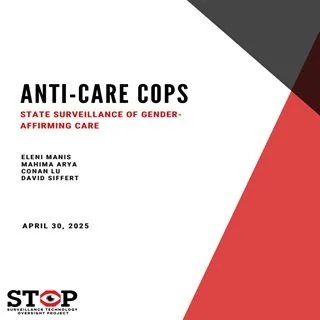
Anti-Care Cops: State Surveillance of Gender-Affirming Care

By Eleni Manis, Mahima Arya, Conan Lu, and David Siffert

Summary

Prosecutors and law enforcement are increasingly weaponizing medical and municipal records to shut down gender-affirming care. Transgender and nonbinary Americans are rapidly losing access to evidence-based and medically necessary care, with escalating attacks by the Trump administration. Given the hostility of the president and federal government toward gender-affirming care, the report asserts that state legislators, hospitals, tech companies, schools, and other decision makers must act now to block anti-care prosecutors.

Key Findings Include:

  • In a rapidly growing number of cases, prosecutors are weaponizing medical records to sue doctors and block access to gender-affirming care.

  • Law enforcement is also expanding anti-care surveillance into non-medical records, including driver’s license, occupational license, and voting databases.

  • With no short-term hope for federal trans civil rights protections, state legislators, healthcare providers, and tech companies must act to protect gender-affirming care

Addressing Hate Speech Through Education: A Guide for Policy-Makers

By UNESCO , Office on Genocide Prevention and the Responsibility to Protect

UNESCO, in collaboration with the United Nations Office on Genocide Prevention and the Responsibility to Protect (OSAPG), has developed a guide aimed at combating hate speech through education: Addressing Hate Speech through Education: A Guide for Policy Makers, which is now available in Spanish.

The publication provides a detailed framework for decision-makers and educators to reinforce educational systems in the fight against hate, offering concrete strategies to create safe and respectful learning environments that promote more inclusive and hate-free societies. These strategies range from media and information literacy to reviewing curricula.

Regarding media and information literacy, the document emphasises the need for students to understand how media and digital platforms operate. This knowledge will enable them to recognise persuasive tactics used to spread conspiracy theories and disinformation, and develop media and information literacy skills that reduce susceptibility to exclusionary and violent ideas. It also stresses the urgency of training teaching staff to understand and reflect on their students’ digital experiences.

"Hate speech undermines fundamental human rights and not only threatens the dignity of individuals but also incites violence, hostility, and discrimination. Through education, not only can we protect freedom of expression, but we can also promote mutual respect and a shared sense of humanity," stated Esther Kuisch Laroche, Director of UNESCO's Regional Office for Latin America and the Caribbean.

Regarding the importance of detecting and countering hate speech within curricula, the guide highlights that this phenomenon is not only combated in classrooms but requires a comprehensive review of pedagogical materials. This will allow students to be sensitised to contemporary forms of discrimination and violence.

Addressing Hate Speech through Education: A Guide for Policy Makers emphasises the need for a safe, inclusive, and collaborative school environment that gives students a sense of community to counteract the allure of hate. Global citizenship education programmes and socio-emotional learning are key tools for embracing diversity and engaging respectfully in a pluralistic society. It stresses that a comprehensive approach is needed, involving not only educators and school administrators but also parents, the wider educational community, and the private sector.

Hate Speech Against Asian American Youth: Pre-Pandemic Trends and The Role of School Factors

By Kevin A. Gee, North Cooc & Peter Yu 

Although hate speech against Asian American youth has intensified in recent years—fueled, in part, by anti-Asian rhetoric associated with the COVID-19 pandemic—the phenomenon remains largely understudied at scale and in relation to the role of schools prior to the pandemic. This study describes the prevalence of hate speech against Asian American adolescents in the US between 2015 and 2019 and investigates how school-related factors are associated with whether Asian American youth are victims of hate speech at school. Analyses are based on a sample of 938 Asian American adolescents (Mage = 14.8; 48% female) from the three most recently available waves (2015, 2017, and 2019) of the School Crime Supplement to the National Crime Victimization Survey. On average, approximately 7% of Asian Americans were targets of hate speech at school between 2015 and 2019, with rates remaining stable over time. Findings also indicate that students had lower odds of experiencing hate speech if they attended schools with a stronger authoritative school climate, which is characterized by strict, yet fair disciplinary rules coupled with high levels of support from adults. On the other hand, Asian American youth faced higher odds of experiencing hate speech if they were involved in school fights. Authoritative school climate and exposure to fights are malleable and can be shaped directly by broader school climate related policies, programs and interventions. Accordingly, efforts to promote stronger authoritative climates and reduce exposure to physical fights hold considerable potential in protecting Asian American youth from hate speech at school.

J. Youth Adolescence 53, 1941–1952 (2024).

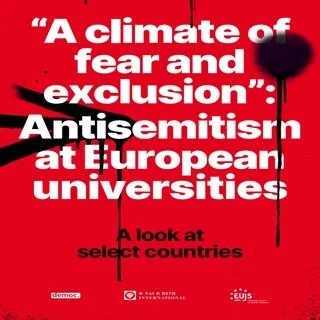
A Climate of Fear and Exclusion: Antisemitism at European Universities. A Look at Select Countries

by B’nai B’rith International, democ and the European Union of Jewish Students (EUJS)
This report from B’nai B’rith International, democ and the European Union of Jewish Students (EUJS) documents the surge of antisemitism on university campuses across Europe in the aftermath of the October 7, 2023 Hamas terrorist attack in Israel. Since then, Jewish students and faculty have faced harassment, intimidation and violence, creating a climate of fear and exclusion across campuses.

Universities that should safeguard open debate and diversity have instead seen antisemitic rhetoric, Holocaust distortion, glorification of Hamas and calls for “intifada.” Professors, radical student groups, and outside organizations have often fueled this atmosphere, while administrators too often failed to act.

Covering Austria, Belgium, France, Germany, Italy, the Netherlands, Spain, Sweden and the United Kingdom, the report identifies repeated patterns: threats and assaults against Jewish students, antisemitic vandalism, incitement to violence, and weak or inconsistent institutional responses.

Washington DC: ’nai B’rith International, 2025. 100p.

Preventing criminal exploitation: evidence summary

By The Scottish Government, Social Research

This paper is part of a series of rapid evidence summaries which aim to explore current understanding of prevention strategies and interventions in relation to human trafficking and exploitation in the UK. These include an overarching paper on prevention approaches, and three smaller, more focused reviews on preventing criminal exploitation, sexual exploitation and labour exploitation. This paper focuses on the prevention of criminal exploitation of adults and children, with a focus on the latter, reflecting the evidence base. It was undertaken to inform the Scottish Government’s refresh of its Trafficking and Exploitation Strategy. Whilst evidence is lacking on ‘what works’ to prevent criminal exploitation, the available information hopefully provides some useful insight into the challenges and opportunities for prevention. The research findings and views summarised in this report do not necessarily reflect the views or policies of the Scottish Government or Scottish Ministers.

Key findings

Robust evidence on public health approaches to preventing criminal exploitation is lacking, and in particular evidence on primary and secondary prevention interventions. There is therefore a lack of robust ‘what works’ evidence on how to prevent and respond to criminal exploitation.

That said, a number of common themes for preventing criminal exploitation arose in the literature reviewed. These included the need for more effective multi-agency working and information sharing; better evidence and data; and calls for a statutory definition of criminal exploitation.

Other ‘promising practices’, mostly relating to child exploitation, were methods for engaging with children and young people at risk of exploitation (e.g. mentors); specialist education and therapeutic support in schools (e.g. restorative justice); and, effective training and awareness raising for those in contact with children, young people and/or families.

Though early intervention (secondary prevention) is considered essential to prevent and respond to child criminal exploitation, the literature reviewed for this paper raises concerns about a lack of a contextual safeguarding approach - which assesses risks outside the family/home environment, including online.

Much of the literature focuses on the criminal justice response (tertiary prevention). A common theme concerning child exploitation was the prioritisation of prosecution over safeguarding.

Also in relation to tertiary prevention, the literature reviewed raises a number of concerns about service responses. Access to tailored, specialist support for criminal exploitation is reported to be limited in the UK. Moreover, a lack of suitable accommodation and appropriate mental health support were flagged as key barriers to preventing child re-exploitation.

Edinburgh: The Scottish Government, 2025. 17p.

Intersectionality and Atrocity Crimes: Reflecting on the Experiences of Youth in Atrocity Situations

By The Global Centre for the Responsibility to Protect

Mass atrocity crimes are often perpetrated against populations based on shared identity characteristics, such as ethnicity, religion, race or language. In many contexts, individuals who belong to more than one marginalized group face heightened and compounded risks. These risks are shaped by the unique social and political dynamics of a given context, where assumptions about power and identity intersect.

There is growing recognition that failing to address complex and overlapping identities can obscure or deny the human rights inherent to all. Effective atrocity prevention must reflect the diversity of populations around the world and recognize how intersecting identities contribute to vulnerability and risk. Applying an intersectional lens is essential to identifying early warning signs, understanding the drivers of identity-based violence and ensuring no one is overlooked.

This new policy brief focuses on the specific risks faced by youth in atrocity situations, particularly when multiple forms of identity compound their vulnerability. This brief underscores the urgent need to meaningfully center youth perspectives, in all their diversity, within national, regional and multilateral atrocity prevention strategies and decision-making processes.

The brief draws on case studies from the Gaza Strip, El Salvador, Sudan and the Uyghur community in and beyond China. These examples are informed by testimony and insights shared by youth activists during an event hosted by the Global Centre for the Responsibility to Protect and the European Union on 18 April 2024. Participants included young advocates for marginalized ethnic groups, people with disabilities and LGBTQIA+ youth, who shared their lived experiences and strategies for more inclusive, effective prevention.

New York: Global Centre for the Responsibility to Protect 2025. 7p.

The Choice Violence or Poverty

By Anne Summers  

The data that is published here for the frst time reveals both the shocking extent of domestic violence suffered by women who are now single mothers, and outlines in grim detail the economic, health and other consequences of the choice these women made to leave the violence. The findings are both new and confronting and have major policy ramifications for how we address domestic violence, and to the policy-induced poverty that is its outcome for far too many women and children. Although there is extensive, and growing, awareness about domestic violence in contemporary Australia, the true extent, and the consequences, of this violence remain largely hidden. Perhaps as a result, the conversations about domestic violence are mostly focused on how to deal with its victim-survivors, rather than how to stop the violence from happening. The same is true of much policy. Prevention policy is mostly long-term, based on the assumption that we need full gender equality in our society for domestic violence to end, yet there is no federal government plan for how to achieve gender equality in Australia. (Nor is there any evidence that countries with greater gender equality than Australia have lower rates of domestic violence. In fact, the opposite is often the case.) Another major focus is teaching respectful relationships in schools – another long-term approach that will hopefully pay dividends in the future but cannot be expected to have much impact on violence being perpetrated today. All this suggests that a policy reset is required, and for that to happen the conversation needs to change. And for the conversation to change, we need new information. This was the overall context and rationale for the report that follows: the search for new information that might prompt us to take a fresh look at domestic violence in Australia. Rather than continuing to look through all the familiar lenses, rehashing all the known data, and continuing to reinforce our existing findings and convictions, I thought it was necessary to seek a fresh perspective. This might, I hoped, yield new knowledge which can, in turn, suggest new ways of tackling our twin objectives: reducing domestic violence, and providing better support for the women who escape it. I decided to do this by examining the circumstances of single mothers who had experienced domestic violence. My reason for this choice was that single mothers appeared to experience domestic violence at a much greater rate than women in any other household group.

Syfnry: University of Technology Sydney., 2022. 109p.

A Systematic Review of Intimate Partner Violence Interventions Focused on Improving Social Support and/Mental Health Outcomes of Survivors

By Emilomo Ogbe , Stacy Harmon , Rafael Van den Bergh , Olivier Degomme 

  Background - Intimate partner violence (IPV) is a key public health issue, with a myriad of physical, sexual and emotional consequences for the survivors of violence. Social support has been found to be an important factor in mitigating and moderating the consequences of IPV and improving health outcomes. This study’s objective was to identify and assess network oriented and support mediated IPV interventions, focused on improving mental health outcomes among IPV survivors. Methods A systematic scoping review of the literature was done adhering to PRISMA guidelines. The search covered a period of 1980 to 2017 with no language restrictions across the following databases, Medline, Embase, Web of Science, PROQUEST, and Cochrane. Studies were included if they were primary studies of IPV interventions targeted at survivors focused on improving access to social support, mental health outcomes and access to resources for survivors. Results 337 articles were subjected to full text screening, of which 27 articles met screening criteria. The review included both quantitative and qualitative articles. As the focus of the review was on social support, we identified interventions that were i) focused on individual IPV survivors and improving their access to resources and coping strategies, and ii) interventions focused on both individual IPV survivors as well as their communities and networks. We categorized social support interventions identified by the review as Survivor focused, advocate/case management interventions (15 studies), survivor focused, advocate/case management interventions with a psychotherapy component (3 studies), community-focused, social support interventions (6 studies), community-focused, social support interventions with a psychotherapy component (3 studies). Most of the studies, resulted in improvements in social support and/or mental health outcomes of survivors, with little evidence of their effect on IPV reduction or increase in healthcare utilization. Conclusion There is good evidence of the effect of IPV interventions focused on improving access to social support through the use of advocates with strong linkages with community based structures and networks, on better mental health outcomes of survivors, there is a need for more robust/ high quality research to assess in what contexts and for whom, these interventions work better compared to other forms of IPV interventions. 

PLoS ONE 15(6): e0235177.

The Use of Open Source Investigation Methods in Tracking Environmental Harms

By The University of California Digital Investigations Network

In January 2023, the University of California Digital Investigations Network (UC Network) received a Public Interest Technology University Network grant to institutionalize and expand the UC Network to support frontline environmental defenders. During the first phase of the project, in collaboration with Cultural Survival, an organization that advocates for Indigenous Peoples’ rights and supports Indigenous communities’ self-determination, cultures and political resilience, students in the UC Network conducted an open source investigation (OSI) into the deaths of 13 murdered Indigenous land defenders in Brazil, and produced a report documenting the circumstances surrounding their deaths (also available in Portuguese). During the second phase of the project, we focused on developing a broader understanding of how OSI methods can be used to document environmental harms globally, and how OSI is being used in environmental harm research, advocacy and litigation. We conducted a literature review and case law analysis, and convened a meeting with leading several experts who are using OSI in their work, and conducted individual consultations with others. This brief report is an outcome of phase two of our project. In addition, environmental exploitation often goes hand in hand with human exploitation. Indigenous communities are at the forefront of land defense worldwide as their land is often targeted by state and corporate actors through agriculture, fishing, logging, and mining and the extraction of other resources. For example, the Brazilian human rights group Conselho Indigenista Missionario reported the killing of 795 Indigenous land defenders between 2019 and 2022 under former president Jair Bolsonaro. Those engaged in seeking accountability for environmental harms should consider the use of OSI tools to complement more traditional research methods and thoroughly document the ways in which land, peoples and communities have been impacted by extractive, pollutive, and degrading practices.   

Berkeley: The University of California Digital Investigations Network, 2024.   10p.