Open Access Publisher and Free Library
TERRORISM.jpeg

TERRORISM

Terrorism-Domestic-International-Radicalization-War-Weapons-Trafficking-Crime-Mass Shootings

Posts tagged diplomacy
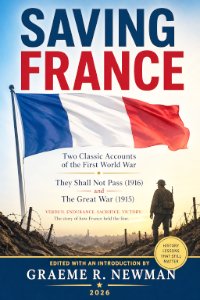
Saving France

By Graeme Newman (Author), Frank Simonds (Author)

What does it mean to “win” a war that consumes a generation?

Saving France brings together two of the most vivid contemporary accounts of the First World War—Frank H. Simonds’s They Shall Not Pass (1916) and The Great War (1915)—and reframes them through a powerful new introduction by Graeme R. Newman. Written in the shadow of Verdun, when the fate of France and the outcome of the war still hung in the balance, Simonds’s works capture the immediacy, uncertainty, and human cost of modern industrial conflict.

At the center of this volume stands the Battle of Verdun—one of the most brutal and निर्णative struggles in military history. Through eyewitness reporting and sharp geopolitical analysis, Simonds reveals not only how France held the line, but what that endurance required: the sacrifice of a nation’s youth, the transformation of war into machinery, and the emergence of total war as a defining feature of the modern age.

Newman’s penetrating introduction places these texts in a broader analytical frame, confronting the enduring questions of the war:
Who really won? Who saved France? Could the catastrophe have been avoided? And what lessons—if any—were learned?

This edition goes further, drawing connections between the First World War and the conflicts of the twenty-first century—where questions of war economics, alliance systems, national endurance, and civilian cost remain as urgent as ever.

Saving France is not simply a historical reprint. It is a critical re-examination of war itself—its causes, its consequences, and its troubling continuity into the present.

For readers of military history, international relations, and the sociology of war, this volume offers both a gripping contemporary narrative and a sobering reflection on the true price of “victory.”

Read-Me.Org Inc. New York-Philadelphia-Australia. 2026. p.218.
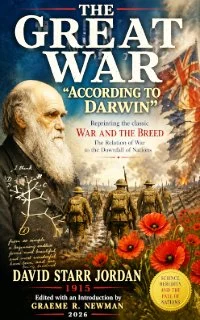
The Great War- "According to Darwin"

by Graeme Newman (Author), David Jordan (Author) Format: Kindle Edition

The Great War – “According to Darwin”
Reprinting War and the Breed by David Starr Jordan
Edited with a new introduction by Graeme R. Newman

What if the devastation of modern war could be understood—not just politically or morally—but biologically?

Written in the midst of the First World War, War and the Breed is a provocative and deeply controversial attempt to interpret global conflict through the lens of Charles Darwin’s theory of evolution. Jordan argues that war does not strengthen nations, as often claimed, but instead weakens them at their very roots—systematically eliminating the strongest and most capable individuals while leaving the least fit to shape future generations.

This Read-Me.Org edition, newly introduced by Graeme R. Newman, situates Jordan’s argument within both its historical moment and our own. The introduction critically examines Jordan’s interpretation of Darwin, the rise of eugenic thinking, and the troubling assumptions about race and heredity that underpin much early twentieth-century social science. It also draws powerful connections to modern warfare—where the technologies, actors, and consequences of conflict have changed, but its human costs remain enduring.

This volume invites readers to grapple with urgent and unsettling questions:
How have scientific ideas been used to justify—or critique—war?
What are the long-term human consequences of mass conflict?
And what does the Great War still teach us about violence, power, and the fate of nations today?

A compelling blend of historical text and contemporary analysis, The Great War – “According to Darwin” is essential reading for anyone interested in war studies, political thought, and the complex relationship between science and society.

Read-Me.Org Inc. New York-Philadelphia-Australia. 2026. p.185..

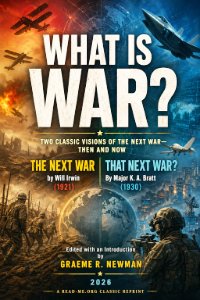
What is War?

by Graeme Newman (Author), Will Irwin (Author), K. A. Bratt (Author)

What is war? Is it a contest of armies, a failure of diplomacy, or something far more pervasive—a condition that engulfs entire societies, economies, and ways of life?

This provocative volume brings together two of the most penetrating early twentieth-century explorations of modern conflict: The Next War and That Next War?. Written in the aftermath of the First World War—when the scale and nature of warfare had changed irrevocably—these works confront a world struggling to understand what had just occurred, and what might come next.

In The Next War, Will Irwin delivers a gripping and urgent analysis of how industrialization, science, and total mobilization transformed war from a clash of armies into a devastating force directed at entire populations. His warnings about chemical weapons, aerial bombardment, and the erosion of moral restraint read today with startling clarity and foresight.

Nearly a decade later, Major K. A. Bratt’s That Next War? expands the inquiry, examining the strategic, and psychological dimensions of future conflict. Moving beyond immediate aftermath, Bratt explores the rise of air power, ideological struggle, global tensions, and the uneasy balance between democracy and militarism in a rapidly changing world.

Together, these two works form a powerful intellectual dialogue—one grounded in lived experience, the other in strategic foresight. Framed by a substantial new introduction by Graeme R. Newman, this edition situates both texts within the longer history of modern warfare and draws out their enduring relevance to the twenty-first century.

At a time when war continues to evolve—through technology, geopolitics, and new forms of power—this volume asks a question that remains as urgent as ever: not simply when the next war will come, but what war has become.

A Read-Me.Org Classic Reprint. Carefully prepared for contemporary readers, this edition preserves the original texts while offering new insight into their historical significance and modern implications.

Read-Me.Org Inc. New York-Philadelphia-Australia. 2026. p.237.

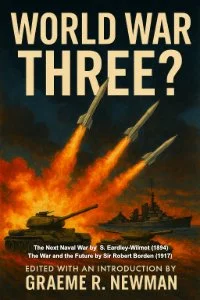
World War Three?

by Graeme Newman (Author), S. Eardley Wilmot (Author), Robert Borden (Author)

What if the next world war does not look like the last two?

At the turn of the twentieth century, military thinkers struggled to imagine the wars that were coming. On the eve of catastrophe, some warned that new technologies, global commerce, and fragile political systems were making large‑scale conflict more likely—and more devastating—than ever before. Few listened. Fewer understood.

World War Three? revisits those moments of foresight and failure to ask a question that now confronts the twenty‑first century: have we once again misunderstood the nature of the next war?

Drawing on two remarkable but often overlooked works—Captain S. Eardley‑Wilmot’s The Next Naval War (1894) and Sir Robert Borden’s The War and the Future (1917)—this volume examines how earlier generations anticipated, experienced, and struggled to comprehend the transformation of warfare. One book speculates before disaster strikes; the other reflects from within it. Together, they offer a framework for understanding modern conflict in an age of global interdependence, precision weapons, cyber operations, and contested sea lanes.

Edited and introduced by Graeme R. Newman, World War Three? places these historical perspectives in direct conversation with contemporary dilemmas:

  • Can a major war be fought—or even won—without large armies on the ground?

  • What happens when commerce, communications, energy supplies, and undersea infrastructure become primary battlefields?

  • Do missiles, drones, and digital networks change the meaning of “war,” or merely its appearance?

  • Are today’s geopolitical crises isolated events, or symptoms of a changing world order?

From maritime chokepoints and missile warfare to economic coercion and the limits of international institutions, this book offers guided speculation grounded in history. It does not predict dates or battlefields. Instead, it explores how wars begin, how they expand, and how societies repeatedly fail to recognize their early forms.

Written for readers interested in history, strategy, international relations, and contemporary global risk, World War Three? is both a warning and an invitation—to think more clearly about the conflicts of the past before they reappear, transformed, in the future.

Is the next world war inevitable—or has it already begun under other names?

Read-Me.Org Inc. New York-Philadelphia-Australia. 2026. p.152.

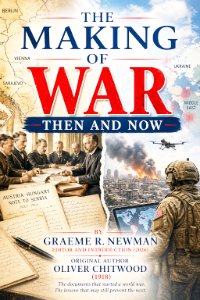
The Making of War - Then and Now

Edited and Introduced by Graeme R. Newman. The Immediate Causes of the Great War by Oliver Perry Chitwood

What if the real story of World War I is not the past—but the present?

This boldly reimagined edition places a powerful new introductory essay by Graeme R. Newman at the center of the book, transforming a classic documentary history into a searching inquiry into how wars are made—then and now. Drawing on Oliver Perry Chitwood’s original 1918 compilation of diplomatic correspondence, ultimatums, and state papers, this volume reconstructs the fatal chain of decisions that led Europe into catastrophe. But it does more: it asks what those decisions reveal about the world we inhabit today.

Newman’s extended introduction reframes the Great War not as a closed historical episode, but as a recurring pattern of international behavior. Nationalism, alliance systems, economic rivalry, and the language of “defensive” war are examined not only in their early twentieth-century form, but in their modern equivalents—from the conflict in Ukraine to instability in the Middle East, and the global role of the United States. The essay confronts a central paradox: that leaders who claim to preserve peace may, under pressure, construct the very conditions that make war inevitable.

At the heart of the book remains Chitwood’s original method—letting the documents speak. Here are the voices of statesmen, ambassadors, and governments as they justify, accuse, negotiate, and ultimately fail. Read in light of Newman’s analysis, these documents become more than historical artifacts; they are case studies in escalation, miscalculation, and the limits of diplomacy.

Making War – Then and Now is both a primary source reader and a contemporary critique. It reveals how quickly order can unravel, how fragile peace can be, and how familiar the pathways to conflict remain. For readers seeking not only to understand the origins of World War I but to grasp the enduring mechanics of war itself, this edition offers an unsettling and necessary perspective.

Read-Me.Org Inc. New York-Philadelphia-Australia. 2026. p.189.

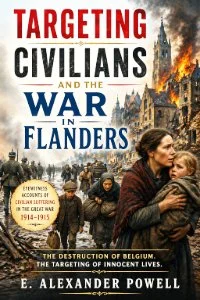
Targeting Civilians And The War In Flanders (Copy)

by A British Statesman (Author), Graeme Newman (Introduction) Format: Kindle Edition

Targeting Civilians and the War in Flanders brings E. Alexander Powell’s gripping eyewitness account of the First World War into sharp contemporary focus, reframing one of the earliest narratives of the conflict through the lens of civilian suffering and the ethics of modern warfare.

Written in 1914 at the very outbreak of hostilities, Powell’s Fighting in Flanders remains one of the most immediate and vivid journalistic records of the German invasion of Belgium and the rapid, chaotic campaigns that swept across Flanders. As an American war correspondent moving with Allied forces, Powell witnessed firsthand the destruction of historic towns, the flight of refugees, and the transformation of peaceful European landscapes into scenes of devastation. His reporting captures not only the movement of armies, but the profound human cost borne by civilians caught in the path of industrial war.

This new Read-Me.Org edition, retitled Targeting Civilians and the War in Flanders, highlights a central and enduring theme in Powell’s work: the deliberate and incidental targeting of civilian populations during wartime. From the burning of Louvain to the mass displacement of Belgian families, Powell documents events that helped shape early international outrage and contributed to the evolving laws of war. His account stands at the intersection of journalism, moral witness, and wartime narrative—revealing how the First World War blurred the boundaries between combatant and non-combatant in ways that continue to resonate today.

Carefully prepared for modern readers, this edition preserves Powell’s powerful prose while offering a clean, accessible text suitable for contemporary publication standards. It is an essential volume for readers interested in World War I history, the origins of total war, and the enduring question of how civilians become targets in conflicts across time.

A compelling blend of reportage and historical insight, Targeting Civilians and the War in Flanders invites readers to revisit the opening chapter of the Great War—not as distant history, but as a warning that remains urgently relevant

Read-Me.Org Inc. New York-Philadelphia-Australia. 2026. p.143.

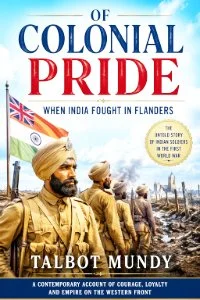
Of Colonial Pride: When India Fought In Flanders

by Talbot Mundy (Author), Graeme Newman (Introduction)

Of Colonial Pride: When India Fought in Flanders presents a vivid and compelling account of one of the most overlooked chapters of the First World War—the arrival and service of Indian troops on the Western Front. Originally published as When India Came to Fight in Flanders, Talbot Mundy’s work brings readers directly into the early months of the war, when soldiers from across the Indian subcontinent were deployed to the muddy, mechanized battlefields of Belgium and northern France.

Blending frontline observation with narrative intensity, Mundy captures the shock, endurance, and courage of these men as they confronted a new kind of warfare far removed from their homeland. From trench conditions to battlefield engagements, the book offers a rare contemporary perspective on the experiences of Indian regiments who played a critical role in holding the line during some of the war’s most desperate moments.

This newly titled edition, Of Colonial Pride, invites modern readers to reconsider the story within its broader historical context. It highlights not only the bravery of Indian soldiers, but also the complex realities of empire, identity, and loyalty that shaped their service. Mundy’s account reflects the attitudes of his time—admiring, yet often filtered through the lens of imperial thinking—making this volume both a gripping wartime narrative and an important historical document.

For readers of military history, colonial studies, and World War I, this book offers a powerful and thought-provoking look at the global dimensions of the conflict. It stands as a testament to the contributions of Indian soldiers whose role in the war deserves far greater recognition.

This Read-Me.Org edition has been carefully prepared for contemporary audiences, preserving the original text while presenting it in a clear, accessible format for today’s reader.

Read-Me.Org Inc. New York-Philadelphia-Australia. 2026. p.216..

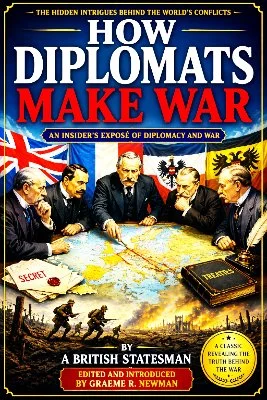
How Diplomats Make War

by A British Statesman (Author), Graeme Newman (Introduction) Format: Kindle Edition

Behind every war lies a story not told in headlines, speeches, or patriotic slogans. How Diplomats Make War lifts the veil on the hidden machinery of international conflict, exposing the calculated maneuvers, secret agreements, and political intrigues that turn disputes into devastation.

Written in 1915 by an anonymous insider known only as “A British Statesman,” this remarkable work offers a rare, unflinching examination of the diplomatic system at the height of the First World War. Drawing on deep knowledge of European politics, the author dismantles the comforting myths that wars are fought for the people, revealing instead how they are engineered by a small circle of officials, financiers, and power brokers operating far from public scrutiny.

With sharp wit and devastating clarity, the book traces the role of treaties, alliances, and the so-called “balance of power” across a century of European history—from the aftermath of Napoleon to the crises that plunged the world into modern industrial warfare. It exposes how secrecy, propaganda, and the relentless expansion of armaments create a self-perpetuating cycle in which preparation for war becomes its very cause.

This new Read-Me.Org edition, edited and introduced by Graeme R. Newman, situates the text within both its historical moment and its continuing relevance. More than a century later, its insights remain strikingly contemporary, challenging readers to reconsider the relationship between governments, diplomacy, and the human cost of global conflict.

At once a historical document and a powerful critique of political power, How Diplomats Make War is essential reading for anyone seeking to understand not just why wars happen—but who truly makes them.

Read-Me.Org Inc. New York-Philadelphia-Australia. 2026. p.257.

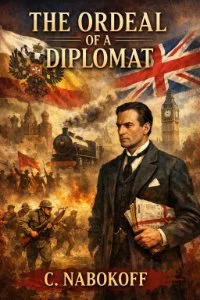
Ordeal of a Diplomat

by C. Nabokoff (Author), Graeme Newman (Introduction)

The Ordeal of a Diplomat is a vivid and penetrating memoir by Constantin Nabokoff, a senior Russian diplomat who served in India and London during the final years of the Russian Empire and the First World War. Writing with candor and intellectual clarity, Nabokoff recounts his experiences at the heart of imperial diplomacy as long-established political structures gave way to revolution, war, and the collapse of old alliances. His narrative blends personal observation with acute political insight, illuminating the misunderstandings, rivalries, and illusions that shaped international relations on the eve of the modern world. At once a historical document and a timeless meditation on power, loyalty, and misjudgment, the book offers a rare insider’s view of diplomacy conducted amid global crisis and enduring relevance for readers interested in international affairs today.