Open Access Publisher and Free Library
TERRORISM.jpeg

TERRORISM

Terrorism-Domestic-International-Radicalization-War-Weapons-Trafficking-Crime-Mass Shootings

Veteran Perspectives on Extremist Exploitation of the Military: Sources and Solutions

 By Amy Cooter

There has been increasing attention to how military service members and veterans may be recruited or exploited by extremists, yet there is little research on precisely how this may happen or on how such ties may, in turn, influence military cohesion. It is important to emphasize that the vast majority of service members are not extremist, but a growing number of domestic extremists have military connections who may then have an outsized ability to enact harm, including by training others in military techniques. Given the potential for veterans’ knowledge and experiences to be exploited by extremist groups, understanding these connections is pressing. This paper shares findings from an in-depth interview study with 42 veterans from all military branches who collectively shed light on how extremism influences various aspects of military life from recruitment to readiness and who offer concrete steps the military could pursue at every stage of service to limit extremists’ exploitation of the institution and those who serve.

Monterey, CA: Center on Terrorism, Extremism, and Counterterrorism (CTEC) at the Middlebury Institute of International Studies 2025. 31p.

download
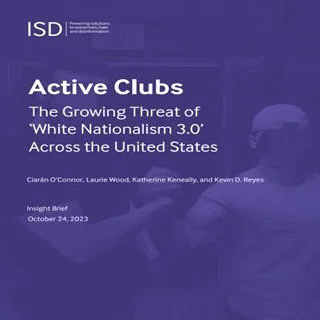
Active Clubs: The Growing Threat of ‘White Nationalism 3.0’ across the United States

By Ciarán O’Connor, Laurie Wood, Katherine Keneally and Kevin D. Reyes

The number of Active Clubs in the United States, Canada and Europe is increasing, posing a threat to public safety. Active Clubs (“ACs”) are white nationalist extremist groups that emphasize physical fitness and hand-to-hand combat skills and have a history of violence. Though each “club” is autonomous, the groups frequently engage in coordinated activities offline, such as mixed martial arts (MMA) tournaments, protests and physical training. In recent years, these clubs have used their social media profiles to encourage likeminded individuals to establish their own clubs in their respective locations. ISD’s research shows this strategy has been highly effective throughout the US.

This report identifies and analyzes the network of Active Clubs operating within the US along three themes: ideology, tactics and targets. The research predominately focuses on the use of the messaging platform Telegram by ACs, and includes detailed data analysis exploring how this network uses Telegram to produce and promote white nationalist propaganda, expand the network of clubs, and facilitate on- and offline collaboration between members and groups.

Amman | Berlin | London | Paris | Washington DC: Institute for Strategic Dialogue, 2023. 17p.

download
The “Chanification” of White Supremacist Extremism

By  Michael Miller Yoder,  David West Brown &  Kathleen M. Carley 

Much research has focused on the role of the alt-right in pushing far-right narratives into mainstream discourse. In this work, we focus on the alt-right’s effects on extremist narratives themselves. From 2012 to 2017, we find a rise in alt-right, 4chan-like discourse styles across multiple communication platforms known for white supremacist extremism, such as Stormfront. This discourse style incorporates inflammatory insults, irreverent comments, and talk about memes and online “chan” culture itself. A network analysis of one far-right extremist platform suggests that central users adopt and spread this alt-right style. This analysis has implications for understanding influence and change in online white supremacist extremism, as well as the role of style in white supremacist communications. Warning: This paper contains examples of hateful and offensive language.

Comput Math Organ Theory Volume 31, pages 222–235, (2025)

download
Discord and the Pentagon's Watchdog: Countering Extremism in the U.S. Military

By Amy C. Gaudion

In his 2022 book, Ward Farnsworth crafts a metaphor from the lead-pipe theory for the fall of Rome to consider how rage and misinformation traveling through today’s technology-enabled pipes are poisoning our civic engagement and threatening our governmental structures: “We have built networks for the delivery of information––the internet, and especially social media. These networks too, are a marvel. But they also carry a kind of poison with them. The mind fed from those sources learns to subsist happily on quick reactions, easy certainties, one-liners, and rage.” This Article carries the metaphor into a new context and considers what should be done when the poison being transported through the digital pipes is directed at members of the U.S. military. While extremism in the U.S. military is not a new threat, the events of January 6, 2021, brought the threat into much sharper focus. It exposed three preexisting trends, each sitting in plain sight but not yet woven together. These trends include a growing acceptance of extremist views and ideologies in U.S. military and veteran communities, an increase in violent extremist acts committed by individuals with military backgrounds, and the enhanced use of digital platforms by extremist groups to target their messaging to and strengthen their recruitment of individuals with military experience. To return to the metaphor, the extremist poison is teeming through the pipes at an alarming rate, and the number of pipes has increased to include social media platforms, encrypted chat tools, gaming platforms, podcasts, and music streaming apps, including YouTube, Discord, Gab, Telegram, and WhatsApp, among many others. In offering these observations, the author is mindful of not overstating the threat and takes seriously warnings as to the adverse consequences that follow from hyperbole and exaggeration. Indeed, a fundamental difficulty is the lack of understanding as to scope and scale of the extremism threat in the U.S. military. This Article attempts to draw the contours of that threat, exposes the structural and legal obstacles that make countering extremism in the military such a fraught exercise, and identifies actors, tools, and mechanisms—beyond the conventional options––able to overcome these long-standing structural and institutional obstacles.

Indiana Law Journal | Vol. 100:1743 | 2025, Penn State Dickinson Law Research Paper 10-2025

download
The enduring shadow of extremism: tackling radicalisation in the Bangladeshi diaspora

By Iftekharul Bashar

The recent arrests in Malaysia confirm that radicalisation within the Bangladeshi diaspora is a significant and evolving threat. This problem stems from socioeconomic factors, homeland instability, and online recruitment. A transparent, collaborative, and multi-faceted P/CVE (Preventing and Countering Violent Extremism) approach is essential to mitigate the risk.

COMMENTARY

Malaysian authorities recently arrested 36 Bangladeshi citizens in Selangor and Johor for their involvement in a radical militant movement promoting Islamic State (IS) ideology. Home Minister Datuk Seri Saifuddin Nasution Ismail reported that these individuals were forming recruitment cells, fundraising for terrorism, and plotting to overthrow the Bangladesh government.

Notably, the network, as detailed by police, raised funds using international fund transfer services and e-wallets, directing money to the IS group in Syria and Bangladesh. This method highlights a growing trend in terrorist financing, leveraging the speed, lower costs, and often less stringent oversight of digital platforms and cross-border money movement to facilitate illicit financial flows globally.

Of those arrested, five have been charged with terrorism-related offences, 15 face deportation, and 16 remain under investigation, with the police anticipating further arrests. Malaysian authorities estimate that 100 to 150 individuals are suspected to be involved in this network, demonstrating the scale of the threat they are actively dismantling.

These arrests are a stark reminder that the threat of extremism continues to cast a long shadow, not just within Bangladesh’s national borders but also across diaspora communities. The arrest of the 36 nationals is not an isolated incident. There have been previous cases of radicalisation of Bangladeshis in Malaysia.

In May 2019, a 28-year-old Bangladeshi mechanic was arrested in Kuala Kedah; he had possessed the necessary chemicals and expertise to produce improvised explosive devices (IEDs). Earlier in January 2017, two Bangladeshi salesmen, aged 27 and 28, were arrested in Kuala Lumpur, reportedly for having ties with suspected IS militants in Bangladesh and for planning to join a terror cell in the southern Philippines.

Singapore, among other nations, has also experienced similar cases in the past, notably in 2015, 2016, and 2020, highlighting a recurring pattern of Bangladeshi diaspora members being targeted and recruited by terrorist networks, including the Islamic State.

S. Rajaratnam School of International Studies, NTU Singapore, 2025. 6p.

download
Banditry violence in Nigeria’s North West: insights from affected communities

By Johanna Kleffmann, Swetha Ramachandran, Noah Cohen, Siobhan O'Neil, Mohammed Bukar, Francesca Batault, Kato Van Broeckhoven,

Key Findings • The labelling of banditry as “organized crime,” “unknown gunmen,” or, more lately, “terrorists” has distorted this multi-faceted and still poorly understood phenomenon. Likewise, some of the frames that have been applied to banditry – particularly the farmer/herder conflict or Hausa/Fulani tensions – do not appear to fully align with local communities’ understandings of today’s evolution of banditry. Simplistic categorization and narrow lenses for understanding banditry may contribute to inappropriate or insufficient policy and programmatic responses. MEAC’s survey unearths some of the lived experiences with bandits and sheds light on the nuances of the phenomenon and its profound impact on communities. • Community perceptions of bandit groups corroborate earlier research depicting them as comprised of largely distinct, organized groups, albeit with shifting configurations and subject to fragmentation. Bandit groups operate in highly mobile, armed, and largely forestbased units that use quick-strike attacks on motorbikes against communities. Their motivations are primarily perceived as economic/financial by victims, including the notable subsection of the sample of Fulanis who have been victimized by bandits. • For the surveyed communities, weapons are the most recognizable feature of bandit groups. This bears critical implications for the potential for escalation of violence, further proliferation of illicit arms and ammunition including in the neighbouring regions, community violence reduction efforts and future DDR programming. • Victimisation experiences differ considerably with gender, age, and location in the North West. While physical violence and killings disproportionately affect adult men, sexual violence appears to especially affect women and girls (although it likely remains underreported). Variations of victimization across states indicate the volatile and dynamic nature of overall banditry presence and violence. • Banditry violence has profound and pervasive effects on the physical safety, access to income-generating activities, education, and mobility of residents in the northwestern communities surveyed. The perceived intensity and frequency of attacks are on the rise, with one in three respondents reporting experiencing weekly attacks in recent years. Close to two-thirds of respondents have family members who have been attacked by bandits.

Findings Report 36,

Geneva, The United Nations Institute for Disarmament Research ., UNIDIR, 2024,43p.

download
The Islamic State in Afghanistan: A Jihadist Threat in Retreat?

By The International Crisis Group

What’s new? Since the Taliban takeover of Afghanistan in 2021, the Islamic State-Khorasan Province (IS-KP) has emerged as a major international security threat, orchestrating or inspiring attacks abroad following a Taliban clampdown on its home turf. Although its strikes have fallen in number in 2025, its offensive could resurge. Why does it matter? Despite the recent lull, IS-KP might reactivate commanders willing to carry out attacks abroad or coordinate with other ISIS branches to launch them. Even a small number of highprofile operations – such as the March 2024 mass shooting and arson in Moscow – can cause numerous deaths and have major international repercussions. What should be done? Coordination among security services has improved, particularly in intelligence sharing and rendition. There are strong reasons not to resort to military action, but more could be done in terms of collaborating with the Taliban and Syrian governments, redefining the global anti-ISIS coalition’s law enforcement role, and supporting Central Asian countries.

Crisis Group Asia Briefing N°183

Brussels: International Crisis Group, 2025. 28p.

download
Criminal Justice Interventions for Preventing Radicalisation, Violent Extremism and Terrorism: An Evidence and Gap Map

By Michelle Sydes | Lorelei Hine | Angela Higginson4 | James McEwan | Laura Dugan | Lorraine Mazerolle3

Background: Criminal justice agencies are well positioned to help prevent the radicalisation of individuals and groups, stop those radicalised from engaging in violence, and reduce the likelihood of terrorist attacks. This Evidence and Gap Map (EGM) presents the existing evidence and gaps in the evaluation research. Objectives: To identify the existing evidence that considers the effectiveness of criminal justice interventions in preventing radicalisation, violent extremism and terrorism. Search Methods: We conducted a comprehensive search of the academic and grey literature to locate relevant studies for the EGM. Our search locations included the Global Policing Database (GPD), eight electronic platforms encompassing over 20 academic databases, five trial registries and over 30 government and non‐ government websites. The systematic search was carried out between 8 June 2022 and 1 August 2022. Selection Criteria: We captured criminal justice interventions published between January 2002 and December 2021 that aimed to prevent radicalisation, violent extremism, and/or terrorism. Criminal justice agencies were broadly defined to include police, courts, and corrections (both custodial and community). Eligible populations included criminal justice practitioners, places, communities or family members, victims, or individuals/groups who are radicalised or at risk of becoming radicalised. Our map includes systematic reviews, randomised controlled trials, and strong quasi‐experimental studies. We placed no limits on study outcomes, language, or geographic location. Data Collection and Analysis: Our screening approach differed slightly for the different sources, but all documents were assessed in the systematic review software program DistillerSR on the same final eligibility criteria. Once included, we extracted information from studies using a standardised form that allowed us to collect key data for our EGM. Eligible systematic reviews were assessed for risk of bias using the AMSTAR 2 critical appraisal tool. Main Results: The systematic search identified 63,763 unique records. After screening, there were 70 studies eligible for the EGM (from 71 documents), of which two were systematic reviews (assessed as moderate quality), 16 were randomised controlled trials, and 52 were strong quasi‐experimental studies. The majority of studies (n = 58) reported on policing interventions. Limited evidence was found related to courts or corrections interventions. The impact of these interventions was measured by a wide variety of outcomes (n = 50). These measures were thematically grouped under nine broad categories including (1) terrorism, (2) extremism or radicalisation, (3) non‐terror related crime and recidivism, (4) citizen perceptions/intentions toward the criminal justice system and government, (5) psychosocial, (6) criminal justice practitioner behaviours/attitudes/ beliefs, (7) racially targeted criminal justice practices, (8) investigation efficacy, and (9) organisational factors. The most commonly assessed outcomes included measures of terrorism, investigation efficacy, and organisational factors. Very limited research assessed intervention effectiveness against measures of extremism and/or radicalisation. Authors’ Conclusions: Conducting high‐quality evaluation research on rare and hidden problems presents a challenge for criminal justice research. The map reveals a number of significant gaps in studies evaluating criminal justice responses to terrorism and radicalisation. We conclude that future research should focus attention on studies that consolidate sound measurement of terrorism‐related outcomes to better capture the potential benefits and harms of counter‐terrorism programs, policies and practices which involve criminal justice agencies.

Campbell Systematic Reviews, 19(4). 2023. 53p.

download
The Use of Artificial Intelligence in Countering Online Radicalisation in Indonesia

By Raneeta Mutiara

Digitalisation of the activities of Islamic State in Iraq and Syria (ISIS) has been a longstanding issue in Southeast Asia. In recent years, the nature of this threat has become more widespread and complex. In countries like Indonesia, where radicalisation is primarily offline, online platforms still play a role in spreading extremist ideas and maintaining ideological networks. The phenomenon of online radicalisation can erode social cohesion, highlighting the need for strategic measures to counter its destabilising impact.

Indonesia has made several attempts to combat online radicalisation. The National Counter Terrorism Agency of Indonesia (BNPT) initiated the Duta Damai Dunia Maya campaign to counter harmful content on the Internet. Other online initiatives, such as BincangSyariah and Islamidotco, have also been promoting Islamic literacy, moderating religious interpretations, and correcting misleading narratives.

Nevertheless, Indonesia still encounters online radicalisation cases. In July 2024, Indonesia’s elite counterterrorism unit, Densus 88, detained a 19-year-old student who had expressed allegiance to ISIS through social media and was believed to be planning attacks on religious sites before he was caught.

The swift progress of Artificial Intelligence (AI), especially in areas of machine learning (ML) and natural language processing (NLP), presents both opportunities and challenges in combating online radicalisation in Indonesia. AI, generally defined as machines mimicking human intelligence, enables systems to recognise patterns, analyse content, and produce outputs in text, images, and videos. Within this AI landscape, ML allows models to enhance themselves through data, while NLP, as a specific ML application, deals with understanding and generating human language. These advancements provide possibilities for creating early detection systems, content moderation tools, and sentiment analysis tools that can spot and counter extremist messages online.

For the research, the author conducted interviews with fifteen experts across different fields, including law enforcement officers, academics, representatives from civil society organisations (CSOs), and employees of AI start-ups in Indonesia. The qualitative data collected from this process have been analysed through thematic analysis, and the preliminary findings reveal that AI can indeed complement the conventional CVE (countering violent extremism) methods in the country, albeit not without challenges

S. Rajaratnam School of International Studies, NTU Singapore, 2025. 6p.
download
Rethinking Religion and Radicalization: Terrorism and Violence Twenty Years After 9/11

Edited by Michele Grossman

With contributions from a range of regions and disciplines, this open access volume offers theoretically compelling and empirically rich new insights on the relationship between religion and violent extremism. The role of religion and religiosity in processes of radicalisation to violence has been at the forefront of debates around terrorism and extremism for decades. The events of 9/11 gave new impetus to these debates, cementing assumptions about the role of Islam as the key driver for religiously inspired violent radicalisation, and defining the way in which radicalisation to violence is understood. The years since 9/11 have seen a striking diversification in the terrorist and violent extremist landscape, yet the treatment of how religious beliefs, concepts and histories are entangled with established and emergent violent ideologies and social movements has changed far less. By looking beyond Islamist-inspired or attributed terrorism, this volume explores how violent extremists instrumentalise religion and religiosity in unexpected ways, from Orthodox Christianity and Hindutva to ‘conspirituality’, far-right extremism, and single-issue social movements. The eBook editions of this book are available open access under a CC BY-NC-ND 4.0 licence on bloomsburycollections.com

London: Bloomsbury Academic, 2025. 312p.

download
The Terrorism News Beat: Professionalism, Profit, and the Press

By Aaron M. Hoffman

Critics of terrorism news coverage often describe it as a sensationalized and intimidating area of reporting. However, this characterization offers a misleading guide to the coverage of terrorist threats and attacks, counterterrorism, and community responses to terrorism that appears in U.S. newspapers. Counterterrorism—not terrorist threats or attacks—is the most reported-on subject in newspapers such as the New York Times and Wall Street Journal. Rather than focusing on accounts of terrorist attacks, militarized counterterrorism, or counterterrorism failures, journalists more often cover counterterrorism successes, criminal justice, and diplomatic or community responses to terrorism. The Terrorism News Beat engages thinking about terrorism and the news media from the fields of political science, communication, criminology, economics, and sociology using multimethod research involving more than 2,500 newspaper articles published between 1997 and 2018. Chapters analyze the terrorism news beat’s subject matter, language, and coverage of the Oklahoma City Bombing, Olympic Park bombing, 9/11 attacks, DC Sniper case, and Dallas Police shooting. When it comes to language use, Hoffman finds that, rather than giving into the temptation to convey the news in lurid detail, journalists are minimalists. The language used to depict events on the terrorism beat is typically moderate and extreme words like “torture” appear only as necessary. The Terrorism News Beat shows that contrary to claims of sensationalism, the tone of terrorism coverage becomes even more sober during terrorism crises than it is during non-crisis periods and meets journalistic standards for quality.

Ann Arbor: University of Michigan Press, 2025. 255p.

download
The Chronicle Of The Discovery And Conquest Of Guinea: Volumes 1 & 2

By Gomes Eannes De Azurara (Author), Colin Heston (Editor), Raymond Beazley (Translator)

The Chronicle of the Discovery and Conquest of Guinea is one of the most important early historical sources on the European Age of Discovery. Written in the mid-fifteenth century by Gomes Eannes de Zurara, the royal chronicler of Portugal, the work offers a detailed and vivid narrative of Prince Henry the Navigator’s sponsorship of voyages along the West African coast. Zurara’s chronicle records the systematic exploration of the Atlantic islands and the African shoreline, the capture and enslavement of Africans, and the establishment of the Portuguese presence south of Cape Bojador — a turning point that opened the way for European maritime expansion.

This English edition, translated and edited by historian Charles Raymond Beazley and lusitanist Edgar Prestage for the Hakluyt Society (published 1896–1899), makes Zurara’s text accessible to a modern audience. Their careful translation preserves the rich detail of the original, while their scholarly introduction and notes provide historical context about fifteenth-century Portugal, Prince Henry’s motives, and the wider significance of these early voyages.

Part narrative history, part celebration of Portuguese royal ambition, the chronicle reveals both the triumphs and moral ambiguities of the early encounters between Europe and Africa. It remains an essential source for historians of maritime exploration, Atlantic slavery, and global contact in the late Middle Ages.
This version has been carefully edited, removing unnecessary endnotes, footnotes and other distracting content that distract from a pleasant reading experience.

Read-Me.Org Inc. New York-Philadelphia-Australia. 2025. 267p.

download free
kindle $2.99 -- paperback $9.99
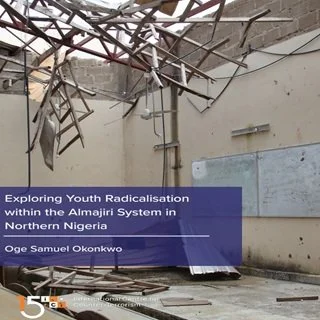
Exploring Youth Radicalisation within the Almajiri System in Northern Nigeria

By Oge Samuel Okonkwo

Boko Haram’s emergence in Northern Nigeria is closely tied to systemic vulnerabilities within the Almajiri system, a traditional Islamic educational framework mainly for boys. Founded by Mohammed Yusuf, an Almajiri graduate himself, the terror group exploited socio-cultural fractures, leveraging identity-based grievances, economic deprivation, and governance failures to recruit marginalised Almajirai. While the Almajiri system itself does not inherently radicalise individuals, it produces a large, unemployed youth demographic with a strong collective identity, creating fertile ground for extremist exploitation.Addressing systemic marginalisation and poverty within Nigeria's Almajiri educational system is crucial for preventing youth radicalisation, requiring integrated reforms across education, governance, and community engagement spheres.

The Hague: The International Centre for Counter-Terrorism (ICCT)  2025. 18p.

download
The Need for Greater Transparency in the Moderation of Borderline Terrorist and Violent Extremist Content

By Ellie Rogers

Content moderation is becoming an increasingly prominent feature of legislation to increase the safety of online spaces. One aspect of this debate is moderating borderline content in the context of terrorism and violent extremism (borderline TVEC). For content moderation approaches to be proportionate in respecting users’ rights whilst improving the safety of online spaces, transparency is crucial. This importance is recognised within recent legislation such as the Digital Services Act and the Online Safety Act. However, legislation does not provide direct requirements for transparency surrounding the moderation of borderline TVEC. As a result, there are concerns that transparency reporting will continue to focus on removals of content that is illegal or violative in nature. This article argues that there needs to be more transparency surrounding the moderation of borderline TVEC. Through a review of the literature, this article discusses the importance of increased transparency surrounding the moderation of borderline TVEC, and demonstrates the ways in which current legislation, tech company policies and content moderation processes are not conforming to transparent practices in the context of borderline TVEC moderation.

Internet Policy Review, 14(3)., 2025.

download
Gore and Violent Extremism: An Explorative Analysis of the Use of Gore Websites for Hosting and Sharing Extremist and Terrorist Content

By Human Digital, Ali Fisher and Arthur Bradley

Gore-related websites enable the hosting and sharing of illegal videos, including those produced by proscribed terrorist entities. The websites are numerous, free to access, provide no user or child safety features, and have seen a growth in visitor numbers in recent years due to ongoing conflicts. Most gore-related websites offer download and social media share functionality, allowing for graphic content, including thousands showing terrorist violence, to be shared across social media. Gore-related websites and the content they host have been largely avoided within academic study and practitioner responses, particularly in relation to counterterrorism and online harms such as violence fixation. This report provides a starting point for understanding the utility the websites provide to terrorist and violent extremist actors and the harms the content hosted on the websites present to children. The report is particularly pertinent in the UK context due to the recently passed Online Safety Act and growing public concern about the availability of graphic violent content in light of the Southport attacker’s reported online behaviours.

Dublin: VOX-Pol Network of Excellence, 2025  69p.

download
Prevent, Detect, and React: A Framework for Countering Violent Extremism on Gaming Surfaces

By Galen Lamphere-Englund

GIFCT hosts Working Groups annually to bring together international experts across sectors to work together in helping tech companies counter terrorist and violent extremist exploitation online. GIFCT's GCoP Working Group ran from May 2024 through January 2025, with the aim of providing a space to share insights and feedback on how gameplay spaces could evolve safety work, review safety policies, tools, and practices, and anticipate evolving safety risks. The following document, Interventions for Countering Violent Extremism on Gaming Surfaces, is a series of explanations that detail various intervention strategies, structured across three stages of Prevent, Detect, and React. Each stage outlines specific interventions that gaming platforms can implement, organized by clearly described objectives (“How”) and supported by real-world examples with links to resources (“Case Studies”). Many thanks to the 2024 GIFCT GCoP members for sharing their expertise, particularly to Linda Schlegel (Peace Research Institute Frankfurt; PRIF) and Rachel Kowert, Ph.D. (Discord) for their helpful suggestions. How to Use This Resource Each section below presents a strategic goal (Prevent, Detect, or React), specific objectives that support that goal (such as “Design Games and Gaming Experiences With User Safety in Mind”), and practical case studies with linked resources. The examples given should be seen as illustrative, not exhaustive. GIFCT’s academic research arm, the Global Network on Extremism and Technology (GNET), regularly shares the latest research related to gaming and gaming-adjacent platforms, which can be found here. Additionally, the Extremism and Gaming Research Network (EGRN), where GIFCT is a founding member, distributes resources here. GIFCT offers tailored guidance and support to any online gameplay company seeking to prevent TVE from exploiting their platform.   

(Washington, D.C.: Global Internet Forum to Counter Terrorism, Year 4 Working Groups. 2025. 28p.

download
Conceptualising and Addressing the Migration-Terrorism Nexus: Literature Review, Case Studies, and Policy Recommendations

By Thomas Renard and Méryl Demuynck 

The nexus between migration and terrorism is a contentious subject. Attacks conducted by immigrants or by terrorists infiltrated within migration flows have raised legitimate concerns among the population and policy-makers. Yet, reductive narratives and political ideology have resulted in a simplistic and biased perception of this phenomenon. As a result, public immigration and counter-terrorism policies are poorly informed. This research, conducted by the International Centre for Counter-Terrorism (ICCT), seeks to offer a robust, evidence-based analysis of the migration-terrorism nexus. Through an interdisciplinary approach that integrates an extensive literature review, the analysis of an original dataset, semi-structured interviews, and detailed case studies, the report interrogates the multifaceted dynamics of this relationship. It aims to uncover the nuanced ways in which migration and terrorism intersect, providing a critical counterpoint to simplistic and politicised interpretations.

The Hague: The International Centre for Counter-Terrorism (ICCT) , 2025. 110p.

download
Addressing Online Self-Radicalisation in Singapore

By Sabariah Hussin

SYNOPSIS
The evolving nature of online self-radicalisation in Singapore raises pressing concerns that go beyond traditional counterterrorism frameworks. While Singapore’s preventive strategies are largely effective, emerging digital dynamics and psychosocial vulnerabilities call for more spiritually grounded, trauma-informed, and community-empowered approaches.

COMMENTARY
The issue of youth radicalisation is gaining attention in Singapore. During a speech by Acting Minister for Muslim Affairs, Faishal Ibrahim, at the Religious Rehabilitation Group (RRG) retreat on 24 June 2025, he noted that the availability of extremist content and the emergence of ideologically themed online communities have contributed to a gradual increase in radicalisation among young people. Given that many of these individuals are still developing their identities and critical thinking skills, they may be more susceptible to these influences.
It is concerning that a 17-year-old supporter of far-right ideology was reportedly planning a mass shooting of worshippers attending Friday prayers, while a 15-year-old girl expressed a desire to marry an ISIS fighter and engage in combat overseas. Both cases illustrate the phenomenon of self-radicalisation occurring entirely through online platforms.
These developments highlight a significant and rapid evolution in the patterns and scope of radicalisation, necessitating a thorough reassessment of Singapore’s CVE (countering violent extremism) strategies.

S. Rajaratnam School of International Studies, NTU Singapore, 2025. 6p.
download
  Culture of Violence Terrorism Reaches Its Peak in Burkina Faso

By Riza Kumar 

Culture of Violence: Terrorism Reaches Its Peak in Burkina Faso paints a harrowing picture of a nation consumed by escalating extremist attacks, militarized ethnic tensions, and a state strategy that empowers untrained civilian militias with deadly consequences.

Key points include:

  • Burkina Faso ranks #1 in global terrorism deaths, with over 3,000 civilians killed in 2024 alone.

  • State-sponsored militias—the Volunteers for the Defense of the Homeland (VDP)—now outnumber the national army, but their lack of training and ethnic bias has fueled further violence.

  • Over 80% of Burkinabe territory is under the control of terrorist groups, with projections estimating nearly 4 million people could be internally displaced by year-end.

  • Human rights abuses are rampant: civilian massacres, ethnic targeting—particularly of the Fulani—and extrajudicial killings are now common features of the government’s counterterrorism effort.

  • Public trust in the state is collapsing, while extremist groups like al-Qaeda affiliate Jama’at Nusrat al-Islam wal Muslimeen (JNIM) are increasingly seen as more reliable providers of security.

The report warns that the Burkinabe government's hardline, militarized approach—relying on loosely controlled militias and sidelining local peace negotiations—has entrenched a self-perpetuating “culture of violence.” This normalization of brutality not only undermines stability in Burkina Faso but risks setting a dangerous precedent for the broader Sahel region.

Riza Kumar, Senior Research Analyst, CEP and author of the report, said:

Without law, accountability, or a credible strategy, Burkina Faso’s counterterrorism model is spiraling into a humanitarian catastrophe. Security solutions that disregard human rights and social cohesion are destined to fail—and are only empowering the extremists they aim to defeat.

CEP calls for an urgent reevaluation of counterterrorism strategy in Burkina Faso, emphasizing demilitarization of rogue militia forces, restoration of local mediation mechanisms, and the increased recognition and integration of marginalized communities across all security sectors.  

New York; Berlin; London: Counter Extremism Project, 2025. 24p.

download
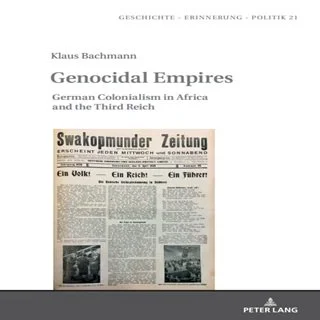
Genocidal Empires: German Colonialism in Africa and the Third Reich

German Colonialism in Africa and the Third Reich

By Bachmann, Klaus

Between 1904 and 1907, German soldiers, settlers and mercenaries committed mass murder in Africa. Can this be considered the first genocide of the 20th century? Was it a forecast of the Third Reich’s extermination policy in Central and Eastern Europe? This book provides the answer. Based on extensive archival and library research in Tanzania, Namibia, South Africa, Germany and Poland as well as on the most recent and up-to-date jurisprudence of international criminal tribunals, the renowned historian and political scientist Klaus Bachmann paints a new and surprising picture of the events and their legal significance, which many will find disturbing and provocative. It abolishes many well-established interpretations about German colonialism and its alleged links with the Third Reich and provides a new and intriguing contribution to the current post-colonial debate.

Bern: Peter Lang International Academic Publishers, 2018. 384p.

download