Open Access Publisher and Free Library
CRIME+CRIMINOLOGY.jpeg

CRIME

Violent-Non-Violent-Cyber-Global-Organized-Environmental-Policing-Crime Prevention-Victimization

Posts in INCLUSION
Income Inequality and Violent Crime: Evidence from Mexico's Drug War

By Ted Enamorado, Luis-Felipe López-Calva, Carlos Rodríguez-Castelán, and Hernán Winkler

The relationship between income inequality and crime has attracted the interest of many researchers, but little convincing evidence exists on the causal effect of inequality on crime in developing countries. This paper estimates this effect in a unique context: Mexico's Drug War. The analysis takes advantage of a unique data set containing inequality and crime statistics for more than 2,000 Mexican municipalities covering a period of 20 years. Using an instrumental variable for inequality that tackles problems of reverse causality and omitted variable bias, this paper finds that an increment of one point in the Gini coefficient translates into an increase of more than 10 drug-related homicides per 100,000 inhabitants between 2006 and 2010. There are no significant effects before 2005. The fact that the effect was found during Mexico's Drug War and not before is likely because the cost of crime decreased with the proliferation of gangs (facilitating access to knowledge and logistics, lowering the marginal cost of criminal behavior), which, combined with rising inequality, increased the expected net benefit from criminal acts after 2005.

Washington, DC: The World Bank, 2014. 31p.

download
Large Ocean Nations Forum on Transnational Organised Fisheries Crime

By Blue Justice

The Large Ocean Nations Forum on Transnational Organised Fisheries Crime was launched at the UN City in Copenhagen on 15 October 2018. The forum was hosted by PescaDOLUS in cooperation with the Faroese Ministry of Fisheries, the Norwegian Ministry of Trade, Industry and Fisheries and the Nordic Council of Ministers. The forum, which gathered more than 80 participants from Large Ocean Nations (LONs) as well as from other countries, intergovernmental organizations and civil society, was opened by the Ministers of Faroe Islands, Palau, and Kiribati alongside high-level participants from the Nordic Council of Ministers and Norway. The establishment of the Forum on Transnational Organised Fisheries Crime built on the Large Ocean Nations Forum on Blue Growth launched in Malta in 2017. The objective of the LON Forum on Fisheries Crime was to facilitate agreement between LON participants on the particular challenges posed by transnational organised fisheries crime to LONs and the importance of cooperatively fighting such crime. Presentations from Fiji, Indonesia, Jamaica, Mauritius, Sao Tome and Principe and Seychelles highlighted the common challenges and opportunities of Large Ocean Nations and the need for cooperative action to address transnational fisheries crime towards fulfilling the Sustainable Development Goals and Blue Growth. Drawing on the content of the speeches, presentations and discussion points at the Forum, suggested ways forward are highlighted at the end of the Report. The launching of the LON Forum on Transnational Organised Fisheries Crime is a concrete first step towards fostering such cooperation, as subsequently reflected in the joint ministerial declaration agreed by the LON government representatives present at the meeting

Oslo: Blue Justice, 2019. 53p.

download
Electoral Violence and Illicit Influence in Mexico’s Hot Land

By International Crisis Group

What’s new? On 6 June, Mexico will stage its largest-ever election day, with 21,000 contests nationwide. Opposition forces accuse President Andrés Manuel López Obrador of planning to deepen authoritarian rule should his allies prevail in the polls. Meanwhile, criminal groups exploit electoral competition in their quest for impunity and power. Why does it matter? The country’s politics are highly polarised, and its parties are weak and opportunistic. Criminal groups can use favours and threats to gain influence over future elected officials. Entanglements between government and organised crime that have long undermined security policies help perpetuate Mexico’s high levels of violence. What should be done? Severing links between criminals and state officials will be challenging, especially given the government’s apparent reticence to act. Still, outside actors should encourage investment in independent election oversight bodies and local institutions, and a shift toward tailored and less militarised policies to curb insecurity in Mexico’s most conflict-ridden areas.

Brussels: International Crisis Group, 2021. 33p.

download
How Much Violence Does Football Hooliganism Cause?

By Marc Fabel and Helmut Rainer

This paper quantifies how much of violent crime in society can be attributed to football-related violence. We study the universe of professional football matches played out in Germany’s top three football leagues over the period 2011-2015. To identify causal effects, we leverage time-series and cross-sectional variation in crime register data, comparing the number of violent crimes on days with and without professional football matches while controlling for date heterogeneity, weather, and holidays. Our main finding shows that violent crime increases by 21.5 percent on a match day. In the regions and time period under consideration, professional football matches explain 8 percent of all violent assaults, and generate social costs of roughly 194 million euros. Exploring possible mechanisms, we establish that the match day effect cannot be explained by emotional cues stemming from either unsettling events during a match or unexpected game outcomes, nor is it driven by increases in domestic violence. Instead, we find that the match day effect can be attributed to violence among males in the 18-29 age group, rises to almost 70 percent on days with high-rivalry derby matches, and that a non-negligible share of it stems from violent assaults on police officers. These findings are inconsistent with frustration-aggression theories that can explain sports-related violence in the United States, but can be accommodated by social identity explanations of football hooliganism.

Munich: CESifo, 2021. 40p.

download
Strengthening legal frameworks for licit and illicit trade in wildlife and forest products: Lessons from the natural resource management, trade regulation and criminal justice sectors

By United Nations Environment Programme

The publication takes stock and gives a ‘gap analysis’ of the current status of institutions and legal frameworks relating to the regulation of licit trade, and the prevention, detection and penalization of illicit trade, in wildlife and forest products. It also highlights useful components of existing instruments and possible issues with the content of those instruments, which could benefit from future attention by the executive, legislative and judicial branches of national governments.

Nairobi: UNEP, 2018. 73p.

download
Nations Hospitable To Organized Crime And Terrorism

By LaVerle Berry. et al.

This report assesses conditions that contribute to or are potentially hospitable to transnational criminal activity and terrorist activity in selected regions of the world during the period 1999-2002. Although the focus of the report is on transnational activity, domestic criminal activity is recognized as a key foundation for transnational crime, especially as the forces of globalization intensify. The report has been arranged geographically into the following major headings: Africa, the former Soviet Union and Eastern Europe, South Asia, Southeast Asia, Western Europe, and the Western Hemisphere. Within the geographical headings, the report addresses individual countries with particularly salient conditions. Cases such as the Triborder Area (TBA) of South America and East and West Africa, where conditions largely overlap national borders, have been treated as regions rather than by imposing an artificial delineation by country. The bibliography has been divided into the same geographical headings as the text. The major sources for this report are recent periodical reports from Western and regional sources, Internet sites offering credible recent information, selected recent monographs, and personal communications with regional experts. Treatment of individual countries varies according to the extent and seriousness of conditions under study. Thus some countries in a region are not discussed, and others are discussed only from the perspective of one or two pertinent activities or conditions. Because they border the United States, Canada and Mexico have received especially extensive treatment.

Washington, DC: Federal Research Division, Library of Congress, 2003. 260p.

download
Formal Employment and Organized Crime: Regression Discontinuity Evidence from Colombia

By Gaurav Khanna, Carlos Medina, Anant Nyshadham and Jorge Tamayo

Canonical models of criminal behavior highlight the importance of economic incentives and employment opportunities in determining participation in crime (Becker, 1968). Yet, deriving causal corroborating evidence from individual-level variation in employment incentives has proven challenging. We link rich administrative micro-data on socioeconomic measures of individuals with the universe of criminal arrests in Medellin over a decade. We test whether increasing the relative costs to formal-sector employment led to more crime. We exploit exogenous variation in formal employment around a socioeconomic score cutoff, below which individuals receive generous health benefits if not formally employed. Our regression discontinuity estimates show that this popular policy induced a fall in formal-sector employment and a corresponding spike in organized crime. This relationship is stronger in neighborhoods with more opportunities for organized crime. There are no effects on less economically motivated crimes.

Boston, MA: Harvard Business School, 2019. 57p.

download
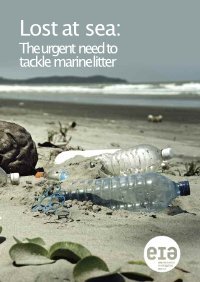
Lost at Sea: The urgent need to tackle marine litter

By Environmental Investigation Agency

Lost at Sea, calls on governments, industry, retailers, and consumers to help end the appalling damage that plastic waste inflicts on marine environments.

The report details how global plastics production has grown from five million tons per year in the 1960s to 299 million tons in 2013. It is found in our clothes, computers, and cars and has now found its way to our oceans, leaving no area uncontaminated. Plastics are ingested by seabirds and other marine life, concentrated in Arctic Sea ice, and are accumulating in deep sea sediments where microplastics are now more numerous than in surface waters. An estimated 80 percent of marine litterl originates from terrestrial waste sources, but can vary depending on geographical area.

This report outlines some of the impacts on marine creatures, with recommended actions to reduce the rising tide of plastic waste entering the oceans.

London: Environmental Investigation Agency, 2015. 12 p.

download
Nigeria: A Prime Example of the Resource Curse? Revisiting the Oil-Violence Link in the Niger Delta

By Mähler, Annegret

This paper studies the oil‐violence link in the Niger Delta, systematically taking into con‐ sideration domestic and international contextual factors. The case study, which focuses on explaining the increase in violence since the second half of the 1990s, confirms the differentiated interplay of resource‐specific and non‐resource‐specific causal factors. With re‐ gard to the key contextual conditions responsible for violence, the results underline the basic relevance of cultural cleavages and political‐institutional and socioeconomic weakness that existed even before the beginning of the “oil era.” Oil has indirectly boosted the risk of violent conflicts through a further distortion of the national economy. Moreover, the transition to democratic rule in 1999 decisively increased the opportunities for violent struggle, in a twofold manner: firstly, through the easing of political repression and, sec‐ ondly, through the spread of armed youth groups, which have been fostered by corrupt politicians. These incidents imply that violence in the Niger Delta is increasingly driven by the autonomous dynamics of an economy of violence: the involvement of security forces, politicians and (international) businessmen in illegal oil theft helps to explain the per‐ petuation of the violent conflicts at a low level of intensity.

Hamburg: German Institute of Global and Area Studies (GIGA) , 2010. 39p.

download
La Familia Drug Cartel: Implications for U.S.-Mexican Security

By George W. Grayson

La Familia Michoacana burst onto the national stage on September 6, 2006, when ruffians crashed into the seedy Sol y Sombra nightclub in Uruapan, Michoacán, and fired shots into the air. They screamed at the revelers to lie down, ripped open a plastic bag, and lobbed five human heads onto the beer-stained black and white dance floor. The day before these macabre pyrotechnics, the killers seized their prey from a mechanic’s shop and hacked off their heads with bowie knives while the men writhed in pain. “You don’t do something like that unless you want to send a big message,” said a U.S. law-enforcement official, speaking on condition of anonymity about an act of human depravity that would “cast a pall over the darkest nooks of hell.” The desperados left behind a note hailing their act as “divine justice,” adding that: "The Family doesn't kill for money; it doesn't kill women; it doesn't kill innocent people; only those who deserve to die, die. Everyone should know . . . this is divine justice.” While claiming to do the “Lord’s work,” the ruthless leaders of this syndicate have emerged as the dominant exporter of methamphetamines to the United States, even as they control scores of municipalities in Michoacán and neighboring states.

Carlisle, PA: U.S. Army War College Press, 2010. 128p.

download
A Walk in the Park

By Robin Clarke.

Join Robin Clarke, world class naturalist, on his dramatic venture in Bolivia, to establish the Amboró national park along with his friend and Bolivian zoologist Noel Kempff Mercado, who was eventually murdered by a drug cartel. Clarke battled for decades to save the beautiful rain forests, terminate the trafficking in endangered species, and grappled with the Californian mafia’s drug cartel. And he risked his life to save hikers lost in the wilds of the Bolivian mountains. Though this book is essentially a very personal memoir, it reads like a suspense story.

New York. Harrow and Heston, A Read-Me.Org Imprint. 2022. 391p.

download
Oath taking and the transnationalism of silence among Edo female sex workers in Italy

By Cynthia A. Olufade.

This book is based on Cynthia A. Olufade’s Master’s thesis ‘Oath taking and the transnationalism of silence among Edo female sex workers in Italy’, winner of the African Studies Centre, Leiden’s 2018 Africa Thesis Award. This annual award for Master’s students encourages student research and writing on Africa and promotes the study of African cultures and societies. This study aimed to interrogate the oath taking phenomena among Edo female sex workers in Italy. In a bid to understand how the oaths taken in Edo State, translates into an intangible aspect of the trafficking process. To achieve the aims of the study, the research utilised the qualitative method of data collection, it involved the use of in-depth interviews and observations. The study reveals that the transnational silence exhibited by different categories of actors in the Edo sex work network sustains the industry. The research also highlights that the oaths form only a part, albeit important of the construction of debt and bondage in the context of Edo transnational sex work. In light of its findings, the study concludes that the idea of transnationalism of silence is as effective as the oaths taken.

Leiden: Leiden University, 2020. 118p.

download
Challenge Of Crime In A Free Society

By the President’s Commission of Law Enforcement and Administration of Justice.

“This report is about crime in America — about those who commit it, about those who are its victims, and about what can be done to reduce it….The existence of crime, the talk about crime, the reports of crime, and the fear of crime have eroded the basic quality of life of many Americans.” From the Summary.

Harrow and Heston Classic reprint. (1967) 342 pages.

download
The Sussex Hate Crime Project: final report

By Jennifer Paterson, Mark A Walters, Rupert Brown, and Harriet Fearn.

This report summarises the findings from a five year research project, the Sussex Hate Crime Project, funded by the Leverhulme Trust. The aim was to examine the indirect impacts of hate crimes – how hate attacks on members of a community affect the thoughts, emotions and behaviours of other members of that community. The project focused on hate crimes targeted against LGB&T and Muslim communities and used a variety of different research methods, including questionnaire surveys, individual interviews and social psychological experiments.

Sussex, UK: University of Sussex, 2018. 54p.

download
Human Trafficking And Organised Crime: Trafficking for sexual exploitation and organised procuring in Finland

By Minna Viuhko and Anniina Jokinen.

Research on human trafficking and organised crime is relatively rare in Finland. During the recent years human trafficking, procuring and prostitution have been studied i.a. in a legal perspective (Roth 2007a; 2007b; 2008), in relation to cross-border prostitution (Marttila 2004; 2005a; 2005b; 2006; 2008), and in the context of commercialisation of sex (Jyrkinen 2005). The problems of identifying the victims of human trafficking (Putkonen 2008) and trafficking in women and illegal immigration (Lehti and Aromaa 2003) have also been examined, as well as the effects of globalization on the sex industry in Finland (Penttinen 2004). In addition, Finnish sex-workers (Kontula 2008), prostitution in Northern Finland (Skaffari and Urponen 2004; Korhonen 2003), sex bars (Lähteenmaa and Näre 1994; Näre and Lähteenmaa 1995; Näre 1998), and sex buyers (Keeler & Jyrkinen 1999) have been the focus of recent research. Also organised pandering and prostitution in Finland was studied in the beginning of the 2000s (Leskinen 2003). Organised crime is scrutinised by Junninen (2006) and Bäckman (2006). However, the connection between human trafficking and organised crime has not been a central focus of any specific recent study in Finland. It also seems that prostitution and procuring markets have changed during the recent years and because of this, new studies on the issue are needed. Although human trafficking, prostitution and organised crime have been researched extensively in the global context, in this report we refer mainly to the earlier Finnish studies. The aim is to provide a comprehensive view of the Finnish prostitution-related human trafficking situation in the context of organised crime. We approach the topic from a sociological perspective and with qualitative methods. This study covers the first decade of the 21st century.

Helsinki: European Institute for Crime Prevention and Control (HEUNI), 2009. 143p.

download
Geographical behaviour of stranger offenders in violent sexual crimes

By Harald Dern, Roland Frönd, Ursula Straub, Jens Vick and Rainer Witt.

“The perpetrator isn’t from here!” This claim is an understandable defensive response exhibited by local people following a sexual homicide,1 particularly in cases involving a child victim. The contention is grounded more in belief than in knowledge, however, as very few of the perpetrators who are later identified travelled a great distance to the crime scene. One occasionally encounters this notion in police circles as well, and it often makes the process of identifying the perpetrator even more difficult. When cases of this kind remain unsolved, the investigating unit in charge frequently requests the appropriate operational case analysis unit to perform a case analysis.2 As a rule, such cases analyses include the development of an offender profile containing, to the extent possible, statements about the unidentified perpetrator’s probable age, prior criminal record and place or region of residence. These criteria within the offender profile are of utmost importance to local investigative authorities. On the basis of a combination of these criteria, which can be researched in databases, analysts can, for example, identify a group of potential suspects and/or establish a scale of priorities within a known group of suspects (keyword “profiling”).

Wiesbaden: Bundeskriminalamt , 2005. 101p.

download
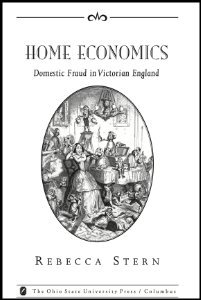
Home Economics: Domestic Fraud in Victorian England

By Rebecca Stern.

In Home Economics: Domestic Fraud in Victorian England, Rebecca Stern establishes fraud as a basic component of the Victorian popular imagination, key to its intimate, as well as corporate, systems of exchange. Although Victorian England is famous for revering the domestic realm as a sphere separate from the market and its concerns, actual households were hardly isolated havens of fiscal safety and innocence. Rather, the Victorian home was inevitably a marketplace, a site of purchase, exchange, and employment in which men and women hired or worked as servants, contracted marriages, managed children, and obtained furniture, clothing, food, and labor. Alongside the multiplication of joint-stock corporations and the rise of a credit-based economy, which dramatically increased fraud in the Victorian money market, the threat of swindling affected both actual household commerce and popular conceptions of ostensibly private, more emotive forms of exchange. Working with diverse primary material, including literature, legal cases, newspaper columns, illustrations, ballads, and pamphlets, Stern argues that the climate of fraud permeated Victorian popular ideologies about social transactions. Beyond providing a history of cases and categories of domestic deceit, Home Economics illustrates the diverse means by which Victorian culture engaged with, refuted, celebrated, represented, and consumed swindling in familial and other household relationships.

Columbus, OH: Ohio State University Press, 2008. 207p.

download
Violence in Nigeria: A qualitative and quantitative analysis

By Pérouse de Montclos.

Most of the academic literature on violence in Nigeria is qualitative. It rarely relies on quantitative data because police crime statistics are not reliable, or not available, or not even published. Moreover, the training of Nigerian social scientists often focuses on qualitative, cultural, and political issues. There is thus a need to bridge the qualitative and quantitative approaches of conflict studies.This book represents an innovation and fills a gap in this regard. It is the first to introduce a discussion on such issues in a coherent manner, relying on a database that fills the lacunae in data from the security forces. The authors underline the necessity of a trend analysis to decipher the patterns and the complexity of violence in very different fields: from oil production to cattle breeding, radical Islam to motor accidents, land conflicts to witchcraft, and so on. In addition, they argue for empirical investigation and a complementary approach using both qualitative and quantitative data. The book is therefore organized into two parts, with a focus first on statistical studies, then on fieldwork.

Leiden: African Studies Centre Leiden (ASCL), 2016. 217p.

download
Violence based on perceived or real sexual orientation and gender identity in Africa

Edited by CALS (Coalition of African Lesbians) and AMSHeR.

Violence against sexual minorities in Africa is rife. Persons belonging to or perceived to be members of the broad grouping ‘lesbian, gay, bisexual, transgender and intersex (LGBTI)’ are often victim of violence in African states. This violence is sometimes perpetrated by state actors, such as the members of the Police force, and more often by ordinary persons (non-state actors). By condoning violence by state actors, and by failing to diligently investigate, prosecute and punish the perpetrators of these acts, states fail to respect the basic right to security of some of its citizens. By condoning these actions, or by failing to act effectively, the state also violates its human rights obligations. The argument of this report is not that sexual minorities deserve special protection, but that they are entitled to the rights all other citizens have – the right to security, liberty, life, dignity, and a fair trial.

As members of the African Union, states are party to and should abide by their obligations under the African Charter on Human and Peoples’ Rights (African Charter). Like several other regional and international human rights instruments, the African Charter guarantees freedom from discrimination, and equal protection and equality of individuals and peoples’ before the law (articles 2, 3 and 19). The African Commission on Human and Peoples’ Rights (African Commission), the body monitoring compliance with the African Charter, has in various communications presented to it denounced acts of discrimination on several of the listed grounds of discrimination and has clearly established that ‘other status’ (in article 2 of the Charter) can be broadly interpreted to include grounds other than those explicitly listed under that provision of the African Charter. The Commission made its first pronouncement on sexual orientation and gender identity (SOGI) issues in its Concluding Observations on Cameroon’s periodic report of 2005 by expressing concern about the upsurge in intolerance towards sexual minorities. Most recently, the Chairperson of the Commission issued a statement on in April 2013 stating that the he Commission ‘equally denounces violence committed against individuals based on their sexual orientation as part of its mandate to protect individuals from all forms of violence’.

Pretoria: Pretoria University Law Press, 2013. 57p.

download
The Organizational Aspects of Corporate and Organizational Crime

Edited by Judith van Erp.

Corporate crimes seem endemic to modern society. Newspapers are filled on a daily basis with examples of financial manipulation, accounting fraud, food fraud, cartels, bribery, toxic spills and environmental harms, corporate human rights violations, insider trading, privacy violations, discrimination, corporate manslaughter or violence, and, recently, software manipulation. Clearly, the problem of corporate crime transcends the micro level of the individual ‘rotten apple’ (Ashforth et al. 2008; Monahan and Quinn 2006); although corporate crimes are ultimately committed by individual members of an organization, they have more structural roots, as the enabling and justifying organizational context in which they take place plays a defining role. Accounts of corporate fraud, misrepresentation, or deception that foreground individual offender’s motivations and characteristics, often fail to acknowledge that organizational decisions are more than the aggregation of individual choices and actions, and that organizations are more than simply the environment in which individual action takes place.

Basel: MDPI - Multidisciplinary Digital Publishing Institute, 2018. 152p.

download