Open Access Publisher and Free Library
CRIME+CRIMINOLOGY.jpeg

CRIME

Violent-Non-Violent-Cyber-Global-Organized-Environmental-Policing-Crime Prevention-Victimization

Posts in Social Sciences
Crime and Criminals 1887

By J. Sanderson Christison.

“Last winter I contributed a series of articles to the Chicago Tribune under the caption of "Jail Types," which were so favorably noticed, both in Europe and America, that my friends have urged their appearance in book form. With some typographical corrections, the articles are here presented in their original text, with a number of additional sketches. While they do not constitute a systematic treatise on the subject of criminology, they present the points of most importance in a form and style intended to attract and interest the general reader, who will find much to reflect upon in the line of duty as a member of society at large.” (from Preface)

Chicago: THE W. T. Keener Co. 1897 117p.

download
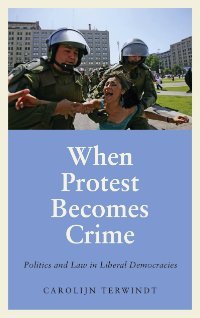
When Protest Becomes Crime

By Carolijn Terwindt.

Politics and Law in Liberal Democracies.How does protest become criminalised? Applying an anthropological perspective to political and legal conflicts, Carolijn Terwindt urges us to critically question the underlying interests and logic of prosecuting protesters. The book draws upon ethnographic research in Chile, Spain, and the United States to trace prosecutorial narratives in three protracted contentious episodes in liberal democracies. Terwindt examines the conflict between Chilean landowners and the indigenous Mapuche people, the Spanish state and the Basque independence movement, and the United States' criminalisation of 'eco-terrorists.' Exploring how patterns and mechanisms of prosecutorial narrative emerge through distinct political, social and democratic contexts, Terwindt shines a light on how prosecutorial narratives in each episode changed significantly over time. Challenging the law and justice system and warning against relying on criminal law to deal with socio-political conflicts, Terwindt's observations have implications for a wide range of actors and constituencies, including social movement activists, scholars, and prosecutors.

London: Pluto Press, 2020. 305p.

download
Piracy in World History

Edited by Stefan Amirell, Hans Hägerdal, Bruce Buchan.

In a modern global historical context, scholars have often regarded piracy as an essentially European concept which was inappropriately applied by the expanding European powers to the rest of the world, mainly for the purpose of furthering colonial forms of domination in the economic, political, military, legal and cultural spheres. By contrast, this edited volume highlights the relevance of both European and non-European understandings of piracy to the development of global maritime security and freedom of navigation. It explores the significance of ‘legal posturing’ on the part of those accused of piracy, as well as the existence of non-European laws and regulations regarding piracy and related forms of maritime violence in the early modern era. The authors in Piracy in World History highlight cases from various parts of the early-modern world, thereby explaining piracy as a global phenomenon.

Amsterdam: Amsterdam University Press, 2021. 290p.

download
Contemporary Criminological Issues: Moving Beyond Insecurity and Exclusion

Edited by Carolyn Côté-Lussier, David Moffette, and Justin Piché.

Contemporary Criminological Issues tackles some of today’s most pressing social issues, from the criminalization of Indigenous peoples to interpersonal violence, border control, and armed conflicts. This book advances cutting-edge theories and methods, with the aim of moving beyond the scholarship that reproduces insecurity and exclusion. The breadth of approaches encompasses much of the current critical criminological scholarship, serving as a counterpoint to the growth of managerial and administrative criminologies and the rise of explicitly exclusionary and punitive state policies and practices with respect to ‘crime’ and ‘security.’ This edited collection featuring two books, one in English and one in French, includes important contributions to knowledge and public policy by eminent experts and emerging scholars.

Ottawa: University of Ottawa Press, 2020. 322p.

download
Intergenerational transmission of criminal and violent behaviour

By Sytske Besemer.

The apple doesn't fall far from the tree', 'Like father like son', 'Chip off the old block'. All these idioms seem to suggest that offspring resemble their parents and this also applies to criminal behaviour. This dissertation investigates mechanisms that might explain why children with criminal parents have a higher risk of committing crime. Several explanations for this intergenerational transmission have been contrasted, such as social learning (imitation of behaviour), official bias against certain families, and transmission of risk factors. Sytske Besemer investigated this in England as well as in the Netherlands. She answers questions such as: does it matter when the parents committed crime in the child's life? Do more persistent offenders transmit crime more than sporadic offenders? Do violent offenders specifically transmit violent behaviour or general crime to their children? Might the police and courts be biased against certain families? Could a deprived environment explain why parents as well as children show criminal behaviour? Does parental imprisonment pose an extra risk? This dissertation is the first study to specifically investigate these mechanisms of intergenerational continuity. The study is scientifically relevant because of its breadth, integration of conviction data as well as data on self-reported offending and environmental risk factors, its comparative design and the long periods over which transmission is investigated. Furthermore, the dissertation has important policy implications. It demonstrates how penal policy designed to reduce criminal behaviour might actually increase this behaviour in the next generation. This is especially important since Western countries such as the United Kingdom and the Netherlands show an increasing trend towards more punitive policies.

Leiden: Sidestone Press, 2012. 198p.

download
Everyday Crime, Criminal Justice and Gender in Early Modern Bologna

By Sanne Muurling.

Female protagonists are commonly overlooked in the history of crime; especially in early modern Italy, where women’s scope of action is often portrayed as heavily restricted. This book redresses the notion of Italian women’s passivity, arguing that women’s crimes were far too common to be viewed as an anomaly. Based on over two thousand criminal complaints and investigation dossiers, Sanne Muurling charts the multifaceted impact of gender on patterns of recorded crime in early modern Bologna. While various socioeconomic and legal mechanisms withdrew women from the criminal justice process, the casebooks also reveal that women – as criminal offenders and savvy litigants – had an active hand in keeping the wheels of the court spinning.

Leiden; Boston: Brill, 2021. 265p.

download
Macrocriminology and Freedom

By John Braithwaite.

How can power over others be transformed to ‘power with’? It is possible to transform many institutions to build societies with less predation and more freedom. These stretch from families and institutions of gender to the United Nations. Some societies, times and places have crime rates a hundred times higher than others. Some police forces kill at a hundred times the rate of others. Some criminal corporations kill thousands more than others. Micro variables fail to explain these patterns. Prevention principles for that challenge are macrocriminological.

Freedom is conceived in a republican way as non-domination. Tempering domination prevents crime; crime prevention reduces domination. Many believe a high crime rate is a price of freedom. Not Braithwaite. His principles of crime control are to build freedom, temper power, lift people from poverty and reduce all forms of domination. Freedom requires a more just normative order. It requires cascading of peace by social movements for non-violence and non-domination. Periods of war, domination and anomie cascade with long lags to elevated crime, violence, inter-generational self-violence and ecocide. Cybercrime today poses risks of anomic nuclear wars.

Braithwaite’s proposals refine some of criminology’s central theories and sharpen their relevance to all varieties of freedom. They can be reduced to one sentence. Strengthen freedom to prevent crime, prevent crime to strengthen freedom.

Canberra: Australian National University Press, 2022. 814p.

download
Sourcebook of Criminal Justice Statistics: Forever Edition
Behavioural drivers of corruption facilitating illegal wildlife trade: Problem analysis and state of the field review

By Claudia Baez Camargo and Gayle Burges.s

This Problem Analysis is a review of the efficacy and opportunities for using social norm and behaviour change (SNBC) approaches to combat illegal wildlife trade (IWT) and similar natural resource-related corruption. Behavioural science is a rich and expansive field that has received prominent coverage in recent years for the promise it offers as a foundational yet underutilised approach to achieving biodiversity conservation. Extensive literature shows how SNBC initiatives can help combat diverse corruption problems, although for those related to natural resource management the evidence for doing so is sparse. This report synthesises the available information and suggests the next steps to redress this current lack of evidence.

Basel, SWIT: Basel Institute on Governance , 2022. 61p.

download
The Criminal

By Havelock Ellis.

The “science” of criminality as presented by the famous psychiatrist Havelock Ellis. Lavishly illustrated with empirical and physical evidence to support his theories, findings and other truth claims. In this 4th edition (1910) of The Criminal first published in 1890, Ellis is pleased that there is “an approximation to general agreement” concerning his findings.

London. New York. Walter Scott Publishing. (1910) 494 pages.

download
State of the Apes Section 2

Arcus Foundation.

Killing, Capture, Trade and Conservation. The illegal trade in live apes, ape meat and body parts occurs across all ape range states and poses a significant and growing threat to the long-term survival of wild ape populations world- wide. What was once a purely subsistence and cultural activity, now encompasses a global multi-million-dollar trade run by sophisticated trans-boundary criminal networks. The chal- lenge lies in teasing apart the complex and interrelated factors that drive the ape trade, while implementing strategies that do not exacerbate inequality. This volume of State of the Apes brings together original research and analysis with topical case studies and emerging best practices, to further the ape conservation agenda around killing, capture and trade.

Cambridge (2021) 410 pages.

download
State of the Apes

Arcus Foundation.

Killing, Capture, Trade and Conservation. The illegal trade in live apes, ape meat and body parts occurs across all ape range states and poses a significant and growing threat to the long-term survival of wild ape populations world- wide. What was once a purely subsistence and cultural activity, now encompasses a global multi-million-dollar trade run by sophisticated trans-boundary criminal networks. The chal- lenge lies in teasing apart the complex and interrelated factors that drive the ape trade, while implementing strategies that do not exacerbate inequality. This volume of State of the Apes brings together original research and analysis with topical case studies and emerging best practices, to further the ape conservation agenda around killing, capture and trade.

Cambridge University Press. (2021) 410 pages.

download
Journeys to freedom? Post-rescue ethnography of bonded labourers and sex workers in India

By Pankhuri Agarwal.

Working with a simplistic notion of release from bondage as “freedom”, mainstream anti-trafficking activists focus on rescue. They argue that victims of trafficking are “free” once removed from their employers. Critics contest this approach and argue that significantly less attention is paid to the role of the state and the NGOs in producing conditions due to which people remain vulnerable. This research lends empirical support to this critical position through a multi-sited ethnography of informal migrant workers, sex workers, and law enforcement officers, traversing through courtrooms, police stations, district welfare offices, worksites, shelter homes, and offices of NGOs, in New Delhi, India. It corroborates that the authority of law is compromised ‘on ground’ and is actively negotiated within the legal space of anti-trafficking efforts. Instead of being instantly transported to “freedom”, the workers end up in protracted legal proceedings, ranging two to thirty-seven years, to seek justice and rights. Their rights are neglected due to a Kafkaesque bureaucracy. Their mobility is restricted due to improper documentation. Their suffering is intensified through an evasive legal system. The result – arbitrary, unjust legal outcomes after an endless wait and dependence on intermediaries. In fact, their journey through the system, with cost and time overruns, has no direct or precise chronology, and often moves in a circle rather than reaching an end. The workers resemble the class of people that Denise Ferreira da Silva (2009) describes as “nobodies”. They continue to struggle to achieve the rights and recognition that would allow them to escape this status. The combination of empirical data, doctrinal analysis, and socio-legal theory in this research provide an insight on the harm and limits of the anti-trafficking discourse with reference to India.

Bristol, UK: University of Bristol, 2021. 233p.

download
Inside War. Understanding the Evolution of Organised Violence in the Global Era

By Fabio Armao.

The post-Cold War era was characterised by both the recurrence of state wars and the spread of forms of organised violence other than wars. Asymmetric warfare between alliances led by the USA and groups of insurgents, such as those witnessed in Afghanistan and Iraq, coexist alongside domestic conflicts, such as that of former Yugoslavia and, more recently, Libya and Syria; and still other conflicts involving gangs, mafias or narco-traffickers. The massive military-industrial complexes conceived in the context of the threat of nuclear Armageddon are still there of course, but they now coexist with irregular armies of insurgents carrying out massacres through the use of light weapons and improvised explosives devices. This book oppose the idea that this situation prefigures the return to an anarchical, pre-political condition, by assuming that new wars are rather the product of the blurring of the public-private divide, induced by the end of the Cold War, together with globalisation. As a consequence, also the internal and external factors are blurred; and ever more permeable and elusive is becoming even the border between war and crime. Inside War goes beyond a state-centered analysis and adopts an interdisciplinary and multilayered approach, and is intended to foster the dialogue among researchers from different fields. It places war at the core of analysis, assuming that the reality of war is what we make of it; and that the only insurmountable limit to our comprehension of war is our way of knowing and representing it. Fabio Armao teaches courses in Politics and Globalisation Processes, and Criminal Systems. He has been Visiting Professor at Cornell University, and co-convenor of the Standing Group on Organized Crime, European Consortium for Political Research. Founding member of T.wai (Torino World Affair Institute), he is also member of the Editorial Board of ‘Global Crime’. His research interests and publications focus on international wars and geopolitics, on violent non-state actors and transnational organised crime, and on urban security.

Warsaw, Poland: deGruyter, 2015. 224p.

download
Blood Feuds

By M. J. L. Hardy.

And the Payment of Blood Money in The Middle East. The classic text on feuding, violence and the rules of engagement. “…traces the history of a distinctive legal institution in Arab society, that of settling of blood feuds and the payment of blood money following cases of violent death of physical injury.”

Beirut (1963) 101p.

download
Hidden Histories of the Dead

By Elizabeth T. Hurren.

In this discipline-redefining book, Elizabeth T. Hurren maps the post-mortem journeys of bodies, body parts, organs and brains, inside the secretive culture of modern British medical research after WWII as the bodies of the deceased were harvested as bio-commons. Often the human stories behind these bodies were dissected, discarded or destroyed in death. Hidden Histories of the Dead recovers human faces and supply-lines in the archives that medical science neglected to acknowledge. It investigates the medical ethics of organ donation, the legal ambiguities of a lack of fully informed consent and the shifting boundaries of life and re-defining of medical death in a biotechnological era. Hurren reveals the implicit, explicit and missed body disputes that took second place to the economics of the national and international com modification of human material in global medical sciences of the Genome era. This title is also available as open access.

Cambridge University Press. (2021) 350 pages.

download
Representing O.J.- Murder, Criminal Justice and Mass Culture

By Gregg Barak.

Th author takes a broad-gauged cultural studies approach to understanding the "trial of the century." A ground-breaking work on the cultural study of news reporting, entertainment, and the administration of criminal justice. This book defined the field in the emerging area of news-making criminology.

NY. Harrow and Heston Publishers. 2012. 382p.

download
Wildlife trade on e-commerce sites in China, with a focus on mammoth ivory: A Rapid Assessment

By Sarah Stoner and Jenny Feltham.

‘Wildlife trade on e-commerce sites in China, with a focus on mammoth ivory: A Rapid Assessment’, analysis of this research reveals that the majority of advertised wildlife products are legally permitted for sale. However, the prevalence of mammoth ivory found legally for sale raises concerns about perpetuating demand for elephant ivory products which is now illegal in China. Our research looked at e-commerce platforms like Alibaba and 1688, allowing us to conclude that measures taken by these platforms and by the Chinese government have helped curb online sales of illegal wildlife products. The research identified 4,297 advertisements of wildlife, parts and derivatives, in total, 637 (15%) advertisements were identified as referring to the sale of Protected species, while a minimum of 3,657 (85%) of the identified advertisements were classified as Not Protected and therefore are deemed to be legal. Items derived from mammoth ivory were the most common type of wildlife product for sale on these platforms.

The Hague: Wildlife Justice Commission, 2021. 35p.

download
Illegal Wildlife Trade and Illicit Finance in the UK

By Alexandria Reid and Cathy Haenlein.

The UK is a leading advocate of the need to ‘follow the money’ linked to illegal wildlife trade (IWT) on the international stage. Yet, to date, little focus has been placed on examining the UK’s domestic record in this area. This report is the first independent study to address the UK’s exposure and response to IWT-linked illicit finance, offering recommendations to bolster enforcement action. Based on an open-source literature review, analysis of government enforcement data, a focused ‘call for evidence’ and 40 semi-structured interviews, the report assesses the UK’s record in relation to the Financial Action Task Force’s (FATF) 2020 recommendation that countries assess their exposure to IWT-linked illicit finance; ensure legal powers exist to bring financial charges in relation to IWT offending; and undertake greater numbers of parallel financial investigations in IWT cases.

London: Royal United Services Institute (RUSI), 2022. 60p.

download
The Global Illicit Trade Environment Index

By Economist Intelligence Unit.

Behind most every major headline, every major story in the news, lies another potential headline and another story about some form of illicit trade. From the refugee crises in the Mediterranean and South-east Asia, where the chaos is providing cover for human traffickers, to North Korea, a criminal state that couldn’t survive if it didn’t trade in arms, illicit cigarettes and counterfeit currency. Even the investigation into Russian interference in the 2016 US presidential election has led to indictments on money laundering, which is both a product of illicit trade and a facilitator of it. To measure how nations are addressing these and other issues related to illicit trade, the Transnational Alliance to Combat Illicit Trade (TRACIT) has commissioned the Economist Intelligence Unit to produce the Global Illicit Trade Environment Index. The global index expands upon an Asia-specific version, originally created by The Economist Intelligence Unit in2016toscore17economiesinAsiaonthe extent to which they enabled or prevented illicit trade. This year’s updated and expanded version now includes 84 economies, providing a global perspective and new insights on the trade’s societal and economic impacts.During research for the construction of the index and in writing this report, The Economist Intelligence Unit interviewed executives and • experts from across the world. Their time and insights are greatly appreciated.

NY: TRACIT 2017. 44p.

download