Open Access Publisher and Free Library
CRIME+CRIMINOLOGY.jpeg

CRIME

Violent-Non-Violent-Cyber-Global-Organized-Environmental-Policing-Crime Prevention-Victimization

Posts in Violence & Oppression
Reflections on prevention policies for gender based violence against women and girls: Debates in Brazil and Australia.

Edited by Thiago Pierobom de Ávila, Aline Yamamoto, Cristina Elsner de Faria, Jude McCulloch, Kerry Carrington

This collection of articles is the fruit of a joint project implemented between Brazilian and Australian researchers and professionals committed to the work of gender and family violence prevention and response. With the support of the Australian Embassy in Brazil and the United Nations Entity for Gender Equality and the Empowerment of Women Brazil Country Office, an innovative project was designed to support research exchange and strenghten academic collaboration, as well as foster a collaborative network of experts and professsionals, with the aim to enhance debate on gender and family violence prevention and extract lessons from both countries’ policy experiences. The Brazil-Australia Partnership on Preventing Domestic and Gender-based Violence project included several institutions. Amongst those institutions, it is important to highlight the role played by the Gender Equality Cabinet of the Public Prosecutor’s Office of the Federal District (MPDFT), along with the Monash Gender and Family Violence Prevention Centre and the School of Justice of Queensland University of Technology in Australia, in the organization of international conferences and the coordination of this collection. This initiative also had the active participation of the São Paulo Public Prosecutor’s Office (MPSP), the Pontifical Catholic University of São Paulo (PUC-SP), the Research Group on Criminal Policies of the Law Faculty at the University Center of Brasilia (UniCEUB), the Superior School of the Public Prosecutor of the Union (ESMPU), the Institute for Applied Economic Research (IPEA), the Center for Studies and Research on Women at the University of Brasilia (UnB) and the Gender Observatory of the Brazilian Senate. From the Australian side, the project was financially supported by the Council on Australia Latin America Relations (COALAR), and additionally to the institutions previously mentioned, it also had the participation of Australia’s National Research Organisation for Women’s Safety (ANROWS) and RMIT University. In June 2019, as part of the Project’s planning, a delegation of Australian professionals from governmental institutions, non-governmental organizations, academic and justice sectors came to Brazil (Brasilia and São Paulo) to explore the Brazilian policy framework and analyse program cases. Following it, in December 2019, a delegation of Brazilian experts went to Australia (Brisbane and Melbourne) to participate in expert workshops and conferences, as well as visit Australian successful programs for violence prevention. As a result, the project allowed an in-depth policy dialogue and advanced debates related to measuring the costs of domestic violence, as well as its impact on the economic growth. It also created opportunties to share good practices in gender equality policies, particularly primary prevention approaches, and to promote an integrated approach across the justice, public security and public health systems. The aim is to establish collaborative arrangements between both countries, contributing to policy development on gender and family violence prevention in Brazil and Australia.

Brasilia 2021 Ministério Público do Distrito Federal e Territórios, Brazil. 2021. 203p.

Organised Crime Groups, Criminal Agendas, Violence and Conflict: Implications for Engagement, Negotiations and Peace Processes

By Huma Haider

Organised crime actors can be spoilers in peace processes or partners in peace. Policymakers and practitioners have in some cases engaged in a strategic trade-off – accepting organised crime as part of the political settlement to achieve short-term stability. However, the relationship between illicit markets and conflict can deepen over time, entrenching criminal structures in the post-conflict state. As Kemp and Shaw (2014, p. 16) argue, ‘failure to integrate issues of organised crime into mediation strategies and peace processes will leave the international community with a potentially dangerous blind spot.’ Negotiating with organised crime groups and addressing criminal agendas in peace processes has become a reality in practice. There is, however, limited research on negotiating with criminal actors in peace processes. In seeking to address this gap, this paper reviews scholarly and practitioner literature across a wide range of research disciplines. 1 Key findings from this evidence review include: • Confrontation approaches have failed to resolve the problem of serious organised crime (SOC) and, in some cases, have fuelled more violence and criminality. • Organised crime groups that have strong internal cohesion and hierarchical leadership are more likely to be considered potential partners in negotiation. • Negotiation can be a necessary approach when criminal groups have strong territorial control – serving as de facto authorities that fill governance gaps. • Socio-economic and financial opportunities, and legal leniency, can encourage criminal actors to come to the negotiating table and agree on a deal. • A criminal group’s demand for legal leniency tends to be higher when they are expected to make larger concessions, such as to disarm and demobilise. • It is challenging to determine an ‘end state’ to a criminal group and to achieve complete resolution of the criminal agenda. • Lack of political will, inadequate resources, and weak long-term planning constrain positive outcomes of negotiation processes and deal implementation. • Negotiators and mediators need to mitigate the risks of moral hazard and strengthening of criminal groups. • The lack of broad public support for negotiating with SOC actors can undermine and destroy such processes. • A balance is needed between satisfying the interests of victims and of perpetrators to avoid alienating victims and producing public backlash for negotiated deals. • Many negotiations tend to occur in secret, yet lack of transparency can undermine the legitimacy and sustainability of outcomes. This review demonstrates the importance of creating a framework for engaging with criminality and organised crime groups that extends beyond confrontation – allowing for accommodation and incorporating a wider societal change agenda through transformation. This requires an understanding of when to address SOC and engage criminal groups in peace processes; how to motivate actors to negotiate, conclude and implement deals; how to increase the likelihood of positive outcomes; and how to mitigate risks associated with negotiation. Drawing on a wide breadth of interdisciplinary literature, this paper aims to provide insights into these crucial questions. The case studies illustrate key themes and findings from this review (see Appendix 1). In El Salvador, ineffective confrontation, the internal cohesion of gangs, and an opportune moment contributed to the the successful conclusion of a gang truce. It ultimately failed, however, due in large part to public outrage that translated into political pullback. In Colombia, negotiations with the FARC2 produced an innovative transitional justice mechanism that, alongside security guarantees, served as an effective inducement for disarmament. In contrast, the absence of a requirement to disarm and demobilise was a key criticism of negotiations with gangs in Jamaica, where violence has continued. In Mali and in Kosovo, international actors were initially hesitant to address organised crime in peace processes, yet this was subsequently recognised as contributing to longer-term instability, resulting in new strategies to address SOC actors.

SOC ACE Evidence Review Paper No. 3.

Birmingham, UK: University of Birmingham. 2023. 88p.

The prevalence of intimate partner violence in Australia: a national survey

By Ben Mathews, Kelsey Hegarty, Harriet MacMillan, et al.

Objectives: To estimate the prevalence in Australia of intimate partner violence, each intimate partner violence type, and multitype intimate partner violence, overall and by gender, age group, and sexual orientation. Study design: National survey; Composite Abuse Scale (Revised)— Short Form administered in mobile telephone interviews, as a component of the Australian Child Maltreatment Study. Setting: Australia, 9 April – 11 October 2021. Participants: 8503 people aged 16 years or older: 3500 aged 16–24 years and about 1000 each aged 25–34, 35–44, 45–54, 55–64, or 65 years or older. Main outcome measures: Proportions of participants who had ever been in an intimate partner relationship since the age of 16 years (overall, and by gender, age group, and sexual orientation) who reported ever experiencing intimate partner physical, sexual, or psychological violence. Results: Survey data were available for 8503 eligible participants (14% of eligible persons contacted), of whom 7022 had been in intimate relationships. The prevalence of experiencing any intimate partner violence was 44.8% (95% confidence interval [CI], 43.3–46.2%); physical violence was reported by 29.1% (95% CI, 27.7–30.4%) of participants, sexual violence by 11.7% (95% CI, 10.8–12.7%), and psychological violence by 41.2% (95% CI, 39.8–42.6%). The prevalence of experiencing intimate partner violence was significantly higher among women (48.4%; 95% CI, 46.3–50.4%) than men (40.4%; 95% CI, 38.3–42.5%); the prevalence of physical, sexual, and psychological violence were also higher for women. The proportion of participants of diverse genders who reported experiencing intimate partner violence was high (62 of 88 participants; 69%; 95% CI, 55–83%). The proportion of nonheterosexual participants who reported experiencing intimate partner violence (70.2%; 95% CI, 65.7–74.7%) was larger than for those of heterosexual orientation (43.1%; 95% CI, 41.6–44.6%). More women (33.7%; 95% CI, 31.7–35.6%) than men (22.7%; 95% CI, 20.9–24.5%) reported multitype intimate partner violence. Larger proportions of participants aged 25–44 years (51.4%; 95% CI, 48.9–53.9%) or 16–24 years (48.4%, 95% CI, 46.1–50.6%) reported experiencing intimate partner violence than of participants aged 45 years or older (39.9%; 95% CI, 37.9–41.9%). Conclusions: Intimate partner violence is widespread in Australia. Women are significantly more likely than men to experience any intimate partner violence, each type of violence, and multitype intimate partner violence. A comprehensive national prevention policy is needed, and clinicians should be helped with recognising and responding to intimate partner violence.

Medical Journal of Australia (MJA), 2025, 9p.

Abused and Neglected: A Gender Perspective on Aggravated Migrant Smuggling Offences and Response

By Ilias Chatzis, under the substantive guidance of Morgane Nicot, Martin Hemmi and Pascale Reinke-Schreiber

Migrant smuggling is a type of organized crime with links to other serious criminal offences, including illicit financial flows, corruption and trafficking in persons. Smuggling is an illegal service that is offered to countless people and requires a financial or material remuneration. Many migrants who do not have other viable options to move across borders, regularly depend on the services provided by smugglers to migrate. In principle, once the smuggling transaction is completed and the person arrives at the desired destination, the relationship between the smuggler and the migrant ceases without any harm being done. Too often, however, smuggled migrants and refugees suffer from various dangerous circumstances and abusive and violent treatment while under the control of smugglers. This Study considers the underlying risk factors that lead to abuse and violence during the smuggling operation and analyses whether gender influences the type of violence that is inflicted upon smuggled migrants. It also analyses the criminal justice responses to these abuses and the practical obstacles that may hamper the reporting, investigating or prosecuting of these “aggravations”. Finally, the Study provides recommendations for reducing the impunity of the people involved in such offences along the smuggling routes. UNODC, through the analysis of case law within its Knowledge Portal on Smuggling of Migrants, noted that there was little evidence of migrant smuggling being prosecuted in the countries where the smuggling venture occurred, let alone for cases where smuggling became abusive or exploitative. Yet, civil society, researchers and academia have increasingly raised their concerns over the extreme violence faced by people on the move along certain routes. To have a better understanding of the dynamics at play and the challenges to obtain justice in this context, this Study looks into two major transit regions, North Africa and Central America. It uses recently collected data from the UNODC Observatory on Migrant Smuggling that contains testimonies from frontline responders, smuggled migrants and migrant smugglers from West and North Africa. Aggravations occurring along the Central Mediterranean route also feature in the Study, as they are characteristic of the various types of abuse that migrants face before embarking on their dangerous sea crossings. It is often over those cases that courts in destination countries assess jurisdiction to prosecute smugglers and provide access to justice to the affected smuggled migrants. Practitioners were also interviewed for the Study to gain knowledge about smuggling characteristics in Central America. The present Study therefore focuses on these two regions, typically coined as transit regions for migrant smuggling operations.

Vienna: UNODC, 2021. 102p.

Cost of Violence Study: South Africa. A Halving Global Violence Study

By Richard Matzopoulos, Sarah Truen, and Ian Neethling,

Violence as a health priority impacts low- to middle-income countries (LMICs) disproportionately, which experience mortality rates almost 2.5 times greater than in high-income countries.

South Africa is among the LMICs most affected by violence with homicide rates six times global averages and among the world’s highest rates of gender-based violence, including rape and intimate partner violence. Several historical drivers have contributed, including colonialism, apartheid race-based social control policies, civil unrest and armed struggle, and the violent oppression of social justice movements. Some social drivers have endured, and income inequality—which still largely follows the apartheid-era race profiles and geography—has continued to be entrenched within society.

Within this milieu, certain progressive policies such as the 1996 National Crime Prevention Strategy and the 2020 National Strategic Plan on Gender-Based Violence and Femicide have sought to holistically address South Africa’s problem. However, uptake has been sub-optimal and violence has become so normalized that the extent of its harm to society is no longer fully recognized.

The authors in this study present evidence for the prevention of violence including examples from South Africa, and document the enormous toll of violence in terms of both its health impact on mortality and morbidity and its economic cost. In doing so, the study illustrates the costs of prevention are not prohibitive and emphasizes the urgent need to implement effective policies and interventions.

Recommendations in this study include highlighting the urgent need to provide financial and technical support for intersectoral collaboration, multilateral research cooperation, and research capacity to address violence, which in South Africa imposes a significant threat to development. Key aspects to support this agenda include: an integrated violence prevention approach to prevent violence at a societal level; and research to improve the evidence base for violence prevention and the quality of future costing studies.

New York: Center on International Cooperation, New York University, 2023. 54p.

Cost of Violence Study: Switzerland. A Halving Global Violence Report

By Li Li, Anke Hoeffler, and Teresa Artho

Background: Switzerland is a high-income country with low rates of fatal and nonfatal violence. Possibly due to these low prevalence rates, the costs of violence to Swiss society have received relatively little attention. Objective: This report aims to establish the prevalence rates of homicide and assaults (both physical and sexual) in Switzerland and assess their related tangible and intangible costs. Furthermore, it aims to estimate the economic cost of violence in Switzerland while specifically delving into the economic impact of domestic violence and intimate partner violence (IPV). Methods: We employ a comprehensive approach to categorize violence-related costs into three categories: (1) tangible direct costs; (2) tangible indirect costs; and (3) intangible costs. Within each category, we further classify costs based on the outcome of injuries, distinguishing between fatal and nonfatal violence. To estimate these costs, we use official crime data from the Federal Statistical Office for homicide and assaults. Recognizing the issue of underreporting in physical and sexual assault offenses, victimization surveys are employed to estimate the number of unreported cases. In the absence of Swiss data on the cost of injuries, the Centers for Disease Control and Prevention (CDC) provides estimates on medical costs, work loss costs, and the value of a statistical life (VSL)/quality of life loss costs. To ensure comparability, violence types are mapped, and costs are adjusted for purchasing power parity between the US and Switzerland. We also make adjustments to reflect the relative size of medical spending between the two countries. For comparison, we use prevalence rates of physical assault from Gallup. Using the same methodology, we also estimate the costs of domestic violence and IPV. Results: Our estimates suggest that the economic cost of violence in Switzerland is about USD 66.3 billion, equivalent to 8.3 percent of the country’s GDP, according to Swiss data. However, the costs could be as high as USD 73.4 billion, representing 9.2 percent of GDP, based on the Gallup World Poll data. Further, domestic violence alone accounts for at least 4.4 percent of Swiss GDP, while IPV accounts for at least 3.2 percent. Conclusions: Despite low Swiss prevalence rates of violence, the estimated costs of said violence are high. However, there is considerable uncertainty regarding our estimates due to missing Swiss data on medical and criminal justice costs, as well as the severity of injuries due to assault.

New York: NYU Center on International Cooperation, 2023. 36p

The Costs of Crime and and Violence: Expansion and Update of Estimates for Latin America and the Caribbean

By Perez-Vincent, Santiago M.; Puebla, David; Alvarado, Nathalie; Mejía, Luis Fernando; Cadena, Ximena; Higuera, Sebastián; Niño, José David

Crime and violence have plagued Latin America and the Caribbean (LAC) for decades. For the region’s inhabitants, living amid violence disrupts everyday life, while also complicating the operations of the State and private companies, and reducing societal well-being in multiple ways. The fear and experience of being a victim of crime can affect people’s physical and mental health, lower productivity, and shape fundamental decisions, such as where to live and how to pursue academic and professional development. For the Inter- American Development Bank (IDB) Group, the leading development institution in LAC, the high levels of crime and violence in the region pose a serious obstacle to achieving its strategic objectives of strengthening sustainable economic growth, reducing poverty and inequality, and addressing climate change. Quantifying the cost of crime is fundamental to understanding the gravity of the situation and aligning the dialogue to find concrete actions to remedy it. However, doing so is not a simple task. Measuring the cost of crime requires estimating what the lives of LAC citizens would be like if they were not exposed to crime and violence, and comparing this alternative scenario with the current situation. The complexity of the phenomenon of crime and violence—which affects and is affected by multiple individual and social factors—makes such a comparison difficult. The lack of accurate, up-to-date, and comparable data on crime and victimization in most countries in the region further complicates the task. Moreover, crime generates costs not only from the occurrence of criminal acts but also from the anticipation and fear of them, underscoring the importance of incorporating perceptions of insecurity in analyses of its costs and in shaping public policies. The response to crime also implies a reorientation of resources. Thus, these analyses should also include a review of the allocation and efficiency of public spending on security. Despite these difficulties, but mindful of them, the IDB has promoted a series of publications to aid in quantifying the cost of crime and violence in LAC. The most recent of these publications (Jaitman et al. , 2017) estimated that the direct costs of crime (in terms of (i) human capital lost due to homicides, reported non-lethal crimes, and deprivation of liberty; (ii) expenditures by private firms to prevent crime; and (iii) public spending to respond to and prevent crime) averaged between 3 and 3.5 percent of GDP in 17 countries in the region in 2014. This publication continues that line of research. Prepared in partnership with Fedesarrollo, the document expands, updates, and refines the estimates of these three direct costs of crime and violence. The updated results—covering 22 countries in the region—show that the costs of crime remain high, at around 3.4 percent of GDP in 2022. This is roughly equivalent to 78 percent of the public budget for education, twice the public budget for social assistance, and 12 times the budget for research and development in these countries. The new estimates also show the evolution of these costs over time. In addition to updating the estimates for these three direct costs, this new publication explores the indirect costs of crime and violence (i.e., dimensions affected by fear or by the experience of being a victim of crime or violence). It summarizes recent advances in the academic literature focused on quantifying the impact of crime and violence on various dimensions of development. The evidence, much of it from our region, reveals that crime and violence directly affect the objectives of the IDB Group’s new Institutional Strategy. They impact business and investment, reducing economic growth. They affect human capital accumulation and the health at birth of the most vulnerable populations, deepening poverty and inequality. And they are linked to the unrestricted exploitation of natural resources and ecosystem degradation, thus contributing to climate change. The study concludes with the analysis of three complementary studies, carried out within the framework of this publication, that seek to show how crime imposes costs on our region, affecting tourism activity, migration, and business productivity. Together, the analyses presented in both parts of the paper complement each other to provide a comprehensive look at the costs that crime and violence impose on LAC societies. However, much remains to be learned. Emerging dynamics, such as cybercrime, and complex ones, such as organized crime, pose challenges with likely profound impacts for the LAC region. These issues are evolving in a worrisome way. Organized criminal groups, which account for 50 percent of homicides in the Americas (UNODC, 2023), are increasing their presence and influence, raising concerns about rising violence across the region. In LAC, 54 percent of households report the presence of local criminal groups (Uribe et al. , 2022), and between 20 and 50 percent consider organized crime to be the greatest threat to their security (LAPOP, 2012, 2014, 2019). Improving the measurement of these phenomena and the quantification of their impacts should be an essential part of efforts to achieve an effective public policy approach. The IDB seeks to promote sound public sector institutions and policies that translate into more effective, efficient, and transparent governments that serve the needs of the people and foster sustainable and inclusive growth. The main objective of this publication is to provide information to support these objectives by raising awareness of the magnitude and variety of the impacts of crime and violence in our region. We also hope that it will promote debate and the development of new studies to deepen this complex but urgent research agenda.

Washington, DC: Inter-American Development Bank (“IDB”) 2024. 170p.

Violent Crime and Insecurity in Latin America and the Caribbean – A Macroeconomic Perspective

By Paul M Bisca, Vu Chau, Paolo Dudine, Raphael A Espinoza, Jean-Marc Fournier, Pierre Guérin, Niels-Jakob H Hansen, and Jorge Salas

Violent crime and insecurity remain major barriers to prosperity in Latin America and the Caribbean (LAC). With just 8 percent of the global population, LAC accounts for a third of the world’s homicides. Building on the existing literature, this paper aims to support economic policymakers and development partners by exploring the interplay between insecurity and macroeconomic outcomes, with emphasis on the relationship between violent crime and growth, the business climate, and public finances. The analysis shows that national-level crime indicators mask huge internal disparities, and that municipalities with 10 percent higher homicide rates have lower economic activity by around 4 percent. The paper develops an innovative measure of insecurity—the share of crime-related news—and shows its association with lower industrial production. Using firm-level data, it also estimates that the direct costs of crime, for firms, are around 7 percent of annual sales, and these are much higher when gangs and drug-trafficking organizations are present. Violent crime rises with macroeconomic instability, inequality, and governance problems. Using a large cross-country panel, the analysis finds that homicides increase when a country is affected by negative growth, high inflation, or a worsening of inequality. Victimization surveys indicate that where populations are concerned with the rule of law—impunity and police corruption—only one in five victims file their case with the police. Lack of trust and crime can be mutually reinforcing. Finally, the paper documents the fiscal burden of security provision and finds that spending tends to be inelastic to crime and that spending efficiency could be improved. The paper concludes with policy lessons and areas for additional collaboration between national authorities, international partners, and key stakeholders. These focus on data collection and analysis, economic policies that may address the root causes and manifestations of crime, strengthening rule of law institutions, and intensifying regional exchanges on security and public finance issues.

Washington, DC: : International Monetary Fund. 2024. 60p.

Cities and Violence: An Empirical Analysis of the Case of Costa Rica

By Gregorio Gimenez, Liubov Tkacheva, Katarína Svitková and Beatriz Barrado

The world’s urban population is booming; by 2050, six and a half billion people will be living in urban areas (World Bank, 2011a). On the one hand cities are significant population, infrastructure and economy hubs, as well as centers of political power; on the other hand, according to a time-proved assumption provided by the social sciences, the growth of cities tends to lead to disruption and crime (Shaw and McKay, 1942). The focus of this study on the city level is in line with the gradual transformation of governance and the growing importance of urban political economies (Sassen, 2006). In a public policy domain, the urban lens is useful for addressing site-specific issues – especially in the field of security (UN-Habitat, 2012; Jaitman and Guerrero, 2015). Crime rates tend to reveal geographic patterns, with higher concentration in urban areas (Eck and Weisburd, 2015; Johnson et al., 2007; Curman, Andersen and Brantingham, 2015; Gill, Wooditch and Weisburd, 2017). Understanding the degree to which urban concentration affects crime incidents is a fundamental issue to better plan crime prevention strategies and reduce violence. Focusing on the urban dimension of violent crime, the main aim of this study is to examine the relationship between the degree of urban concentration and the number of serious offenses, particularly homicides. Most existing research is focused on developed countries1 and often has methodological problems, mostly due to the use of databases with poor data quality. This problem is especially acute in developing countries, where crime statistics are usually fragmented, inconsistent, and aggregated only to the most macro levels. The lack of information and the weak national statistical systems are an important challenge for conducting rigorous research. It is important to emphasize that our contribution is not only in terms of providing additional evidence, but also in terms of the type of context that we analyze. As Ajzenman and Jaitman (2016:9) remark, providing empirical evidence from developing countries is crucial, given that “developing and developed countries are different in many dimensions, and also because crime levels tend to be much higher in the developing world and, in particular, in Latin America”. Specifically in Latin America, one of the main characteristics of the phenomenon of crime and violence is the degree of geographic concentration. Urban homicide rates are much higher than the average homicide rate, and almost half of all homicides are concentrated in 10% of municipalities (IDB, 2017). Violence in cities is not only homicidal and includes all types of crimes. Among the main causes associated with the concentration of crimes in urban areas, Alvarado and Muggah (2018) highlight those linked to the existence of large poor and peripheral neighbourhoods, the presence of disorderly urbanization and youth unemployment. Regarding our case study, Costa Rica, Vilalta Perdomo, Castillo and Torres (2016) highlight a series of specificities in the link between urbanization and delinquency. They point out that the Costa Rican population is largely concentrated around so-called Gran Área Metropolitana (GAM). They remark that, according to the Instituto Nacional de Estadística y Censos (INEC), in 2011 this area occupied 4% of the national territory and concentrated 53% of the population. Most of the country’s crimes take place in this area, which is characterized by higher unemployment, but also higher education and income levels. Higher education is related to higher earnings, which means that there are more potential victims for crimes against property. The authors also indicate that, within the GAM, San Jose is considered the most important zone of the country for the cocaine trade. Consequently, the GAM as a whole, and San Jose in particular, present the greatest challenges for public policies, especially in relation to urban development and public safety. Our in-depth econometric analysis of Costa Rica – a country of the Global South with significant urbanization and inequality rates – uses highly disaggregated socioeconomic data. It focuses on a wide range of types of crimes, in combination with econometric techniques which test for the presence of endogeineity, which constitutes a significant empirical contribution to the existing literature. The article is organized as follows. The next section presents a literature review in the field of urban violence in Latin America and Costa Rica. Its main objective is to provide a general context of citizen insecurity in the region and, particularly, the country, before presenting the case study in the third section. This empirical part develops an econometric model in order to demonstrate the connection between urban concentration and crime, particularly homicides.

DADOS, Rio de Janeiro, vol.64 (1): e20190127, 2021, 35p.

Cost of Violence Study: Costa Rica. A Halving Global Violence Report

By Andrés Fernández Arauz , and Camelie Ilie

Costa Rica faces an unprecedented challenge in the form of escalating violence concentrated within specific regions of the country. This report delves into the country's administrative divisions, shedding light on its eighty-two cantons, where critical security data is localized. Recent statistics up to September 2023 underline a concerning situation. While violence in Costa Rica remains lower than the regional average for Latin America, it is the country in the region where violence has grown the most since 1995. Levels of intentional homicide have surpassed the threshold of 10 per 100,000 people, which makes it an epidemic in the country according to the World Health Organization’s classification. Moreover, while violence remains a localized issue, the number of cantons surpassing ten homicides per 100,000 inhabitants has increased, especially in coastal and border regions Much of this increase can be attributed to organized crime and the proliferation of illegal weapons, which is made clear by the fact that the cantons that saw the most increase in violence are territories through which the entry and transit of drugs occur in the region. Beyond homicide, non-lethal assault and intimate partner violence are issues that have their own effects in society. While official statistics put the rate of assault at less than one percent, survey data shows the number to be close to 4 percent, and evenly spread between men and women. Intimate partner violence affects 7 percent of adult women, and has increased over the last few years. These statistics add to a diminishing perception of safety, with 65 percent of the population reporting feeling that the country is not safe. For women, the feeling of unsafety is even higher, with 73 percent of female respondents expressing that they feel a high likelihood of being assaulted, compared to 57 percent of male respondents. Specific recommendations are delineated to counter these challenges. First, a thorough reevaluation and update of previous social programs is imperative. This evaluation should delve deep into identifying flaws in the existing programs. Such scrutiny enables timely corrections and reveals valuable lessons to be gleaned from previous work. Second, a regional focus for targeted interventions is proposed. By channeling efforts into the six cantons witnessing the steepest rise in homicides, particularly those strategically located along coasts and borders, Costa Rica can address the problems at their source. These areas often serve as primary entry points for drug trafficking, requiring concentrated and specialized interventions. Finally, an integrated strategy involving local, national, and international stakeholders is emphasized. Present programs often lack alignment and coordination to address recent violence patterns, emphasizing the need for cohesive collaboration. This strategy should foster a cooperative spirit between local governments, ensuring harmonized and effective efforts. These joint initiatives can significantly curb violence in specific cantons by integrating local insights with national expertise

New York: NYU Center on International Cooperation, 2023. 46p.

Firms and Labor in Times of Violence: Evidence from the Mexican Drug War

By Hale Utar

This paper examines how firms in an emerging economy are affected by violence due to drug trafficking. Employing rich longitudinal plant-level data covering all of Mexico from 2005–2010, and using an instrumental variable strategy that exploits plausibly exogenous spatiotemporal variation in the homicide rate during the outbreak of drug-trade related violence in Mexico, I show that violence has a significant negative impact on plant output, product scope, employment, and capacity utilization. Resilience to violence differs widely across different types of employment within firms and across firms with different characteristics. Employment decline is driven by blue collar employment only. Dissecting within- and cross-plant heterogeneity points to a local labor supply channel where particularly plants utilizing low-wage, female, blue-collar workers are impacted. Consistent with a blue-collar labor supply shock, the results show a positive impact on average blue-collar wages and a negative impact on average white-collar wages at the firm level. Output elasticity of violence is also shown to be larger among low-wage, female-intensive but also domestically buying and selling plants. These findings show the rise of drug violence has significant distortive effects on domestic industrial development in Mexico and shed light on the characteristics of the most affected firms and the channels through which they are affected.

Bonn: IZA – Institute of Labor Economics, 2022. 121p.

Advancing a Coordinated Response to Intimate Partner Violence: A Systemwide Assessment from Allegheny County, Pennsylvania

By Marina Duane, Storm Ervin, Susan Nembhard, Roderick Taylor

Allegheny County, Pennsylvania, is one of the most populous counties in the United States, 1 and the sheer number of people who appear in courtrooms and need services there presents several challenges for responding to intimate partner violence (IPV). For example, in the Pittsburgh Municipal Court alone, 10,200 cases were filed in 2018, of which IPV cases constituted 16 percent (or 1,687 cases).2 The same is true for the child welfare system and family court, where IPV is one of the many issues clients face. To tackle this challenge, Allegheny County partners have made several notable strides in responding to IPV, including the following innovations: ◼ creating resource specialist positions in magisterial district judge (MDJ) courtrooms who now help divert aggressors into interventions and otherwise offer expedient connections to social services, which creates more options other than punishment ◼ becoming more trauma informed and family friendly at the family division of the Court of Common Pleas for survivors and families filing for Protection from Abuse (PFA) orders (figure 1 provides an example of a child-friendly playroom available to parents who come to the court to file a PFA order) ◼ initiating early screening for IPV at the Office of Children, Youth and Families and creating IPV specialist positions with the goal of helping families address IPV and reducing its negative impact on children without separating family members from one another From June 2018 to December 2020, researchers from the Urban Institute conducted a systemwide assessment of Allegheny County’s response to IPV. Based on a variety of data collection activities described in this report and in consultation with local partners, we developed the following three priority areas to improve interagency coordination and respond to IPV more effectively and efficiently: 1. Get the county’s top leaders to prioritize IPV over a defined period. Attention to the issue from the top can help mobilize individual agencies, enable IPV experts to turn recommendations into policies and practice, and direct resources where they can make the most impact. 2. Shift the focus from case outcomes to people’s experiences, especially during early encounters with formal services. Focusing on experiences can help overcome hesitancy and increase buy-in among aggressors and survivors. In turn, improved experiences can alleviate many survivors’ reluctance to turn to authorities or aggressors’ hesitancy to get help, through Battering Intervention Programs (BIPs). 3. Reinstitute and sustain IPV-focused fatality reviews and ensure they embrace a nonblaming culture. Moreover, identify the most critical system gaps and get assistance from leaders to implement the changes that the review team recommends. In addition to these interagency priorities, we also recommend that Allegheny County partners consider taking the following agency-specific steps: ◼ Establish a specialized IPV unit in the Allegheny County Public Defender office. ◼ Differentiate IPV from DV in the 911 system, in the PFA office, throughout the family division, and in all IPV-related cases coming through the child welfare system ◼ Record survivors’ information (including full names, date of birth, and other identifiers) consistently, and when possible ensure law enforcement and/or assistant district attorneys can safely and securely share survivors’ information with criminal and family division actors, the probation office, the Department of Human Services, and BIP providers. ◼ Prioritize and improve referrals to BIPs and play an active role in encouraging participants to view them as help (not as admissions of guilt) and in monitoring and encouraging attendance. ◼ Create a mechanism to consistently track aggressors’ and survivors’ experiences at system entry points.

Washington, DC: Urban Institute, 2021. 47p.

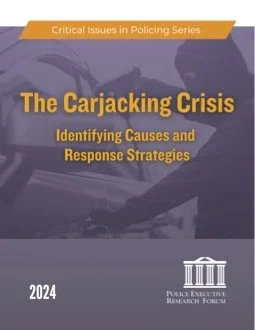
The Carjacking Crisis: Identifying Causes and Response Strategies

By Police Executive Research Forum

Jurisdictions across the United States have struggled with a dramatic rise in carjackings since 2020, leaving police leaders with questions about why this spike is occurring, why juveniles are committing this crime in unprecedented numbers, and why carjacking numbers remained elevated when the number of homicides and aggravated assaults started to decline. With those questions in mind, the Police Executive Research Forum (PERF) assembled a group of over 130 people from more than 50 different agencies for a National Summit on Carjacking in early 2024 in Washington, D.C. Throughout the day, police leaders, federal officials, local and federal prosecutors, researchers, executives, and business and community leaders discussed the situation in 7. D.C. Metropolitan Police Department. MPD Carjacking Dashboard. https://mpdc.dc.gov/page/carjacking. their communities and the challenges they have faced effectively addressing these incidents, particularly when juveniles are involved. Jurisdictions that have successfully brought their numbers down shared lessons learned and promising strategies for preventing carjackings. This report is drawn from the comments and observations of those who attended PERF’s summit and follow-up interviews. It looks at the carjacking problem in cities and counties across the country, offers insights into the factors causing the increase, and shares some of the innovative approaches jurisdictions are implementing — including the use of technology, data analysis, and cross-agency partnerships. The report includes 10 recommendations to help police and other stakeholders effectively respond to carjackings in their communities.

Washington, DC: Police Executive Research Forum, 2024. 62p.

Carjacking and Homicide in Minneapolis After the Police Killing of George Floyd: Evidence from an Interrupted Time Series Analysis

By Allison Lind , Ryan P. Larson , Susan M. Mason , Christopher Uggen

There is abundant research showing the disproportionate impacts of violence on health in disadvantaged neighborhoods, making an understanding of recent violent crime trends essential for promoting health equity. Carjackings have been of particular interest in the media, although little research has been undertaken on this violent crime. We use interrupted time series models to examine the impact of the police killing of George Floyd on the spatiotemporal patterns of carjacking in Minneapolis in relation to neighborhood disadvantage. To provide grounding, we compare our results to the well-studied patterns of homicides. Results indicate that carjackings both increased and dispersed spatially after the murder of George Floyd and subsequent social unrest, more so than homicides. Socially disadvantaged neighborhoods experienced the greatest absolute increase while more advantaged neighborhoods saw a greater relative increase. The challenge ahead is to identify policy responses that will effectively curb such violence without resorting to harsh and inequitable policing and sentencing practices.

Uncovering the Truth: Violence and Abuse Against Black Migrants in Immigration Detention

By Timantha Goff, et al.

Black migrants are subject to abuse and a disturbing pattern of racism, violence and harm at disproportionately higher incidence than non-Black migrants while in the custody of Immigration and Customs Enforcement (ICE), according to a groundbreaking report released today by Black-led and immigrants rights organizations.

Authored by the Black LGBTQIA+ Migrant Project (BLMP), Black Alliance for Just Immigration (BAJI), UndocuBlack Network, and Freedom for Immigrants (FFI), the first-of-its-kind study draws on nearly 17,000 call records from FFI’s National Immigration Detention Hotline spanning a six year period.

The data reveal a disturbing pattern of abuse perpetrated against Black migrants by ICE, private detention contractors and officials at contracting jails. Key findings include:

28 percent of all abuse-related reports made to the FFI hotline come from Black migrants, despite accounting for only only six percent of the total ICE detention population;

In some detention facilities in Alabama, Georgia and Louisiana, Black migrants are almost twice as likely to experience abuse inside detention compared to non-Black migrants;

Black non-binary migrants are 3.5 times more likely to experience abuse in immigration detention;

A new FOIA request corroborated a previous study that found that 24 percent of all people in solitary confinement are Black;

Over 53 percent of the most high-intensity and life-threatening cases that FFI intervened on in the six year period were on behalf of Black migrants.

“No one should live in fear or face punishment like this, especially not for the color of their skin or where they were born,” said Moussa Haba, an author of the report and monitoring fellow with Freedom for Immigrants who was previously detained by ICE. “The United States calls itself the land of the free, but for this to be true, Black migrants like me deserve to live in freedom, not from behind bars. What I experienced in detention was the opposite of freedom. Significant trauma was inflicted upon me during this time. I was subject to an unending racism in detention, and our new report demonstrates that I am not alone. It’s clear that detention must end to stop this cycle of abuse—and our fight to abolish detention is really a fight for freedom.”

“Being detained as an immigrant and having to fight for my freedom, I have faced discrimination based on my race,” said Marlissa, a 22-year-old Bahamian woman from South Florida currently detained at the Baker County Detention Center in Florida. “I have faced a lot of racism, a lot of disrespect, and a lot of unfairness in this system. I was threatened with solitary confinement after officers used racial slurs against me. Being detained, it’s like you have no say and you have no rights. It’s as if they look at you like you're beneath them, and the door is just being slammed in your face like you're an animal. Once released and given a second chance, the first thing I want to do is see my family because it's been almost three years. Then I want to continue my enrollment in college to follow my dream, and I want to continue to try to be successful in life and be a role model to my siblings and society.”

“It is not shocking that Black migrants in detention describe their conditions as torture, because detention is torture,” said Ronald Claude, director of policy & advocacy with Black Alliance for Just Immigration (BAJI). “Our report ‘Uncovering the Truth’ makes it clear that the U.S. immigration system is anti-Black. Detention is one of the enduring legacies of this country’s history of slavery and Jim Crow laws. Collecting race and ethnicity data is critical as it makes visible the Black people detained by the U.S. government.”

“The profit-driven mass incarceration system of the U.S. is built on the backs of formerly enslaved Black people and Black migrants,” said Haddy Gassama, policy and advocacy director of UndocuBlack Network. “White supremacist sentiments and anti-Blackness are not only endemic in the current systems of policing and immigration enforcement, they were the driving factors for the existence of these inhumane institutions. The U.S. has the world's largest carceral system, and Black folks bear the heaviest brunt of its cruelty. Immigration is a Black issue, and as long as the practice of detention exists, Black migrants will always face anti-Blackness within the system that was built to uniquely harm them. The findings of this report affirm the call for the complete abolition of all forms of detention.

Black Alliance for Just Immigration (BAJI) , 2022. 31p.

Crimes Against Morality: Unintended Consequences of Criminalizing Sex Work

By Lisa Cameron, Jennifer Seager, Manisha Shah

We examine the impact of criminalizing sex work, exploiting an event in which local officials unexpectedly criminalized sex work in one district in East Java, Indonesia, but not in neighboring districts. We collect data from female sex workers and their clients before and after the change. We find that criminalization increases sexually transmitted infections among female sex workers by 58 percent, measured by biological tests. This is driven by decreased condom access and use. We also find evidence that criminalization decreases earnings among women who left sex work due to criminalization, and decreases their ability to meet their children's school expenses while increasing the likelihood that children begin working to supplement household income. While criminalization has the potential to improve population STI outcomes if the market shrinks permanently, we show that five years post-criminalization the market has rebounded and the probability of STI transmission within the general population is likely to have increased.

Working Paper 27846

Cambridge, MA: National Bureau of Economic Research, 2020. 52p.

The State's Monopoly of Force and the Right to Bear Arms

By Robert Leiter

  In debates over the Second Amendment, the conventional view is that the government ought to possess a monopoly of legitimate force, subject to the right of individuals to act in emergency self-defense. Many treat the non-defensive circumstances in which our system decentralizes force as holdovers from the days of nonprofessional police and soldiers. When it comes to the Second Amendment, many believe that the only legitimate reason individuals may bear arms today is for individual self-defense against isolated criminal violence (e.g., to resist a home invasion). This Symposium Essay attacks the monopoly-of-force account, justifying the continued relevance of American law’s decentralization of legitimate force. This Essay argues that decentralization of force remains important for three reasons. First, despite the rise of professional police, American law enforcement still enforces core crimes below desirable levels, particularly in disadvantaged and rural communities and during times of civil unrest. Decentralization of force mitigates this underenforcement problem. And decentralization may be a better solution than providing more police because many areas where law is under-enforced also (paradoxically) suffer from the effects of overcriminalization. Second, American law has a mismatch between public duties and private rights. Providing effective law enforcement is only a public duty. Individuals have no private claim that the government adequately enforce the law or protect them against unlawful violence. Self-help and private law enforcement are the best remedies when governments undersupply needed levels of police protection. Third, even if the government has a monopoly of force, it does not follow that government officers are the only ones in whom the government’s monopoly may be vested. The “government” is an incorporeal entity whose power must be exercised by human agents. Agents do not perfectly carry out the tasks of their principals; some government officers commit malfeasance and nonfeasance. The decentralization of force provides a remedy for such abuses of office. Ultimately, this Essay concludes that the individual right to bear arms still has relevance for public defense and security. This fact should warrant consideration when determining the scope of the right, including that the  arms protected by the Second Amendment should continue to include those arms that are primarily useful for public security.   

 116 Nw. U. L. Rev. 35 (2021), 46p.

Serious Incidents Annual Report 2023/24

By The Youth Justice Board (UK)

Key findings The Serious Incident Annual Report provides a comprehensive overview of 438 serious incidents notified to the Youth Justice Board (YJB) in 2023-24 and the 546 children involved, highlighting key themes and recommendations. Whilst serious incident reporting has been mandatory for youth justice services (YJSs) since April 2022, this is the first year of published findings. A summary of the key findings is below. Whilst there are limitations to this data (please see section 2.1 Data Limitations), this report underscores the importance of addressing exploitation, knife crime, and the vulnerabilities of children with special educational needs or who are neurodivergent. It also highlights the need for timely, effective interventions which address underlying causes, and support to prevent children from being involved in serious incidents. To learn more about the notification process itself, please see the Serious incidents notification: standard operating procedures for YJSs - GOV.UK Criminal exploitation • 41% of all children notified were said to be gang affiliated, criminally exploited, or involved with the National Referral Mechanism (NRM) process1; 42% of all boys and 29% of all girls. • 20% of all children notified had exploitation concerns identified relating to the charge, of these; 58% an NRM referral was due to be made and 42% had a previous NRM referral but were awaiting a decision. Offence types • 55% of all notifications were for Grievous Bodily Harm (GBH), 16% for Rape, 13% for Murder/Manslaughter, 9% Attempted Murder and 3% Terrorism offences. • 56% of incidents notified were knife/blade enabled. • 92% of Attempted Murder notifications indicated there was knife or blade involvement, 84% of Murder/Manslaughter, and 62% of Grievous Bodily Harm incidents. • Rape charges increased from 8-13% of overall notifications when compared to the previous year. Contact with services • 36% of all children charged were under the supervision of a youth justice service at the time of the incident. • 24% were not known to YJSs, nor were they engaged in support from any other local authority service at the time of the incident. • 49% of children notified had no previous cautions and convictions, increasing to 92% for children charged with terrorism offences. • 71% of children notified for murder were not supervised by a youth justice service at the time of the incident, but were known to other agencies, social care, education, health. • 63% had some kind of previous contact with a local authority or Children and Adolescent Mental Health Service (CAMHS), of these 24% were engaged with both the youth justice service and one or more other services at the time of the incident. Safeguarding and vulnerabilities • Of the 63% who had some kind of previous contact with a local authority or CAMHS service; o 29% were identified as Children in Need or in Wales, Children with care and support needs o 19% were subject of a Child Protection Plan o 27% were in the care of the local authority as a looked after child, with 48% of these reported to have gang involvement and/or exploitation concerns. • 23% of children reported had identified Special Educational Needs, in Wales Additional Learning Needs/Neurodiversity. Of these; • 19% had an Education Health Care Plan (EHCP) or in Wales Individual Development Plans • 48% were diagnosed with Attention Deficit Disorder (ADD) or Attention Deficit Hyperactivity Disorder (ADHD) or Autistic Spectrum Disorder (ASD) • 53% reported risks associated with exploitation. • 43% of children notified due to their death whilst under the supervision of the youth justice service were victims of murder and 19% died by suicide. Demographics and over-representation • 96% of the children notified were boys • 68% of the children notified were 16-17 years old; 99% of these were boys. • 48% of all children notified were from ethnic minority backgrounds and significantly overrepresented compared to the general 10-17 population (27%) • 17% of children reported were from Black backgrounds and significantly overrepresented compared to the general 10-17 population (6%) • 17% of children reported were from Mixed backgrounds and significantly overrepresented compared to the general 10-17 population (6%) Timeliness of investigations and decision making • Rape offences took the longest from offence to charge, averaging 380 days, followed by terrorism offences at 230 days. • 32% of all incidents took longer than 180 days from offence to charge. • 17% of children notified were reported as being on bail for another matter at the time of the incident.

London: YJB, 2025. 38p.

Exploring banditry in Nigeria

By Sara T. Thompson

Banditry is a current problem in Nigeria. Historically, banditry has been a problem around the world. A review of the trends of banditry can help to identify and understand patterns that are present related to such criminal activity. To further understand and analyze this problem, this paper outlines the methodology for the systematic collection and creation of one major dataset that provides detailed information about bandit attacks in Nigeria. A review of around 1200 publications from peer-reviewed journals, news articles, and other relevant publications containing information about bandit attacks in Nigeria resulted in a dataset containing a sample of almost 1000 bandit attacks over the course of a decade in Nigeria. Upon analysis of this dataset, there are spatial concentrations related to where bandit attacks occurred as well as the identifcation of common types of bandit attacks. This paper concludes with recommendations for future research.

Security Journal, 2025, 17p.

Under the Radar: Corruption’s Role in Fueling Arms Diversion

By Michael Picard and Colby Goodman

As armed conflicts surge and organised crime activity rises, a new report from Transparency International Defence & Security (TI-DS) and Transparency International US (TI-US) reveals how corruption is quietly but consistently enabling weapons to fall into the wrong hands.

Under the Radar: Corruption’s Role in Fueling Arms Diversion investigates over 400 cases of diversion across 70 countries and shows how corruption, including bribery, embezzlement, and abuse of authority, serves as a key enabler of illicit arms flows.

The report’s release comes at a time of intensifying global concern over weapons diversion. It shows how corruption-fuelled diversion has empowered organised crime, fuelled armed conflict and violence, weakened military effectiveness, and undermined governance and security around the world.

“Despite greater recognition of corruption’s corrosive effect on arms control policies, corruption has often been sidelined in efforts to assess risks of arms diversion like a detective ignoring key clues in a recurring crime,” said Colby Goodman, Senior Researcher at TI US and TI-DS and one of the report’s authors. “Some states’ actions in recent years to add corruption risk assessments are a critical first step to better tackling this global scourge.”

The report provides critical information and tools for states to help identify and mitigate corruption-fuelled arms diversion as they develop new national arms control policies and engage in ongoing discussions within the United Nations on curbing arms diversion.

“The vast amounts of weapons diverted to terrorist groups in the past war on terror is a stark reminder of what happens when governments lose sight of corruption risks in the name of national security,” said Dr. Francesca Grandi, Head of Advocacy at Transparency International Defence & Security. “As demand for arms imports grows amid increasing global insecurity, this report offers practical and effective tools for arms exporting countries to strengthen integrity in their export control systems. It should also help spark more serious conversations globally, at the United Nations and in other fora, about sharing corruption-related information to prevent arms diversion.”

Some of the reports key findings include:

  • The theft or embezzlement of state-owned weapons for private gain is the most common type of corruption-fuelled diversion, accounting for over 350 cases. Bribery and abuse of authority remain a serious concern for diversion.

  • Corruption facilitates diversion at each stage of a weapon’s lifecycle, including production, international transfers, active use and storage, and disposal. The active use and storage stage had the most corruption-fuelled diversion cases followed by the disposal, international transfer, and production stages.

  • Many of the corruption-fuelled diversion cases resulted in devastating consequences for civilians. In more than 200 cases, military or security personnel reportedly colluded with illicit actors, such as insurgents or terrorists, in connection with arms diversion, which resulted in hundreds of deaths and injuries.

To address this urgent issue, the report offers key analysis and recommendations for states engaged in arms exports and imports:

  • Strengthen national policies by explicitly identifying corruption as a key risk for arms diversion and developing implementation guidelines that incorporate targeted risk assessment questions that measure key, often overlooked defence and security institutional controls.

  • Improve international collaboration on corruption in arms transfers by sharing information on corruption risks in arms transfers within the Arms Trade Treaty (ATT) framework and establishing working groups within the ATT and other multilateral for deeper discussions on the topic.

  • Support research and foreign aid to curb corruption-fuelled arms diversion, including funding studies on related issues and efforts to strengthen the integrity of defence and security institutions.

London: Transparency International, 2025. 50p.