Open Access Publisher and Free Library
CRIME+CRIMINOLOGY.jpeg

CRIME

Violent-Non-Violent-Cyber-Global-Organized-Environmental-Policing-Crime Prevention-Victimization

Posts in rule of law
Illegal Wildlife Trade in Uganda Tracking Progress on ‘Following the Money’

By Cathy Haenlein and Vincent Opyene.

Uganda occupies a critical position as a logistics hub for transnational flows of illegally sourced wildlife. As a source, consolidation and transit country, it acts as a nexus state – a ‘one-stop shop’ for criminals looking to illegally buy and sell wildlife, launder the proceeds, and tie this in with other illicit activity, from trafficking in timber to drugs. In this context, illegal wildlife trade (IWT) in Uganda is highly lucrative for criminals. Yet, little is known about the associated money flows, despite strong momentum to address the finances of IWT at a global level. In parallel, little research has assessed Uganda’s record in disrupting these flows. While the country has taken tangible steps to target the finances of IWT, the effectiveness of its actions has not yet been analysed. Based on 35 semi-structured interviews with key stakeholders, a rigorous review of open-source literature and analysis of confidential information, this paper assesses the relationship between IWT and illicit finance in Uganda and considers how effectively the country is responding to these threats. In doing so, the paper represents the most in-depth independent study of a single jurisdiction’s experience of and response to the finances of IWT to date.

London: Royal United Services Institute for Defence and Security Studies, 2021. 54p.
download
World Wildlife Crime Report Trafficking in protected species

United Nations Office on Drug and Crime

The heedless exploitation of nature by humans has led to unprecedented biodiversity loss and a worsening climate crisis. It is also a threat to human health, as highlighted by the COVID-19 pandemic. Three-quarters of all emerging infectious diseases are zoonotic, according to the United Nations Environment Programme, transferred from animals to humans, facilitated by environmental destruction and wildlife crime. Links between the global health crisis and the illegal exploitation of wildlife have been in the spotlight since it was suggested that wet markets selling wildlife, in this case pangolins, could have facilitated the transfer of COVID-19 to humans. The spike in public awareness of this connection has led to a push for new bans on the sale of wild animals for consumption. It is against this backdrop that the second edition of the World Wildlife Crime Report is published by the United Nations Office on Drugs and Crime (UNODC). The report shows wildlife crime to be a business that is global; lucrative, with high demand driving high prices; and extremely widespread. Nearly 6,000 different species of fauna and flora have been seized between 1999 and 2018, with nearly every country in the world playing a role in the illicit wildlife trade

Vienna; New York: UNODC, 2020. 134p.

download
Transnational crime and the interface between legal and illegal actors : the case of the illicit art and antiquities trade

By A. J. G. Tijhuis

In this PhD study the interface between legal governments and corporations on the one hand, and transnational criminals at the other hand, is analysed in depth. In the first part of the book, a typology of interfaces is developed that can be used to describe interfaces between legal and illegal actors. Furthermore, an analytical model, the so-called lockmodel, is developed with which the 'laundering' of all kinds of transnational crime can be understood. The analysis is based on the literature on transnational crime as well as a range of case-studies. The case studies include e.g. individual arms traffickers, commercial banks, intelligence agencies, charities, bank secrecy jurisdictions etc. The second part of the book discusses the results of an empirical study of the illicit art and antiquities trade that was part of the PhD project and which has hardly been studied before by criminologists. With the collected data, the use of the typology and lockmodel is looked at. It shows that the laundering of stolen art and antiquities can be understood by the lockmodel that was developed on the basis of other crimes. Finally, an extensive overview of the illicit art and antiquities trade is provided.

Nijmegen: The Netherlands: Wolf Legal Publishing, 2006. 243p.

download
Drug-related Homicide in Europe; Part 1: Research Report

R. de Bont. Liem.

Illicit drugs continue to be a profitable area for criminal organizations operating within the EU. Drug use and drug markets can act as facilitators for all types of violence, which could ultimately lead to homicide. Yet, drug-related homicide (DRH) has not been monitored. The development of a drug-related homicide data collection is necessary to study this phenomenon. This report provides a first step towards a European-level DRH monitor.

Leiden; Leiden University, 2017. 66p.

download
The Organizational Aspects of Corporate and Organizational Crime

Edited by Judith van Erp.

Corporate crimes seem endemic to modern society. Newspapers are filled on a daily basis with examples of financial manipulation, accounting fraud, food fraud, cartels, bribery, toxic spills and environmental harms, corporate human rights violations, insider trading, privacy violations, discrimination, corporate manslaughter or violence, and, recently, software manipulation. Clearly, the problem of corporate crime transcends the micro level of the individual ‘rotten apple’ (Ashforth et al. 2008; Monahan and Quinn 2006); although corporate crimes are ultimately committed by individual members of an organization, they have more structural roots, as the enabling and justifying organizational context in which they take place plays a defining role. Accounts of corporate fraud, misrepresentation, or deception that foreground individual offender’s motivations and characteristics, often fail to acknowledge that organizational decisions are more than the aggregation of individual choices and actions, and that organizations are more than simply the environment in which individual action takes place.

Basel: MDPI - Multidisciplinary Digital Publishing Institute, 2018. 152p.

download
The Dilemma of lawlessness: Organized Crime, Violence, Prosperity, and Security along Guatemala’s Borders

By Ralph Espach, Daniel Haering, Javier Melendez Quinonez, and Miguel Castillo Giron.

The Dilemma of Lawlessness explores in-depth three towns typical of Guatemala’s border regions and examines the economic, political, and security effects of the amplification of the drug trade in their streets, across their rivers, and on their footpaths. The cases reveal that trade has brought prosperity, but also danger, as illegal profits penetrate local businesses, government offices, and churches as longstanding local smuggling networks must contend with or accommodate the interests of Mexican cartels. The authors argue persuasively for the importance of cultivating local community capital to strengthen these communities’ resiliency in the face of these threats.

Quantico, VA: Marine Corps University Press (MCUP), 2016. 104p.

download
The Woman Who Murdered Black Satin: The Bermondsey Horror

By Albert Borowitz.

This is the first book-length study of an important early Victorian criminal case: the murder of Patrick O'Connor in Bermondsey (South London) by his mistress Marie Manning and her husband. Set in the midst of the raging cholera epidemic of 1849, the case stirred the passionate interest of all sectors of British society, including writers and public figures. Notable among students of the case was Charles Dickens, who based his characterization of Mile Hortense, the murderess in Bleak House, on the personality of Mrs. Manning. The Manning case represents a remarkable chapter in the social history of England. The apprehension of the Mannings was a major early triumph of Scotland Yard; and the efficient detective work, featuring the use of the newly invented electric telegraph, as well as pursuits by sea and rail, confirmed the early Victorian sense of security and the belief in progress based on science. At the same time, the case stirred controversy in a number of respects. The intensive coverage of the murder by a sensation-mongering press led to public outcries against the commercialization of crime; and the brutish behavior of the crowd at the Mannings' execution sharpened partisan feelings on the issue of capital punishment. Dickens was inspired to write his famous letters to the Times advocating an end to public hangings, and was denounced in turn by absolutist supporters of the abolition of the death penalty.

Columbus, OH: Ohio State University Press, 1981. 337p.

download
Drug Smuggling and Taking in India and Burma

By Roy K. Anderson.

“ At a time when the drug-evil, as it is called, is attracting so much attention all over the world, it does not seem out of place to tell the public something about how conditions brought it about.”

Calcutta: Thacker, Spink, 1922. 104p.

download
National Reconviction Statistics and Studies in Europe

Edited by Hans-Jörg Albrecht, Jörg-Martin Jehle.

Nationale Rückfallstatistiken und -untersuchungen in Europa. Recidivism belongs to the main categories of criminology, crime policy and criminal justice. If the target of preventing offenders from reoffending is taken seriously crime policy should be measured by success of certain penal sanctions in terms of relapses. Also institutions that deal directly with crime and offenders need to get basic information on the consequences of their actions; particularly general knowledge about offender groups at risk of reoffending. All these are reasons why representative recidivism studies are needed. Meanwhile a lot of European countries gather systematic and comprehensive information on recidivism, periodically and on a national level. This volume presents an exemplary collection of such endeavors: Austria, Estonia, France, Germany, Switzerland and a comparative study of England and Wales, the Netherlands and Scotland.

Universitätsverlag Göttingen 2014, 249p.

download
Cocaine: From Coca Fields to the Streets

Edited by Enrique Desmond Arias and Thomas Grisaffi.

The contributors to Cocaine analyze the contemporary production, transit, and consumption of cocaine throughout the Americas and the illicit economy's entanglement with local communities. Based on in-depth interviews and archival research, these essays examine how government agents, acting both within and outside the law, and criminal actors seek to manage the flow of illicit drugs to both maintain order and earn profits. Whether discussing the moral economy of coca cultivation in Bolivia, criminal organizations and drug traffickers in Mexico, or the routes cocaine takes as it travels into and through Guatemala, the contributors demonstrate how entire ways of life are built around cocaine commodification. They consider how the authority of state actors is coupled with the self-regulating practices of drug producers, traffickers, and dealers, complicating notions of governance and of the relationships between economic and moral economies. The collection also outlines a more progressive drug policy that acknowledges the important role drugs play in the lives of those at the urban and rural margins. Contributors. Enrique Desmond Arias, Lilian Bobea, Philippe Bourgois, Anthony W. Fontes, Robert Gay, Paul Gootenberg, Romain Le Cour Grandmaison, Thomas Grisaffi, Laurie Kain Hart, Annette Idler, George Karandinos, Fernando Montero, Dennis Rodgers, Taniele Rui, Cyrus Veeser, Autumn Zellers-León.

Durham, NC: Duke University Press, 2021. 377p.

download
Behavioural drivers of corruption facilitating illegal wildlife trade: Problem analysis and state of the field review

By Claudia Baez Camargo and Gayle Burges.s

This Problem Analysis is a review of the efficacy and opportunities for using social norm and behaviour change (SNBC) approaches to combat illegal wildlife trade (IWT) and similar natural resource-related corruption. Behavioural science is a rich and expansive field that has received prominent coverage in recent years for the promise it offers as a foundational yet underutilised approach to achieving biodiversity conservation. Extensive literature shows how SNBC initiatives can help combat diverse corruption problems, although for those related to natural resource management the evidence for doing so is sparse. This report synthesises the available information and suggests the next steps to redress this current lack of evidence.

Basel, SWIT: Basel Institute on Governance , 2022. 61p.

download
State of the Apes Section 2

Arcus Foundation.

Killing, Capture, Trade and Conservation. The illegal trade in live apes, ape meat and body parts occurs across all ape range states and poses a significant and growing threat to the long-term survival of wild ape populations world- wide. What was once a purely subsistence and cultural activity, now encompasses a global multi-million-dollar trade run by sophisticated trans-boundary criminal networks. The chal- lenge lies in teasing apart the complex and interrelated factors that drive the ape trade, while implementing strategies that do not exacerbate inequality. This volume of State of the Apes brings together original research and analysis with topical case studies and emerging best practices, to further the ape conservation agenda around killing, capture and trade.

Cambridge (2021) 410 pages.

download
State of the Apes

Arcus Foundation.

Killing, Capture, Trade and Conservation. The illegal trade in live apes, ape meat and body parts occurs across all ape range states and poses a significant and growing threat to the long-term survival of wild ape populations world- wide. What was once a purely subsistence and cultural activity, now encompasses a global multi-million-dollar trade run by sophisticated trans-boundary criminal networks. The chal- lenge lies in teasing apart the complex and interrelated factors that drive the ape trade, while implementing strategies that do not exacerbate inequality. This volume of State of the Apes brings together original research and analysis with topical case studies and emerging best practices, to further the ape conservation agenda around killing, capture and trade.

Cambridge University Press. (2021) 410 pages.

download
Inside War. Understanding the Evolution of Organised Violence in the Global Era

By Fabio Armao.

The post-Cold War era was characterised by both the recurrence of state wars and the spread of forms of organised violence other than wars. Asymmetric warfare between alliances led by the USA and groups of insurgents, such as those witnessed in Afghanistan and Iraq, coexist alongside domestic conflicts, such as that of former Yugoslavia and, more recently, Libya and Syria; and still other conflicts involving gangs, mafias or narco-traffickers. The massive military-industrial complexes conceived in the context of the threat of nuclear Armageddon are still there of course, but they now coexist with irregular armies of insurgents carrying out massacres through the use of light weapons and improvised explosives devices. This book oppose the idea that this situation prefigures the return to an anarchical, pre-political condition, by assuming that new wars are rather the product of the blurring of the public-private divide, induced by the end of the Cold War, together with globalisation. As a consequence, also the internal and external factors are blurred; and ever more permeable and elusive is becoming even the border between war and crime. Inside War goes beyond a state-centered analysis and adopts an interdisciplinary and multilayered approach, and is intended to foster the dialogue among researchers from different fields. It places war at the core of analysis, assuming that the reality of war is what we make of it; and that the only insurmountable limit to our comprehension of war is our way of knowing and representing it. Fabio Armao teaches courses in Politics and Globalisation Processes, and Criminal Systems. He has been Visiting Professor at Cornell University, and co-convenor of the Standing Group on Organized Crime, European Consortium for Political Research. Founding member of T.wai (Torino World Affair Institute), he is also member of the Editorial Board of ‘Global Crime’. His research interests and publications focus on international wars and geopolitics, on violent non-state actors and transnational organised crime, and on urban security.

Warsaw, Poland: deGruyter, 2015. 224p.

download
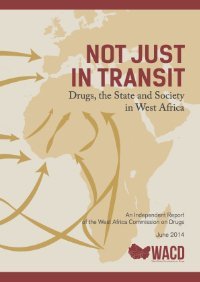
Not Just in Transit: Drugs, the State and Society in West Africa

By West Africa Commission on Drugs.

After looking at the evidence, consulting experts from the region and around the world, and visiting some of the most affected countries and communities in West Africa, the Commissioners of the West Africa Commission on Drugs detail their conclusions in this report about how the problems of drug trafficking and consumption in the region should be tackled.

Geneva: WACD, 2014. 64p.

download
Wildlife trade on e-commerce sites in China, with a focus on mammoth ivory: A Rapid Assessment

By Sarah Stoner and Jenny Feltham.

‘Wildlife trade on e-commerce sites in China, with a focus on mammoth ivory: A Rapid Assessment’, analysis of this research reveals that the majority of advertised wildlife products are legally permitted for sale. However, the prevalence of mammoth ivory found legally for sale raises concerns about perpetuating demand for elephant ivory products which is now illegal in China. Our research looked at e-commerce platforms like Alibaba and 1688, allowing us to conclude that measures taken by these platforms and by the Chinese government have helped curb online sales of illegal wildlife products. The research identified 4,297 advertisements of wildlife, parts and derivatives, in total, 637 (15%) advertisements were identified as referring to the sale of Protected species, while a minimum of 3,657 (85%) of the identified advertisements were classified as Not Protected and therefore are deemed to be legal. Items derived from mammoth ivory were the most common type of wildlife product for sale on these platforms.

The Hague: Wildlife Justice Commission, 2021. 35p.

download
Below the Surface: How Illegal, Unreported and Unregulated Fishing Threatens our Security

By Cathy Haenlein.

This paper argues that large-scale illegal, unreported and unregulated (IUU) fishing takes place on an organised, systematic scale across multiple jurisdictions, and must therefore be recognised as transnational organised crime. Such IUU fishing endangers food security, threatens livelihoods, undermines the rule of law and deprives states of revenues. It also intersects with other crimes, further amplifying the threat to security. Illegal, unreported and unregulated (IUU) fishing is conventionally treated by governments worldwide as the result of technical regulatory infringements. As such, it is often deemed a matter for industry regulators and dismissed as a trivial issue insofar as it relates to national security. This diagnosis is flawed. Certainly, IUU fishing is often small in scale and conducted by artisanal fishers out of ignorance of laws, or opportunism. Yet there is also evidence that much of today’s IUU fishing activity takes place on an organised, systematic scale across multiple jurisdictions. Testament to this are the volumes involved. Although numerous difficulties affect such calculations, global losses to IUU fishing have been estimated at some $10–23.5 billion annually – equivalent to 11–26 million tonnes of fish per year. The result is the plunder of the world’s oceans, threatening not only marine ecosystems, but also the security of human populations. Large-scale IUU fishing endangers food security, threatens livelihoods, undermines the rule of law and deprives states of revenues. It also intersects with other crimes, further amplifying the threat to security. Yet research on these security dimensions is limited and fragmented; our understanding of their dynamics remains partial. Policy and practical responses, meanwhile, remain ill-suited, failing to keep pace with the complexity of the threat posed.

London: Royal United Services Institute (RUSI), 2019. 56p.

download
Illegal Wildlife Trade and Illicit Finance in the UK

By Alexandria Reid and Cathy Haenlein.

The UK is a leading advocate of the need to ‘follow the money’ linked to illegal wildlife trade (IWT) on the international stage. Yet, to date, little focus has been placed on examining the UK’s domestic record in this area. This report is the first independent study to address the UK’s exposure and response to IWT-linked illicit finance, offering recommendations to bolster enforcement action. Based on an open-source literature review, analysis of government enforcement data, a focused ‘call for evidence’ and 40 semi-structured interviews, the report assesses the UK’s record in relation to the Financial Action Task Force’s (FATF) 2020 recommendation that countries assess their exposure to IWT-linked illicit finance; ensure legal powers exist to bring financial charges in relation to IWT offending; and undertake greater numbers of parallel financial investigations in IWT cases.

London: Royal United Services Institute (RUSI), 2022. 60p.

download
The Global Illicit Trade Environment Index

By Economist Intelligence Unit.

Behind most every major headline, every major story in the news, lies another potential headline and another story about some form of illicit trade. From the refugee crises in the Mediterranean and South-east Asia, where the chaos is providing cover for human traffickers, to North Korea, a criminal state that couldn’t survive if it didn’t trade in arms, illicit cigarettes and counterfeit currency. Even the investigation into Russian interference in the 2016 US presidential election has led to indictments on money laundering, which is both a product of illicit trade and a facilitator of it. To measure how nations are addressing these and other issues related to illicit trade, the Transnational Alliance to Combat Illicit Trade (TRACIT) has commissioned the Economist Intelligence Unit to produce the Global Illicit Trade Environment Index. The global index expands upon an Asia-specific version, originally created by The Economist Intelligence Unit in2016toscore17economiesinAsiaonthe extent to which they enabled or prevented illicit trade. This year’s updated and expanded version now includes 84 economies, providing a global perspective and new insights on the trade’s societal and economic impacts.During research for the construction of the index and in writing this report, The Economist Intelligence Unit interviewed executives and • experts from across the world. Their time and insights are greatly appreciated.

NY: TRACIT 2017. 44p.

download
lllicit Trade in Alcohol in Costa Rica: Challenges and Solutions

By Transnational Alliance to Combat Illicit Trade (TRACIT).

Illicit trade in alcohol is widespread, representing significant percentages of alcohol consumption worldwide and stripping governments of billions of dollars in tax revenues. In almost all cases, illicit trade in alcohol results in serious health risks to consumers, revenue loss, and brand degradation for legitimate manufacturers, as well as reduced tax revenue for governments. This publication explores the situation in Costa Rica and highlights a number of regulatory and legal mechanisms that the government can implement to better control and combat illicit alcohol.

NY: TRACIT(September 2019) 14p.

download