Open Access Publisher and Free Library
CRIME+CRIMINOLOGY.jpeg

CRIME

Violent-Non-Violent-Cyber-Global-Organized-Environmental-Policing-Crime Prevention-Victimization

Posts in rule of law
Honduras: A Pariah State, or Innovative Solutions to Organized Crime Deserving U.S. Support?

By R. Evan Ellis.

Since his election in 2013, Honduran President Juan Orlando Hernandez has made significant changes in the strategy and institutions of the country in combating the interrelated scourges of organized crime and violent gangs, which have prejudiced Honduras as well as its neighbors. Principal among these are the creation of a new inter-agency structure, de la Fuerza de Seguridad Interinstitucional Nacional (the National Inter-Agency Security Force [FUSINA]), integrating the military, police, prosecutors, special judges, and other state resources to combat organized crime and delinquency in the country. More controversially, he has created a new police force within the military, the Policía Militar del Orden Público (Military Police of Public Order [PMOP]), which has been deployed both to provide security to the nation’s principal urban areas, Tegucigalpa, Comayagüela and San Pedro Sula, and to participate in operations against organized crime groups. In the fight against narcotrafficking, he has advanced a concept of three interdependent “shields”:

1). An air shield to better control Honduran airspace, enabled by January 2014 enabling the shoot-down of suspected drug flights and the acquisition of three radars from Israel to support intercepts by the Honduran air force;

2). A maritime shield, with new naval bases on the country’s eastern coast, and new shallow-water and riverine assets for intercepting smugglers; and,

3). A land shield, including enhanced control of the border with Guatemala through the Task Force “Maya Chorti.”

Beyond FUSINA, the Hernandez administration has also sought to reform the nation’s national police, albeit with slow progress. It is also reforming the penitentiary system, dominated by the criminal gangs MS-13 and B-18.

The new security policies of the Hernandez administration against transnational organized crime and the gang threat, set forth in its Inter-Agency Security Plan and “OPERATION MORAZÁN,” have produced notable successes. With U.S. assistance, FUSINA and the Honduran government dismantled the leadership of the nation’s two principal family-based drug smuggling organizations, the Cachiros and the Los Valles, and significantly reduced the use of the national territory as a drug transit zone, particularly narco flights. Murders in the country have fallen from 86.5 per 100,000 in 2011, to 64 per 100,000 in 2014.

This monograph focuses on the evolution of the transnational organized crime and gang challenges in Honduras, the strategy and structures of the Hernandez administration in combating them, associated challenges, and provides recommendations for the U.S. military and policymakers to support the country in such efforts.

Carlisle, PA: U.S. Army War College Press, 2016. 104p.
download
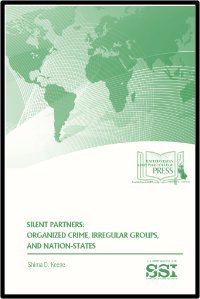
Silent Partners: Organized Crime, Irregular Groups, and Nation-States

By Shima D. Keene.

The U.S. Army increasingly faces adversaries that are difficult to define. The threat landscape is further complicated by the silent partnership between criminal organizations, irregular groups, and nation-states. This collaboration, whatever its exact nature, is problematic, because it confounds understanding of the adversary, making existing countermeasures less effective, and thus directly challenging U.S. national security interests. Military action taken without full appreciation of the dynamics of the nature of these relationships is likely to be ineffective at best or suffer unintended consequences. This monograph provides a comprehensive assessment of the threat to U.S. national security interests posed by the silent partners, as well as how the vulnerabilities of the relationships could be exploited to the advantage of the U.S. Army.

Carlisle, PA: U.S. Army War College Press, 2018. 72p.

download
Mexico's Narco-Insurgency and U.S. Counterdrug Policy

By Hal Brands.

In late 2007, the U.S. and Mexican governments unveiled the Merida Initiative. A 3-year, $1.4 billion counternarcotics assistance program, the Merida Initiative is designed to combat the drug-fueled violence that has ravaged Mexico of late. The initiative aims to strengthen the Mexican police and military, permitting them to take the offensive in the fight against Mexico’s powerful cartels. As currently designed, however, the Merida Initiative is unlikely to have a meaningful, long-term impact in restraining the drug trade and drug-related violence. Focussing largely on security, enforcement, and interdiction issues, it pays comparatively little attention to the deeper structural problems that fuel these destructive phenomena. These problems, ranging from official corruption to U.S. domestic drug consumption, have so far frustrated Mexican attempts to rein in the cartels, and will likely hinder the effectiveness of the Merida Initiative as well. To make U.S. counternarcotics policy fully effective, it will be imperative to forge a more holistic, better-integrated approach to the “war on drugs.”

Carlisle, PA: U.S. Army War College Press, 2008. 68p.

download
The Evolution of Los Zetas in Mexico and Central America: Sadism as an Instrument of Cartel Warfare

By George W. Grayson.

The United States has diplomatic relations with 194 independent nations. Of these, none is more important to America than Mexico in terms of trade, investment, tourism, natural resources, migration, energy, and security. In recent years, narco-violence has afflicted Mexico with more than 50,000 drug-related murders since 2007 and some 26,000 men, women, and children missing. President Enrique Peña Nieto has tried to divert national attention from the bloodshed through reforms in energy, education, anti-hunger, health-care, and other areas. Even though the death rate has declined since the chief executive took office on December 1, 2012, other crimes continue to plague his nation. Members of the business community report continual extortion demands; the national oil company PEMEX suffers widespread theft of oil, gas, explosives, and solvents (with which to prepare methamphetamines); hundreds of Central American migrants have shown up in mass graves; and the public identifies the police with corruption and villainy. Washington policymakers, who overwhelmingly concentrate on Asia and the Mideast, would be well-advised to focus on the acute dangers that lie principally below the Rio Grande, but whose deadly avatars are spilling into our nation.

Carlisle, PA: U.S. Army War College Press, 2014. 103p.

download
La Familia Drug Cartel: Implications for U.S.-Mexican Security

By George W. Grayson

La Familia Michoacana burst onto the national stage on September 6, 2006, when ruffians crashed into the seedy Sol y Sombra nightclub in Uruapan, Michoacán, and fired shots into the air. They screamed at the revelers to lie down, ripped open a plastic bag, and lobbed five human heads onto the beer-stained black and white dance floor. The day before these macabre pyrotechnics, the killers seized their prey from a mechanic’s shop and hacked off their heads with bowie knives while the men writhed in pain. “You don’t do something like that unless you want to send a big message,” said a U.S. law-enforcement official, speaking on condition of anonymity about an act of human depravity that would “cast a pall over the darkest nooks of hell.” The desperados left behind a note hailing their act as “divine justice,” adding that: "The Family doesn't kill for money; it doesn't kill women; it doesn't kill innocent people; only those who deserve to die, die. Everyone should know . . . this is divine justice.” While claiming to do the “Lord’s work,” the ruthless leaders of this syndicate have emerged as the dominant exporter of methamphetamines to the United States, even as they control scores of municipalities in Michoacán and neighboring states.

Carlisle, PA: U.S. Army War College Press, 2010. 128p.

download
The Real "Long War": The Illicit Drug Trade and the Role of the Military

By Geoffrey Till.

The 21st century has seen the growth of a number of nontraditional threats to international stability on which, trade, and thus U.S. peace and security, depends, and for the moment at least a reduced likelihood of continental scale warfighting operations, and something of a de-emphasis on major involvement in counterinsurgency operations. These nontraditional threats are, however, very real and should command a higher priority than they have done in the past, even in a period of budgetary constraint. The military have cost-effective contributions to make in countering the manufacture and distribution of illicit drugs, and in many cases can do so without serious detriment to their main warfighting role. Successfully completing this mission, however, will require the military to rethink their integration with the nonmilitary aspects of a whole-of-government approach, and almost certainly, their institutional preference for speedy victories in short wars.

Carlisle, PA: U.S. Army War College Press, 2020. 81p.

download
Cartel Car Bombings in Mexico

By John P. Sullivan and Robert J. Bunker.

Contemporary Mexican cartel use of car bombs began in mid-July 2010 and has since escalated. Given the proximity to the United States, some literally within miles of the border, the car bombings, with about 20 incidents identified over the last 2 1/2 years, should be of interest to local, state, and federal U.S. law enforcement, the U.S. Army, and other governmental institutions which are providing increasing support to Mexican federal agencies. An historical overview and analysis of cartel car bomb use in Mexico provides context, insights, and lessons learned stemming from the Medellin and Cali cartel car bombing campaigns. In order to generate insights into future cartel car bombings in Mexico, the identification of such potentials offers a glimpse into cartel “enemy intent,” a possible form of actionable strategic intelligence. For Mexico, steady and both slowly and quickly increasing car bomb use trajectories may exist. The prognosis for decreasing car bomb deployment appears unlikely. If cartel car bombs were to be deployed on U.S. soil or against U.S. personnel and facilities in Mexico, such as our consulates, we could expect that a pattern of indications and warnings (I&W) would be evident prior to such an attack(s). In that case, I&W would be drawn from precursor events such as grenade and improvised explosive device (IED) attacks (or attempted attacks) on our personnel and facilities and on evolving cartel car bomb deployment patterns in Mexico. The authors conclude with initial recommendations for U.S. Army and defense community support to the military and the federal, state, and local police agencies of the Mexican state, and the various U.S. federal, state, and local police agencies operating near the U.S.-Mexican border. The extent of support in intelligence, organization, training, and equipment is highlighted, as well as the extent that these forms of support should be implemented to counter cartel vehicle-borne IEDs and overall cartel threats.

Carlisle, PA: U.S. Army War College Books, 2013. 72p.

download
A Walk in the Park

By Robin Clarke.

Join Robin Clarke, world class naturalist, on his dramatic venture in Bolivia, to establish the Amboró national park along with his friend and Bolivian zoologist Noel Kempff Mercado, who was eventually murdered by a drug cartel. Clarke battled for decades to save the beautiful rain forests, terminate the trafficking in endangered species, and grappled with the Californian mafia’s drug cartel. And he risked his life to save hikers lost in the wilds of the Bolivian mountains. Though this book is essentially a very personal memoir, it reads like a suspense story.

New York. Harrow and Heston, A Read-Me.Org Imprint. 2022. 391p.

download
Towards an Efficient, Just and Humane Criminal Justice: Nordic Essays on Criminal Law, Criminology and Criminal Policy 1972-2020

By Raimo Lahti.

This collection of essays on criminal law, criminology and criminal policy includes a selection of my articles from the year of 1972 to the year of 2020, i.e., from a period of 49 years. The writings – in all 32 – chosen for the compilation are written in English and 30 of them have been published earlier. The main aim with this anthology is to crucially widen the access of my writings for comparative purposes. The articles are divided into seven chapters. Chapters I–VI cover a large spectrum of criminal sciences, and they are – in particular, in Chapters IV–VI – written rather from a Nordic (Scandinavian) than from a narrower Finnish perspective. The title of the anthology expresses its main message: towards an efficient, just and humane criminal justice. Chapter VII includes five articles related to bio-ethics and (criminal) law. The reason for that chapter’s attachment is to present some of my contributions to the new discipline entitled ‘Medical law and biolaw’.

The intensified internationalization and Europeanization of criminal law and justice have changed the role of comparative law and criminal sciences in general. There is much more need for comparison of legal orders due to the emergence of European criminal law and international criminal law and due to the increased interaction between European and global legal regulations and the national legal orders. We also need more evidence-based criminological research to be utilized in criminal-policy planning and as a foundation for rational policy decisions.

Helsinki: Suomalainen lakimiesyhdistys, 2021. 554p.

download
Oath taking and the transnationalism of silence among Edo female sex workers in Italy

By Cynthia A. Olufade.

This book is based on Cynthia A. Olufade’s Master’s thesis ‘Oath taking and the transnationalism of silence among Edo female sex workers in Italy’, winner of the African Studies Centre, Leiden’s 2018 Africa Thesis Award. This annual award for Master’s students encourages student research and writing on Africa and promotes the study of African cultures and societies. This study aimed to interrogate the oath taking phenomena among Edo female sex workers in Italy. In a bid to understand how the oaths taken in Edo State, translates into an intangible aspect of the trafficking process. To achieve the aims of the study, the research utilised the qualitative method of data collection, it involved the use of in-depth interviews and observations. The study reveals that the transnational silence exhibited by different categories of actors in the Edo sex work network sustains the industry. The research also highlights that the oaths form only a part, albeit important of the construction of debt and bondage in the context of Edo transnational sex work. In light of its findings, the study concludes that the idea of transnationalism of silence is as effective as the oaths taken.

Leiden: Leiden University, 2020. 118p.

download
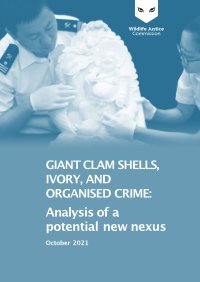
Giant clam shells, ivory, and organised crime: Analysis of a potential new nexus.

By Jenny Feltham and Luciana Capdepon

Giant clams are a traditional source of subsistence protein for coastal communities across Asia and Pacific regions. In recent decades, however, giant clams have been subject to poaching and commercial harvesting. Now viewed as high-value luxury food item, giant clams are also in demand in the international aquarium trade, and their shells are sought after for the ornamental carving industry. The Wildlife Justice Commission is concerned that giant clam shells are being used as a substitute for elephant ivory. Since China’s 2017 ban on the domestic elephant ivory trade, giant clam shells are an increasingly popular ivory alternative. These factors are likely to have contributed to the overexploitation and rapid decline of giant clam populations throughout many of their natural habitats. This not only puts increased pressure on the vulnerable giant clam, but also perpetuates demand for “premium” ivory products, sustaining the threat to elephant populations in the wild. Giant clams may not be as immediately charismatic as, say, elephants or rhinos, but they play a valuable role in maintaining healthy coral and oceans. Preventing biodiversity loss and preserving ocean eco-systems are crucial in the fight against catastrophic climate change.

The Hague: Wildlife Justice Commission, 2021. 41p.

download
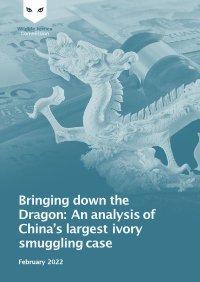
Bringing Down the Dragon: An analysis of China’s largest ivory smuggling case

By Jenny Feltham and Hendelene Prinsloo.

Bringing down the Dragon: An analysis of China’s largest ivory smuggling case, provides an in-depth case study of the inner workings of a wildlife crime syndicate and how Chinese authorities took it down by targeting the key facilitators and following the money. It also highlights how complex trafficking is and offers useful insights for law enforcement. The Chen organised crime group was a successful organised crime network, the kingpins, the untouchables. For several years they trafficked huge quantities of ivory by flying under the radar and eluding authorities through their corrupt connections. That all changed in late 2018 when Chen Chenzong, son of the Big Boss Chen Jiancheng, was arrested whilst dining out at a restaurant in China. Chinese authorities caught onto the network and the key players. They targeted the corrupt facilitators, in this instance a corrupt Customs Officer. Then followed the money, eventually seizing the assets of the Chen organised crime group. By December 2020, 17 members of the group had been convicted for their roles in trafficking 20.22 tonnes of ivory – equivalent to approximately 2000 elephants – from Nigeria to China. This case is a blueprint for law enforcement agencies investigating transnational organised wildlife crime.

The Hague: Wildlife Justice Commission, 2022. 56p.

download
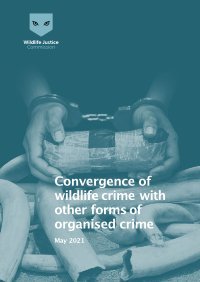
Convergence of wildlife crime with other forms of organised crime

By Jenny Feltham.

Through its own investigations and intelligence analysis, the Wildlife Justice Commission has also collected evidence of criminal networks that are dealing in wildlife alongside other illicit commodities. This report aims to present some of these examples, along with information collected from open sources, to contribute to the knowledge base on this issue. It sets out 12 case studies that illustrate a range of converging crime types and typologies that have transpired in different regions of the world to increase the understanding of how these intersections can occur on the ground. The case studies include six cases involving the trafficking of terrestrial wild animals, three cases involving fisheries crimes, and three cases involving timber crimes (although they are collectively referred to as wildlife crime throughout the report). The cases demonstrate that criminal groups may have a range of motivations to diversify their activities and engage in wildlife or other types of crime Convergence can occur opportunistically on an adhoc basis, as a complete “career shift” in response to changing conditions, or as part of a diversification strategy to increase profits across a range of illicit commodities. It can also occur transactionally when criminal groups in different markets exchange goods or services with each other or could be embedded to such an extent that the crimes are inextricably linked.

The Hague: Wildlife Justice Commission, 2021. 53p.

download
Corruption and wildlife trafficking

By Tanya Wyatt and Anh Ngoc Cao .

Wildlife trafficking is a growing global concern. It takes place in all regions of the world with those nations with high biodiversity being the source and the consumers of the wildlife as well as transit areas and hubs for smuggled wildlife. It is a significant contributor to biodiversity loss and species extinction. Many if not most developing nations are rich in biodiversity and therefore must contend with wildlife trafficking. It is a critical concern for these nations’ environment and economies. It has been documented that corruption is an essential component in the facilitation and perpetration of the illegal wildlife trade, but a comprehensive study into the scale, scope and structure has yet to be undertaken. This U4 Issue paper conducts a meta-study regarding corruption’s role in wildlife trafficking from the available literature, interviews with experts and a case study of Vietnam in an attempt to highlight concerns for bilateral donors in regards to conservation, environment and law enforcement programmes.

Bergen, Norway: U4 Anti-Corruption Resource Centre – Chr. Michelsen Institute, 2015. 54p.

download
Wildlife Trafficking: the illicit trade in wildlife, animal parts, and derivatives

Edited by Gian Ege, Andreas Schloenhardt, and Christian Schwarzenegger.

"Wildlife trafficking threatens the existence of many plant and animal species and accelerates the destruction of wildlife, forests, and other natural resources. It contributes to environmental degradation, destroys unique natural habitats, and deprives many countries and their populations of scarce renewable resources. Nevertheless, preventing and supressing the illegal trade in wildlife, animal parts, and plants is presently not a priority in many countries and it remains overlooked and poorly researched. The chapters included in this volume address causes, characteristics, and actors of wildlife trafficking, analyse detection methods, and explore different international and national legal frameworks."

Berlin: Carl Grossmann Verlag, 2020. 405p.

download
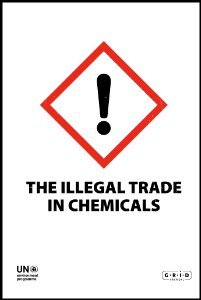
The Illegal Trade in Chemicals

By Amanda Cabrejo le Roux, Jacob Duer, Brenda Koekkoek, Arnold Kreilhuber, Elizabeth Mrema, and Andrew Raine of the United Nations Environment Programme (UNEP).

Chemicals provide important benefits to society and play a vital role in the global economy, but they also carry risks for the environment and human health, with greater risks to vulnerable social groups. Chemicals can contaminate soil, air and water and can damage biodiversity, and human exposure to chemicals is implicated in a range of acute and chronic health effects. As industries have grown in recent decades, so too have environmental and health concerns, and now a range of multilateral environmental agreements together with initiatives, non-binding legal instruments, national legislation and policy frameworks regulate the trade in chemicals

Arendal: UNEP and GRID-Arendal , 2020 86p.

download
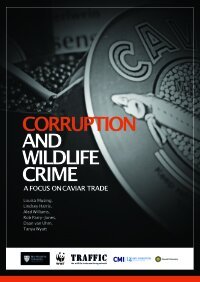
Corruption And Wildlife Crime: A Focus On Caviar Trade

By Louisa Musing, Lindsey Harris, Aled Williams, Rob Parry-Jones, Daan van Uhm, and Tanya Wyatt.

While conservation practitioner anecdotes and existing empirical research all point to corruption as a main facilitator enabling wildlife crime, there is still limited knowledge about what can change this situation and help reverse the pernicious impact of corruption on conservation outcomes in practice. Corruption has a negative impact on conservation by reducing the effectiveness of conservation programmes, reducing law enforcement and political support, as well as establishing incentives for the overexploitation of resources. It undermines the effectiveness and legitimacy of laws and regulations and can be an indicator of the presence of organised crime groups. Corruption needs to be addressed as a central part of the approach to tackling wildlife crime.

Cambridge, UK: A TRAFFIC, WWF, U4 ACRC, Utrecht University, and Northumbria University, 2019. 42p.

download
Gone With the Wind: The Effect of Air Pollution on Crime – Evidence From Germany

By Yasemin Karamik And Kathrine von Graevenitz.

Recent evidence suggests a positive impact of air pollution on crime in large cities. We provide first evidence on the potential effect of air pollution on criminal activity using a broader set of geographical regions with lower air pollution levels. We use a unique combination of daily crime data with weather and emission records for the states of Baden-Wuerttemberg (BW) and Rhineland-Palatinate (RLP) in Germany from 2015 until 2017. We exploit the variation in air pollution which is attributable to changes in daily wind direction. We find that an increase of one standard deviation of PM10 leads to an increase in crime of 4.6%.

Mannheim, Germany: ZEW – Leibniz Centre for European Economic Research, 2002. 47p.

download
Adventurers and Risk-Takers: Finnish professional criminals and their organisations in the 1990s cross-border criminality

By Mika Junninen.

This study concentrates on Finnish professional criminals1 and their organisations in Finland and in cross-border crime operations. It is based on qualitative empirical material. The basic idea of this study was developed when working on the study “Crime across the Border - Finnish Professional Criminals and Estonian Crime Opportunities” (Junninen 1999). In the course of that study, it became clear that some Finnish professional criminals are working closely together and taking advantage of the national border, and have a good relationship with the Estonian underworld when committing crimes either in Finland or in Estonia. In the present study, I focus on 14 different Finnish groups active in the 1990s in smuggling (alcohol, tobacco and drugs), and/or procuring prostitutes, and/or handling stolen goods. The objective was to gather collective information about the world of the Finnish professional criminals by studying the personal characteristics of the group members, the crimes they commit, and the structures of the criminal groups. According to Finnish police sources, Finnish professional criminals have in recent years widened their scope of activity, become more violent and started to work more closely together (Häkämies 1999). In the overviews made by the Finnish National Bureau of Investigation, when EU standards for defining organised crime groups2 are applied, there were 27 organised crime groups active in Finland in 1999. The number of such groups has increased rapidly: in 1995, police identified only 10 active groups in Finland. (NBI 2000)3 . In addition, the criminal justice system operators of the European Union countries have paid attention to the growing organised crime problem and its impact on the work of the judges and prosecutors in member countries. In consequence, the EU created a European justice network in Amsterdam in 1997. In the network meetings, judges and prosecutors practise co-operation of authorities for solving cases where an organised crime group is operating in several EU countries. (Vallisaari 1997.) The global and national lack of information and studies concerning organised crime in general, and the internal and international relations of its participants made this research phenomenon more interesting and challenging.

Helsinki: European Institute for Crime Prevention and Control (HEUNI), 2006. 202p.

download
Human Trafficking And Organised Crime: Trafficking for sexual exploitation and organised procuring in Finland

By Minna Viuhko and Anniina Jokinen.

Research on human trafficking and organised crime is relatively rare in Finland. During the recent years human trafficking, procuring and prostitution have been studied i.a. in a legal perspective (Roth 2007a; 2007b; 2008), in relation to cross-border prostitution (Marttila 2004; 2005a; 2005b; 2006; 2008), and in the context of commercialisation of sex (Jyrkinen 2005). The problems of identifying the victims of human trafficking (Putkonen 2008) and trafficking in women and illegal immigration (Lehti and Aromaa 2003) have also been examined, as well as the effects of globalization on the sex industry in Finland (Penttinen 2004). In addition, Finnish sex-workers (Kontula 2008), prostitution in Northern Finland (Skaffari and Urponen 2004; Korhonen 2003), sex bars (Lähteenmaa and Näre 1994; Näre and Lähteenmaa 1995; Näre 1998), and sex buyers (Keeler & Jyrkinen 1999) have been the focus of recent research. Also organised pandering and prostitution in Finland was studied in the beginning of the 2000s (Leskinen 2003). Organised crime is scrutinised by Junninen (2006) and Bäckman (2006). However, the connection between human trafficking and organised crime has not been a central focus of any specific recent study in Finland. It also seems that prostitution and procuring markets have changed during the recent years and because of this, new studies on the issue are needed. Although human trafficking, prostitution and organised crime have been researched extensively in the global context, in this report we refer mainly to the earlier Finnish studies. The aim is to provide a comprehensive view of the Finnish prostitution-related human trafficking situation in the context of organised crime. We approach the topic from a sociological perspective and with qualitative methods. This study covers the first decade of the 21st century.

Helsinki: European Institute for Crime Prevention and Control (HEUNI), 2009. 143p.

download