Open Access Publisher and Free Library
CRIME+CRIMINOLOGY.jpeg

CRIME

Violent-Non-Violent-Cyber-Global-Organized-Environmental-Policing-Crime Prevention-Victimization

Posts in INCLUSION
Ah Nam: The Downfall of Vietnam's Wolf of Wall Street

By Wildlife Justice Commission

The report aims to bring to light key aspects of the criminal dynamics of ivory and rhino horn trafficking in Vietnam and the efforts of Vietnamese law enforcement authorities in bringing Ah Nam to justice. The Wildlife Justice Commission initiated an investigation in 2016 to delve into the illegal ivory and rhino horn trade in Vietnam and gain a deeper insight into the Africa-Asia supply chain. By January 2017, Ah Nam had become the main focus of the investigation due to his growing role. By 2019 he had asserted his position as one of Vietnam’s top wildlife criminals, acting as lead broker for a sophisticated criminal network responsible for trafficking vast quantities of elephant ivory and rhino horn from Africa to China via Vietnam. The Wildlife Justice Commission’s investigations into Ah Nam and his network resulted in the collection of a wealth of intelligence and evidence. This information on Ah Nam and his key associate Duong Van Phong was compiled in a detailed Case File and provided to the Vietnam Environmental Crime Police and the Anti-Smuggling Bureau of China Customs in December 2017. The two men were partners in crime for the entire period of the investigation and were eventually arrested and convicted together. Over the course of the three-year investigation, the Wildlife Justice Commission documented Ah Nam’s access to a minimum of 17.6 tonnes of raw ivory (valued at more than USD 9 million), and 477 kg of rhino horn (valued at more than USD 8 million). This quantity of product is estimated to equate to the killing of approximately 1,760 elephants and more than 106 rhinos, and still represents only a fraction of what Ah Nam’s network is likely to have trafficked. The Wildlife Justice Commission’s efforts directly contributed to the arrest of 12 other individuals in Vietnam – 10 of whom were imprisoned and two were released without charges – and the seizure of 1,428 kg of ivory and 18 rhino horns. Ah Nam’s conviction and heavy penalty also send an important message: the risk-reward ratio for wildlife crime is changing in Vietnam. Analysis of published court judgements in China shows that additional cases linked to Ah Nam have continued to be prosecuted and convicted, while the Wildlife Justice Commission’s investigations have found many Vietnamese traders are no longer operating due to the increased fear of arrest and difficulties in smuggling products across the border into China.

The Hague: Wildlife Justice Commission, 2022,. 59p.

download
Illicit Wildlife Markets and the Dark Web: A Scenario of the Changing Dynamics

By Felipe Thomas

This brief gives an overview of the online illicit wildlife trade (IWT), and analyzes the current state of this market, and speculates on its likely developments. Although there is currently very little IWT activity on the dark web, we expect this to change as enforcement steps up, and this brief explores how that process might evolve.The online market for illicit wildlife trade appears to be disaggregated and characterized by ‘blurred channels’, yet, at the same time, it is relatively ‘out in the open’, which points either to a lack of enforcement or challenges that stymie effective enforcement.However, as and when enforcement activities are stepped up, it is probable that the IWT will respond by moving along a specific pathway. This trajectory would first see a move to centralized dark-web markets, then to specialist, and smaller, dark-web ‘shops’. These market shifts would be followed by ‘markets by invitation’ and then distributed, peer-to-peer marketplaces. Under this scenario of a changing market, each step would be accompanied by a decline in market size caused by a decrease in potential consumers (and vendors), but this market loss would be counteracted by an increase in marketing efficiencies and organization on the part of the vendors.

Geneva: Global Initiative Against Transnational Organized Crime, 2018. 15p.

download
Stolen Amazon: The Roots of Environmental Crime in Five Countries By InSight Crime and Igarape

By InSight Crime and Igarape

Environmental crime respects no borders. This investigation – conducted with Igarapé Institute – reveals how wildlife trafficking, illegal logging, illicit gold mining, and slash-and-burn land clearance are spreading across five Amazonian countries: Ecuador, Venezuela, Bolivia, Guyana, and Suriname. These countries account for some 20 percent of the Amazon Basin and have collectively lost 10 million hectares of forest over the last two decades -- an area the size of Portugal. This in-depth report traces the chain of actors involved in the plunder, from the labor force harvesting trees and digging up gold to the brokers and corrupt officials that launder the ill-gotten materials. It also uncovers the land trafficking schemes that serve settlers who invade forests to sow palm oil and soy, as well as raise cattle, for the benefit of large-scale agribusiness.

Washington, DC: InSight Crime and Rio de Janeiro - RJ - Brasil, Igarape: 2022. 83p.

download
An EU-focused Analysis of Drug Supply on the Online Anonymous Marketplace Ecosystem

By Nicolas Christin

Online anonymous marketplaces are a relatively recent technological development that enables sellers and buyers to transact online with far stronger anonymity guarantees than on traditional electronic commerce platforms. This has led certain individuals to engage in transactions of illicit or illegal goods.

This report presents an analysis of the online anonymous marketplace data collected by Soska and Christin [13] over late 2011–early 2015. In this report, we focus on drug supply coming from the European Union. Keeping in mind the limitations inherent to such data collection, we found that, for the period and the marketplaces considered.

Lisbon, Portugal: European Monitoring Centre for Drugs and Drug Addiction, 2017. 25p.

download
Women and the Mafia: Female Roles in Organized Crime Structures

Edited by Giovanni Fiandaca

Where is a woman’s place in the mob? Does she even have one? Is the rise in women’s involvement in organized crime the darker side of their increased presence in the legitimate workplace, or simply a reworking of the mafia’s traditional male attitudes cloaked in the guise of women’s emancipation?

The insightful essays in Women and the Mafia seek to answer these questions from a wide range of academic disciplines and trace the portrait of women tied to organized crime in Italy and around the world. This book pulls back the code of silence and shines a light on the dark image of women entangled in organized crime.

The surprising first hand accounts of mafia women in Italy not only reveal women in power, "generals in skirts", but also tales of severe abuse and violence against women.

The book introduces us to the professional women of the Argentine "mafia state", Albanian human traffickers, spies for the Russian mob, runners for Brazilian numbers rackets, and the mystique of the American gangster moll.

New York: Springer, 2007. 300p.

download
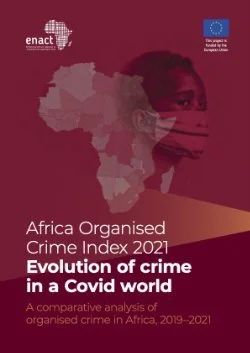
Africa Organised Crime Index 2021, Evolution of crime in a Covid world. A comparative analysis of organised crime in Africa, 2019–2021

By ENACT Africa

As COVID-19 dominates the world’s stage, nearly every aspect of society has been affected by the deadly pandemic. While the impact of the contagion on countries’ economies, social cohesion, health and security has been widely reported on, less is known about its influence on criminal dynamics. The pandemic has not only become a central component of the everyday lives of Africans, but has also revealed the important role the continent plays in the global economy – both licit and illicit. COVID-19 measures have posed a double burden on African countries by heavily challenging people’s economic livelihood and restricting the freedom of movement of Africans, while also challenging governments in how they balance the need to address the health crisis with the provision of services and security amid declining economies. In this context, organised crime in Africa has evolved and taken advantage of the confusion and frustration wrought by the pandemic; it has filled in the gaps left by state institutions, by both adapting its illicit activities in order to circumvent COVID restrictions and providing new sources of livelihoods and parallel services. Institutional responses to stop the spread of the virus have had a profound impact on movement, trade and business, including in black markets and shadow economies. In Africa, COVID-19 was slower to take effect than in other parts of the world, and even though the continent has had experience in handling other major viral epidemics, the health, economic and security systems of many countries on the continent have found themselves ill-equipped to face the particular challenges posed by the COVID-19 pandemic. As legitimate businesses suffered extensive losses across the continent, people increasingly turned to the informal and illicit economies for alternative sources of livelihood. Meanwhile, those already vulnerable to exploitation become even more at risk due to the paucity of economic opportunities available to them and the isolating restrictions put in place in the interest of public health

ENACT (Africa), 2021. 160p.

download
Use of Medication-Assisted Treatment for Opioid Use Disorder in Criminal Justice Settings

By The Substance Abuse and Mental Health Services Administration

Treatment and recovery of individuals with opioid use disorder (OUD) can vary. These individuals may have co-occurring disorders, live in diverse parts of the country, and face a variety of socio-economic factors that help or hinder their treatment. All these factors bring complexities to evaluating the effectiveness of services, treatments, and supports. Despite variations, substantial evidence is available to understand the types of services, treatments, and supports that reduce substance use, lessen mental health symptoms, and improve individuals’ quality of life. Communities are eager to take advantage of what has been learned to help individuals in need. The Evidence-Based Resource Guide Series is a comprehensive and modular set of resources intended to support health care providers, health care system administrators, and community members to meet the needs of individuals at risk for, experiencing, or recovering from substance use and mental health disorders.

Rockville, MD: National Mental Health and Substance Use Policy Laboratory. Substance Abuse and Mental Health Services Administration, 2019. 76p.

download
Cannabis Regulation: Lessons from the illicit tobacco trade

By Benoit Gomis

Since 2013, a number of countries and local jurisdictions around the world have legalised and regulated their cannabis supply chains for non-medical use. Lawmakers, regulators, researchers, and advocates continue to design, enact, implement and revise regulatory frameworks for medical and recreational cannabis. And yet lessons from regulating other psychoactive substances, including tobacco products, are not always fully considered. The experience of the illicit tobacco trade is particularly relevant for cannabis regulation. … The global tobacco market is heavily concentrated. China, Brazil, and India accounted for 63% of all tobacco leaf cultivation in 2019 as part of a global cigarette market dominated by a small number of companies.6 China National Tobacco Corporation (CNTC) accounted for 43.9% of global cigarette retail volume in 2019 – the large majority of it is destined for domestic consumption, though the company has been developing a global expansion strategy. Beyond CNTC, Philip Morris International (PMI) (13.4% of global retail volume in 2019), British American Tobacco (BAT) (12.7%), Japan Tobacco International (JTI) (9.1%) and Imperial Brands (4.2%) accounted for 70% of the rest of the world’s market share in 2019. In contrast, cannabis can be grown indoors and therefore almost anywhere across the world. The illicit cannabis market has been characterised by a high number of small-scale growers, including for personal consumption and local distribution.

International Drug Policy Consortium, 2021. 23p.

download
The Globalization of Hate: Internationalizing Hate Crime?

Edited by Jennifer Schweppe and Mark Austin Walters

The Globalisation of Hate: Internationalising Hate Crime? is the first book to examine the impact of globalisation on our understanding of hate speech and hate crime. Bringing together internationally acclaimed scholars with researchers, policy makers and practitioners from across the world, it critically scrutinises the concept of hate crime as a global phenomenon, seeking to examine whether hate crime can, or should, be conceptualised within an international framework and, if so, how this might be achieved. …. The final part of the book concludes with an examination of the different ways in which hate speech and hate crime is being combatted globally. International law, internet regulation and the use of restorative practices are evaluated as methods of addressing hate-based conflict, with the discussions drawn from existing frameworks as well as exploring normative standards for future international efforts. Taken together, these innovative and insightful contributions offer a timely investigation into the effects of hate crime, offering an interdisciplinary approach to tackling what is now a global issue.

New York: Oxford University Press, 2016. 340p.

download
Climate Change and Crime in Cities

By Robert Muggah

Climate change is already disrupting cities around the world. Continued greenhouse gas emissions and warming are intensifying heat islands, contributing to water shortages, rising seas, increasing flood-related risks and worsening pollution. With over two thirds of the population expected to live in cities by 2030, the effects are consequential. Large and fast-growing cities in Asia, Africa and the Americas are likely to be hit hardest by more frequent and intense disasters. Coastal cities across North America and Western Europe are likewise on the front-line.

Climate change is influencing all aspects of city life, from labor markets and food security to migration patterns and economic productivity. One critical, if under-examined, way climate change is affecting cities is in relation to crime and victimization. To be sure, the debate about the relationships between climate and security – and in particular the influence of global warming on conflict onset, duration and intensity – has heated-up over the past decade, there is less attention devoted to how climate change stands to influence criminal violence in cities around the world.

Evidence suggests that dramatic climate change will generate a substantial increase in crime in many cities – and especially more vulnerable neighborhoods. In this paper, Robert Muggah, Igarapé Institute co-founder and Research and Innovation Director analyses studies and theories about the link climate-crime and present strategies and preventive measures to avoid violence while protecting the most vulnerable.

Rio de Janeiro - RJ - Brasil, Igarapé Institute, 2021. 13p.

download
European Drug Report 2022: Trends and Developments

By European Monitoring Centre on Drugs and Drug Addiction (EMCDDA)

Our overall assessment is that drug availability and use remain at high levels across the European Union, although considerable differences exist between countries. Approximately 83.4 million or 29 % of adults (aged 15–64) in the European Union are estimated to have ever used an illicit drug, with more males (50.5 million) than females (33.0 million) reporting use. Cannabis remains the most widely consumed substance, with over 22 million European adults reporting its use in the last year. Stimulants are the second most commonly reported category. It is estimated that in the last year 3.5 million adults consumed cocaine, 2.6 million MDMA and 2 million amphetamines.

Lisbon: EMCDDA: 2022. 60p.

download
Violence Against Women and Ethnicity: Commonalities and Differences Across Europe

Edited by Ravi K. Thiara, Stephanie A. Condon, and Monika Schröttle

This book draws together both: theory and practice on minority/migrant women and gendered violence. The interplay of gender, ethnicity, religion, class, generation and sexuality in shaping the lives, experiences and choices of minority/migrant women affected by violence has not always been adequately theorised within much of the existing writing on violence against women. Feminist theory, especially the insights provided by the concept of intersectionality, are central to the editors’ conceptual frameworks.

Leverkusen-Opladen: Verlag Barbara Budrich , 2011. 426p.

download
The Ecology of Football-related Crime and Disorder

By Justin Kurland

Numerous studies have been conducted on football ‘hooliganism’ with the majority of this work ignoring the immediate, environmental conditions that facilitate opportunities for crime in the football match day context. Consequently, the existing theoretical framework for explaining why crime emerges during football matches remains incomplete. This thesis aims to fill this gap for understanding modern football-related crime and disorder. The thesis uses a predominantly environmental criminology framework to explore whether crime opportunity theories can make sense of crime patterns observed around previously unexplored English domestic football stadia. It is crime event-oriented, focussing on how variation in the ecology of the area around stadia on match days and a set of counterfactual days when the stadium is not used facilitates different criminal opportunities. This is achieved primarily through the analysis of police-recorded crime data for three kilometre areas surrounding a sample of five stadia for the period 2005- 2010. The thesis focuses on three components of crime events - where they occur, when they occur, and why a disproportionate amount of it clusters in some neighbourhoods and not others. Despite the contrasting physical environment around the five stadia, the findings suggest very similar spatial and temporal crime patterns in the area surrounding stadia when they are used relative to when they are not and thus lend support to environmental theories of crime in the football context. The findings also help draw attention to where and when crime is elevated on football match days. The implications of the research for reducing the unintended and unwanted side-effect of football that is desired for the positive utilities it brings, in particular the practicality of employing situational crime prevention in the context of English domestic football are discussed.

London: University College London, 2014.

download
Organized Crime, Violent Conflict and Fragile Situations Assessing Relationships through a Review of USAID Programs

By Phyllis Dininio

The USAID Bureau for Democracy, Conflict, and Humanitarian Assistance Office of Conflict Management and Mitigation (DCHA/CMM) commissioned Management Systems International (MSI) to conduct research on the relationship between organized crime, conflict and fragility. The year-long research project included a literature review and country case studies in Guatemala, Nigeria and the Democratic Republic of the Congo (DRC) that examine the interaction between organized criminality and USAID conflict and fragility programming in both causal directions—with regard to how criminality affects USAID implementation and results, and how assistance affects criminality. ..The report concludes with a set of key findings and recommendations. Organized crime is both facilitated by, and contributor to, state fragility.

Arlington, VA: Management Systems International, 2015. 61p.

download
Organized Crime, Conflict, and Fragility: A New Approach

By Rachel Locke

Transnational organized crime (TOC) is a global challenge posing serious threats to our collective peace and security. But in conflict-affected and fragile states the threats of transnational organized crime present particular and insidious challenges requiring new and innovative responses. Not only does TOC undermine the strength of the state, it further affects the critical and often contested relationship between the state and society. In fragile and conflict-affected states it is precisely the degraded nature of this relationship that often prevents progress toward greater peace and prosperity. While there is now an established correlation between conflict and state fragility, much less is understood about the relationship between transnational organized crime, conflict, and fragility. This report examines the dynamics between conflict, state fragility, and TOC, demonstrating how the three fit together in an uneasy triumvirate, and it presents ideas for a more effective response. Roughly half of all illicit transactions in the world are taking place in countries experiencing a range of weak enforcement mechanisms, low levels of economic well-being, insufficient government capacity, and significant societal divisions. In these contexts, transnational criminal networks further erode state legitimacy by incentivizing corruption, infiltrating state structures, and competing with the state in the provision of services. Yet the dominant approach to tackling organized crime, what I term a “law-and-order” approach, frequently fails to account for the complex dynamics associated with criminal networks in fragile and conflict-affected contexts. This approach, which is primarily focused on security, sanctions, and the rule of law, is rarely tailored to the needs of countries suffering from severe governance deficits or those with a history of conflict. On the contrary, it has the potential to reinforce historical enmities between the state and its citizens and notions of state power as coercive control rather than legitimate representation

New York: International Peace Institute, July 2012. 24p.

download
Organised Crime Index Africa 2019

By ENACT Africa

Lives are lost, forests and oceans are pillaged beyond the point of replenishment, animals are slaughtered, women, men, girls and boys are held in situations of violent abuse and exploitation. Customs officials receive bribes to turn their backs to a shipment of drugs. Police officers and soldiers sell their weapons on to street gangs. Politicians accept kickbacks, fix contracts and sell concessions to criminal groups and unethical corporations, so that they can profit from resources that were intended to improve the development opportunities of citizens. The harms caused by organised crime are widespread and profound. Yet because it is almost always obscured in the 'underworld', hidden in the shadows of remote borderlands, concealed in secrecy jurisdictions or felt most keenly by underserved communities, organised crime is a threat too easily overlooked. 'Organised crime' is not a term that has tended to be used in the African context. However, as the political economy of the continent is evolving and intertwining with other geopolitical and globalisation dynamics, the term is currently being applied to the continent with increasing frequency – and urgency. It describes everything from a range of illicit activities and actors, from human smuggling by militia groups along the North African coast, to the consorts and cronies aligned with heads of state.

ENACT Africa; 2019. 130p.

download
Social Dimension of Organised Crime: Modelling The Dynamics Of Extortion Rackets

Edited by Corinna Elsenbroich, David Anzola and Nigel Gilbert

This book presents a multi-disciplinary investigation into extortion rackets with a particular focus on the structures of criminal organisations and their collapse, societal processes in which extortion rackets strive and fail and the impacts of bottom-up and top-down ways of fighting extortion racketeering. Through integrating a range of disciplines and methods the book provides an extensive case study of empirically based computational social science. It is based on a wealth of qualitative data regarding multiple extortion rackets, such as the Sicilian Mafia, an international money laundering organisation and a predatory extortion case in Germany. Computational methods are used for data analysis, to help in operationalising data for use in agent-based models and to explore structures and dynamics of extortion racketeering through simulations. In addition to textual data sources, stakeholders and experts are extensively involved, providing narratives for analysis and qualitative validation of models. The book presents a systematic application of computational social science methods to the substantive area of extortion racketeering. The reader will gain a deep understanding of extortion rackets, in particular their entrenchment in society and processes supporting and undermining extortion rackets. Also covered are computational social science methods, in particular computationally assisted text analysis and agent-based modelling, and the integration of empirical, theoretical and computational social science.

Cham, SWIT: Springer, 2016. 250p.

download
Exploring Links Between Transnational Organized Crime & International Terrorism

By Louise I. Shelley Dr.; John T. Picarelli; Allison Irby; Douglas M. Hart; Patricia A. Craig-Hart; Phil Williams Dr.; Steven Simon; Nabi Abdullaev; Bartosz Stanislawski; Laura Covill

The report presents three case studies of regions that are hospitable to transnational crime-terrorism interactions: Chechnya; the Black Sea region; and the tri-border area of Paraguay, Brazil, and Argentina. The analysis of links between criminal and terrorist groups in these areas used a military intelligence method called "intelligence preparation of the battlefield," which involves the identification of areas where terrorism and organized crime are most likely to interact. Such areas are expressed not only in geographic terms but also conceptual terms; for example, the analysis identifies the way groups organize themselves, communicate, use technology, deploy their members, and share cultural affinities. Within each of these areas, investigators can identify indicators that suggest whether or not cooperation between specific terrorist and criminal groups are likely to occur. The general principle that previous research in this domain has developed is that terrorist and criminal groups have links via methods but not motives. This report concludes that although the motives of terrorists and organized criminals are most often different, the links that separate such groups are growing increasingly complex, such that the separation of motives is no longer unequivocal. This study identifies an evolutionary pattern whereby the sharing of methods leads to more intimate connections within a short time. Factors that influence this evolution are failed states, war-torn regions, and alliances developed in penal institutions and urban neighborhoods. The central recommendation is to incorporate crime analysis in the intelligence analysis of terrorism.

Washington, DC: U.S. National Institute of Justice, 2005. 115p.

download
The Cuban Connection: Drug Trafficking, Smuggling, And Gambling In Cuba from The 1920s to the Revolution

By Eduardo Sáenz Rovner and Russ Davidson

A comprehensive history of crime and corruption in Cuba, The Cuban Connection challenges the common view that widespread poverty and geographic proximity to the United States were the prime reasons for soaring rates of drug trafficking, smuggling, gambling, and prostitution in the tumultuous decades preceding the Cuban revolution. Eduardo S?enz Rovner argues that Cuba's historically well-established integration into international migration, commerce, and transportation networks combined with political instability and rampant official corruption to help lay the foundation for the development of organized crime structures powerful enough to affect Cuba's domestic and foreign politics and its very identity as a nation.S?enz traces the routes taken around the world by traffickers and smugglers. After Cuba, the most important player in this story is the United States. The involvement of gangsters and corrupt U.S. officials and businessmen enabled prohibited substances to reach a strong market in the United States, from rum running during Prohibition to increased demand for narcotics during the Cold War.

Chapel Hill, NC:University of North Carolina Press, 2008. 247p.

download
The Changing Racial Dynamics of the War on Drugs

By Marc Mauer

For more than a quarter century the “war on drugs” has exerted a profound impact on the structure and scale of the criminal justice system. The inception of the “war” in the 1980s has been a major contributing factor to the historic rise in the prison population during this period. From a figure of about 40,000 people incarcerated in prison or jail for a drug offense in 1980, there has since been an 1100% increase to a total of 500,000 today. To place some perspective on that change, the number of people incarcerated for a drug offense is now greater than the number incarcerated for all offenses in 1980. The increase in incarceration for drug offenses has been fueled by sharply escalated law enforcement targeting of drug law violations, often accompanied by enhanced penalties for such offenses. Many of the mandatory sentencing provisions adopted in both state and federal law have been focused on drug offenses. At the federal level, the most notorious of these are the penalties for crack cocaine violations, whereby crack offenses are punished far more severely than powder cocaine offenses, even though the two substances are pharmacologically identical. Despite changes in federal sentencing guidelines, the mandatory provisions still in place require that anyone convicted of possessing as little as five grams of crack cocaine (the weight of two sugar packets) receive a five-year prison term for a first-time offense

Washington, DC: The Sentencing Project, 2009. 23p.

download