Open Access Publisher and Free Library
CRIME+CRIMINOLOGY.jpeg

CRIME

Violent-Non-Violent-Cyber-Global-Organized-Environmental-Policing-Crime Prevention-Victimization

Posts in justice
Octopus: The Rise and Rise of the Sicilian Mafia

By Joe Pieri

This book reveals a shocking and sensational story: the mafia and the huge syndicates it controls have infiltrated the government in Italy, the US, the highest levels of the Catholic Church, and in modern times, are even implicated in the murder of an American president and the pope. At lower levels of criminality the mafia is omnipresent - from prostitution, gambling and boot-legging during the Prohibition era in the 1920's, to the present day control of drug trafficking in Europe and America. The annals of the mafia are bloodstained and littered with corpses, both of the mobsters themselves and the law-abiding citizens and legislators who have tried to resist their intimidation. Peopled with compelling characters, Pieri rattles through the tangle of rackets, feuds, business affairs and political chicanery that satisfies our fascination with the criminal underworld.

Edinburgh: Birlinn, 1990. 182p.

download
Powderburns: Cocaine, Contras and the Drug War

By Celerino Castillo, III , Dave Harmon

The truth about the remaining dark secret of the Iran-Contra scandal- the United States government's collaboration with drug smugglers. Powderburns is the story of Celerino Castillo III who spent 12 years in the Drug Enforcement Administration. During that time, he built cases against organized drug rings in Manhattan, raided jungle cocaine labs in the Amazon, conducted aerial eradication operations in Guatemala, and assembled and trained anti-narcotics units in several countries. The eerie climax of Agent Castillo's career with the DEA took place in El Salvador. One day, he received a cable from a fellow agent. He was told to investigate possible drug smuggling by Nicaraguan Contras operating from the ilpango air force base. Castillo quickly discovered that Contra pilots were, indeed, smuggling narcotics back into the United States - using the same pilots, planes, and hangars that the Central Intelligence Agency and the National Security Council, under the Direction of Lt. Col. Oliver North, used to maintain their covert supply operation to the Contras.sm

Oakville, Ont: Mosaic Press,1994. 205p.

download
Drug War Against America

By John Coleman

The drug trade is a very profitable business of enormous proportions, stretching across the world from producer countries to consumer countries, of which the United States of America is the leader. The cost of the product is negligible, with profits far exceeding those of some of the greatest companies in modern times. The drug trade is a war being waged principally against the United States , where innovative methods and ever-shifting pitched battles are fought. Thus far, nothing has been able to put an end to this cancer upon the United States and other western countries.

This book tells, in alarming detail, the story of how the drug trade was started in earnest with the arrival of a mop-haired group of musicians known as the Beatles. The band was brought to the U.S. to go on concert tours, which acted as a magnet for teenagers and provided cover for the distribution of drugs that got a generation of young Americans hooked.

  • Most Americans have only been exposed to the street pusher and know very little about the insidious, illicit trade being carried out in their country; a trade that has cost time and billions in health care and anti-drug police expenditures. This timely book by Dr. Coleman rips the lid off the drug trade, from the opium growing poppy fields of Afghanistan to the desolate coast line at Maccra, Pakistan, to the British Bank of the Middle East in Dubai and beyond to the cocoa bush processing plants in Bolivia and Colombia, where the murderous M19 FARC guerillas, better armed than the Colombian military, run the country.

    This account is no soap opera, but real life in which the drug trade is playing an increasingly ugly and costly role of our treasure and finances. It is a book which should be read by every thinking person concerned about the welfare of his country.Description text goes here

Carson City, NV: World In Review, 2009. 203p.

download
Lies, Damned Lies, and Drug War Statistics: A Critical Analysis of Claims Made by the Office of National Drug Control Policy. 2nd ed.

By Matthew B. Robinson and Renee G. Scherlen

First published in 2007, Lies, Damned Lies, and Drug War Statistics critically analyzed claims made by the Office of National Drug Control Policy (ONDCP), the White House agency of accountability in the nation's drug war since 1989, as found in the six editions of the annual National Drug Control Strategy between 2000 and 2005. In this revised and updated second edition of their critically acclaimed work, Matthew B. Robinson and Renee G. Scherlen examine seven more recent editions (2006–2012) to once again determine if ONDCP accurately and honestly presents information or intentionally distorts evidence to justify continuing the drug war. They uncover the many ways in which ONDCP manipulates statistics and visually presents that information to the public. Their analysis demonstrates a drug war that consistently fails to reduce drug use, drug fatalities, or illnesses associated with drug use; fails to provide treatment for drug-dependent users; and drives up the prices of drugs. They conclude with policy recommendations for reforming ONDCP's use of statistics, as well as how the nation fights the war on drugs.

Albany, NY: State University of New York Press, 2014. 310p.

download
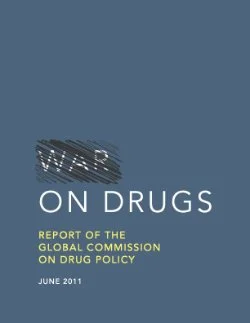
War On Drugs: Report of the Global Commission on Drug Policy

By The Global Commission on Drug Policy

The global war on drugs has failed, with devastating consequences for individuals and societies around the world. Fifty years after the initiation of the UN Single Convention on Narcotic Drugs, and 40 years after President Nixon launched the US government’s war on drugs, fundamental reforms in national and global drug control policies are urgently needed. Vast expenditures on criminalization and repressive measures directed at producers, traffickers and consumers of illegal drugs have clearly failed to effectively curtail supply or consumption. Apparent victories in eliminating one source or trafficking organization are negated almost instantly by the emergence of other sources and traffickers. Repressive efforts directed at consumers impede public health measures to reduce HIV/AIDS, overdose fatalities and other harmful consequences of drug use. Government expenditures on futile supply reduction strategies and incarceration displace more cost-effective and evidence-based investments in demand and harm reduction.

Global Commission on Drug Policy, 2011. 24p.

download
Drug War Pathologies : Embedded Corporatism and U.S. Drug Enforcement in the Americas

By Horace A. Bartilow

In this book, Horace Bartilow develops a theory of embedded corporatism to explain the U.S. government’s war on drugs. Stemming from President Richard Nixon’s 1971 call for an international approach to this “war,” U.S. drug enforcement policy has persisted with few changes to the present day, despite widespread criticism of its effectiveness and of its unequal effects on hundreds of millions of people across the Americas. While researchers consistently emphasize the role of race in U.S. drug enforcement, Bartilow’s empirical analysis highlights the class dimension of the drug war and the immense power that American corporations wield within the regime.

Drawing on qualitative case study methods, declassified U.S. government documents, and advanced econometric estimators that analyze cross-national data, Bartilow demonstrates how corporate power is projected and embedded—in lobbying, financing of federal elections, funding of policy think tanks, and interlocks with the federal government and the military. Embedded corporatism, he explains, creates the conditions by which interests of state and nonstate members of the regime converge to promote capital accumulation. The subsequent human rights repression, illiberal democratic governments, anti-worker practices, and widening income inequality throughout the Americas, Bartilow argues, are the pathological policy outcomes of embedded corporatism in drug enforcement.

Chapel Hill, NC:The University of North Carolina Press, 2019. 320p.

download
Why Our Drug Laws Have Failed and What We Can Do About It: A Judicial Indictment of The War on Drugs. 2nd ed.

By James Gray

Veteran trial judge and former federal prosecutor Judge James P. Gray believes drug prohibition remains one of our country's biggest failed policies. In this updated edition of his bestseller, Why Our Drug Laws Have Failed and What Can We Do About It, Judge Gray provides startling information about drug-related crimes from escalating incarceration rates to drug-related kidnappings. Judge Gray also examines the latest experiments in drug legalization. The thirteen states that have adopted medical marijuana have seen a reduction in crime and an increase in revenue. Judge Gray explains how and why we need to take the profit out of the drug trade. There are viable options at work in other countries. Portugal saw a drop of 50 percent in drug usage by problem users after decriminalization, as well as a drop in children's drug use! This incendiary book will anger readers, but it also provides hope. We can solve some of our medical and social problems by repealing our failed drug laws.

Philadelphia: Temple University Press, 2012. 302p.

download
'High rollers' A study of criminal profits along Australia’s heroin and methamphetamine supply chains

By John Coyne and Teagan Westendorf

This report helps develop an understanding of the quantum of profits being made and where in the value chain they occur. Australians spent approximately A$5.8 billion on methamphetamine and A$470 million on heroin in FY 2019.

Approximately A$1,216,806,017 was paid to international wholesalers overseas for the amphetamine and heroin that was smuggled into Australia in that year. The profit that remained in Australia’s economy was about A$5,012,150,000. Those funds are undermining Australia’s public health and distorting our economy daily, and ultimately funding drug cartels and traffickers in Southeast Asia.

One key takeaway from the figures presented in this report is that the Australian drug trade is large and growing. Despite the best efforts of law enforcement agencies, methamphetamine and heroin use has been increasing by up to 17% year on year. Falling prices in Southeast Asia are likely to keep pushing that number up, while drug prices and purity in Australia remain relatively stable.

Barton, ACT, Australia: Australian Strategic Policy Institute, 2021. 40p

download
The Drug War in Mexico: Confronting a Shared Threat

By David A. Shirk

The drug war in Mexico has caused some U.S. analysts to view Mexico as a failed or failing state. While these fears are exaggerated, the problems of widespread crime and violence, government corruption, and inadequate access to justice pose grave challenges for the Mexican state. The Obama administration has therefore affirmed its commitment to assist Mexico through continued bilateral collaboration, funding for judicial and security sector reform, and building “resilient communities.”

David A. Shirk analyzes the drug war in Mexico, explores Mexico’s capacities and limitations, examines the factors that have undermined effective state performance, assesses the prospects for U.S. support to strengthen critical state institutions, and offers recommendations for reducing the potential of state failure. He argues that the United States should help Mexico address its pressing crime and corruption problems by going beyond traditional programs to strengthen the country’s judicial and security sector capacity and help it build stronger political institutions, a more robust economy, and a thriving civil society.

Washington, DC; Council on Foireign Relations Press, 2011, 56p.

download
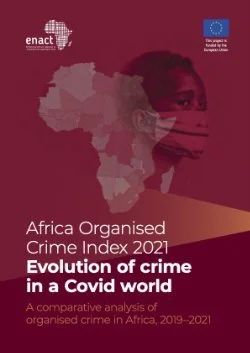
Africa Organised Crime Index 2021, Evolution of crime in a Covid world. A comparative analysis of organised crime in Africa, 2019–2021

By ENACT Africa

As COVID-19 dominates the world’s stage, nearly every aspect of society has been affected by the deadly pandemic. While the impact of the contagion on countries’ economies, social cohesion, health and security has been widely reported on, less is known about its influence on criminal dynamics. The pandemic has not only become a central component of the everyday lives of Africans, but has also revealed the important role the continent plays in the global economy – both licit and illicit. COVID-19 measures have posed a double burden on African countries by heavily challenging people’s economic livelihood and restricting the freedom of movement of Africans, while also challenging governments in how they balance the need to address the health crisis with the provision of services and security amid declining economies. In this context, organised crime in Africa has evolved and taken advantage of the confusion and frustration wrought by the pandemic; it has filled in the gaps left by state institutions, by both adapting its illicit activities in order to circumvent COVID restrictions and providing new sources of livelihoods and parallel services. Institutional responses to stop the spread of the virus have had a profound impact on movement, trade and business, including in black markets and shadow economies. In Africa, COVID-19 was slower to take effect than in other parts of the world, and even though the continent has had experience in handling other major viral epidemics, the health, economic and security systems of many countries on the continent have found themselves ill-equipped to face the particular challenges posed by the COVID-19 pandemic. As legitimate businesses suffered extensive losses across the continent, people increasingly turned to the informal and illicit economies for alternative sources of livelihood. Meanwhile, those already vulnerable to exploitation become even more at risk due to the paucity of economic opportunities available to them and the isolating restrictions put in place in the interest of public health

ENACT (Africa), 2021. 160p.

download
Tussle for the Amazon: New Frontiers in Brazil's Organized Crime Landscape

By Ryan C. Berg

Brazil is witnessing a “tussle for the Amazon”—a new and deadly phase in the history of its organized crime groups and their operations. While the country is no stranger to violent criminal organizations, recent years have seen groups building increasingly sophisticated networks, both within and beyond Brazil’s borders. In the strategic state of Amazonas, these developments have sparked a power struggle between several of the country’s largest criminal organizations that has concerning implications for the stability of Brazil as a whole. This “tussle” is more than a mere clash between Brazil’s transnational organized crime groups. It is a threat to regional stability and imperils neighboring Latin American countries. Appreciating the Amazon region’s current role in the dynamics of Brazil’s criminal underworld is the first step toward deliberate, informed action by the United States and Brazil against a shifting criminal environment.

Miami: Florida International University, 2021. 26p.

download
The Organized Crime Community: Essays in Honor of Alan A. Block

Edited by Frank Bovenkerk and Michael Levi

In his social investigative writings on "the serious crime community" which describes the loose merger of corporate interests, organized crime and political crime, professor Alan A. Block of Penn State University has proven to be one of the most inspiring criminologists in the field. An international group of pupils and friends dedicate this book to him which contains original contributions on the troubled concept of organized crime, the social history of crime groups in the United States, corruption in the United Nations Oil-for-Food Program in Iraq, the struggle against identity fraud, the world of drugs and the adverse consequences of criminalization, the money-laundering control movement, International Tribunals against war crimes and a Jewish studies chapter on the role of bystanders during the Holocaust.

New York: Springer, 2007. 246p.

download
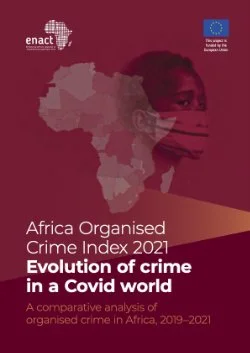
Africa Organised Crime Index 2021, Evolution of crime in a Covid world. A comparative analysis of organised crime in Africa, 2019–2021

By ENACT Africa

As COVID-19 dominates the world’s stage, nearly every aspect of society has been affected by the deadly pandemic. While the impact of the contagion on countries’ economies, social cohesion, health and security has been widely reported on, less is known about its influence on criminal dynamics. The pandemic has not only become a central component of the everyday lives of Africans, but has also revealed the important role the continent plays in the global economy – both licit and illicit. COVID-19 measures have posed a double burden on African countries by heavily challenging people’s economic livelihood and restricting the freedom of movement of Africans, while also challenging governments in how they balance the need to address the health crisis with the provision of services and security amid declining economies. In this context, organised crime in Africa has evolved and taken advantage of the confusion and frustration wrought by the pandemic; it has filled in the gaps left by state institutions, by both adapting its illicit activities in order to circumvent COVID restrictions and providing new sources of livelihoods and parallel services. Institutional responses to stop the spread of the virus have had a profound impact on movement, trade and business, including in black markets and shadow economies. In Africa, COVID-19 was slower to take effect than in other parts of the world, and even though the continent has had experience in handling other major viral epidemics, the health, economic and security systems of many countries on the continent have found themselves ill-equipped to face the particular challenges posed by the COVID-19 pandemic. As legitimate businesses suffered extensive losses across the continent, people increasingly turned to the informal and illicit economies for alternative sources of livelihood. Meanwhile, those already vulnerable to exploitation become even more at risk due to the paucity of economic opportunities available to them and the isolating restrictions put in place in the interest of public health

ENACT (Africa), 2021. 160p.

download
Global Organized Crime Index : 2021

By The Global Initiative Against Transnational Organized Crime

The Global Organized Crime Index is the first tool of its kind designed to assess levels of organized crime and resilience to organized criminal activity. It includes in its rankings all the UN member states – 193 countries. The results, which draw from a comprehensive dataset informed by experts worldwide, paint a worrying picture of the reach, scale and impact of organized crime. It is a sobering thought, for instance, that nearly 80% of the world’s population today live in countries with high levels of criminality. It is equally alarming to consider that the exploitation of people, in the form of human trafficking, has become the most pervasive criminal economy in the world – a development that serves as a dark reminder of the dehumanizing impact of organized crime. Meanwhile, the Index highlights how state involvement in criminality is a deeply embedded phenomenon around the world: state officials and clientelist networks who hold influence over state authorities are now the most dominant brokers of organized crime, and not cartel leaders or mafia bosses, as one might be forgiven for thinking. And these are but a few stand-out examples of the findings of this Index. This report introduces the Global Organized Crime Index and sets out the results and implications of the 2020 data, the year in which a new pandemic began to ravage the world. Of course, organized crime is not a new phenomenon, but it is now a more urgent issue than ever. Criminal networks and their impact have spread across the globe in the last two decades, driven by geopolitical, economic and technological forces. The analysis in this report conclusively demonstrates that organized crime is the most pernicious threat to human security, development and justice in the world today.

Geneva: The Global Initiative Against Transnational Organized Crime. 2021. 188p.

download
Synthetic Cannabinoids in Europe: A Review

By The European Monitoring Centre for Drugs and Drug Addiction (EMCDDA)

This report provides a technical review of the current body of knowledge regarding synthetic cannabinoids that are monitored by the EU Early Warning System. The aim of this report is to strengthen situational awareness of synthetic cannabinoids in Europe and to help stakeholders prepare for, and respond to, public health and social threats caused by such substances.

Lisbon: European Monitoring Centre for Drugs and Drug Addiction (EMCDDA), 2021. 70p.

downloads
Estimating the Size of the Illicit Small Arms Economy in San Diego

By Topher L. McDougal

Illicit economies are notoriously difficult to detect and quantify for the simple reason that participants have incentives to keep their activities clandestine. This paper outlines and implements a method for estimating the markets for illicit small arms, sex, and drugs as constituent components of the total cash economy for the San Diego metropolitan area. The method has two parts: first it derives the total cash economy of San Diego; second it fits a model predicting that amount for each available year as a function of index variables for three distinct illicit markets (small arms, sex, and drugs) and the licit cash economy. It estimates that the market for cash-based purchases of small arms in San Diego in 2013 was $920 million – slightly larger than the illicit sex industry, and much smaller than both the market for illicit drugs and the licit cash economy. Limitations of the method are discussed, including the potential for better proxy variables to improve reliability.

San Diego: Small Arms Data Observatory, 2015. 13p.

download
Operation Burglary Countdown: Evaluation Study Final Report

By Rick Cummings

Operation Burglary Countdown is an innovative community-based crime reduction program operating in two pilot areas, Bentley and Morley. A comprehensive and independent evaluation study has shown that the model of integrating central and local resources through coordinated police and community activities has been well implemented and generated considerable community support. During 12 months of operation, the program has demonstrated its effectiveness in targeted hotspots by reducing residential burglary in Bentley and the surrounding area by over 40%, saving the community an estimated $700,000. Its lack of significant impact in Morley indicates it is best introduced only in identified hotspots

Perth: Office of Crime Prevention, Government of Western Australia, 2005. 65p.

download
On the Trail of Illicit Gold Proceeds: Strengthening the Fight Against Illegal Mining Finances: Colombia’s Case.

By The The Organization of American States, Department against Transnational Organized Crime

The illegal gold trade in Colombia is a widespread and significant threat that has seen considerable growth in recent years. Illegal mining activity produces substantial quantities of gold in the country, by some estimates representing over 70% of national production and accounting for the majority of gold exports. The illegal extraction of gold exacerbates numerous challenges Colombia faces, such as insecurity, environmental degradation, and corruption, while also providing opportunities for drug trafficking organizations and illegal armed groups to obtain significant revenue in some regions. Indeed, in areas where there is extensive mineral exploitation these transnational criminal organizations are often deeply involved in Colombia’s illegal trade in gold, leveraging extensive criminal expertise, ample financing capacities, and armed violence in order to develop illicit gold networks. The spread of illegal mining in Colombia is facilitated by high levels of economic and commercial informality, rural poverty, corruption, limited governmental presence and resources in remote mining areas, and porous international borders that are vulnerable to smuggling, among other factors. Colombia’s government is taking numerous steps to combat the sale and export of illegal gold, including through regulation and oversight of gold supply chains, formalization programs targeting small-scale miners, support for subsistence mining, and on-the-ground operations to disrupt illegal mining activity. Nevertheless, illegal trade in gold continues to thrive as illicit actors excel in finding gaps and opportunities to exploit.

Washington, DC: The Organization of American States, Department against Transnational Organized Crime, 2022. 66p.

download
On the Trail of Illicit Gold Proceeds: Strengthening the Fight Against Illegal Mining Finances.The Case for Ecuador

By The Organization of American States, Department against Transnational Organized Crime

The illegal gold trade is a growing and significant challenge in Ecuador. The spread of illegal gold mining activity has brought surges of violence and instability to remote areas while attracting organized crime, at the local and international level, and triggering an increase in money laundering and contraband. Concern regarding the disruptive and harmful impact of illegal gold mining, as well as the government’s desire to develop and expand Ecuador’s mining sector away from its reliance on small-scale and artisanal operations, have also led to a renewed focus on the challenges posed by illegal mining. There is reason to believe that the illegal gold trade and its associated criminal networks are less entrenched and developed in Ecuador than in neighboring Peru and Colombia. However, there are significant challenges facing the government as it works to combat illegal mining activity, which is increasingly accelerated by illicit cross-border contraband flows and unique vulnerabilities to money laundering activity.

Washington, DC: The Organization of American States, Department against Transnational Organized Crime, 2021. 46p.

download
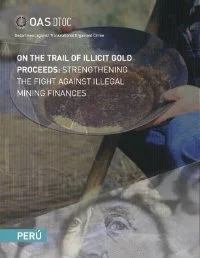
On the Trail of Illicit Gold Proceeds: Strengthening the Fight Against Illegal Mining Finances. Peru's Case.

By The Organization of American States, Department against Transnational Organized Crime

Peru’s well-developed mining sector has shaped the country’s economy and society to a significant degree. The mining sector contributes up to 10% of GDP, while minerals like gold and copper weigh heavily in Peru’s trade composition. Peru’s abundant reserves of mineral resources have helped to fuel the development of its mining sector, attracting a variety of small, medium, and large enterprises to engage in exploration and extraction. However, the country’s mineral wealth and governance challenges in remote mining areas, also offer ample opportunities for organized crime and illegal mining activity. As a result, large populations of illegal miners and transnational criminal networks have become deeply entrenched in Peru, giving the country a central role in the international illegal gold trade. While Peru has taken active steps to combat illegal gold mining and the sale and export of illegal gold, a variety of criminal actors have continued to successfully engage in and promote these illicit activities, producing detrimental effects for citizen security, the economy, and the environment.

Washington, DC: Organization of American States, Department against Transnational Organized Crime 2021. 40p.

download