Open Access Publisher and Free Library
CRIME+CRIMINOLOGY.jpeg

CRIME

Violent-Non-Violent-Cyber-Global-Organized-Environmental-Policing-Crime Prevention-Victimization

Posts in rule of law
The India-Myanmar Borderlands: Guns, Blankets and Bird Flu

By Jabin T. Jacob

The India-Myanmar border regions form a forgotten frontier in the Indian and global imagination. India’s frontiers to the west (Pakistan), to the north (Tibet/China) and to the south (Sri Lanka and the Indian Ocean) have always received greater attention. Today, however, the region representing the conjunction of India, China and Myanmar is returning to the centre of attention for a number of reasons both old and new. Violence (‘Guns’) has been endemic in the region since communities and peoples were rent asunder by the imposition and policing of officially demarcated borders between India and Myanmar. Yet, trade (‘Blankets’) – both formal and informal – has managed to carry on. What has added to the importance of the region in the eyes of the national capitals, is the increasing severity of transnational challenges such as drug-trafficking and the spread of diseases (‘Bird Flu’). Together, these three factors have kept both a regional identity as well as specific community identities alive. This paper is an attempt to examine the region-building properties of these factors.

Cahiers de SPIRIT, 2010. 27p,
download
From Drug Wars to Criminal Insurgency: Mexican Cartels, Criminal Enclaves and Criminal Insurgency in Mexico and Central America. Implications for Global Security

By John P. Sullivan

Transnational organized crime is a pressing global security issue. Mexico is currently embroiled in a protracted drug war. Mexican drug cartels and allied gangs (actually poly-crime organizations) are currently challenging states and sub-state polities (in Mexico, Guatemala, El Salvador and beyond) to capitalize on lucrative illicit global economic markets. As a consequence of the exploitation of these global economic flows, the cartels are waging war on each other and state institutions to gain control of the illicit economy. Essentially, they are waging a ‘criminal insurgency’ against the current configuration of states. As such, they are becoming political, as well as economic actors.

Paris: Fondation Maison des sciences de l’homme , 2011. 21p.

download
Nations Hospitable To Organized Crime And Terrorism

By LaVerle Berry. et al.

This report assesses conditions that contribute to or are potentially hospitable to transnational criminal activity and terrorist activity in selected regions of the world during the period 1999-2002. Although the focus of the report is on transnational activity, domestic criminal activity is recognized as a key foundation for transnational crime, especially as the forces of globalization intensify. The report has been arranged geographically into the following major headings: Africa, the former Soviet Union and Eastern Europe, South Asia, Southeast Asia, Western Europe, and the Western Hemisphere. Within the geographical headings, the report addresses individual countries with particularly salient conditions. Cases such as the Triborder Area (TBA) of South America and East and West Africa, where conditions largely overlap national borders, have been treated as regions rather than by imposing an artificial delineation by country. The bibliography has been divided into the same geographical headings as the text. The major sources for this report are recent periodical reports from Western and regional sources, Internet sites offering credible recent information, selected recent monographs, and personal communications with regional experts. Treatment of individual countries varies according to the extent and seriousness of conditions under study. Thus some countries in a region are not discussed, and others are discussed only from the perspective of one or two pertinent activities or conditions. Because they border the United States, Canada and Mexico have received especially extensive treatment.

Washington, DC: Federal Research Division, Library of Congress, 2003. 260p.

download
Formal Employment and Organized Crime: Regression Discontinuity Evidence from Colombia

By Gaurav Khanna, Carlos Medina, Anant Nyshadham and Jorge Tamayo

Canonical models of criminal behavior highlight the importance of economic incentives and employment opportunities in determining participation in crime (Becker, 1968). Yet, deriving causal corroborating evidence from individual-level variation in employment incentives has proven challenging. We link rich administrative micro-data on socioeconomic measures of individuals with the universe of criminal arrests in Medellin over a decade. We test whether increasing the relative costs to formal-sector employment led to more crime. We exploit exogenous variation in formal employment around a socioeconomic score cutoff, below which individuals receive generous health benefits if not formally employed. Our regression discontinuity estimates show that this popular policy induced a fall in formal-sector employment and a corresponding spike in organized crime. This relationship is stronger in neighborhoods with more opportunities for organized crime. There are no effects on less economically motivated crimes.

Boston, MA: Harvard Business School, 2019. 57p.

download
Poached Timber: Forest Crimes, Corruption, and Ivory Trafficking in the Malian Rosewood Trade with China

By Environmental Investigation Agency

Since 2018, Mali has suffered two military coups, while the country has become one of the largest suppliers of rosewood to China, through the export of Pterocarpus erinaceus – commonly identified as “kosso,” “keno,” or “bois de vêne,” a species the trade of which is regulated by the Convention on International Trade in Endangered Species of Wild Fauna and Flora (CITES), since January 2017.

The Environmental Investigation Agency (EIA)’s findings indicate that China has imported the equivalent of half a million kosso trees from Mali – worth approximately US$220 million, between January 2017 and January 2022, a large portion of it being the product of illegal harvesting or illegal export. The relentless timber poaching in the Southern forests of Mali has resulted in a significant decline of the species.

Washington, DC: : EIA, 2022. 27p.

download
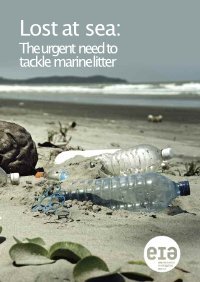
Lost at Sea: The urgent need to tackle marine litter

By Environmental Investigation Agency

Lost at Sea, calls on governments, industry, retailers, and consumers to help end the appalling damage that plastic waste inflicts on marine environments.

The report details how global plastics production has grown from five million tons per year in the 1960s to 299 million tons in 2013. It is found in our clothes, computers, and cars and has now found its way to our oceans, leaving no area uncontaminated. Plastics are ingested by seabirds and other marine life, concentrated in Arctic Sea ice, and are accumulating in deep sea sediments where microplastics are now more numerous than in surface waters. An estimated 80 percent of marine litterl originates from terrestrial waste sources, but can vary depending on geographical area.

This report outlines some of the impacts on marine creatures, with recommended actions to reduce the rising tide of plastic waste entering the oceans.

London: Environmental Investigation Agency, 2015. 12 p.

download
The Nexus of Illegal Gold Mining Supply Chains Lessons from Latin America ,

By Verité

In-depth research carried out by Verité has found that Latin American countries export reputational risks for major companies with gold in their supply chains. The Global Initiative Against Transnational Organized Crime, with which Verité has been closely collaborating, recently released an in-depth report thoroughly documenting the close link between illegal gold mining and organized crime, which fuels violence, environmental damage, corruption, money Verité publications include a research report focusing on illegal gold mining in Colombia and a white paper with detailed recommendations for companies and other stakeholders to ensure that illegally mined gold does not enter into company supply chains and the vaults of central banks. research carried out by Verité in Peru in 2012-2013 and in Colombia in 2015, and desk research carried out across the Latin American region.

Amherst, MA: Verité , 2016. 17p.

download
Commodity Booms, Conflict, and Organized Crime: Logics of Violence in Indonesia's Oil Palm Plantation Economy

By Paul D. Kenny, Rashesh Shrestha, and Edward Aspinall

This paper examines the relationships between agrarian commodity booms and the incidence of group conflict and criminality in the context of Indonesia’s expanding oil palm sector. It theorizes that commodity boom violence takes two main forms: low level but organized criminal violence involved in the extortion of “rents” produced by a given commodity extraction and production process (extortion); and violent competition among a range of groups, including “mafias”, youth gangs, landholders, and commercial producers for control of these rents (competition). Extortion and competition violence are associated with distinct temporal distributions consistent with our theory. Criminality–especially theft–is higher in villages with established and productive oil palm plantations (extortion), whereas villages undergoing planation expansion have a higher incidence of group conflict (competition). Dynamic analyses utilizing panel data at the sub-district level support our causal interpretation, as the relationship between the area under oil palm cultivation and resource conflict (competition) changes over time and with prevailing commodity prices. Our results are robust to the use of instrumental variable analysis to account for the potential endogeneity of plantation expansion. Our theorized mechanism is given further support by a targeted primary survey of 1,920 respondents in oil palm producing and non-producing villages, which shows that villages experience different rates of extortion and competition violence depending both on if, and when, oil palm production commenced.

Canberra: Australian National University, 2020. 77p.

download
Nigeria: A Prime Example of the Resource Curse? Revisiting the Oil-Violence Link in the Niger Delta

By Mähler, Annegret

This paper studies the oil‐violence link in the Niger Delta, systematically taking into con‐ sideration domestic and international contextual factors. The case study, which focuses on explaining the increase in violence since the second half of the 1990s, confirms the differentiated interplay of resource‐specific and non‐resource‐specific causal factors. With re‐ gard to the key contextual conditions responsible for violence, the results underline the basic relevance of cultural cleavages and political‐institutional and socioeconomic weakness that existed even before the beginning of the “oil era.” Oil has indirectly boosted the risk of violent conflicts through a further distortion of the national economy. Moreover, the transition to democratic rule in 1999 decisively increased the opportunities for violent struggle, in a twofold manner: firstly, through the easing of political repression and, sec‐ ondly, through the spread of armed youth groups, which have been fostered by corrupt politicians. These incidents imply that violence in the Niger Delta is increasingly driven by the autonomous dynamics of an economy of violence: the involvement of security forces, politicians and (international) businessmen in illegal oil theft helps to explain the per‐ petuation of the violent conflicts at a low level of intensity.

Hamburg: German Institute of Global and Area Studies (GIGA) , 2010. 39p.

download
Downstream Oil Theft: Implications and Next Steps

By Ian M. Ralby

On January 13, 2017, the Atlantic Council launched a major study on downstream oil theft at its inaugural Global Energy Forum in Abu Dhabi, United Arab Emirates. The present analysis draws on that launch event to examine the implications of the Downstream Oil Theft: Global Modalities, Trends, and Remedies report findings, and to suggest tangible next steps in both further investigating this global scourge and beginning to confront it effectively. The panel, moderated by Ambassador Richard Morningstar, the Atlantic Council Global Energy Center’s chairman, included the lead author of the report, Dr. Ian Ralby, a nonresident senior fellow of the center and chief executive officer (CEO) of I.R. Consilium; Éric Besson, former minister of industry, energy, and digital economy for the Republic of France; Dr. John Gannon, former Central Intelligence Agency deputy director for intelligence and chairman of the US National Intelligence Council; and Kola Karim, CEO of Shoreline Energy, an oil company in Nigeria. Though the panelists’ comments form a starting point for this analysis, they do not constitute the sole basis for this report. The implications of the study are extensive and point to a wide range of challenges, but six areas stand out as encompassing the most significant consequences of illicit downstream hydrocarbons activity: 1. The Energy Industry 2. Security, Terrorism, and Law Enforcement 3. The Environment 4. Finance and Economics 5. Politics and Policy 6. International Relations The present analysis focuses on the implications of the study for these six areas

Washington, DC: Atlantic Council, 2017. 15p.

download
Countering global oil theft: responses and solutions \by Etienne

By Etienne Romson

This second of two papers on global oil theft discusses ways to reduce oil theft, misappropriation, and fraud. At US$133 billion per year, oil is the largest stolen natural resource globally, while fuel is the most smuggled natural resource. Oil theft equates to 5–7 per cent of the global market for crude oil and petroleum fuels. It is so engrained in the energy supply chain that thefts are priced in by traders and tolerated by many shipping companies as petty theft. Oil theft and related insecurity have substantial negative economic effects on developing countries, whether they produce oil or not. In 2012, non-oil-producing Benin saw a 28 per cent drop in taxable income after a spate of oil tanker hijacking incidents in the Gulf of Guinea in 2011. In Nigeria, the oil capacity shut-in and amount of oil deferred is more than twice the amount estimated as stolen, with a US$20 billion annual loss in petroleum profit tax—63 per cent of total government tax revenue in 2019. Organized oil crime syndicates are often transnational and conduct theft and fraud professionally, exploiting gaps in jurisdiction and adapting their practices when law enforcement becomes more effective. They evolve from ship piracy to stealing tanker cargoes to kidnapping tanker crews; from physical ransom of assets to digital hijacking via ransomware. The proceeds of oil theft often finance other organized crime, and it triggers violence against the community and in crime-on-crime activities. Twelve commonalities in oil theft and fraud have been identified that can direct international solutions, in three target areas: stolen oil volumes, stolen oil transport, and stolen oil money. Prosecution for acts of bribery offers opportunities for action: transport of or payment for illegal oil could constitute a bribe under the US Foreign Corrupt Practice Act if government officials were involved in the transaction or shipment. Bribe charges could be raised for paid ‘services’ that facilitate oil theft (through action or non-action).

Helsinki: UNU-WIDER , 2022. 65p.

download
Downstream Oil Theft: Global Modalities, Trends, and Remedies

By Ian M. Ralby.

This report is the first comprehensive study of the theft of refined oil products around the globe. It provides insight into the modalities and trends in oil theft, the culprits responsible, the stakeholders affected by illicit activities, and recommendations that could change the dynamics.

Washington, DC: Atlantic Council, 2017. 117p.

download
Tipping Point Transnational organised crime and the ‘war’ on poaching-Beyond Borders Part 1

By Julian Rademeyer

The rhino population is nearing the ‘tipping point’ where the numbers of rhino deaths could outnumber births, critically reducing the ability of the population to sustain itself. In the first part of this two-part series, “Tipping Point: Transnational crime and the ‘war’ on poaching,” the Global Initiative brought together evidence that the impact of rampant poaching and deeply entrenched transnational criminal networks active in Southern Africa over the past decade has been severe. Driven by seemingly insatiable demand in Southeast Asia and China, rhino horn has become a black market commodity rivalling gold and platinum in value. Six thousand rhinos have fallen to poachers’ bullets in Africa over the past decade.1 Dozens more have been shot in so-called “pseudo-hunts” in South Africa. Today there are estimated to be about 25,000 rhino left in Africa, a fraction of the tens of thousands that existed just half-a-century ago. Numbers of white rhinos (Ceratotherium simum) have begun to stagnate and decline, with 2015 population figures estimated at between 19,666 and 21,085. While the numbers of more critically endangered black rhino (Diceros bicornis) - estimated to number between 5,040 and 5,458 – have increased, population growth rates have fallen.2 Since 2008, incidents of rhino poaching have increased at a staggering rate. In 2015, 1,342 rhinos were killed for their horns across seven African range states, compared to just 262 in the early stages of the current crisis in 2008. While the vast majority of poaching incidents occurred in South Africa, home to about 79% of the continent’s last remaining rhinos, dramatic spikes in poaching in Namibia and Zimbabwe, two key black rhino range states, have counteracted the growing efforts of conservationists and the South African government to protect their remaining herd. Namibia, which had experienced little to no poaching from 2006 to 2012 saw incidents increase from four in 2013 to 30 in 2014 and 90 in 20153 . In Zimbabwe, 51 rhinos were killed, up from twenty in 2014. It was the country’s worst year on record since 2008, when 164 rhinos were lost to poachers.

Geneva: Global Initiative Against Organized Crime, 2016. 44p.

download
The Global Illicit Economy: Trajectories of transnational organized crime

By Summer Walker, Walter Kemp, Mark Shaw and Tuesday Reitano

Through stark images and charts, this report gives a graphic illustration of how the global illicit economy has boomed in the past 20 years and how it poses a serious threat to security, development and justice.

Geneva: Global Initiative Against Transnational Organized Crime, 2021. 120p.

download
World Atlas of Illicit Flows. 2nd ed.

Edited by Nellemann, C.; Henriksen, R., Pravettoni, R., Stewart, D., Kotsovou, M., Schlingemann, M.A.J, Shaw, M. and Reitano, T.

Peace, development and security are the most crucial concerns for any country. Yet national and international efforts are increasingly undermined by criminal networks. Indeed, transnational organized crime is infiltrating every corner of society, and continues to diversify its scope of operations. Of particular concern has been the growth and convergence of criminal networks exploiting governance weaknesses during local conflicts and sustaining non-state armed groups and terrorists. This atlas identifies more than 1 000 routes used for smuggling drugs and natural resources as well as human trafficking. The report provides the first consolidated global overview of these illicit flows and their significance in conflicts worldwide. It also forms a foundation for further development of actionable intelligence. The findings reveal that the incomes of non-state armed groups and terrorist groups are diversifying and becomingly increasingly based on organized crime activities, sustaining conflicts worldwide. Illegal exploitation and taxation of gold, oil and other natural resources are overtaking traditional threat finance sectors such as kidnapping for ransom and drug trafficking. At the same time these non-state armed groups only take a fraction, around 4 per cent, of all illicit finance flows by organized crime in or near conflicts. The implication is that combating organized crime must be considered a significant factor in conflict prevention and resolution. This report provides a new impetus for our continued efforts to stem these illicit flows and combat the threat posed by transnational organized crime in terms of peace, development and security

Geneva: Global Initiative Against Transnational Organized Crime, 2018. 152p.

download
Getting Real About an Illicit ‘External Stressor’: Transnational Cocaine Trafficking through West Africa

By Markus Schultze-Kraft

This report interrogates the stressor framework and applies it to the case of transnational cocaine trafficking through West Africa. The key innovation presented is that internal and external stresses should not be conceptualised as separate but actually as relating to and reinforcing one another for they are interconnected through transnational actors and processes that are part of broader globalising dynamics. In the case of illicit drug trafficking, such as the prohibited trade in cocaine, these dynamics should be understood as manifestations of ‘illicit globalisation’. While there is a need for a much better empirical understanding of how transnational criminal networks operate in West Africa and what impact trafficking has on the region’s states and governance, the problem at hand is arguably of a different order of magnitude than involvement in other illicit trades, which have been a constant for a long time in West Africa.

Brighton, UK: Institute of Development Studies, 2014. 46p.

download
Strategic Planning and the Drug Threat

By Mendel, William W. and Munger, Murl D.

The primary purpose of this publication is to show how the principles and techniques of strategic and operational planning can be applied to the supply reduction side of our national effort to curb the trafficking of illicit drugs. An earlier version was published in 1991 which introduced campaign planning methodology as a means to help bridge the gap existing between the policy and strategy documents of higher echelons and the tactical plans developed at the field level. These campaign planning principles, formats, and examples of operational level techniques have been retained and updated for use as models for current interagency actions. This expanded edition provides a more detailed overview of the drug problem in the opening chapter and adds a new chapter devoted to strategy--what are the key ingredients and how is an effective strategy formulated? The United States is at a critical juncture in its campaign to eliminate the rampant drug problem. Past gains are in danger of being lost. Recent trends suggest a resurgence in illicit drug use and that younger and younger Americans are falling prey to the drug pusher.

Carlisle, PA: U.S. Army War College Press, 1997. 186p.

download
Drug Trafficking, Violence, and Instability

By Phil Williams and Vanda Felbab-Brown.

“Drug Trafficking, Violence, and Instability,” will serve to: (1) introduce the series by providing general conceptions of the global security challenges posed by violent armed groups; (2) identify the issues of greatest import to scholars studying the phenomenon; and, (3) emphasize the need for the U.S. Government to understand variations in the challenges it faces from a wide range of potential enemies. In this first report, Dr. Phil Williams and Dr. Vanda Felbab-Brown provide the strategic context for the series and highlight many of the issues that will be addressed in more detail by authors of subsequent monographs in the series. SSI is pleased to offer this report in fulfillment of its mission to assist U.S. Army and Department of Defense senior leaders and strategic thinkers in understanding the key issues of the day.

Carlisle, PA: U.S. Army Wall College Press, 2021. 88p.

download
Counternetwork: Countering the Expansion of Transnational Criminal Networks

By Angel Rabasa, Christopher M. Schnaubelt, Peter Chalk, Douglas Farah, Gregory Midgette, Howard J. Shatz.

In July 2011, President Barack Obama promulgated the Strategy to Combat Transnational Organized Crime. In the letter presenting the strategy, the president stated that the expanding size, scope, and influence of transnational organized crime and its impact on U.S. and international security and governance represent one of the most significant challenges of the 21st century. Through an analysis of transnational criminal networks originating in South America, this report develops a more refined understanding of the operational characteristics of these networks; the strategic alliances that they have established with state and other nonstate actors; and the multiple threats that they pose to U.S. interests and to the stability of the countries where they operate. It identifies U.S. government policies and programs to counter these networks; the roles of the Department of Defense, the geographic combatant commands, component commands, and task forces; and examines how U.S. Army assets and capabilities can contribute to U.S. government efforts to counter these networks. The report also recommends reconsidering the way in which nontraditional national security threats are classified; updating statutory authorities; providing adequate budgets for the counternetwork mission; and improving interagency coordination.

Santa Monica, CA: RAND, 2017. 215p.

download
The Challenge of Drug Trafficking to Democratic Governance and Human Security in West Africa

By David E. Brown.

International criminal networks mainly from Latin America and Africa—some with links to terrorism—are turning West Africa into a key global hub for the distribution, wholesaling, and production of illicit drugs. These groups represent an existential threat to democratic governance of already fragile states in the subregion because they are using narco-corruption to stage coups d’état, hijack elections, and co-opt or buy political power. Besides a spike in drug-related crime, narcotics trafficking is also fraying West Africa’s traditional social fabric and creating a public health crisis, with hundreds of thousands of new drug addicts. While the inflow of drug money may seem economically beneficial to West Africa in the short-term, investors will be less inclined to do business in the long-term if the subregion is unstable. On net, drug trafficking and other illicit trade represent the most serious challenge to human security in the region since resource conflicts rocked several West African countries in the early 1990s. International aid to West Africa’s “war on drugs” is only in an initial stage; progress will be have to be measured in decades or even generations, not years and also unfold in parallel with creating alternative sustainable livelihoods and addressing the longer-term challenges of human insecurity, poverty, and underdevelopment.

Carlisle, PA: U.S. Army War College Press, 2013. 104p.

download