Open Access Free Library
CRIME+CRIMINOLOGY.jpeg

CRIME

Violent-Non-Violent-Cyber-Global-Organized-Environmental-Policing-Crime Prevention-Victimization

Posts in social sciences
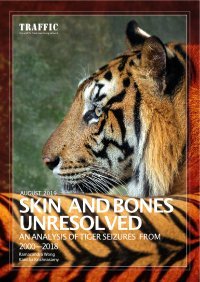
Skin and Bones Unresolved: An Analysis of Tiger Seizures from 2000–2018

By Wong, R. and Krishnasamy, K

The present report is the fourth iteration of TRAFFIC’s analysis on the illegal trade in Tigers Panthera tigris looking at an overall 19-year trend from 2000 to 2018. Previous analyses reviewed seizures from the 2000–2010, 2000–2012 and 2000–2015 periods. This analysis involved largely Tiger Range Countries (TRCs), while information opportunistically gathered from outside TRCs has also been included to provide a more comprehensive picture of the illegal trade in Tigers. Beyond highlighting the statistics, this report provides insights into trends and the most current and urgent threats facing Tigers. Nineteen years is a considerable time frame for data aggregation, and admittedly numerous changes have occurred in the wildlife protection and management regimes, including of Tiger habitats in a number of TRCs. With the large dataset spanning almost two decades, various considerations emerge involving TRCs and issues concerning the protection of wild Tigers, as well as those arising from captive facilities implicated with illegal Tiger trade. Overall, a conservative estimate of 2,359 Tigers were seized from 2000 to 2018 across 32 countries and territories globally. These occurred from a total of 1,142 seizure incidents, with 95.1% (or 1,086 incidents) occurring in the 13 Asian TRCs1 , accounting for a minimum of 2,241 Tigers seized. On average, 60 seizures were recorded annually, accounting for almost 124 Tigers seized each year. The top three countries with the highest number of seizure incidents were India (463 or 40.5% of total seizures) and China (126 or 11.0%) closely followed by Indonesia (119 or 10.5%).

Cambridge, UK: TRAFFIC International, 2019. 52p.
From Drug Wars to Criminal Insurgency: Mexican Cartels, Criminal Enclaves and Criminal Insurgency in Mexico and Central America. Implications for Global Security

By John P. Sullivan

Transnational organized crime is a pressing global security issue. Mexico is currently embroiled in a protracted drug war. Mexican drug cartels and allied gangs (actually poly-crime organizations) are currently challenging states and sub-state polities (in Mexico, Guatemala, El Salvador and beyond) to capitalize on lucrative illicit global economic markets. As a consequence of the exploitation of these global economic flows, the cartels are waging war on each other and state institutions to gain control of the illicit economy. Essentially, they are waging a ‘criminal insurgency’ against the current configuration of states. As such, they are becoming political, as well as economic actors.

Paris: Fondation Maison des sciences de l’homme , 2011. 21p.

Drug Money and Bank Lending: The Unintended Consequences of Anti-Money Laundering

By Tomas Williams, Pablo Slutzky, and Mauricio Villamizar-Villegas

We explore how anti-money laundering (AML) policies affect banks and credit provision to firms. For identification we exploit the enactment of a financial regulation in Colombia. Aimed at controlling the flow of money from drug trafficking into the financial system, we find that after implementation bank deposits in municipalities with high drug trafficking decline. This negative liquidity shock has consequences for credit in other municipalities. Banks sourcing their deposits from areas with high drug trafficking cut lending relative to other banks. Using a proprietary database containing data on bank-firm credit relationships, we show that small firms that rely on credit from affected banks experience a negative shock to sales, investment, and profitability. Furthermore, we use night-lights data to show that these results are not due to a reallocation of activity across firms nor between the formal and informal sectors. Our evidence uncovers a hidden to be considered when implementing AML policies.

Washington, DC: Elliott School of International Affairs, The George Washington University, 2020. 62p.

Job Loss, Credit and Crime in Colombia

By Gaurav Khanna, Carlos Medina, Anant Nyshadham, Christian Posso, Jorge Tamayo

We investigate the effects of job displacement, as a result of mass-layoffs, on criminal arrests using a matched employer-employee-crime dataset from Medellín, Colombia. Job displacement leads to immediate and persistent earnings losses, and higher probability of arrest for both the displaced worker and family members. Leveraging a banking policy-reform, we find that greater access to credit attenuates the criminal response to job loss. Impacts on arrests are pronounced for property crimes and among younger men for whom opportunities in criminal enterprises are prevalent. Taken together, our results are consistent with economic incentives contributing to criminal participation decisions after job losses.

Boston, MA: Harvard Business School, 2020. 35p.

Increasing The Demand For Workers With A Criminal Record

By Zoe B. Cullen, Will S. Dobbie, and Mitchell Hoffman

State and local policies increasingly restrict employers’ access to criminal records, but without addressing the underlying reasons that employers may conduct criminal background checks. Employers may thus still want to ask about a job applicant’s criminal record later in the hiring process or make inaccurate judgments based on an applicant’s demographic characteristics. In this paper, we use a field experiment conducted in partnership with a nationwide staffing platform to test policies that more directly address the reasons that employers may conduct criminal background checks. The experiment asked hiring managers at nearly a thousand U.S. businesses to make incentive-compatible decisions under different randomized conditions. We find that 39% of businesses in our sample are willing to work with individuals with a criminal record at baseline, which rises to over 50% when businesses are offered crime and safety insurance, a single performance review, or a limited background check covering just the past year. Wage subsidies can achieve similar increases but at substantially higher cost. Based on our findings, the staffing platform relaxed the criminal background check requirement and offered crime and safety insurance to interested businesses.

Cambridge, MA: National Bureau of Economic Research, 2022. 42p.

Poached Timber: Forest Crimes, Corruption, and Ivory Trafficking in the Malian Rosewood Trade with China

By Environmental Investigation Agency

Since 2018, Mali has suffered two military coups, while the country has become one of the largest suppliers of rosewood to China, through the export of Pterocarpus erinaceus – commonly identified as “kosso,” “keno,” or “bois de vêne,” a species the trade of which is regulated by the Convention on International Trade in Endangered Species of Wild Fauna and Flora (CITES), since January 2017.

The Environmental Investigation Agency (EIA)’s findings indicate that China has imported the equivalent of half a million kosso trees from Mali – worth approximately US$220 million, between January 2017 and January 2022, a large portion of it being the product of illegal harvesting or illegal export. The relentless timber poaching in the Southern forests of Mali has resulted in a significant decline of the species.

Washington, DC: : EIA, 2022. 27p.

Nigeria: A Prime Example of the Resource Curse? Revisiting the Oil-Violence Link in the Niger Delta

By Mähler, Annegret

This paper studies the oil‐violence link in the Niger Delta, systematically taking into con‐ sideration domestic and international contextual factors. The case study, which focuses on explaining the increase in violence since the second half of the 1990s, confirms the differentiated interplay of resource‐specific and non‐resource‐specific causal factors. With re‐ gard to the key contextual conditions responsible for violence, the results underline the basic relevance of cultural cleavages and political‐institutional and socioeconomic weakness that existed even before the beginning of the “oil era.” Oil has indirectly boosted the risk of violent conflicts through a further distortion of the national economy. Moreover, the transition to democratic rule in 1999 decisively increased the opportunities for violent struggle, in a twofold manner: firstly, through the easing of political repression and, sec‐ ondly, through the spread of armed youth groups, which have been fostered by corrupt politicians. These incidents imply that violence in the Niger Delta is increasingly driven by the autonomous dynamics of an economy of violence: the involvement of security forces, politicians and (international) businessmen in illegal oil theft helps to explain the per‐ petuation of the violent conflicts at a low level of intensity.

Hamburg: German Institute of Global and Area Studies (GIGA) , 2010. 39p.

Downstream Oil Theft: Global Modalities, Trends, and Remedies

By Ian M. Ralby.

This report is the first comprehensive study of the theft of refined oil products around the globe. It provides insight into the modalities and trends in oil theft, the culprits responsible, the stakeholders affected by illicit activities, and recommendations that could change the dynamics.

Washington, DC: Atlantic Council, 2017. 117p.

Crime, Safety and Victims' Rights

By European Union Agency for Fundamental Rights

Crime harms individual victims, their loved ones, as well as society as a whole. Its effects are multi-faceted, causing physical, psychological and material injury. Fear of crime can be almost equally damaging, often changing how people live their daily lives. Crime undermines the individual rights of victims, including their core fundamental rights, such as the right to life and human dignity. The EU Charter of Fundamental Rights obliges states to protect these rights. The Charter and the Victims’ Rights Directive also give victims a right to redress and to be treated without discrimination. In addition, victims’ property and consumer protection rights can be affected. This report presents results from FRA’s Fundamental Rights Survey – the first EU-wide survey to collect comparable data on people’s experiences with, concern about, and responses to select types of crime. It focuses on violence and harassment, as well as on certain property crimes. The survey reached out to 35,000 people in the EU, the United Kingdom and North Macedonia.

Luxembourg: Publications Office of the European Union, 2021 117p.

Getting Real About an Illicit ‘External Stressor’: Transnational Cocaine Trafficking through West Africa

By Markus Schultze-Kraft

This report interrogates the stressor framework and applies it to the case of transnational cocaine trafficking through West Africa. The key innovation presented is that internal and external stresses should not be conceptualised as separate but actually as relating to and reinforcing one another for they are interconnected through transnational actors and processes that are part of broader globalising dynamics. In the case of illicit drug trafficking, such as the prohibited trade in cocaine, these dynamics should be understood as manifestations of ‘illicit globalisation’. While there is a need for a much better empirical understanding of how transnational criminal networks operate in West Africa and what impact trafficking has on the region’s states and governance, the problem at hand is arguably of a different order of magnitude than involvement in other illicit trades, which have been a constant for a long time in West Africa.

Brighton, UK: Institute of Development Studies, 2014. 46p.

Strategic Planning and the Drug Threat

By Mendel, William W. and Munger, Murl D.

The primary purpose of this publication is to show how the principles and techniques of strategic and operational planning can be applied to the supply reduction side of our national effort to curb the trafficking of illicit drugs. An earlier version was published in 1991 which introduced campaign planning methodology as a means to help bridge the gap existing between the policy and strategy documents of higher echelons and the tactical plans developed at the field level. These campaign planning principles, formats, and examples of operational level techniques have been retained and updated for use as models for current interagency actions. This expanded edition provides a more detailed overview of the drug problem in the opening chapter and adds a new chapter devoted to strategy--what are the key ingredients and how is an effective strategy formulated? The United States is at a critical juncture in its campaign to eliminate the rampant drug problem. Past gains are in danger of being lost. Recent trends suggest a resurgence in illicit drug use and that younger and younger Americans are falling prey to the drug pusher.

Carlisle, PA: U.S. Army War College Press, 1997. 186p.

Drug Trafficking, Violence, and Instability

By Phil Williams and Vanda Felbab-Brown.

“Drug Trafficking, Violence, and Instability,” will serve to: (1) introduce the series by providing general conceptions of the global security challenges posed by violent armed groups; (2) identify the issues of greatest import to scholars studying the phenomenon; and, (3) emphasize the need for the U.S. Government to understand variations in the challenges it faces from a wide range of potential enemies. In this first report, Dr. Phil Williams and Dr. Vanda Felbab-Brown provide the strategic context for the series and highlight many of the issues that will be addressed in more detail by authors of subsequent monographs in the series. SSI is pleased to offer this report in fulfillment of its mission to assist U.S. Army and Department of Defense senior leaders and strategic thinkers in understanding the key issues of the day.

Carlisle, PA: U.S. Army Wall College Press, 2021. 88p.

Mexico's Narco-Insurgency and U.S. Counterdrug Policy

By Hal Brands.

In late 2007, the U.S. and Mexican governments unveiled the Merida Initiative. A 3-year, $1.4 billion counternarcotics assistance program, the Merida Initiative is designed to combat the drug-fueled violence that has ravaged Mexico of late. The initiative aims to strengthen the Mexican police and military, permitting them to take the offensive in the fight against Mexico’s powerful cartels. As currently designed, however, the Merida Initiative is unlikely to have a meaningful, long-term impact in restraining the drug trade and drug-related violence. Focussing largely on security, enforcement, and interdiction issues, it pays comparatively little attention to the deeper structural problems that fuel these destructive phenomena. These problems, ranging from official corruption to U.S. domestic drug consumption, have so far frustrated Mexican attempts to rein in the cartels, and will likely hinder the effectiveness of the Merida Initiative as well. To make U.S. counternarcotics policy fully effective, it will be imperative to forge a more holistic, better-integrated approach to the “war on drugs.”

Carlisle, PA: U.S. Army War College Press, 2008. 68p.

The Evolution of Los Zetas in Mexico and Central America: Sadism as an Instrument of Cartel Warfare

By George W. Grayson.

The United States has diplomatic relations with 194 independent nations. Of these, none is more important to America than Mexico in terms of trade, investment, tourism, natural resources, migration, energy, and security. In recent years, narco-violence has afflicted Mexico with more than 50,000 drug-related murders since 2007 and some 26,000 men, women, and children missing. President Enrique Peña Nieto has tried to divert national attention from the bloodshed through reforms in energy, education, anti-hunger, health-care, and other areas. Even though the death rate has declined since the chief executive took office on December 1, 2012, other crimes continue to plague his nation. Members of the business community report continual extortion demands; the national oil company PEMEX suffers widespread theft of oil, gas, explosives, and solvents (with which to prepare methamphetamines); hundreds of Central American migrants have shown up in mass graves; and the public identifies the police with corruption and villainy. Washington policymakers, who overwhelmingly concentrate on Asia and the Mideast, would be well-advised to focus on the acute dangers that lie principally below the Rio Grande, but whose deadly avatars are spilling into our nation.

Carlisle, PA: U.S. Army War College Press, 2014. 103p.

The Real "Long War": The Illicit Drug Trade and the Role of the Military

By Geoffrey Till.

The 21st century has seen the growth of a number of nontraditional threats to international stability on which, trade, and thus U.S. peace and security, depends, and for the moment at least a reduced likelihood of continental scale warfighting operations, and something of a de-emphasis on major involvement in counterinsurgency operations. These nontraditional threats are, however, very real and should command a higher priority than they have done in the past, even in a period of budgetary constraint. The military have cost-effective contributions to make in countering the manufacture and distribution of illicit drugs, and in many cases can do so without serious detriment to their main warfighting role. Successfully completing this mission, however, will require the military to rethink their integration with the nonmilitary aspects of a whole-of-government approach, and almost certainly, their institutional preference for speedy victories in short wars.

Carlisle, PA: U.S. Army War College Press, 2020. 81p.

Cartel Car Bombings in Mexico

By John P. Sullivan and Robert J. Bunker.

Contemporary Mexican cartel use of car bombs began in mid-July 2010 and has since escalated. Given the proximity to the United States, some literally within miles of the border, the car bombings, with about 20 incidents identified over the last 2 1/2 years, should be of interest to local, state, and federal U.S. law enforcement, the U.S. Army, and other governmental institutions which are providing increasing support to Mexican federal agencies. An historical overview and analysis of cartel car bomb use in Mexico provides context, insights, and lessons learned stemming from the Medellin and Cali cartel car bombing campaigns. In order to generate insights into future cartel car bombings in Mexico, the identification of such potentials offers a glimpse into cartel “enemy intent,” a possible form of actionable strategic intelligence. For Mexico, steady and both slowly and quickly increasing car bomb use trajectories may exist. The prognosis for decreasing car bomb deployment appears unlikely. If cartel car bombs were to be deployed on U.S. soil or against U.S. personnel and facilities in Mexico, such as our consulates, we could expect that a pattern of indications and warnings (I&W) would be evident prior to such an attack(s). In that case, I&W would be drawn from precursor events such as grenade and improvised explosive device (IED) attacks (or attempted attacks) on our personnel and facilities and on evolving cartel car bomb deployment patterns in Mexico. The authors conclude with initial recommendations for U.S. Army and defense community support to the military and the federal, state, and local police agencies of the Mexican state, and the various U.S. federal, state, and local police agencies operating near the U.S.-Mexican border. The extent of support in intelligence, organization, training, and equipment is highlighted, as well as the extent that these forms of support should be implemented to counter cartel vehicle-borne IEDs and overall cartel threats.

Carlisle, PA: U.S. Army War College Books, 2013. 72p.

The Crime of the Congo

By Arthur Conan Doyle .

Sir Arthur Conan Doyle came to the fore to publicize the dreadful massacres and genocidal crimes of Belgium’s King Leopold, who, fraudulently bought up all the land that he could then call it his Congo. He actually “owned” his own country. He then proceeded to exploit the indigenous peoples of the Congo to rob the Congo of its “riches.” He treated all the Congolese peoples as his personal slaves and used them to produce sugar, rubber and whatever else he could export and build his own riches and the lavish mansion in France and Belgium. An influential writer like Conan Doyle was needed to expose Leopold for the evil tyrant that he was, because, incredibly, Leopold achieved all his horrible gains under the guise of “humanity” and “charity” in helping the Congo people to become civilized.

NY. Doubleday. (1909) 156 pages.

Carnival of Crime

By Mark Twain.

The Facts Concerning The Recent Carnival Of Crime In Connecticut. “Straightway the door opened, and a shriveled, shabby dwarf entered. He was not more than two feet high. He seemed to be about forty years old. Every feature and every inch of him was a trifle out of shape; and so, while one could not put his finger upon any particular part and say, “This is a conspicuous deformity,” the spectator perceived that this little person was a deformity as a whole—a vague, general, evenly blended, nicely adjusted deformity. There was a fox-like cunning in the face and the sharp little eyes, and also alertness and malice. And yet, this vile bit of human rubbish seemed to bear a sort of remote and ill-defined resemblance to me! “

Atlantic Monthly June (1876) 17 pages.

The Story of Crime

By Hargrave Lee Adam.

From the Cradle to the Grave. “Some years ago I set myself the task of studying crime and prison life in all its phases. Not merely to accept hearsay evidence, but to see and hear with my own eyes and ears all that was significant on the subject that I could. Therefore, whereever anything was to be learned concerning crime I there prosecuted and observed for my inquiries myself what transpired.”

London: T. Werner Laurie, 346p.

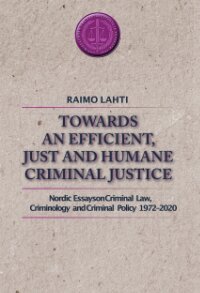
Towards an Efficient, Just and Humane Criminal Justice: Nordic Essays on Criminal Law, Criminology and Criminal Policy 1972-2020

By Raimo Lahti.

This collection of essays on criminal law, criminology and criminal policy includes a selection of my articles from the year of 1972 to the year of 2020, i.e., from a period of 49 years. The writings – in all 32 – chosen for the compilation are written in English and 30 of them have been published earlier. The main aim with this anthology is to crucially widen the access of my writings for comparative purposes. The articles are divided into seven chapters. Chapters I–VI cover a large spectrum of criminal sciences, and they are – in particular, in Chapters IV–VI – written rather from a Nordic (Scandinavian) than from a narrower Finnish perspective. The title of the anthology expresses its main message: towards an efficient, just and humane criminal justice. Chapter VII includes five articles related to bio-ethics and (criminal) law. The reason for that chapter’s attachment is to present some of my contributions to the new discipline entitled ‘Medical law and biolaw’.

The intensified internationalization and Europeanization of criminal law and justice have changed the role of comparative law and criminal sciences in general. There is much more need for comparison of legal orders due to the emergence of European criminal law and international criminal law and due to the increased interaction between European and global legal regulations and the national legal orders. We also need more evidence-based criminological research to be utilized in criminal-policy planning and as a foundation for rational policy decisions.

Helsinki: Suomalainen lakimiesyhdistys, 2021. 554p.