Open Access Publisher and Free Library
Fiction+Mediajpg.jpg

FICTION and MEDIA

CRIME AND MEDIA — TWO PEAS IN A POD

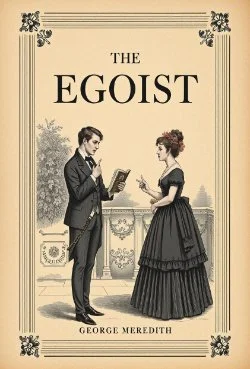
The Egoist


By George Meredith (Author), Colin Heston (Introduction)

George Meredith’s “The Egoist” is widely regarded as one of his most accomplished and mature works, combining his characteristic wit, psychological depth, and social critique into a sharp and satirical narrative. Published in 1879, this novel represents a pinnacle in Meredith’s literary philosophy—his commitment to using fiction not merely as entertainment but as a vehicle for exploring human character, societal expectations, and the subtle dynamics of personal relationships. In many ways, “The Egoist” functions both as a comedy of manners and as a profound psychological study, holding a mirror up to the follies and vanities of Victorian society.
At the heart of “The Egoist” lies a central theme that preoccupied Meredith throughout his literary career: the tension between individual selfhood and the demands of others—particularly within the confines of marriage and social conventions. The story revolves around Sir Willoughby Patterne, a wealthy and charming yet profoundly self-absorbed gentleman, whose narcissism forms the axis upon which the novel’s drama turns. Meredith describes him as a man who regards others merely as extensions of his own identity, whose self-love blinds him to the autonomy, desires, and inner lives of those around him. Willoughby’s egoism is not the mere arrogance or pride commonly depicted in fiction but is an all-encompassing psychological state—a subtle, insidious failure of empathy and moral imagination.
In conclusion, “The Egoist” is more than a satire of a single narcissistic man; it is a brilliant dissection of the subtle forces that govern human relationships. Through its precise psychological characterization, sharp wit, and philosophical depth, the novel transcends its Victorian context to speak to enduring questions about identity, autonomy, and the ethical demands of living among others. Its challenge to readers remains as relevant today as it was in 1879: to recognize, confront, and transcend the egoisms that so often distort both personal and social life.
Read-Me.Org Inc. New York-Philadelphia-Australia. 2025. 441p..
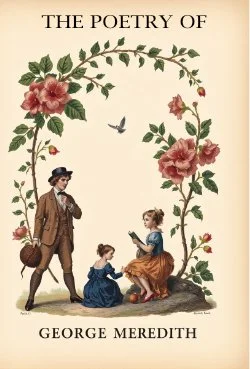
The Poetry Of George Meredith

By George Meredith (Author), Colin Heston (Introduction) Format: Kindle Edition

George Meredith’s poetry stands as one of the most intellectually challenging and idiosyncratic contributions to Victorian literature. Published in 1888 by Macmillan and Co., The Poetry of George Meredith collects his poetic output into a single volume, offering readers a comprehensive view of a body of work that was often overshadowed by his accomplishments as a novelist. While Meredith’s fiction earned him widespread recognition during his lifetime, his poetry was a more private, cerebral pursuit—revered by literary peers but frequently misunderstood or overlooked by the broader reading public.
To approach Meredith’s poetry is to enter a realm where language serves not merely as ornament but as a crucible for thought. His verse rejects the lush musicality and emotional immediacy typical of many of his contemporaries in favor of a dense, elliptical style that demands intellectual engagement. Meredith himself was acutely aware of how unconventional his poetic voice was, famously describing his work as being written for those “whose heads are used to thinking.” His lines often eschew smoothness for compression, sacrificing surface harmony in pursuit of precision, depth, and psychological or philosophical insight.

Read-Me.Org Inc. New York-Philadelphia-Australia. 2025. 501p.

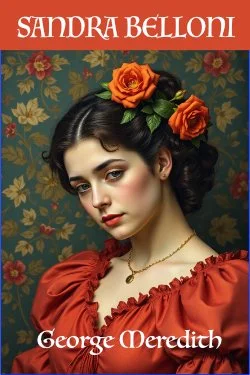
Sandra Belloni

By George Meredith. Designed and Edited with an Introduction by Colin Heston.

Sandra Belloni, first published in 1864 under the title Emilia in England, occupies a distinctive place in the literary corpus of George Meredith. It represents one of his earliest extended efforts to merge the comic novel with a more pointed social critique, a technique that would become a hallmark of his mature style. This novel, rich in subtle irony and psychological insight, grapples with the tensions between individuality and conformity, art and social convention, and the constraints of class and gender in Victorian England. At its heart, it is a narrative about a young woman of Italian descent, Emilia Belloni, whose musical gifts and unorthodox spirit clash with the expectations of the rigid English society into which she is thrust.

Meredith uses Emilia’s character not merely as a protagonist but as a symbolic figure—an embodiment of passionate sincerity, artistic freedom, and the disruptive power of the outsider. Emilia’s foreignness is not just ethnic; it is deeply cultural and emotional. Her instincts are governed by feeling and a commitment to truth, which repeatedly brings her into conflict with the carefully cultivated hypocrisies and social facades of the English middle and upper classes. Through her, Meredith examines the ways in which English society suppresses emotional authenticity in favor of propriety and self-interest.

In reading Sandra Belloni today, one encounters not only a portrait of Victorian society in all its contradictions but also an enduring exploration of the universal struggle between the self and society, between the voice that seeks to sing freely and the forces that would silence it. It is a novel that resonates beyond its historical moment, inviting readers to reflect on the costs and necessities of remaining true to oneself in the face of overwhelming pressure to conform.

Read-Me.Org Inc. New York-Philadelphia-Australia. 2025. 318p.

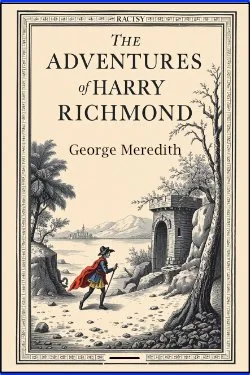
The Adventures Of Harry Richmond

By George Meredith. Designed and Edited with an Introduction by Colin Heston

The Adventures of Harry Richmond, first published in serial form between 1870 and 1871, then in full in 1871, occupies a fascinating place in the evolution of the English novel. A heady mixture of picaresque adventure, coming-of-age narrative, satire, romance, and psychological study, it is one of George Meredith’s most ambitious works. Beneath its surface as a lively and sometimes eccentric tale of a young man’s escapades lies an intricate meditation on the construction of identity, the conflict between appearance and reality, and the profound influence of family, class, and society. These themes connect the novel powerfully to concerns that dominate modern fiction.

At its core, Harry Richmond examines how identity is not simply inherited but assembled—through choice, resistance, deception, and chance. Harry Richmond is born into a web of conflicting influences: his father, Roy Richmond, is a charming but unscrupulous social climber whose life revolves around maintaining appearances and manipulating social structures; his grandfather, Squire Beltham, represents a rigid, landed English respectability that is both moralistic and emotionally cold. Caught between these poles, Harry’s life becomes a journey to define himself outside the narrow confines of these competing legacies.

Read-Me.Org Inc. New York-Philadelphia-Australia. 2025. 355p.

One of Our Conquerors


By George Meredith (Author), Colin Heston (Introduction)

At the heart of One of Our Conquerors is the story of Victor Radnor, a self-made, successful businessman who embodies the energies of commercial Victorian England. Victor is a man of formidable charm, ambition, and benevolence, yet he is ensnared in a socially precarious position due to his relationship with his beloved partner, Nataly, with whom he has lived for years as husband and wife without formal marriage. Their union, socially illegitimate though personally devoted, becomes the focal point for much of the novel’s tension. Victor’s desire to legitimize their relationship and secure a respectable position for their daughter Nesta in society serves as the narrative’s driving conflict.
Meredith, ever the ironist, does not present Victor uncritically. Victor is a man of immense energy, imagination, and generosity, but also prone to illusions—particularly about the power of charm, wealth, and personal will to override the deeper currents of social judgment. His belief that society can be bent to his personal desires reflects both the optimism of the self-made man and the hubris that often accompanies unchecked ambition. In this sense, the title One of Our Conquerors carries a double edge: it acknowledges Victor’s triumphs in commerce and his conquest of circumstances but also points to the broader critique of conquest itself—whether in business, society, or personal relationships.
One of Our Conquerors is a profound exploration of the tensions between private morality and public life, between individual will and social constraint, and between the old moral orders and the emerging complexities of modernity. It challenges readers to consider the costs of social conformity, the meaning of success, and the possibilities for human integrity in a world increasingly driven by commerce, appearance, and social performance. As with Meredith’s other major works, it is a novel whose rewards are commensurate with the patience and thoughtfulness brought to it—a work that continues to resonate with readers interested in the enduring struggles between the personal and the public, the ideal and the real.

Read-Me.Org Inc. New York-Philadelphia-Australia. 2025. 291p.

Evan Harrington


By George Meredith (Author), Colin Heston (Introduction)

Evan Harrington, first published in 1861, represents a crucial early milestone in the literary career of George Meredith. While not as formally experimental or philosophically dense as his later masterpieces like The Egoist or Beauchamp’s Career, this novel nonetheless displays in fully developed form the sharp social satire, psychological acuity, and probing concern with class, identity, and social performance that would become hallmarks of Meredith’s mature work. More overtly comedic than much of his later fiction, Evan Harrington occupies a unique place in his canon as both a sparkling social comedy and a pointed critique of the hypocrisies embedded within Victorian class structures.
At its most basic level, Evan Harrington is a novel about a young man’s struggle with the question of identity — specifically, the tension between his personal merit and the social stigma attached to his family’s occupation. Evan is the son of Melchisedec Harrington, an exceedingly proud and flamboyant tailor whose death leaves his family facing financial and social crisis. Although Evan has received a gentleman’s education and possesses the manners and intellect of the upper classes, he is forced to reckon with the fact that in the rigidly stratified world of mid-19th century England, the mere fact of being “the tailor’s son” is enough to exclude him from the ranks of polite society.
Evan Harrington remains a vital and compelling work not only because it provides insight into Meredith’s literary evolution but also because its central concerns continue to resonate. The tension between personal integrity and social expectation, the arbitrariness of class distinctions, and the enduring question of what it means to live authentically within a society structured by appearances — these remain pressing questions in any era.
In sum, Evan Harrington is both a sparkling social comedy and a profound moral fable. It combines the pleasures of sharp character portraits, witty dialogue, and romantic intrigue with a serious exploration of identity, class, and the painful comedy of human vanity. It is a work that delights the reader while also challenging them to reflect on the enduring absurdities of social life and the courage it takes to live truthfully in the face of them. As such, it stands as a worthy introduction to the genius of George Meredith and a foundational text within the broader tradition of the Victorian social novel.

Read-Me.Org Inc. New York-Philadelphia-Australia. 2025. 332p.

Diana Of The Crossways


By George Meredith (Author), Colin Heston (Introduction)

Diana of the Crossways, first published in 1885, represents a pivotal achievement in George Meredith’s literary career. It stands apart not merely as his most commercially successful novel during his lifetime but as a mature and sophisticated exploration of some of the most pressing social, psychological, and philosophical dilemmas of the Victorian age. This novel synthesizes his longstanding thematic concerns—gender relations, the constraints of marriage, the struggle for individual autonomy, and the social mechanisms of hypocrisy and surveillance—into a narrative that is at once accessible, profoundly ironic, and deeply analytical.
At its center is the figure of Diana Merion Warwick, a woman of exceptional beauty, intellect, and vivacity, whose struggle is emblematic of the tensions between the individual, particularly the intellectually aspiring woman, and a society structured to suppress her independence. Diana’s trajectory is not merely the story of a woman’s personal fate but a dramatization of the larger structural impediments to female agency in a patriarchal world that equates female virtue with silence, obedience, and domestic confinement.
The novel’s contemporary relevance is striking. Its exploration of gendered power dynamics, the politics of reputation, the policing of women’s voices, and the ethical failures of institutions built on inequality continues to resonate with modern readers. It anticipates many of the concerns that would later be taken up by feminist literary critics, particularly in its portrayal of how systemic power operates through language, marriage, and social surveillance.
Diana of the Crossways thus stands not merely as a compelling work of Victorian fiction but as a profound literary experiment in social critique, psychological realism, and moral philosophy. It is a novel that challenges the reader to think deeply about the structures of power that govern intimate relationships and public life, and about the costs of pursuing truth and autonomy in a world designed to punish those who do. Through its combination of narrative wit, philosophical depth, and emotional intensity, it remains one of George Meredith’s most enduring and significant achievements.

Read-Me.Org Inc. New York-Philadelphia-Australia. 2025. 275p.

Celt and Saxon: ans other short works

By George Meredith. Designed and Edited with an Introduction by Colin Heston.

Published posthumously in 1910, Celt and Saxon represents George Meredith’s final, unfinished foray into the social and psychological intricacies that occupied his life’s work. Though left incomplete at the time of his death, the novel encapsulates many of Meredith’s enduring concerns: the collision of cultures, the tensions of national identity, the role of women in modern society, and the inescapable dance between personal desire and social obligation. It stands as both a summation of Meredith’s intellectual preoccupations and a poignant farewell from one of Victorian England’s most challenging and original literary minds.
The title, Celt and Saxon, announces immediately that the novel grapples with one of the central ethnic and political fault lines of the British Isles: the relationship between the English (Saxon) and the Irish (Celt). By the late 19th and early 20th centuries, the so-called “Irish Question” loomed large over British politics. The long history of Anglo-Irish conflict—marked by conquest, colonization, famine, and rebellion—had crystallized into fierce debates about Home Rule, national identity, and the future of the United Kingdom.
Celt and Saxon stands as a fitting culmination of George Meredith’s literary journey. It is at once a love story, a family drama, and a political allegory—a work that captures the intricate dance between passion and principle, between history and the individual.
Though unfinished, it offers one of the most sophisticated literary treatments of Anglo-Irish relations in the Victorian canon, rendered with Meredith’s signature blend of intellectual rigor, emotional depth, and merciless yet compassionate irony. It leaves readers not with easy answers but with an enduring question: how do we live honestly within the web of history, identity, and the aching desire to be both free and connected?
Read-Me.Org Inc. New York-Philadelphia-Australia. 2025. 265 p.

Read-Me.Org
THE CASE OF GENERAL OPLE AND LADY CAMPER. And other short stories.

By George Meredith. Introduction by Colin Heston.

George Meredith, best known for his major novels such as The EgoistDiana of the Crossways, and Beauchamp’s Career, also wrote a number of shorter works—novellas and long stories—that display in concentrated form the hallmarks of his art: ironic wit, subtle psychological insight, satire of societal norms, and a persistent concern with the interplay between the sexes. These works are not mere diversions from his larger projects but compact laboratories in which Meredith sharpens his analysis of human behavior, particularly in the realm of courtship, marriage, pride, and social pretense. This book contains five of his best short stories: The Case of General Ople and Lady Camper, The Tale of Chloe: An Episode in the History of Beau Beamish, The House on the Beach, The Gentleman of Fifty and the Damsel of Nineteen, and The Sentimentalists. Together, these stories encapsulate Meredith’s lifelong investigation into the absurdities and tragedies of human relationships, particularly as they are mediated by vanity, pride, and the rigid codes of Victorian society. These shorter works occupy an important place in George Meredith’s literary canon. While the major novels develop their themes over hundreds of pages, these stories offer distilled reflections of the same philosophical concerns: the comedy of human self-deception, the struggle between individual agency and societal constraint, and the complex dance of genders within a framework of rigid social codes. Far from being minor or incidental, these stories are exquisite miniatures—each a sharply faceted gem that catches the light of Meredith’s extraordinary insight into the follies, tragedies, and redemptive possibilities of human life..

This edition has been reformatted, designed, abridged and annotated  by renowned novelist and story writer Colin Heston to remove errors and other distracting content that occurred in the original edition, making the book more accessible for the present day reader.

Read-Me.Org Inc. New York-Philadelphia-Australia. 2025. 191p.

Read-Me.Org
The Devil Next Door: Toward a Literary and Psychological Definition of Human Evil

By Vera B. Profit

Rather than theoretical or abstract, above all else, this monograph endeavors to serve as a practical guide, a handbook for helping us navigate a dark terrain. It neither presumes to examine the sources of evil nor suggest radical cures. These pages strive only to continue the process of naming the signs of individual evil that we might recognize these persons before they inflict even more damage. Scott Peck says it best. “If evil were easy to recognize, identify, and manage, there would be no need for this book.” Of course, he was referring to his own pioneering treatise; given the realities of our day, the need remains as great as ever.

Amsterdam - New York, NY by Editions Rodopi B.V., 2014

Imagery of Hate Online

Edited by Matthias J. Becker, Marcus Scheiber, and Uffa Jensen

This edited volume explores the evolving role of visual and multimodal expressions in spreading hate ideologies within digital communication. In digital spaces, hate speech is increasingly conveyed through memes, images, and videos, blending textual and pictorial elements to perpetuate harmful stereotypes and other exclusionary narratives. While historical perspectives on hate imagery are well-documented, this collection emphasises the pressing need for contemporary analysis of visual and multimodal communication in digital environments. Featuring contributions from interdisciplinary experts, this volume investigates the content, structure, and dynamics of normalisation of visual hate speech. By examining memes, manipulated images, and other visual artifacts, it reveals how hateful content gains traction in digital public spheres, often blurring traditional boundaries of acceptability. Through rigorous case studies and theoretical insights, the anthology provides a comprehensive understanding of how multimodality shapes hate discourse and its societal impact. Grounded in empirical research, this collection also addresses the challenges of defining and analysing hate ideologies, offering nuanced frameworks for distinguishing legitimate critique from hate-based narratives. Decoding Visual Hate is an essential resource for scholars, policymakers, teachers, and digital communicators seeking to combat the proliferation of visual hate and foster more inclusive online spaces.

Cambridge, U: Open Book Publishers, 2025. 278p.

Islamophobia, anti-racism and the British left

By Scarlet Harris

Drawing on first-hand accounts from anti-racist activists and community workers in two British cities, Islamophobia, anti-racism and the British left explores the treatment of Islamophobia by those committed to challenging it. The book interrogates the ways in which anti-racist activists and community workers understand the problem of Islamophobia, and what this means for their organised responses on the ground. Islamophobia remains one of the most misunderstood varieties of racism in the current moment. By combining empirical research with sociological theory, the book casts a clarifying lens on Islamophobia’s complex relationship to ‘race’, other modalities of racism and wider structures of racial capitalism. Furthermore, it offers a critical assessment of recent attempts to talk about and tackle Islamophobia. Reflecting on key political trends in Britain, from the entrenchment of ‘counter-extremism’ policy, liberal hegemony and resurgent left nationalisms, to histories of Black radicalism and recent pro-Palestine activism, Islamophobia, anti-racism and the British left offers an alternative approach to resisting Islamophobia from and for the anti-racist left.

Manchester, UK: Manchester University Press, OA Open. 2025. 177p.

Appealing Because He Is Appalling: Black Masculinities, Colonialism, and Erotic Racism

Edited by Tamari Kitossa

This collection invites us to think about how African-descended men are seen as both appealing and appalling, and exposed to eroticized hatred and violence and how some resist, accommodate, and capitalize on their eroticization. Drawing on James Baldwin and Frantz Fanon, the contributors examine the contradictions, paradoxes, and politico-psychosexual implications of Black men as objects of sexual desire, fear, and loathing. Kitossa and the contributing authors use Baldwin’s and Fanon’s cultural and psychoanalytic interpretations of Black masculinities to demonstrate their neglected contributions to thinking about and beyond colonialist and Western gender and masculinity studies. This innovative and sophisticated work will be of interest to scholars and students of cultural and media studies, gender and masculinities studies, sociology, political science, history, and critical race and racialization. Foreword by Tommy J. Curry.

Contributors: Katerina Deliovsky, Delroy Hall, Dennis O. Howard, Elishma Khokhar, Tamari Kitossa, Kemar McIntosh, Leroy F. Moore Jr., Watufani M. Poe, Satwinder Rehal, John G. Russell, Mohan Siddi

Alberta: University of Alberta Press, 2021

An Amazing Marriage

By George Meredith. Introduction by Colin Heston

When An Amazing Marriage was published in 1895, George Meredith stood at the summit of his literary career, celebrated as one of the most intellectually formidable and stylistically daring novelists of the Victorian age. By this time, Meredith had forged a reputation for works that combined psychological subtlety, social satire, and philosophical inquiry, appealing more to the discerning literary elite than to the broader Victorian reading public. An Amazing Marriage emerges as one of his last full-length novels and, fittingly, revisits many of the themes that had preoccupied him throughout his life—gender relations, the institution of marriage, the constraints of social conventions, and the inner lives of women.

The very title, An Amazing Marriage, signals Meredith's ironic stance toward the Victorian ideal of marriage. Rather than a romantic or sentimental union, marriage is often portrayed in his works as a contested arena, where conflicting expectations, social pressures, and personal ambitions collide. In this novel, Meredith offers a biting critique of the marital conventions of his era, presenting a union that is both remarkable and troubling in its complexity.
Although An Amazing Marriage is less frequently read today than Meredith’s earlier masterpieces, it remains a vital document of the tensions that defined late-Victorian society. Its psychological acuity, progressive gender politics, and sharp critique of social hypocrisy retain their resonance in the modern era, where debates about marriage, gender roles, and personal autonomy continue to evolve.
For contemporary readers, the novel offers both a window into the anxieties of the past and a mirror reflecting the enduring challenges of balancing love, freedom, and social expectation. Aminta’s journey toward self-realization, with all its attendant risks and uncertainties, anticipates the narratives of countless women in the century that followed.

Read-Me.Org Inc. New York-Philadelphia-Australia. 2025. 213p.

Beauchamp's Career

By George Meredith. Designed and Edited with an Introduction by Colin Heston.

More than any other of his novels, Beauchamp’s Career embodies Meredith’s philosophical worldview: that the highest human calling is the continual pursuit of greater consciousness. For Meredith, the “Comic Spirit” serves as an ethical guide—illuminating human folly, deflating pretension, and inviting self-correction through laughter rather than dogma.

Yet Beauchamp, ironically, lacks the flexibility of the Comic Spirit. He is too earnest, too driven by absolute convictions, to fully participate in the comic self-awareness that Meredith idealizes. In this sense, Beauchamp is both a hero and a warning: a figure of immense moral courage whose tragedy lies in his refusal to accept that the world operates not by ideals but by compromises.

While Beauchamp’s Career was never Meredith’s most popular work during his lifetime, it has come to be recognized as one of his most ambitious and profound novels. Its examination of the dilemmas of idealism, political integrity, and personal sacrifice remains strikingly relevant in an era of political polarization and disillusionment.

The novel speaks to anyone who has struggled with the tension between moral conviction and the messy realities of human society. Its insights into the nature of political life—the seductions of populism, the compromises demanded by coalition, the frustrations of advocacy in an indifferent world—resonate just as powerfully now as they did in the 19th century. Beauchamp’s Career stands as one of George Meredith’s greatest achievements: a work that challenges as much as it enlightens, a moral and political fable wrapped in the ironic garb of the Victorian social novel. It demands much of its readers—patience, attentiveness, and a willingness to engage with ambiguity—but it rewards that effort with a deeply moving meditation on the costs and the dignity of living according to one’s principles.

In an age when the struggle between ideals and pragmatism remains as urgent as ever, Beauchamp’s Career offers both a mirror and a guide—one that reflects the frailty of human institutions, but also the enduring power of conscience.

Read-Me.Org Inc. New York-Philadelphia-Australia. 2025. 383p.

The Woman-Haters

By Joseph C. Lincoln. Introduction by Colin Heston

Joseph C. Lincoln, the warm-hearted chronicler of Cape Cod’s idiosyncratic inhabitants and firm believer in the redemptive power of small-town values, presents in The Woman-Haters (1911) one of his most amusing and subtly insightful novels. While the title may suggest farce or even a certain antiquated misogyny, the book in fact delivers a humorous, ironic, and ultimately romantic portrait of two stubborn men who, having sworn off women, are gradually—and inevitably—reclaimed by the very forces they sought to escape.

The Woman-Haters is a story that begins in comic defiance and ends in gentle reconciliation. It stands as a playful yet thoughtful exploration of masculinity, friendship, and the futility of emotional denial. Thematically, it touches on some of Lincoln’s most enduring concerns: the tension between isolation and community, the blundering path to personal growth, and the quiet insistence of love—even when disguised as irritation. The book can be read as a story of emotional maturation. Both protagonists begin the novel trying to simplify their lives by eliminating emotional risk. Their commitment to solitude is not so much philosophical as defensive. Lincoln makes it clear that behind their cranky misanthropy lies a deep human need for connection—not just with women, but with others in general.

This need is reflected in the setting. The lighthouse—a classic symbol of loneliness and endurance—becomes a metaphor for their isolation. It offers protection and routine but also breeds stagnation. As women, neighbors, and even memories begin to invade this space, the protagonists are forced to rethink their identities. Far from being “liberated” by their woman-hating stance, they discover that meaningful life lies in openness, not exclusion. Lincoln uses the lighthouse’s physical isolation to underscore the emotional distance his characters must cross. In the end, the book affirms that maturity does not mean independence from others, but the strength to accept vulnerability.

Lincoln’s tone in The Woman-Haters is light and amiable, but it does not shy away from emotional honesty. He ridicules the characters’ extremes without condemning them. His comic timing is impeccable, particularly in scenes of domestic mishap or social discomfort. Yet beneath the humor is a genuine tenderness for his characters.

This edition has been reformatted, designed, abridged and annotated by renowned novelist and story writer Colin Heston to remove errors and other distracting content that occurred in the original edition, making the book more accessible for the present day reader.

Read-Me.Org Inc. New York-Philadelphia-Australia. 2025. 157p.

Read-Me.Org
The Postmaster

By Joseph C. Lincoln. Introduction by Colin Heston

In The Postmaster, Joseph Crosby Lincoln returns to the familiar sandy lanes and salt-scented breezes of his beloved Cape Cod to offer another deeply affectionate, character-driven tale of small-town life, personal redemption, and the timeless conflict between past obligations and future hopes. First published in 1925, this novel is a fine example of Lincoln’s mature period—a work that blends gentle satire with human warmth and rural wisdom. It is a story steeped in Yankee resilience, full of familiar Cape archetypes, yet touched with unexpected emotional depth and psychological insight. At its heart, The Postmaster is a tale of a man caught between two worlds—between the public role he fulfills and the private burdens he carries. It explores questions of personal identity, civic duty, and the cost of maintaining appearances in a tightly-knit, ever-observant New England village. As with so many of Lincoln’s best works, it is in the quiet, often comic collisions of personality and principle that the story finds its strength.

The Postmaster was originally published in 1925 and was well received by contemporary readers, many of whom found solace and delight in Lincoln’s steadfast moral compass and reliable narrative pleasures—especially at a time when American literature was increasingly experimental or urban-centered. Though never adapted into a film or widely anthologized, The Postmaster has endured as a minor classic among Lincoln’s loyal readers and fans of traditional New England fiction. It is a novel that rewards patient reading. While its plot unfolds at a deliberate pace, it gradually reveals a world in which small actions matter deeply, and where moral courage is measured not in grand gestures but in quiet, sustained integrity. Sylvanus Cahoon, in his modesty, becomes a figure of quiet heroism, and Lincoln once again proves himself a master of the intimate epic—a teller of tales in which the heart of America is found not in cities or battlefields, but in small towns, honest labor, and lives lived with quiet conviction.

For readers seeking charm with substance, humor with humanity, and a vision of American life both nostalgic and ethically serious, The Postmaster offers all this and more. This edition has been reformatted, designed, abridged and annotated  by renowned novelist and story writer Colin Heston to remove errors and other distracting content that occurred in the original edition, making the book more accessible for the present day reader.

Read-Me.Org Inc. New York-Philadelphia-Australia. 2025. 147p.

Read-Me.Org
"SHAVINGS"

By Joseph C. Lincoln (Author), Colin Heston (Introduction)

In Shavings, published in 1918 at the peak of his literary success, Joseph C. Lincoln again turns his familiar eye and pen toward Cape Cod—its people, its rhythms, and its moral heart. Like much of Lincoln’s fiction, this novel offers more than light entertainment; it is a nuanced exploration of human decency, community obligation, and emotional transformation, wrapped in a quietly humorous and affectionately drawn setting.
Set in the fictional village of East Wellmouth, Shavings centers on a seemingly unremarkable character: a middle-aged man named Lemuel “Shavings” Keziah, a gentle and eccentric resident who works as a handyman and caretaker of sorts at the local ship-chandlery. What begins as a portrait of a quiet, solitary man becomes a deeper meditation on compassion, guardianship, and the power of unassuming kindness to transform lives. In this novel, Lincoln refines his formula of New England coastal fiction, combining rich local detail, deft character sketches, and moral clarity in a story that both reflects and transcends its setting.
The title Shavings is rich in metaphor. At the surface level, it refers to wood shavings—fragments trimmed away in the process of building or shaping. But on a deeper level, it suggests themes of smallness, modesty, and the overlooked. Lemuel Keziah is, like his namesake shavings, a figure that most would pass over without a second thought. He is plain, odd, physically unimposing, and considered somewhat simple by his neighbors. Yet within that uncarved block of humility lies a figure of enormous quiet integrity, and Lincoln’s triumph is in showing how such a man can become a pillar of his community and a redeemer in the lives of others.
Lincoln gives us a novel that blends humility with heart, modesty with moral insight. It is a story of redemption through quiet persistence, of fatherhood without blood, and of character tested not by fame or fortune but by the daily demands of decency. For those who cherish gentle fiction with real emotional weight, Shavings is a touchstone. It evokes a vanished New England but leaves in its place timeless lessons on love, trust, and the power of doing good without seeking reward. In Lemuel Keziah, Lincoln offers a model of quiet heroism whose relevance has only grown with time.

Read-Me.Org Inc. New York-Philadelphia-Australia. 2025. 229p.

Abe's Yarns and Stories

By Alexander K. McClure (Author), Colin Heston (Introduction)

Abe’s Yarns and Stories, edited by Alexander K. McClure and first published in 1901 by the International Publishing Company, is a unique and enduring contribution to the cultural memory of Abraham Lincoln. Rather than a conventional biography, this volume presents Lincoln through the lens of his own storytelling—anecdotes, jokes, parables, and recollections that he used to communicate, persuade, and connect with people from all walks of life. The book is both a literary and historical artifact, capturing the essence of Lincoln’s personality and the oral tradition that helped shape his public image. McClure, a journalist and political figure who knew Lincoln personally, compiled this collection not only to entertain but to preserve the wit and wisdom of a man whose humor was as integral to his leadership as his moral conviction.
What makes Abe’s Yarns and Stories particularly compelling is its blend of folklore and fact. While some of the anecdotes may be apocryphal or embellished, they reflect the way Lincoln was remembered and revered by those who knew him and those who came after. The book thus serves as a bridge between history and myth, illustrating how Lincoln’s legacy was shaped not only by his deeds but by the stories told about him. McClure’s editorial voice is respectful and admiring, but he allows Lincoln’s own words and the voices of his contemporaries to take center stage. The result is a portrait that is intimate, humanizing, and deeply American. His rich self-education and his storytelling formed the foundation of a presidency that not only preserved the Union but also reshaped the American identity. They allowed him to lead not just with policy, but with wisdom and heart—qualities that continue to define his legacy.

Read-Me.Org Inc. New York-Philadelphia-Australia. 2025. 360p.

The Portygee

By Joseph Crosby Lincoln . Designed and Edited with an Introduction by Colin Heston

Joseph C. Lincoln's 1920 novel The Portygee holds a unique place in his body of work. Known for his warm-hearted Cape Cod tales celebrating small-town life, moral decency, and New England character, Lincoln here expands his focus to address questions of heritage, identity, and belonging in a changing America. While retaining the gentle humor and richly textured settings that made him popular with early 20th-century readers, The Portygee engages more directly with themes of cultural difference and assimilation—offering a nuanced portrayal of prejudice, generational misunderstanding, and the search for personal integrity.

The novel’s title refers to the derogatory local slang for “Portuguese,” used to identify individuals of Portuguese descent who had settled along the Massachusetts coast in significant numbers by the late 19th and early 20th centuries. Through this lens, Lincoln examines not only the resilience of the American immigrant but also the sometimes unspoken tensions that lie beneath the surface of even the most tight-knit communities. It is a story of collision—between old and new, native and newcomer, tradition and ambition.

Read-Me.Org Inc. New York-Philadelphia-Australia. 2025. 262p.