Open Access Free Library
SOCIAL SCIENCES.jpeg

SOCIAL SCIENCES

Social sciences examine human behavior, social structures, and interactions in various settings. Fields such as sociology, psychology, anthropology, and economics study social relationships, cultural norms, and institutions. By using different research methods, social scientists seek to understand community dynamics, the effects of policies, and factors driving social change. This field is important for tackling current issues, guiding public discussions, and developing strategies for social progress and innovation.

Posts in Social Inequalities
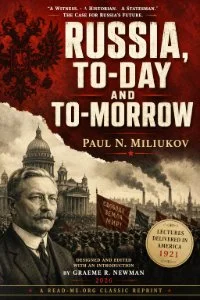
Russia, To-Day And To-Morrow

Paul Miliukov (Author) Graeme Newman (Editor and Introduction)

Russia, To-Day and To-Morrow A Read-Me.Org Classic Reprint

In the winter of 1921, a defeated statesman stood before American audiences in Boston, New York, and Chicago and delivered one of the most extraordinary eyewitness accounts of the Russian Revolution ever recorded.

Paul N. Miliukov was no distant observer. As founder and leader of Russia's Constitutional Democratic Party — the "Kadets" — he spent two decades fighting for a liberal, constitutional Russia inside the Tsarist Dumas. When the monarchy finally fell in 1917, he became Foreign Minister of the new Provisional Government, only to be forced from office within ten weeks over his insistence that Russia honor its wartime commitments to the Allies. He watched the country he had tried to build collapse first into radicalism, then into Bolshevik dictatorship — and he lived to explain why.

Russia, To-Day and To-Morrow is his reckoning: a sweeping, first-hand analysis of why the Revolution could not be averted, how the Bolsheviks seized and held power, what their regime meant for Russia's many nationalities, and how the Civil War, foreign intervention, and the catastrophic famine of 1921 reshaped the country. Miliukov writes as a trained historian even as he writes as a casualty of the events he describes — a rare combination that makes this book both an argument and an irreplaceable primary source.

This edition presents Miliukov's original 1922 text in a newly reset, corrected format, with the original maps and statistical tables restored to their places in the narrative, and a new introduction situating the book — and its author — in their historical moment.

What's inside:

  • Eleven chapters tracing the Revolution from its roots in Tsarist autocracy through the rise and "decline" of Bolshevism

  • Eyewitness analysis of the 1917 Revolutions, the Civil War, and Anti-Bolshevist Russia

  • A full chapter on the 1921 famine and its human toll

  • Original maps of Anti-Bolshevist Russia, the Soviet famine zones, and Japanese-occupied Siberia

  • Contemporary statistics on population, industry, agriculture, and education under Bolshevik rule

  • A new scholarly introduction on Miliukov and his place in Russian history

For readers of Russian history, the Revolution, and the century of ideological conflict it set in motion, Russia, To-Day and To-Morrow offers something no later history can replace: the voice of a man who helped shape the events — and lost.

Read-Me.Org Inc. New York-Philadelphia-Australia. 2026. p.232.

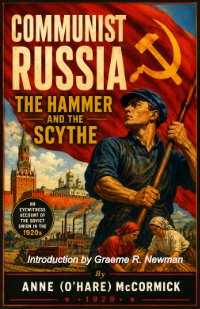
Communist Russia: Hammer and Scythe

Communist Russia: The Hammer and the Scythe is Anne O'Hare McCormick's vivid firsthand account of the Soviet Union a decade after the Russian Revolution. Based on a series of articles originally written for The New York Times, the book chronicles her travels through Moscow, Leningrad, the countryside, factories, collective farms, and government institutions as she sought to understand the world's first communist state. McCormick emphasizes that her work is not a theoretical study or political manifesto but an eyewitness exploration of a nation undergoing immense and often bewildering transformation.

Published in 1929, the book examines the emergence of the Soviet ruling class, the lives of workers and peasants, the role of women, religion, art, education, and the growing influence of Communist ideology. Rather than offering simple praise or condemnation, McCormick presents Soviet Russia as a vast social experiment whose ultimate outcome remained uncertain. Her perceptive observations, balanced prose, and willingness to question both Soviet claims and Western assumptions make Communist Russia: The Hammer and the Scythe an important contemporary record of one of the twentieth century's most significant political revolutions.

Read-Me.Org Inc. New York-Philadelphia-Australia. 2026. 233p.

Gender Identity Hate Crimes in California

By Jordan Grasso, Nathan Cisneros, & Ilan H. Meyer

This study uses publicly available administrative data reported by California law enforcement agencies to the California Department of Justice to examine trends in reported hate crimes in the state, with a particular focus on gender identity hate crimes. 

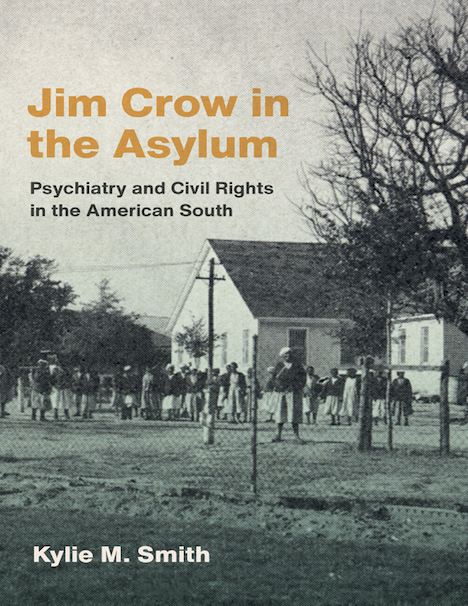
Jim Crow in the Asylum: 

Psychiatry and Civil Rights in the American South

By Kylie M. Smith

There is a complicated history of racism and psychiatric healthcare in the Deep South states of Georgia, Alabama, and Mississippi. The asylums of the Jim Crow era employed African American men and women; served as places of treatment and care for African Americans with psychiatric illnesses; and, inevitably, were places of social control. Black people who lived and worked in these facilities needed to negotiate complex relationships of racism with their own notions of community, mental health, and healing. Kylie M. Smith mixes exhaustive archival research, interviews, and policy analysis to offer a comprehensive look at how racism affected Black Southerners with mental illness during the Jim Crow era. Complicated legal, political, and medical changes in the late twentieth century turned mental health services into a battlefield between political ideology and psychiatric treatment approaches, with the fallout having long-term consequences for patient outcomes. Smith argues that patterns of racially motivated abuse and neglect of mentally ill African Americans took shape during this era and continue to the present day. As the mentally ill become increasingly incarcerated,Jim Crow in the Asylum reminds readers that, for many Black Southerners, having a mental illness was and still tantamount to committing a crime.