Open Access Publisher and Free Library
CRIME+CRIMINOLOGY.jpeg

CRIME

Violent-Non-Violent-Cyber-Global-Organized-Environmental-Policing-Crime Prevention-Victimization

Posts in diversity
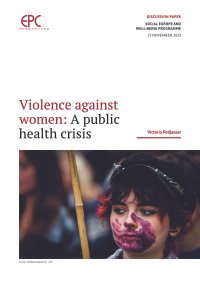
Violence against women: A public health crisis

By Victoria Pedjasaar

In the EU, a third of women over the age of 15 have experienced physical or sexual violence and over half have been sexually harassed. According to a study by the European Union Agency for Fundamental Rights (FRA), just 13% of women reported their most serious incident of non-partner violence to the authorities. Gender-based violence can occur in various situations and circumstances. According to an EU-wide survey report, 32% of perpetrators of sexual harassment in the EU come from the employment context. Although often overlooked, the majority of (workplace) violence takes place in the healthcare sector as healthcare professionals are 16 times more at risk of violence in comparison to other occupations. Violence does not only manifest in abusive behaviour toward workers on duty but can also be perpetrated on women as receivers of healthcare. High rates of violence in healthcare, brought on and exacerbated by gender stereotypes and inequality, point to dysfunctional health systems. This Paper is divided into the following chapters and provides policy recommendations on the way forward for the EU member states: 1. Gender-based violence against healthcare workers. 2. Obstetric and gynaecological violence against women. 3. Gender-based violence is a story of gender inequality. 4. Legislation and policies that protect women.

Brussels, Belgium: European Policy Centre, 2023. 12p.

Women and the Law

By Atkins, Susan and Brenda Hale, Baroness

Women And The Law is a pioneering study of the way in which the law has treated women – at work, in the family, in matters of sexuality and fertility, and in public life. Originally published in 1984, this seminal text is one that truly deserves its 'groundbreaking' moniker. Predating many key moments in contemporary feminist history, it was written before Judith Butler’s Gender Trouble; before Naomi Klein’s The Beauty Myth, with the term ‘feminist jurisprudence’ having only been coined three years earlier. It went on to inspire a legion of women lawyers and feminist legal rulings, from the Family Law Act 1996 to the legal definition of ‘violence’ (Yemshaw v. LB Hounslow 2011). This 2018 edition comes with a new foreword by Susan Atkins and provides a timely analysis of women in law forty years on, how much has changed and the work still left to do

London: University of London Press, 2018. 284p.

Tipping Scales: Exposing the Growing Trade of African Pangolins into China’s Traditional Medicine Industry

By Faith Honor , Amanda Shaverand Devin Thorne

The trafficking of pangolins and their scales drives corruption, undermines the rule of law, creates public health risks, and even threatens local and regional security. Additionally, the illicit pangolin trade may have even played a role in onset of the COVID-19 pandemic.1 Critically, the trade—and all of its related challenges—appears to be growing: between 2015 and 2019, 253 tonnes2 of pangolin scales were confiscated, and the annual quantity of pangolin scales seized increased by nearly 400%. To expose the logistics of how these scales are trafficked internationally, Tipping the Scales uses publicly available seizure data and investigative case studies. The global plight of pangolins is increasingly well-known, but less understood are the opaque supply chains that enable pangolin trafficking. To trace this illicit system from consolidation hubs in West and Central Africa to China’s consumer markets, Tipping the Scales analyses 899 pangolin seizures. Drawing on C4ADS’ Wildlife Seizure Database, law enforcement partner seizure data, official government documents, corporate data, and expert interviews, the report details how traffickers nest their activities within licit systems of trade and commerce. To disrupt this trade, C4ADS identifies opportunities for intervention and capacity building.

In Section I, the report finds that pangolin scale traffickers have co-opted bushmeat supply chains and legal breeding programs for their illicit activities. Bushmeat scale trafficking supply chains are particularly prominent in Central and West Africa; 72% of African scale seizures over the last five years have come from those regions. Growing demand for pangolin meat and scales has made pangolins a dual-transaction good3 that relies on transport networks between rural areas and urban and coastal distribution hubs. Further, the report finds that pangolin breeding programs in sub-Saharan Africa obscure the lines between poaching, conservation, and science. In Section II, the report finds that bulk pangolin scale shipments often exit the continent through coastal countries in Central and West Africa. While 70% of intercontinental trafficking instances tied to Africa rely on the air transport sector, 81% of the total weight of pangolin scales are trafficked intercontinentally via the maritime transport sector. China and Hong Kong are the trade’s most prominent destinations. Since 2015, 42% of the 195 tonnes of pangolin scales seized throughout Asia originated in Africa and were seized in or bound for China or Hong Kong. In Section III, the report finds that there are more than 1,000 companies, hospitals, and other entities participating in China’s legal market for medicinal pangolin products. In this market, which allows companies to privately stockpile pangolin scales, traffickers exploit lax regulations to sell scales from Africa and Asia. Government-reported pangolin scale consumption quotas, geo-tagged company data, and seizures suggest that Guangdong and Hunan provinces have relatively high levels of exposure to both the legal pangolin market and pangolin trafficking. Based on these findings, Tipping the Scales makes 10 recommendations to increase detection of and improve enforcement against transnational criminal networks operating in Africa and Asia (see page 58).

Washington, D: C4ADS, 2020. 60p.

New Versions of Victims: Feminists Struggle with the Concept

Edited by  Sharon Lamb 

It is increasingly difficult to use the word "victim" these days without facing either ridicule for "crying victim" or criticism for supposed harshness toward those traumatized. Some deny the possibility of "recovering" repressed memories of abuse, or consider date rape an invention of whining college students. At the opposite extreme, others contend that women who experience abuse are "survivors" likely destined to be psychically wounded for life.
While the debates rage between victims' rights advocates and "backlash" authors, the contributors to New Versions of Victims collectively argue that we must move beyond these polarizations to examine the "victim" as a socially constructed term and to explore, in nuanced terms, why we see victims the way we do.
Must one have been subject to extreme or prolonged suffering to merit designation as a victim? How are we to explain rape victims who seemingly "get over" their experience with no lingering emotional scars? Resisting the reductive oversimplifications of the polemicists, the contributors to New Versions of Victims critique exaggerated claims by victim advocates about the harm of victimization while simultaneously taking on the reactionary boilerplate of writers such as Katie Roiphe and Camille Paglia and offering further strategies for countering the backlash.
Written in clear, accessible language, New Versions of Victims offers a critical analysis of popular debates about victimization that will be applicable to both practice and theory.

New York; London: NYU Press, 1999. 192p.

Girlfighting: Betrayal and Rejection among Girls

BY Lyn Mikel Brown

For some time, reality TV, talk shows, soap-operas, and sitcoms have turned their spotlights on women and girls who thrive on competition and nastiness. Few fairytales lack the evil stepmother, wicked witch, or jealous sister. Even cartoons feature mean and sassy girls who only become sweet and innocent when adults appear. And recently, popular books and magazines have turned their gaze away from ways of positively influencing girls' independence and self-esteem and towards the topic of girls' meanness to other girls. What does this say about the way our culture views girlhood? How much do these portrayals affect the way girls view themselves?

In Girlfighting, psychologist and educator Lyn Mikel Brown scrutinizes the way our culture nurtures and reinforces this sort of meanness in girls. She argues that the old adage “girls will be girls”—gossipy, competitive, cliquish, backstabbing— and the idea that fighting is part of a developmental stage or a rite-of-passage, are not acceptable explanations. Instead, she asserts, girls are discouraged from expressing strong feelings and are pressured to fulfill unrealistic expectations, to be popular, and struggle to find their way in a society that still reinforces gender stereotypes and places greater value on boys. Under such pressure, in their frustration and anger, girls (often unconsciously) find it less risky to take out their fears and anxieties on other girls instead of challenging the ways boys treat them, the way the media represents them, or the way the culture at large supports sexist practices.

Girlfighting traces the changes in girls' thoughts, actions and feelings from childhood into young adulthood, providing the developmental understanding and theoretical explanation often lacking in other conversations. Through interviews with over 400 girls of diverse racial, economic, and geographic backgrounds, Brown chronicles the labyrinthine journey girls take from direct and outspoken children who like and trust other girls, to distrusting and competitive young women. She argues that this familiar pathway can and should be interrupted and provides ways to move beyond girlfighting to build girl allies and to support coalitions among girls.

By allowing the voices of girls to be heard, Brown demonstrates the complex and often contradictory realities girls face, helping us to better understand and critique the socializing forces in their lives and challenging us to rethink the messages we send them.

New York; London: NYU Press, 2003. 259p.

Why Girls Fight: Female Youth Violence in the Inner City

By Cindy D. Ness

In low-income U.S. cities, street fights between teenage girls are common. These fights take place at school, on street corners, or in parks, when one girl provokes another to the point that she must either “step up” or be labeled a “punk.” Typically, when girls engage in violence that is not strictly self-defense, they are labeled “delinquent,” their actions taken as a sign of emotional pathology. However, in Why Girls Fight, Cindy D. Ness demonstrates that in poor urban areas this kind of street fighting is seen as a normal part of girlhood and a necessary way to earn respect among peers, as well as a way for girls to attain a sense of mastery and self-esteem in a social setting where legal opportunities for achievement are not otherwise easily available.
Ness spent almost two years in west and northeast Philadelphia to get a sense of how teenage girls experience inflicting physical harm and the meanings they assign to it. While most existing work on girls’ violence deals exclusively with gangs, Ness sheds new light on the everyday street fighting of urban girls, arguing that different cultural standards associated with race and class influence the relationship that girls have to physical aggression.

New York; London: NYU Press, 2010. 198p.

Breaking the Devil's Pact: The Battle to Free the Teamsters from the Mob

By  James B. Jacobs and Kerry T. Cooperman

In 1988, Manhattan U.S. Attorney Rudy Giuliani brought a massive civil racketeering suit against the leadership of the International Brotherhood of Teamsters (IBT), at the time possibly the most corrupt union in the world. The lawsuit charged that the mafia had operated the IBT as a racketeering enterprise for decades, systematically violating the rights of members and furthering the interests of organized crime. On the eve of trial, the parties settled the case, and twenty years later, the trustees are still on the job.

Breaking the Devil’s Pact is an in-depth study of the U.S. v. IBT, beginning with Giuliani’s lawsuit and the politics surrounding it, and continuing with an incisive analysis of the controversial nature of the ongoing trusteeship. James B. Jacobs and Kerry T. Cooperman address the larger question of the limits of legal reform in the American labor movement and the appropriate level of government involvement.

New York; London: NYU Press, 2011. 320p.

A New Nonmandated Program for People Who Cause Intimate Partner Violence: Subtitle Findings from an Implementation Assessment in New York City

By Storm ErvinSusan NembhardClaudia Nmai

In 2020, the New York City Mayor’s Office for Economic Opportunity, the New York City Human Resources Administration, and the Mayor’s Office to End Domestic and Gender-Based Violence funded the Urban Institute to conduct an implementation assessment of the Respect and Responsibility (R&R) demonstration project, a free nonmandated program for people who cause intimate partner violence (IPV). The majority of intervention programs for people who cause IPV—batterer intervention programs, also called abusive partner intervention programs—are court-mandated and for people who are in the criminal legal system as a result. The challenge with mandating IPV intervention programs for harm doers is that IPV needs to be reported to law enforcement in order for a court mandate to occur and, often, IPV goes unreported. To date, the Respect and Responsibility demonstration project is the first program in New York City to operate as a non mandated intervention program for those who have caused harm or are causing harm in their intimate relationships.

Washington, DC: Urban Institute. 2024, 44pg

The Sex Offender Housing Dilemma: Community Activism, Safety, and Social Justice

By Monica Williams

The controversy surrounding community responses to housing for sexually violent predators When a South Carolina couple killed a registered sex offender and his wife after they moved into their neighborhood in 2013, the story exposed an extreme and relatively rare instance of violence against sex offenders. While media accounts would have us believe that vigilantes across the country lie in wait for predators who move into their neighborhoods, responses to sex offenders more often involve collective campaigns that direct outrage toward political and criminal justice systems. No community wants a sex offender in its midst, but instead of vigilantism, Monica Williams argues, citizens often leverage moral, political, and/or legal authority to keep these offenders out of local neighborhoods. Her book, the culmination of four years of research, 70 in-depth interviews, participant observations, and studies of numerous media sources, reveals the origins and characteristics of community responses to sexually violent predators (SVP) in the U.S. Specifically, The Sex Offender Housing Dilemma examines the placement process for released SVPs in California and the communities’ responses to those placements. Taking the reader into the center of these related issues, Monica Williams provokes debate on the role of communities in the execution of criminal justice policies, while also addressing the responsibility of government institutions to both groups of citizens. The Sex Offender Housing Dilemma is sure to promote increased civic engagement to help strengthen communities, increase public safety, and ensure government accountability.

New York; London: New York University Press, 2018. 288p.

Homicide among Indigenous females in North Carolina: a comparison of publicly generated data and violent death reporting system

By Muhammad Hudhud, Scott Proescholdbell, Tammy Norwood, Crystal Cavalier-Keck, Ronny A Bel

Like other minoritized populations, American Indian/Alaska Native (AI/AN) females experience disparate morbidity and mortality outcomes to that of the general US population. This study identified discrepancies in reporting of AI/AN female decedents between the North Carolina Violent Death Reporting System (NC-VDRS) and an online, user-generated database. Female AI/AN decedent data of all ages were collected from the NC-VDRS and compared against that of the publicly available North Carolina Missing and Murdered Indigenous Women (MMIW NC) database for the study period, 2004–2019. Twenty-four of the 72 cases matched between data systems (33.3%). Substantive differences between the NC-VDRS and the MMIW NC database were found. Future efforts should be directed towards supporting Indigenous communities with the comprehensive data the NC-VDRS can provide. This paper highlights statewide public health systems like the NC-VDRS supporting community efforts to understand, advocate for, and disseminate information on MMIW.

Forensic Sciences Research, Volume 9, Issue 1. March 2024, 3pg

The “Webification” of Jihadism: Trends in the Use of Online Platforms, Before and After Attacks by Violent Extremists in Nigeria

By Folahanmi Aina and John Sunday Ojo

Violent extremist organisations (VEOs) use social media platforms to promote extremist content and coordinate agendas.  The use of digital platforms to disseminate information and coordinate activities by VEOs in Nigeria has grown considerably in recent years. This report analyses the adoption of social media before and after attacks by Boko Haram, Islamic State of West Africa Province (ISWAP) and Ansaru. In the post-attack environment, Boko Haram, ISWAP and Ansaru use platforms to claim responsibility and display their strengths against the state’s security forces. By demonstrating their capacity to attack state security forces, the three groups aim to erode the public’s confidence in the state military’s capacity to safeguard national security. The key findings of this report are as follows: Boko Haram, ISWAP and Ansaru previously leveraged popular social media platforms, including YouTube, Facebook, Telegram and Instagram. These platforms were used to promote propaganda and create awareness regarding upcoming attacks. However, all three groups have now had their use of these platforms restricted or banned. ISWAP has switched to using WhatsApp as a secure platform for communication before, during and after attacks. Rocket.Chat and Telegram have also been instrumental in ISWAP’s information dissemination. Boko Haram uses Telegram to share its activities in the pre-attack and post-attack environments. Ansaru has yet to appear on social media platforms due to its underground activities, which are hard to monitor. The recent acquisition of high-speed satellite internet has enhanced ISWAP’s communication with its audience and enabled coordinated attacks. Combating the exploitation of social media platform by VEOs requires a multidimensional approach. Effective collaboration with technology companies becomes imperative to identify extremist content. Building technological infrastructure for the state requires synergistic collaboration with the military and intelligence agencies to enable the removal of extremism from social media platforms. Devising multilingual and specialised algorithms to detect coded extremism messages and audio-visual content is essential for effective counter-extremism digital architecture. Investing in current technology through research and algorithm development must be prioritised to identify violent extremist content in Nigeria and beyond.

London: Global Network on Extremism & Technology, 2023. 30p.

Whose History? How Textbooks Can Erase the Truth and Legacy of Racism

By Jakiyah Bradley

In recognition of Black History Month, this TMI brief examines the ramifications of attempts by anti-truth groups to remove or whitewash our nation’s history and legacy of racism from K-12 public school classrooms. The Legal Defense Fund (LDF) fights tirelessly for safe, inclusive, and high-quality education, and we believe that proper education requires an honest, accurate, and comprehensive understanding of our past to create a more just and inclusive future. The current efforts to silence discussions on race and its intersections with inequalities based on sexuality and gender are not the first attempts to distort and erase U.S. history. This is a centuries old war on truth that continues to evolve. Today’s attacks on truth are born out of a broader history where a small minority tries to use their power and privilege to eclipse racial justice progress. One way in which truth is attacked is through controlling the narratives told in children’s history textbooks, a practice dating back to the U.S. Civil War.

New York: NAACP Legal Defense Fund , Thurgood Marshall Institute, 2023, 12p

Bullied: The Story of an Abuse

By Jonathan Alexander

"What happens when the defining moment of your life might be a figment of your imagination? How do you understand — and live with — definitive feelings of having been abused when the origin of those feelings won’t adhere to a singular event but are rather diffused across years of experience? In Bullied: The Story of an Abuse, Jonathan Alexander meditates on how, as a young man, he struggled with the realization that the story he’d been telling himself about being abused by a favorite uncle as a child might actually just have been a “story” — a story he told himself and others to justify both his lifelong struggle with anxiety and to explain his attraction to other men. Story though it was, Alexander maintains that some form of abuse did occur. In writing that is at turns reflective, analytic, and hallucinatory, Alexander traces what it means to suffer homophobic abuse when such is diffused across multiple actors and locales, implicating a family, a school, a culture, and a politics — as opposed to a singular individual who just happened to be the only openly gay man in young Alexander’s life. Along the way, Alexander reflects on Jussie Smollett, drug abuse, MAGA-capped boys, sadomasochism, Catholic priests, cruising, teaching young adult fiction about rape, and a host of other oddly but intimately related topics."

Brooklyn, NY: punctum books, 2021. 182p.

Exploring Data Augmentation for Gender-Based Hate Speech Detection

By Muhammad Amien Ibrahim, Samsul Arifin and Eko Setyo Purwanto

Social media moderation is a crucial component to establish healthy online communities and ensuring online safety from hate speech and offensive language. In many cases, hate speech may be targeted at specific gender which could be expressed in many different languages on social media platforms such as Indonesian Twitter. However, difficulties such as data scarcity and the imbalanced gender-based hate speech dataset in Indonesian tweets have slowed the development and implementation of automatic social media moderation. Obtaining more data to increase the number of samples may be costly in terms of resources required to gather and annotate the data. This study looks at the usage of data augmentation methods to increase the amount of textual dataset while keeping the quality of the augmented data. Three augmentation strategies are explored in this study: Random insertion, back translation, and a sequential combination of back translation and random insertion. Additionally, the study examines the preservation of the increased data labels. The performance result demonstrates that classification models trained with augmented data generated from random insertion strategy outperform the other approaches. In terms of label preservation, the three augmentation approaches have been shown to offer enough label preservation without compromising the meaning of the augmented data. The findings imply that by increasing the amount of the dataset while preserving the original label, data augmentation could be utilized to solve issues such as data scarcity and dataset imbalance.

United States, Journal Of Computer Science. 2023, 9pg

Futureproof: Security Aesthetics and the Management of Life

Editor(s): D. Asher Ghertner, Hudson McFann, Daniel M. Goldstein

Security is a defining characteristic of our age and the driving force behind the management of collective political, economic, and social life. Directed at safeguarding society against future peril, security is often thought of as the hard infrastructures and invisible technologies assumed to deliver it: walls, turnstiles, CCTV cameras, digital encryption, and the like. The contributors to Futureproof redirect this focus, showing how security is a sensory domain shaped by affect and image as much as rules and rationalities. They examine security as it is lived and felt in domains as varied as real estate listings, active-shooter drills, border crossings, landslide maps, gang graffiti, and museum exhibits to theorize how security regimes are expressed through aesthetic forms. Taking a global perspective with studies ranging from Jamaica to Jakarta and Colombia to the U.S.-Mexico border ;Futureproof expands our understanding of the security practices, infrastructures, and technologies that pervade everyday life.

Contributors: Victoria Bernal, Jon Horne Carter, Alexandra Demshock, Zaire Z. Dinzey-Flores, Didier Fassin, D. Asher Ghertner, Daniel M. Goldstein, Rachel Hall, Rivke Jaffe, Ieva Jusionyte, Catherine Lutz, Alejandra Leal Martínez, Hudson McFann, Limor Samimian-Darash, AbdouMaliq Simone, Austin Zeiderman

Durham, NC: Duke University Press, 2020. 312p.

Male witches in early modern Europe

 By Lara Apps and Andrew Gow  

Gender at stake critiques historians' assumptions about witch-hunting as well as their explanations for this complex and perplexing phenomenon. The authors insist on the centrality of gender, tradition and ideas about witches in the construction of the witch as a dangerous figure. They challenge the marginalisation of male witches by feminist and other historians. The book shows that large numbers of men were accused of witchcraft in their own right, in some regions, more men were accused than women. The authors analyse ideas about witches and witch prosecution as gendered artefacts of patriarchal societies under which both women and men suffered. They challenge recent arguments and current orthodoxies by applying crucial insights from feminist scholarship on gender to a selection of statistical arguments, social-historical explanations, traditional feminist history and primary sources, including trial records and demonological literature. The authors assessment of current orthodoxies concerning the causes and origins of witch-hunting will be of particular interest to scholars and students in undergraduate and graduate courses in early modern history, religion, culture, gender studies and methodology.

Manchester, UK: Manchester University Press, 2003. 201p

Fantasies of Gender and the Witch in Feminist Theory and Literature

By Justyna Sempruch

In Fantasies of Gender and the Witch in Feminist Theory and Literature, Justyna Sempruch analyzes contemporary representations of the “witch” as a locus for the cultural negotiation of genders. Sempruch revisits some of the most prominent traits in past and current perceptions in feminist scholarship of exclusion and difference. She examines a selection of twentieth-century US American, Canadian, and European narratives to reveal the continued political relevance of metaphors sustained in the archetype of the “witch” widely thought to belong to pop-cultural or folkloristic formulations of the past. Through a critical rereading of the feminist texts engaging with these metaphors, Sempruch develops a new concept of the witch, one that challenges traditional gender-biased theories linking it either to a malevolent “hag” on the margins of culture or to unrestrained “feminine” sexual desire. Sempruch turns, instead, to the causes for radical feminist critique of “feminine” sexuality as a fabrication of logocentric thinking and shows that the problematic conversion of the “hag” into a “superwoman” can be interpreted today as a therapeutic performance translating fixed identity into a site of continuous negotiation of the subject in process. Tracing the development of feminist constructs of the witch from 1970s radical texts to the present, Sempruch explores the early psycho-analytical writings of Cixous, Kristeva, and Irigaray, and feminist reformulations of identity by Butler and Braidotti, with fictional texts from different political and cultural contexts.

West Lafayette, IN: Purdue University Press, 2008. 198p.

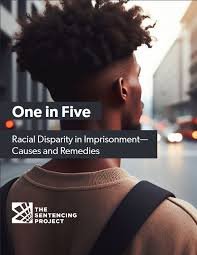
One in Five Racial Disparity in Imprisonment— Causes and Remedies

By Nazgol Ghandnoosh, Celeste Barry and Luke Trinka

The United States experienced a 25% decline in its prison population between 2009, its peak year, and 2021. While all major racial and ethnic groups experienced decarceration, the Black prison population has downsized the most. But with the prison population in 2021 nearly six times as large as 50 years ago and Black Americans still imprisoned at five times the rate of whites, the crisis of mass incarceration and its racial injustice remain undeniable. What’s more, the progress made so far is at risk of stalling or being reversed.

Washington, DC, Sentencing Project. 2023, 34pg

Concealing for Freedom: The Making of Encryption, Secure Messaging and Digital Liberties

By: Ksenia Ermoshina and Francesca Musiani

Concealing for Freedom: The Making of Encryption, Secure Messaging and Digital Liberties sets out to explore one of the core battlegrounds of Internet governance: the encryption of online communications. Current debates around encryption have fundamental implications for our individual liberties and collective presence on the Internet. Encryption of communications at scale and in increasingly usable ways has become a matter of public concern, especially since Edward Snowden’s 2013 revelations. A new cryptographic imaginary is taking hold, which sees encryption as a necessary precondition for the formation of networked publics. At the same time, there have been major evolutions and accelerations in the field of secure communications, prompted in part by the cryptography community’s renewed efforts to create next-generation secure messaging protocols and applications. It is vital that we unveil the very recent, and sometimes less recent history of these protocols and their key applications. The book takes on this task, in order to show how the opportunities and constraints they provide to Internet users came about, and how both developer communities and institutions are working towards making them available for the largest possible audience. It explores how efforts towards this goal are built upon interwoven stories about technical development and architectural choices, about community-building – and about Internet governance and politics. In doing so, the book focuses on the experience of encryption in a wide variety of contemporary secure messaging protocols and tools, and looks at the implications of these endeavors for the “making of” digital liberties on the Internet. Concealing for Freedom provides two key empirical and theoretical contributions. Firstly, it enriches a social sciences-informed understanding of encryption. It does so by examining how different solutions of cryptography for secure communications are created, developed, enacted, and governed, and what this diverse experience of encryption, operating across many different sites, means for online civil liberties. Secondly, it contributes to understanding the social and political implications of particular design choices when it comes to the technical architecture of digital networks, in particular their degree of (de-)centralization. The book explores developers’ actions and their interactions with other stakeholders, for instance users, security trainers, standardising bodies, and funding organizations. It also examines their interactions with the technical artifacts they develop, in which a core common objective is to create tools that “conceal for freedom” even as how this objective is met differs according to technical architectures, the user publics being targeted and the tools’ underlying values and business models.

Manchester, UK: Mattering Press, 2022. 274p.

Addressing Illicit Financial Flows in East and Southern Africa

By Michael McLaggan

Prominent throughout the world, illicit financial flows (IFFs) not only undermine the ability of states to collect revenue, but they also pose challenges to governance and the rule of law and provide avenues for the funding of further illicit activity. Although a global occurrence, IFFs may manifest differently at the regional level, making a uniform approach difficult. This calls for a model that is more inclusive of different types of flows than traditional understandings of IFFs, which tend to focus on financial flows within the formal system. In regions such as East and southern Africa, where informality is much higher than in the developed nations of the ‘global north’, the greater focus on formal systems does not find the same degree of applicability. This is not to downplay the necessity of observing and countering formal financial flows of an illicit nature but rather to emphasise the need to pay greater attention to informal and trade flows, which are prolific in less developed regions. This paper draws on extensive research by the Global Initiative against Transnational Organized Crime (GI-TOC) – in particular, the Observatory of Illicit Economies in East and Southern Africa – in addition to research by other international organisations, to analyse whether the ‘IFFs pyramid’ proposed by the GI-TOC (Reitano, 2022) is applicable to and useful for researchers seeking to understanding illicit financial flows in various settings around the world but especially in regions where greater levels of informality exists, such as East and southern Africa. The paper finds that the pervasive informality of markets in the East and southern African region, and their abuse by criminal actors, means that greater attention to IFFs is necessary in this sphere. Common also is the use of illicitly acquired, or otherwise illicitly traded commodities, in barter (that is, goods for goods) markets. Identified as particularly relevant is the pernicious influence of state-embedded actors, who often play substantial roles in the facilitation of IFFs and act as obstacles to policies to address them. Furthermore, vested interests of criminal actors in keeping certain industries and markets informal serve as barriers to formalisation and highlight the greater need to pay attention to informal financial flows especially. The due consideration to trade and informal flows is what makes the IFFs pyramid a useful model for understanding these flows in both global and regional settings. At the very least, the pyramid model highlights the need for holistic approaches and policy reform when considering IFFs in less developed regions.  

Birmingham, UK: University of Birmingham. 2024, 33pg