Open Access Publisher and Free Library
CRIME+CRIMINOLOGY.jpeg

CRIME

Violent-Non-Violent-Cyber-Global-Organized-Environmental-Policing-Crime Prevention-Victimization

Posts in social sciences
The Rhino Horn and Ivory Trade: 1980–2020

By Lucy Vigne

In much of tropical Africa a breakdown in law and order, corruption and an influx of firearms led to heavy rhino and elephant poaching, especially in the 1970s and 1980s. I collected and analysed data to reveal the collapsing numbers of rhinos in Africa. Although we had general trade information, we needed more understanding of the soaring smuggling and consumption in order to combat it. I carried out extensive fieldwork in the main market at the time: North Yemen (Yemen from 1990). From the 1980s I regularly monitored the trade in rhino horn used for prestigious curved dagger (jambiya) handles, updating information on smuggling routes, prices, and demand. I worked with Yemenis on education campaigns, encouraged substitutes, and assisted policy makers, with Esmond Martin, who was to become my longterm research colleague. In the Indian subcontinent, home to most Asian rhinos, we also worked with officials and local people on strategies to fight rhino poaching and smuggling. And in eastern Asia we surveyed consumer markets for rhino horn used in traditional Oriental medicine to close down illegal trade. Around 2010 demand escalated once again causing serious rhino poaching, this time mainly in South Africa for customers in China and Vietnam, but again information was lacking. I surveyed illegal markets and collected prices of rhino horn, in order to strengthen legislation and enforcement. Demand for elephant ivory also rocketed from about 2010 onwards and we learned newly moneyed undiscerning Chinese consumers were eager to acquire mass-produced ivory items. We carried out market surveys in key illegal African and Asian markets to alert decision makers to control the surge in trafficking and unregulated retail sales, mostly for mainland Chinese. A new Chinese diaspora and the internet encouraged this lucrative trade, fuelled by corruption, mismanagement and apathy in many regions. Human population pressure on valuable natural resources is rising, resulting in climate change and wildlife crime increasing, and biodiversity in wild habitats more threatened, plus spreading zoonotic diseases. Compared with the 1980s there is at last growing attention to these challenges, including wildlife crime, in search of securing nature for a healthier, safer planet.

Oxford, UK: Oxford Brookes University. 2020. 80p.

download
Setting Suns: The Historical Decline of Ivory and Rhino Horn Markets in Japan

By Tomomi Kitade and Ayako Toko

Japan was formerly recognized as one of the world’s largest end-use markets for wildlife products, particularly during the height of the national economic boom which lasted throughout the mid-1970s and 1980s. Wildlife products traded to Japan at the time were extensive and wide-ranging, and included everything from animal fur and leather for fashion, exotic animals for pets and zoos, to taxidermy specimens, raw materials for traditional medicine and other traditional manufacturing industries. Rhino horn and elephant ivory, arguably the two symbols of the current illegal wildlife trade crisis, were also traded to Japan in massive quantities until 1980 and 1989, respectively, when international trade bans were introduced pursuant to the Convention on International Trade in Endangered Species of Wild Fauna and Flora (CITES). For a time Japan ranked as the world’s largest consumer of both rhino horn and elephant ivory, but the market for these products declined significantly over the years, to a point where only a small fraction of the former domestic market remains significant today. This research sheds light on Japan’s wildlife trade history as a case study on the contributing factors that helped reduce the market for rhino horn and elephant ivory. By conducting comprehensive research into these phenomena, this report aims to elucidate the circumstances and drivers for change, in the hope that it may provide useful understanding for the contemporary context in other Asian markets facing problems with wildlife trade. Additionally, this study critically reviewed the status of the current domestic market and regulations to amplify where Japan stands today in terms of the historical and global context and provides recommendations for addressing current issues in Japan, especially in light of severe contemporary global levels of illegal wildlife trade. Because of the holistic approach taken and the historical knowledge required for this study, information was collected and analysed from a wide range of sources. In terms of literature, sources in the Japanese language were especially utilized, including the database of National Diet records and national newspaper archives. Various data relating to trade, production, and socio-economic status, as well as records associated with regulatory schemes, were obtained from many sources including the Japanese government, domestic industry associations, and CITES-related databases (i.e. the CITES Trade Database and the Elephant Trade Information System). Furthermore, critical insights were gathered through a series of stakeholder/expert interviews, especially with industry members who were directly part of the process. Finally, an original consumer survey was conducted in 2014 to gain further understanding of consumer perspectives.

Tokyo: TRAFFIC Japan, 2016. 96p.

download
Europe in Crisis: Crime, Criminal Justice, and the Way Forward. Essays in Honour of Nestor Courakis.

Edited by C.D. Spinellis / Nikolaos Theodorakis Emmanouil Billis / George Papadimitrakopoulos.

Volume Ii: Essays In English, German, French, And Italian. Nestor Courakis is Emeritus Professor of Criminology and Penology at the National and Kapodistrian University of Athens, Faculty of Law and a full-time Professor at the University of Nicosia.

Athens: ANT. N. Sakkoulas Publishers L.P , 2017. 1899p.

download
Conflict and Transnational Crime: Borders, Bullets & Business in Southeast Asia

By Florian Weigand

Exploring the links between armed conflict and transnational crime, Florian Weigand builds on in-depth empirical research into some of Southeast Asia’s murkiest borders. The disparate voices of drug traffickers, rebel fighters, government officials and victims of armed conflict are heard in Conflict and Transnational Crime, exploring perspectives that have been previously disregarded in understanding the field.

Cheltenham, UK; Northampton MA: Edward Elgar Publishing, 2020. 176p

download
The Lion That Didn't Roar: Can the Kimberley Process stop the blood diamonds trade?

By Nigel Davidson

In 2017 it will be Australia’s turn to chair the Kimberley Process Certification Scheme (KP), an international organisation set up to regulate the trade in diamonds. Diamonds are a symbol of love, purchased to celebrate marriage, and it is therefore deeply ironic that the diamond trade has become linked with warfare and human rights violations committed in African producer countries such as Sierra Leone, the Democratic Republic of Congo and, more recently, Zimbabwe and Angola. In their quest for diamonds, or by using diamonds to purchase weapons, armed groups in these countries have engaged in recruiting child soldiers, amputating limbs, and committing rape and murder. In response to the problem, the international community, non-governmental organisations and key industry players such as De Beers combined forces to create the Kimberley Process in 2002. The KP uses an export certificate system to distinguish the legitimate rough diamond trade from so-called ‘blood diamonds’, which are also known as ‘conflict diamonds’. This book considers the extent to which the KP, supported by other agencies at the international and national levels, has been effective in achieving its mandate. In so doing, it presents an original model derived from the domain of regulatory theory, the Dual Networked Pyramid, as a means of describing the operation of the system and suggesting possible improvements that might be made to it. Nigel Davidson spoke with 936 ABC Hobart about what Australia can do to help stop blood diamonds.

Canberra: Australian National University Press, 2016. 330p.

download
Commerce Raiding: Historical Case Studies, 1755–2009

By Elleman, Bruce A. and Paine, S.C.M

The sixteen case studies in this book reflect the extraordinary diversity of experience of navies attempting to carry out, and also to eliminate, commerce raiding. Because the cases emphasize conflicts in which commerce raiding had major repercussions, they shed light on when, how, and in what manner it is most likely to be effective. The authors have been asked to examine the international context, the belligerents, the distribution of costs and benefits, the logistical requirements, enemy countermeasures, and the operational and strategic effectiveness of these campaigns.

Newport, RI: U.S. Naval War College Press, 2010. 277p.

download
Plan Colombia: An Analysis of Effectiveness and Costs

By Daniel Mejía

No one can deny that Colombia has worked tirelessly to fight illegal drug production, trafficking, and organized crime groups linked to these activities. Since 1994, more than two million hectares of coca have been sprayed with glyphosate, 1,890 metric tons of cocaine have been seized, and 28,344 coca leaf processing laboratories have been destroyed. The costs that Colombia has paid in this “war” are very high. Since 2000, the country—with partial funding from the U.S. government—has invested more than US$1.2 billion, or about 1 percent of the country’s gross domestic product (GDP), per year into the military component of Plan Colombia.1 However, the costs have not solely been public financial resources. More than 57,000 Colombians are estimated to have been killed between 1994 and 2008 as a consequence of growing illegal drug markets and resulting confrontations between drug trafficking organizations (DTOs) and the Colombian government during the war on drugs.2 This translates into approximately 3,800 additional homicides (or about 25 percent of total homicides) per year from drug-related violence alone. Yet despite such enormous investments and costs, Colombia continues to be a key producer and trafficker of illicit drugs, and in particular of cocaine.

Washington DC: Brookings Institute, 2016. 17p.

download
Piracy and Maritime Crime: Historical and Modern Case Studies

By Elleman, Bruce A.; Forbes, Andrew; and Rosenberg, David

As modern nation-states emerged from feudalism, privateering for both profit and war supplemented piracy at the margins of national sovereignty. More recently, an ocean enclosure movement under the aegis of the United Nations Convention on the Law of the Sea 1982 has granted states access to maritime resources far beyond their territorial limits.

Newport, RI: U.S. Naval War College Press, 2010. 277p.

download
Following the Money: Wildlife Crimes in Anti-Money Laundering Laws. A review of 110 jurisdictions

By James Wingard and Maria Pascual

Anti-money laundering (AML) laws have the potential to play a crucial, game-changing role in transforming wildlife trafficking from a low-risk/high-reward to a high-risk environment. Yet despite the 2017 UN Resolution callings on countries to leverage AML laws in the fight against wildlife trafficking, they remain under-utilised. Investigations and prosecutions in the case of wildlife-trafficking crimes still rely primarily on charges for poaching or trafficking, while money-laundering crimes are mostly overlooked. There are several reasons for this, one of them being the degree to which wildlife crimes constitute a predicate offence. This paper reviews the AML laws from 110 jurisdictions from the Legal Atlas online platform to determine their applicability to illegal wildlife trade (IWT) crimes, showing positive results for 64 out of the 110 countries. The paper also flags some more general challenges that may hinder the application of such AML laws.

Missoula, MT: Legal Atlas, 2019. 29p.

download
Exploitation of the jaguar, Panthera onca and other large forest cats in Suriname.

By Irvin Kerman

The Guiana’s ecosystems provide habitats to over 4,500 species of flowering plants, 660 species of birds, 300 species of freshwater fishes, 180 species of mammals, 150 species of reptiles and 90 species of amphibians. Of great significance in the Guianas is the large number of wild fauna and flora that are unique to the region. Amongst these are species that are globally in decline but have found safe refuge in the Guianas’ wilderness and are flourishing. Other species are simply endemic to the region, being found in very few other areas of the planet. Amongst the very special species found in the Guianas is the jaguar, Panthera onca, the largest cat of South America. As with species like the giant river otter, Pteronura brasiliensis, the arapaima, Arapaima gigas, black caiman Melanosuchus niger, and giant anteater, Myrmecophaga tridactyla, the jaguar requires an extensive territory to survive and has found this in the Guianas. The extremely low population of humans, most of whom live along the coast, make the Guianas very attractive for forest cats whose migratory behaviour necessitates their having extensive wilderness areas as habitats. Another character that has helped make the Guianas attractive to forest cats has been the general respect and or fear that persons of the region have always had for the species. The jaguar, and many of its smaller relatives such as the jaguarundi, Herpailurus yagouaroundi, ocelot, Leopardus pardalis and the oncilla, Leopardus tigrinus, have rarely ever had to face the threat of targeted exploitation. Human – wildlife conflicts have, in the past, been limited to accidental encounters within the territory of the animals. However, from recent reports to WWF, this situation is feared to have changed. Several species of wildlife are exported annually from Suriname and Guyana to the US, Europe and Japan. Some of these species, particularly birds and wild plants, are also the subject of domestic trade. Globally, illegal and/or excessive trade remains a very significant impediment to the survival of many species. Both Guyana and Suriname have a legal international trade, with export quotas being set per species, based on population estimates and relative abundances worldwide. The quotas also reflect the listing of the species under international conventions. However, the jaguar does not belong to this list of species approved for exploitation. The jaguar is classified by all countries of the Guianas as being endangered and thus in need of protection. This means that it is illegal to target and hunt the species, whether for export, recreation, the domestic pet trade, or for bushmeat. There are only a few exceptions where special provisions are made for capture and shipment for education, exhibition and research to zoological parks, museums and wildlife reserves.

Guianas: WWF Guianas, 2010. 14p.

download
Online Markets For African Grey Parrots In Africa : Evidence for a growing trade for endangered birds as pets

By Simone Haysom and Rowan Martin

The research described in this trend report is a response to concerns raised by the World Parrot Trust (WPT) over the scale and scope of online markets for African grey parrots within range states in Africa. African Grey parrots are popular pets in many countries but international trade in wild African grey parrots is prohibited under multilateral agreements and national laws in some countries. However, preliminary investigations into advertisements for these birds on Nigerian internet platforms raised concern. Analysis of data from an ongoing project of the Market Monitoring and Friction Unit (MMFU), which focuses on monitoring the online marketing of live endangered birds, revealed an emerging online market for African grey parrots in several African countries. This report provides evidence that, despite high levels of local and international protection, live sales of this endangered species are being advertised on so-called ‘classifieds platforms’ across the continent, including in countries outside the species’ natural range, and which represent some of the largest and most rapidly developing economies. The study sought not only to highlight specific concerns about the trade in African grey parrots but also to elucidate the dynamics of its international and regional regulation so as to inform targeted engagement and potential action at a malleable stage in market development. A total of 782 online advertisements were identified over a six-month period (October 2020–March 2021), with almost all of them being on classified sites. The high number and frequency of advertisements in Kenya (455) and Nigeria (264) were concerning, and action is urgently needed to address the problem in both countries. Noticing advertisements in countries such as Benin, Ghana and Angola, even in low numbers, is an early-warning sign of nascent markets elsewhere. The analysis suggests a rising demand for the species as pets, which traders are seeking to meet. The pattern of these advertisements suggests illegal trade both across borders, contravening agreements under the Convention on International Trade in Endangered Species of Wild Fauna and Flora (CITES) and within countries, contravening national laws. National wildlife authorities are therefore urged to monitor the development of these markets and to take early action to shut down such marketing activities on the implicated platforms.

Geneva: Global Initiative Against Transnational Organized Crime, 2021. 31p.

download
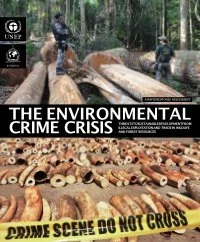
The Environmental Crime Crisis – Threats to Sustainable Development from Illegal Exploitation and Trade in Wildlife and Forest Resources. A UNEP Rapid Response Assessment

By Nellemann, C., Henriksen, R., Raxter, P., Ash, N., Mrema, E. (Eds)

Given the alarming pace, level of sophistication, and globalized nature that illegal trade in wildlife has now notoriously achieved, UNEP initiated a Rapid Response Assessment to provide some of the latest data, analysis, and broadest insights into the phenomenon. Tackling illegal wildlife trade demands this examination of the relationship between the environmental resources at stake, their legal and illegal exploitation, the loopholes that exacerbate the situation, the scale and types of crimes committed, and the dynamics of the demand driving the trade. In the international community, there is now growing recognition that the issue of the illegal wildlife trade has reached significant global proportions. Illegal wildlife trade and environmental crime involve a wide range of flora and fauna across all continents, estimated to be worth USD 70–213 billion annually. This compares to a global official development assistance envelope of about 135 billion USD per annum. The illegal trade in natural resources is depriving developing economies of billions of dollars in lost revenues and lost development opportunities, while benefiting a relatively small criminal fraternity. This report focuses on the far-reaching consequences of the environmental crime phenomenon we face today. The situation has worsened to the extent that illegal trade in wildlife’s impacts are now acknowledged to go well beyond strictly environmental impacts – by seriously undermining economies and livelihoods, good governance, and the rule of law. Even the security and safety of countries and communities is affected: the report highlights how wildlife and forest crime, including charcoal, provides potentially significant threat finance to militias and terrorist groups. Already recognized as a grave issue in DRC and Somalia by the UN Security Council, the assessment reveals that the scale and role of wildlife and forest crime in threat finance calls for much wider policy attention, well beyond those regions. The consequences are increasingly evident: illegal wildlife trafficking constitutes a barrier to the achievement of both sustainable development and environmental sustainability. As reflected in a range of decisions of the Convention on International Trade in Endangered Species of Wild Fauna and Flora, the UN Office for Drugs and Crime, the UN Commission on Crime Prevention and Criminal Justice, INTERPOL, the UN Security Council, and others, the illegal trade in wildlife and environmental crime are now widely recognized as significant threats on a global scale, to be tackled with urgency. However the responses to date, in terms of impact on the ground, have been too modest, and inadequate to the scale and growth of the threat to wildlife and the environment.

Nairobi: United Nations Environment Programme; Arendal, Norway: GRID-Arendal. 2014. 108p.

download
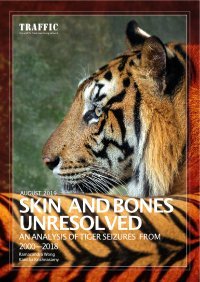
Skin and Bones Unresolved: An Analysis of Tiger Seizures from 2000–2018

By Wong, R. and Krishnasamy, K

The present report is the fourth iteration of TRAFFIC’s analysis on the illegal trade in Tigers Panthera tigris looking at an overall 19-year trend from 2000 to 2018. Previous analyses reviewed seizures from the 2000–2010, 2000–2012 and 2000–2015 periods. This analysis involved largely Tiger Range Countries (TRCs), while information opportunistically gathered from outside TRCs has also been included to provide a more comprehensive picture of the illegal trade in Tigers. Beyond highlighting the statistics, this report provides insights into trends and the most current and urgent threats facing Tigers. Nineteen years is a considerable time frame for data aggregation, and admittedly numerous changes have occurred in the wildlife protection and management regimes, including of Tiger habitats in a number of TRCs. With the large dataset spanning almost two decades, various considerations emerge involving TRCs and issues concerning the protection of wild Tigers, as well as those arising from captive facilities implicated with illegal Tiger trade. Overall, a conservative estimate of 2,359 Tigers were seized from 2000 to 2018 across 32 countries and territories globally. These occurred from a total of 1,142 seizure incidents, with 95.1% (or 1,086 incidents) occurring in the 13 Asian TRCs1 , accounting for a minimum of 2,241 Tigers seized. On average, 60 seizures were recorded annually, accounting for almost 124 Tigers seized each year. The top three countries with the highest number of seizure incidents were India (463 or 40.5% of total seizures) and China (126 or 11.0%) closely followed by Indonesia (119 or 10.5%).

Cambridge, UK: TRAFFIC International, 2019. 52p.

download
From Drug Wars to Criminal Insurgency: Mexican Cartels, Criminal Enclaves and Criminal Insurgency in Mexico and Central America. Implications for Global Security

By John P. Sullivan

Transnational organized crime is a pressing global security issue. Mexico is currently embroiled in a protracted drug war. Mexican drug cartels and allied gangs (actually poly-crime organizations) are currently challenging states and sub-state polities (in Mexico, Guatemala, El Salvador and beyond) to capitalize on lucrative illicit global economic markets. As a consequence of the exploitation of these global economic flows, the cartels are waging war on each other and state institutions to gain control of the illicit economy. Essentially, they are waging a ‘criminal insurgency’ against the current configuration of states. As such, they are becoming political, as well as economic actors.

Paris: Fondation Maison des sciences de l’homme , 2011. 21p.

download
Drug Money and Bank Lending: The Unintended Consequences of Anti-Money Laundering

By Tomas Williams, Pablo Slutzky, and Mauricio Villamizar-Villegas

We explore how anti-money laundering (AML) policies affect banks and credit provision to firms. For identification we exploit the enactment of a financial regulation in Colombia. Aimed at controlling the flow of money from drug trafficking into the financial system, we find that after implementation bank deposits in municipalities with high drug trafficking decline. This negative liquidity shock has consequences for credit in other municipalities. Banks sourcing their deposits from areas with high drug trafficking cut lending relative to other banks. Using a proprietary database containing data on bank-firm credit relationships, we show that small firms that rely on credit from affected banks experience a negative shock to sales, investment, and profitability. Furthermore, we use night-lights data to show that these results are not due to a reallocation of activity across firms nor between the formal and informal sectors. Our evidence uncovers a hidden to be considered when implementing AML policies.

Washington, DC: Elliott School of International Affairs, The George Washington University, 2020. 62p.

download
Job Loss, Credit and Crime in Colombia

By Gaurav Khanna, Carlos Medina, Anant Nyshadham, Christian Posso, Jorge Tamayo

We investigate the effects of job displacement, as a result of mass-layoffs, on criminal arrests using a matched employer-employee-crime dataset from Medellín, Colombia. Job displacement leads to immediate and persistent earnings losses, and higher probability of arrest for both the displaced worker and family members. Leveraging a banking policy-reform, we find that greater access to credit attenuates the criminal response to job loss. Impacts on arrests are pronounced for property crimes and among younger men for whom opportunities in criminal enterprises are prevalent. Taken together, our results are consistent with economic incentives contributing to criminal participation decisions after job losses.

Boston, MA: Harvard Business School, 2020. 35p.

download
Increasing The Demand For Workers With A Criminal Record

By Zoe B. Cullen, Will S. Dobbie, and Mitchell Hoffman

State and local policies increasingly restrict employers’ access to criminal records, but without addressing the underlying reasons that employers may conduct criminal background checks. Employers may thus still want to ask about a job applicant’s criminal record later in the hiring process or make inaccurate judgments based on an applicant’s demographic characteristics. In this paper, we use a field experiment conducted in partnership with a nationwide staffing platform to test policies that more directly address the reasons that employers may conduct criminal background checks. The experiment asked hiring managers at nearly a thousand U.S. businesses to make incentive-compatible decisions under different randomized conditions. We find that 39% of businesses in our sample are willing to work with individuals with a criminal record at baseline, which rises to over 50% when businesses are offered crime and safety insurance, a single performance review, or a limited background check covering just the past year. Wage subsidies can achieve similar increases but at substantially higher cost. Based on our findings, the staffing platform relaxed the criminal background check requirement and offered crime and safety insurance to interested businesses.

Cambridge, MA: National Bureau of Economic Research, 2022. 42p.

download
Poached Timber: Forest Crimes, Corruption, and Ivory Trafficking in the Malian Rosewood Trade with China

By Environmental Investigation Agency

Since 2018, Mali has suffered two military coups, while the country has become one of the largest suppliers of rosewood to China, through the export of Pterocarpus erinaceus – commonly identified as “kosso,” “keno,” or “bois de vêne,” a species the trade of which is regulated by the Convention on International Trade in Endangered Species of Wild Fauna and Flora (CITES), since January 2017.

The Environmental Investigation Agency (EIA)’s findings indicate that China has imported the equivalent of half a million kosso trees from Mali – worth approximately US$220 million, between January 2017 and January 2022, a large portion of it being the product of illegal harvesting or illegal export. The relentless timber poaching in the Southern forests of Mali has resulted in a significant decline of the species.

Washington, DC: : EIA, 2022. 27p.

download
Nigeria: A Prime Example of the Resource Curse? Revisiting the Oil-Violence Link in the Niger Delta

By Mähler, Annegret

This paper studies the oil‐violence link in the Niger Delta, systematically taking into con‐ sideration domestic and international contextual factors. The case study, which focuses on explaining the increase in violence since the second half of the 1990s, confirms the differentiated interplay of resource‐specific and non‐resource‐specific causal factors. With re‐ gard to the key contextual conditions responsible for violence, the results underline the basic relevance of cultural cleavages and political‐institutional and socioeconomic weakness that existed even before the beginning of the “oil era.” Oil has indirectly boosted the risk of violent conflicts through a further distortion of the national economy. Moreover, the transition to democratic rule in 1999 decisively increased the opportunities for violent struggle, in a twofold manner: firstly, through the easing of political repression and, sec‐ ondly, through the spread of armed youth groups, which have been fostered by corrupt politicians. These incidents imply that violence in the Niger Delta is increasingly driven by the autonomous dynamics of an economy of violence: the involvement of security forces, politicians and (international) businessmen in illegal oil theft helps to explain the per‐ petuation of the violent conflicts at a low level of intensity.

Hamburg: German Institute of Global and Area Studies (GIGA) , 2010. 39p.

download
Downstream Oil Theft: Global Modalities, Trends, and Remedies

By Ian M. Ralby.

This report is the first comprehensive study of the theft of refined oil products around the globe. It provides insight into the modalities and trends in oil theft, the culprits responsible, the stakeholders affected by illicit activities, and recommendations that could change the dynamics.

Washington, DC: Atlantic Council, 2017. 117p.

download